The Philippines was the dark horse of our time in South East Asia, many climbers we spoke to before we went had no idea there was any climbing there at all! In fact, we would often be asked if we were going there just for sight seeing. What makes this so surprising is that the climbing in The Philippines is excellent and there is loads of it, all over the country! Aside from climbing, we really loved The Philippines as a country, it is a truly beautiful place and the people are genuinely some of the friendliest we have ever met. During the 3½ weeks we spent in The Philippines, we barely scratched the surface of what’s on offer and we were sad to leave, we could easily have spent over double that amount of time and still not had long enough.
Guidebooks for Climbing in the Philippines
Currently there is no national guidebook for climbing in the Philippines. The most comprehensive source of information is the Climb Philippines website, which is a great place to start when planning which areas you want to visit. theCrag has many topos and good information for various crags, including some not covered on the Climb Philippines website, so it is worth cross referencing the two of them. We would also highly recommend getting in touch with local climbers, either via the climbing gym or contact details online. Filipino people are very kind and happy to help, the knowledge and information they have is priceless.

In Cebu, however, there is a high quality guidebook available. We used the CEBU PHILIPPINES Rock climbing guidebook by Mervil Patigdas, which is a mine of great information for climbing on Cebu. Currently, Danao is not in this guidebook as it is a new area, but the guidebook will be updated and future editions released.
Weather and Climbing Season in the Philippines
The Philippines has a tropical climate, which can be divided into five further sub categories over the 7,640 islands that make up the country. These categories relate to when and how long the rainy season is. We would recommend using this this map to research when the best climbing seasons are specific to where you want to visit. As the crags we visited are in the west of the country, the best conditions will usually be found from November to February.

Much like elsewhere in the tropics, climbing conditions in the Philippines can be tough if you aren’t used to it. We visited between February and March, and had quite a mix of conditions. At Cantabaco we had a lot of rain followed by high temperatures and high humidity, which meant choosing the right route was important. By contrast, in Igbaras it was cloudy and breezy and the conditions were surprisingly cool. If you’re well prepared and psyched you will be able to climb in almost anything, just don’t forget sun cream, insect repellent and a waterproof jacket!
Below is a map of the different crags we climbed at in the Philippines, so you can see where they are in relation to each other.
Climbing Recommendations
Cebu
Cantabaco
Cantabaco is one of the best and most famous climbing areas in the Philippines. Set in the mountains around 30 km inland from Cebu City, Cantabaco is off the tourist trail and doesn’t receive many international climbers. However, Cebu has an impressive and thriving climbing scene, at weekends the crag comes alive with local climbers and the place has a really sociable atmosphere.
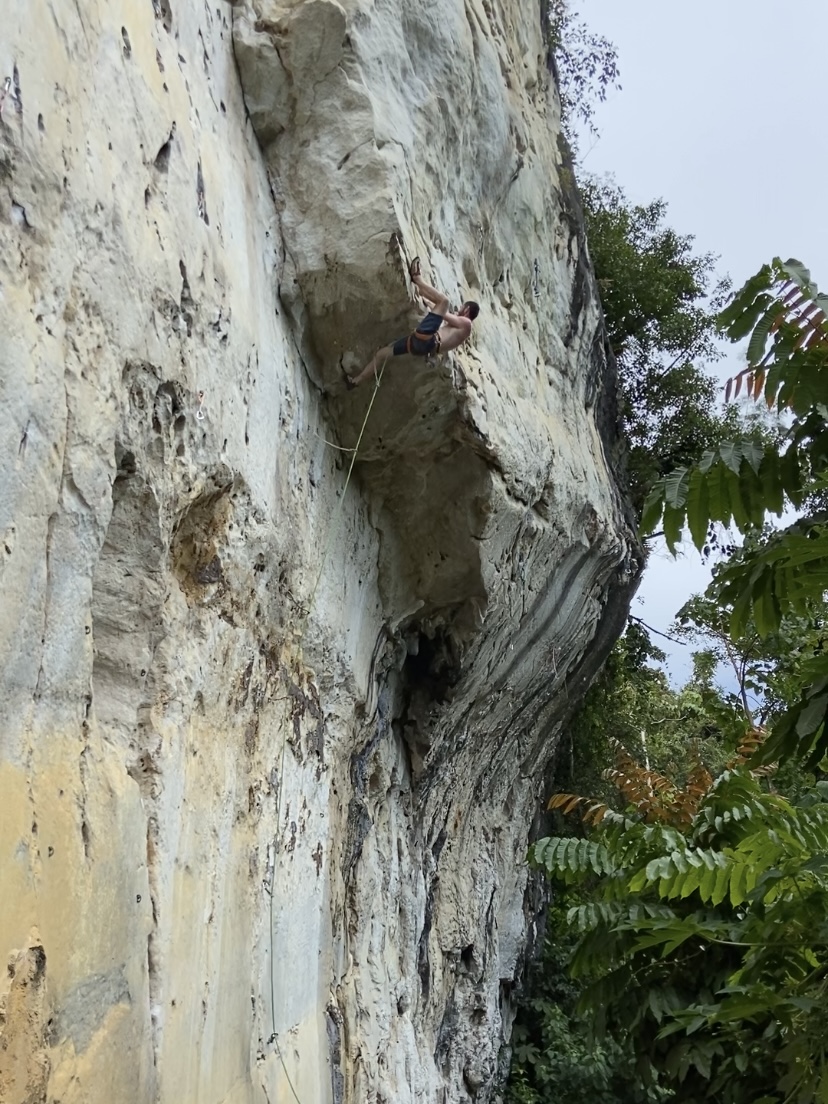
The climbing style at Cantabaco is really unique and pretty savage at first, especially for onsighting. Area 5 is the best wall, and consists of a smooth limestone face dotted with pockets and the occasional tufa. Some of the routes would be totally impossible if only one of the pockets was missing. The footwork is incredibly technical and finding a good sequence fast is hard and gets very pumpy very quickly. The other sectors have a similar style, but also include a few sections of crack climbing and a slightly more textured rock surface.

What made Cantabaco stand out is that almost every route seemed to have a distinctive character to it, something unique or unusual that made it live long in the mind. We often found a route could feel almost impossible first try, with the beta difficult to find and giving the ego a good kicking. However, second try routes often went surprisingly well, with a bit of knowledge on where to put your feet the climb can be almost transformed. All the locals climbers will know what you mean if you talk about ‘Cantabaco style’, this just adds to the quality of the crag.
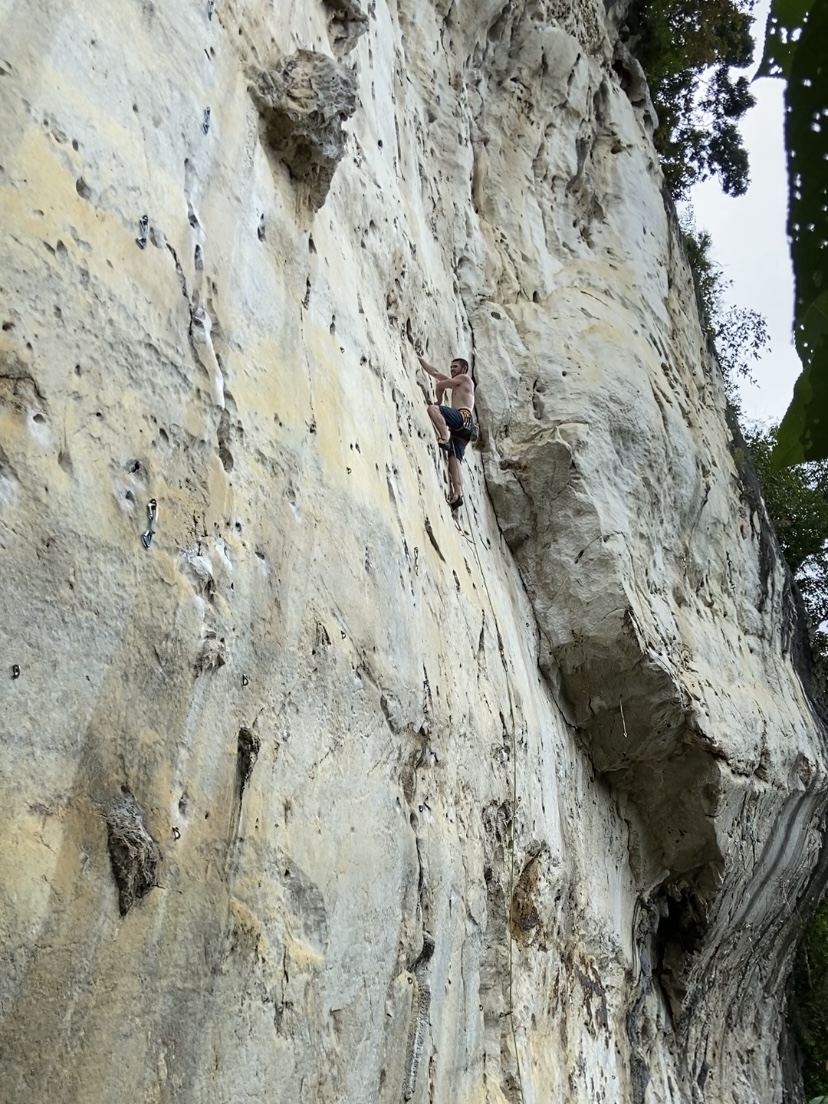
Cantabaco has 75 routes from 5c to 8b+, spread across several different ‘areas’. These are all along the same crag but break the wall up into smaller chunks to make it easier to find routes. Cantabaco faces south east and comes into the shade in the afternoon, if the sun is out then it is essential to climb in the shade. Access to the crag is easy, a 5 minute walk, there is a logbook to sign and a small access fee of 20 Pesos (€0.35) per person for the day.
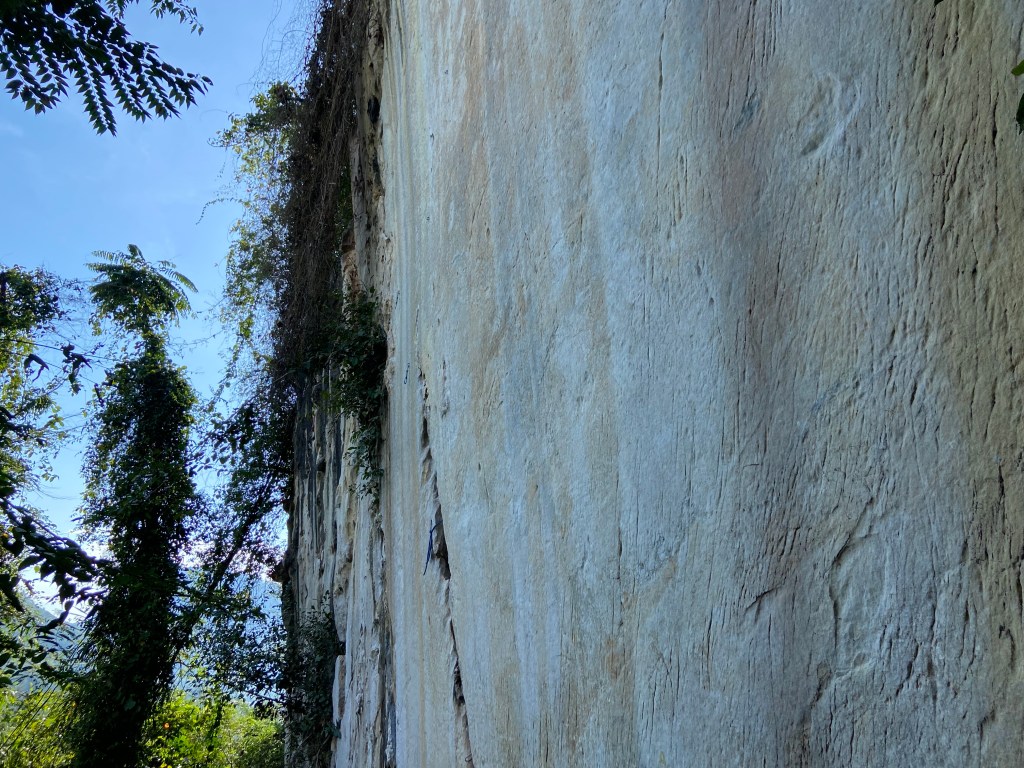
We really loved Cantabaco, the climbing was great quality and very memorable, as well as being in a nice location on the island. There is nothing much in Cantabaco itself, but it is still lively and vibrant, with plenty of food, drinks and karaoke. It had an unspoilt feel, it’s just a nice part of semi-rural Cebu where friendly and welcoming locals live alongside climbers.
We write for pleasure and climbing is our passion. Our articles will never be paywalled. However, if you would like to help towards the costs of running the site or if you have found our content useful, please consider contributing here. To read more about why your support matters, click here.
Danao
Danao is a city on the island of Cebu, about 35 km up the coast from Cebu city. In the mountains behind Danao lies a beautiful band of cliffs, surrounded by stunning mountain views. For about 8 years, a dedicated team of climbers have been bolting routes here and developing the crag into a future gem of the Philippines. For most of that time the crag was kept low profile and was not well known to climbers outside of Cebu. Now the crag has accommodation options for climbers and a great selection of routes, it will become more popular and will be included in future editions of the Cebu guidebook.

The accommodation at the crag is simply perfect, there are a handful of traditional bamboo bungalows which have spacious balconies and fabulous views. The hosts are a wonderful local couple who prepare delicious local food for you each day. Amazingly, they grow their own Cacao which they process themselves into Tablea. Tablea is made from 100% roasted and ground cocoa beans that are formed into tablets. These are used to make a traditional Filipino hot chocolate drink. Drinking delicious chocolate, grown meters from where you sit, has to rank as one of the most pleasurable things we’ve ever done after a days climbing.

The crag is around 10 minutes walk away, on a scenic trail. Currently there are around 75 routes, from 5c to 8c, most of which are between 25 and 35 meters long. The rock is really interesting, a combination of bone white limestone with lots of flow stone formations on top. The flowstone has an almost quartz like texture and a striking caramel colour set against the white rock. Small sections of the crag can have brittle holds so a helmet is advised for the belayer. The climbing style is quite diverse, lots of pockets, jugs and even some tufas, spread across all angles. Emerging classics like ‘Vulcanizer’, 7a+, epitomise the crag, it is 33 meters long and has sections of slabby, vertical and 45° overhanging rock – all in the same pitch!

We had a really great time on the routes here, they were all really well equipped and had a great flowing nature to them. The bolts are the standard 2 meters or so apart, but have been placed with great thought, the clipping positions are very natural and either precede or follow hard sections, rather than forcing you to clip in the middle of one. We also loved the features of the crag, there are several striking arêtes as well as clean pocketed slabs and improbable rounded bulges, all enticing you to climb them.

Climbing at Danao was one of our personal highlights of our time in the Philippines, the combination of the climbing and the location was a total sweet spot for us. Places like this are a great example of how climbing can take you to some beautiful places. Here we were eating fresh papaya from the garden and watching fireflies at night in total solitude. These things would be incredibly hard to find if you were only ever on the beaches and in the cities, but because of climbing and help from other climbers we were able to enjoy a place so stunning as this.

The climbing at Danao has been mostly developed by Algin Amores, he should be your first point of contact if you want to visit. The easiest way to get in touch with Algin is on DanaoClimbing. You can get in touch via their instagram, or if like us, you don’t have Instagram, you can communicate via email, found on the Danao Climbing website.
Panay
Igbaras
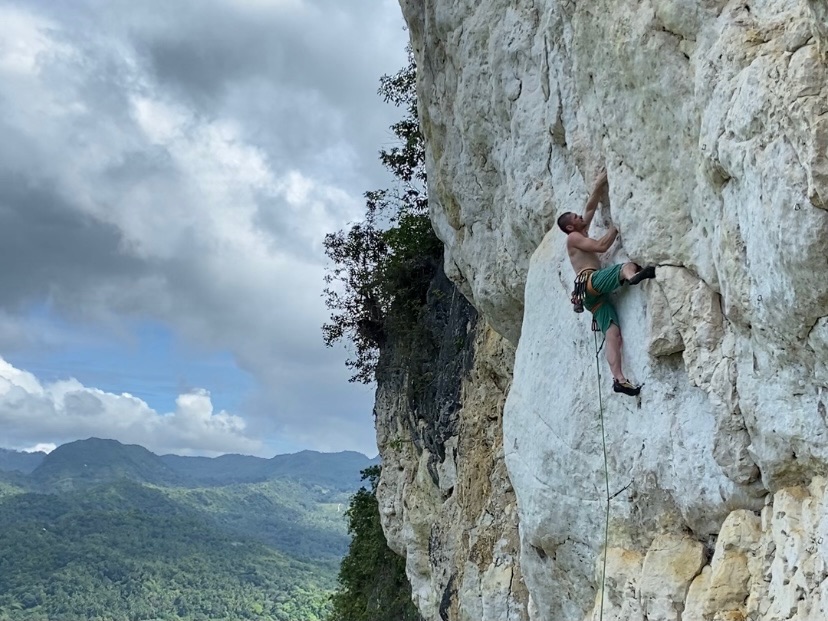
When we arrived in Igbaras, our first thought was ‘wow, the Philippines has delivered yet again’, and that turned out to be totally true. The crag itself is located in a small ‘barangay’ called Igcabugao, about 53 km from Iloilo City. The area is simply stunning, surrounded by steep mountains, terraced fields and sea views in the distance. We saw a great video of the area which really got us psyched to visit. Local climbing legend Mackie Makinano developed the area and thinks it is one of the most remote climbing areas in the Philippines, for us this was perfect! Although road improvements are gradually making their way up the hill, the Habal-Habal (motorbike taxi) still felt full value!
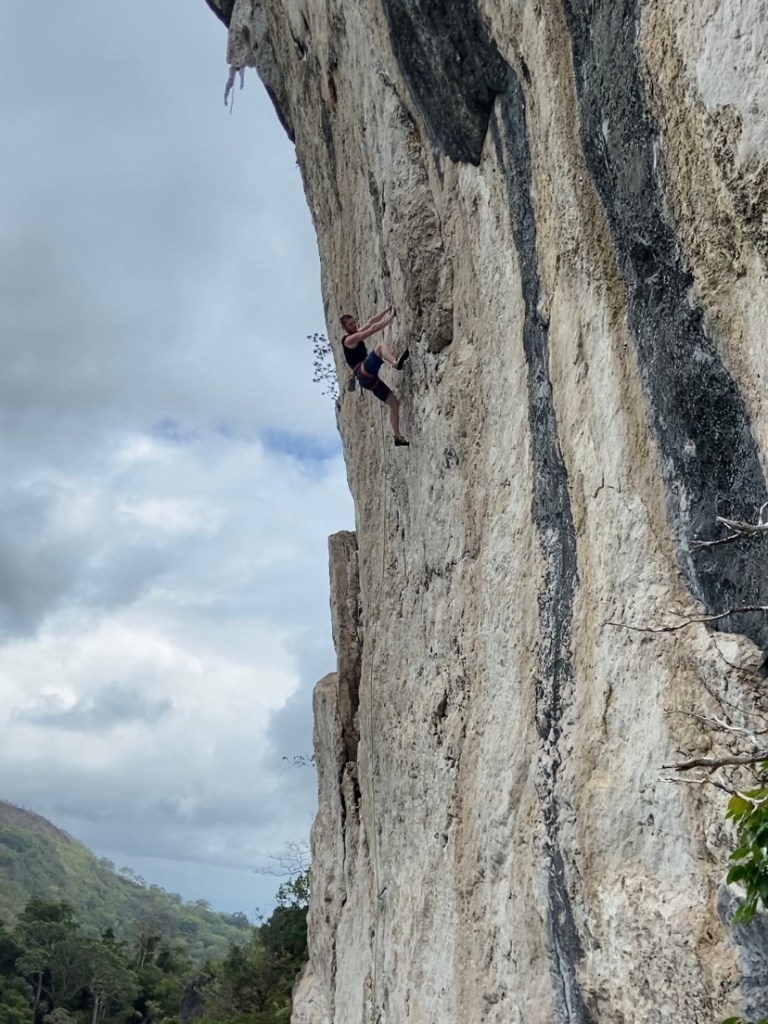
The crag at Igcabugao is very impressive and gives you a real ‘whoa’ moment the first time you lay eyes on it. The routes are generally steep wall climbs, much steeper than they look and also very exposed. You belay from a ledge and several of the best pitches start higher still after an intro pitch, from a hanging belay. The rock is beautiful and there is a bit of everything, pockets, jugs, crimps, tufas and slopers. The crag is in the shade after 10am and it usually receives a strong breeze which gives great climbing conditions and makes the routes feel extra exposed!
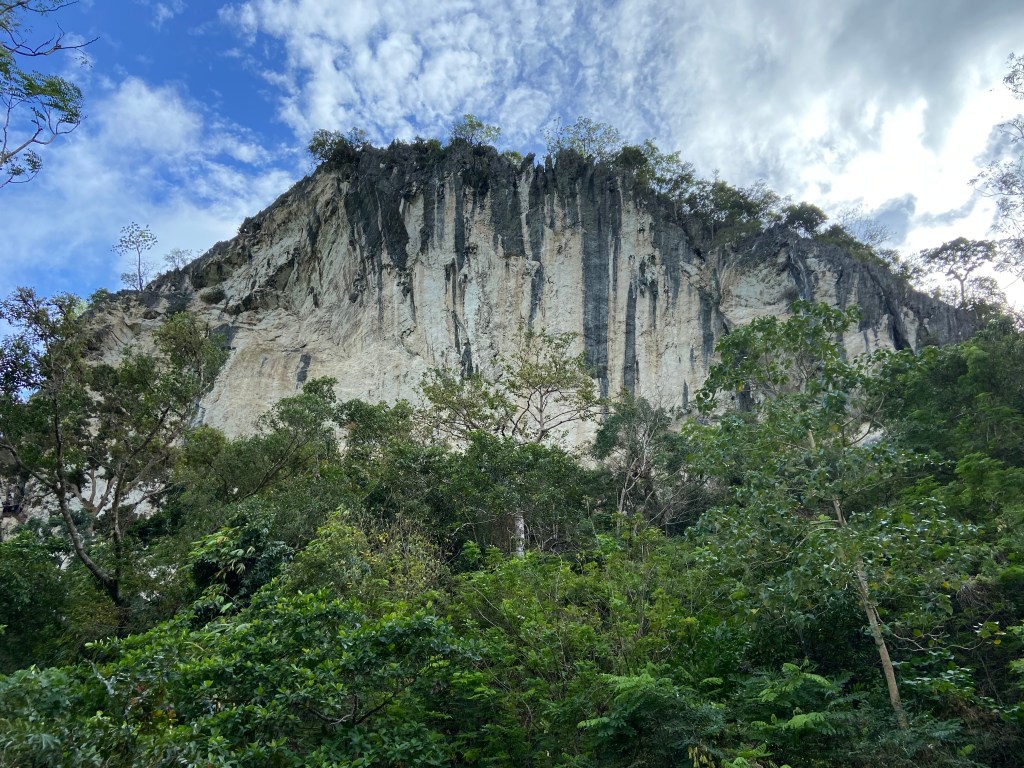
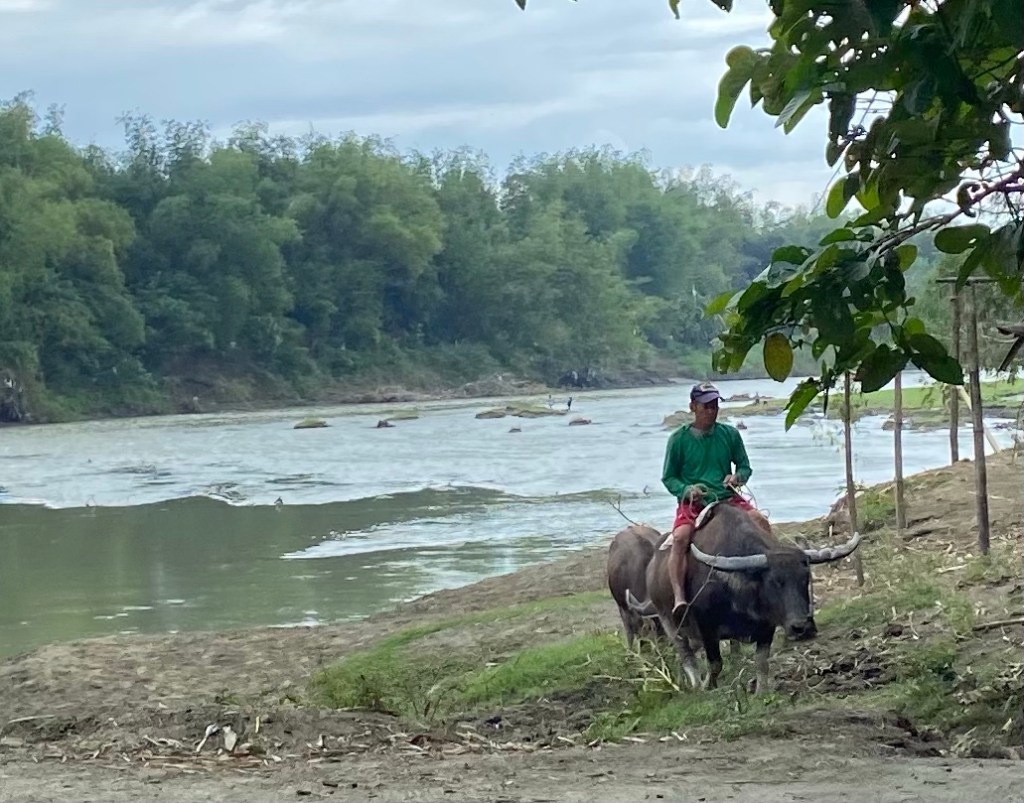
Below the main wall is another small sector down by the river, with some short, steep routes close to the waters edge. The river turns into a canyon further down, which is well worth exploring. There are numerous beautiful waterfalls and plunge pools as well as some impressive rock, caves and serious looking canyoneering terrain. When you are climbing at the main wall all you can hear is the roar of the river making its way through the canyon and you stare down on the tree canopy that is alive with birds and insects. The whole place has a really special ambience and it is such a wonderful environment to climb in.

There is accommodation for climbers at Dayhag, just a short walk from the crag. The process of getting there and arranging everything is a bit intricate, we would really recommend visiting the Adventure Central climbing gym in Iloilo City where you can meet friendly local climbers that can give you the most up to date information and recommendations. When you get to the crag, the locals are all very kind and happy to see you there. The area receives very very few foreign visitors and has a perfect local and authentic atmosphere. Steaming around the countryside on a motorbike, meeting new people, great scenery and wonderful climbing – Igbaras really felt like the complete package.
Dingle
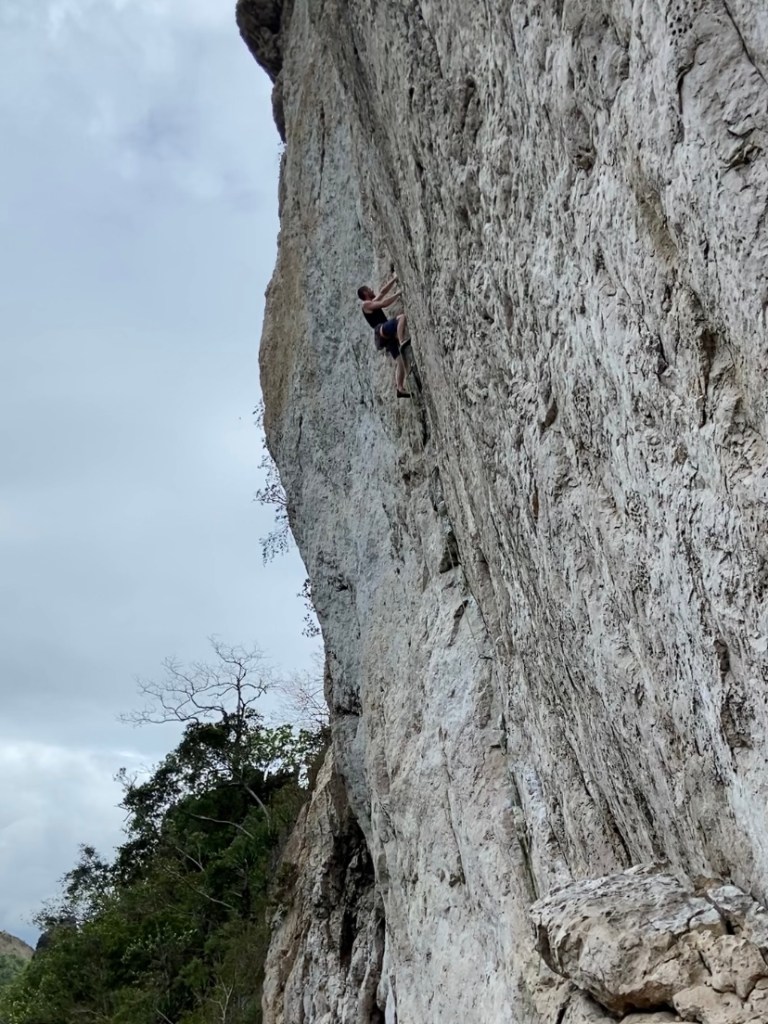
Dingle is the other main climbing area on Panay, and it is definitely worth the effort to go and visit. Usually, getting from Dingle town to the crag is quite fast, but as a typhoon has destroyed a bridge there is a lengthy and complicated detour. As well as this you must visit a national park office to pay a fee as well as the Barangay Caguyuman outpost to sign in. As with Igbaras, visiting the Adventure Central climbing gym in Iloilo City to get some up to date information from local climbers is a good idea. The guys at the gym were really kind to us and were enormously helpful in giving tips on the best way to get there.

Once you’ve made it that far, you start the approach through a beautiful cacao grove, which gradually turns into jungle. The area seems so unlikely to have a crag it feels like magic when you finally see it. The rock is bright white limestone with lots of different features, including some giant stalactites. What makes it more unusual is the start of the crag is entirely undercut by a steep and poorly featured overhang, like a wave. This is bypassed by using bamboo ladders to reach the first holds. Be careful, you’ll need to move the ladders for each route and the termites have devoured some of them!

The climbing style is quite technical, the holds can be hard to spot in the light coloured rock and the routes can often feel sequencey. The crag is gently overhanging and has many vines and tree roots dangling from the top, at times it feels like climbing behind a curtain and really makes it feel immersive. The best example is ‘Chief Suave’, 6c+, which is a beautiful route. The jungle around the crag was full of life, we were treated to lots of insect encounters and it is a really lovely place to be. If you have the gear, it is also allowed to camp at the base of the crag, which would be a great way to enjoy the area even more.

Notable Areas We Missed
Where to even start?! There are absolutely loads of awesome crags in the Philippines, and a huge variety – from conglomerate bouldering to DWS on limestone karsts. We would really love to return to the Philippines one day to visit the areas we missed. Like we mentioned earlier, browsing on the Climb Philippines website and theCrag will give you a solid overview of what’s on offer. One of the most famous areas is the deep water soloing at El Nido on the island of Palawan, which is also one of the most popular tourist areas in the country. In all the areas we visited, you could count the number of westerners we saw or met on one hand! The climbing looks impeccable though, so we’re sure it is worth a visit.
One of the crags we were really gutted to miss was Kiokong on the island of Mindanao, a huge crag with loads of routes on beautiful white limestone. Likewise, in Luzon, Nagtipunan has some amazing looking tufas in a really cool location, right next to a river. These are just a few examples of places that caught our eye, but there are many, many more. The Philippines is a great climbing country and there are many dedicated Filipino climbers who are psyched to climb and develop new areas. We really loved each area we visited, no doubt the ones we missed are just as awesome. Don’t underestimate the quality of the climbing, it deserves way more recognition than it gets!
Rest Day Activities
Snorkelling
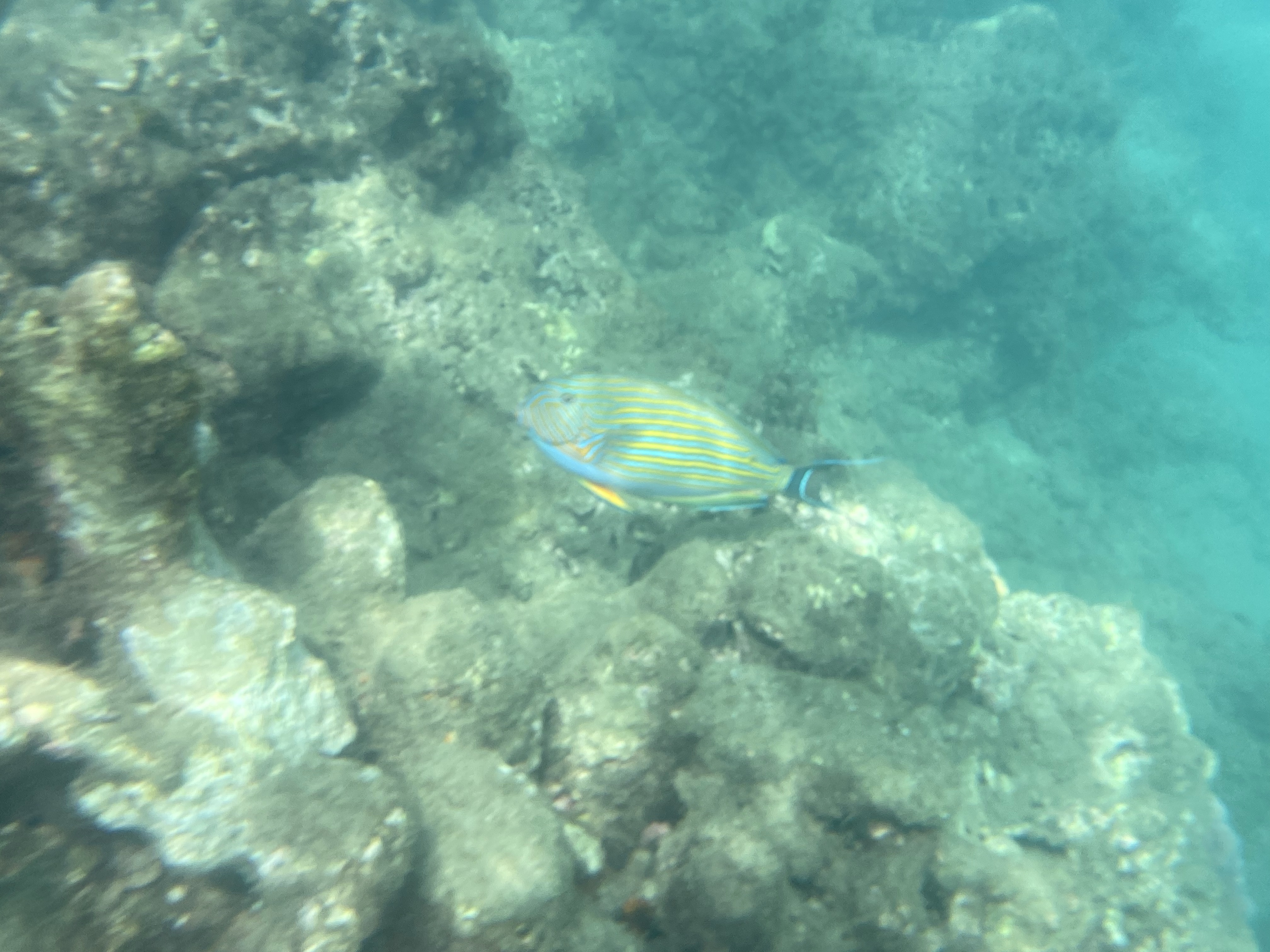
The waters of the Philippines are world renowned for excellent marine life and snorkelling is one of the easiest and most cost effective ways to experience some of it for yourself. On Cebu it is popular to swim with whale sharks, but having read reviews about this we decided it wasn’t a good thing. The practice of feeding the whale sharks disrupts their migratory and breeding patterns, and as they are already an endangered species they shouldn’t be put at further risk for tourism. Away from the Philippines’ most touristic beach spots like Boracay, there are an endless amount of quiet, peaceful and unspoilt areas of coast to enjoy. We visited a small marine sanctuary in San Joaquin province, on the island of Panay. No fishing or water discharge etc is allowed in the sanctuary so the environment is well looked after. There are small bungalows overlooking the sea and local restaurants in the area. It was a beautiful place to enjoy the coast in a tranquil and authentic part of the country.


Museums
The vast majority of visitors to the Philippines will pass through Manila at some point. The city doesn’t have a great reputation for tourists, but we actually liked it, certainly just as equally as other big cities in South East Asia. It is definitely worth staying for a few days, and during that time there are some superb museums, that are also free. The National Museum of Natural History and the National Museum of Anthropology are the best two, with loads of artefacts and excellent information. You will get a solid education of the Filipino people, their history and cultural traditions as well as an overview of the flora, fauna and geography of the country. While it is possible to visit both in a day, we preferred to visit them on separate days to avoid an information overload. Considering the size and quality of the museums it is surprising they are free, if you are in Manila they are not to be missed.

Historical Churches
The Philippines is a devoutly catholic country, with over 85 million followers, which puts it 3rd in the world by total number, behind Brazil and Mexico. Catholicism in The Philippines is quite different to other places. Here it provides a window into the history of the Philippines. Catholicism was imported by Spanish colonists, who first arrived in 1521. What thrives today is a blend of catholicism with traditional folk beliefs and traditions. In the San Agustin Church & museum in Manila there is lot of information about the conversion of the Filipinos from their original tribal religions. You can see lots of historical artefacts, and the San Agustin Church itself is the oldest stone church in The Philippines, constructed in 1607.
In Cebu City there is also Magellan’s cross, which symbolises the arrival of christianity in the country in 1521. The original has been encased inside another cross since 1835, to protect it from people chipping bits off, believing it had miraculous powers. We haven’t visited anywhere where Catholicism is followed as in earnest as in The Philippines. In fact, people even volunteer to be crucified and flog themselves as an act of religious devotion. Of course, not all Filipino Catholicism is like this, but it is a good demonstration of how important the religion is to the country.

Food
Adobo is by far the Philippines most famous dish, a classic meat stew typically made with pork or chicken. The meat is stewed in vinegar and soy sauce along with peppercorns and bay leaves giving a delicious flavoursome gravy.
Batchoy is a must for anyone visiting Panay. The dish originates from the La Paz district of the islands capital, Iloilo City. Batchoy is a noodle soup dish comprising of sliced pork, pigs innards & offal, chicharon and miki (egg) noodles. Batchoy is a delicious hearty meal with lots of flavour and a great contrast in textures.
Lechon is the magnificent spit roasting of a whole pig, the ultimate pork roast. Lechon is real treat and a standout classic filipino dish.
Sisig is an interesting dish made from pork jowl, ears and chicken liver that is fried with onions, chillies and egg. The dish gets a zesty citrus flavour from calamansi and it tastes different to what you may expect if you just looked at the ingredients. It is great that such a dish can make the perfect use of parts of the pig that people in western countries often throw away.
Silog is the breakfast dish of the Philippines, a combination meal that is based on garlic fried rice (sinangag) and egg (itlog) – hence silog. The dish will usually have another component, typically meat, that changes the name. For example, if it comes with corned beef it will be cornsilog or if it comes with hot dogs it is hotsilog.
Halo-Halo is considered the national dessert of the Philippines, the literal translation means mix-mix, which is exactly what it is. The basis of halo-halo is shaved ice and condensed milk, but what else is added just depends on what is available or what needs to be used up. Toppings include: jelly, ube jam, kidney beans, sweetcorn, nata de coco, flan, sugar palm fruit and much, much more. Halo-Halo is nothing if not diverse and you surely won’t eat the same combo twice!
Summary
It is safe to say that the Philippines more than surpassed our expectations. As a climbing destination we were blown away by the lack of visitors for the quality of routes that are just waiting to be climbed. It was a total pleasure to spend time in the Philippines, the people are very warm and welcoming, everywhere we stayed it felt like climbers were accepted with open arms. Even though we spent a good amount of time in the Philippines, it never felt long enough. It is somewhere we would love to revisit one day, and climb at the crags we missed out on. We had an absolute blast and can’t recommend the Philippines enough.
We write for pleasure and climbing is our passion. Our articles will never be paywalled. However, if you would like to help towards the costs of running the site or if you have found our content useful please consider contributing here. To read more about why your support matters, click here.
You can read more about the climbing in South East Asia here.
Or for useful travel tips for the region you can find our handy article here.
Relevant links and resources
https://danaoclimbing.org/contact
Information for the rock climbing in the Philippines
http://www.climbphilippines.com
https://www.thecrag.com/en/climbing/philippines
Cebu Rock Climbing guidebook
www.amazon.com/CEBU-PHILIPPINES-Rock-climbing-guidebook
Map of different climates in the Philippines
https://www.researchgate.net/figure/Climate-types-in-the-Philippines_fig8_294104577
 The Crag Journal
2 thoughts on “Climbing in The Philippines: A Journey through South East Asia”