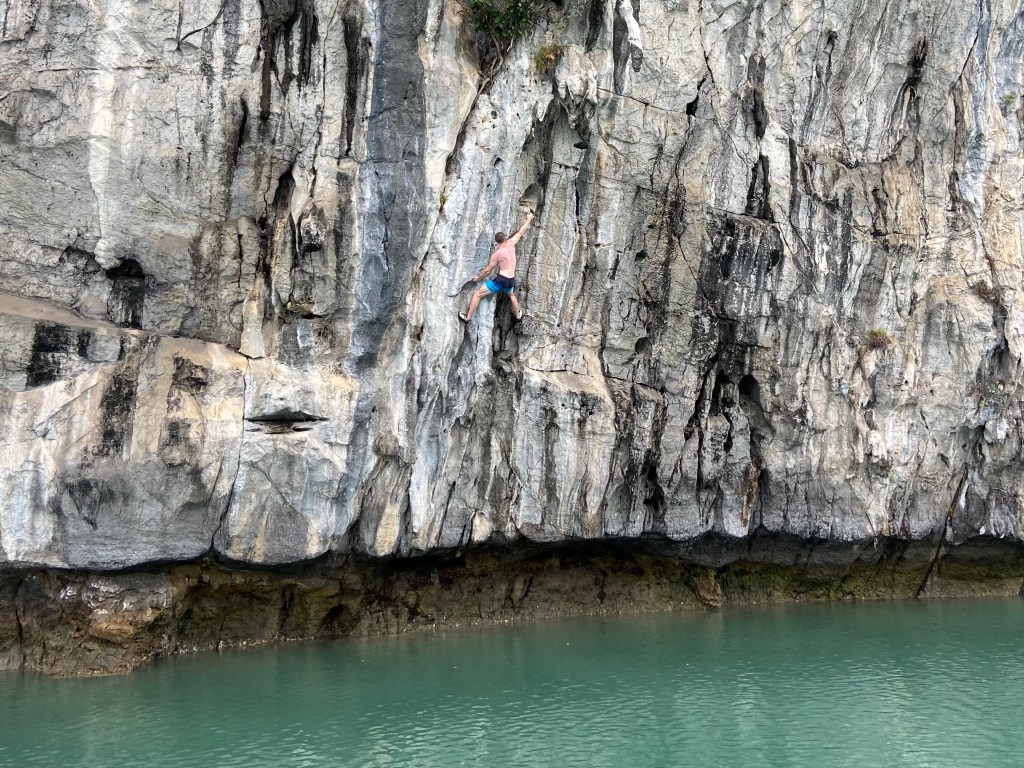
Deep Water Soloing (DWS) is one of the most enjoyable and unique styles of climbing. In many ways, DWS combines the skills from other disciplines of climbing and rolls them all together. In DWS, you’ll be climbing onsight or ground-up and just like in trad climbing, you’ll have to think about your fall, the trajectory and any potential consequences. If the rock is steep and the water is deep, you can really go all out, like you would when sport climbing. DWS can give you an amazing feeling of flow. When it comes to falling it is more like bouldering, you’re either going to top out, or jump/fall back to the very bottom. Falling off DWSing is obviously different to bouldering, but similar rules apply. You wouldn’t jump onto a bouldering mat with straight legs, or your knees might explode. Likewise, if you jump off into the water it is essential you make an effort to enter the water safely.
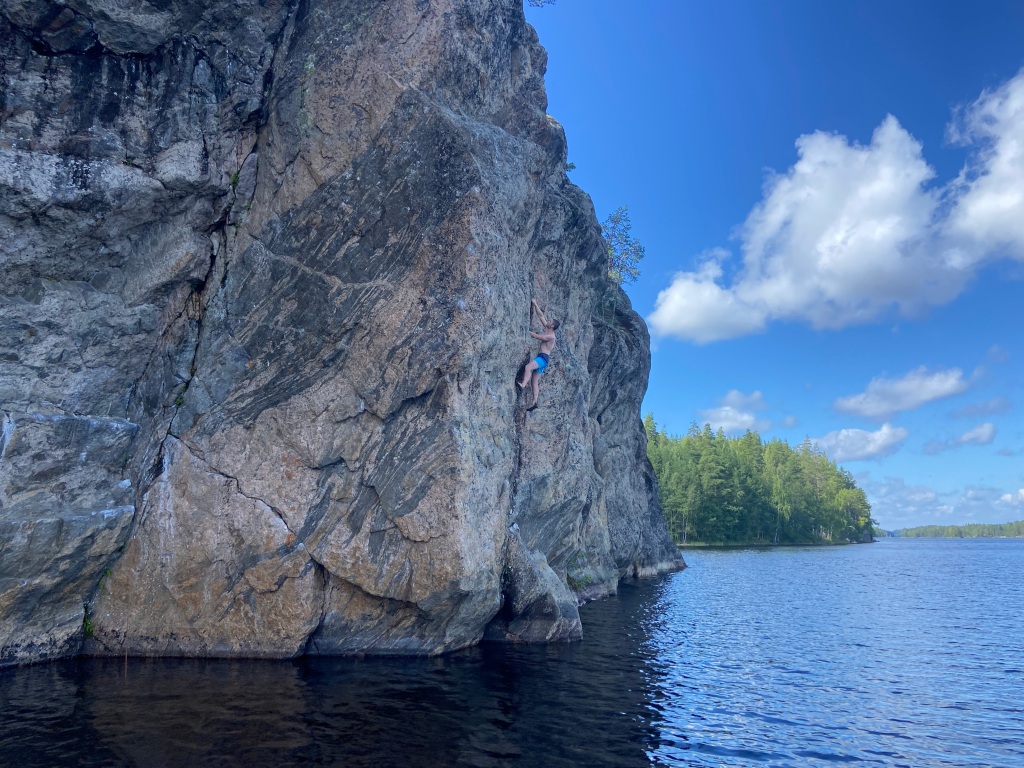
Below are a few hints and tips that will be helpful to experienced climbers who have not got any prior DWS experience.
Make sure you are a strong swimmer: This should go without saying.
Don’t go alone: Although it has soloing in the name, it isn’t something you should do when no one else is around. There are lots of potential risks, the biggest of all is getting knocked unconscious. If that happens and you’re on your own, you will probably drown. If you have a few friends, you can probably be rescued quite easily – this could be the difference between life and death.

Guidebook: Using a guidebook for DWS is a great way to get as much information as possible about the key safety elements like water depth, submerged rocks and entry/exit points. Of course DWSing without a guidebook is also fine, but will require more time checking the venue first, and is probably not a good option for your first time.
We write for pleasure and climbing is our passion. Our articles will never be paywalled. However, if you would like to help towards the costs of running the site or if you have found our content useful, please consider contributing here. To read more about why your support matters, click here.
Tides: A fairly obvious consideration. Some venues are safe at low tide, while others are barely safe at high tide. The guidebook will tell you the specifics of each venue, once you know, make sure to check the tides before you go.
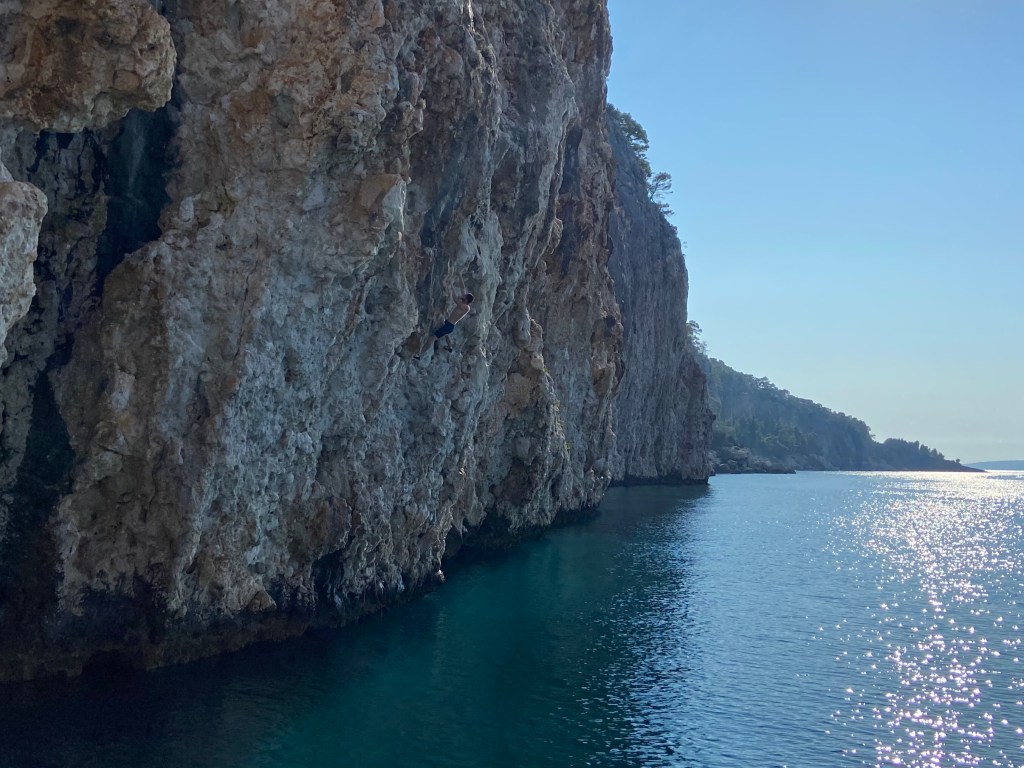
Check the exit route: Make sure you know how you’re going to exit the water if you fall, before you start climbing. It may be a swim back to a boat, a short easy climb you know you can do or a swim along the coast to a beach. Just don’t wait until you’ve had a big fall to work it out.
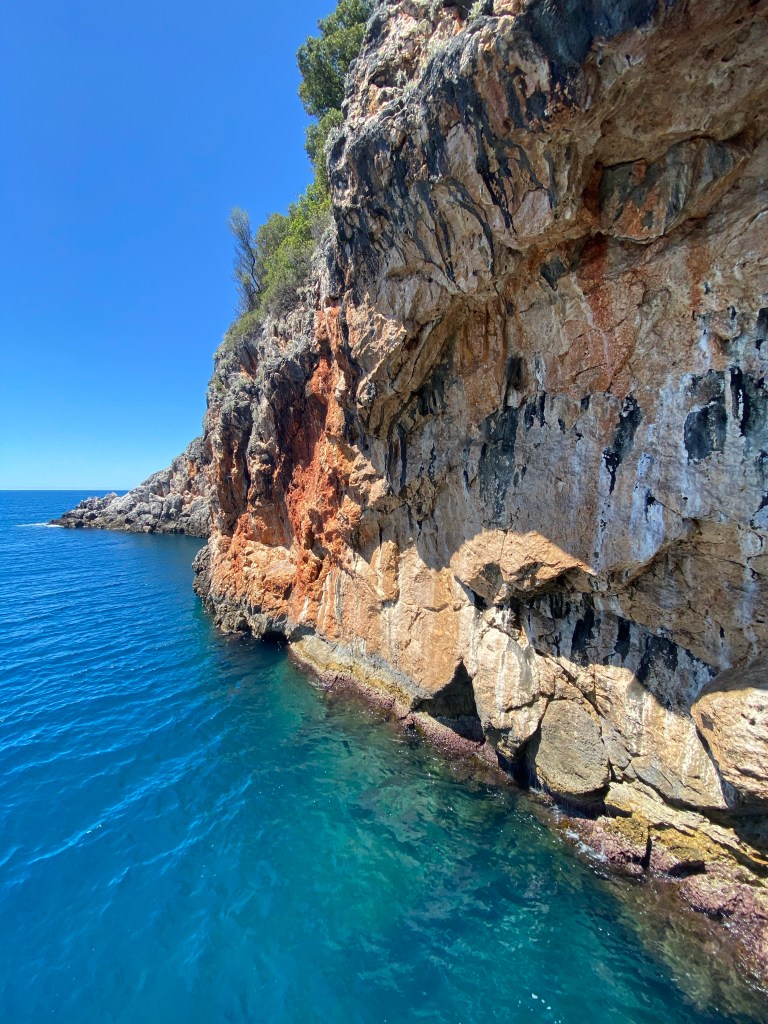
Wave conditions: If the water is choppy, there is a risk that a wave could smash you into the bottom of the crag after a fall. Waves can be extremely powerful and colliding with the crag could easily knock you out. It is wise to avoid climbing on windy days where the water is particularly choppy.

Practice falls: If you haven’t been DWSing before (or even if you have!) falling can be quite intimidating and scary. Taking practice falls will help you learn to fall safely and simultaneously help boost your confidence climbing higher above the water. The best way to fall is like a pencil, with legs straight and arms down by your side. We like to start every session with a few low and easy practice falls to get used to the sensation and make sure you are ready to take bigger falls.
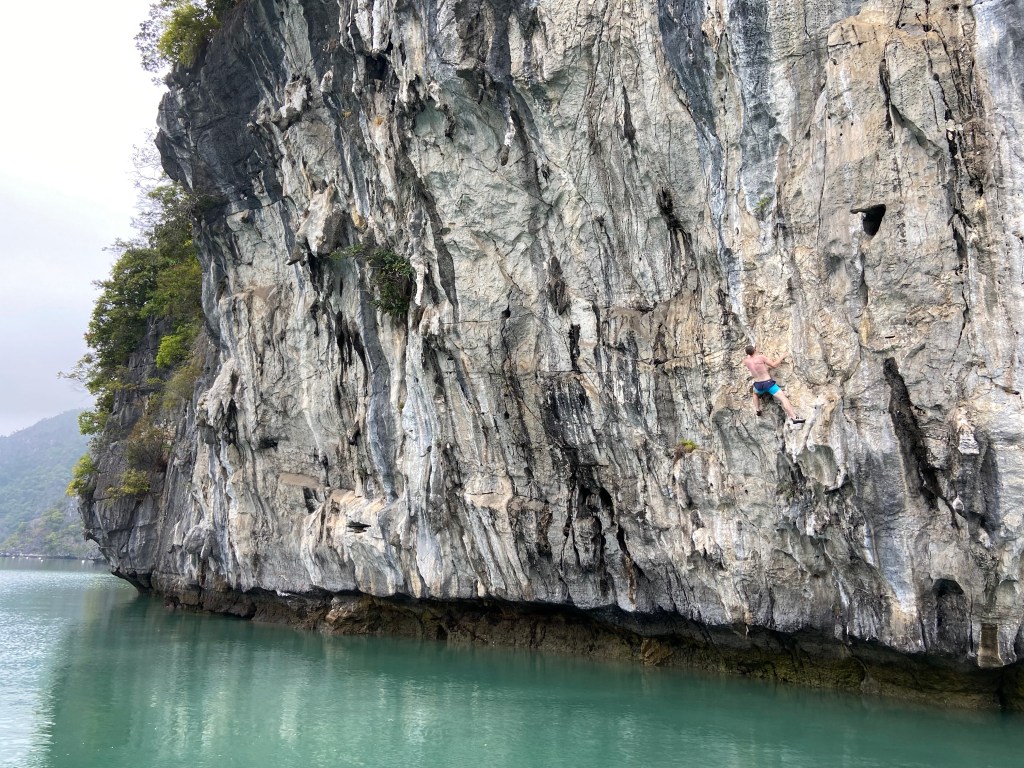
Water temperature: Depending on where you are, the water temperature can be a major consideration. In somewhere like Thailand, you need not worry. However, if you happen to be DWSing in Scotland on a sunny spring day, it might be crucial. Jumping straight into deep, cold water (anything below 15 degrees) could put you at risk of cold water shock and potentially drowning. If the water is a bit chilly, go for a swim first to see how cold it is and become acclimatised to the temperature.
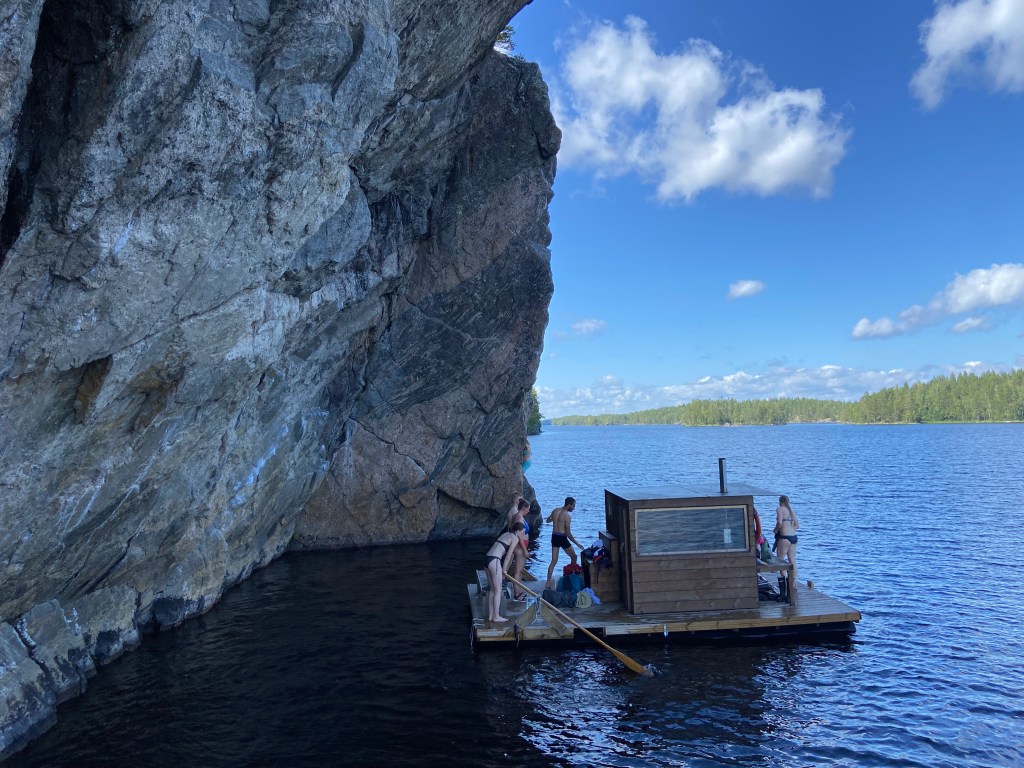
Watch out: If you happen to be climbing at a busy venue, never climb or swim underneath any other climbers, if they fall off they could hit you and injure both of you. This is common etiquette that goes as deep as indoor bouldering, however not everyone will follow this. With that in mind, it is worth keeping an eye out even if you are the highest climber (who should have priority).

Shoes: It’s a nice luxury to have a few different pairs of climbing shoes for DWS, but it’s far from essential. If you have several old pairs of rock shoes it’s a big bonus, but by no means a necessity. For most people, starting each route with bone dry shoes is probably not what will make the difference between success and failure. We take an old towel, specifically for drying shoes with. The uppers will remain wet, but you can get the rubber dry easily and that is what matters the most. It is worth washing your shoes with fresh water afterwards to get the salt off.
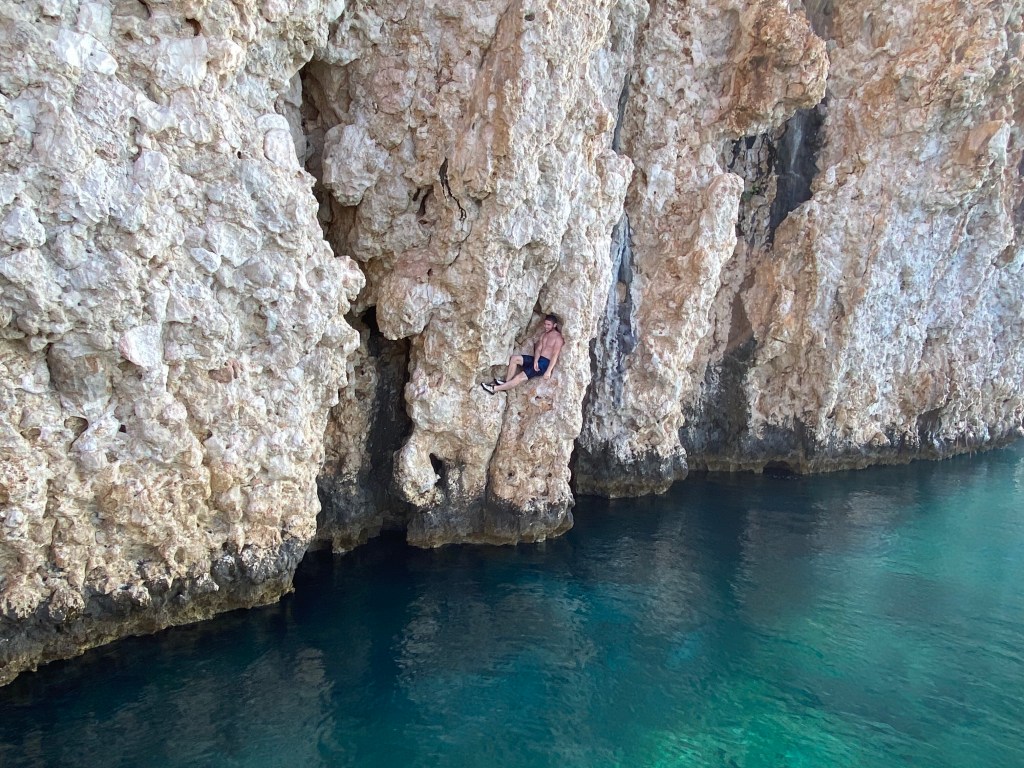
Chalk: When climbing by the sea, on often greasy rock or unbrushed holds, chalk is massively helpful. There are several different ways to solve the problem of wet chalk every time you fall in:
- Multiple chalk bags is a good option, although we don’t think it is worth buying more just for DWS. Chalk bags are very simple and easy to make, and can be hand stitched with some scrap fabric and a needle & thread. Try and use a piece of old gear made of lightweight synthetic material that will dry quickly. Only put one nugget of chalk in the bag each time you set off, to avoid wasting loads each time you fall in.
- Liquid chalk is an easy and relatively cheap option. It works fine, although you will notice it wear off if you’re doing a lot of moves, particularly if you have sweaty skin.
- Chalk on the back of your forearms is a crafty and effective solution. Simply rub a decent layer of chalk over the back of each forearm and you can chalk up as you go by rubbing your fingers on the back of the opposite arm. This works especially well when combined with liquid chalk, as you can start to use the arm chalk when the liquid chalk is starting to fade.

Summary
Hopefully these tips show that while DWS does carry some risks, it isn’t the preserve of elite climbers and can be accessible to anyone with the right preparations and precautions. Personally, we think DWS is one of the most fun and enjoyable types of climbing, something that every climber should try at some point. Perhaps the best part is that most climbers will be able to enjoy DWS without needing to buy any extra gear, something that couldn’t be said for someone wanting to start trad or winter climbing! As DWS has grown in popularity, more and more areas have been developed and there are a huge amount of cool places to choose from. Find and area you’re psyched on and go and try it out, it may be the most fun you’ve ever had on rock!
We write for pleasure and climbing is our passion. Our articles will never be paywalled. However, if you would like to help towards the costs of running the site or if you have found our content useful please consider contributing here. To read more about why your support matters, click here.
Relevant links and resources
https://thecragjournal.com/2021/09/23/climbing-in-albania/
https://thecragjournal.com/2021/11/04/a-croatian-climbing-roadtrip/
https://thecragjournal.com/2023/09/01/climbing-in-finland-a-nordic-roadtrip/
https://thecragjournal.com/2023/05/01/climbing-in-vietnam-a-journey-through-south-east-asia/
 The Crag Journal