Namibia is one of the world’s most sparsely populated countries, renowned for its harsh but beautiful desert environments. For climbers, Namibia is one of the better known countries in Africa, with several climbing areas to choose from. Whilst Namibia is a fairly large country, the climbing areas are mostly quite close together, in the central part of the country, on a plateau sandwiched between the Namib desert to the west and the Kalahari desert to the east. We enjoyed 3 weeks in Namibia, spending almost all of that time camping in the desert, which is a really great way to experience the stunning natural environment. One of the best things about the country is you will be outdoors virtually the whole time, it is a great destination for nature lovers.
Guidebooks for Climbing in Namibia
Affiliate Disclosure
We have an affiliate partnership with Climb-Europe.com, which means we receive a commission if you buy a guidebook via one of our links, at no extra cost to you. Currently, we only use affiliates for guidebooks from Climb Europe, not anything else. To read more, click here.
The new 2025 guidebook, Namibian Rock by Tony Lourens, is available now. This is a new and updated version of the old guidebook from 2010, which is all that was available for our trip, in 2024. No doubt the new guidebook builds on the old one and includes plenty of new routes and up to date information. We cross referenced the guidebook with theCrag which is a good source of up to date Spitzkoppe information. We also used the Namibia Mountain Club website which is very useful for the areas outside the Spitzkoppe, like Omandumba. Between these resources, you can find everything you should need for a climbing trip to Namibia.

Weather and Climbing Season in Namibia
For climbers, or anyone wanting to visit Namibia, winter is going to be the best time to visit. Southern Hemisphere winter runs from May to September and June, July & August are the best months of the year. As well as being the coolest months of the year, winter in Namibia is also the driest time of the year, making it a real no brainer. The vast majority of Namibia’s climate is classified as either hot desert or hot semi-arid, so even if you are visiting in winter, the midday sun can still be incredibly hot. Personally for us, even in the winter months, it was too hot to climb in the sun anytime after 10am. However, depending on your tolerance of heat you may fare better. Nighttime can get chilly, but we didn’t find it unpleasant and it was actually very nice to sleep in with a decent sleeping bag, especially compared to the daytime heat.
Below is a map of the different crags we climbed at in Namibia so you can see where they are in relation to each other.
Climbing Areas in Namibia
Spitzkoppe and the Pontoks
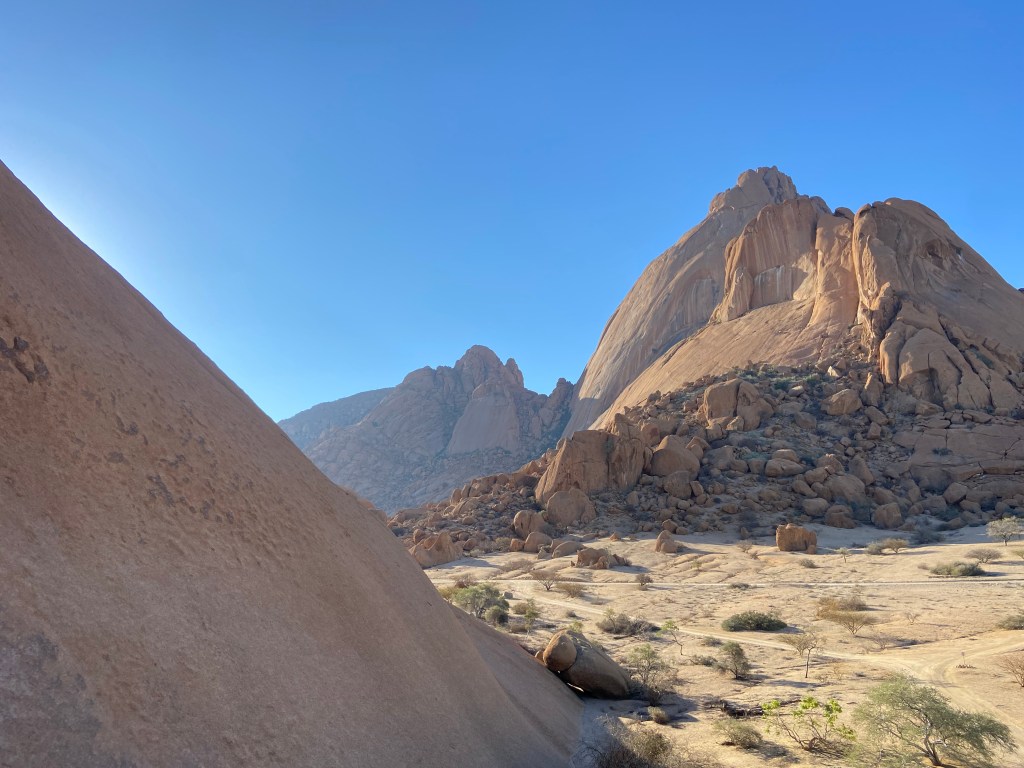
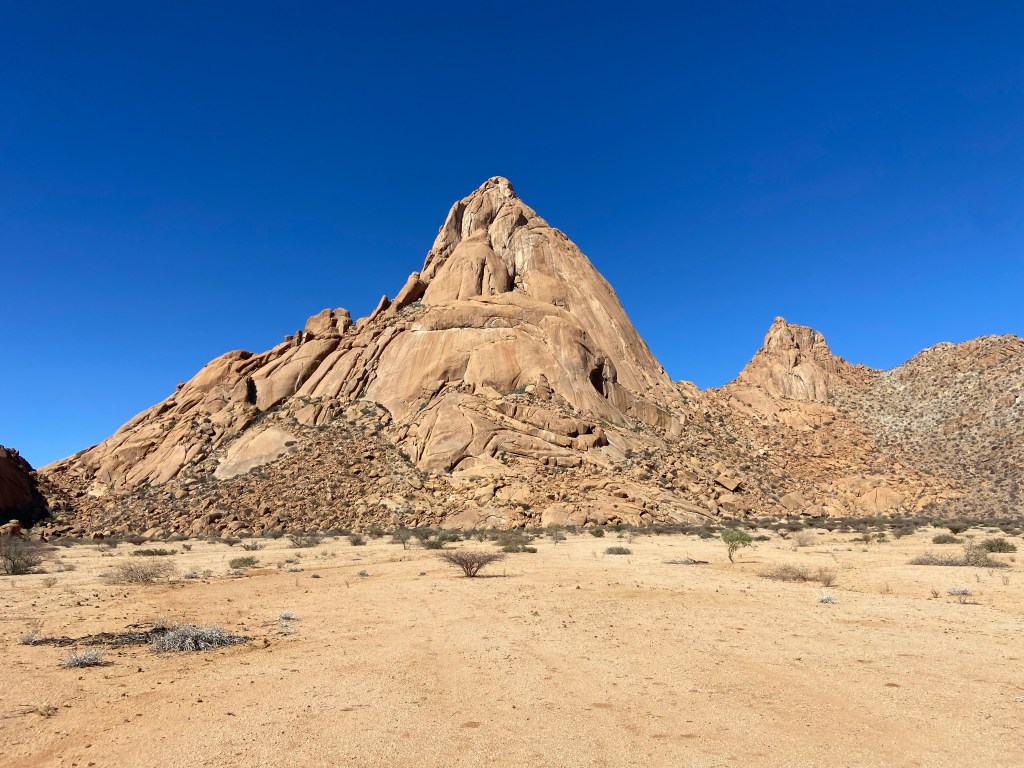
Spitzkoppe and the Pontoks, often just referred to as Spitzkoppe, is the most famous and most popular climbing area in Namibia. Climbers have been visiting Spitzkoppe for a long time, the first ascent of the main summit was way back in 1946. The area is incredibly beautiful, with pointed summits and smooth golden slabs rising straight out of the desert. Despite the dry and inhospitable nature of the desert, the area is actually full of life. We encountered klipspringer, the unique dassie rat (not the same as a dassie), giant plated lizards and southern yellow hornbills to name just a few. Somehow these beautiful animals seem to thrive in Spitzkoppe’s environment.
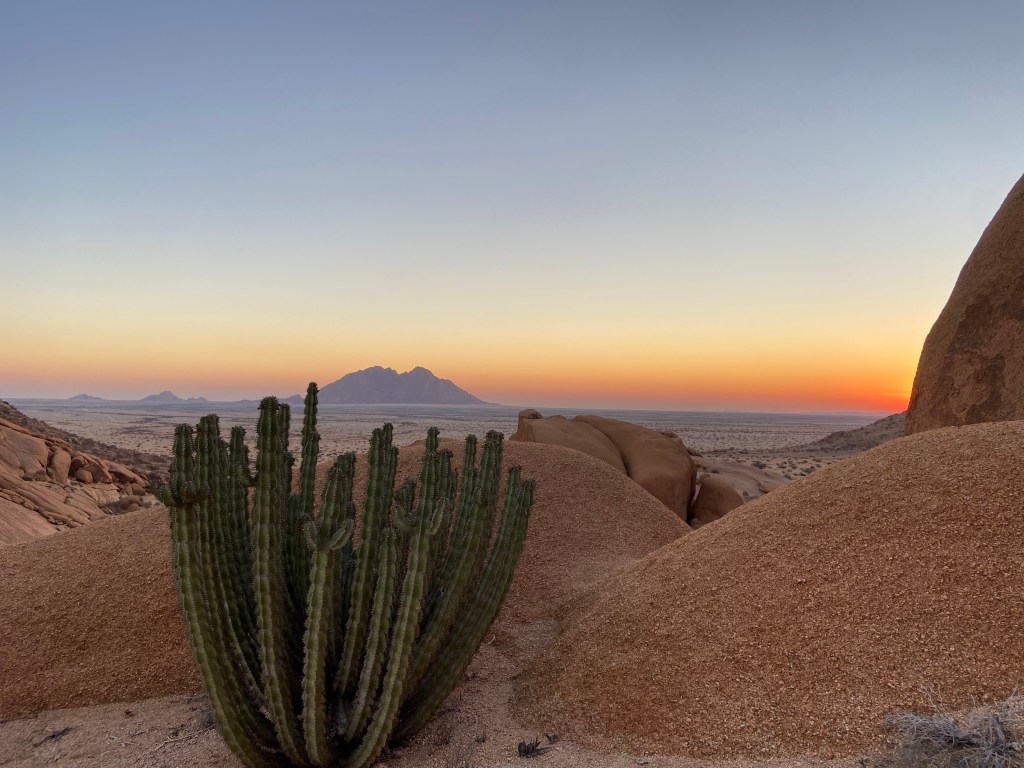
If you’re wanting to climb at Spitzkoppe then it’s best to camp at the Spitzkoppe Community Rest Camp. It is worth bringing your own tent, stove and everything else you need with you. Some places online make the area out to be so unbelievably remote that you must be prepared for armageddon, but this isn’t the case. There are showers and a restaurant at the rest camp entrance! It is remote in the sense you’re a long way from the nearest phone shop or dentist, but not so remote that you can’t get a beer and a pizza 30 minutes after climbing – you should still bring all your groceries with you though. That said, the camping is absolutely superb. The pitches are spread out from one another and each have their own fire pit and long drop toilet. You can pick a pitch down a dead end track so you will be out of sight and sound of anyone else, free to enjoy the stars and your campfire in private. We spent 11 nights camping at spitzkoppe and it was a wonderful experience. Remember to consider wind direction and shade for your tent spot!
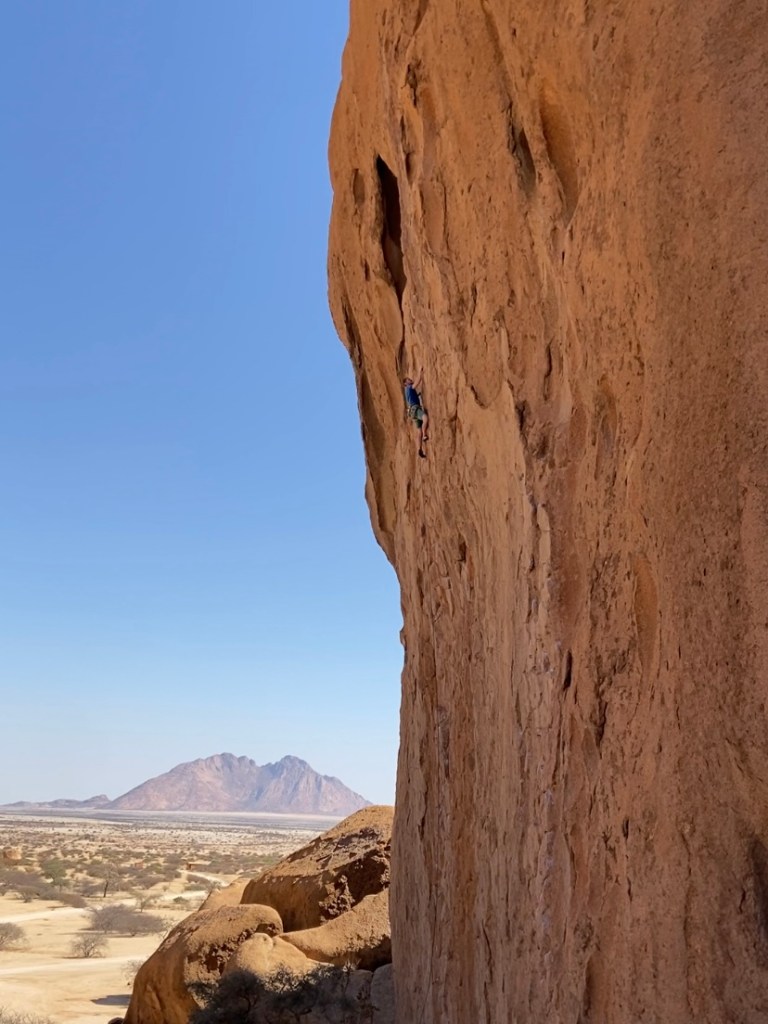
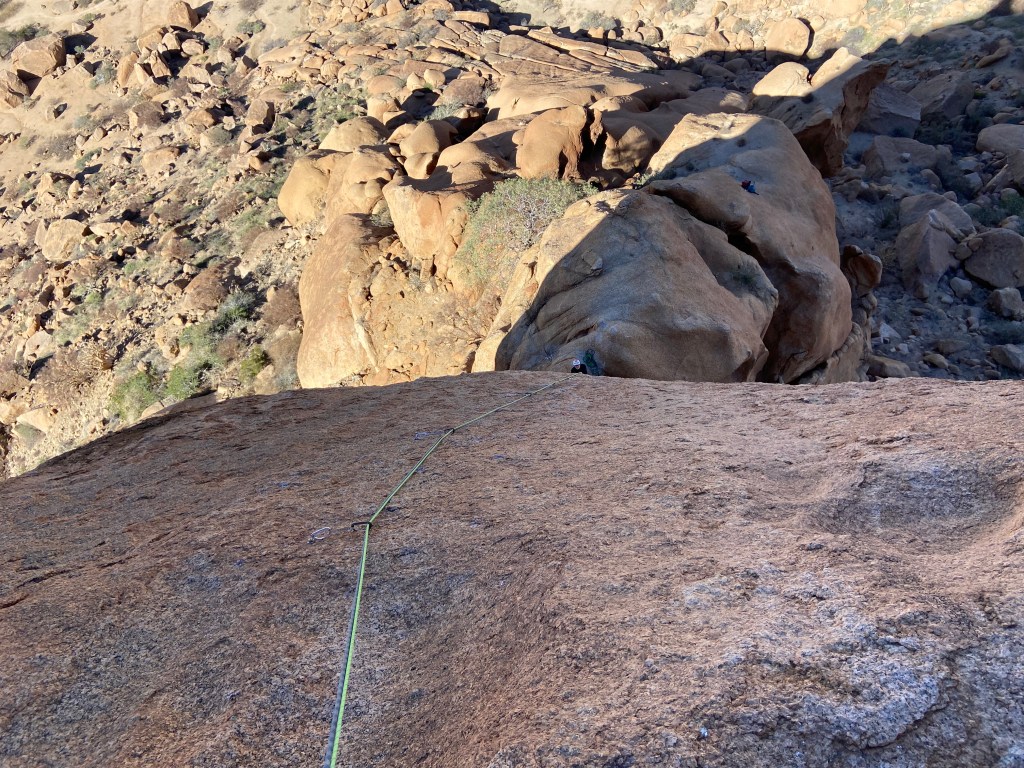
Climbing wise the Spitzkoppe is somewhat of an acquired taste, one that perhaps we never really acquired. Firstly, we feel we must be honest about the rock quality, whilst it is visually beautiful, it is crumbly, friable and often hollow – it is effectively low quality large grained granite. The routes are also bolted quite sparsely and there are lots of big runouts. The bolting alone is not a deal breaker, but it becomes distinctly less pleasant because of the rock quality. It has to be factored in that the vast majority of routes at spitzkoppe are slabs and doing 6 to 8 meter slab runouts with crumbly footholds is not really what floats our boat! That being said there are sections of good quality rock out there – routes like ‘La Ligne Blanche’ or the Dinosaur Rock sector are significantly better than some of the other areas like the Sugarloaf, which we found to be very flaky.
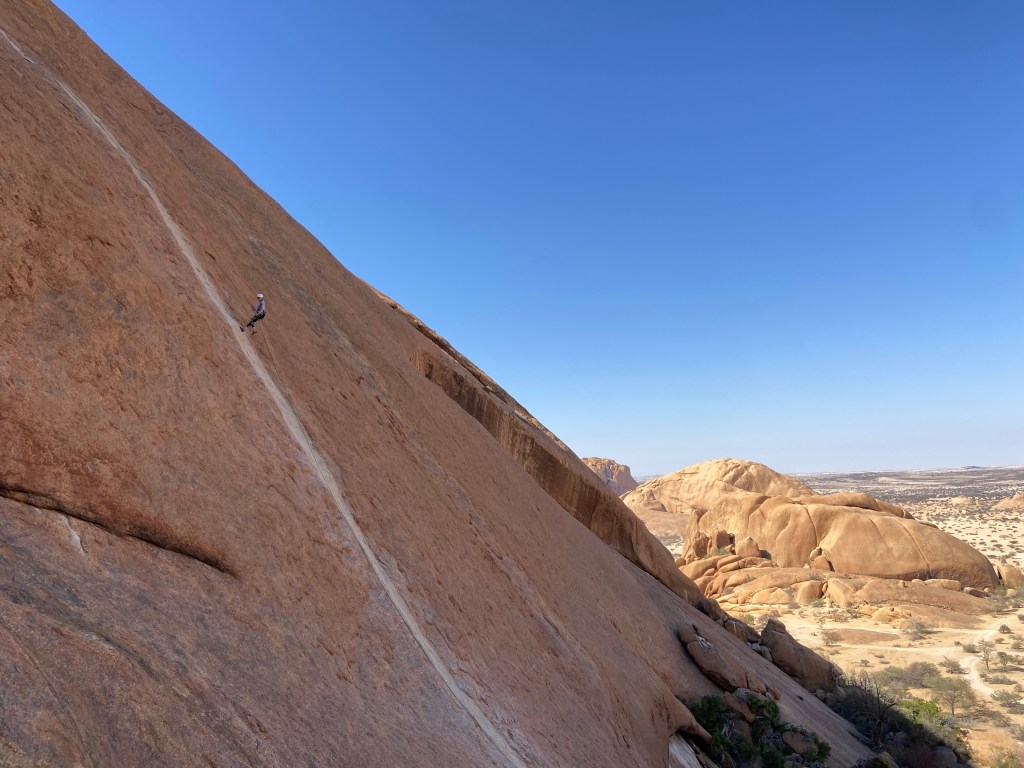
We don’t want to be dramatic about it, but we felt that the rock quality in particular was oversold both in the guidebook and online. There is no reason the Spitzkoppe can’t still be an awesome place to climb, but it is important to be realistic about the pros and cons of any climbing area. The views, the wildlife and the experience of being at the spitzkoppe is still wonderful, just don’t go expecting ‘A’ grade granite. Had we gone with no expectations we would have thought less of it, but we were under quite a different impression before we arrived. We still very much enjoyed some of the routes here, there are many striking lines and features to catch your eye. Climbing in the desert is a great privilege and it really is a stunning place, just be sure to go with realistic expectations.
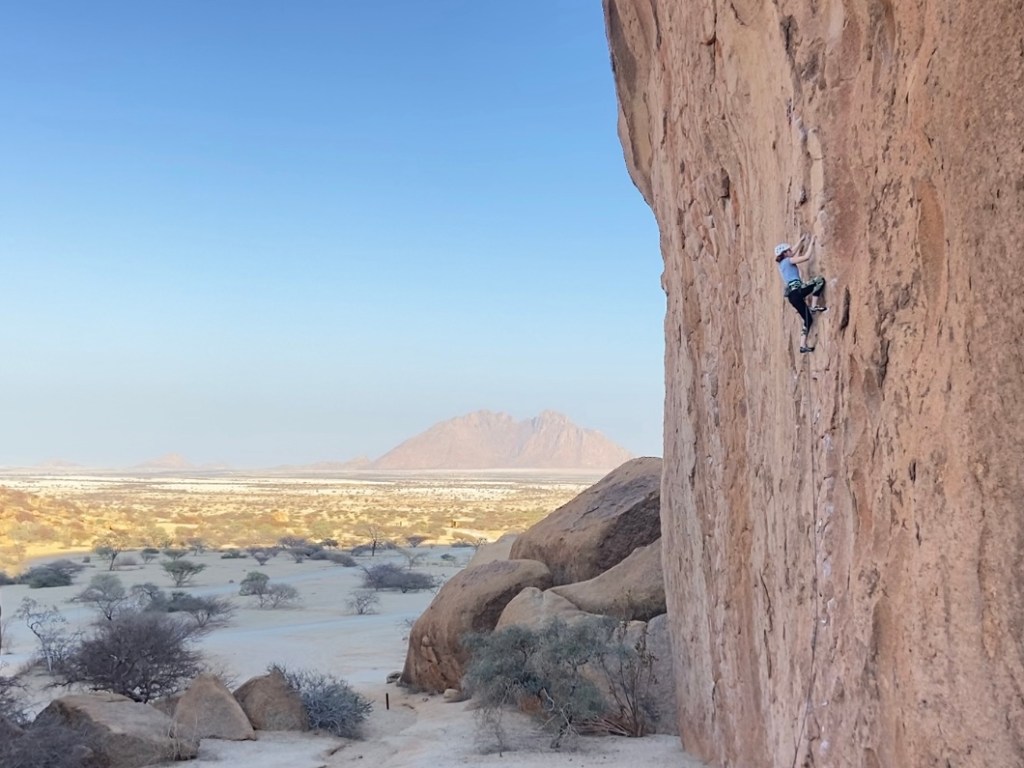
An interesting curve ball that surprised us was the grades, which we genuinely found to be quite soft. Normally these type of areas are known for sandbags, but we felt the opposite – we climbed a few 22s or 23s that could have easily passed for a 20 or a 21 in South Africa. Perhaps the reason for this is that falls on many routes could be quite risky and the routes can be mentally demanding, so the grades may have been adjusted to account for that. Compared to the similar (and in our opinion better) climbing at Paarl rocks in South Africa, the grades are definitely harder at Paarl!
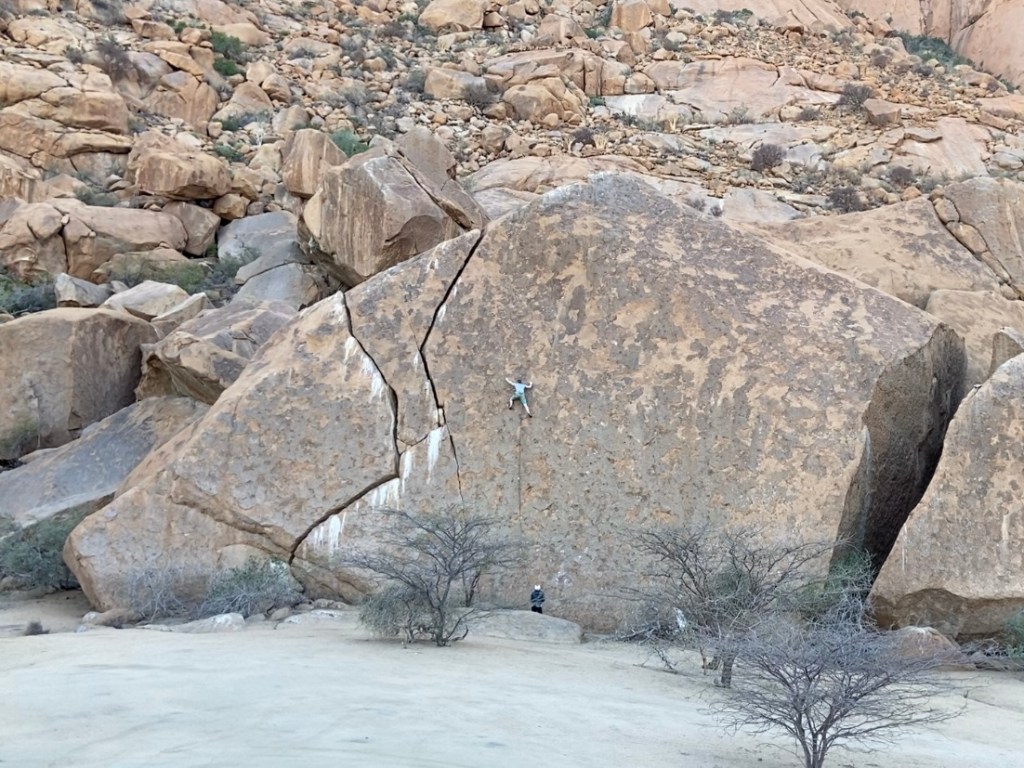
Spitzkoppe has around 190 routes from grades 10 to 29, the climbing ranges from short bouldery routes to long alpine adventures. We enjoyed our time at Spitzkoppe although subjectively it was a place we liked more for its unique beauty and stunning landscape rather than for the quality of the climbing alone. Whilst there are some great routes at Spitzkoppe, they can definitely be hit and miss. The environment, however, is a 100% awesome place to be.

We write for pleasure and climbing is our passion. Our articles will never be paywalled. However, if you would like to help towards the costs of running the site or if you have found our content useful, please consider contributing here. To read more about why your support matters, click here.
Omandumba
Omandumba was our personal highlight of climbing in Namibia, the area is simply stunning and the nature is really special. Omandumba feels very different to the Spitzkoppe, despite being relatively close. Whilst Spitzkoppe has mountains rising from the desert out of nowhere, Omandumba is like a valley completely encased by mountains. Omandumba is more like bush than the desert, and the wildlife is fantastic – giraffe, zebra, warthog and impala are all common sightings you will enjoy.
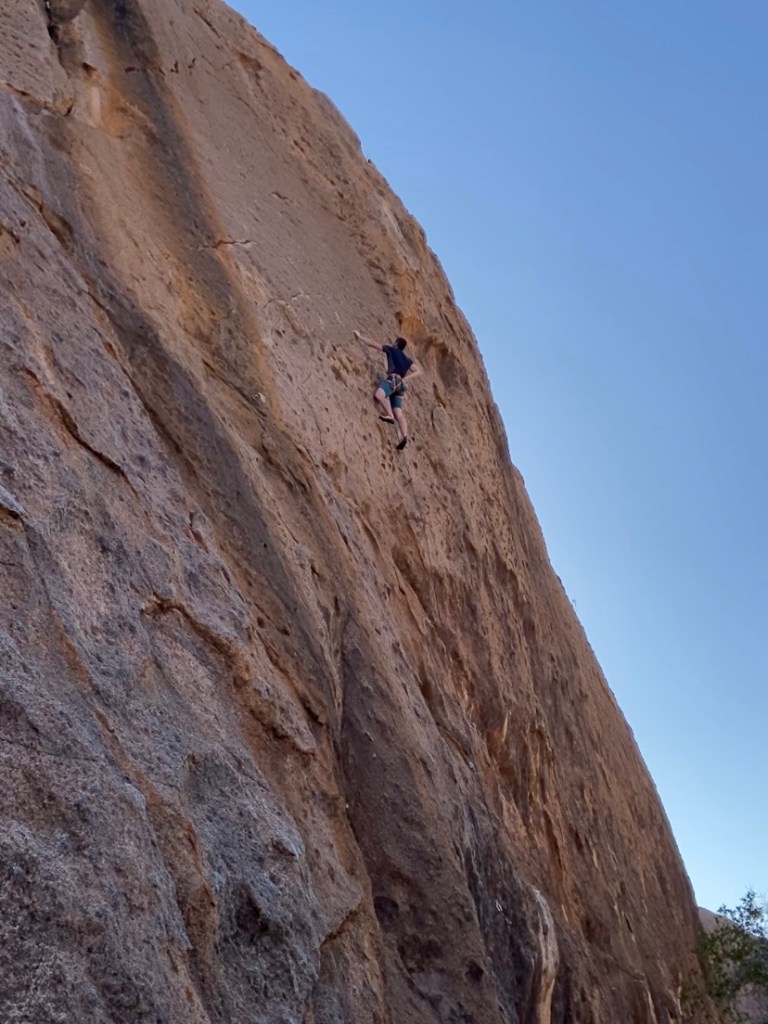
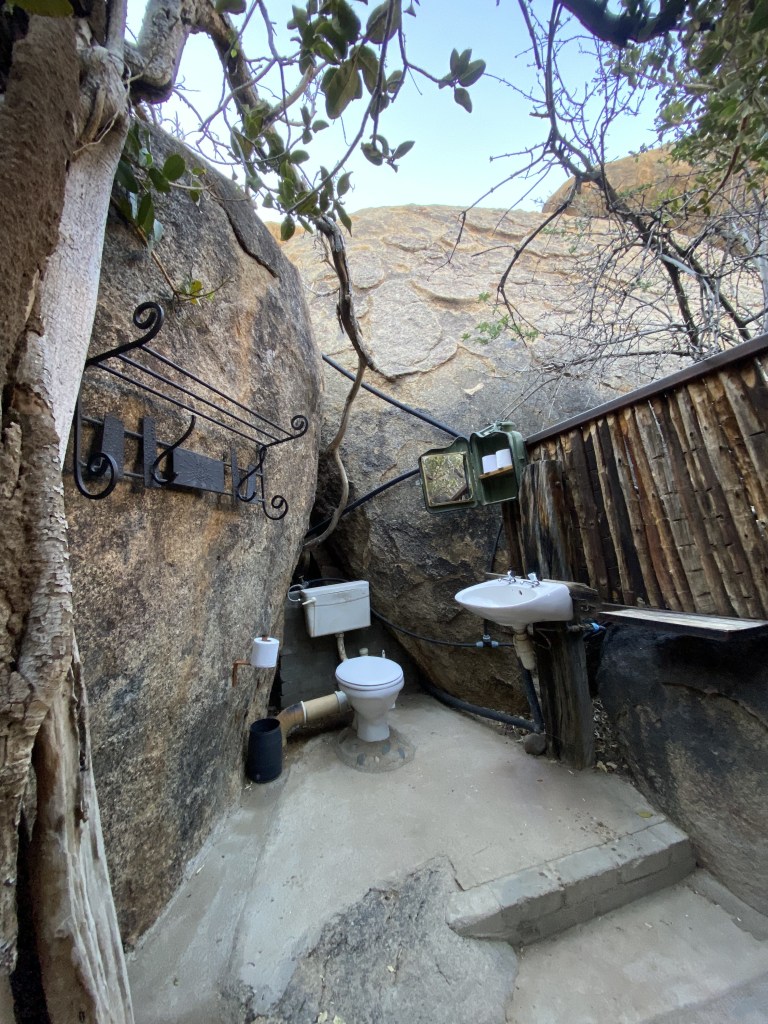
Omandumba is on a privately owned guest farm that welcomes climbers and is well equipped with some of the best camping you’ll ever do. The crags are spread all over the farm, with areas like the split apple, San and owl camps having several different sectors between them. However, the three elephants camp is the best of them all with beautiful views and easy access to the largest sector at Omandumba, Schattenwand. When you book the camp you are actually reserving the entire place, not just one pitch. This effectively means you have the entire valley to yourself as there is nothing else around. There is a flushing bush toilet and a wood fired boiler system so you can prepare your own hot showers!

Climbing wise, we found the rock at Omandumba to be generally better than at Spitzkoppe. There are far fewer hollow holds and on the whole the rock is more compact and far less crumbly. At Schattenwand the easier routes may have some loose holds, but the harder routes are really nice and have some wonderful and entertaining moves on them. The potential for more routes in the area is huge – the place is positively littered with crags and boulders.
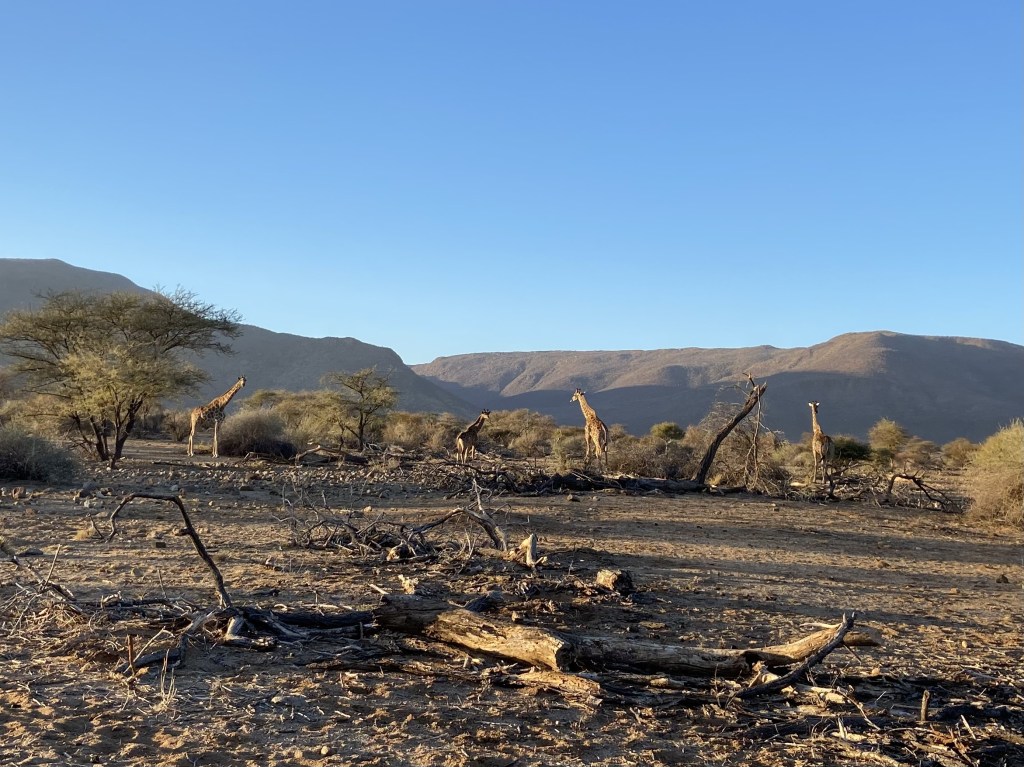
Omandumba has over 40 routes, from 15 to 27, and it is just an awesome place to be. Whilst it doesn’t have the multipitches that Spitzkoppe does, the unreal camping, better rock and even more beautiful views made it a winner for us personally. Sitting by the campfire, watching the baboons climbing up to roost and being the only people for miles around is a really special experience.

Swakop River
The Swakop river valley is a small sport climbing area close to Swakopmund. The valley is on the border between the Dorob National Park and the Namib-Naukluft National Park, so rest assured it is a beautiful place. The drive to get there is really interesting and takes you up the bottom of a dry riverbed, which clearly doesn’t get wet very often! There are loads of stunning rock formations along the way, although the rock quality on many of them is questionable. When you finally arrive at the main sector, Brauhaus Wand, it is surprising to see a crag that is relatively compact and also a completely different colour and texture to any of the other rock we saw in Namibia. Whilst the crag is still granite, it is a dark grey colour with many veins of quartz running through it, nothing like the golden granite of Spitzkoppe and Omandumba.

The rock is much finer grained and generally not friable, although some of the small crimps are at risk of snapping. The climbing is mostly off vertical and on small sharp crimps, which sounds similar to the other areas, although the style actually feels quite different. The Swakop River area has around 40 routes from grade 12 to 28, and whilst it is the smallest area we visited, it is still a fun place to climb in a beautiful and unique feeling area. It is also in a very handy location, easy as a day trip from Swakopmund, which is somewhere most visitors to Namibia end up passing through at some point.

If you find our content useful please consider subscribing:
Camping & Rental Cars
We normally don’t include this type of information, but we thought it would be particularly useful here as the situation in Namibia is relatively uncommon. Firstly, you will 100% want to bring your own camping gear: tent, sleeping bags, liquid fuel stove – the whole works. This is cheaper and better than renting it and also far preferable to a rooftop tent as you can leave all your stuff set up and simply drive off at will – no pitching up and down every time you need the car. For climbing, you will basically camp for most nights you’re in Namibia, so don’t forget anything! The environment is very enjoyable to camp in, spending nights by the fire and under the stars is a big part of the pleasure.
For cars, Namibia is a bit of a joke and pretty much every tourist you see will be cruising around in an enormous 4×4 that looks like a collaboration between Mad Max and Ray Mears. The cost of these is astronomical, but more importantly they are completely unnecessary, particularly for a team of two. The majority of Namibian roads are in very good condition and the few slightly rougher sections just need higher ground clearance, nothing extreme. Driving in sand is the only time you’ll need an actual 4×4, but none of the climbing areas we visited, other than Swakop River, necessitated driving in sand, so 4×4 is not required. We rented a Suzuki Jimny, which was almost 70% cheaper than a Hilux! Even the Jimny felt overkill to us, basically any car with more clearance than the average hatchback or sedan, something like a Dacia Duster would have done the trick perfectly.
Rest Day Activities
Etosha National Park
Etosha is Namibia’s premier national park, with the best opportunities for big game viewing in the country. Etosha is situated around the pan of a large dried up lake, which is an interesting sight in its own right. The area is incredibly dry for much of the year and game viewing really revolves around the water holes that are dotted around the park. The landscape can be very barren, but the water holes are full of life – you can often see over 6 species of mammals all vying for a spot by the waters edge. Some of the rest camps have water holes that you can walk to from within the campsite, allowing for 24 hour access, which gives you a great opportunity to see a wider variety of animals but without having to pay for expensive game drives. Etosha, like the Kruger National Park in South Africa, allows for self drive. This is one of the best parts of visiting, allowing you to explore at your own will and enjoy the quiet corners of the park. The camp and entrance gates are shut for self drivers during the dark hours, however the campsite water hole areas mean you still have great spotting opportunities.
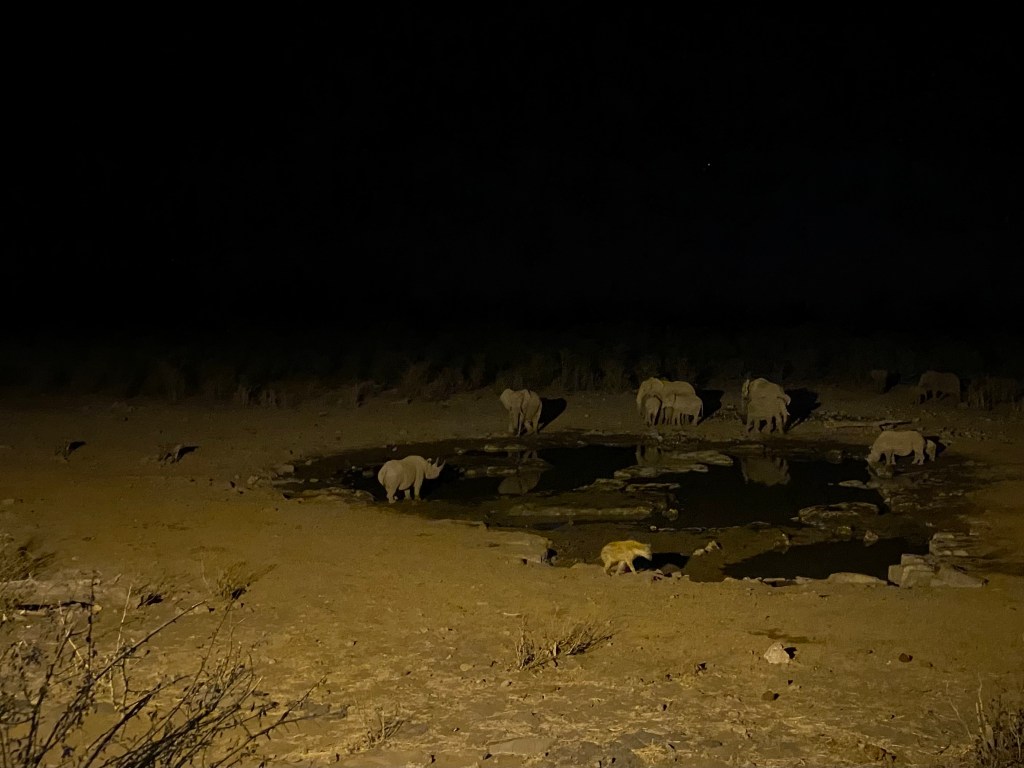
We stayed in Etosha for 3 nights, which felt like more than long enough to enjoy the amazing wildlife. The park entrance fees are relatively cheap at N$ 150 (€7.50) per person per day for foreigners (plus N$ 50 per car per day). However, the accommodation is absolutely extortionate, so it is highly recommended to camp rather than stay in a bungalow. The camping is still pricy at N$420 (€21) per person per night (season dependant) but it allows you to stay inside the park, which is far preferable to staying outside. We spent 3 nights at the Halali rest camp, which is more or less in the middle of Etosha. We decided to stay in the same camp to avoid having to pitch our tent down every morning – which is often when the best game viewing hours are. Etosha is significantly smaller than a park like Kruger, so it is possible to drive pretty much anywhere in the park and back to Halali in a day.

We really enjoyed visiting Etosha, it felt like a completely different experience to the Kruger National Park and although it is a smaller and less diverse park, we were still very impressed by the place. Namibia has the world’s 3rd largest population of black rhinos, after only South Africa and Zimbabwe. Many of these are in Etosha, where you stand a good chance of seeing them. We were delighted to see 9 different black rhinos in Etosha, which was beyond amazing. By contrast we saw none in Kruger – but we saw several different groups of lions there and saw not one in Etosha. We are really glad we decided to visit both, we almost didn’t as we thought it might be too samey. That wasn’t the case at all and we would recommend visiting Etosha even if you’ve been on a safari elsewhere previously.

Learn Some History
Namibia is often not covered in your average history lesson, despite being the site of the first genocide of the 20th century, from 1904 to 1908. The genocide was perpetrated by the German empire, against the Herero and Nama people, whom are native to Namibia. The genocide is incredibly significant, both in terms of colonial crimes and the parallels it has with certain aspects of the Holocaust.
During the course of colonisation, native people such as the Herero and the Nama had their land stolen from them, which in turn had a huge impact on their livelihoods which relied heavily on grazing land for cattle. This understandable discontent led to an uprising against the colonists. This reached boiling point in early 1904 when a Herero attack killed around 150 Germans in an attack on a garrison at Okahandja. The majority of those killed were men, and the Herero leader Samuel Maherero specifically forbid his soldiers from attacking women and children.
What followed was a carefully planned massacre by the Germans, which killed thousands in its initial offensive. The Germans then proceeded to chase the survivors deep into the desert where most died of dehydration or starvation, this brutality continued for months. If you had any doubts about the German’s genocidal intent, a quote from their general, Lothar von Trotha, will clear it up. He said: “Any Herero found inside the German frontier, with or without a gun or cattle, will be executed. I shall spare neither women nor children. I shall give the order to drive them away and fire on them.”
Any survivors left in the country went to concentration camps like Shark Island, to be used as slaves. The treatment of those in concentration camps was beyond evil and the conditions they lived in were so bad that as many as 80% of prisoners died – thousands of people. The Germans also conducted medical experiments on both living and dead people, as well as exporting their skulls to Germany to try and prove their theories of white supremacy. These incredibly sinister crimes have many similarities to the atrocities of the Holocaust, some 30 years later.
By the time the Namibian Genocide had ended, around 75% of all Herero people and 50% of all Nama people had been killed, with a death toll that could potentially be in excess of 100,000 people. Fast forward to the present day and it took until 2021 for Germany to officially recognise it as genocide. It is very important that the Namibian genocide is remembered and the suffering of those killed is not forgotten.
Summary
We enjoyed our time in Namibia, especially being outside in the desert for night after night. Climbing wise, there are lots of beautiful lines, but the quality of the climbing itself definitely falls short of what you’ll find over the border in South Africa. However, being able to climb in the desert environment is a wonderful experience, the crags are quite unique and there aren’t many climbing areas like Spitzkoppe in the world. The crags can be very varied, we climbed some great routes but equally some bad ones. Whilst Spitzkoppe is the star attraction, we personally much preferred Omandumba, for the better quality rock and the more tranquil setting – If we were ever back in the area again, that is where we’d go.
We write for pleasure and climbing is our passion. Our articles will never be paywalled. However, if you would like to help towards the costs of running the site or if you have found our content useful, please consider contributing here. To read more about why your support matters, click here.
Relevant links and resources
New Guidebook:
Affiliate Disclosure
We have an affiliate partnership with Climb-Europe.com, which means we receive a commission if you buy a guidebook via one of our links, at no extra cost to you. Currently, we only use affiliates for guidebooks from Climb Europe, not anything else. To read more, click here.
https://climb-europe.com/products/namibian-rock-climbing-guidebook-topo?bg_ref=QMscYZ3xQy
Old Guidebook:
https://www.freytagberndt.com/en/spitzkoppe-and-pontoks-a-climber-s-paradise.html
The Crag:
 The Crag Journal
I really enjoyed the article and love it if people visit my home.
a new guidebook for Omandumba and Spitzkoppe is in the making, hopefully being published in 2025.
on Omandumba there are around 150 routes, even up to 7 pitches.
Erongo Rocks, the neighbour Farm of Omandumba also has really good campsites and very good climbing.
LikeLiked by 1 person
Hi Christian, thank you very much for the comment, so glad you enjoyed the article! Really great to hear about how many more routes there are at Omandumba, it is such a beautiful place. Thanks for the tip about Erongo, we’ll be sure to check it out if we’re back in the area!
LikeLike