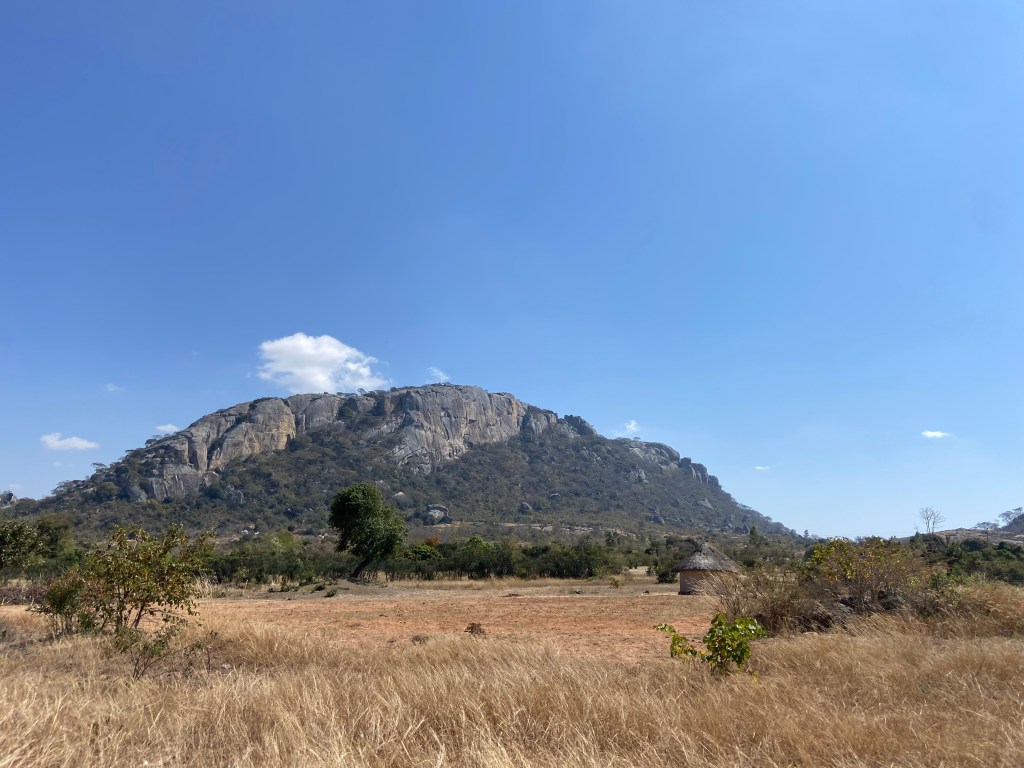
Zimbabwe is not as well known to climbers as other African countries, so it may come as a surprise to some that Zimbabwe has loads of excellent climbing. The amount of rock in Zimbabwe is really impressive, the potential for first ascents is huge and in some areas of the country there are beautiful large granite domes & kopjes extending as far as the eye can see. In general, the rock quality was very high and there are some superb walls to enjoy. Aside from climbing, we thought Zimbabwe was a wonderful country, the people are incredibly friendly and welcoming. We spent three and a half weeks in Zimbabwe, but we could easily have spent much longer, there is so much to do we would love to return one day and experience more of what the country has to offer.

Guidebooks for Climbing in Zimbabwe
There is no guidebook for the climbing in Zimbabwe, currently the best source of information is Mountain Project. However, there is a good PDF guidebook for the bouldering in Chimanimani which can be found here. The majority of crags on Mountain Project don’t have topos, but instead have a route list which makes finding routes a bit tricky but still possible. We were able to find all the crags quite easily, even if the approach notes were vague, the locals are really friendly and always helped us with directions of how to get to the rocks.

Weather and Climbing Season in Zimbabwe
The best time to climb in Zimbabwe is during the winter, which being in the southern hemisphere, runs from May to August. Winter in Zimbabwe usually means moderate daytime temperatures, cool evenings and zero rainfall – almost perfect for climbing. The shoulder months of April and September are also feasible, but definitely not as good as the peak winter season. Many of Zimbabwe’s climbing areas are at a relatively high elevation, which also helps with good conditions. We certainly enjoyed the cool evenings and although it wasn’t particularly hot during the day, it was still preferable to climb in the shade.
Below is a map of the different crags we climbed at in Zimbabwe so you can see where they are in relation to each other, we have described them in the order we visited them.
Climbing Recommendations
Ngomakurira
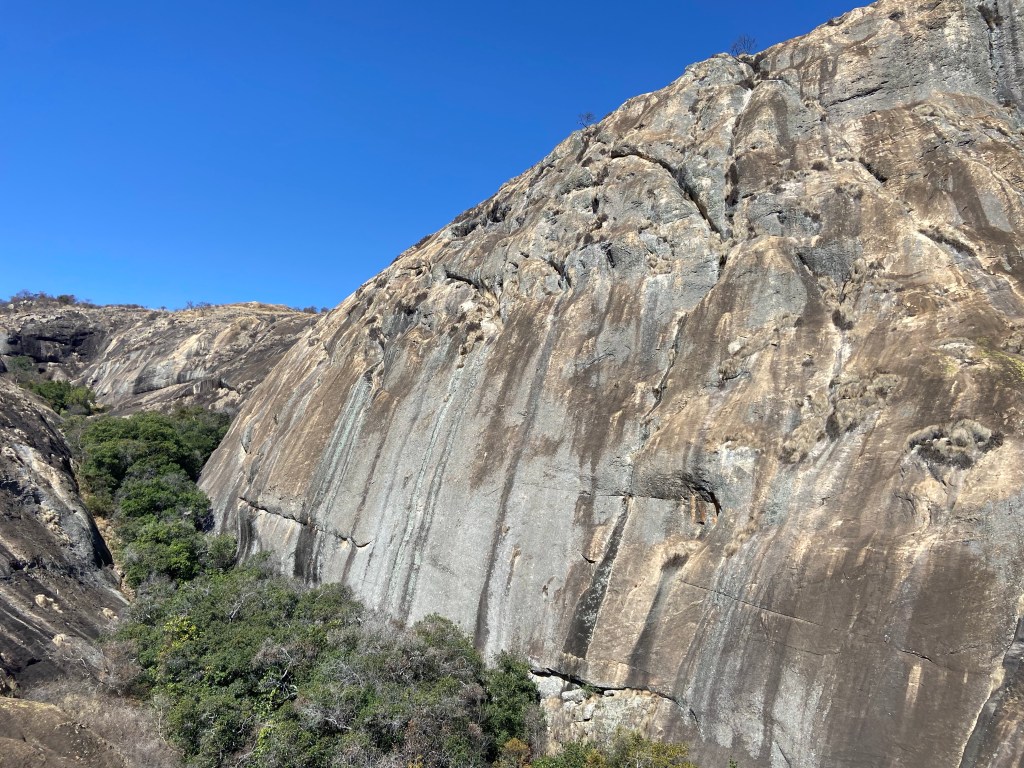
Ngomakurira is an excellent and underrated climbing area about 1 hour 15 minutes from Harare. Despite its proximity to the city, it is extremely peaceful and almost feels remote. The rock is beautiful granite with stunning contrasting orange and grey rock. Of all the granite we climbed on in Africa, Ngomakurira had some of the steepest walls, offering a good selection of harder routes in a totally different style to the more typical slabs. The rock quality was really good and a lot of the granite is incredibly featured, although routes can often look much easier than they are as many of the holds are quite slopey.

There are around 40 routes from 5.7 to 5.13c and there is definitely the potential for a lot more. We really loved the rock at Ngomakurira, it was a really unique climbing style and some of the textured walls almost look sandstone-esque at first glance. Despite the abundance of features the rock is very compact, particularly the grey rock. Although it has been weathered by the rain, the rock still has good friction and will wear your skin out pretty quickly if you’re slapping around! Outside of climbing, the place is great for a hike and also has some beautiful cave paintings that are worthwhile in their own right.

We were privileged enough to witness someone practicing traditional Shona religion at the cave paintings. The entire valley was isolated apart from us, it was so peaceful we could hear him praying even from a distance. Shona religion worships a singular god called Mwari and people do not typically pray directly to him, but communicate with god through the spirits of their ancestors. Our understanding is that the man was praying at the cave paintings as they may have helped him feel a closer connection with his ancestors. It was a wonderful thing to experience authentically and a great opportunity to learn more about the Shona people.
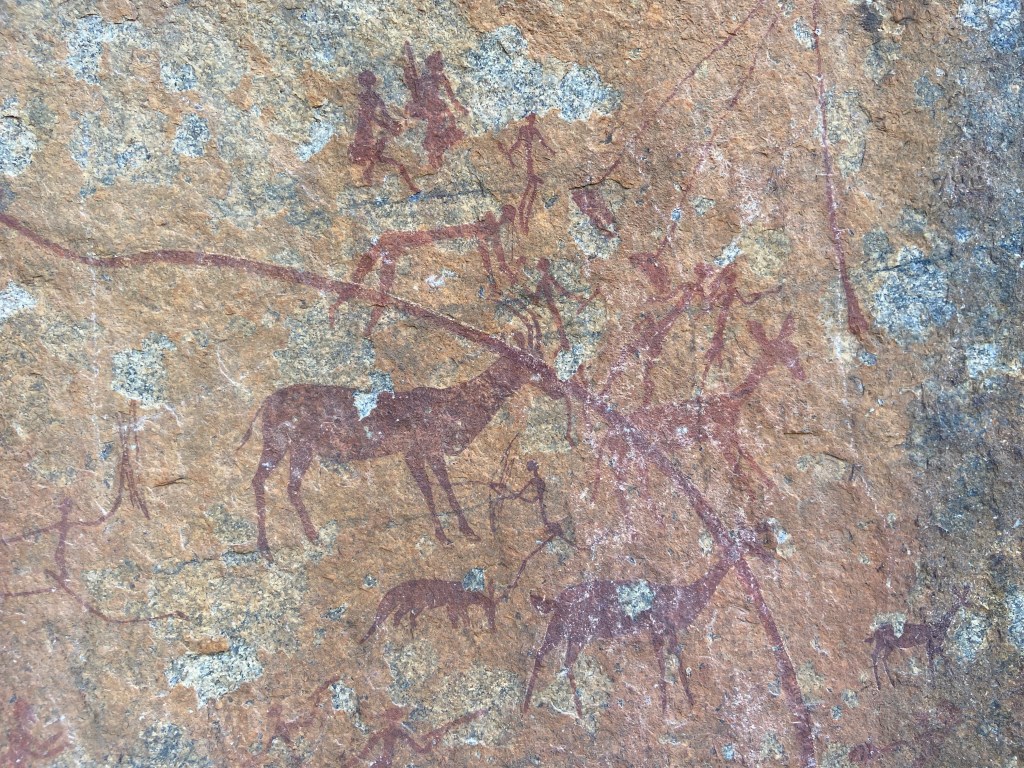
Ngomakurira is a national monument so you must pay for access. We got a bit lost on the numerous dirt tracks and ended up at the ‘Ngomakurira Foot view’ which is apparently not where you are supposed to go. However, there were two rangers there who were incredibly helpful, one went and got us a ticket with a proper receipt while we climbed. They were also pretty knowledgeable about where the climbing was and showed us where to go, always a welcome help to avoid a bushwhack! It really doesn’t seem like many people visit, we were there at the weekend and the place was absolutely deserted. It’s fantastic how peaceful and in nature you feel despite being so close to Harare, Ngomakurira really deserves more visits.
We write for pleasure and climbing is our passion. Our articles will never be paywalled. However, if you would like to help towards the costs of running the site or if you have found our content useful, please consider contributing here. To read more about why your support matters, click here.
Christon Bank
Christon Bank is a great small cragging area only 40 minutes outside Harare. It is set within the Mazowe Botanical Reserve which is a peaceful little protected area with some beautiful views. Crag wise Christon Bank doesn’t have any huge walls, but despite its small size it has loads of impressive features and appealing lines – the insane flake crack ‘Titanic’ is one of the coolest around for anyone up to it (not us!). The rock quality was really good, we thought some of the easier slab climbs were some of the best quality of their style we’d ever done.
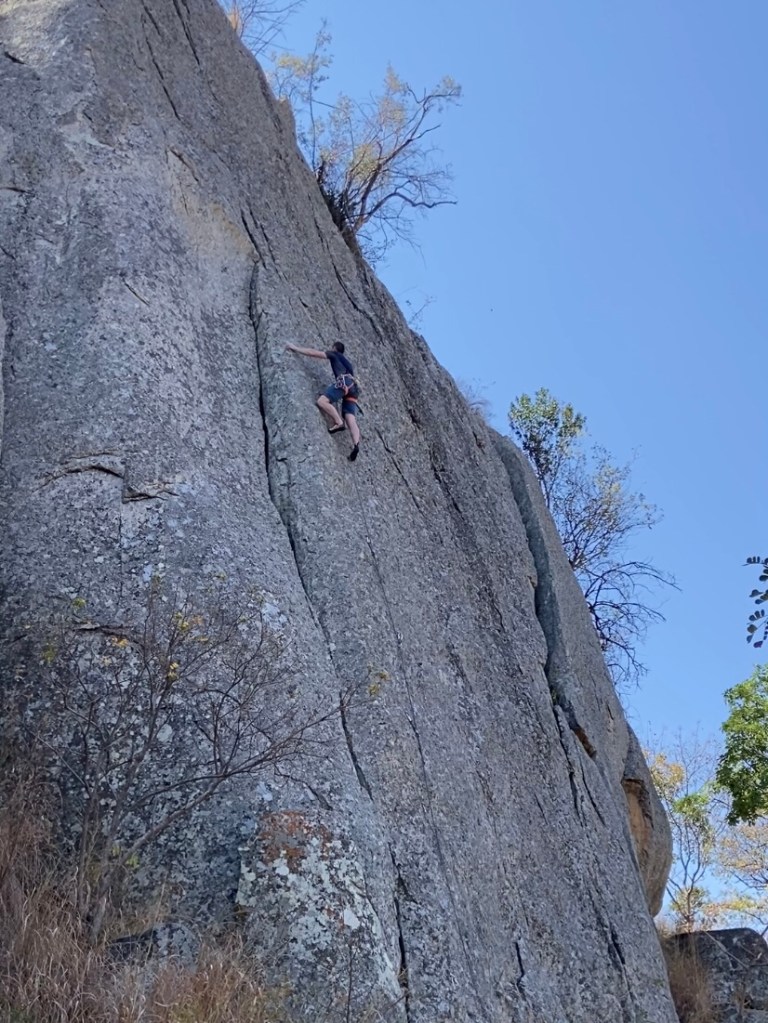
Christon Bank has around 60 routes from very easy up to 5.13a. There are walls facing every aspect so you can follow the shade all day long if you wish. The access is really easy and despite being in a reserve you’ll probably be the only people there. Christon Bank is probably the best crag near Harare for anyone who wants to get lots of routes done in a relatively short space of time, there is no faff and the standard is high. Whilst it isn’t exactly Zimbabwe’s best or biggest climbing area, it is absolutely worth visiting and more than holds it own in terms of quality.
Shamu Pinnacles
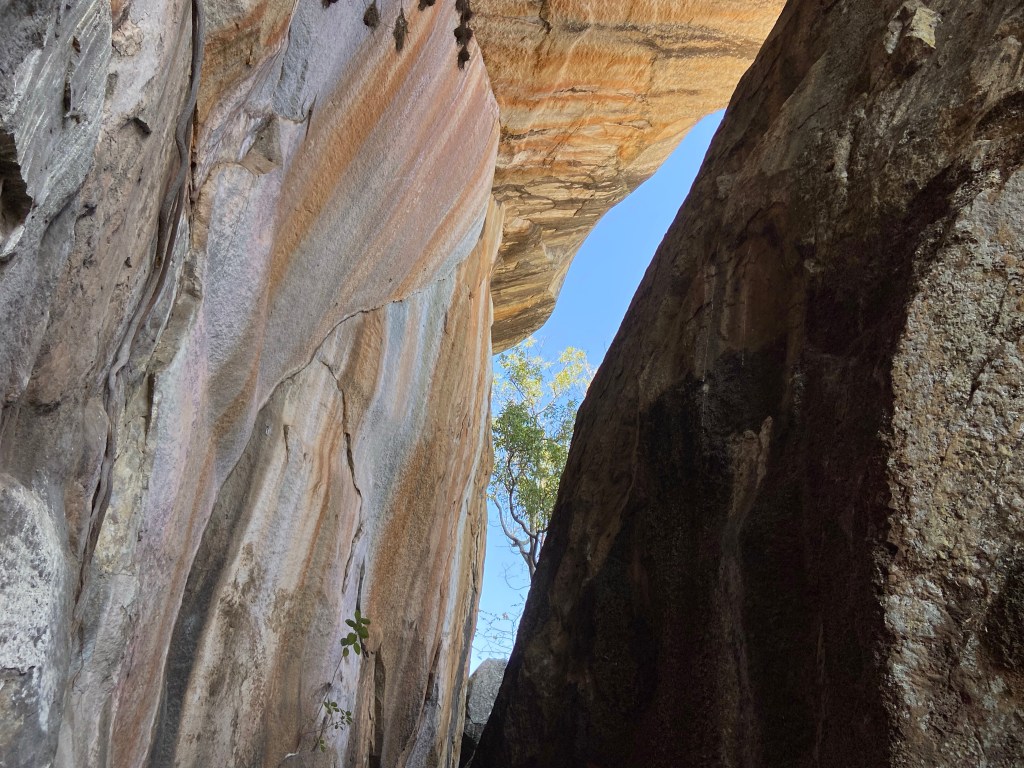
The Shamu pinnacles is another great climbing area, about 70 km from Harare. Shamu feels even more remote than Christon Bank and Ngomakurira, it’s really quite amazing it is so quick to access such a place. The Shamu pinnacles are like a collection of huge boulders and crags set upon a hillside, overlooking a small village. When we arrived it was clear the crags don’t get visited very often, but someone from the village very kindly showed us to the closest point we could get and then we waded through the long grass to the crags – all in all pretty straightforward. It is testament to the friendliness of Zimbabweans that everyone was genuinely happy to see visitors and helped us find the crags without a second thought.
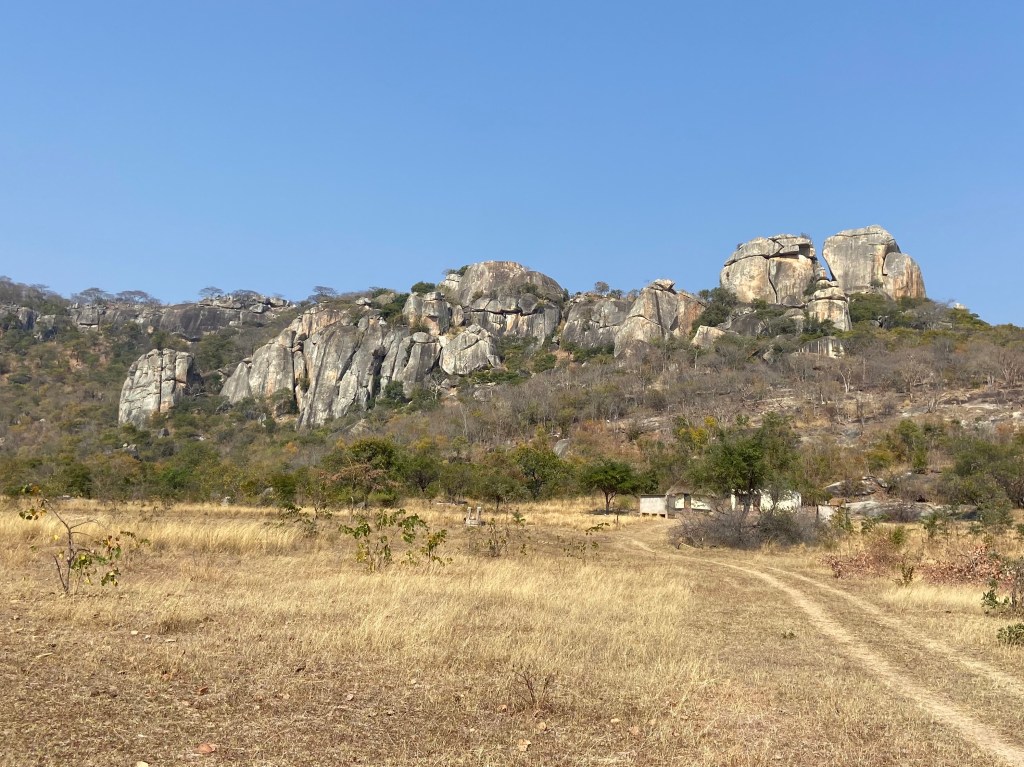
Climbing wise, we found Shamu the most difficult of the ‘Harare crags’ to understand on Mountain Project. This is really just down to the scattered nature of the rocks. You can find routes and paths between them easily enough, but we never managed to work out exactly which routes we climbed or which sector we were at! The rock quality is good, sometimes there are hollow holds that you don’t find so much in the other areas, but it was still really nice to climb on. Shamu has around 40 routes which are a mixture of trad and sport, with grades from around 5.4 to 5.12+ and it’s a really wonderful area to climb – definitely deserving of the extra route finding effort!

If you find our content useful please consider subscribing:
East Matopos
The Matopos is one of the most beautiful parts of Zimbabwe, a stunning wild landscape of endless granite kopjes surrounded by savanna and bush teaming with wildlife. The Matopos sits partially within a national park, with some areas outside of the park also being UNESCO listed for their abundance of rock art. The highest concentration of climbing is found in the East Matopos, near to Shumba Shaba lodge. The lodge is in a wonderfully secluded part of the bush that is completely unspoilt, a very special place that is coincidentally the perfect spot to stay for climbing. Make sure to get in touch with Shumba Shaba before you plan to arrive!
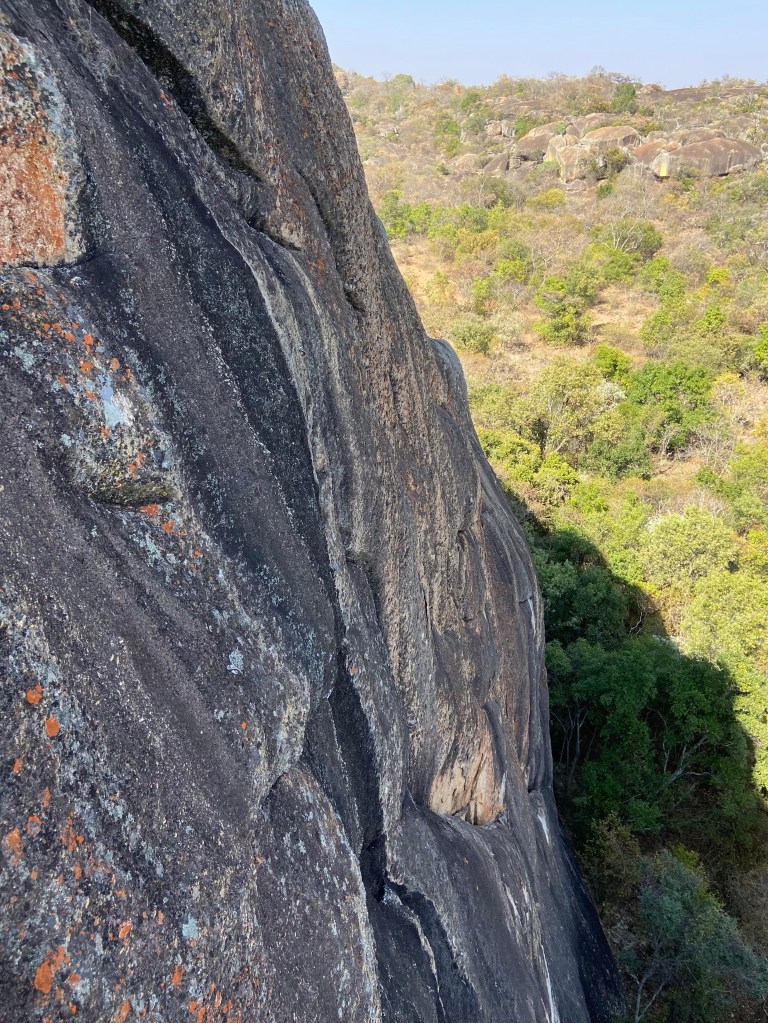
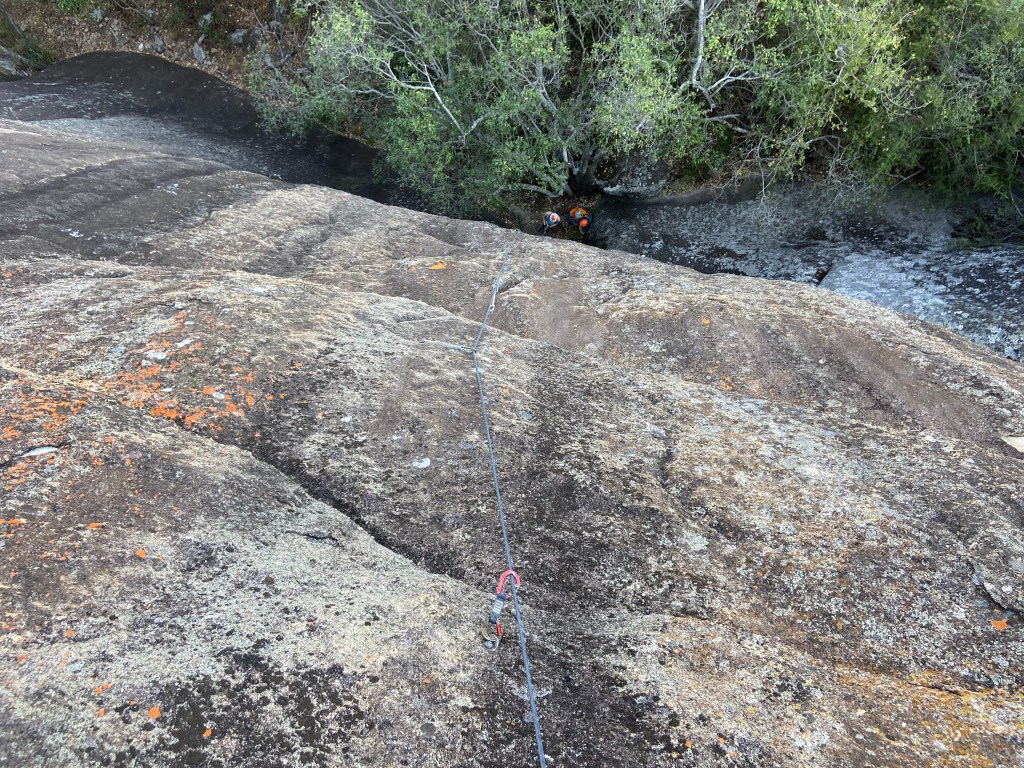
We were initially drawn to the East Matopos for the sport climbing at Silhoti, an impressive granite crag with 27 routes from 5.8 to 5.12d. The crag is in an awesome setting and the journey to get there from Shumba Shaba is fun in its own right. The routes are long and of varying steepness, mostly off vertical but there are a few bulges and steeper sections of rock. The rock quality is generally good but some routes do have some occasional flaky sections, usually in the yellow rock – the darker water worn rock is quite compact. We did find the grades to be all over the place at Silhoti, things that were supposed to be easy felt unclimbable and things we would expect to be hard for us were instead flashable!
When driving around the area it is impossible not to notice the insane amount of rock just lying there, waiting to be climbed. Whilst there are certainly other crags around, it is really the boulders that stand out. There is the potential for tonnes of first ascents and we simply couldn’t pass up such a great opportunity. Whilst some of the boulders close to the lodge may have potentially been climbed before, walking ten to fifteen minutes will bring you to some blocks that have definitely never been climbed on before and have some fantastic moves on them.
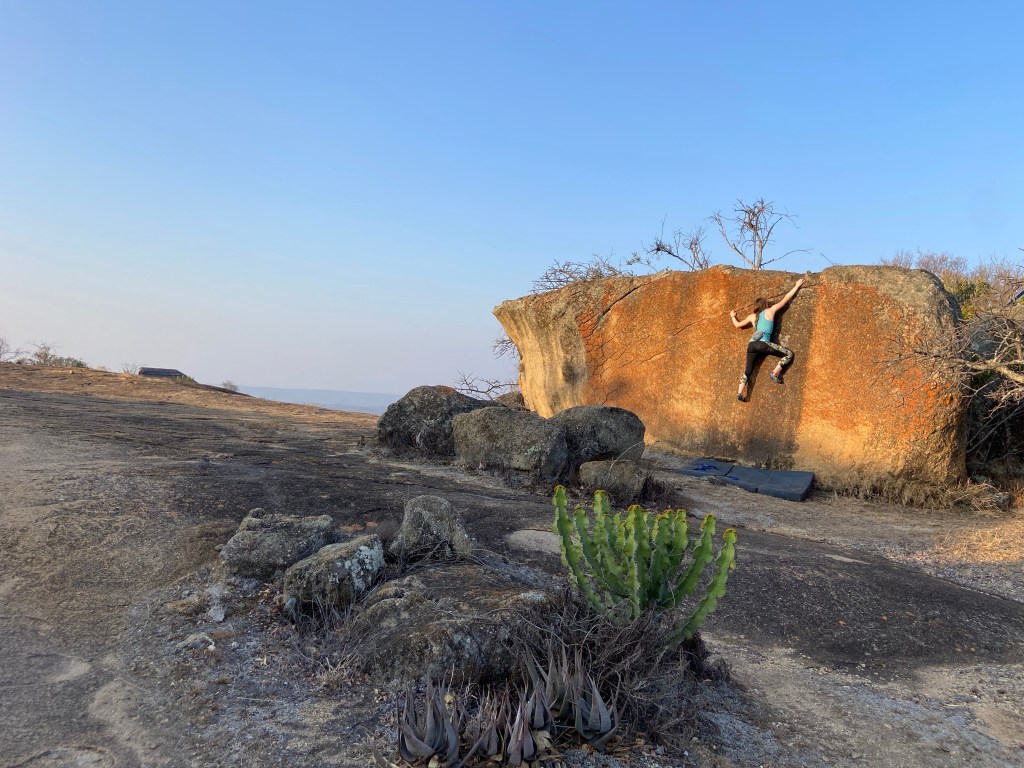
After enjoying a few days at Silhoti we turned our attention to the boulders and tried to find, clean and climb as many good quality problems as we could. The rock itself tended to be quite clean and solid, however the undercut starts of boulders were generally more flaky, which means it is usually not worth bothering with sit starts. Fine by us as sit starts aren’t our bag and the boulders are plenty high enough that you don’t struggle to get enough moves in! Some of the bases needed bushes clearing away but there are mostly flat rocky slabs underneath which made for pretty good landings.
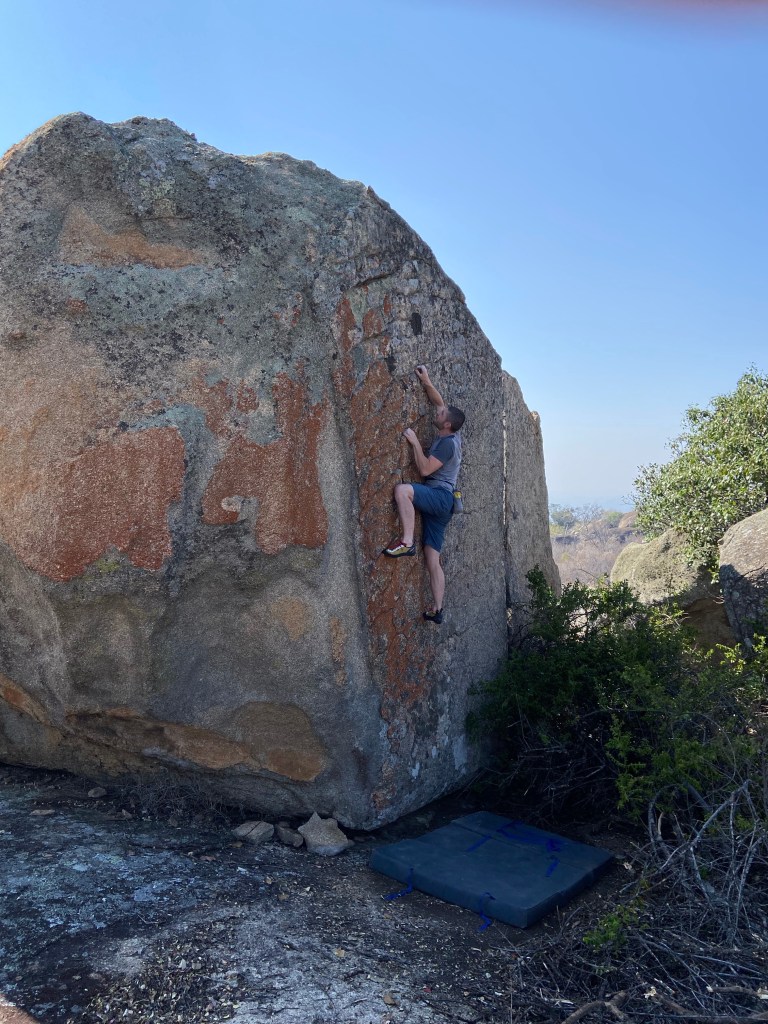
We decided to make a small PDF topo for the boulders we climbed, mainly to try and encourage other climbers to visit the area and develop it further. It definitely isn’t meant to be any kind of comprehensive guide and shouldn’t be treated as a guidebook- think of it as the tip of the iceberg. There could easily be thousands of problems in the area, but they are unlikely to be developed if most people don’t know they’re there or what they look like! Even for us personally, we would likely not have climbed here at all if it wasn’t for the sport crag appearing on Mountain Project. Hopefully a small amount of documented bouldering and the potential for loads of first ascents will tempt more climbers to visit the area, it absolutely deserves more attention. You can find the PDF guide here:

Chimanimani
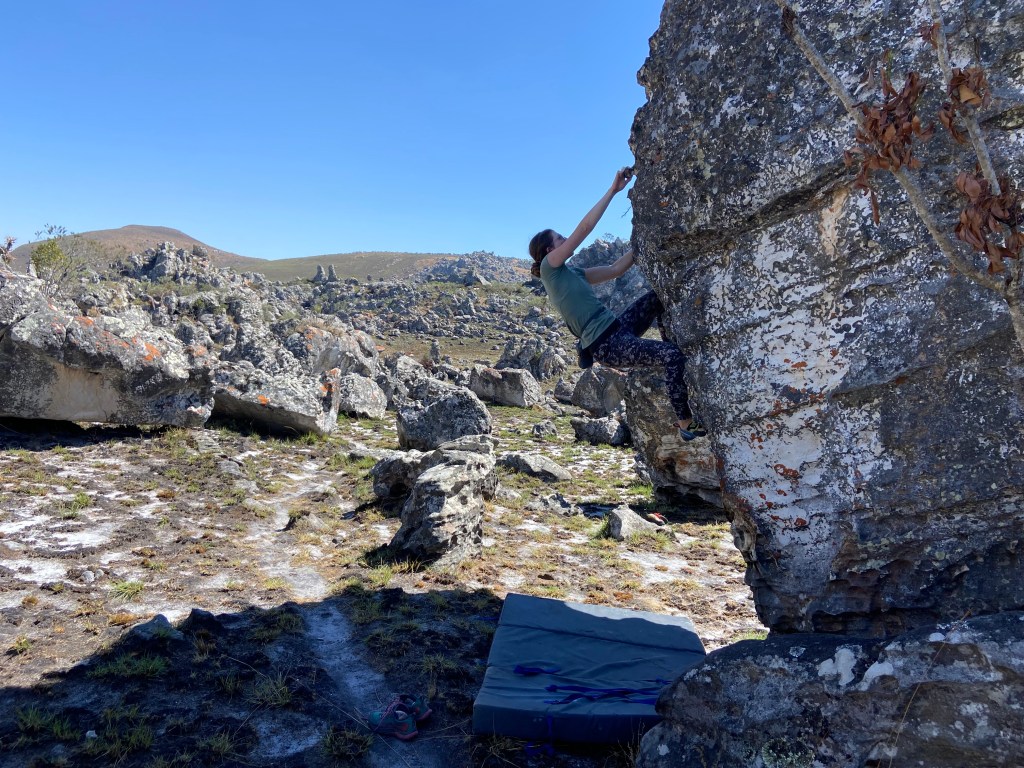
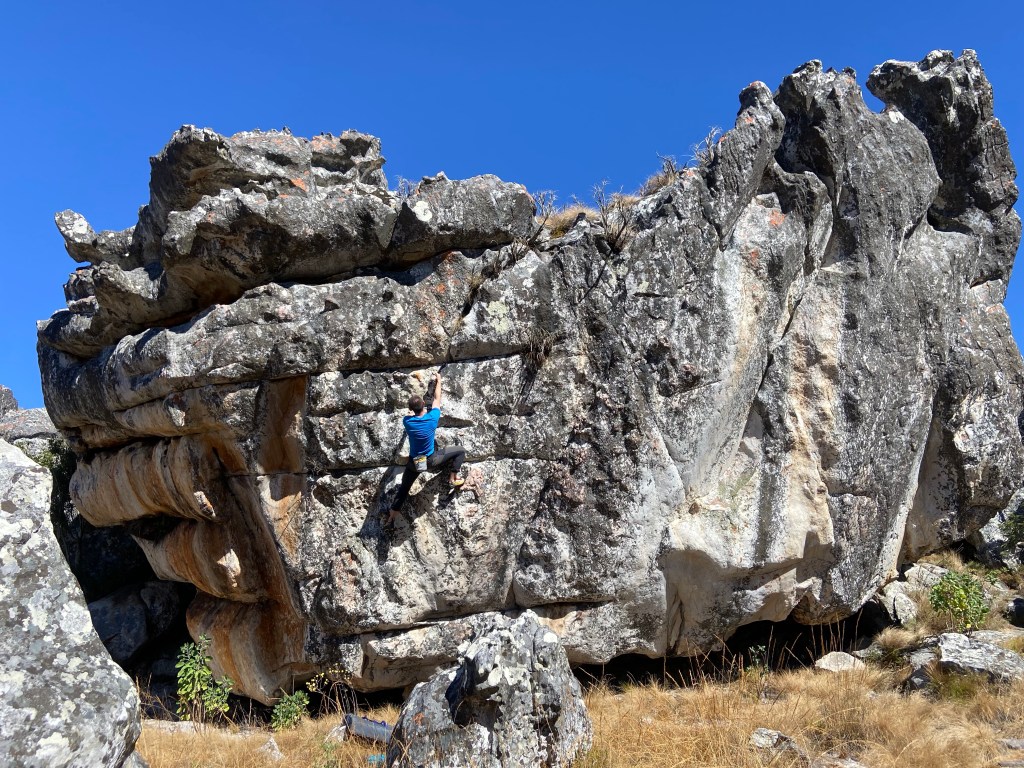
Chimanimani is probably the most famous climbing area in Zimbabwe, a stunning mountain area home to some of the most unique rock you’ll ever climb on. The climbing is in an enormous boulder field half way up the mountains that form the border with Mozambique. The rock is a mix of sandstone and quartz, much of it is bone white in colour and it is covered in holds, like they were designed with climbing in mind. Some of the boulders are almost marble like, these incredibly compact white quartz blocks with an incredible texture. The greyer rock tends to feel more like regular sandstone and is also wonderful to climb on.
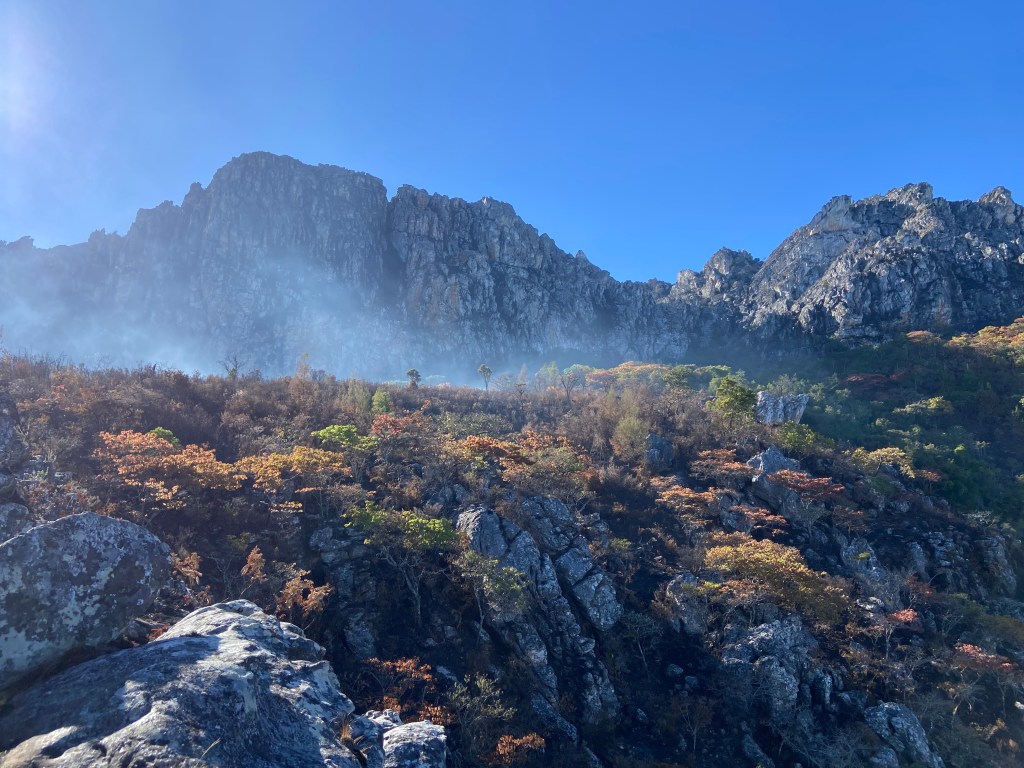
The amount of appealing lines and crazy features is very impressive, it is reminiscent of the Cederberg. The mountains surrounding are so beautiful and the contrast in environment between Chimanimani and somewhere like the Matopos is incredible. There is a great online guidebook for Chimanimani, which has coordinates for the boulders and lots of information about access and general tips for the area. We ended up just climbing all over the place, we had intended to find specific problems but as soon as you start walking around you just end up being drawn in to what you see along the way. Perhaps the greatest strength of Chimanimani is that the rock is just extremely climbable, there are thousands and thousands of moderate boulders of excellent quality – you could just circuit around forever.

Chimanimani is in the mountains and as such the approach is a bit longer than your average bouldering area. We had been expecting it to be severe, but it was actually pretty pleasant and didn’t take very long. It isn’t much more than 1 hours walk, you can do it very comfortably in 1.5 hours with a few breaks so you don’t arrive tired. There is a mountain hut right near the boulders where you can stay, it doesn’t need any booking and is in a very basic state at the moment, if you want to stay there go expecting it to be more like camping than a bunkhouse. We had been quite ill and didn’t fancy carrying all of our stuff up, including several days worth of food! So we opted to stay in Chimanimani village and go up from there. It is around 30 minutes drive (15km) to the trailhead, the road is bumpy but is fine in a normal car if you are in the dry season and go slowly. Then you have the walk in, but you can comfortably go from a guesthouse in the village to the climbing in under 2 hours.
You also have to have a permit to go bouldering in Chimanimani, which is the same as the permit for hiking. Because the mountains are a border area, you must also be accompanied by a ranger for ‘safety’ reasons. In reality it’s very hard to imagine any bad guys being bothered to walk all the way over those summits! We’ve never done anything where you had to be accompanied before, we usually really value our independence, but here it is compulsory, so if you want to climb you must take a ranger. The guy that went with us was really nice, super knowledgeable about the area and he was also super fit so you won’t feel slowed down at all! If you choose to stay at the mountain hut the rangers will stay overnight with you. Otherwise, Mutekeswane base camp is where you can find the rangers. You can buy your permits and pay in Chimanimani village, but it is definitely easiest to actually find the rangers at Mutekeswane, they were living there when we went and you could even find them doing press ups and military style drills!

We really enjoyed Chimanimani, it is a stunning place with an incredible environment – think Drakensberg meets Cederberg! We had imagined it would be quite a popular place but actually it was very quiet and we were the only people around. The rock is fantastic and there is certainly a lot of it too. Chimanimani definitely deserves more attention, there is no reason it can’t be a real paradise for boulderers and no doubt there can be quite a few routes there as well. Despite some perceptions of the place, access is actually quite easy, so there’s no excuse not to go!
If you find our content useful please consider subscribing:
Rest Day Activities
Great Zimbabwe
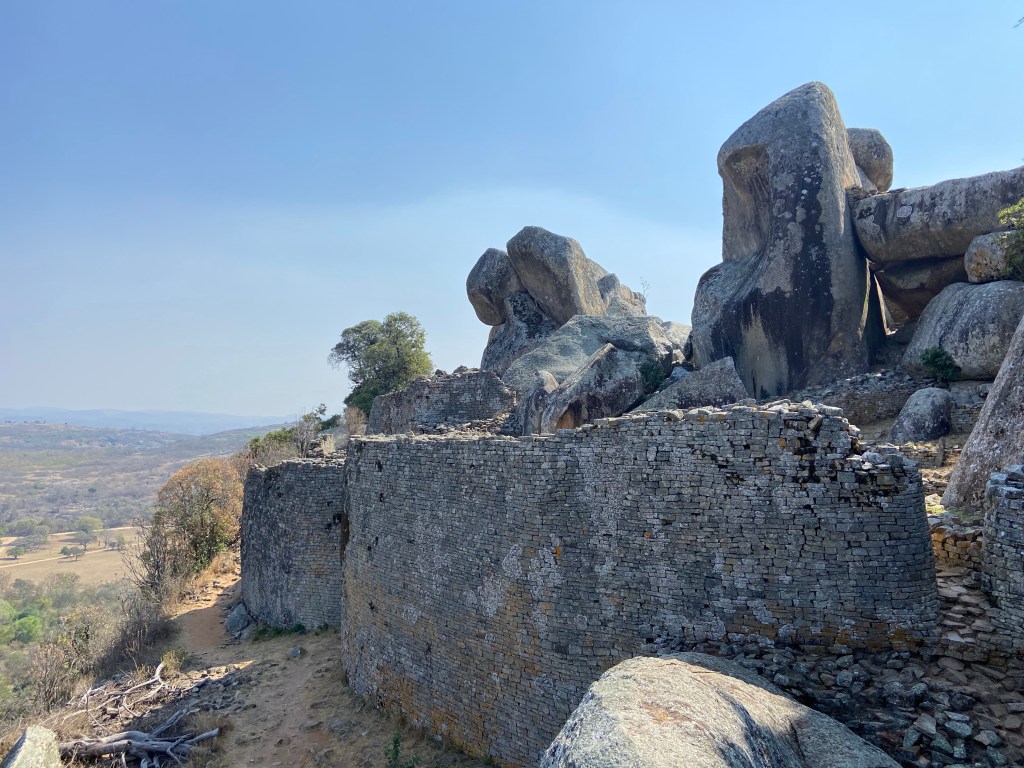
Great Zimbabwe is an amazing historical site of huge significance, a very unique place that really stands out as somewhere worth visiting. Zimbabwe as a country is named after this site, with the word roughly translating to ‘house of stone’ in the Shona language. The ancient city of Great Zimbabwe was settled as early as the 4th century and the ruins we see today were first constructed in the 11th century, continuing until the 15th century. Amazingly, the great enclosure is the largest ancient structure in Sub-Saharan Africa and the city is believed to have been home to around 18,000 people at its peak.
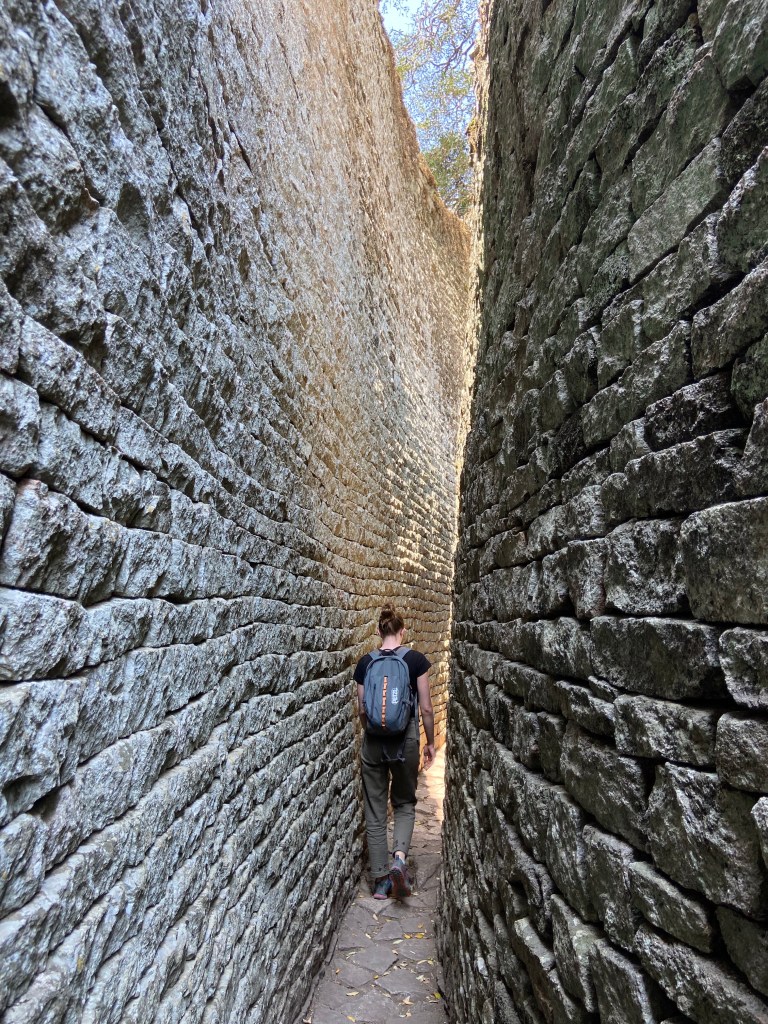
Great Zimbabwe is built from granite blocks, which were created by breaking down large pieces of rock by setting large fires to heat them and then dousing them in water, causing the rock to crack into smaller, more manageable pieces. The structures are built entirely without mortar, they are true dry stone walls. The size of the walls is very impressive, they still stand up to 11 meters tall and 5 meters thick. As well as this huge site, there are also many other smaller ‘Zimbabwe’s’ around the region, built in a similar style. There were lots of amazing artefacts found at great Zimbabwe, some of which you can see in the museum there, the best of which are soapstone carvings of the Zimbabwe bird – an emblem of the nation to this day.

Great Zimbabwe also gives a real insight into just how unbelievably racist the government of Rhodesia was. The colonists consistently refused to acknowledge that Great Zimbabwe was built by African people and came up with all sorts of wild and fanciful explanations to try and prop up their white supremacist ideals. These theories began many hundreds of years ago, but continued to be parroted by prominent figures like Cecil Rhodes and Ian Smith right through the 1960’s and 70’s. It’s genuinely shocking that they deliberately overlooked the overwhelming evidence that Great Zimbabwe was built by African people, for no reason other than bigotry.

Great Zimbabwe is not far from Masvingo, which is really well located for anyone driving between the Matopos and Chimanimani. It was really worth the stop, it’s an amazing place and you can really feel the history of it. We have visited loads of historical sites over the years and Great Zimbabwe is one of the most interesting and unique of them. It gives a great view into the extraordinary ancient history of Zimbabwe, which was undoubtedly an incredibly advanced kingdom, a trailblazer of its time.
Hiking
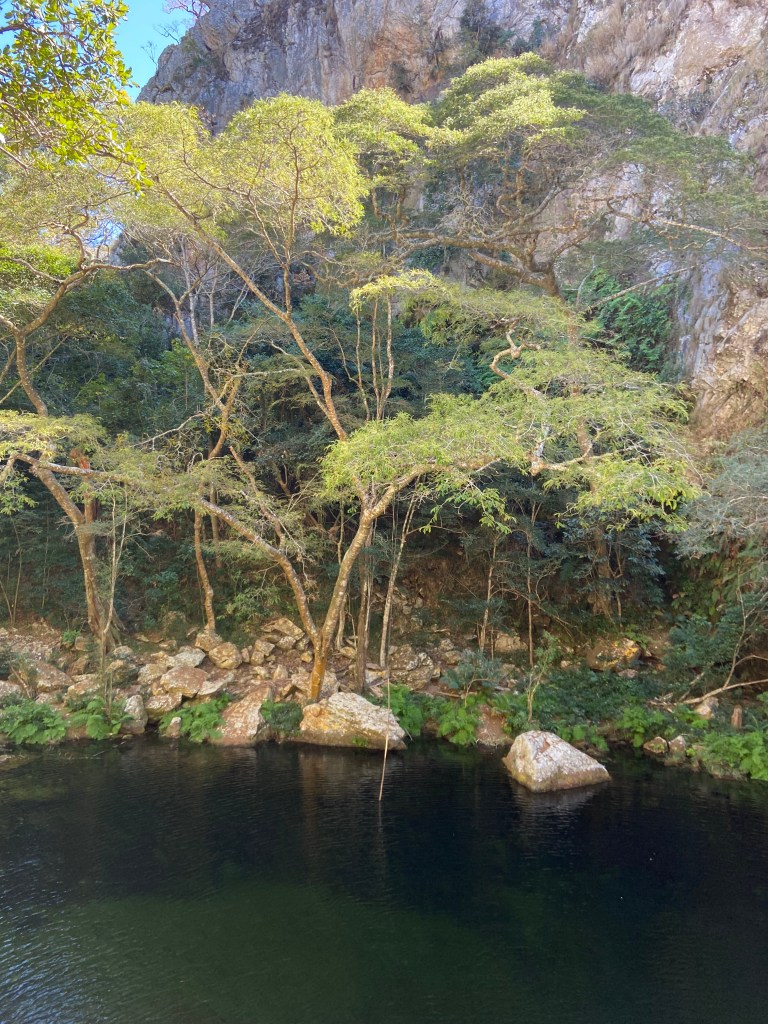
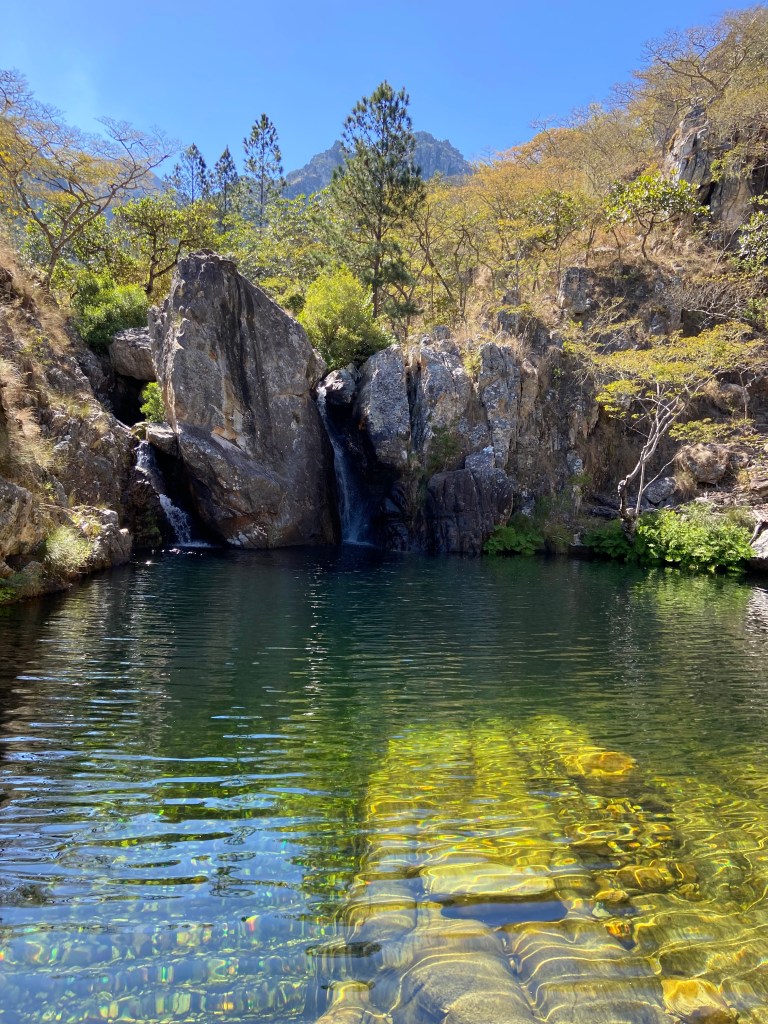
Zimbabwe has many beautiful places to hike in, from numerous mountains over 2,000 meters to biodiverse bush and savanna. There are plenty of established hiking trails in national park areas, as well as lots of small local trails that are just as beautiful and enjoyable. We found we ended up doing more hiking in Zimbabwe than we had elsewhere on the trip, because the climbing areas in Zim seem to be perfectly located for hiking without having to go far at all from the crags.

We also enjoyed hiking here a lot, as it really doesn’t seem like something tourists go to do at all. For example, when hiking in different parts of Chimanimani, even on the weekend, we were the only people there – if we did see anyone they were locals from Harare or Masvingo and they were few and far between as well. This really made it feel special as you could enjoy the nature, the wildlife and the scenery in total peace. If we went back again we would be equally interested in checking out some places away from the climbing areas too, they are bound to be amazing.
Food
Sadza is a Zimbabwean classic, generally made from corn meal and can be eaten with any meal. We ate similar versions of this classic in different parts of Africa, but Zimbabwe seems to have perfected the craft. One South African pap enthusiast even told us that Sadza is next level!
Kugocha Nyama is Zimbabwean barbecue, the word nyama means meat in Shona and kugocha is what refers to the barbecuing. Meat is cooked over open flames giving delicious smoky flavours. We had some exceptionally good meat from a kugocha – including some of the best chicken we’ve ever eaten!
Mupunga Une Dovi is a popular Zimbabwean dish of peanut butter rice. The peanuts give the rice a nutty but savoury flavour that adds great depth of flavour and is a delicious way to elevate plain rice.
Mufushwa is a traditional way of preserving vegetables in Zimbabwe. Leafy green vegetables are preserved and dried, then when fresh vegetables are not longer available they can be cooked alongside onion, tomato and peanut butter. Mufushwa makes a great side and is often served alongside Sadza and meat.
Muriwo na Nyama is a beef stew, a classic dish that also includes leafy greens like kale. The stew is flavourful and wholesome, a delicious meal that when served alongside sadza, really fills you up!
Summary
We absolutely loved Zimbabwe, it is a really beautiful country and the climbing is excellent. The potential for new routes is astonishing and something that we would be very interested in returning for in the future. The amount of large walls and crags suitable for both multi and single pitch, trad or sport, as well as the huge amount of boulders, is simply amazing. It is particularly worth noting that many of these crags wouldn’t even be difficult to get to, they are just lying there waiting to be climbed! The people in Zimbabwe are incredibly friendly and kind, just being there is a pleasure in itself. We had such a great time in Zimbabwe we are just looking for an excuse to go back again!
We write for pleasure and climbing is our passion. Our articles will never be paywalled. However, if you would like to help towards the costs of running the site or if you have found our content useful, please consider contributing here. To read more about why your support matters, click here.
Relevant links and resources
Bouldering in the East Matopos guidebook
Mountain project page for climbing in Zimbabwe
https://www.mountainproject.com/area/109006880/zimbabwe
Bouldering in Chimanimani guidebook
https://www.climbing.co.za/w/images/c/c0/Zimbabwe_chimanimani_bouldering_oct_2016.pdf
 The Crag Journal