Around a year after we last climbed in Sweden, we returned this summer to enjoy the bullet hard granite, peaceful nature and long summer days. You can read our original post ‘Climbing in Sweden: A Scandinavian Road Trip’ to see all of the crags we visited last year, mostly in southern Sweden. This year we climbed more in the north, generally in the Gulf of Bothnia area. We didn’t revisit any crags from last year, so everything in this post is different. If you want information on climbing season, rest day activities etc, please read last years post, as the same things generally apply we will avoid repeating ourselves.
A beautiful cabin in the forest, free for everyone to use respectfully
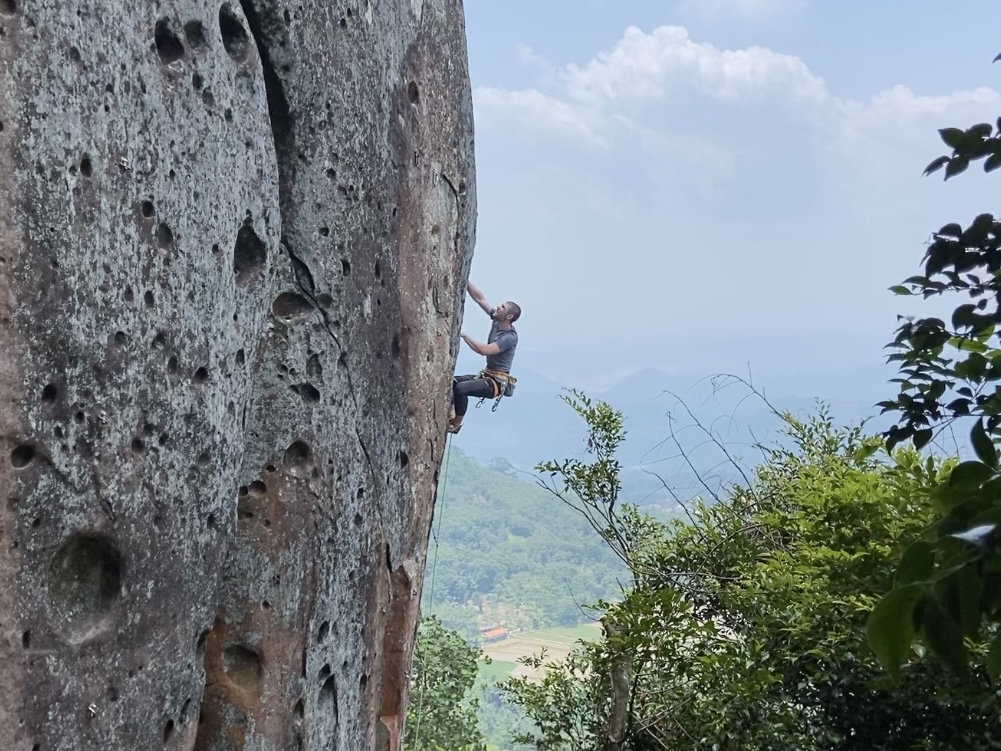
Indonesia is a prodigious country, with an extraordinary amount of records to its name. Indonesia is the world’s most populous Muslim country, the world’s largest archipelagic state and is home to over 700 languages. Choosing where to go in somewhere so vast is tricky, but we settled on Java as it has by far the most documented climbing areas. We spent a month on Java and it flew by, trying to visit anywhere else on top of that would have spread us too thin. Java is the world’s most populous island with over 145 million people, bigger than the population of the UK and France put together! It is an exceptional place, the people are great, the culture is captivating and the geography is fantastic.
Beautiful scenery and rock at Bongkok, on ‘Letjen of the Fall’, 6b
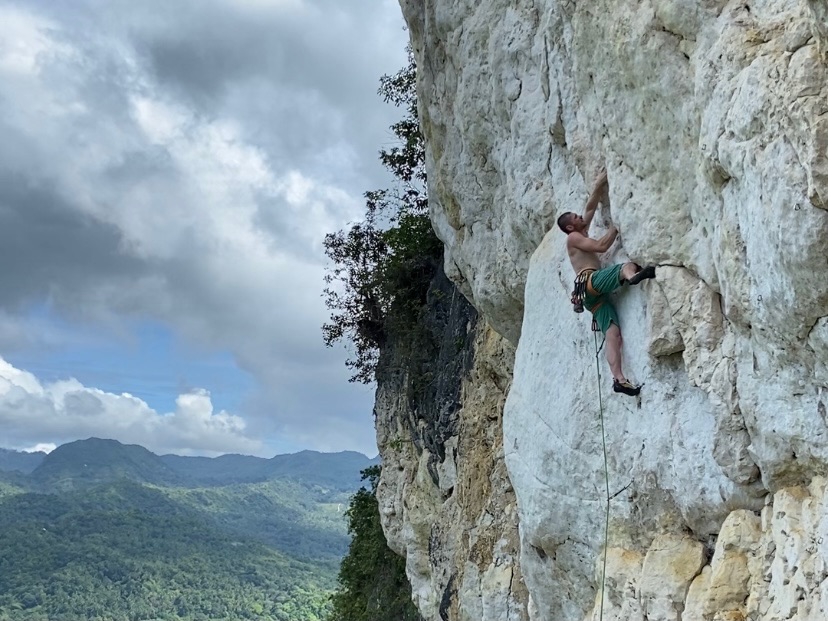
The Philippines was the dark horse of our time in South East Asia, many climbers we spoke to before we went had no idea there was any climbing there at all! In fact, we would often be asked if we were going there just for sight seeing. What makes this so surprising is that the climbing in The Philippines is excellent and there is loads of it, all over the country! Aside from climbing, we really loved The Philippines as a country, it is a truly beautiful place and the people are genuinely some of the friendliest we have ever met. During the 3½ weeks we spent in The Philippines, we barely scratched the surface of what’s on offer and we were sad to leave, we could easily have spent over double that amount of time and still not had long enough.
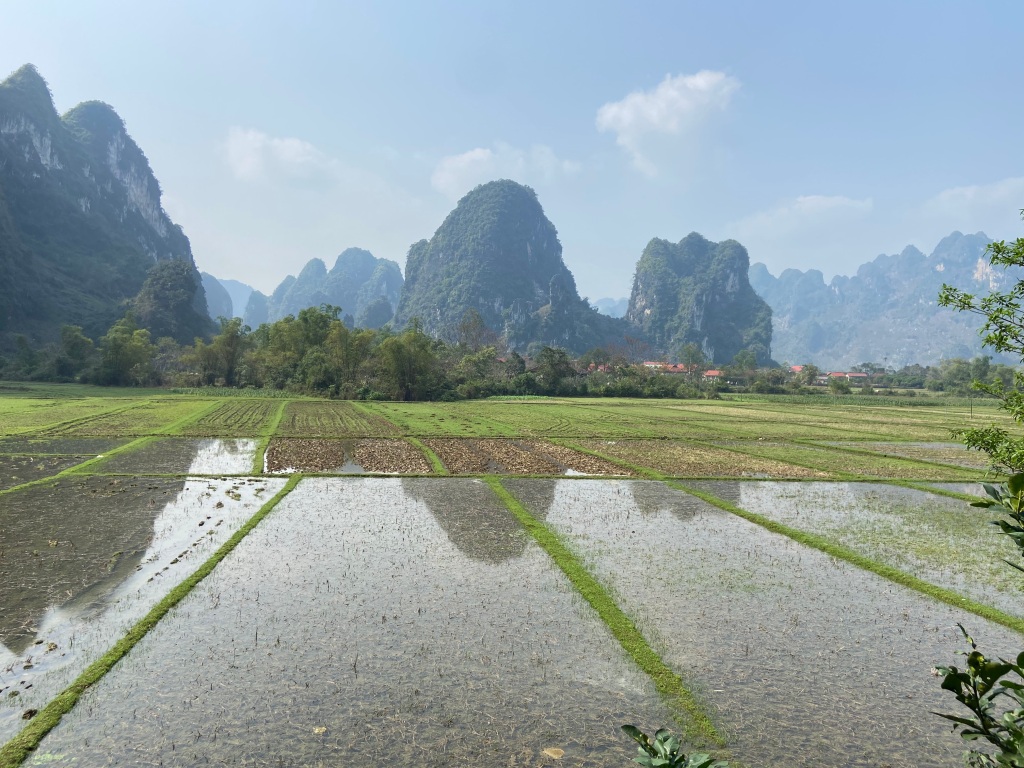
Vietnam was a major stop on our trip in South East Asia and somewhere we had looked forward to visiting for a long time. It certainly didn’t disappoint, we loved the country and Hữu Lũng is a very strong contender for our favourite climbing area of the entire trip. We began our time in Vietnam by crossing the border from Cambodia at Mộc Bài and made the long and interesting journey all the way up to the north with the excellent train line, enjoying a few stops along the way. Whilst we didn’t climb in the south, we really enjoyed experiencing the different culture and landscape on our way north, Vietnam is a country of great contrast. During our month in Vietnam we had a genuinely great time, not only was the climbing superb, the places, people and history were equally good and it was a definite highlight in every sense.
Cambodia is not the place that usually springs to mind for climbers in South East Asia and it is often thought of as a totally flat country. It is true that Cambodia has the one of lowest elevations in the region, at an average of 126 meters above sea level, which is significantly less than in neighbouring countries. However it would be false to represent Cambodia as mountainless. Its highest peak, Phnom Aural, is actually 1,813 meters and Phnom means mountain or hill in Khmer. That being said, mountains and crags are more scarce in Cambodia than other parts of the region. It is true that the climbing in Cambodia is lower in both quality and quantity than in bordering countries. We knew we wanted to include Cambodia as part of our trip, and it fit well with our route, entering from the Laos border and crossing into southern Vietnam to begin the long journey northwards up the coast. There are a handful of climbing areas to choose from in Cambodia and there are less climbers here than anywhere else we visited on our trip. We were glad we visited, Cambodia was a really nice country with a distinctive culture and a long captivating history.
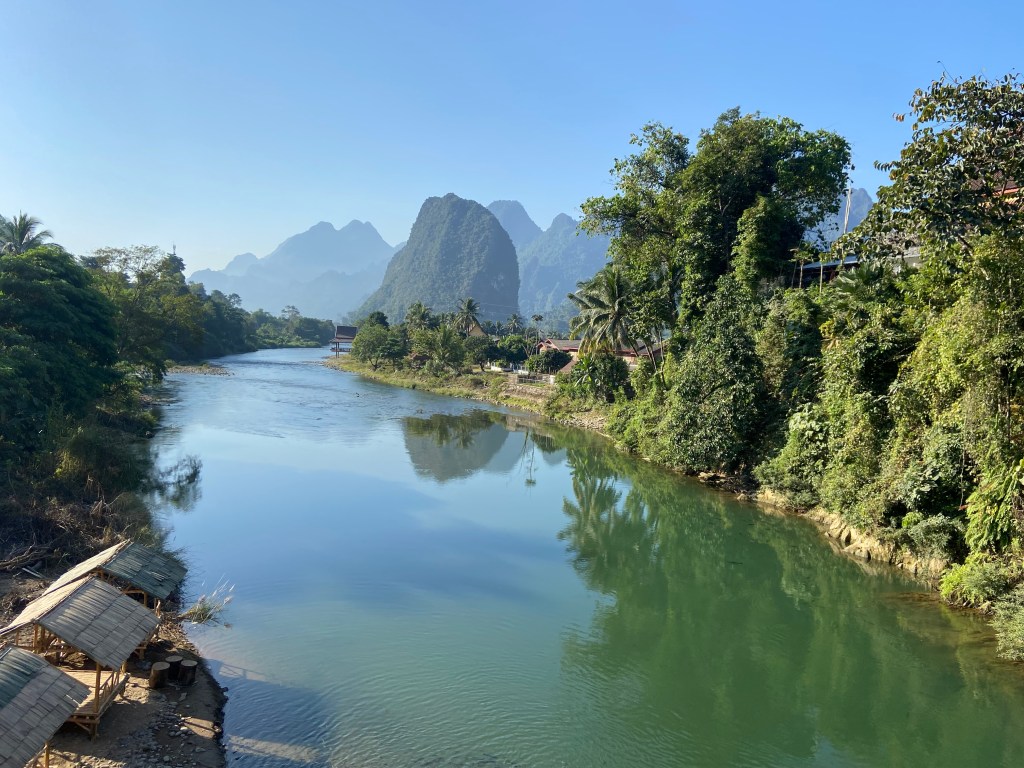
Laos is one of the least visited countries in South East Asia, receiving around one tenth of the visitors Thailand does and significantly less than the majority of other countries in the region. The reason for this seems mostly down to the fact many travellers believe there is ‘nothing to do’ in Laos, which is of course false. There are still plenty of tourists visiting Laos, but it is much easier to escape the crowds and finding authentic local places is very straightforward.
Making a strenuous clip on the amazing ‘Jungle King’, 7b
The even better news is that Laos has some of the best climbing in the whole of South East Asia, in terms of quality and quantity. Climbing in Laos only got started in the last few decades, so the areas still feel relatively new and unspoilt. Around 70% of Laos is mountainous and a similar percentage is forested. There are endless stunning mountains, crags and rivers in Laos and the landscape really lends itself to climbing.
We started our journey in Laos by crossing the border with Thailand near Huay Xai and made our way southwards through Laos before crossing into Cambodia near Nakasong. The crags will be described in the order we visited them and by coincidence this correlates to their quality, saving the best till last!
Thailand has been well known to climbers for many years thanks to its stunning rock and tropical paradise locations. There are lots of wonderful climbing areas spread throughout the country, and there is definitely a lot more to Thai climbing than Tonsai and Railay alone. Climbing aside, Thailand is very popular with travellers and holidaymakers, being the most visited country in South East Asia. While some places can get overcrowded, what shines through is the warmth and kindness of the Thai people, who remain incredibly welcoming. We made our way into Thailand overland from Malaysia, and traveled up through the country before crossing the border into Laos. The climbing areas below will be discussed in the order we visited them, of course there are many other areas in Thailand we didn’t visit. We chose the areas we did based on the quality, quantity and location of the routes and we thought all of the areas we visited were really good.
Malaysia sits in a beautiful part of the world, with the country split between two areas, one on the Malay peninsula and the other on the island of Borneo. Malaysia is well known for its delicious cuisine and being one of the most culturally diverse countries in South East Asia. Rock climbing in Malaysia has been established for some time, with historical routes going back several decades. We chose Malaysia as the starting point for our trip to South East Asia, the country has a lot going for it and the climbing is high quality. As the next leg of our journey would take us northwards to Thailand, we spent all of our time in Peninsular Malaysia. Malaysian Borneo is famous for its mountains and is home to Mount Kinabalu, the countries highest mountain at 4,095 meters. However, the peninsular contains the greatest density of sport routes as well as many mountains of its own, with several over 2,000 meters.
Most climbers won’t have considered Belgium as a destination for climbing, and many of those who have a vague idea of Belgian climbing won’t appreciate how good it actually is. There are many crags in southern Belgium and Freyr is the crown jewel, with several impressive walls close to the river and overlooking a chateau. Those who do know of Freyr will also know of the crags fierce reputation, nothing here comes easy. If you can climb a certain grade in Freyr, then you can climb it anywhere and although the routes are hard the rock is superb. Belgium is also famous for good beer, chocolate, waffles and fries, which is really a winning combination for us!
The beautiful Freyr, seen from the top of ‘La Jeunesse’ sector
Luxembourg is an interesting small country that sits landlocked between France, Germany and Belgium. In the east of the country is a village called Berdorf, which is home to some superb sandstone sport climbing. Berdorf could reasonably claim to be one of the best known crags of its type, owing its reputation to its quality. The crag is set in a beautiful forest, which is itself in the European National Protection Zone, due to the quality and abundance of rare plants in the area. The environment at Berdorf is very special and it should go without saying that climbers must treat it with the utmost respect.
The steep and juggy Berdorf classic ‘Voleur De Spits’ 7a+