POST UPDATED 2026
Bosnia and Herzegovina is hands down one of the best countries in the Balkans, and it is one of the most interesting and unique countries in all of Europe. For climbers, Bosnia is a real treat, with loads of great crags and a variety of styles – tufas, pockets, slabs, overhangs and many multipitches as well. The crags are often near historical sites of great interest or national parks of immense natural beauty, meaning you will always have something enjoyable to do on your rest days. The people of Bosnia are incredibly friendly and welcoming, you will meet lots of great people here and it is easy to feel a connection to the place. Despite all of the great things about Bosnia, it is not yet affected by the mass levels of tourism that many parts of Europe struggle with more and more. This means you often get to enjoy some truly spectacular places completely crowd free, especially if you visit outside of the summer. Considering all this, there really isn’t any reason not to visit Bosnia, so go and enjoy it for yourself!
We love Bosnia so much that we have visited 4 times, totalling around 3 months in the country. This blog post is an amalgamation of all of our experiences in Bosnia across these trips, including from our latest visit in 2026.
Guidebooks for Climbing in Bosnia and Herzegovina
Affiliate Disclosure
We have an affiliate partnership with Climb-Europe.com, which means we receive a commission if you buy a guidebook via one of our links, at no extra cost to you. Currently, we only use affiliates for guidebooks from Climb Europe, not anything else. To read more, click here.
One of Bosnian climbing’s greatest assets is the guidebook. Written by Igor Vukić and David Lemmerer, it is one of the best guidebooks you will ever use. The guys, along with lots of local climbers, have put so much hard work into the guidebook and it really shows. It is a brilliant book, they have done a great job. So many countries in the Balkans have no climbing guidebook, or a very basic one. The guidebook for Bosnia and Herzegovina is so well made it easily rivals those found in major climbing destinations like Spain or France. The guidebook is now in its second edition and you can buy it on Climb Europe here.
There are also several climbing festivals, such as Drill and Chill and the Pecka Climbing Festival, so make sure to check those out as well.
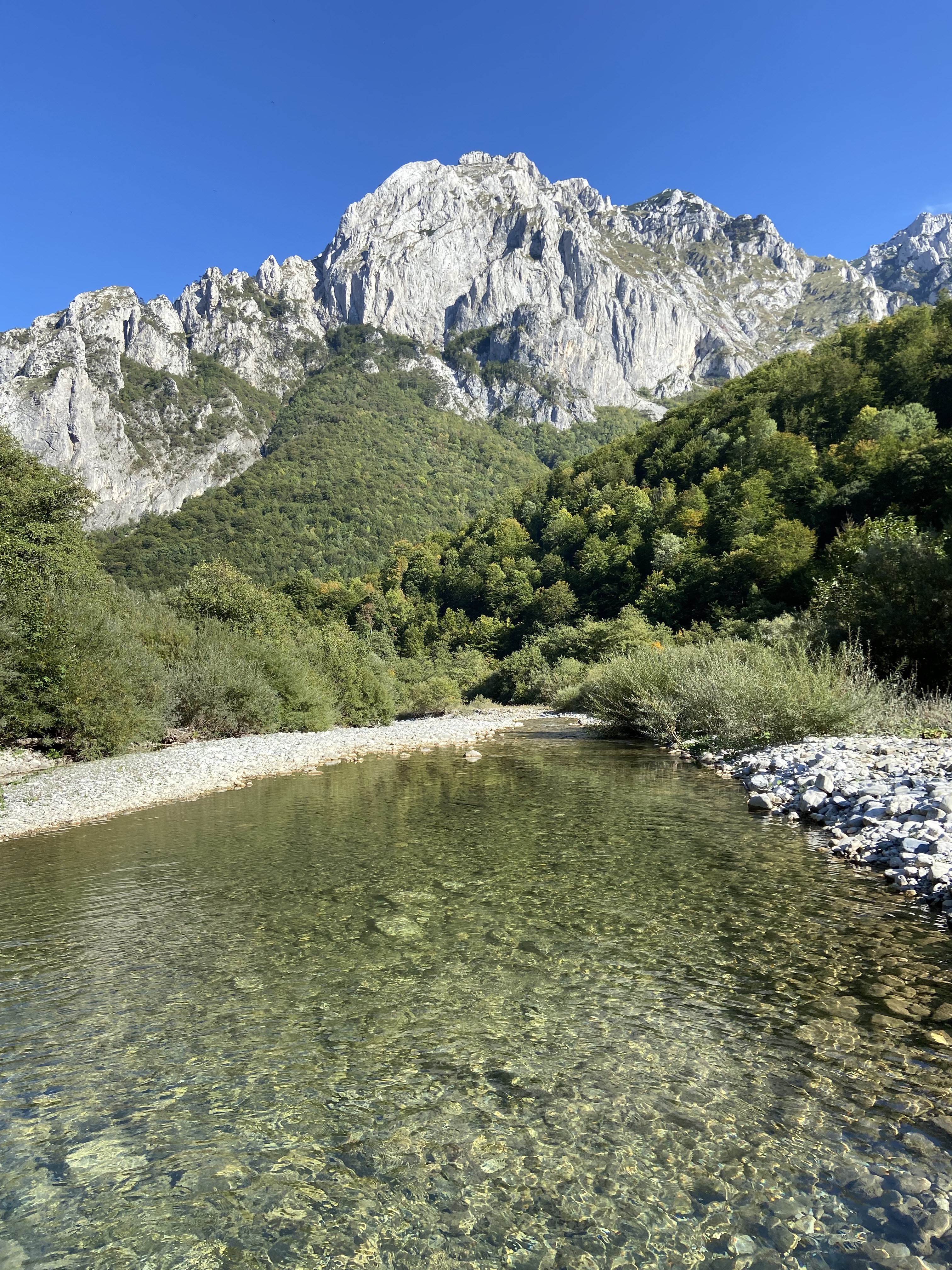
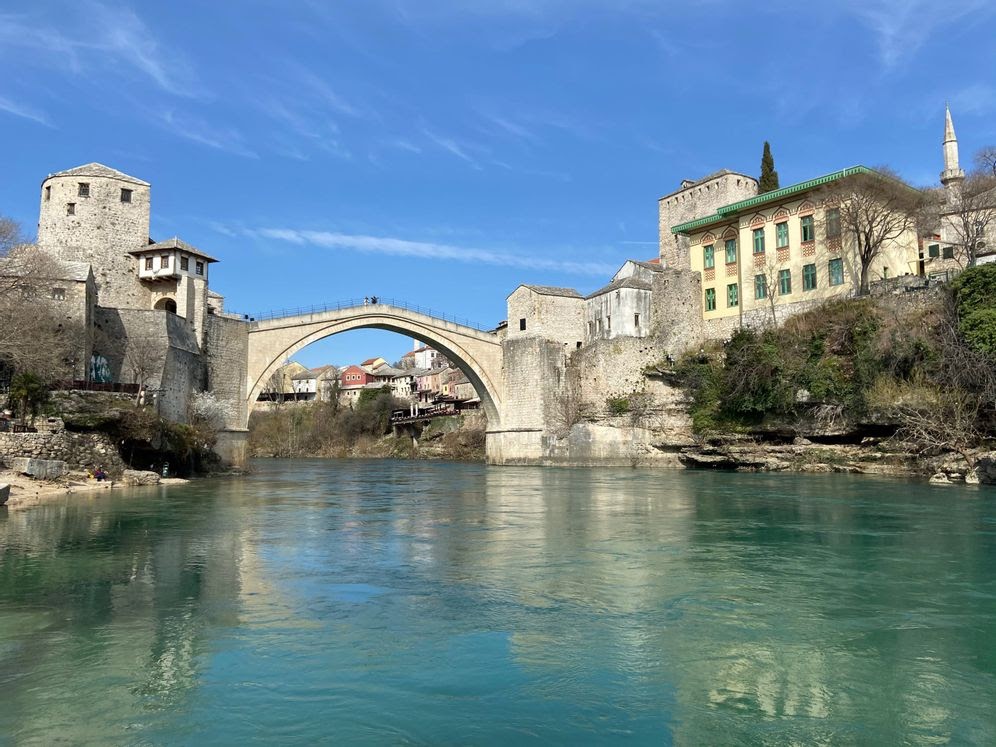
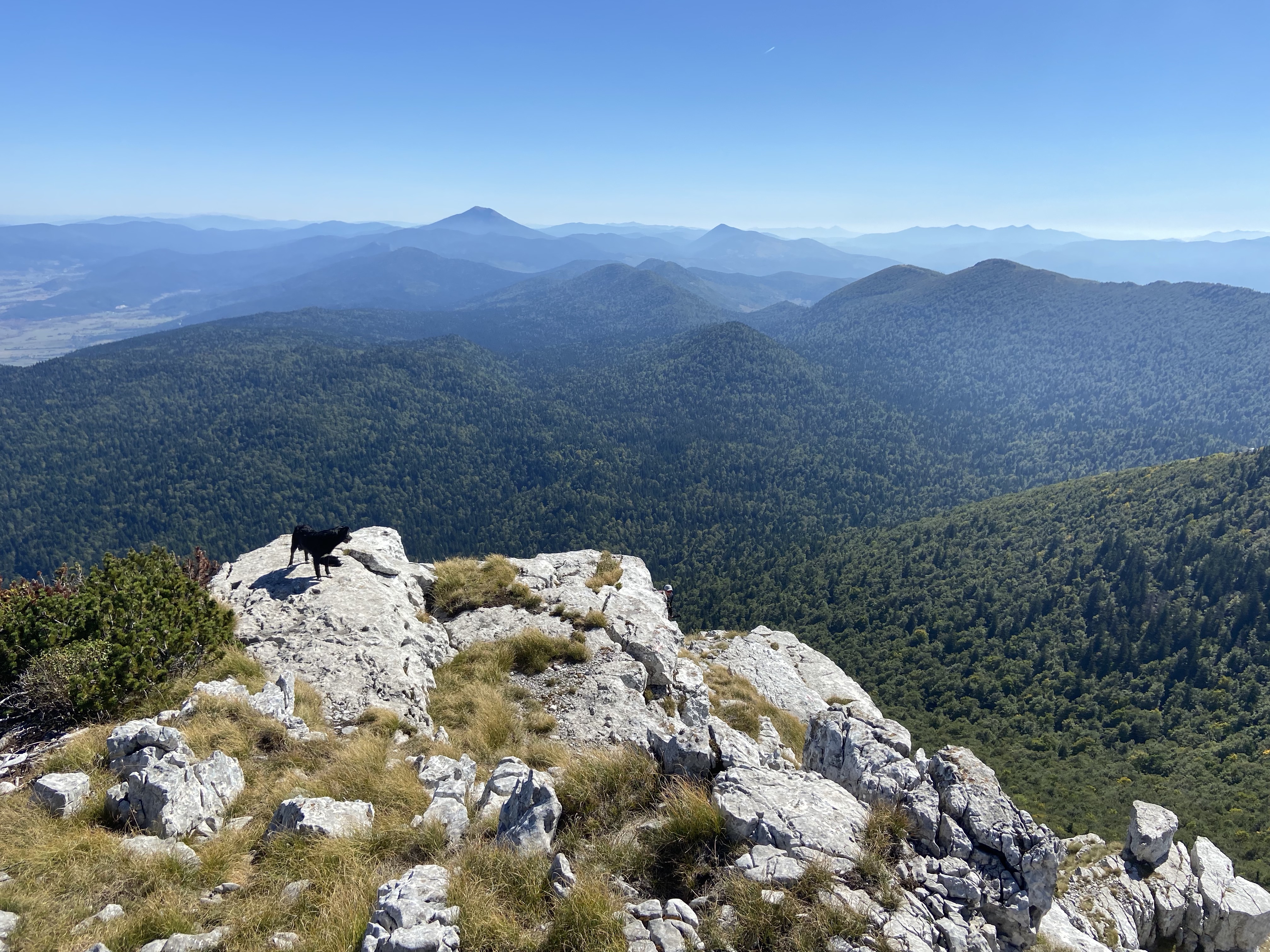
The beauty and variety of Bosnia and Herzegovina
Weather and Climbing Season in Bosnia and Herzegovina
Bosnia is the sort of country where you will be able to find somewhere good to climb at more or less any time of year. In the depths of winter, you can seek sunshine in the Mediterranean climate of Blagaj and in the scorching summer you can head into the mountains and climb at higher elevation crags like Klekovača. However, if you want to make the most of your trip and maximise your options for climbing, visiting during spring and autumn is recommended. The time from mid March to mid May and mid September to mid November will give a really nice balance of not too hot or too cold, giving you maximum flexibility to choose between the country’s best crags.
Below is a map of the different crags we climbed at in Bosnia and Herzegovina, so you can see where they are in relation to each other.
For simplicity, we have described the crags from North to South.
Climbing Recommendations
Zečiji kamen
Zečiji kamen is a really nice crag, set in the beautiful Kozara national park. The first time we ever visited the crag it was home to a very feisty billy goat, meaning that whilst belaying you had to keep one eye on the leader and the other on the goat, which liked to sneak up on people! The goat is no longer around, so now you are free to enjoy the lovely crag surroundings undisturbed. Zečiji kamen has around 40 routes, with grades from 5a to 7c+. The crag really excels for long routes in the 6th grade, of which many are around 40 meters on good quality limestone, with continuously interesting and engaging climbing. The surrounding national park is home to many nice hiking trails through beautiful forested mountains and the crag is not far from the significant WWII memorial monument of the revolution, which is a good opportunity to learn about the hardships that soldiers and civilians of Yugoslavia faced during the war.
Kanjon Tijesno
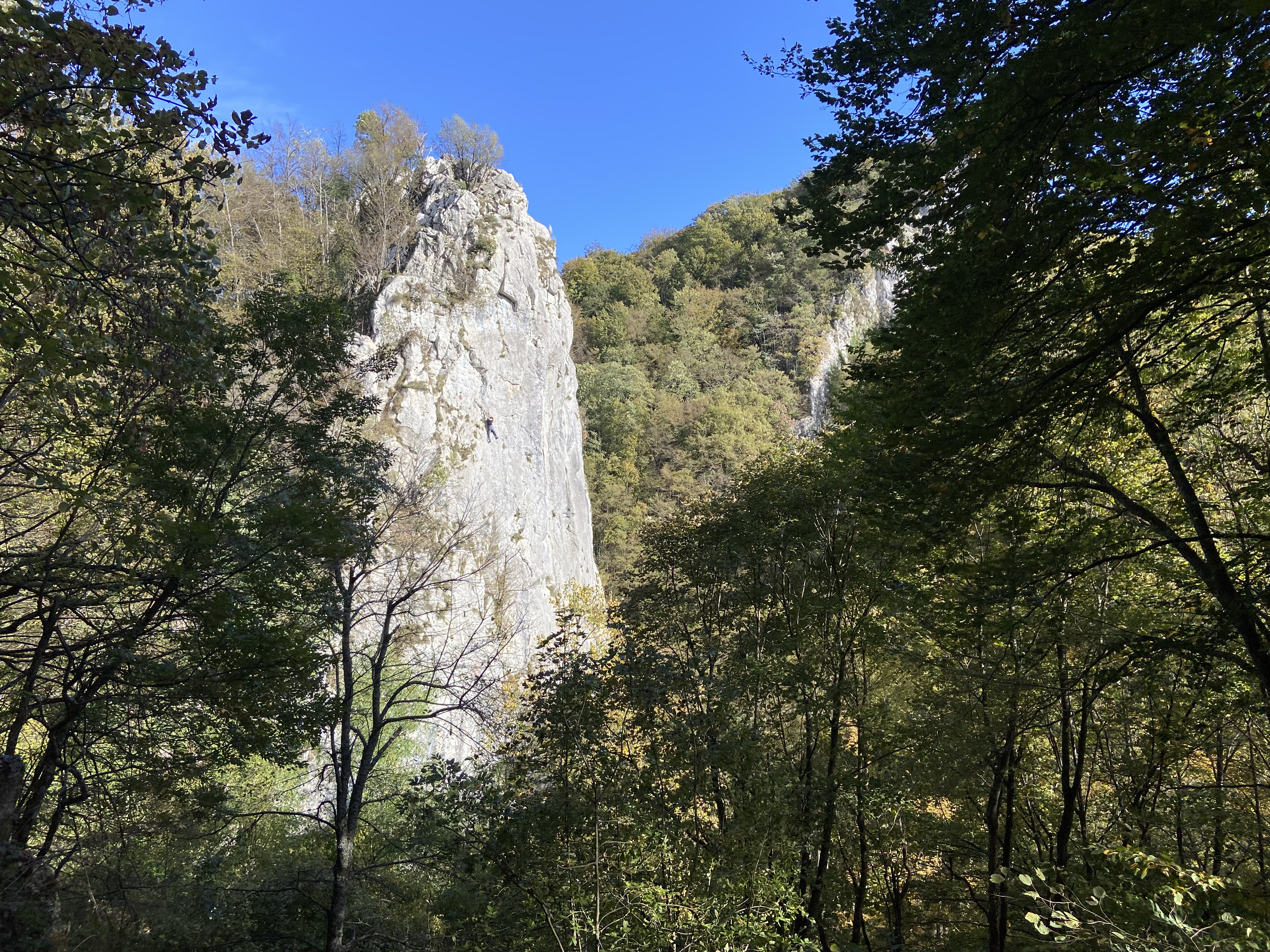
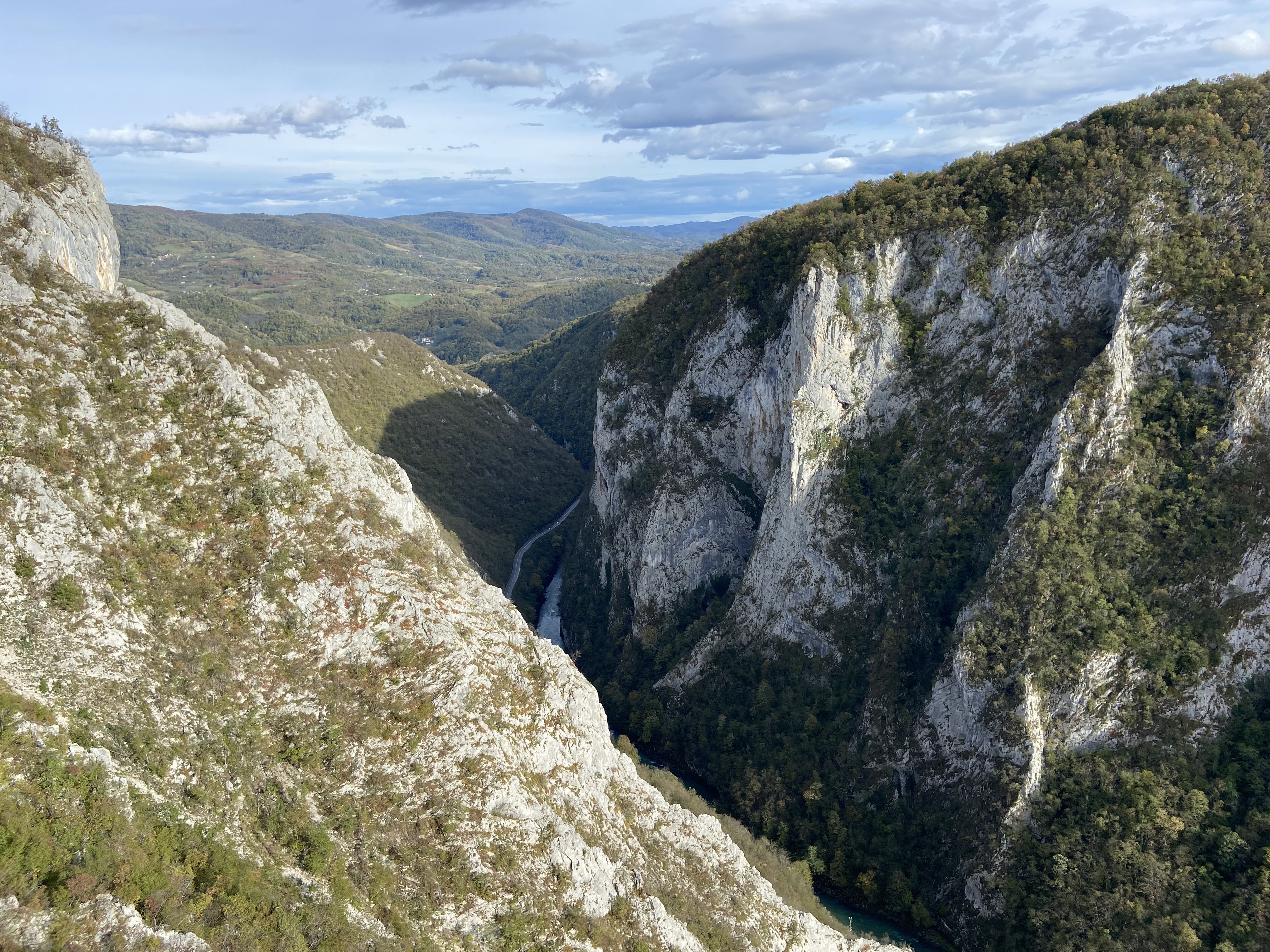
Kanjon Tijesno is the most significant area in Bosnia for multipitch climbing. There are a high concentration of multipitch routes here, which despite their relatively close proximity to the road, can often feel quite isolated. The multipitches are varied in their grade, with something for most people difficulty wise, and their lengths are typically between 100 and 200 meters. It is possible to reach the crags from the bottom by walking, or from the top by either walking or abseil depending on the crag. From our experience approaching from the top is easier, although it can be tricky working out what exactly you are above, it is generally preferable to the difficult terrain beneath many of the crags. The collection of crags in Tijesno is very impressive, and it is not hard to see why such a stunning area became home to Bosnia’s biggest climbing festival – Drill and Chill. The river Vrbas below is popular with rafters and has beautiful clear water – perfect for a swim, if you don’t mind the cold!
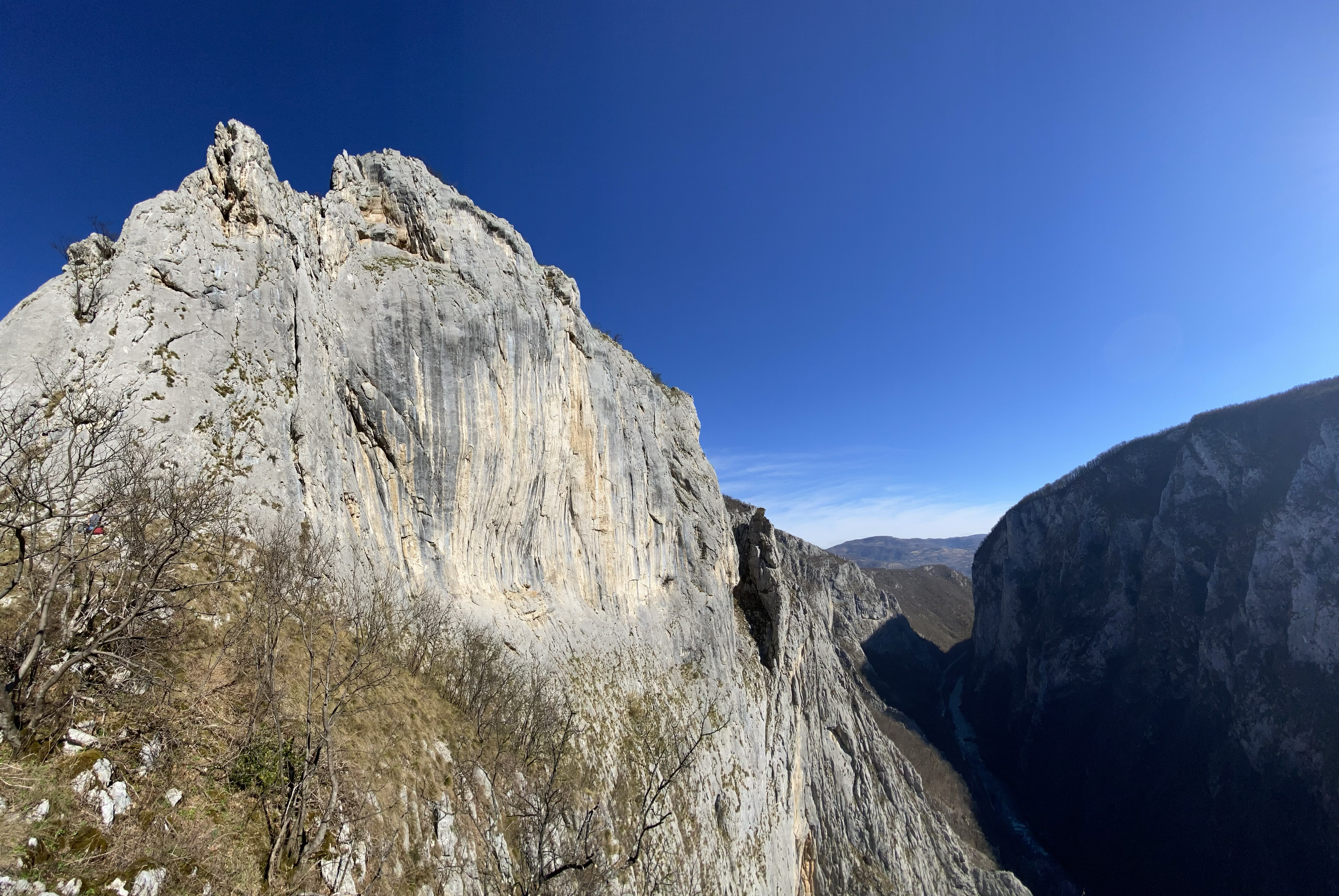
Tijesno is also home to lots of excellent single pitch sport climbs, and there have been more and more sectors developed as the years have gone by, with some really great additions like Jazbina and Vito. The hardest route in Bosnia is at sector Amfiteatar, a 9a+ first ascended by none other than Adam Ondra. The sector also has routes in the 6s and 7s for us mere mortals! We have always really enjoyed the sport climbing in Tijesno, the locations and views from the different sectors are stunning and the climbing is typically on really nice rock. Over our many visits to Tijesno over the years, we’ve only had other climbers at the crag once, so it is reasonable to expect it to be a very quiet and peaceful place to climb. Tijesno is also very close to Banja Luka, which is the second largest city in Bosnia after the capital Sarajevo, and is a great place to visit and eat out.
We write for pleasure and climbing is our passion. Our articles will never be paywalled. However, if you would like to help towards the costs of running the site or if you have found our content useful, please consider contributing here. To read more about why your support matters, click here.
Skubalj
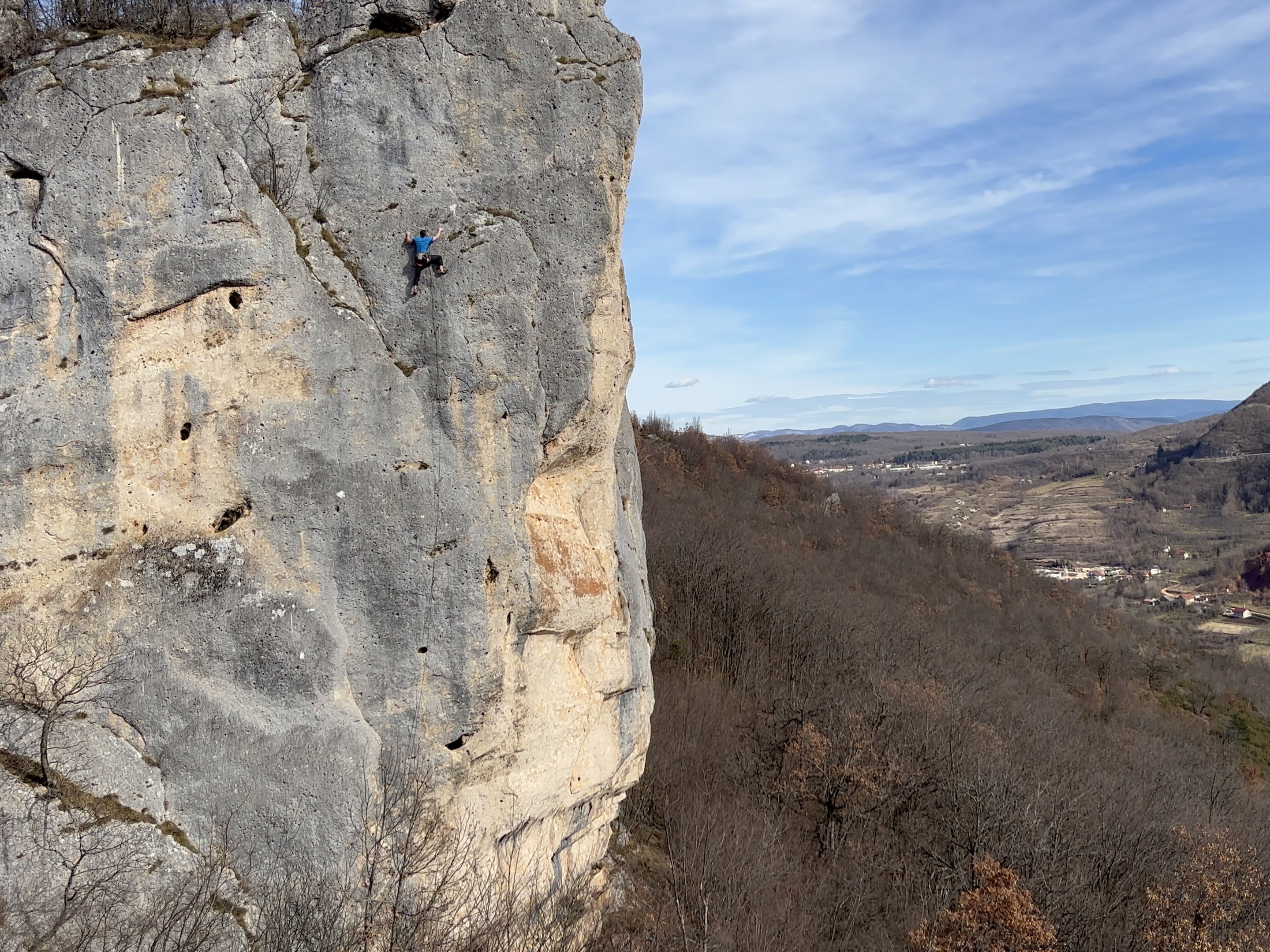
Skubalj, or Skuba as it is often called for short, is a pleasant sport crag not far outside of Tijesno but not as far out as Kameni Most. The crag has quite a variety of routes all things considered, with some short, brutally hard steep routes as well as some long, slabby and easy routes. Access to Skuba is very easy and the crag is quite sheltered from the elements compared to many of the other crags in the area. The climbing is nice, but not amazing, and it would be fair to say Skuba isn’t as good a crag as Kameni Most, for example. However, there are still plenty of fun routes here and some cool sections of rock, so it is definitely still worth a visit if you are in the area for a while, but not a priority if you are short of time.
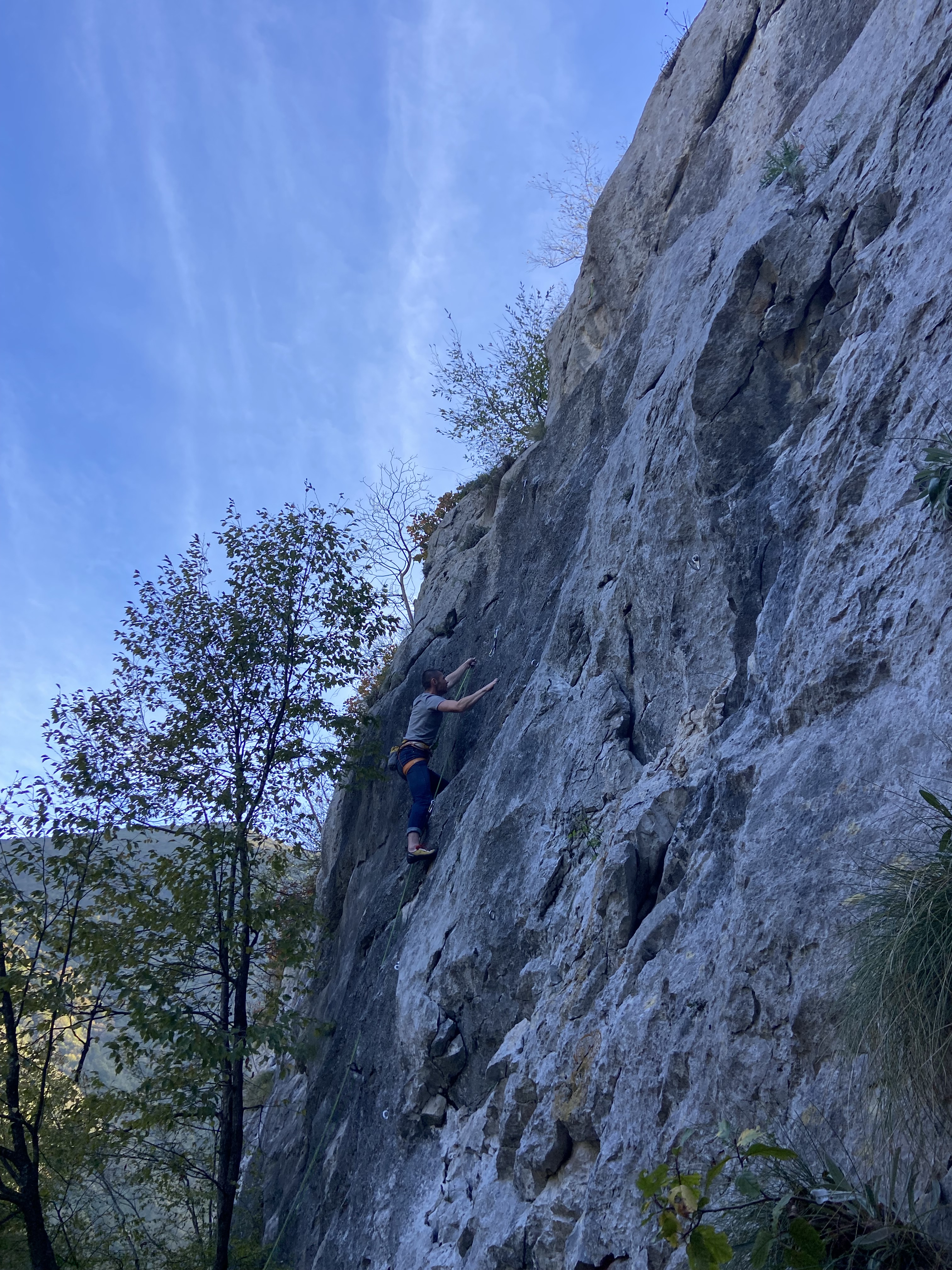
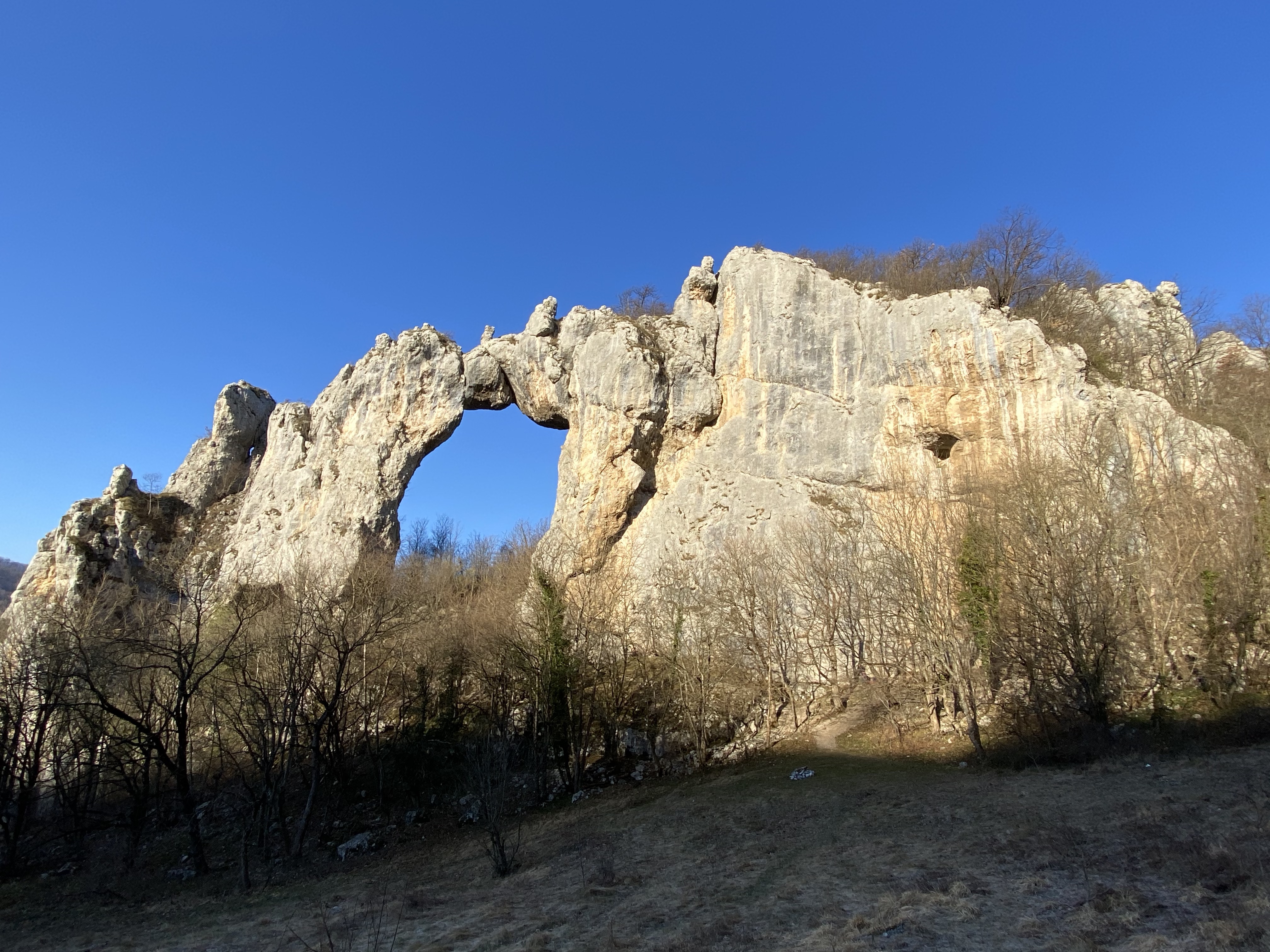
Kameni Most
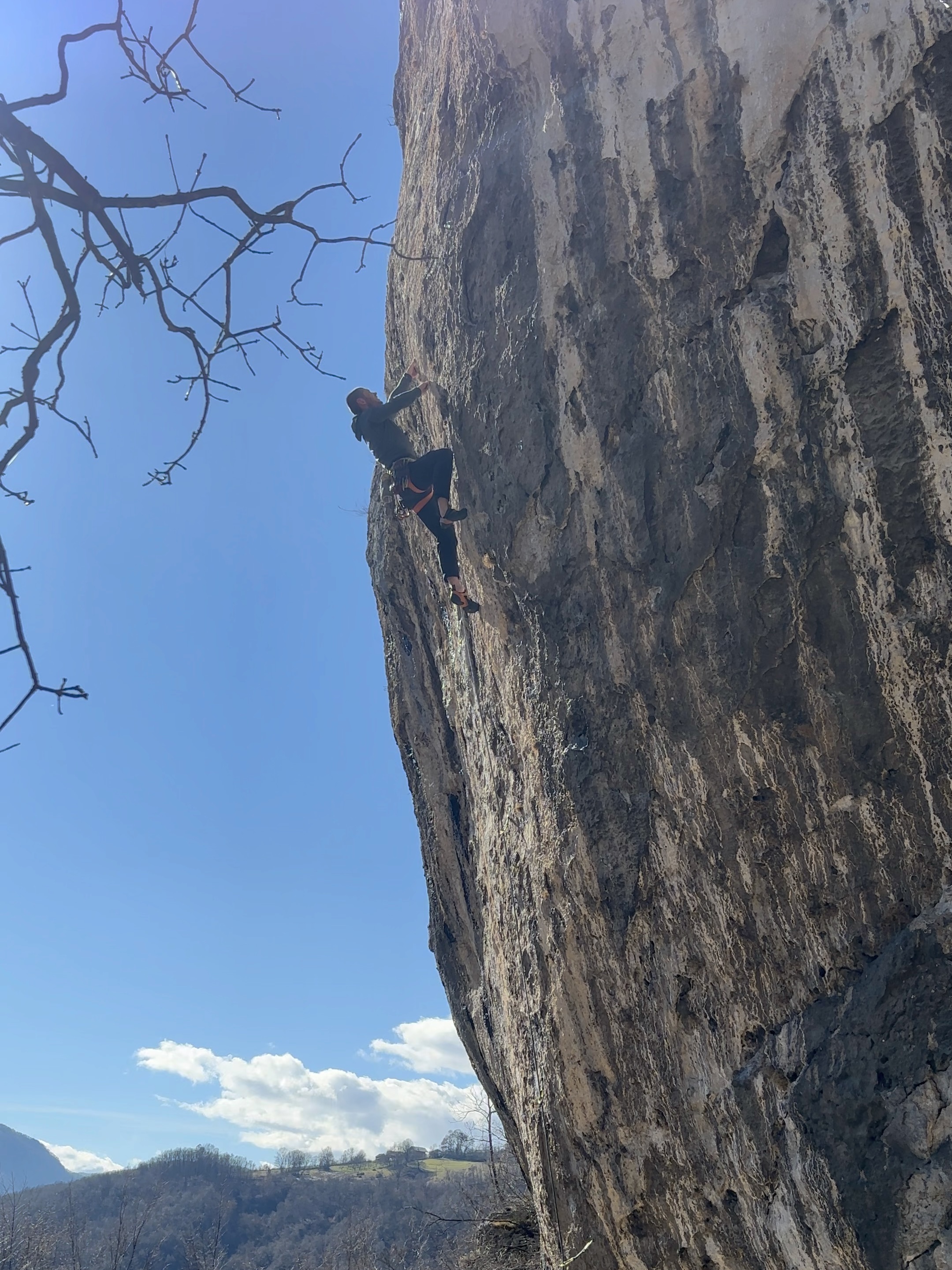
Kameni Most, which translates literally to Stone Bridge in English, is one of the coolest and most unique crags in Bosnia. The feature of a natural stone arch is inherently appealing due to its natural beauty and of course the enticing lines that draw climbers in. The climbing at Kameni Most is great quality, and there is a really good variety of climbing styles between the different sectors. The first sector you arrive at after the approach is a steep and imposing section of rock with caramel, orange and cream colours to it. The climbing here is pretty brutal, long moves on sharp pockets and on overhanging terrain. Even after leaving, climbing in many different places and upping our grade, we always get humbled when we return to climb in this sector! The moves are super cool, but no giveaway, once the successful attempt eventually arrives you can truly say you’ve earned it.
Further along the crag, after the craziness of the routes in the thinnest part of the arch, you will find a wonderful technical grey wall. The routes here are a good 35 meters long and have very absorbing and quite thin moves for their grade. A classic example of this is the excellent ‘Žuba’, a 6b+ that goes straight up the most beautiful part of the face – the climbing is devious and good footwork is worth more than pure finger strength, but you still have to pull too! The difference in style between these two sectors is very marked and it is great to have such variety at one crag. There are other sectors just a short walk uphill past the arch with more lower grade routes, these are of a different style and character as well. We really love Kameni Most and it is one of our favourite places to climb in the Banja Luka area.
If you find our content useful please consider subscribing:
Pecka
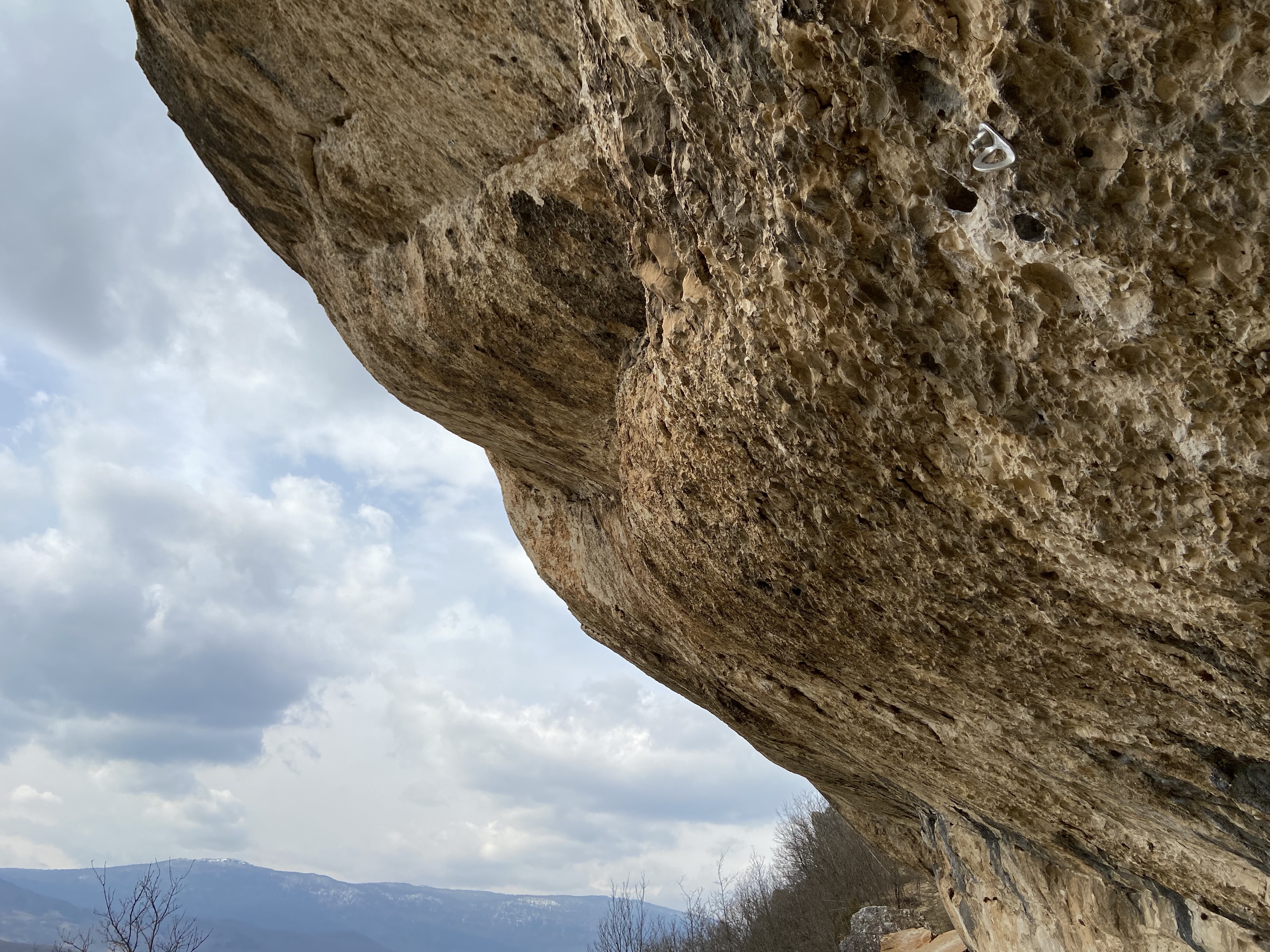
Pecka, in our opinion, is the best sport climbing area in Bosnia. The rock is pocketed conglomerate, just like the world famous Margalef, and is of a very high quality. One of the defining features of Pecka is that its dimensions are that of the ideal sport crag. The cliff band is continuous and traverses the hillside for several hundred meters, maintaining a height of 20 to 35 meters for more or less its entire length. The crag also tilts to varying degrees along the way, with both slabby, vertical and extremely overhanging sections. The pocket pulling style is intense and demanding of your fingers and of your footwork, but you are rewarded with superb quality bone white and steely blue/grey walls and many eye catching lines. The location of Pecka is also perfect, you access the crag easily from above and have panoramic views of the valley beneath you. The field where you park has benches and a fire pit for climbers, it is acceptable to camp here too, remembering always to be very respectful of the place you are visiting.
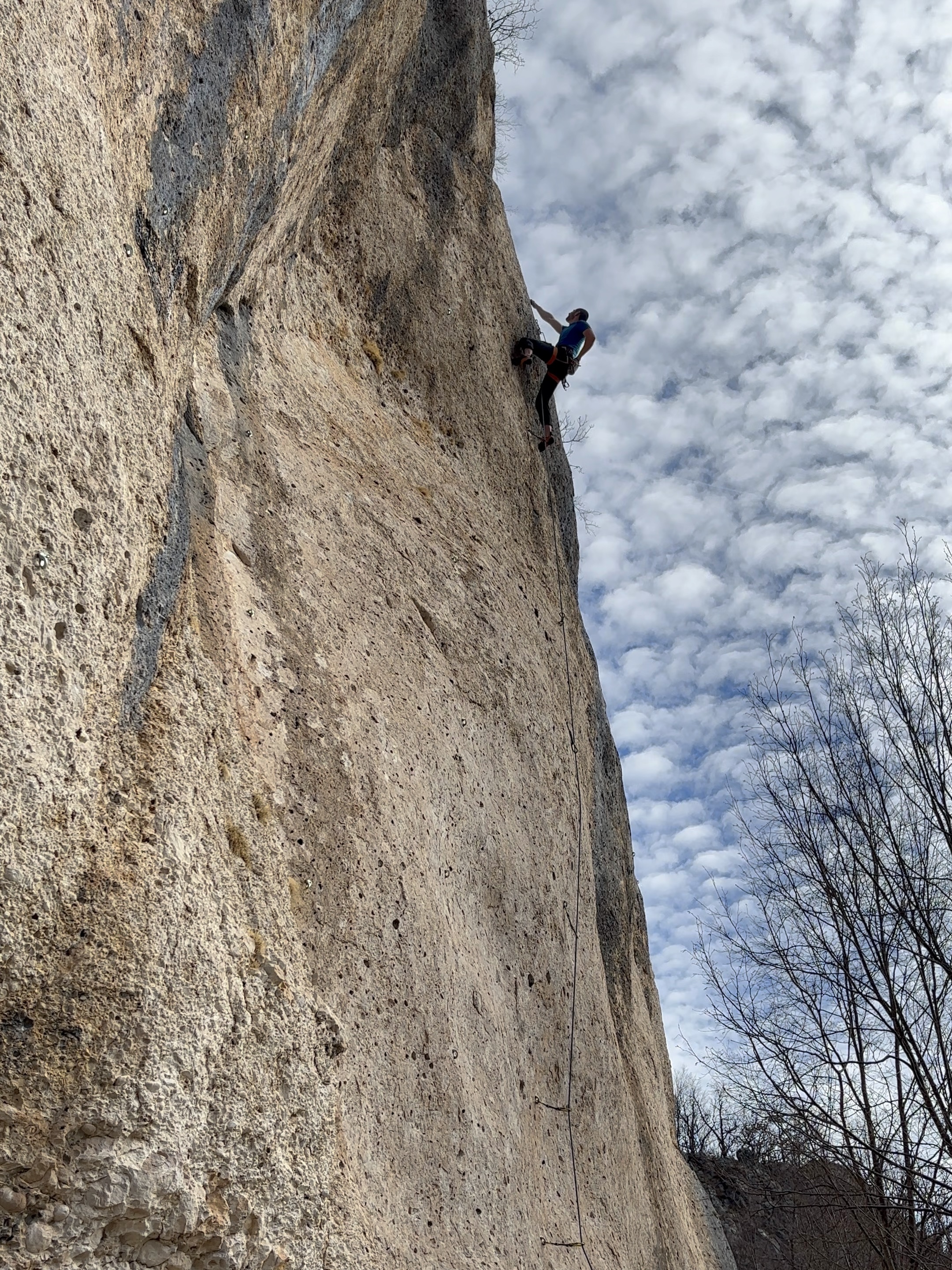
On every trip we’ve taken to Bosnia we have climbed at Pecka, and every time we have loved it and been surprised at just how good it is. There are in excess of 120 routes in Pecka, with grades from the 4s and 5s up to around 8c, so there is something for pretty much everyone. The climbing is generally very pumpy and onsighting at your limit here is a good test of stamina and mettle, sometimes the routes can be very airy and exposed. Don’t be fooled by ones that look easy…the pockets aren’t always as deep as they seem from the ground! The crag is south facing and can be extremely windy, which makes it worth avoiding in midwinter, and likewise isn’t a crag for mid summer due to the heat. Spring and Autumn are the best times to climb here, and on a nice day at this time of year there are probably no other crags in the Balkans we’d rather be at!
Dariva
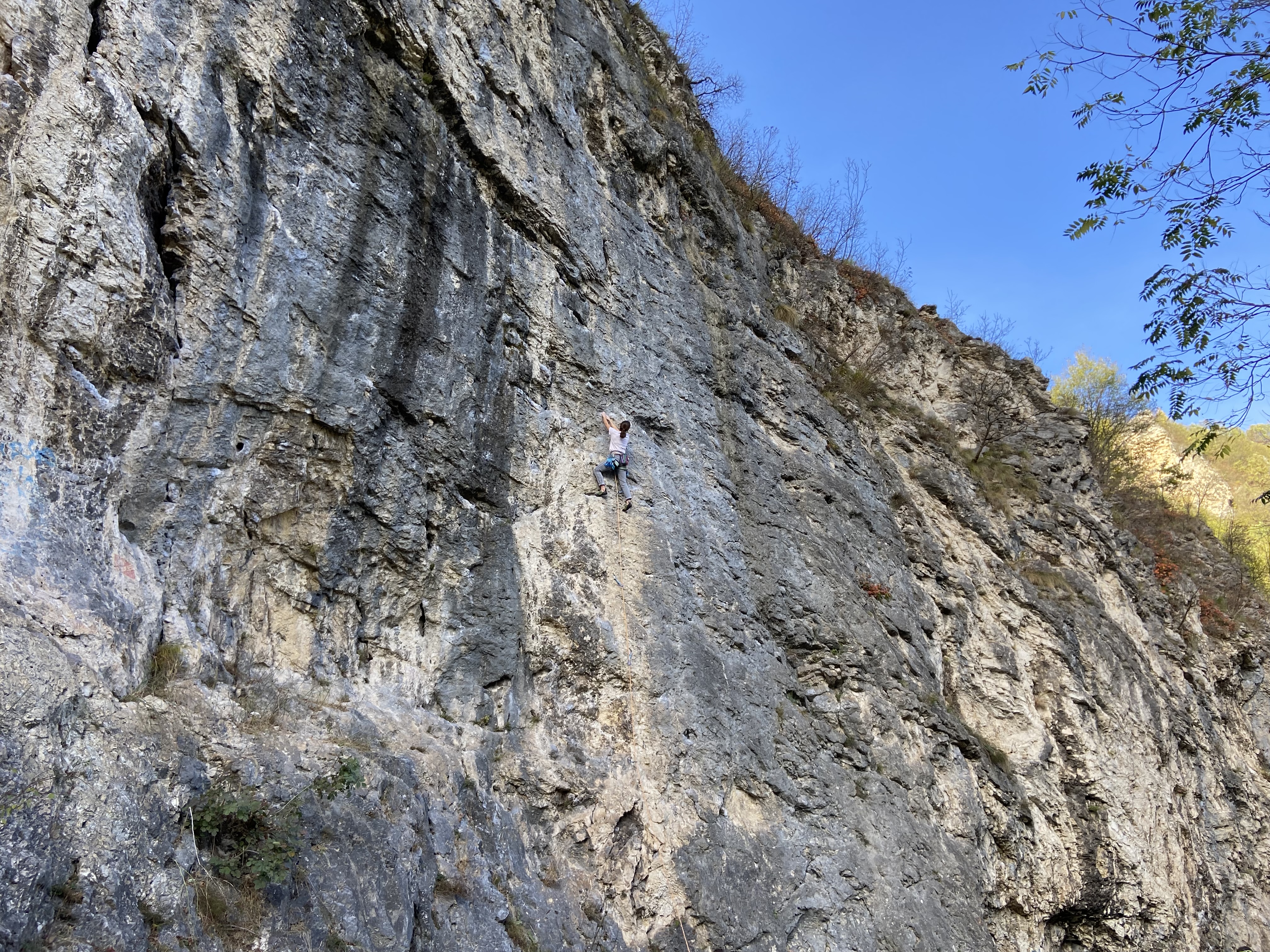
Dariva is the city crag of Sarajevo, and a great place to test your fingers and get pumped whilst visiting the city. The location of Dariva is pleasant as city crags go, it lies along a bridleway type path popular with cyclists and walkers, making access very easy. The crag has a good variety of grades and a no-nonsense, down to business climbing style. Dariva has over 40 routes, from the 4th grade up to 8a+, which is easily enough to keep most people occupied for a day or two. The crag isn’t anything amazing by any stretch, but Sarajevo is an incredibly interesting and must visit city. Dariva gives you the great option to tag on some fun and challenging climbing to your city visit, which overall makes for a winning combination.
Spijonik
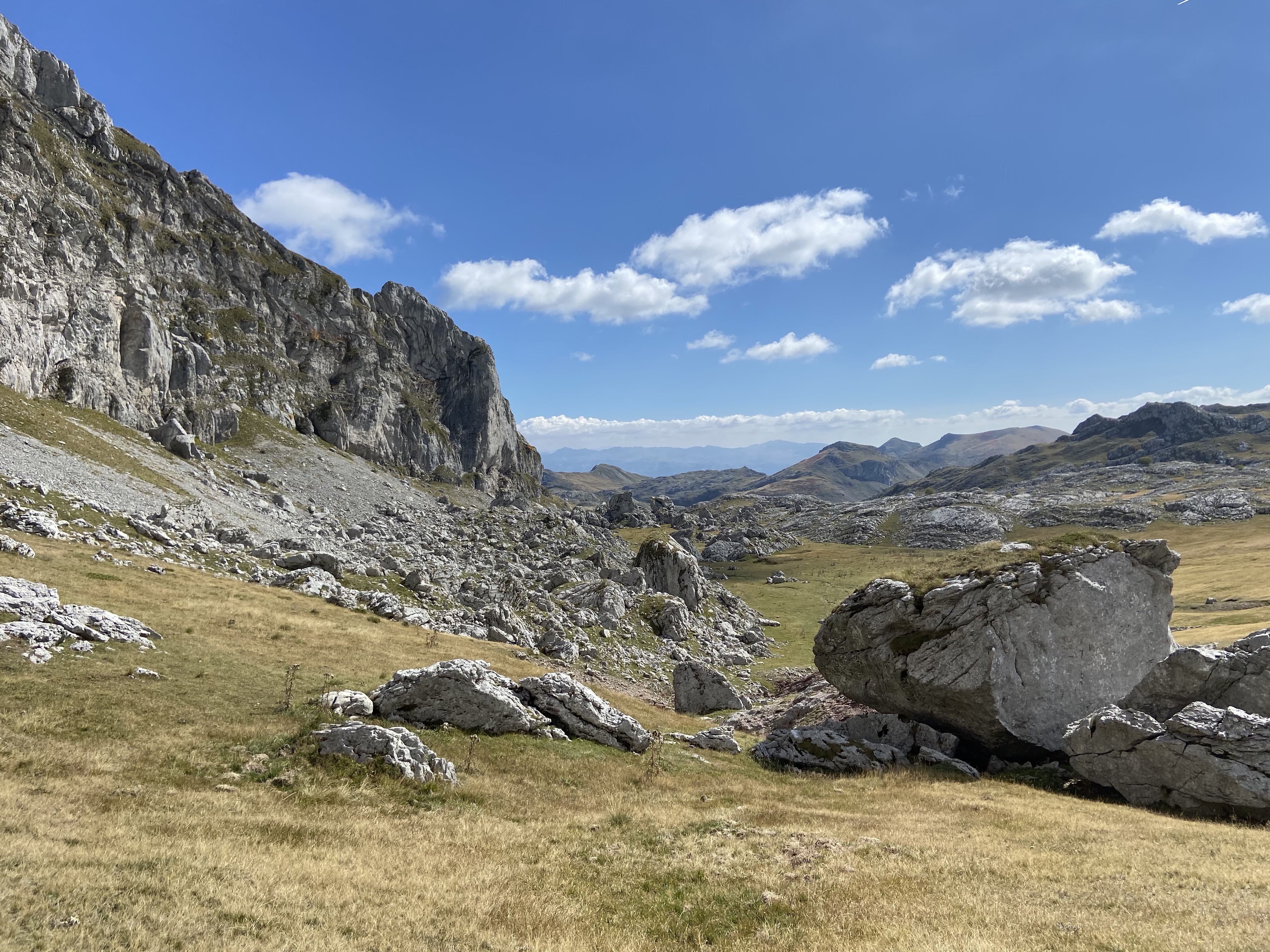
Spijonik is a beautiful bouldering area set in the mountains, around 55km from Sarajevo. The boulders sit at an elevation of around 1,700 meters, so the environment has a definite alpine feel to it. There are large crags towering above the boulder field, with some gorgeous lines just waiting to be climbed. We spotted a few sport routes in the area that weren’t in the guidebook, but undoubtedly there is the potential for many more. There are currently around 50 problems developed, which are documented in the guidebook. With more development there could easily be over 200 problems and a similar amount of sport routes in this area alone. Other valleys nearby and on the other side of road also seem to have lots of boulders and crags that look worth exploring too.
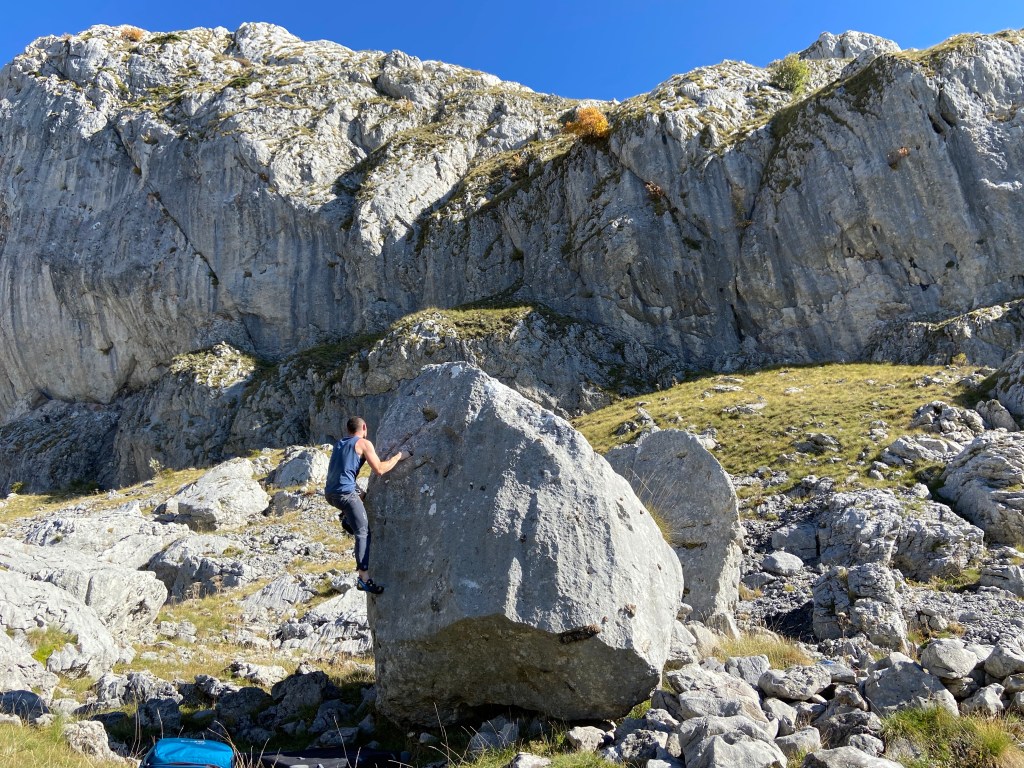
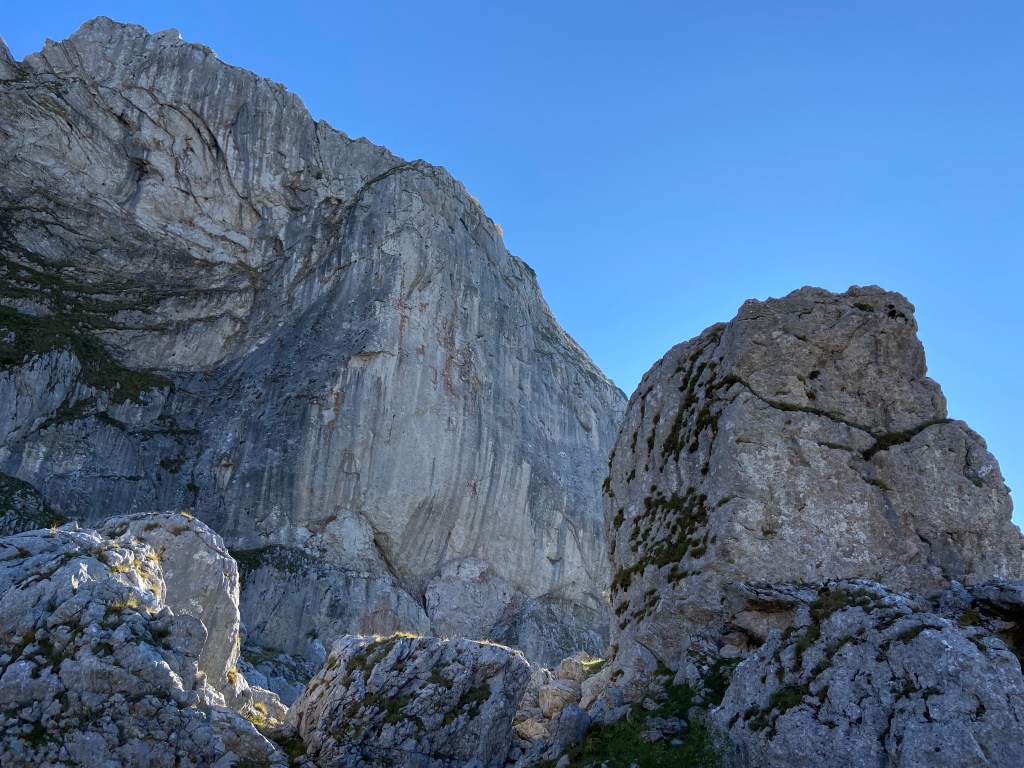
Cool boulders and amazing cliffs at Spijonik
The rock is high quality limestone which is generally solid. Harsh winter weather and snowmelt has weathered the rock so it has lots of interesting features such water runnels, scoops and sloping pockets. The rock can be extremely smooth in some places and extremely sharp in others. We climbed a couple of problems that weren’t in the guide and had no problems with loose holds. The landings vary from flat and grassy to scary scree slopes. Considering the boulders here can get very high, having several pads will be an advantage. Spijonik is a very quiet and peaceful place to boulder – no tick marks, no chalked holds and no polish, you will almost certainly be the only climbers here. Spijonik is definitely worth visiting and it is one of the most unspoilt bouldering areas we have ever visited.
Blagaj
Blagaj is without a doubt one of Bosnia’s best and biggest climbing areas, with a host of superb routes, in beautiful locations and near some amazing historical sites. Needless to say, if you visit Bosnia for climbing you should not miss Blagaj, but equally don’t make it your only stop either. Perhaps the first area you will climb in Blagaj is right above the Eco Centre, which is a great place to camp and find out recent information about the climbing. The crags above the Eco Centre are quite varied, first you will come to some very technical and, to be honest, sandbagged, grey limestone routes of around 20 meters high. The rock is good quality, but nothing comes easily! Slightly further along the same band of cliffs is Sector Crvena Stijena, an absolutely fantastic tufa crag with some really excellent climbing. Classic routes here like Powerline and Punk Donkey are top drawer routes and some of the best in Bosnia. These crags are only a stones throw from the wonderful Dervish house and Buna Spring.
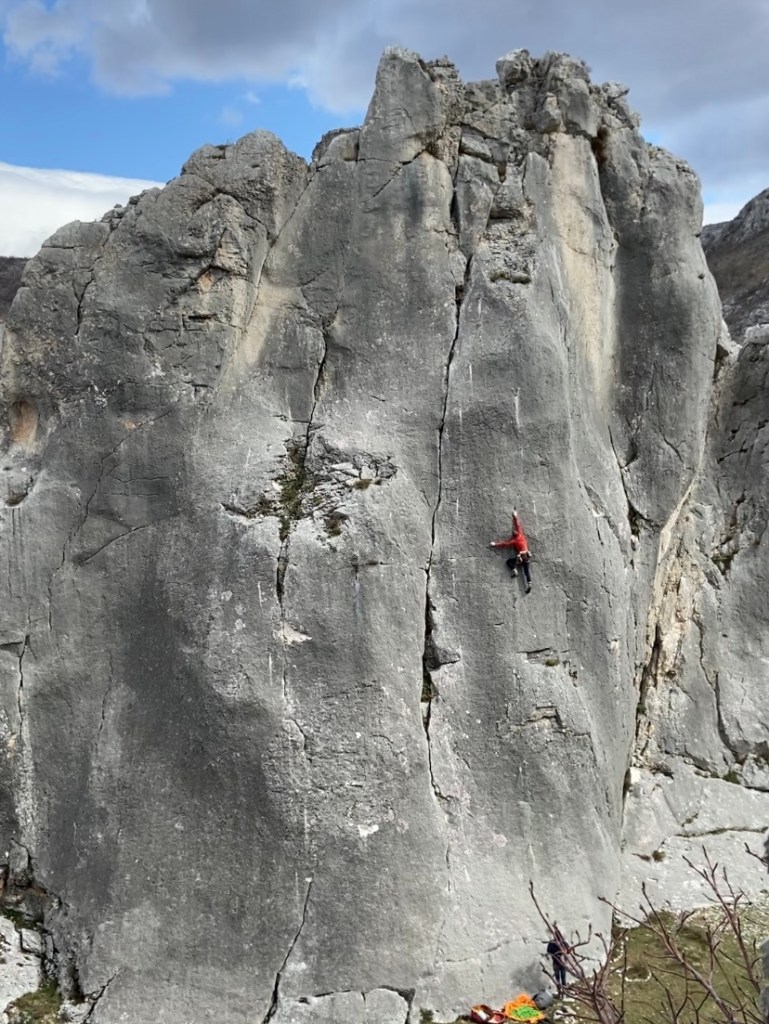
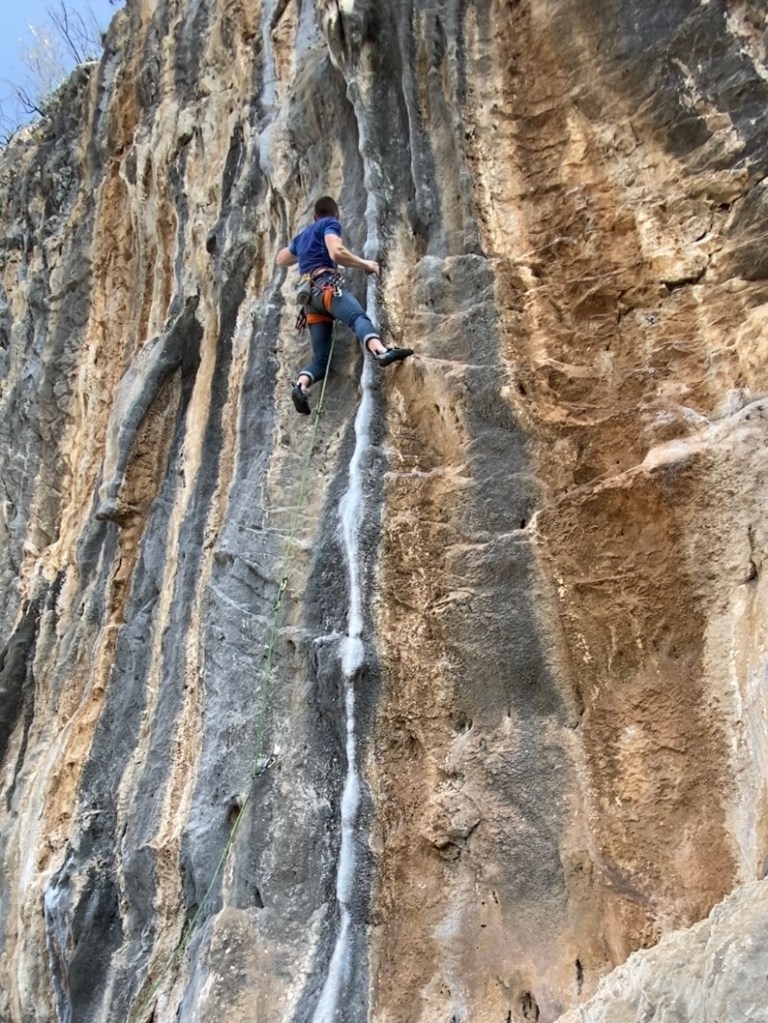
Some of Blagaj’s classics: ‘SSK’, 6b+ and ‘Powerline’, 7a – both truly superb routes
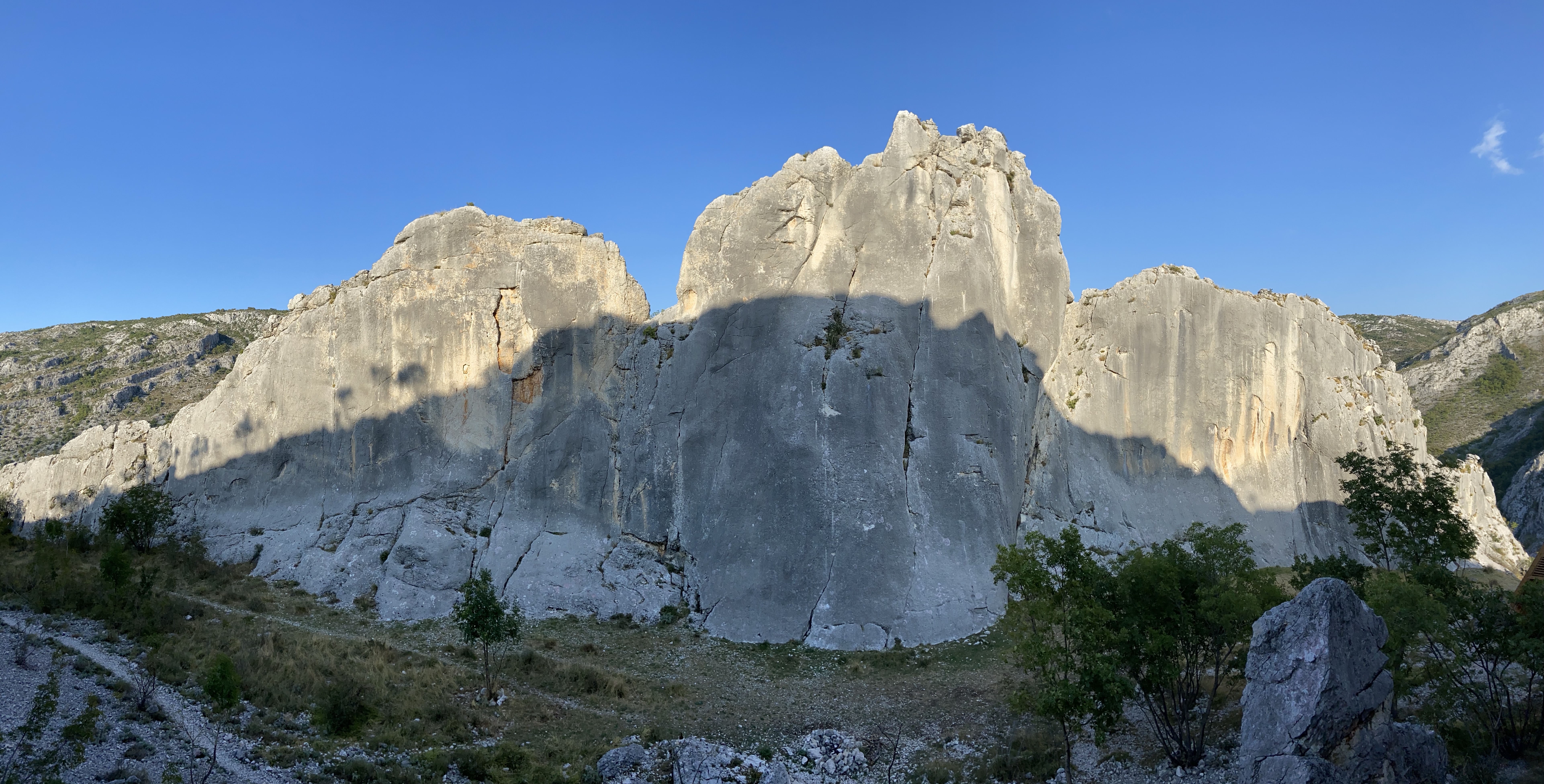
Behind the Eco Center, and to the right of the sectors mentioned above, is a narrow canyon lined with big impressive cliffs and has a via ferrata running through it. The scenery and scale of the canyon is awesome and as well as being home to many sectors and routes already, still holds the potential for far more. The standout sector in this area of Blagaj is definitely Šube, which is an enormous, steep crag covered in tufas. Šube has an almost amphitheatre shape to it, and gives you panoramic views of the surrounding area. The rock quality is excellent, as it is across Blagaj, but we did find it to be specifically good in this sector. Šube is definitely a crag for the harder climber in general, with most routes in the 7s, although there are a few 6s as well. Even if you only go to try and leave with no send it is totally worth a visit. Routes like ‘Kikiriki I Košpice’, 7b+, are amazing and if it was in Leonidio it would probably have a queue!
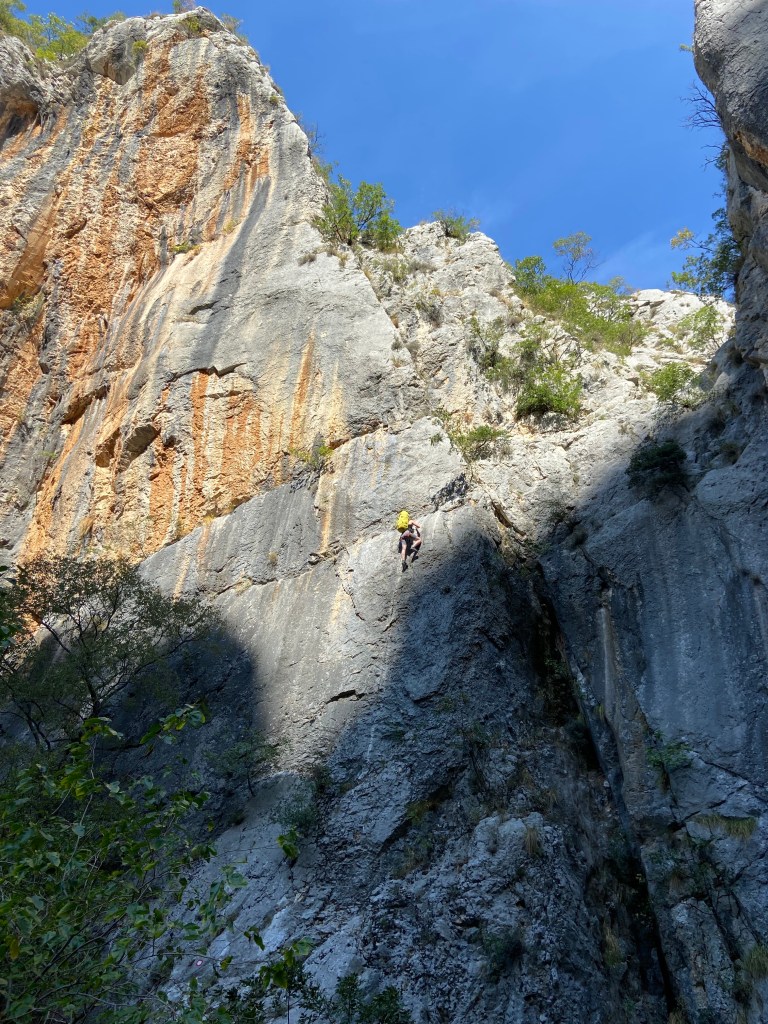
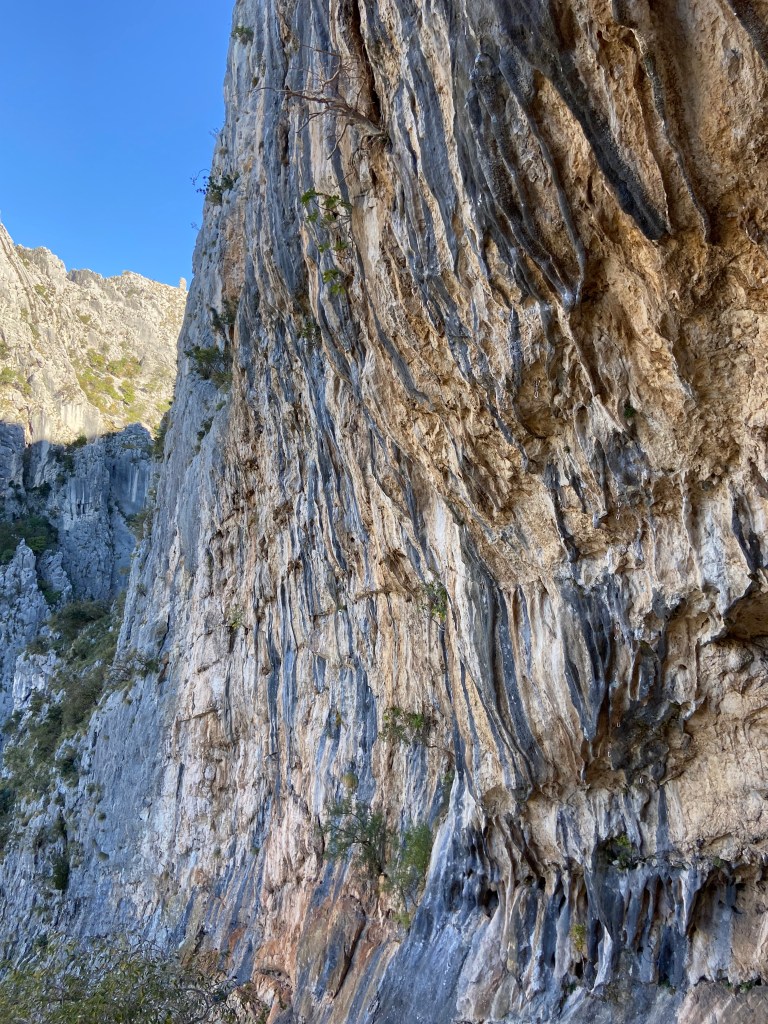
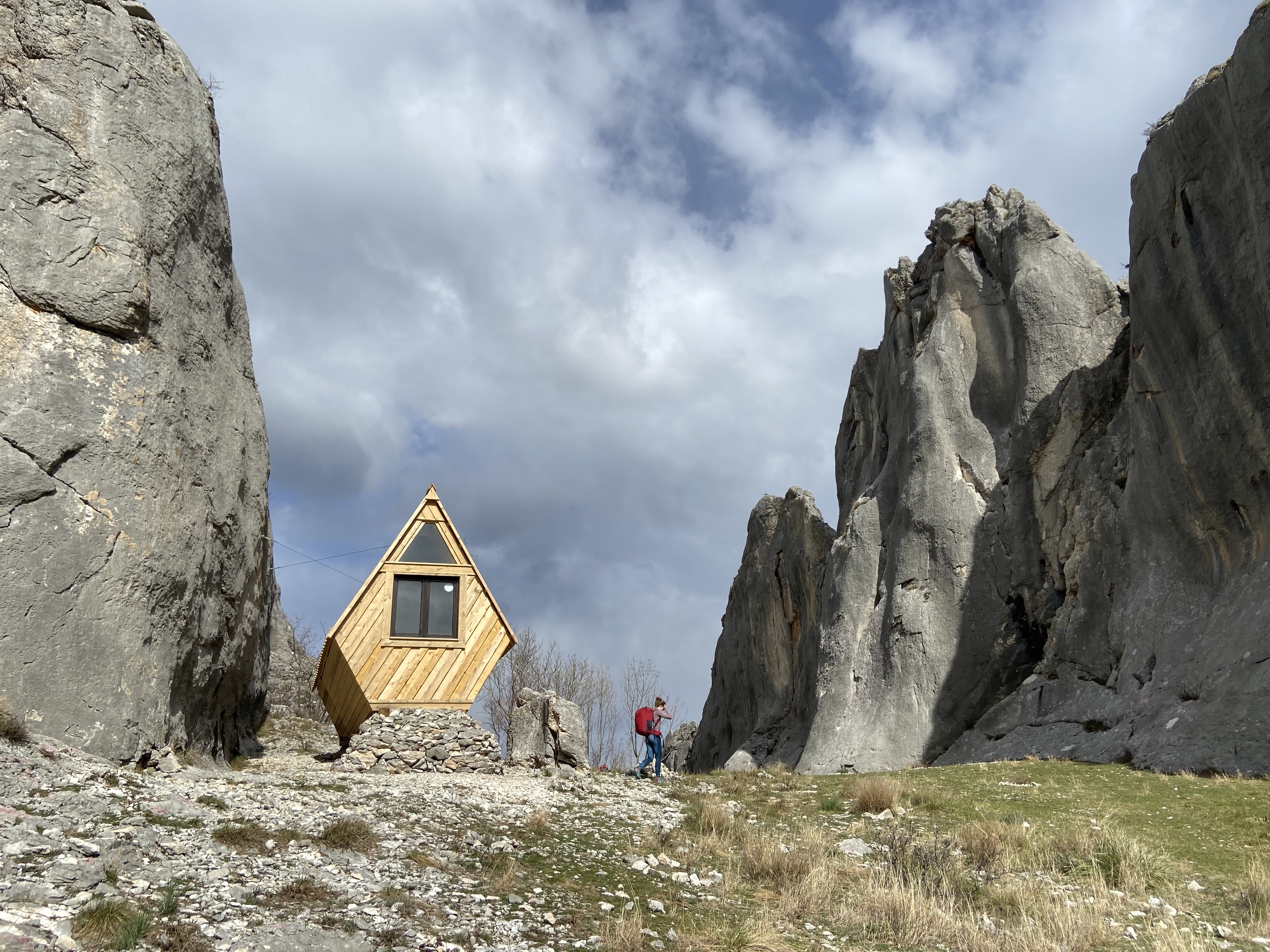
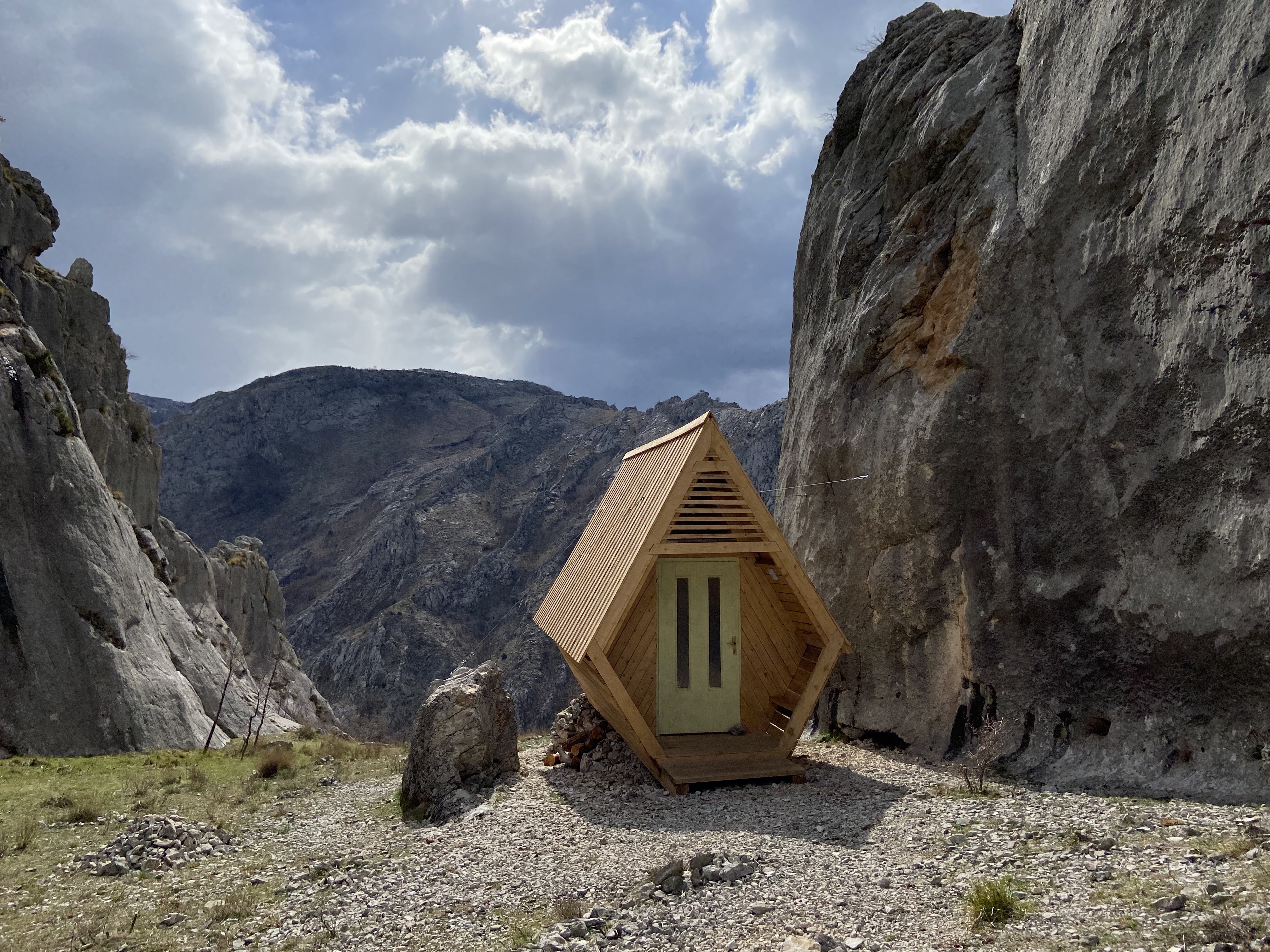
At the top end of Blagaj’s climbing offering is sector Rebro, which is yet another amazing sector. Rebro is beautiful fin of grey limestone that rises out of the hillside like the partially uncovered fossil of a Spinosaurus. There are several smaller fins, but it is the main one which is the most magnificent and has the best routes – on both sides so you can follow the sun or shade as needed. The climbing style here is very technical and very challenging of your footwork. You may need to dig deep to trust those smears! The quality of the routes is great and it contrasts wonderfully with the other areas of Blagaj. Nestled in-between the fins is the Rebro hut, which is a futuristic looking shelter you can sleep in or take refuge from the elements in. It is beautifully made, and a real testament to the local climbing community, make sure to treat it with the utmost respect. Rebro can be approached via the canyon or by walking past the ruins of an impressive fortress, which dates back over 1,000 years and was extensively repaired by the Ottomans.
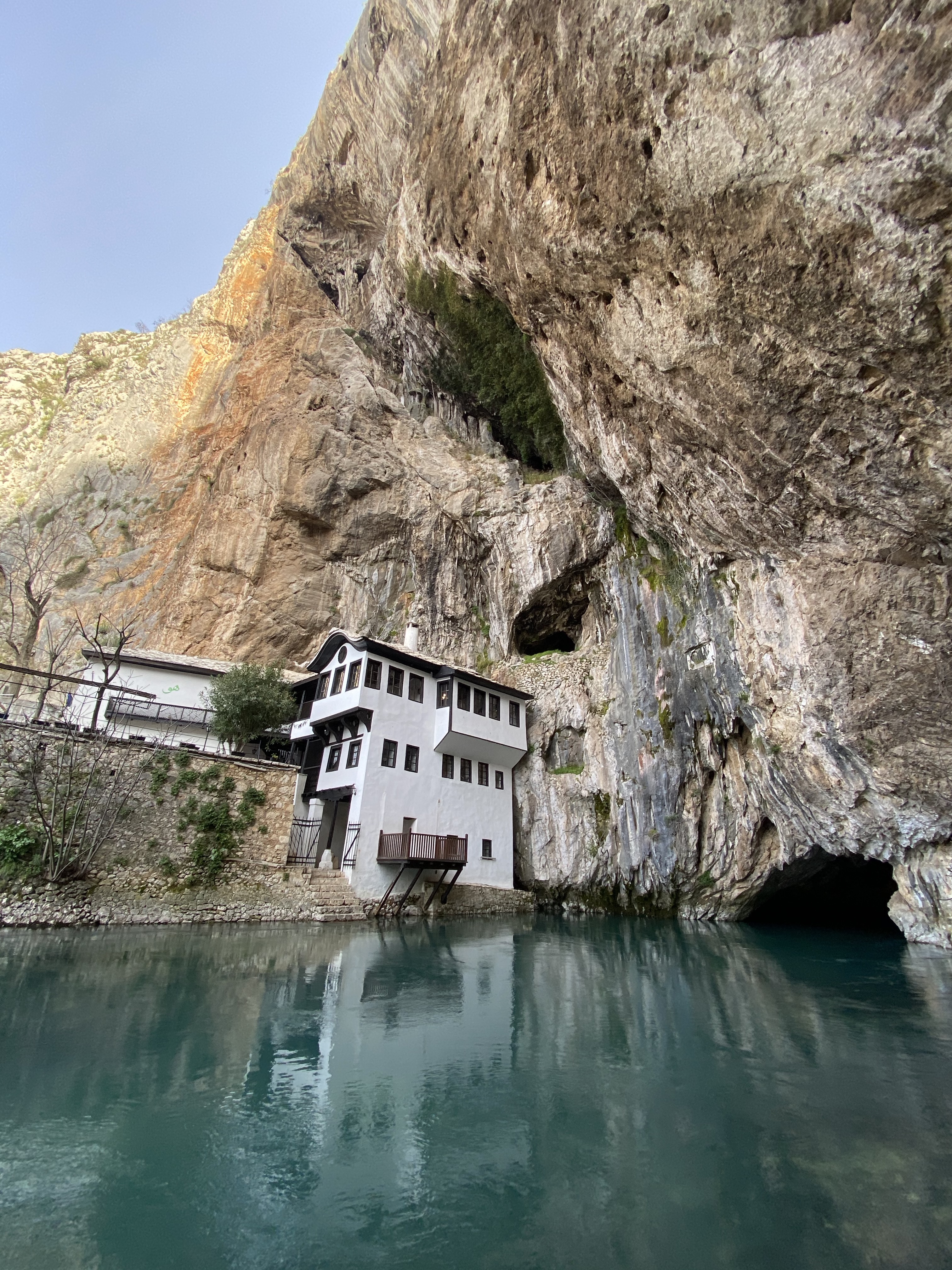
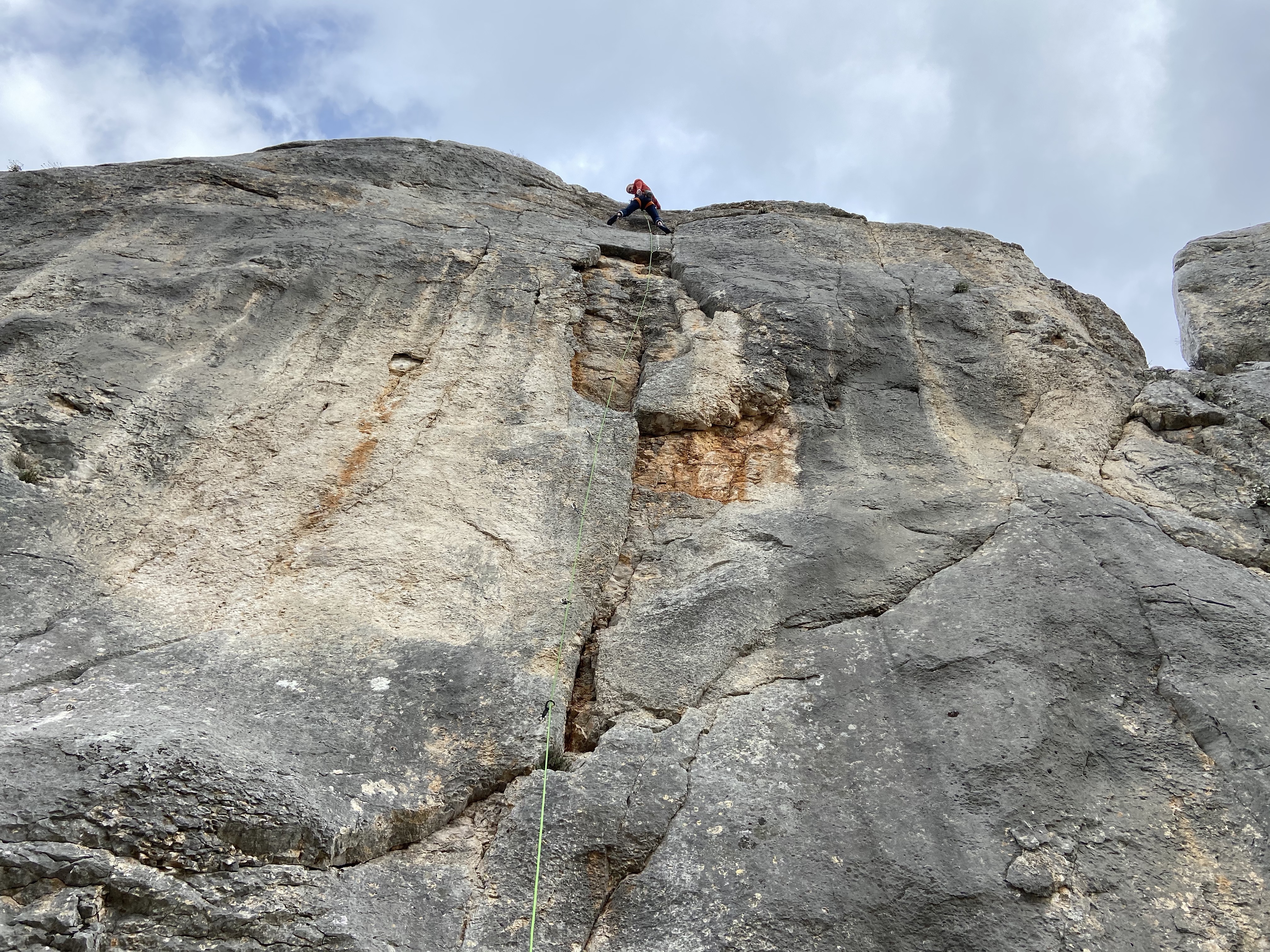
As you can imagine, all of these different facets combine to make Blagaj an excellent and truly wonderful climbing area. There are lots of routes, great quality rock and lots of cultural interest aside from climbing. Even the climate is impressive – people grow pomegranate and even kiwi fruit here! It is more than fair to say the place has a lot going for it, and it is definitely underappreciated within Europe – it is an impressive and really unique climbing area that should be high on your list.
Rest Day Activities
Old Towns and Historical Sites
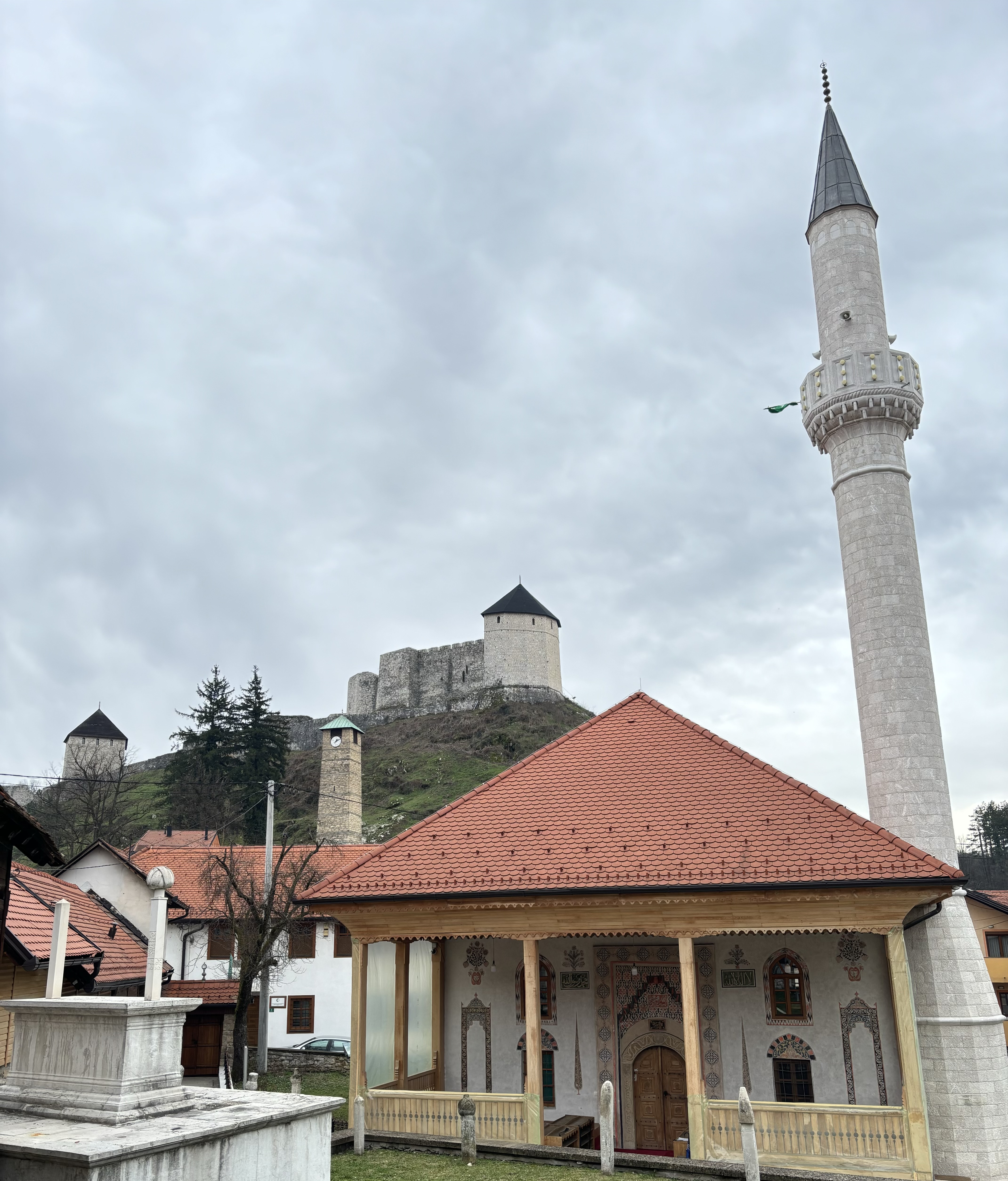
Bosnia has many historical towns and cities, with beautiful old buildings and architecture. There are also plenty of ancient ruins of castles and fortresses throughout the country, so any history enthusiast is in for a treat. The most famous sites are of course Mostar and Sarajevo, both are wonderful and also quite busy in peak season. However, the hidden gems across Bosnia are really something special and are not to be missed. A great example of this is the Srebrenik Castle, which is an amazing fortress type castle built on a natural pinnacle and connected to the hillside by a bridge. The first mention of this castle in written records was back in 1333. This is by no means the only interesting castle or ruin of this type in Bosnia, there are many. Two of our favourite places are the small historic towns of Tešanj and Maglaj. These exemplify best what is so great about Bosnia, being able to visit genuinely beautiful and interesting places that are off the tourist radar, but no less impressive than many well known places.
Hiking
If there’s one thing, other than climbing, that Bosnia is truly exceptional for, it is hiking. There are many, many different mountains across the country, with a variety of different environments and challenges. Bosnia is part of the Dinaric Alps, a stunning limestone mountain range that runs down the Western side of the Balkan peninsula. There is simply so much great hiking to be done in Bosnia that it really deserves an article all of its own. No matter which climbing area you are in, you won’t be far from somewhere with large mountains or beautiful forests to go hiking in. Perhaps a special mention should be given to Maglić, which is Bosnia’s highest peak at 2,386 meters. As well as the main summit, the surrounding mountains are also incredibly beautiful and full of great hikes, you are also near the stunning Perućica, which is a beautiful old growth primeval forest.

Waterfalls
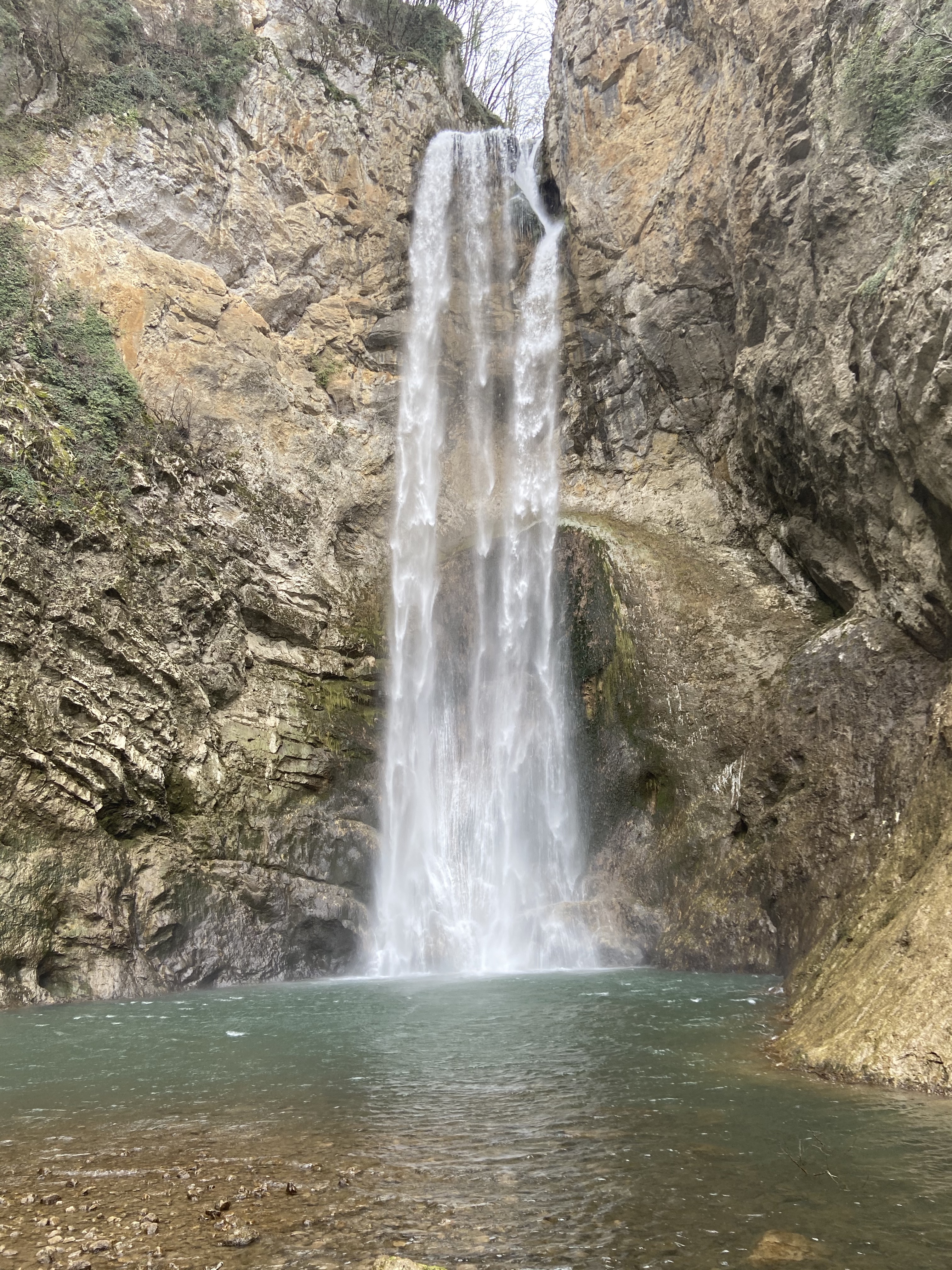
Bosnia is definitely a country shaped by water, and is well known for its gorgeous rivers, karst springs and of course waterfalls. The nature of these can visit from low key and quiet to famous and popular – like Kravice. Naturally we prefer the quieter ones, that can be combined with either hiking or climbing, a good choice for this is Skakavac near Sarajevo. Visiting a beautiful waterfall in Bosnia is not difficult, and is a great way to spend a relaxing afternoon on a rest day and take a refreshing dip on a warm day.
Food
Janjetina is a whole lamb spit roasted over a fire, it doesn’t need much explaining other than that! It tastes delicious and succulent, and it is well worth seeking out. Janjetina is typically sold by the kilo so bring friends and arrive hungry!
Ćevapi are small skinless sausages that are grilled and eaten alongside a gorgeous traditional bread called Lepinja. In Sarajevo the ćevapi are round and finger shaped and in Banja Luka they are rectangular with ribs on them. Try both and see which you like the best!
Sarma are one of the most delicious things to eat in Bosnia, something typically made at home, that takes a lot of effort. Sarma are made by stuffing fermented cabbage leaves with a mixture of minced meat and rice. Often the sarma are cooked alongside smoked pork that imparts extra flavour to the dish. It is also worth mentioning the delicious Sogan Dolma, which are made by stuffing the same mixture as sarma into onion, a really tasty and satisfying meal.
Proja is a traditional type of cornbread made entirely without wheat flour. Proja can be eaten with cream/yoghurt or served alongside a meal like bread. It is a very wholesome and hearty food.
Burek/Pita is popular throughout the Balkans, in Bosnia Burek refers to a meat pita. Pita is a baked pie, made of filo pastry, with a variety of fillings such as meat, cheese and spinach. Bought from a bakery and eaten fresh and warm is the best way to enjoy it, although they make for a great crag lunch as well.
Tufahija is a delicous traditional desert made by poaching apples and stuffing the hollowed out core with a chopped walnut filling and it is topped with whipped cream. It is perfect for after a meal or to enjoy with a coffee.
Rakija is popular throughout the Balkans and Bosnia is no exception. Rakija is brandy made from fruits like plum, apple or quince, among many others. Homemade rakija is the real thing, and families often gather together and distill it together, a real special occasion.
Summary
It is probably obvious by now that we really love Bosnia, it is a country we have made many friends in and feel a connection to. The climbing in Bosnia is excellent and there is a lot of it, as well as the potential for a lot more. Aside from the rock quality and route standard, the location of many of Bosnia’s best crags is also very special and has a big impact on the experience of climbing there. Although Bosnia has grown in popularity in recent years, it still receives nowhere near the number of tourists that neighbouring countries like Croatia do. This makes finding authentic and off the beaten path places very easy, and you feel you get to see the ‘real’ Bosnia, not just things put on for foreigners. In fact, outside of Mostar and Sarajevo, you are pretty unlikely to come across any other tourists, especially in the climbing season. When also considering that some of Bosnia’s crags are among the best in the entire Balkan region, it is easy to see why we have always had such great experiences in the country. We have many great memories from our time spent climbing and travelling in Bosnia, and even though we have already been four times, we are absolutely certain we will continue to visit again and again in the future as well.
We write for pleasure and climbing is our passion. Our articles will never be paywalled. However, if you would like to help towards the costs of running the site or if you have found our content useful, please consider contributing here. To read more about why your support matters, click here.
Relevant links and resources
Affiliate Disclosure
We have an affiliate partnership with Climb-Europe.com, which means we receive a commission if you buy a guidebook via one of our links, at no extra cost to you. Currently, we only use affiliates for guidebooks from Climb Europe, not anything else. To read more, click here.
https://climb-europe.com/products/bosnia-and-herzegovina-rock-climbing-guidebook?bg_ref=QMscYZ3xQy
 The Crag Journal
Great informative post about the various climbing crags in Bosnia and Herzegovina.
The Rebro hut and the Kameni Most look really nice too.
Thanks for the nice report from Bosnia and Herzegovina.
LikeLiked by 1 person
Thank you! Glad you enjoyed the article.
LikeLike