Around a year after we last climbed in Sweden, we returned this summer to enjoy the bullet hard granite, peaceful nature and long summer days. You can read our original post ‘Climbing in Sweden: A Scandinavian Road Trip’ to see all of the crags we visited last year, mostly in southern Sweden. This year we climbed more in the north, generally in the Gulf of Bothnia area. We didn’t revisit any crags from last year, so everything in this post is different. If you want information on climbing season, rest day activities etc, please read last years post, as the same things generally apply we will avoid repeating ourselves.

We had a fantastic trip again this year and we really think Sweden is a great choice for rock climbing in the summer months, temperatures are milder than the majority of places on the continent and the crags & surrounding areas are far less busy than most climbing holiday destinations.
Sundsvall
Sundsvall is a small city on Sweden’s east coast, around 380 km north of Stockholm. The area surrounding the city is home to loads of bouldering, as well as superb routes. There are 3 particularly good crags well worth visiting, we will talk about them in a bit more detail individually.
Brattberget
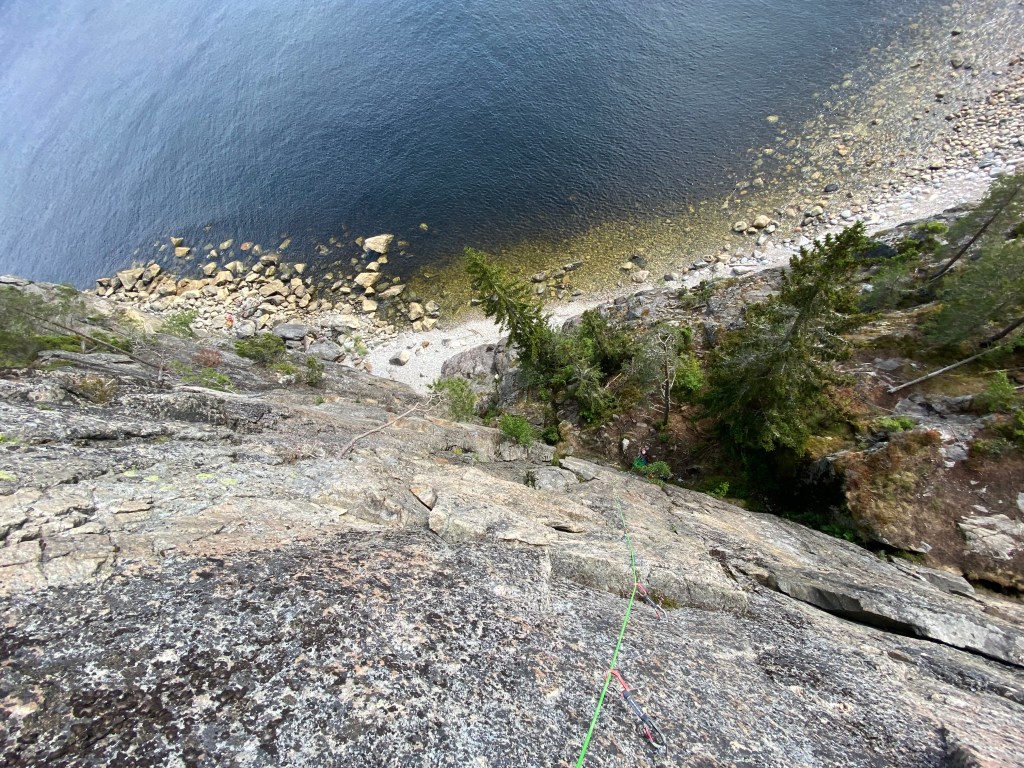
Brattberget is probably the best crag in Sundsvall, a beautiful cliff situated right on the coast of the Baltic Sea. On the road to get there you would never imagine there would be such an impressive crag, or that the location would be as stunning as it is. Once you’ve dropped down the descent gulley the atmosphere is completely different, it feels totally peaceful and secluded, a lovely place to spend time and relax.
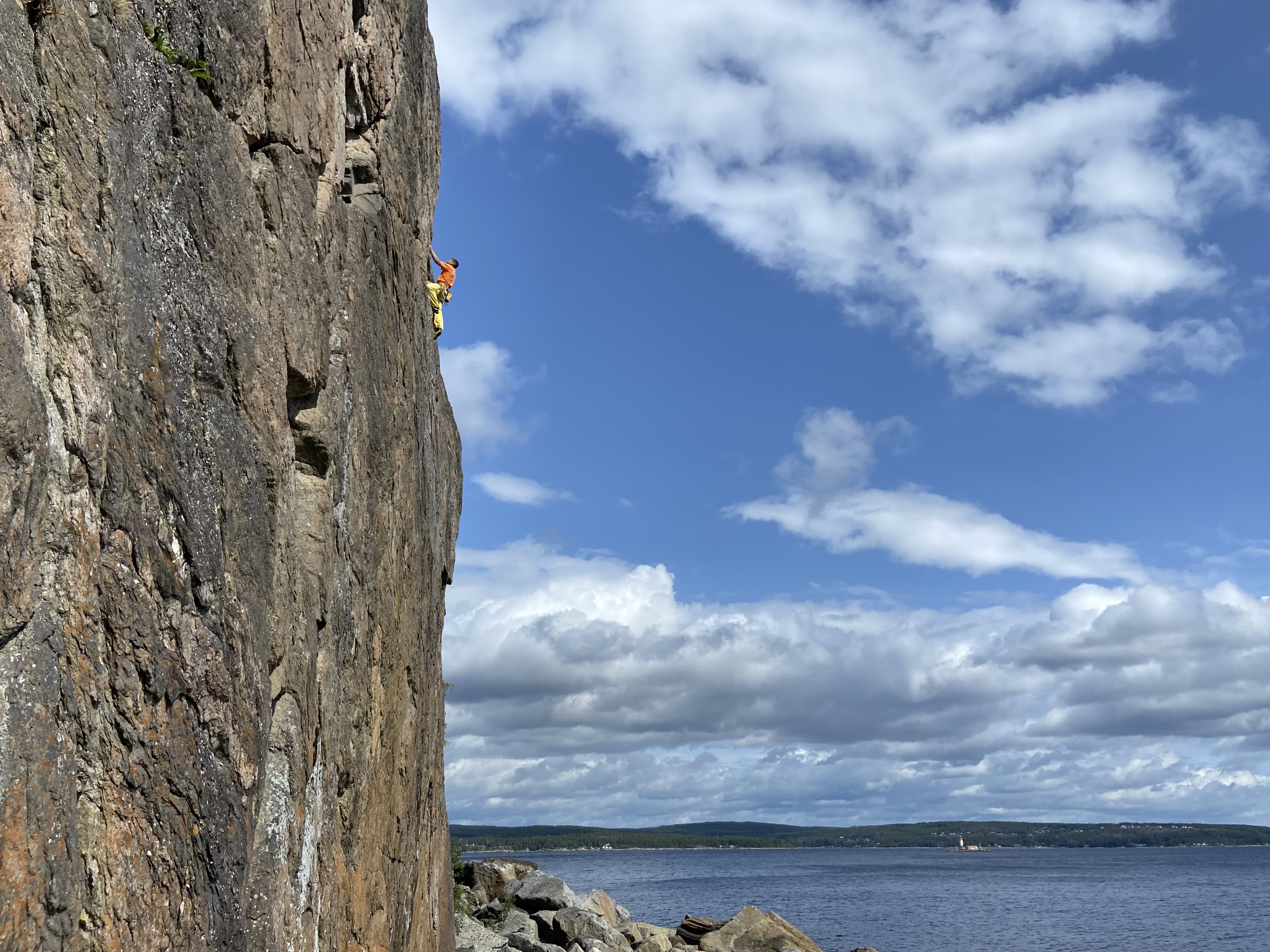
The rock is a really nice quality granite and the routes are a good length, with many over 30 meters. The style is really varied, and the routes often feel like they have a bit of everything. A good example of this is ‘Picea’ 6c+, a fantastic route with great rock and continually interesting moves all the way. The crag is brilliant in its own right, but the location really helps to make it feel extra special.
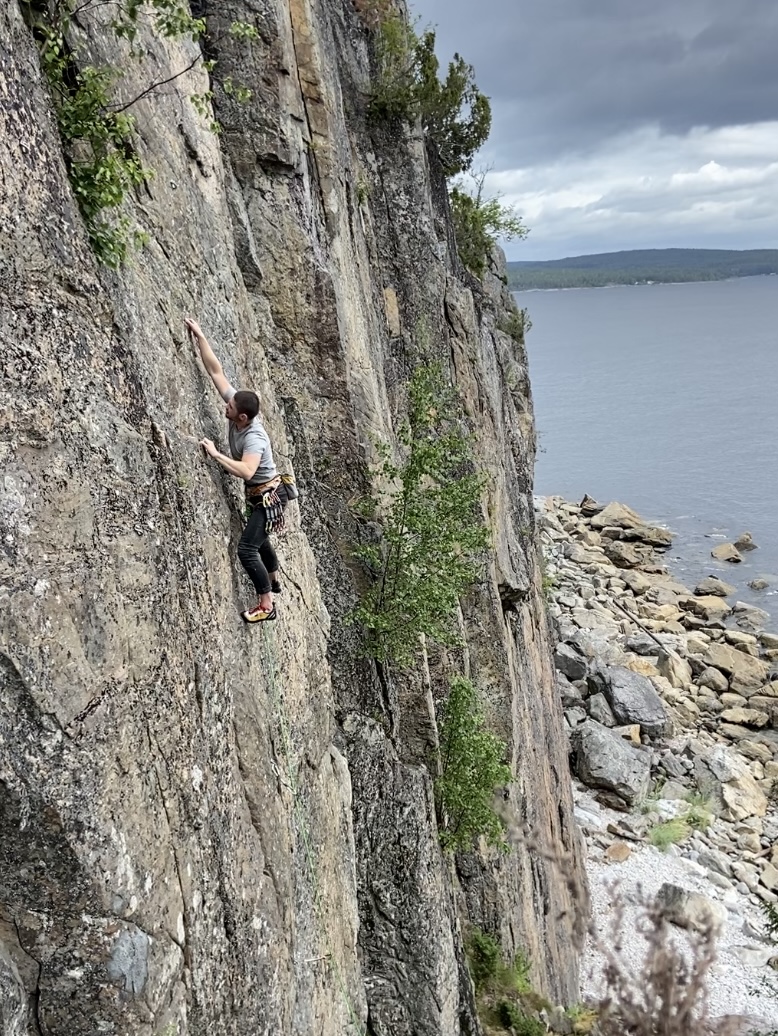
In total Brattberget has 36 sport routes and 42 trad routes, with the grades spanning from 3-7c. The routes are good quality throughout the grades and there is barely a bad route at the main sectors. The crags is east facing and generally receives a breeze so conditions are good on summer afternoons. Make sure to pack your swimming stuff for a post climb dip!
We write for pleasure and climbing is our passion. Our articles will never be paywalled. However, if you would like to help towards the costs of running the site or if you have found our content useful, please consider contributing here. To read more about why your support matters, click here.
Midskogsberget
Midskogsberget is a really impressive crag, a classic venue with some hard and imposing lines. Despite this the crag is well hidden and you could easily drive right past it hidden in the trees if you didn’t know where it was. Midskogsberget is actually in a nature reserve, and the environment is pristine. There is a small shelter for camping at a view point at the left hand side of the crag, a really lovely little spot.
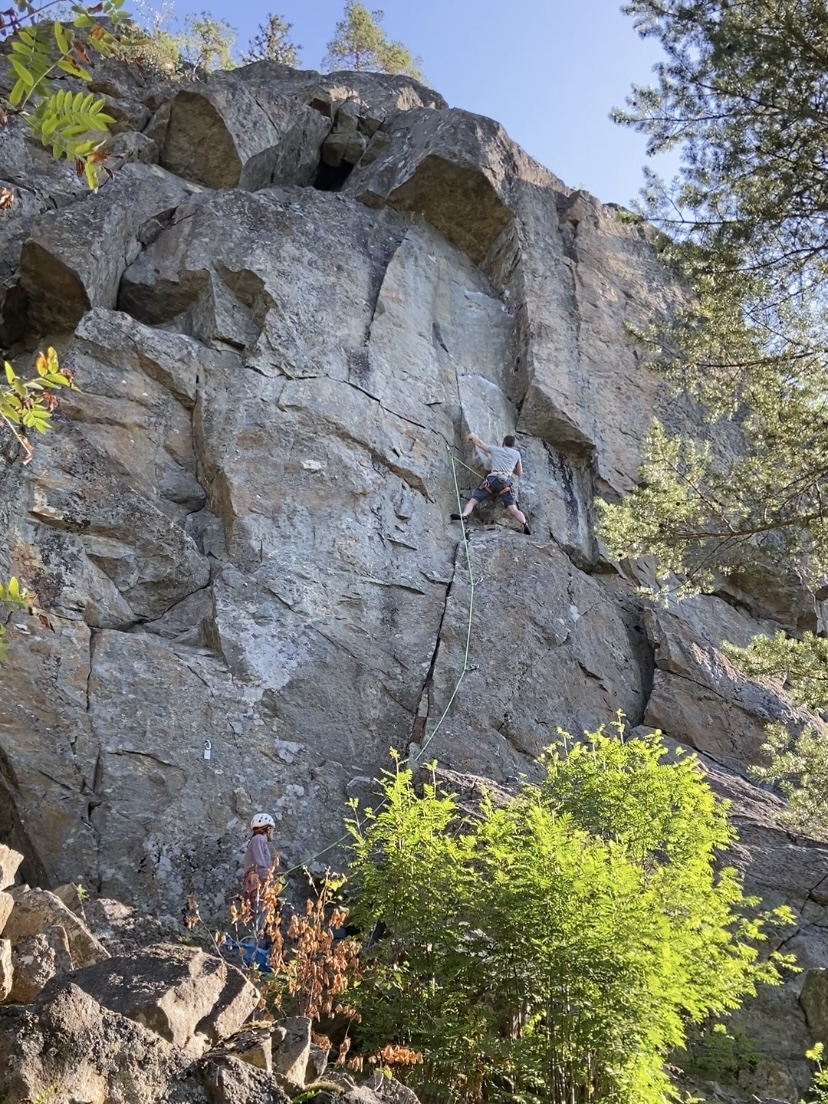
The routes vary massively, from tough test pieces to friendly beginner walls, with the rock quality always there. Midskogsberget has 91 sport routes and 10 trad routes, ranging from 3-8b. The bulk of the routes are between 6a and 7b, with good routes across the grades. The mighty sector Stora Väggen is home to the crags hardest routes, a stunning wall, if you’re up to it.
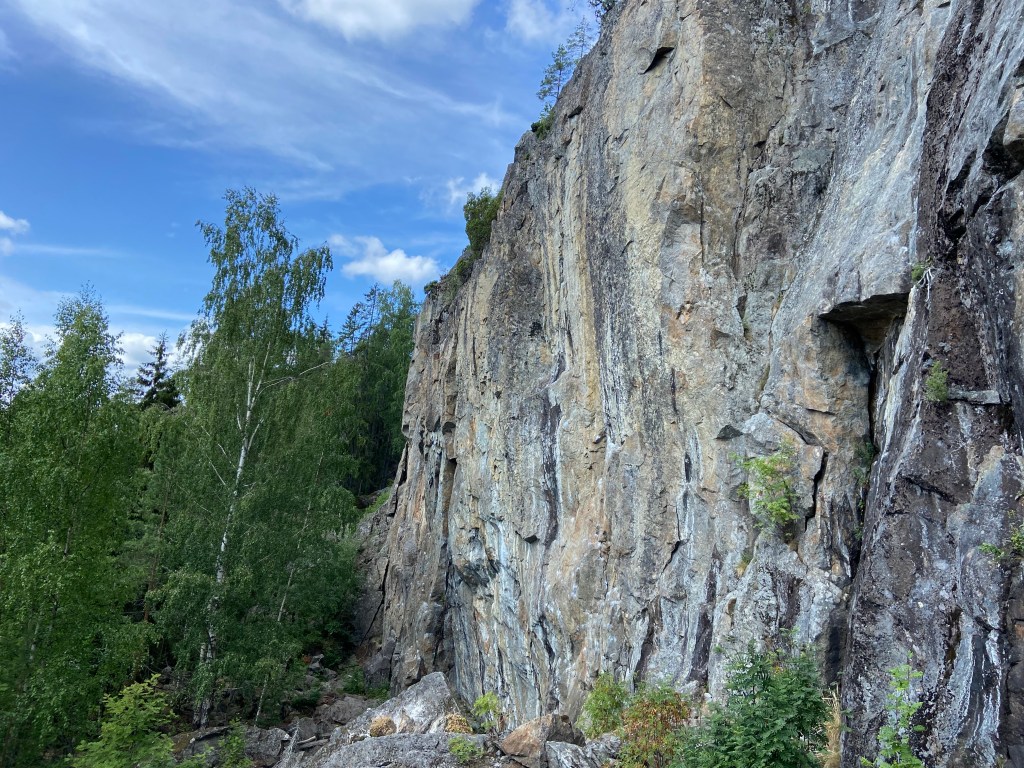
There may be a partial bird ban in place at the crag, depending on when you visit. It normally runs from April to July but could be longer or shorter, just make sure to check crag signage and online.
Tunbyn
Tunbyn is just down the road from Midskogsberget, it’s an equally nice crag but quite different. At Tunbyn, the best routes are in the 6c+ range and are long crimpy routes on a beautiful wall. Whereas the harder routes are a bit shorter and less inspiring, basically the reverse of Midskogsberget. For us we enjoyed both crags pretty much the same, but for people climbing in the lower 6s, Tunbyn will probably be a better choice.

In total Tunbyn has 51 routes, from 3-7c, with loads of great routes in the 6a-7a range. Due to the short approach, the crag will get busy at weekends, particularly with families with children. The crag is south facing and catches a lot of sun, it can get surprisingly hot if there are no clouds around to save you!

Ringkallen
Ringkallen is a beautiful trad climbing area, in one of the nicest locations we have climbed at in Sweden. The crag is a giant sprawl of rock, with loads of different sectors that you don’t spot immediately. The rock is a lovely textured granite and it is absolutely covered in cracks, so get ready for lots of jamming and lots of bomber gear placements. The crag is set on an inlet of the Baltic Sea, almost like a mini fjord if you will. The views from the belays are delightful.
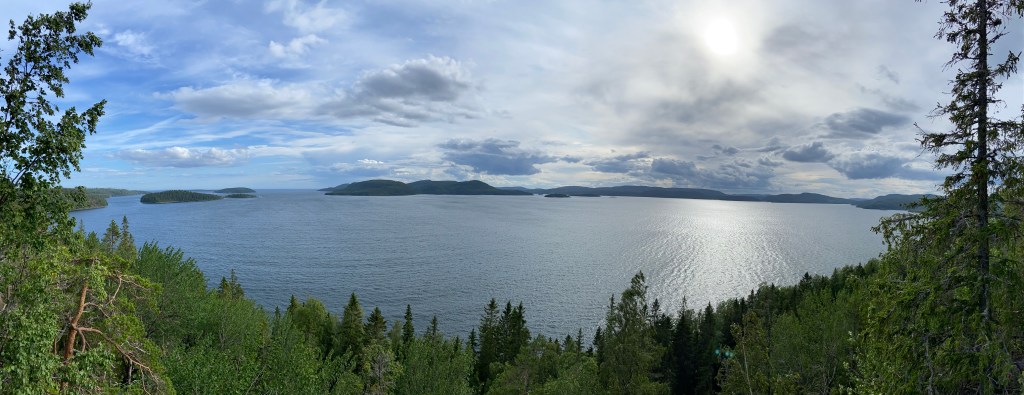
Ringkallen has 130 routes, from 3 to 7b, making it a relatively easy crag that is quite accessible for those new to trad climbing. Some of the routes are partially (or rarely fully) bolted, so it’s not the sort of place with lots of dangerous routes.

Even though many of the routes are not that long (20-30 m) they are very characterful and are often memorable beyond their size. The style often combines crack climbing with some steeper moves on jugs and flakes, with good gear not far away. We had a really fun time at Ringkallen and would definitely recommend it for anyone looking for moderate trad climbing in northern Sweden.

Niemisel
Niemisel is one of Sweden’s premier hard sport crags, with a big concentration of routes in the 8th grade. There are 45 routes, up to 8c, with very little at all beneath the 7th grade. There are 13 routes 7b or below, which would be the only realistic prospects for us in a day or 2. As far as we can tell, the rock is just granite, same as always. However, Niemisel definitely has very different characteristics to the typical granite of the area, if someone showed you a picture and said it was limestone, you might almost believe them.

Niemisel faces south west and can actually get very hot in the summer months, especially for hard sport climbing. Our luck was rather the opposite, we arrived after a few days of persistent rain. This meant damp greasy rock, and as the rain stopped with no wind = hellish mosquitoes. We didn’t get to enjoy Niemisel in the way we wanted to, but no matter what the conditions, all is not lost. There are a few huts in the area, including several accompanied by free saunas, heated by wood stove. One is detailed on 27Crags, but there are others, not listed anywhere online. We won’t be the ones to spoil the fun and tell everyone where they are, but if you look closely you’ll find them.
Falkberget, Luleå
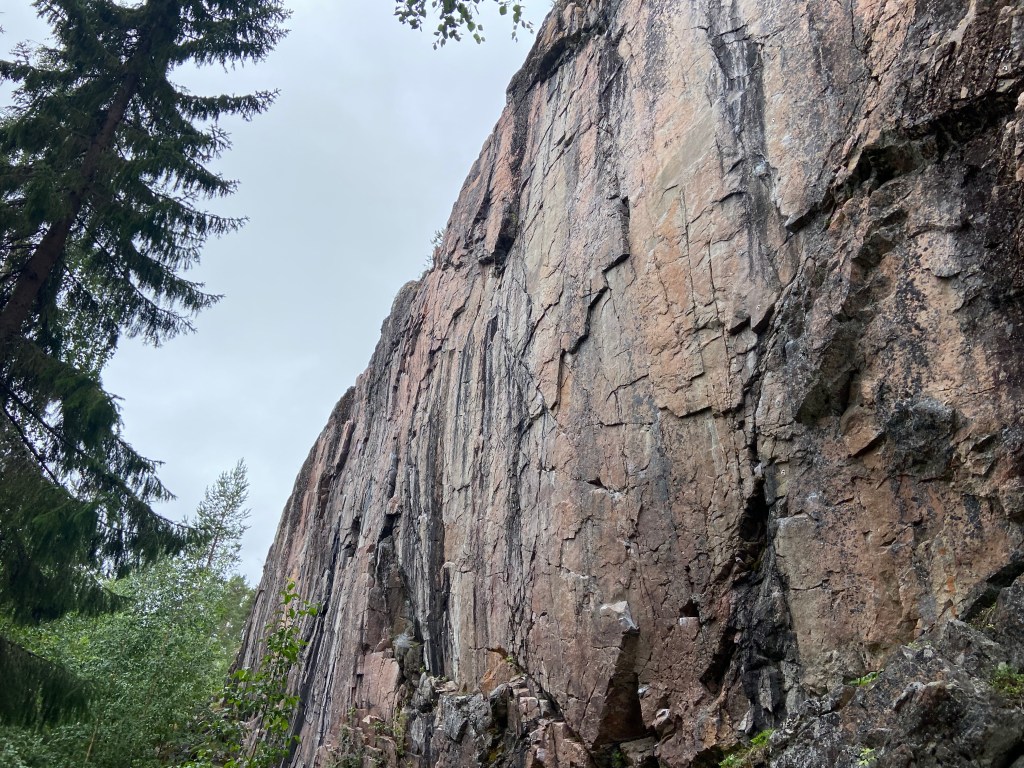
We have used the same name as 27Crags, to help distinguish this Falkberget from the many others in Scandinavia. The crag is not actually that close to Luleå, but is near a small village called Bondersbyn. Falkberget seems to fly relatively under the radar as a sport crag in its area of Sweden, but from what we first saw it appeared much better than the other options.

Upon visiting, we felt our hunch was right, Falkberget is a great little crag! It is about 20 meters high, but feels bigger as the walls are quite clean and unbroken. There are 24 routes, with loads of quality lines in the high 6s and low 7s. We climbed here over the weekend and were really surprised to have the place entirely to ourselves, especially considering the quality. We really enjoyed climbing here and felt it delivered everything we wanted from it.
Luppioberget
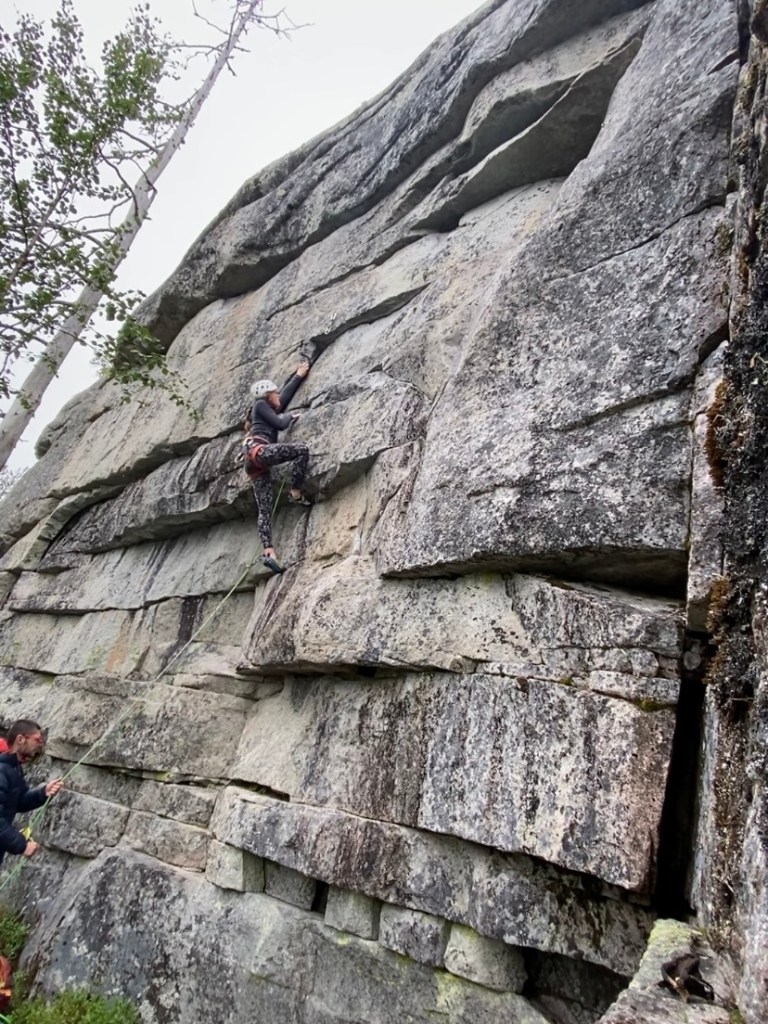
Luppioberget is an unusual little crag, and thanks to more recent developments it sits beneath lots of luxury holiday cabins! Nevertheless, it is very well situated for anyone who wants a quick craving hit when crossing the border to Finland and heading in the direction of Rovaniemi. Whilst the routes are short, the rock is good quality and they certainly pack a lot into their length…the grades are certainly a bit stiff. Luppioberget has 34 sport routes and 25 trad, ranging from 3 to 7b+. While we had some fun climbing there, the crag isn’t the best and in hindsight we would have spent an extra day at Falkberget instead.
Summary
We really enjoyed climbing in Sweden again and we were impressed by the quality of most of the crags we visited. The environment in this part of Scandinavia is so unspoilt, it is a real privilege to be able to spend so much time in nature and enjoy great climbing – free of crowds and polish. Between our two trips to Sweden we have climbed in totally different ends of the country and pretty much enjoyed them evenly, as different as they both are. There is no doubt Bohuslän is the premier destination in the country, but there are loads of smaller areas that are also brilliant and very worthwhile.
We write for pleasure and climbing is our passion. Our articles will never be paywalled. However, if you would like to help towards the costs of running the site or if you have found our content useful please consider contributing here. To read more about why your support matters, click here.
If you haven’t already, take a look at our other post ‘Climbing in Sweden: A Scandinavian Road Trip’
 The Crag Journal
Fantastic climbing in Sweden
LikeLiked by 1 person
Great report as always from you guys! Though, my attention was mostly captured by the cabin in the forest that is free to be used from anyone! I would not mind to spend few nights up there!
LikeLiked by 1 person
Yes it is such a wonderful part of their country, they have many of them in the north and they never seem to get busy, very relaxing places to be!
LikeLiked by 1 person
Great blog as always…Glad you are both having an amazing time.Looking forward to the Finland one!!
LikeLiked by 1 person
Cheers mate! Glad you enjoyed it, it’s an awesome place Scandinavia!
LikeLike