Poland is not a place that most people think of when planning a climbing trip in Europe, and those that do are probably headed to the Tatra mountains for long multipitch routes. It isn’t well known that Poland has a fantastic sport climbing area of its own, the Jura. The climbing is great, with thousands of routes across the grades and many beautiful & unique crags. The area sees a lot of activity from Polish climbers, who are known for being very strong, but sadly gets very little attention from international climbers. We have spent 2 weeks climbing in the Jura and throughly enjoyed it, the quality is very high and we never felt like we would run out of cool crags to visit.
Guidebooks for Climbing in Poland
There are several different guidebooks and online topos for the Polish Jura, which are mainly separated by area. We mainly used the Jura Środkowa guidebook which we accessed via the Vertical Life subscription. This covers the middle Jura including famous areas like Góra Zamkowa and Góra Birów. The names of the crags can vary between sources, we have used the names as they are in the Jura Środkowa guide for all areas it covers.
There are also lots of topos available free online, which we found really useful for covering areas not in the vertical life guide, particularly those in the northern Jura like Skała Jastrzębnik. You can easily use google translate if you don’t speak polish, and the websites have a huge amount of information which is incredibly useful for finding the best spots. There is so much it can be an information overload and hard to choose where to go, so make a coffee and sit down for a bit to get your bearings. The two we found most useful are wspinanie.pl and portalgorski.pl.
Poland has its own unique grading system, created by Polish climbing legend Wojciech Kurtyka. There are several grade conversion tables, which may have some inconsistencies between them, you can see a good overview of them here.
Below is a map of the different crags we climbed at in the Polish Jura, so you can see where they are in relation to each other.
Weather and Climbing Season in Poland
For climbing in the Polish Jura, spring and autumn are the best times for reliable weather and good conditions. Summer can be very hot and interestingly also has much higher levels of precipitation than in the colder months. Winter can be very cold and only the hardiest climbers will enjoy climbing then! Of our different times climbing in the Jura, we had good success with September, being dry and not too hot, but of course this can be extremely variable.
Climbing Recommendations
Skała Jastrzębnik
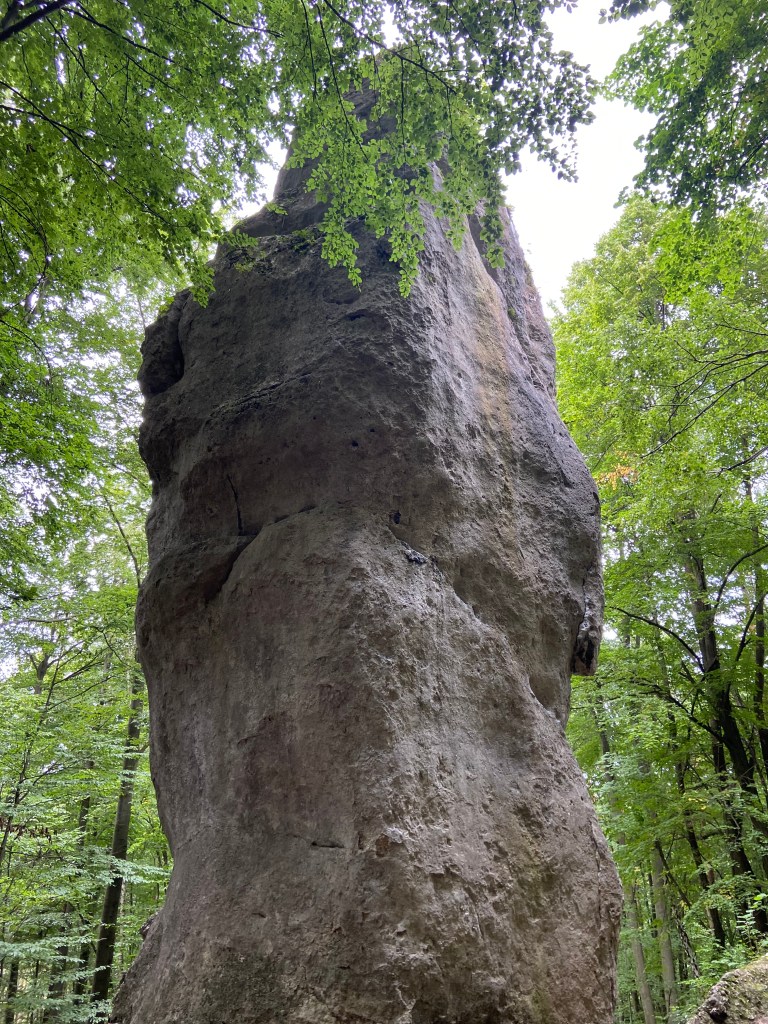
Skała Jastrzębnik is one of the most significant crags in Poland for hard climbing, as well as being one of the tallest in the Jura at 43 meters high. The main wall of Jastrzębnik has many hard routes and projects, although the very longest route is comparatively moderate. In the forest surrounding there are several other sectors on smaller crags and pinnacles, which are less impressive but on great rock.
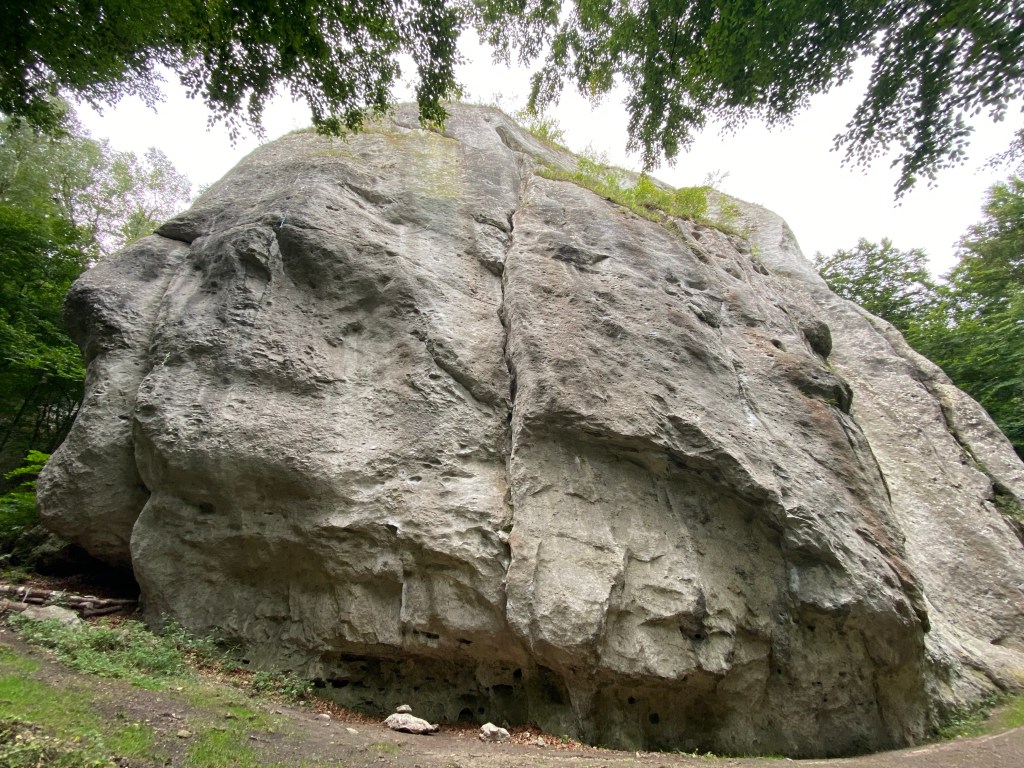
Jastrzębnik has around 47 routes and aside from a couple of easier routes, most will be from 6c all the way to very hard projects. Many of the routes there were beyond us, but anyone that can climb between 6c and 7b will find there’s more than enough for a day or two of climbing. If nothing else it’s worth going to see one of the largest and hardest crags in the Jura.
We write for pleasure and climbing is our passion. Our articles will never be paywalled. However, if you would like to help towards the costs of running the site or if you have found our content useful, please consider contributing here. To read more about why your support matters, click here.
Okiennik Wielki
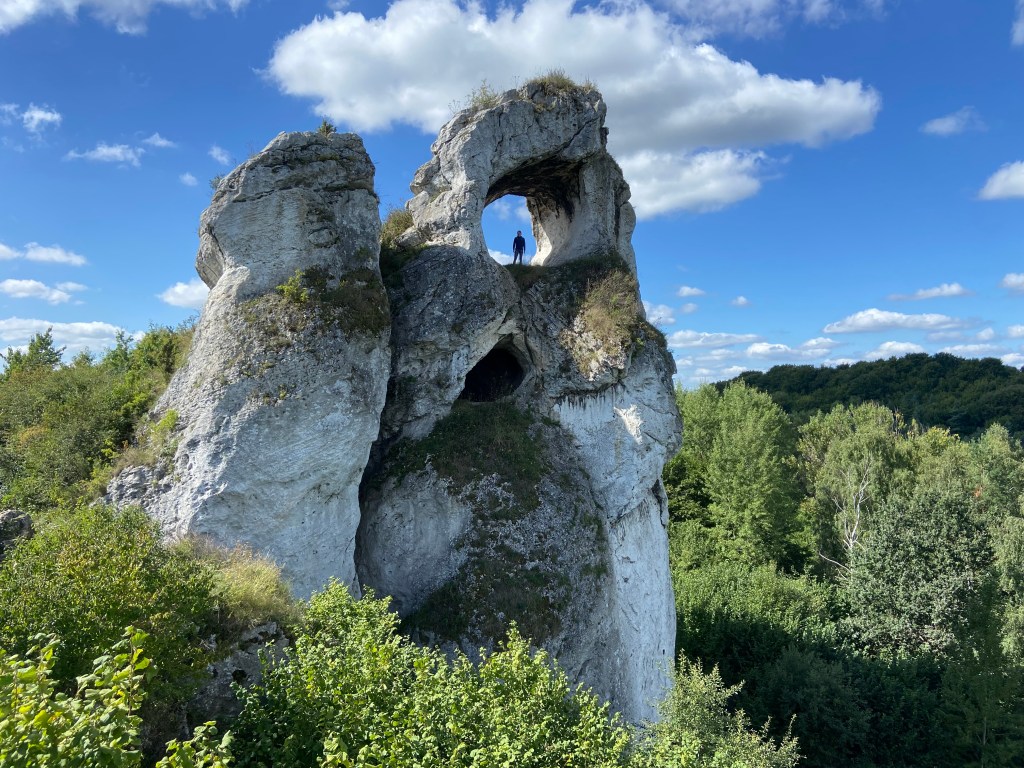
Okiennik Wielki is a superb crag and is probably one of the most famous pieces of rock in the Jura, to climbers and non climbers alike. The crag is effectively a collection of pinnacles rising out of a hillside, the most impressive of which is over 30 meters high and has a natural window in it. There are several different faces with a variety of different styles, some thin crimpy routes on the grey walls and some fantastic pocket pulling on the gorgeous main white wall.
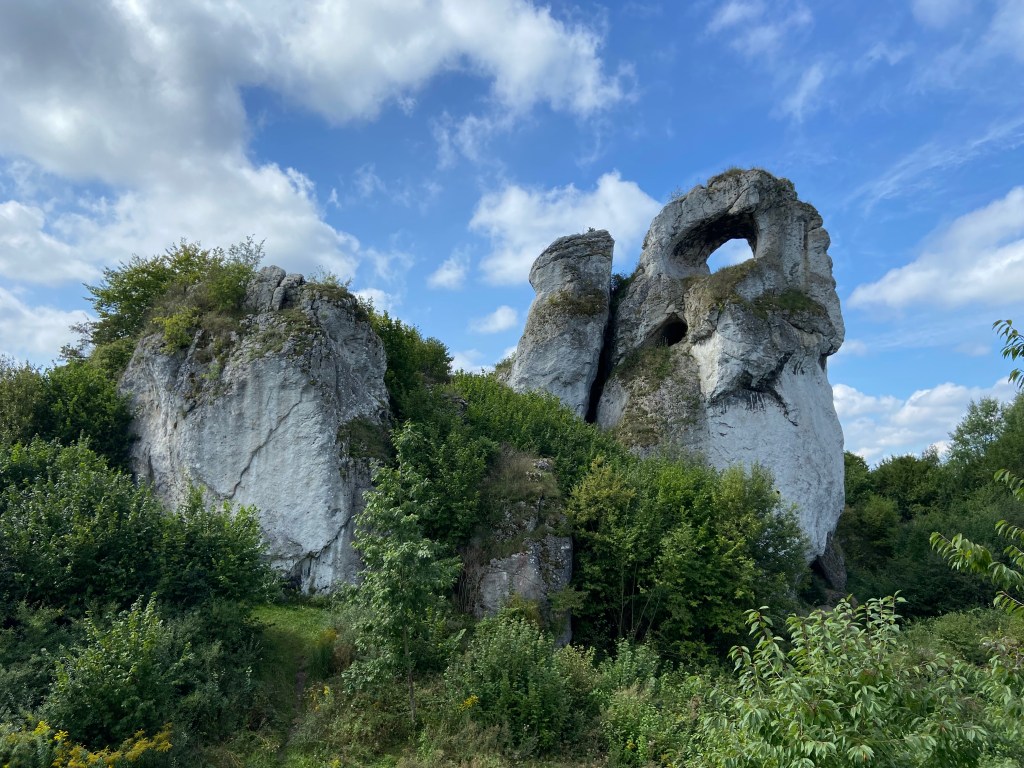
Okiennik Wielki has around 88 routes at a variety of grades, but the best routes are all above French 6b. We thought the climbing was brilliant, the rock quality is very high and the routes were sustained & interesting all the way. The only real downside is polish, but that is completely normal at popular crags anywhere. We climbed at Okiennik Wielki during the week and it was lovely and quiet, it may be worth considering other options at the weekend as it will probably be quite busy with both walkers ands climbers, when other crags will be totally peaceful.
Skały Zegarowe
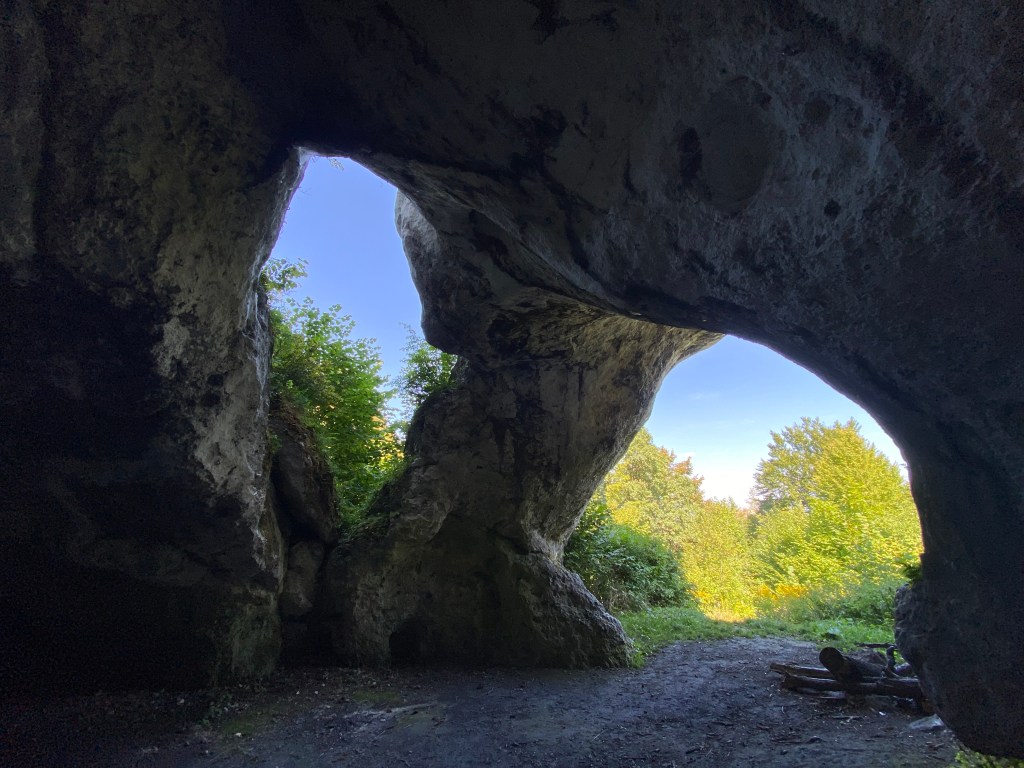
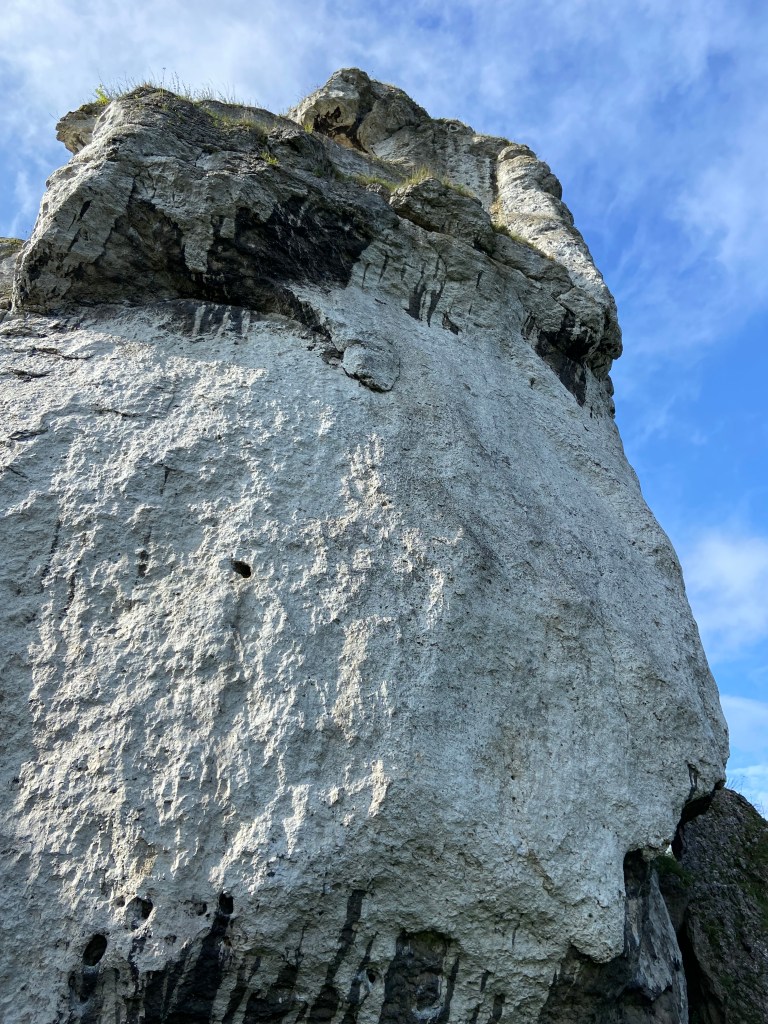
Skały Zegarowe was one of our personal favourites from our time in Poland, a really beautiful crag in a quiet and peaceful setting, with some stand out quality long routes. The main sector has a stunning wall about 30 meters high, with a two tone appearance to it. The bottom half is grey rock, with small features and almost sharp holds. After a rest, the white wall above is heavily featured, with so many pockets you really have to try hard to get the best ones. Magnezjówka is a great example of this, although we realised retrospectively it is graded for starting from the shelf! That might explain why it felt like hard 7a more than 6c+! Nevertheless, it was a personal highlight of the trip.

Skały Zegarowe has around 125 routes, from V to VI.7 (F5b – F8c) and is easily one of the best crags in the area. As well as the big main wall, there is a cave and numerous other sectors dotted around the hillside. The crag doesn’t seem to get very many visits aside from climbers and it was a very relaxing place to be. For anyone climbing 7a and above, we think the main wall of Zegarowe is a contender for the best in the region.

Góra Zamkowa
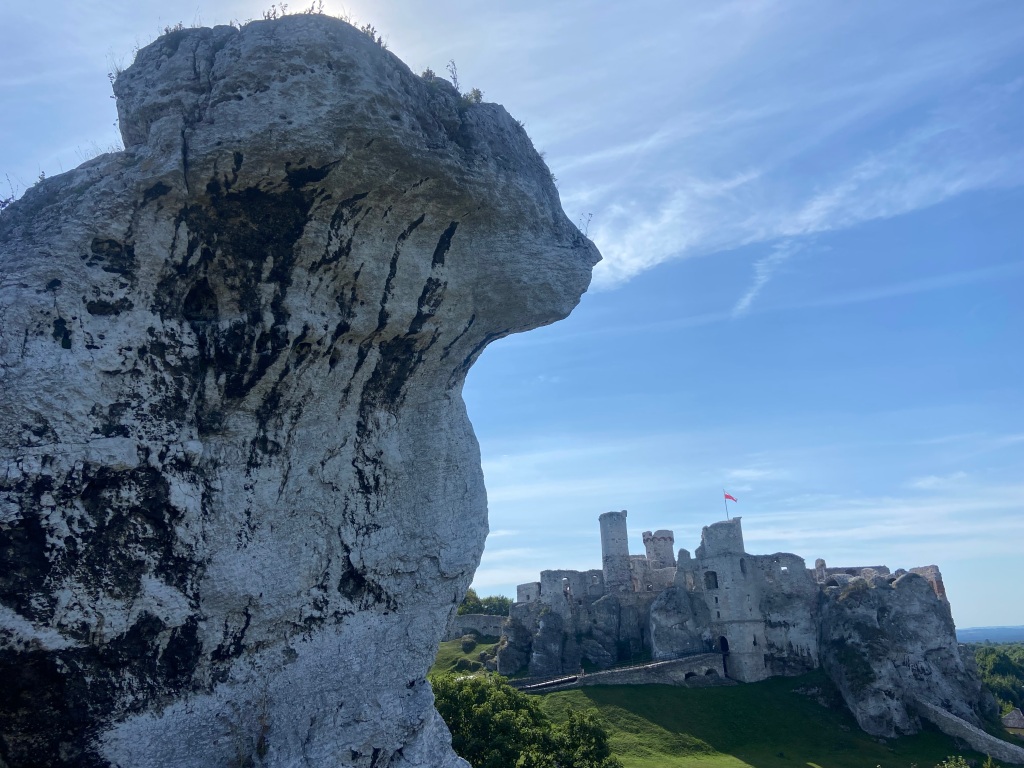
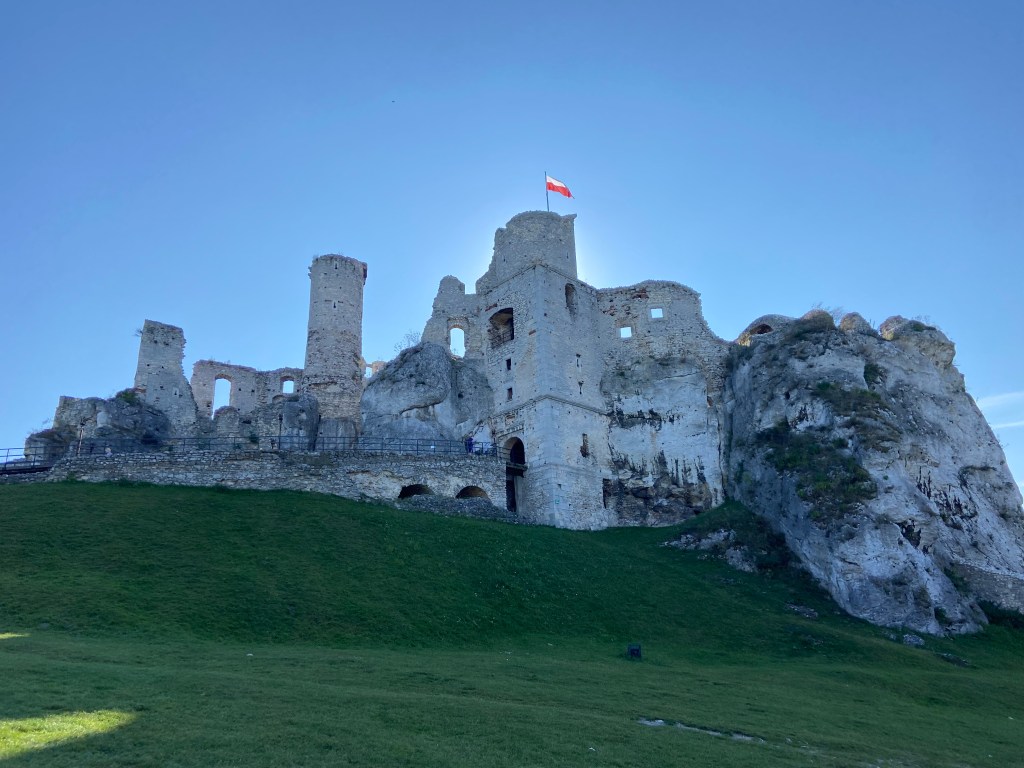
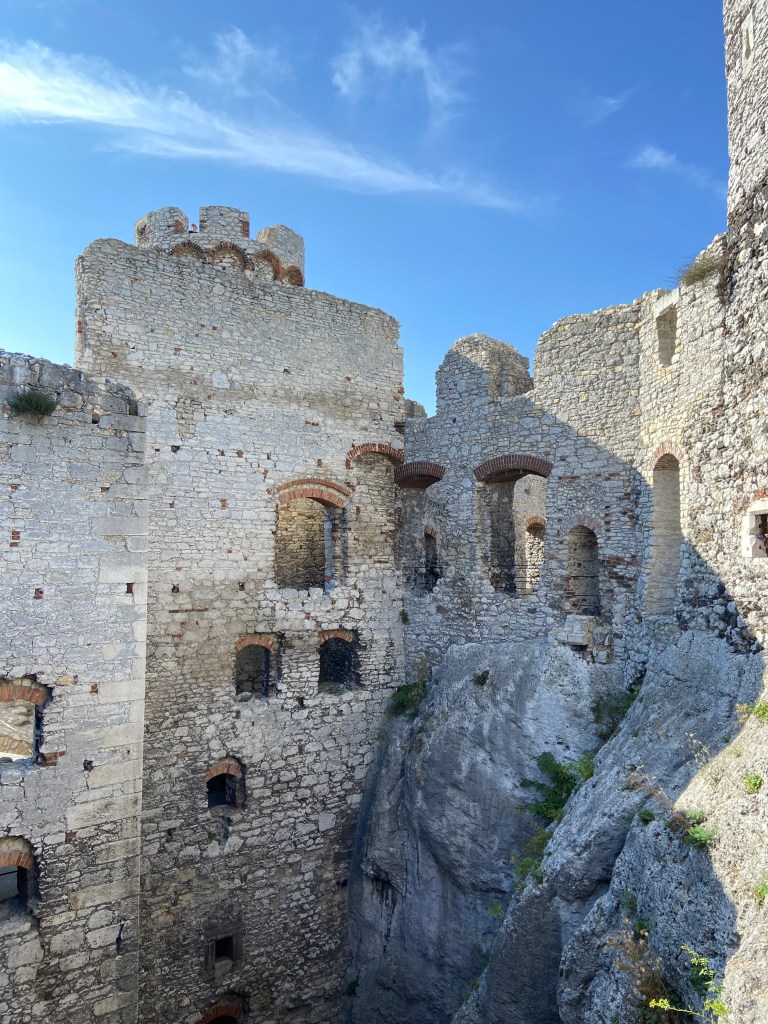
Góra Zamkowa is one of the Jura’s most recognisable areas, and is surely one of the coolest crags anywhere! Góra Zamkowa surrounds Zamek Ogrodzieniec, a stunning ruined castle that sits atop a cliff. Nearby there are many beautiful pinnacles, some of completely immaculate rock. The shapes, colours and locations of the pinnacles are very impressive, some are even part of the castle walls! It goes without saying that the area will be very busy during weekends and school holidays. Whilst that might not make it everyone’s cup of tea, it is absolutely worth visiting because the climbing is brilliant and the location is like a film set!

Góra Zamkowa has around 210 routes, and there is something for everyone grade wise, from very easy routes all the way up to 9a. Some of the hardest routes in the area sit on the Wielka Cima, with stunning compact rock and some really impressive routes. Nearby there are several other pinnacles with equally good but more moderate routes, it is an incredibly beautiful spot. In many ways it is the jewel in the crown of the Jura, but in reality it’s the tip of the iceberg, there are loads of other great spots too.

Zamek Ogrodzieniec is what makes the area so famous, the original structure was from the 12th century, but it was totally destroyed by the Mongols in 1241. It was rebuilt as a Gothic castle in the mid 14th century and was subsequently adapted and reconstructed at various points until the Swedes burnt it down 1655. The castle was once again rebuilt, but the Swedes came back again in 1702 and burned it down for the second time! Zamek Ogrodzieniec was never rebuilt after that, and the remaining ruins are what still stand there today.

Góra Birów
Góra Birów is very close to Góra Zamkowa, in fact it is just over the road! Góra Birów is also home to a castle, a reconstructed wooden fortress that was originally built in the 13th century. Climbing wise it is another of the Jura’s best known spots and you even have to walk past another sector, Suchy Połeć, on the way over from Góra Zamkowa! It feels like the epicentre of the area, and sees a lot of activity from local climbers. Góra Birów itself has 139 routes from 4 to 8b, with plenty of eye-catching lines on nice rock.
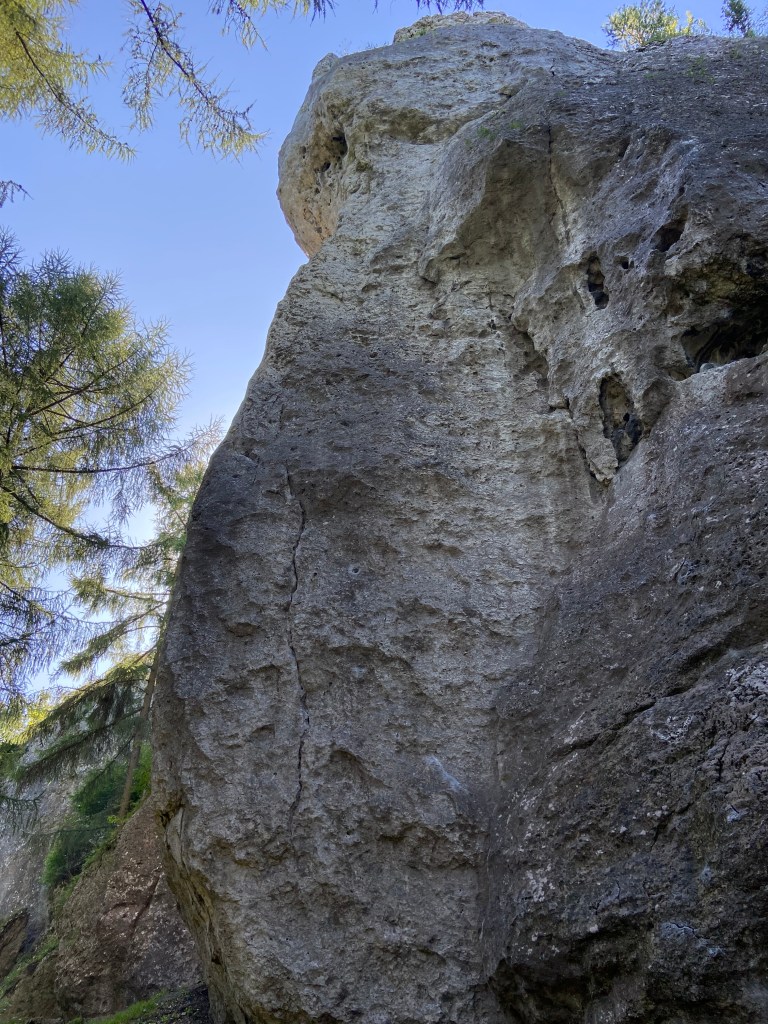
One problem we did encounter at Góra Birów is that quite some number of routes appeared impossible to access due to fences and private land signs going up, tight to the crag at some points. We tried in both directions but couldn’t find a way to access a few sectors without trespassing. We also chatted to the guy selling tickets to the castle and he didn’t know of a way either. Don’t let this put you off, there are still loads of great routes you can easily access, but it is worth knowing that there are some issues.

Grochowiec Wielki
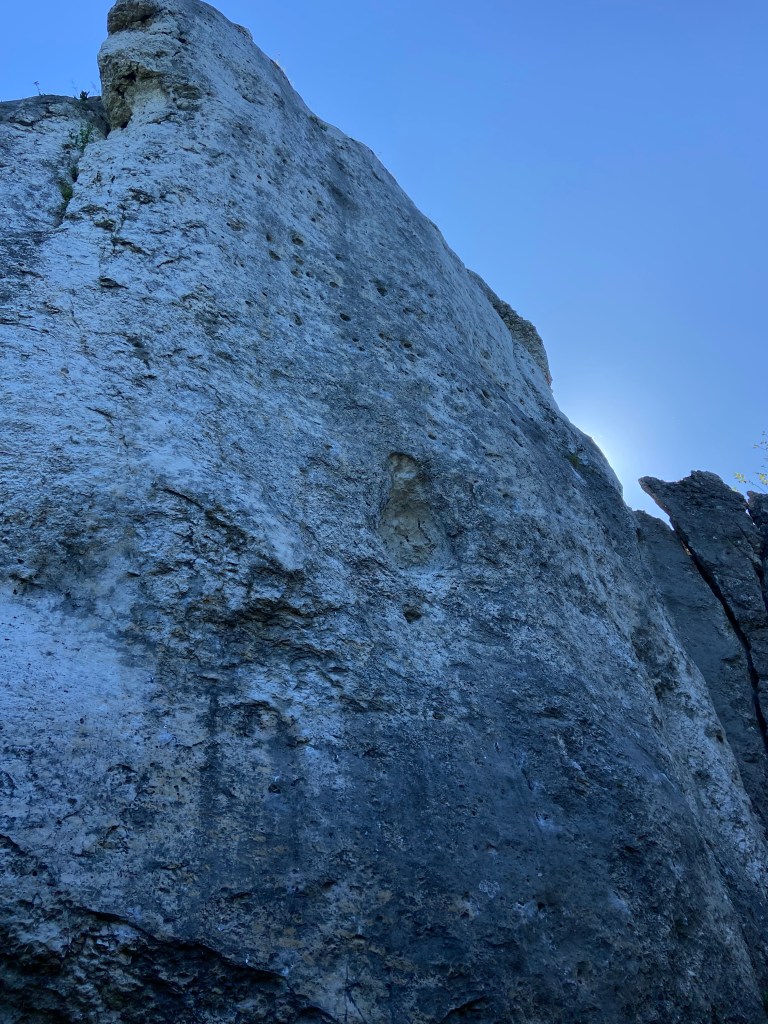
Grochowiec Wielki is a nice smaller crag, in a quiet part of the Jura, despite its proximity to Podzamcze. The crag is not as tall or extensive as its neighbours, but it is a superb venue for days when some of the other crags will be really busy. We enjoyed a weekend day at Grochowiec Wielki and we were the only people there, which would be inconceivable at Góra Zamkowa. The rock quality is good, in fact we never encountered any bad rock during our time in the Jura, it was all very solid and compact. In total, Grochowiec Wielki has 44 routes from 3-7c+, with the best selection in the mid 6s.
Januszkowe skały
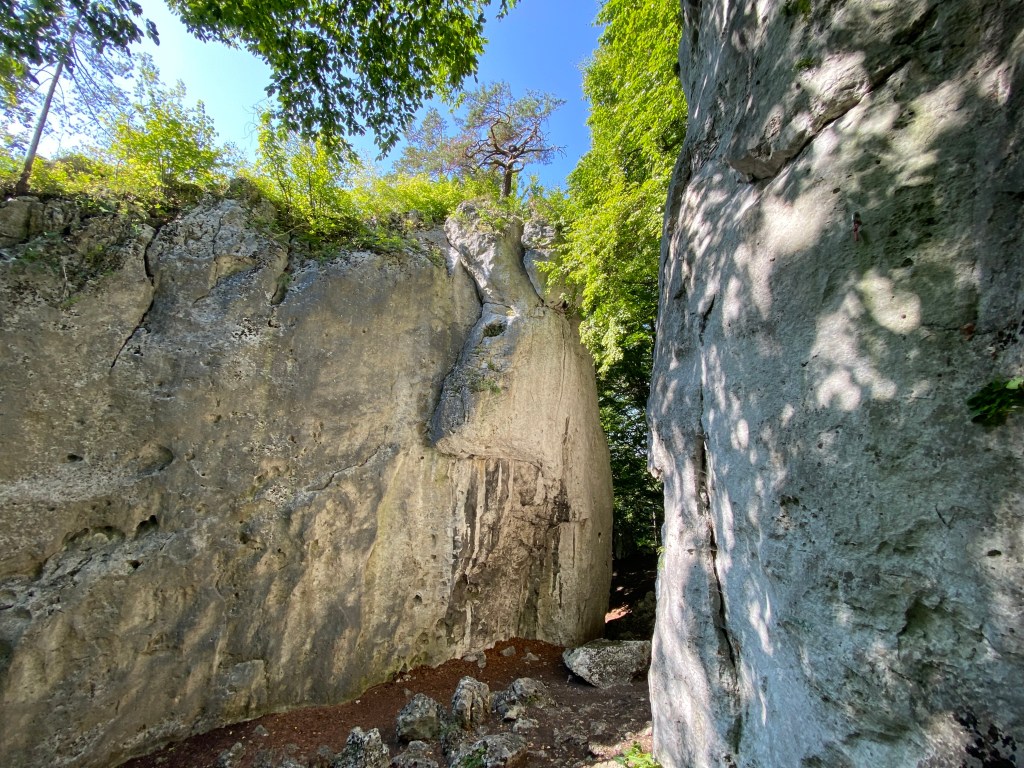
Januszkowe skały was the last crag we visited in the Polish Jura, and probably also the weakest one. In a sense that may be harsh, there is actually nothing wrong with the crag, just that the others were bigger and more impressive. We chose to visit as it fit well with our route and we thought it would be good to see a slightly different part of the Jura. Whilst it didn’t have the height or the unique features that many of the other crags did, there is still some good fun climbing to be done here. One of the Jura’s strengths is that there are hundreds of smaller crags like this, so you can easily mix it up and visit lots of new places. Januszkowe skały has 78 routes from 3-7c+, spread out over several small sectors in a lovely forest.
Rest Day Activities
Castles
There are a lot of beautiful castles in Poland, from different periods in history and in all manner of designs. Of particular interest for those climbing in the Jura is the Szlak Orlich Gniazd, which translates to the ‘The Trail of the Eagle’s Nests’. The trail runs from Częstochowa to Kraków and visits 25 castles along the way, surely even the keenest history buff will get their fill from that! Zamek Ogrodzieniec is one of the castles on the trail, so it is definitely compatible with climbing. Personally we were happy enough with that, but it clearly stands in good company. It’s great that the Jura is such a beautiful and historic area, but that it also has plenty of quiet crags away from it all, so it really feels like there is something for any occasion.
Cities
Poland is famous for having lots of really nice cities, and the Jura is quite well located for visiting several different cities, depending on what you want to see. The climbing is within easy reach of either Katowice, Częstochowa or Kraków. We visited Katowice and Częstochowa, both of which are really nice cities. A day trip from the Jura is really easy and you can be back climbing again the next day. There are also many nice cities you can visit on the way to or from the Jura, we visited Zakopane in southern Poland, which is a really nice town on the doorstep of the Tatra mountains.
Food
Pierogi are hearty Polish dumplings, with the dough being stuffed with mashed potato and cheese. There are many other versions of Pierogi, but this classic and nourishing original is surely the best.
Kotlet Schabowy is Polands national dish, a pork cutlet coated in breadcrumbs and fried to give it a crispy outside and juicy inside. The dish is normally served alongside potatoes and sauerkraut to give a tasty and filling meal.
Placki Ziemniaczane are wonderful potato pancakes, made from grated potatoes bound together with egg and sometimes flour. Versions of this exist in many cuisines and are always delicious, Poland is no exception.
Kabanos is one of Poland’s most famous foods internationally and are loved by many countries across the world. Kabanos are long and thin dried sausages, usually made from pork, but there are also poultry kabanos. Because of their shape and how long they keep, kabanos have always been considered good food for travelling – the perfect crag snack!
Pączki are traditional Polish doughnuts, made from an indulgently rich dough, fried in oil and filled with a variety of sweet fillings like jam or custard, what’s not to like?!
Ptasie Mleczko are the most delicious sweet treats to enjoy in Poland. The name translates literally to bird’s milk, but most foreigners will know them as chocolate covered marshmallows. They are a real national treat, having been invented by Polish confectionary company E. Wedel in the 1930s.
Summary
We really enjoyed the climbing in the Polish Jura, the quality of the rock is very high and the selection on offer is very impressive. It is both surprising and quite sad that more international climbers don’t visit the Polish Jura, especially when considering that Germany’s Frankenjura is quite popular. At our level of 6s and 7s, we actually preferred the Polish Jura! We thought the Polish Jura had everything you need in a climbing destination and that it is perfect for anyone who wants to enjoy good quality limestone sport climbing away from the honeypot areas. We really enjoyed our time there and would definitely visit again in the future.
We write for pleasure and climbing is our passion. Our articles will never be paywalled. However, if you would like to help towards the costs of running the site or if you have found our content useful please consider contributing here. To read more about why your support matters, click here.
Relevant links and resources
Climbing topos and information
https://wspinanie.pl/topo/polska/polnoc/index.htm
https://topo.portalgorski.pl/Słoń,Grochowiec-Wielki,Ryczów,Jura-Krakowsko-Częstochowska,skala,491
Information about Wojciech Kurtyka
https://en.wikipedia.org/wiki/Wojciech_Kurtyka
Polish grade converter
https://github.com/theCrag/website/issues/3695
Information for the Trail of the Eagle’s Nest


The photo of Okiennik Wielki is very cool
LikeLiked by 1 person
Okiennik Wielki was a super unique and interesting place especially to climb!
LikeLike
We’ll probably be in Poland this coming spring,I’ll keep it in mind. Maggie
LikeLiked by 1 person
Thanks for the comment, hope you have a great trip!
LikeLike
Brilliant stuff…hope you’re both safe and well!
LikeLiked by 1 person
Cheers mate! We’re doing well thanks, hope you’re good yourself!
LikeLike
Regarding access and fences – it’s been an issue for polish climbers for some time now. Polish law does allow for private ownership of a rock formation like ones in Jura. Fortunately only few landowners are putting up fences and creating trouble for climbers. In 90% of cases there are no issues with owners if you behave like a civilised human being.
LikeLike
Hi, thanks for the comment. It’s good to hear that in most cases climbers have still been able to access crags without issues. We definitely agree about crag behaviour, it is really important that climbers set a good example and don’t jeopardise access for others.
LikeLike