Ecuador is one of the smaller countries in South America, however it massively punches above its weight when it comes to quality climbing and stunning environments. Ecuador is often dubbed the country of four worlds due to its diversity, which is very impressive. Climbing wise Ecuador has loads to go at and the standard is very high. Ecuadorians are very friendly and local climbers will go out of their way to help you, surprisingly there are very few foreign rock climbers visiting Ecuador – we only met one in a month! We started our journey in Ecuador by crossing the border with Colombia at Rumichaca and snaked our way down the Andes crossing from one side to the other as we went, eventually crossing into Peru at Macara.

Guidebooks for Climbing in Ecuador
Currently (May 2025) there are several different guidebooks covering different, individual climbing areas in Ecuador. However, there is no select, country wide guidebook which would best suit a visiting climber. We found the vast majority of the information and topos on theCrag, as well as escaladaecuador.wordpress.com, which has more information for the crags near Quito. Monodedo, a climbing shop based in Quito and Cuenca, is an excellent source of information and the place to go if you wanted to buy a physical guidebook in the country.
Weather and Climbing Season in Ecuador
There are several climate zones in Ecuador, however it is primarily split into the dry and wet season. In the inter Andean valleys, the mountain chain where most of the climbing is located, the rainy season runs from October to May and the dry season from June to September. We visited in March and April, where the rain presented a challenge, however we did manage to climb most days. The rain was usually predictable, with heavy showers coming in the afternoon. The vast majority of crags stayed dry in the rain, and the crags that do get wet usually dried very fast, unless they are set within the jungle or forest.
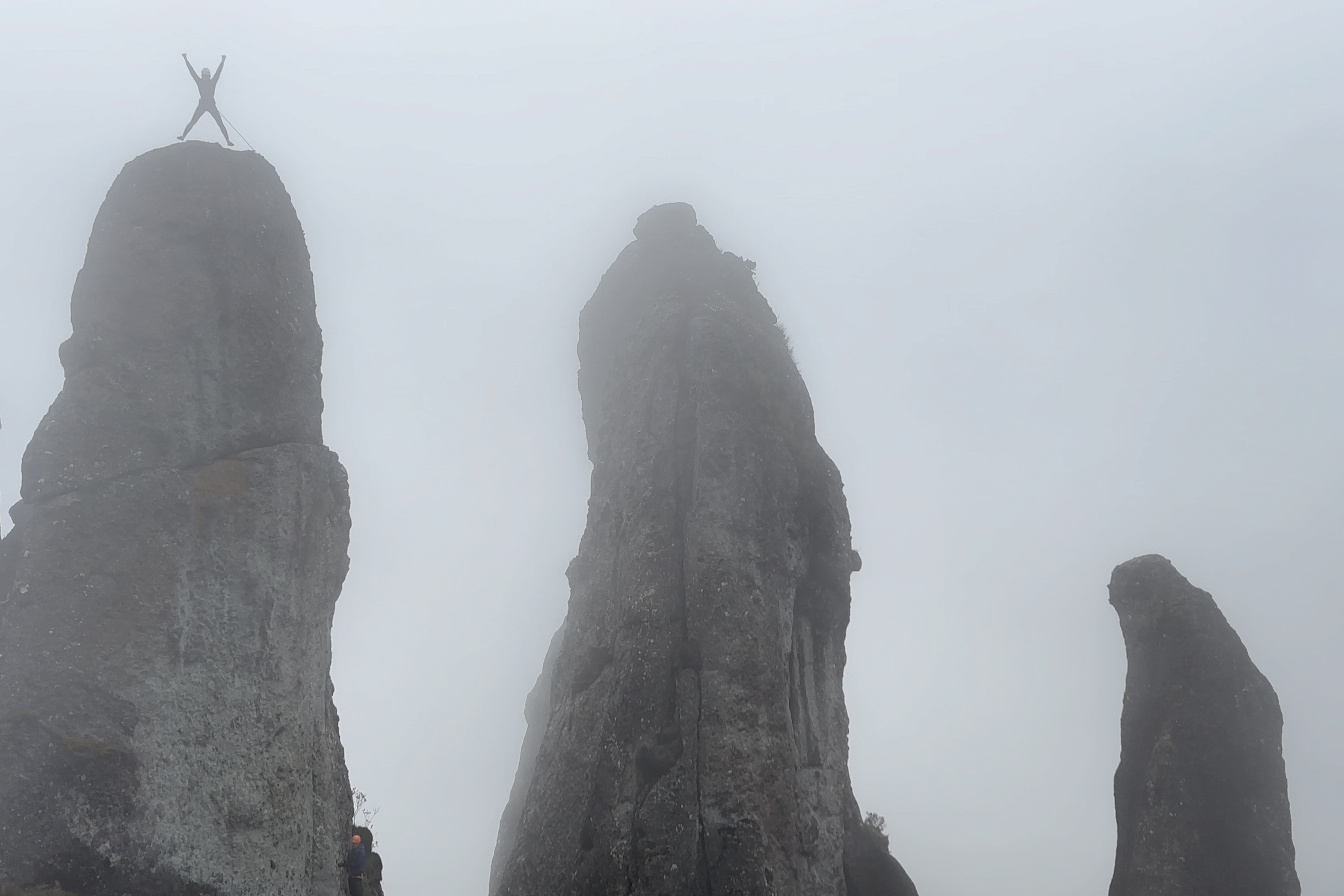
Another consideration is some of the crags are at moderate altitude so you should come prepared for colder temperatures and you may want to factor in a day or two for acclimatisation.
Below is a map of the different crags we climbed at in Ecuador so you can see where they are in relation to each other. They are described below in the order we visited them.
Climbing Recommendations
El Rodadero
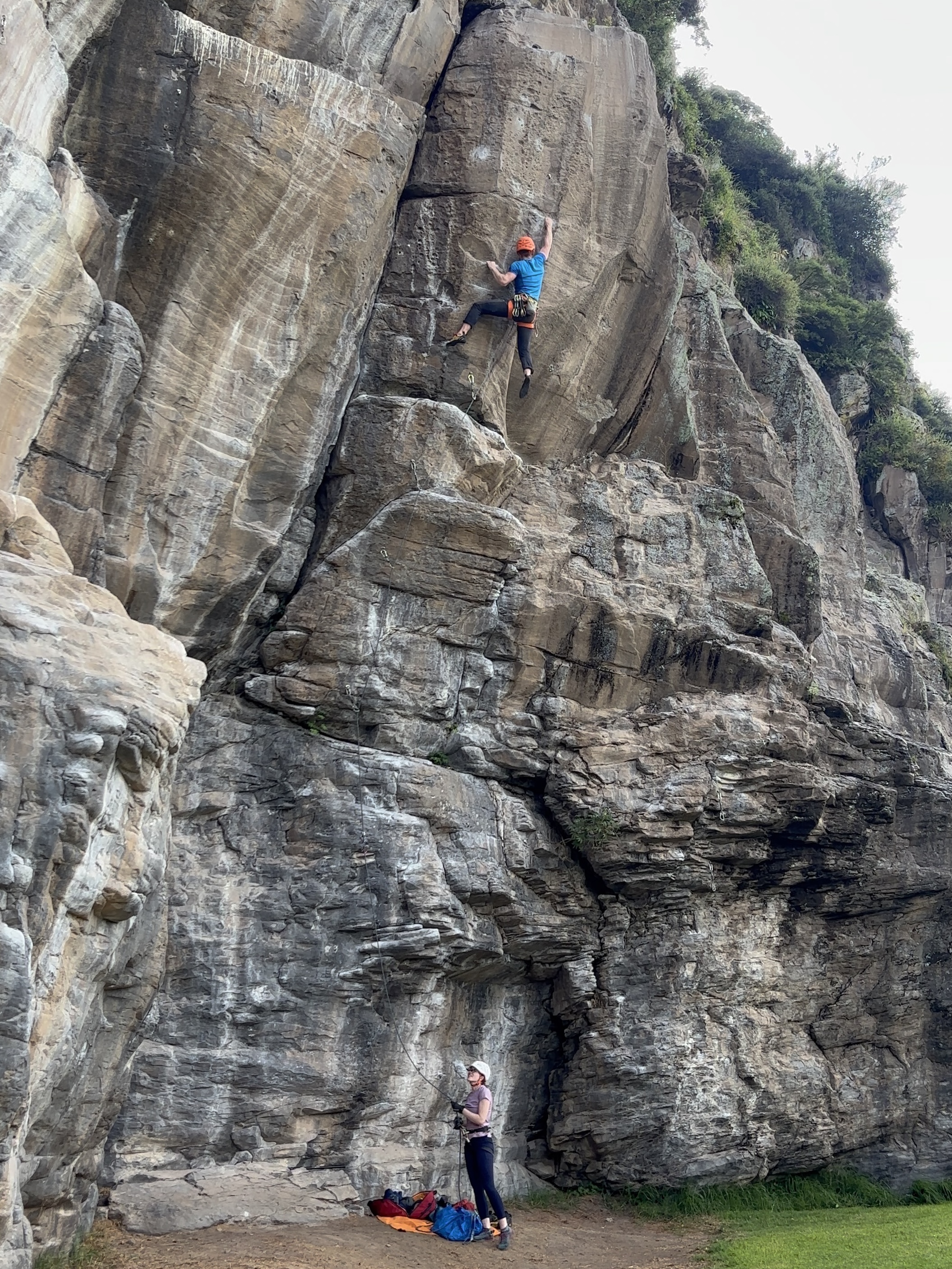
El Rodadero is one of the closest sport crags to Quito and now also one of the best ones, as Sigsipamba has sadly been banned. All is not lost however, as El Rodadero is a good quality basalt crag with routes up to around 30 meters long and with 36 routes from 5 to 8b. The crag is steep enough in the centre that that part will stay dry in the rain. The routes are very well bolted and many of the steeper routes are partially equipped with perma draws to ease route stripping. The crag is on private land and there is an access fee of $5, you can also arrange to camp right beneath the crag. Whilst it isn’t anything spectacular, it is a nice crag with good climbing that is worth a visit, especially considering its proximity to Quito.
We write for pleasure and climbing is our passion. Our articles will never be paywalled. However, if you would like to help towards the costs of running the site or if you have found our content useful, please consider contributing here. To read more about why your support matters, click here.
Cuyuja
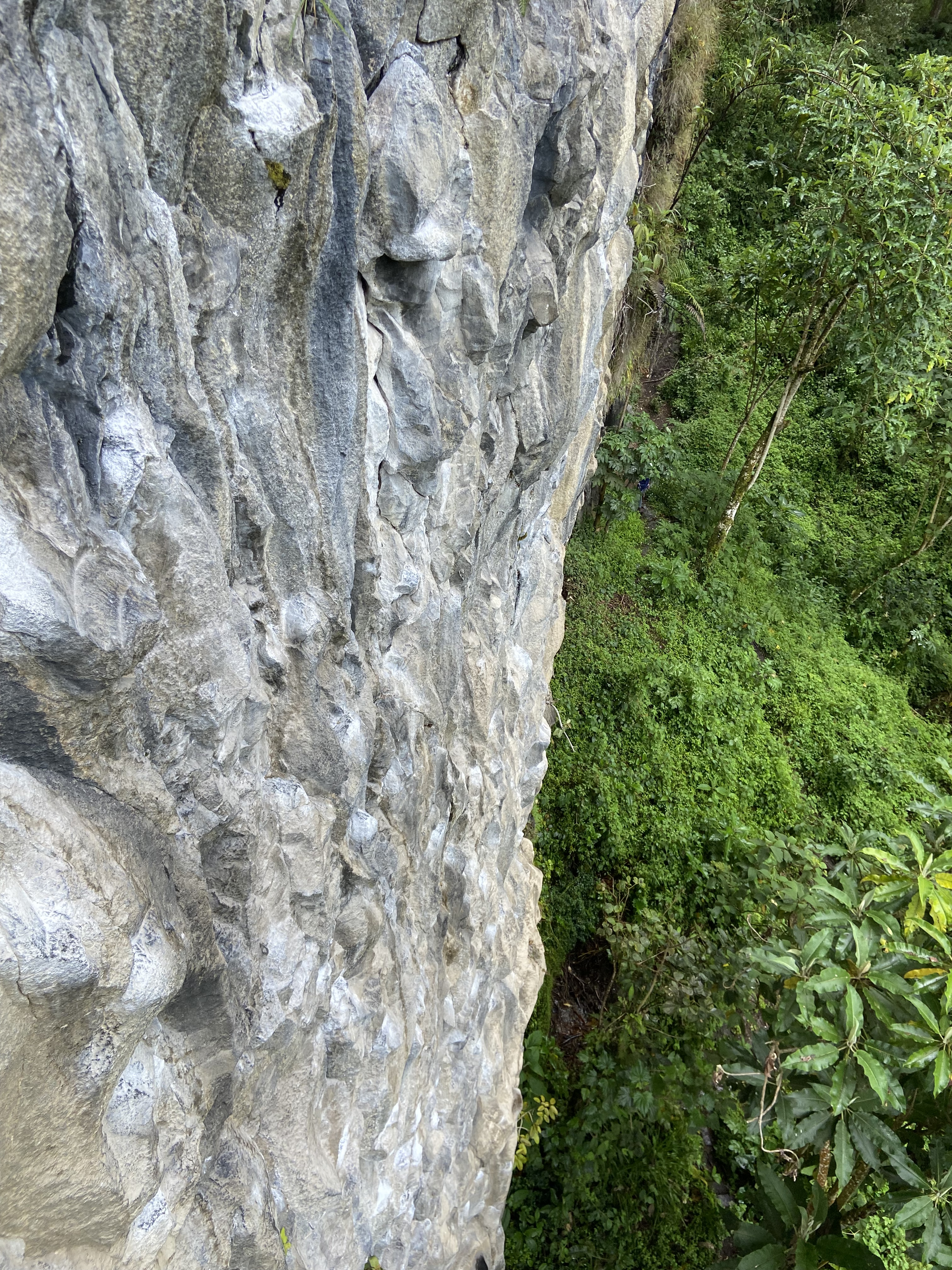
Cuyuja is a fantastic climbing area, about 2 hours from Quito, with many superb routes. The rock is very high quality basalt, which is very compact and not flaky or loose at all. Despite being so compact the rock is highly featured, there is always an intermediate hold or foot to keep you going, which can make for some extremely pumpy climbing! The crag is big and there are lots of routes over 30 meters long, often with very sustained and unbroken climbing. The basalt is just a pleasure to climb, not harsh on the skin and with both technical and physical moves. Some of the routes we did in Cuyuja are among the best we have done in a long time, it is mid grade sport climbing paradise.
Cuyuja has around 78 routes, from 5 to 7c+, and it should be high on your list of quality climbing areas to visit. To access the crag you need to be let through a gate by Señor Jairo, you can find his contact details on theCrag. Whilst it is possible to camp at the crag, there is also an excellent homestay in the village where you can enjoy a cosy, comfortable room and home cooked meals in the family restaurant. Overall, we thought Cuyuja was great, exactly the sort of place you want to visit on a climbing trip. Excellent climbing, easy access whilst simultaneously being quiet and unspoilt – there was only one other pair of climbers around at the weekend! Needless to say we are really glad we visited and we wouldn’t hesitate to go back.


Tangán, oh, Tangán
Tangán is one of Ecuador’s best trad climbing areas, featuring stunning basalt columns, so naturally it was high on our list of places to visit. However, we were warned by several local climbers that it rains a lot in Tangán, and as we were in the heart of the wet season it might not be such a great plan. We got in touch with Ramiro who confirmed it was indeed quite wet and that there were no guarantees we’d get any climbing done. Not to be deterred easily we were up for a gamble and figured we’d try our luck. That was until we saw a severe storm warning from the Instituto Nacional de Meteorología e Hidrología of Ecuador, which was the writing on the wall for our chances of climbing. Whilst sad we didn’t get to visit, the place looks amazing, so anyone who is in the dry season or has good weather should be sure to check it out, as for us it is one to come back to someday!
Baños Area
Baños is a very well known town in Ecuador, famed for its hot springs. There are lots of stunning mountains and canyons surrounding Baños, as well as several climbing sectors, with around 100 routes between them. We have described some of the sectors in more detail below.
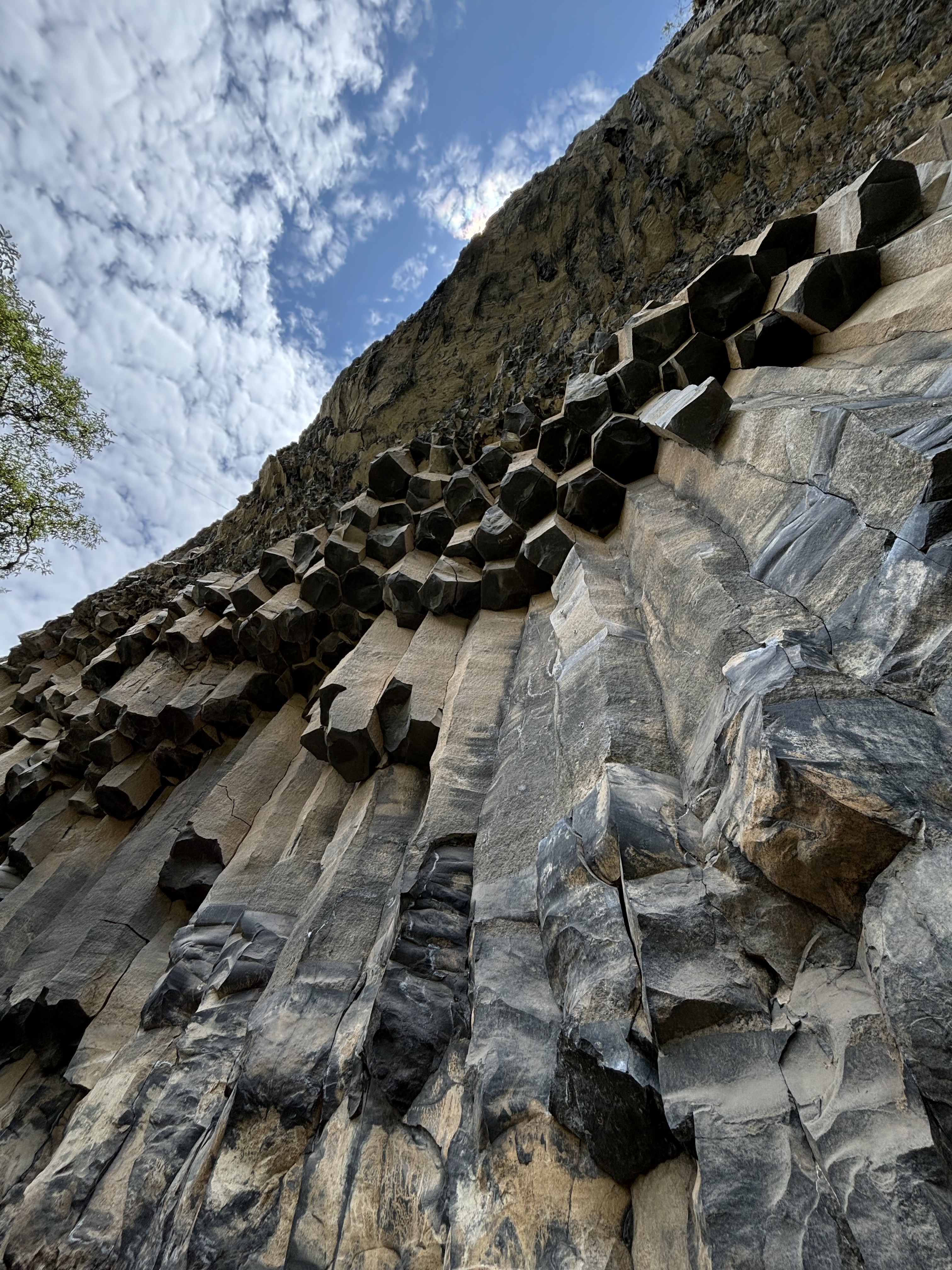
Puente de las Juntas is in our opinion the best crag around Baños, with some absolutely superb basalt columns. The crag is an easy 5 minute walk from the road, but you are mostly concealed by bushes and trees allowing you to climb in relative peace. The rock quality is excellent, the basalt has great friction whilst not sharp, and the columns are incredibly solid and even the blocks are totally stuck. The climbing itself is quite brutal, the routes demand a lot of technique and simultaneously are very powerful – no grade is a giveaway here!

Puente de las Juntas has 16 routes from 6b to 7b and the column routes are some of the most interesting and varied routes you’ll find. There are also some bolted extensions through the roof above the columns, and there is a very impressive 7b that traverses all the way across the lip. Whilst the majority of routes are around 15 to 20 meters long, they certainly pack a lot into their length and are memorable beyond their size. If you’re climbing around Baños this crag is a must visit and definitely our personal favourite.
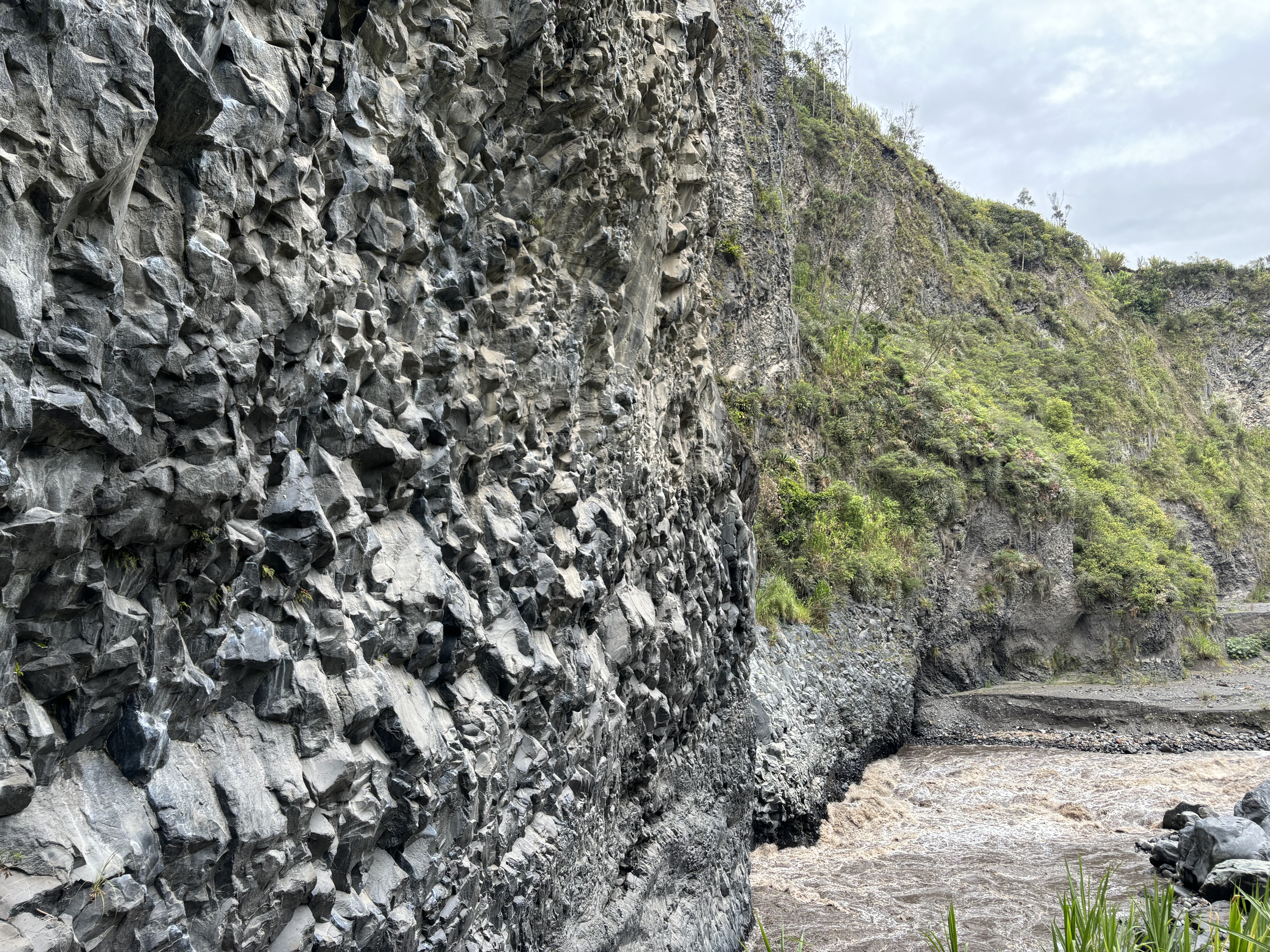
Eco Zoologico San Martin is a large and impressive crag that sits by the raging river, inside the Parque Aventura San Martin, which has a $2 access fee. What makes the crag so unusual is the climbing style. The rock has absolutely no friction whatsoever, meaning you must get very creative with your body positions to avoid being ejected. Sometimes you can feel totally solid, only to be spat off unexpectedly. The rock itself is actually good quality, hard and compact, just with an incredibly smooth river polished texture. The crag has around 25 routes from 5 to 7c+, the routes are generally good with cool rock features, but it will probably put your ego in check!
If you find our content useful please consider subscribing:
Acantilado de San Juan
Acantilado de San Juan is an absolutely stunning climbing area, almost certainly the best sport climbing in Ecuador and the home of some truly world class routes. The rock is superb, some sectors climb like basalt while others are more like tuff, but regardless the quality is consistently excellent. The crags sit in a beautiful canyon that lies at roughly 3,800 meters, which can leave you feeling a little breathless on the crux for your first days cragging! Directly above the canyon is the iconic volcano Chimborazo, Ecuador’s highest peak at 6,263 meters, it goes without saying the scenery is beautiful.

The canyon has around 150 routes, from 5 to 8c and we honestly didn’t do a bad route our whole time there. Whilst there are a few 2 pitch routes, the best of the climbing here is long, 30 meter plus, sport routes. The climbing is technical and engaging the whole way and there are often some roofs to give your biceps a blast too. Some of the routes in the mid 6s to mid 7s are strong contenders for the best we’ve ever done anywhere and many go through outrageous terrain for the grade. Typically the routes are very sustained and pumpy, with continuous climbing and few rests.
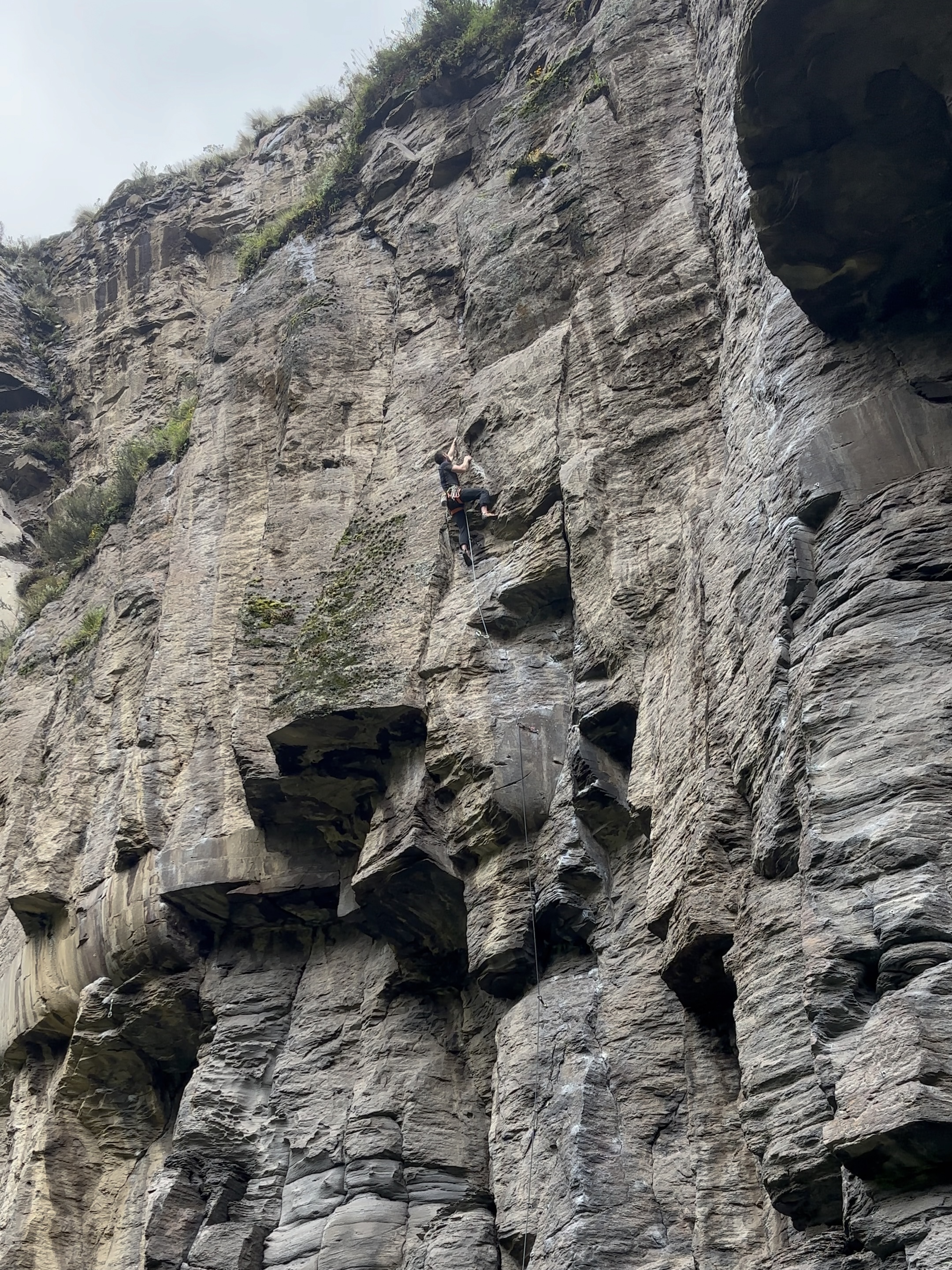
Despite the high mountain location, the crags are quite easy to access and it takes less than an hour by bus from Riobamba. It is absolutely worth staying near the crags as opposed to in the town. There are several homestays in the area where you can camp or take a room and eat freshly cooked meals. The surrounding environment away from the main road is very authentic and many people still live a traditional life, tending to alpacas and sheep on the mountainside. The locals are incredibly friendly and several months of learning Spanish was all worth it to be able to have a conversation with them.
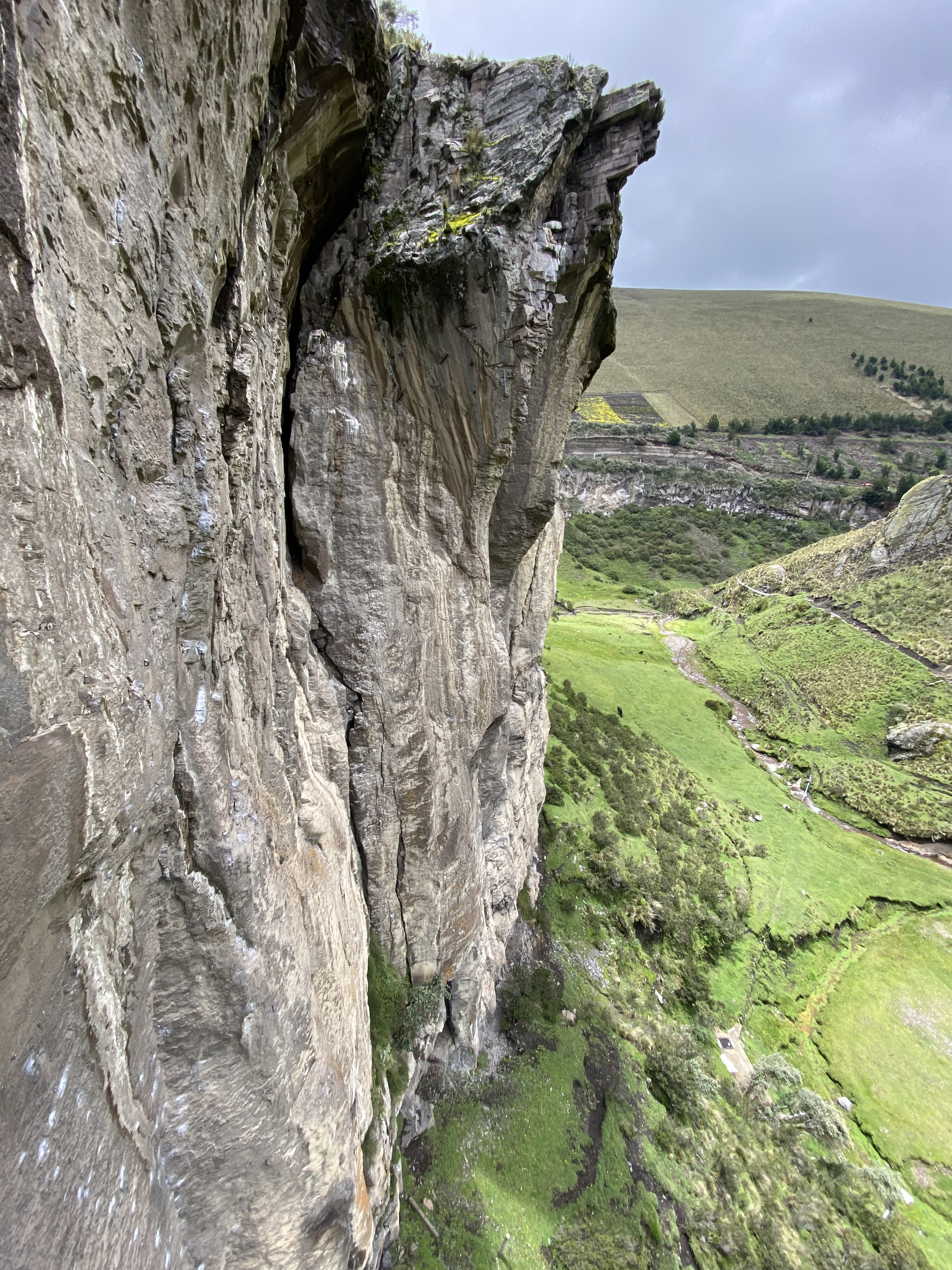
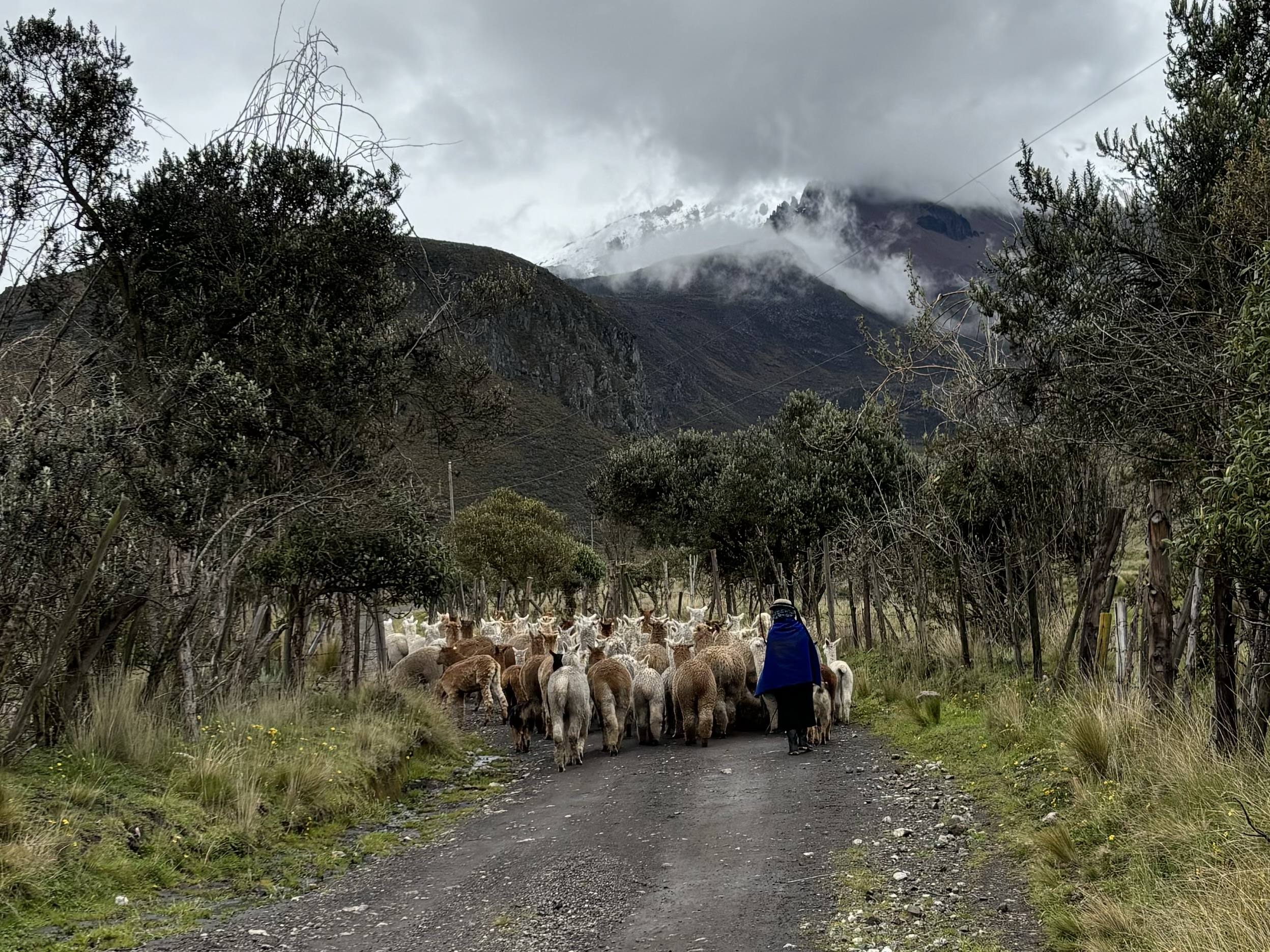
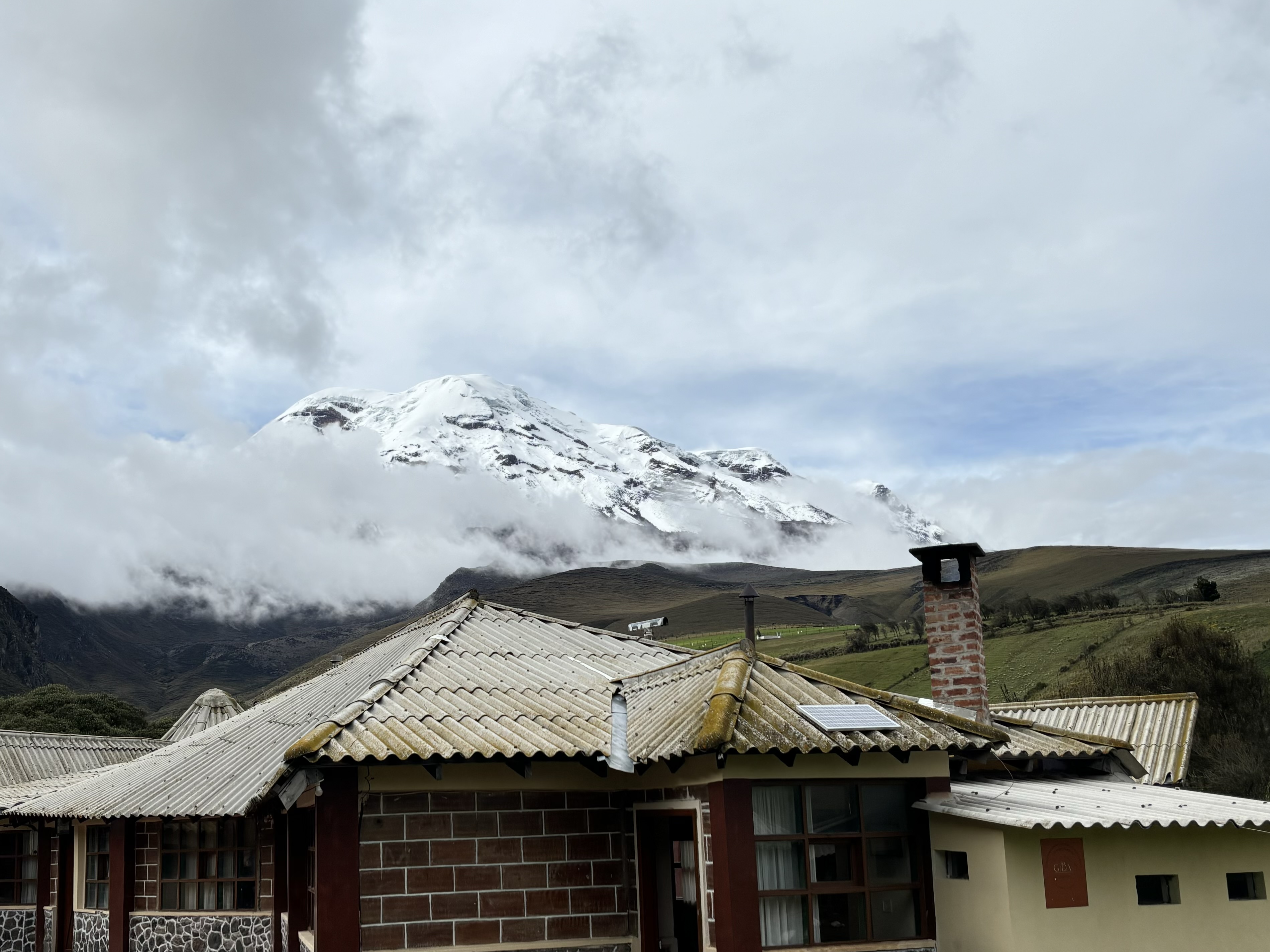
Acantilado de San Juan was definitely our favourite crag in Ecuador, but also ranks very highly compared to crags we’ve visited in different parts of the world. It is amazing that a crag as good as this is so incredibly quiet, you’ll likely be the only people there. Compared to some of the regions most famous climbing areas, like La Mojarra in Colombia, the climbing in Acantilado de San Juan is better and also far, far quieter, which makes for a winning combination. If you’re in Ecuador make this crag a priority and make sure to spend plenty of time here, it really takes some beating.

Cojitambo
Cojitambo is one of the better known and larger climbing areas in Ecuador, home to around 200 routes, from very easy to 8c. Cojitambo is a mountain with a large spread of sectors home to many multipitches, which partly contributes to its popularity. Rather than being one sweeping wall, Cojitambo is comprised of many crags split by gullies, ledges and vegetation. Despite not being as eye-catching as Ecuadors other crags, the rock quality is very high and some of the routes are genuinely excellent, it’s all about picking the right route. The climbing style in Cojitambo is generally slab and wall climbing with nice small crimps and tricky feet, technique is more rewarding here than strength.
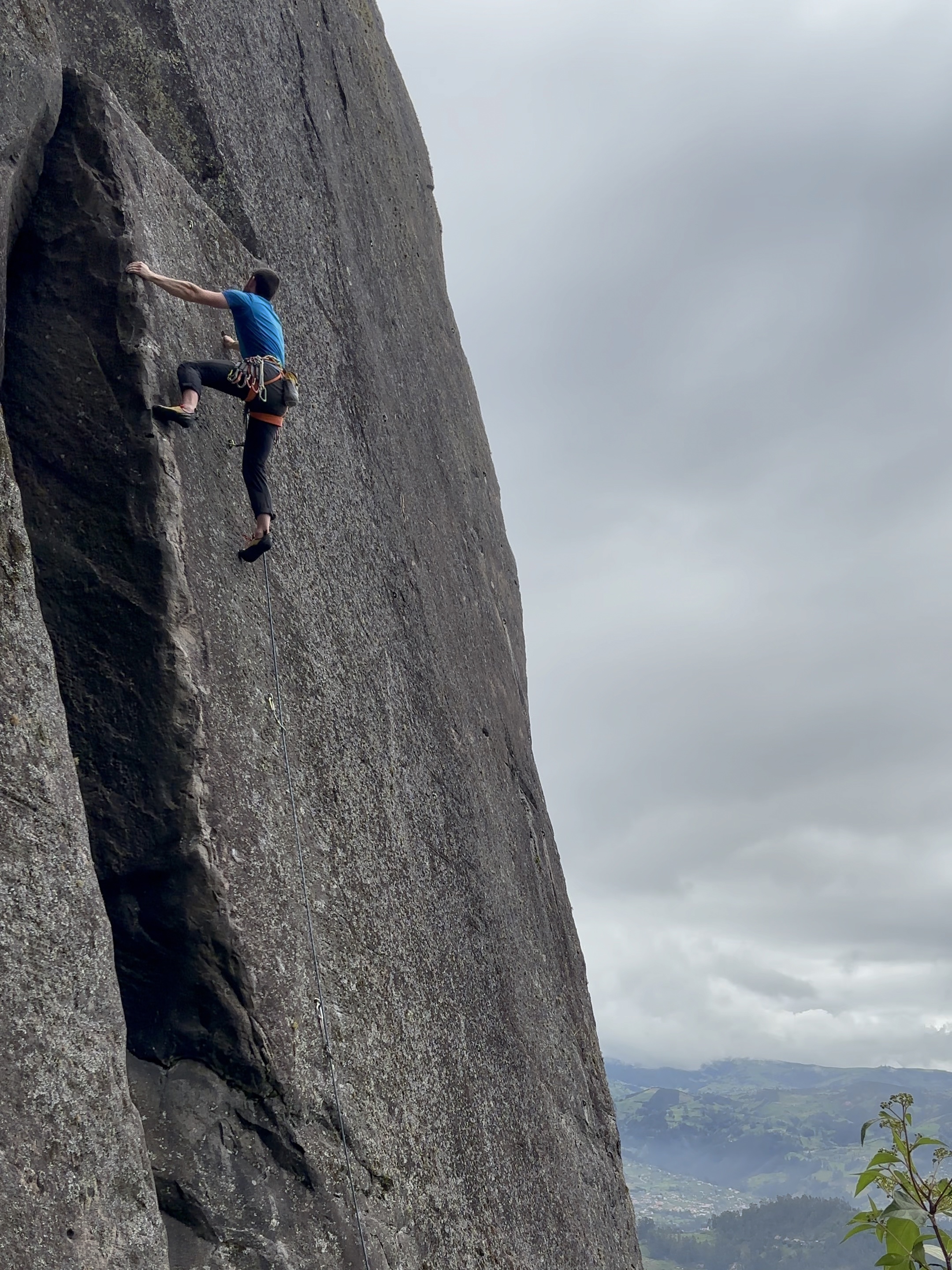
One small problem we encountered here was dodging the rain, as the crags are slabby they almost all get wet in the rain and there aren’t as many places to hide from the showers as in other areas. The rock generally dries quite quickly, but it is worth checking the forecast, especially if you’re in the wet season. The village of Cojitambo is very charming and you are only a short walk from the lovely square to the crags. Quality wise we thought Cojitambo was middle of the road for Ecuador, it isn’t the best crag, but equally there are some awesome routes to be done here.

Parque Nacional Cajas
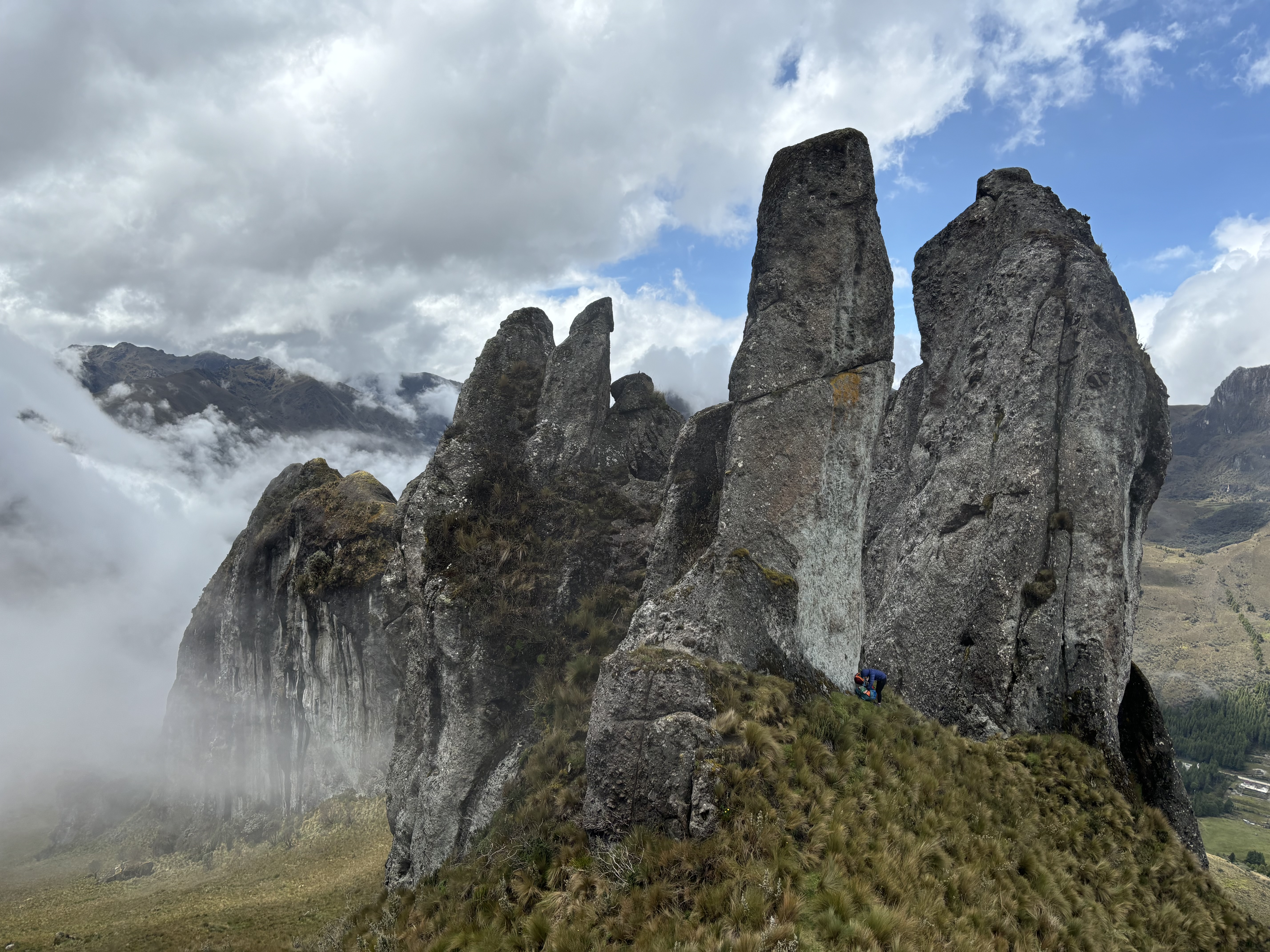
Parque Nacional Cajas is one of Ecuador’s lesser known climbing areas, despite its close proximity to the charming city of Cuenca. Cajas is home to many lakes and mountains – it is a really beautiful place, full of alpine flowers and interesting wildlife in the Páramo environment, we spotted several interesting small mammals we believe to be Agouti. It is very impressive that Cajas is only 30 km or so from the historic centre of Cuenca, yet it is an unspoilt mountain environment with loads for nature lovers to enjoy. Climbing wise, Cajas has around 42 routes, from 5 to 8b, but these are spread out over several different sectors that are many kilometres apart.

Unfortunately we didn’t have such luck with the weather in Cajas, and so had to settle for only one day of climbing. We chose sector La Virgen for its cool pinnacles at around 4,100 m, with a beautiful walk in to get there you are completely in nature and free from any disturbances. The rock at the pinnacles definitely wasn’t the best quality, and the rock which hasn’t been weathered by the rain can be very crumbly. The water worn rock is better, but you should definitely wear a helmet. Of course we can’t comment on the quality of the other sectors, it follows they may be similar, but equally they are at different altitudes and aspects so may actually be better. We very much enjoyed climbing at La Virgen, but it was more for the overall day out rather than the quality of the climbing.
Susudel
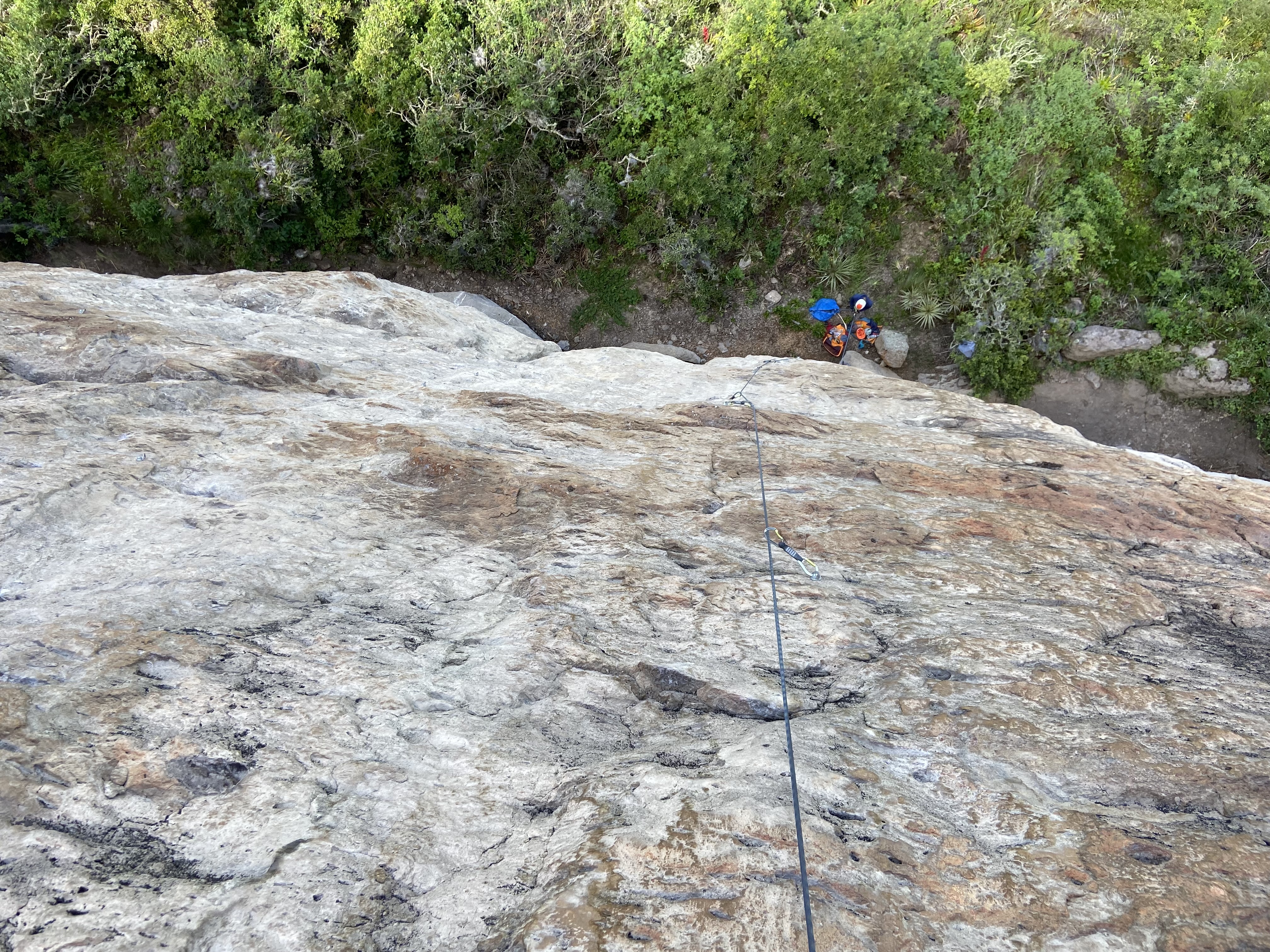
Susudel is a strong contender for Ecuador’s newest crag, having been developed by a Petzl Rock Meeting in 2024. The crag is part of a long line of cliffs which has the potential for a huge amount of climbing. Currently there are around 25 routes at a guess from us, there is only a topo made for one sector of 7 routes- the rest of the crag has no route names or topos anywhere we can find, please do share if any are produced soon. The rock quality is mixed, the darker rock which has received water run off is good, but the lighter white rock is flaky and friable. The rock could settle down nicely with more cleaning and ascents as it seems solid enough underneath.

The climbing itself is really good fun, long pumpy routes with loads of pockets, many of them super juggy. The good pockets can sometimes be tricky to spot and the fatigue sets in quickly while you hang around looking for them. Generally the routes are gently overhanging, often at least a bit steeper than they first appear from the ground. We enjoyed the climbing here, the only thing preventing it from being perfect is the rock quality, which is definitely subpar to areas like Cuyuja or Acantilado de San Juan, however the quality could increase massively with more traffic.
Rest Day Activities
Thermal Springs
As a country with dozens upon dozens of volcanoes, there is naturally a lot of geothermal activity in Ecuador. There is perhaps no better way to enjoy this than a relaxing soak in one of the country’s many thermal springs. Conveniently these are often located right next to the climbing areas! The town of Baños receives its name from the presence of hot springs and is one of the most famous bathing areas in Ecuador. Perhaps better still is Papallacta, close to the climbing at Cuyuja, which has the hottest thermal springs in Ecuador and a beautiful location to bathe in, in the mountains at 3,300 m. It is a great way to soothe tired muscles after a few days climbing and the mountain climate is well suited to it, it is lovely to have a hot soak on a cold, drizzly day.
Salinas de Guaranda
Salinas de Guaranda is a beautiful small town tucked away in a quiet corner of the Ecuadorian Andes. What sets Salinas apart from the many other beautiful Andean towns in Ecuador is its cooperative. The cooperative was originally set up to run the salt mines, from which the town gets its name, fairly. The town soon branched out from salt and the cooperative began producing cheese, chocolate, cured meat, textiles and other products – all of a very high standard. The principle underpinning production was that of solidarity between workers and fair distribution of profits. As well as being produced in an ethical and equitable way, the products are also delicious and of a very high quality.

Hiking
In a country so full of mountains and stunning scenery, there is certainly a shedload of great hiking areas in Ecuador. Whether you’re not far from Quito, close to the Amazon or deep in the Andes, you won’t have to look hard for somewhere nice to hike. During our stay in the wet season we tended to do shorter walks, as getting rained on all afternoon isn’t that nice. Whilst there are plenty of long and remote walks too, one of the nicest things about hiking in Ecuador is that you don’t have to go very far to be immersed in nature and beautiful surroundings. Often you can be in a stunning area or even a national park within a 30 or 40 km bus ride from a city centre. It’s a great way to enjoy the countryside as well as a handy way to gently acclimatise for your days cragging up high.

Food
Hornado is a delicious whole roast pig, with characteristic tender, juicy meat and delicous crunchy crackling. Hornado is usually served alongside mote, salad and Llapingachos, a delightful cheesy potato cake.
Cuy, or Guinea pig, is a popular dish in Ecuador and throughout South America, it is a traditional dish of Andean people. While cuy can be eaten many ways, a spit roasted cuy asado is the best and most popular way to eat it. Westerners love to make a fuss about cuy, but it is juicy, tasty meat comparable to pork or chicken and there is nothing whatsoever to be nervous about. Certain towns and cities have areas where there are loads of cuy roasted freshly every day and this is the best sort of place to go, there’ll be lots of locals flocking to treat themselves too.
Churrasco is one of the most common, and complete, dishes in Ecuador – an awesome post climbing meal. The main component is a thinly pounded steak which is accompanied by rice, fried eggs, plantain, potato fries, salad, avocado and sometimes a pepper and onion salsa. Needless to say you won’t be hungry after that!
Locro de Papa is a hearty and warming potato soup with chunks of cheese and slices of avocado. It is a nourishing dish that is often served as a starter, but is almost energising enough to be the main course!
Mote is a staple carbohydrate in Ecuador, made from boiled and peeled corn kernels. They can be eaten plain, which is tasty, but better still is mote pillo which combines the plain mote with scrambled eggs – which can be eaten as a side dish or breakfast.
Espumilla is a delicous meringue made from egg whites, sugar and guava pulp, which resembles ice cream and is served in a cone. Espumilla is fruity, sweet and light – a delicous snack or desert.
Saving the best till last, Chocolate is simply excellent in Ecuador. Chocolate is native to Latin America and Ecuador is considered a cradle of cacao, with evidence of its use in the country dating back 5,000 years. Today Ecuador is the world’s third largest cacao producer and is renowned for very high quality beans with complex fruity flavours. It is easy to buy single origin, artisanal chocolate in Ecuador and it is leagues ahead of any bog standard chocolate you see around the world. Locally grown, ethically produced and delicious – it can’t be beaten!
Summary
We had a fantastic time in Ecuador and we were incredibly impressed by the quality of the climbing. Acantilado de San Juan is the best crag in our opinion and the standard is world class – easily rivalling the best crags of other South American countries or those in other parts of the world too. Other areas like Cuyuja are also excellent and there is a lot of quality climbing to be done throughout the country. Additionally, Ecuador is an incredibly rocky nation and you frequently see excellent crags, canyons and boulders that haven’t been developed for climbing yet – the potential for new routes is very high. We would love to re-visit some of our favourite crags as well as the ones we missed out on like Tangán – we would not hesitate to return to Ecuador again.
We write for pleasure and climbing is our passion. Our articles will never be paywalled. However, if you would like to help towards the costs of running the site or if you have found our content useful, please consider contributing here. To read more about why your support matters, click here.
You can read more about the climbing in South America here.
 The Crag Journal
Another brilliant article…excellent work.Stay safe!!
LikeLike
Cheers mate, thanks for the comment! Peru article next month!
LikeLike
Hi! Great article! We live in Susdel and are working on communal climbing with people from nearby villages. There are 42 routes open, and there are quite a few boulder sites around. If anyone comes by and needs anything, let us know 🙂
LikeLiked by 1 person
Hi, thank you for the comment! Your community sounds great, I wish we had met you when we were there! Thanks for sharing the info, I’m sure it’ll help other climbers!
LikeLike