Peru was one of the most impressive stops on our journey through South America. The quality and quantity of beautiful climbing areas is vast and we had expected this to mean it would be very busy with climbers, but that was not the case at all. In fact, we often had some of the country’s best crags, like Pitumarca, all to ourselves! Peru is one of the most touristic countries of the continent, however, the nature of the mass tourism is very honeypotted. For example, Cusco or Ollantaytambo will be heaving with tourists, with authenticity a distant thought. However, the good news is that when you get away from the tourist areas, in places like La Unión, you can experience the real Peru, its wonderful culture and friendly people – and you’ll probably be the only ones around! We began our time in Peru by crossing the border from Ecuador at Macara and after 7 weeks of fantastic climbing we finished by crossing the border into Bolivia at Kasani, on the shores of lake Titicaca.

Guidebooks for Climbing in Peru
Peru is well serviced by a multitude of guidebooks and online topo resources. A great place to start is toposperu.com and its predecessor toposperu.wordpress. Despite being essentially the same site, there is quite some info on the older WordPress site that isn’t on the new one and equally the new .com site is clearly checked more frequently. Additionally theCrag and MountainProject are both useful, typically for different areas, e.g. MountainProject is better for the Sacred Valley and theCrag is better for the Huaraz area. As well as plenty of online topos, there are also several print guidebooks you can buy for the country’s biggest and best areas, like Pitumarca. Typically these are best bought in climbing gyms or climbing shops in large cities like Lima, Cusco or Huaraz.

Weather and Climbing Season in Peru
The seasons in Peru can be generally split into the wet season and the dry season. The dry season runs from May to September and this is definitely the best time to visit for climbing. The rainy season runs from November to March and is best avoided if you want to make the most of your trip. The shoulder months of April and October can work, but you will be at risk of more rain. In fact, even in the height of the dry season, the weather can be very changeable and unpredictable. This isn’t the case in the dry coastal regions, but in the Andes the mountains can create their own weather and as such you should be prepared for wet and dry, hot and cold! Many of Peru’s best crags lie above 4,000 meters, so bringing plenty of warm layers and waterproofs is highly recommended.
Below is a map of the different crags we climbed at in Peru so you can see where they are in relation to each other. We have described them below in the order we visited them, generally from north to south.
Climbing Recommendations
Los Olivos
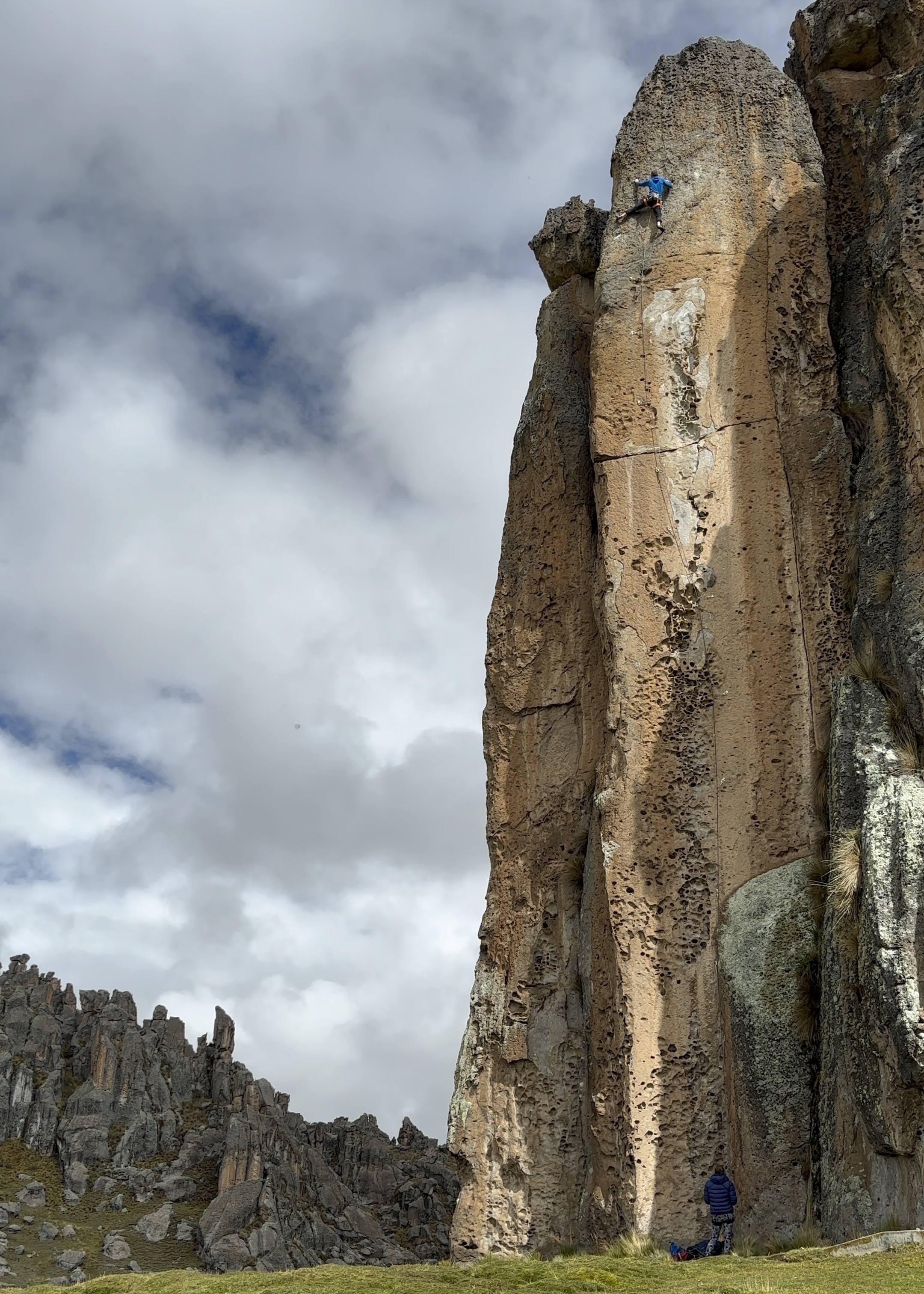
Los Olivos is the city crag of Huaraz, the gateway to Huascarán national park. If you want to climb in or around Huascarán, you’ll almost certainly pass through Huaraz at some point. Los Olivos is a small and pleasant enough crag, not somewhere you would travel specifically for, but a very convenient stop considering its location. The rock is a pretty good quality volcanic conglomerate with a nice mix of potatoes, pockets, crimps and jugs. There are over 70 routes, with grades from 4 to 8a. There is an entrance fee of 15 soles for foreigners and 10 for locals, the owner was very friendly and picked some prickly pears and golden currants for us to snack on while we climbed. If you’re in Huaraz it’s worth a visit for a days cragging to break up the journey before heading into Huascarán for the main event.
Quebrada LLaca
Quebrada Llaca is a stunning climbing area in the Huascarán national park, one of Peru’s most beautiful mountain areas. Llaca is accessed via a long and winding dirt road that is a pleasure in itself. There is a Refugio and a camping area but it is a very quiet place, off the tourist radar and only really visited by climbers. The valley is lined with huge crags, of excellent quality granite, hemmed in by tall snowy peaks and with a gorgeous moraine lake nestled in the bottom. As places to go climbing come, they don’t tend to get more beautiful than this! The environment is pristine, with endless interesting alpine plants and small mammals, it is a real pleasure to be able to climb in such a place.

Quebrada Llaca has around 37 routes, the majority of them sport, with grades from 4 to 7b. This is the tip of the iceberg, there could probably be a thousand more routes there is so much rock. The classic and must-do route is Misión Lunática – supposedly the world’s highest altitude multi pitch sport route. The base of the route is in excess of 4,550 meters and the top is over 4,700, which is enough to make you wheeze! Who knows if it really is the highest of its style, but either way it is pretty bloody high! The route is 6c+ free or 6b obligatory, your level of acclimatisation will help you decide which! It is great rock pretty much the whole way, but the highlight is the stunning climbing up an arête and steep wall on pitch 4.

We write for pleasure and climbing is our passion. Our articles will never be paywalled. However, if you would like to help towards the costs of running the site or if you have found our content useful, please consider contributing here. To read more about why your support matters, click here.
Antacocha
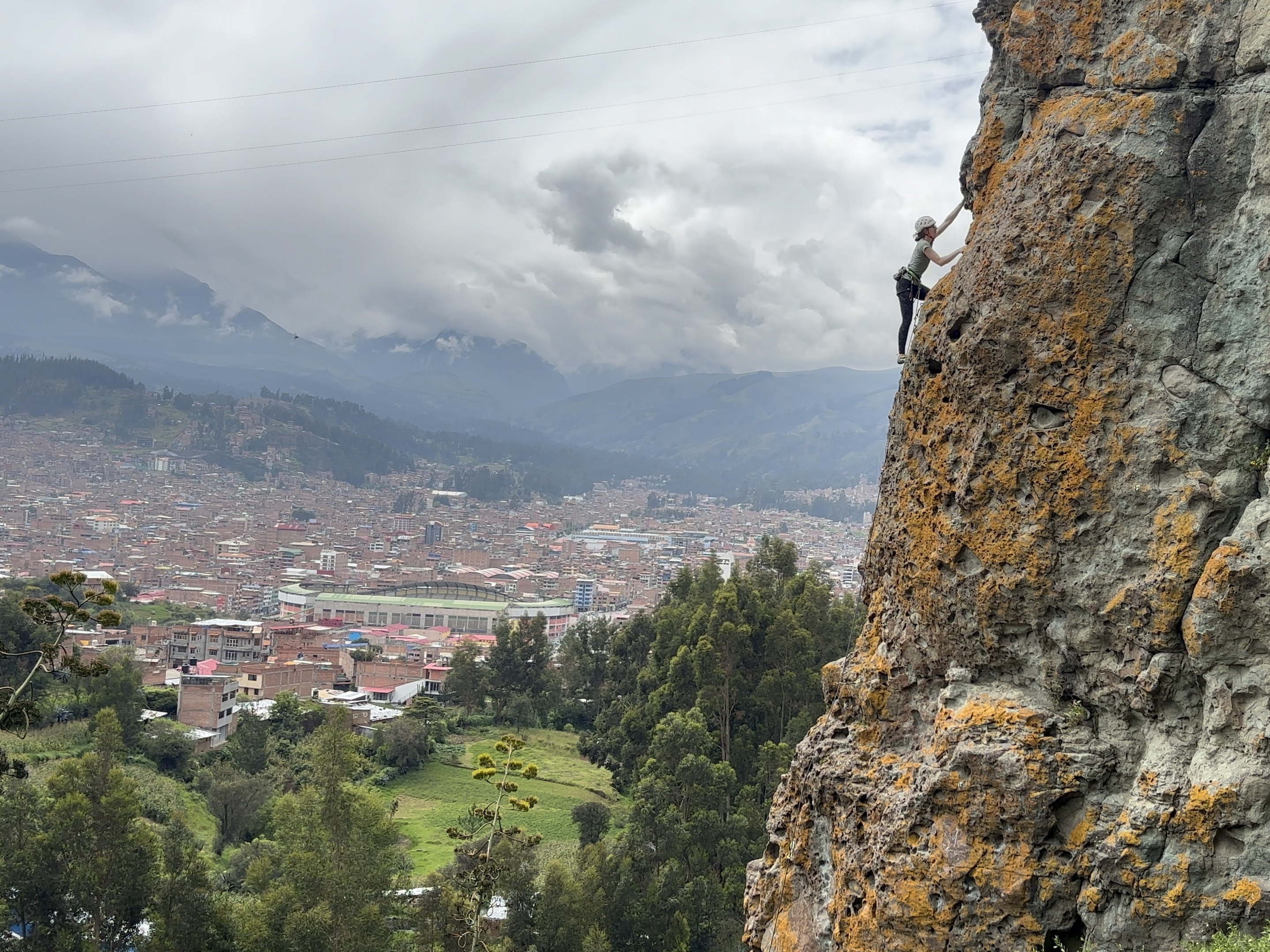
Antacocha is a great crag close to Recuay, around 26 km from Huaraz. The crag is a large sprawling buttress around 180 meters high, situated above the beautiful Laguna Antacocha. The rock is limestone, which is quite impressive to have the contrast between granite, limestone and tuff all within around 50 km of each other. The rock quality is interesting, at first acquaintance some of it looked bad from the ground, but upon climbing it, it was actually very good and much better than it first appeared. It seems the rock is well solidified by calcium deposits, which figures as at the Gruta San Patricio on the road near Recuay you can actually see some tufas and flowstone! Whilst Antacocha is sadly not a tufa crag, it has that similar ‘bonded’ feel and we personally found weak looking rock to climb much more solidly than we’d have guessed.
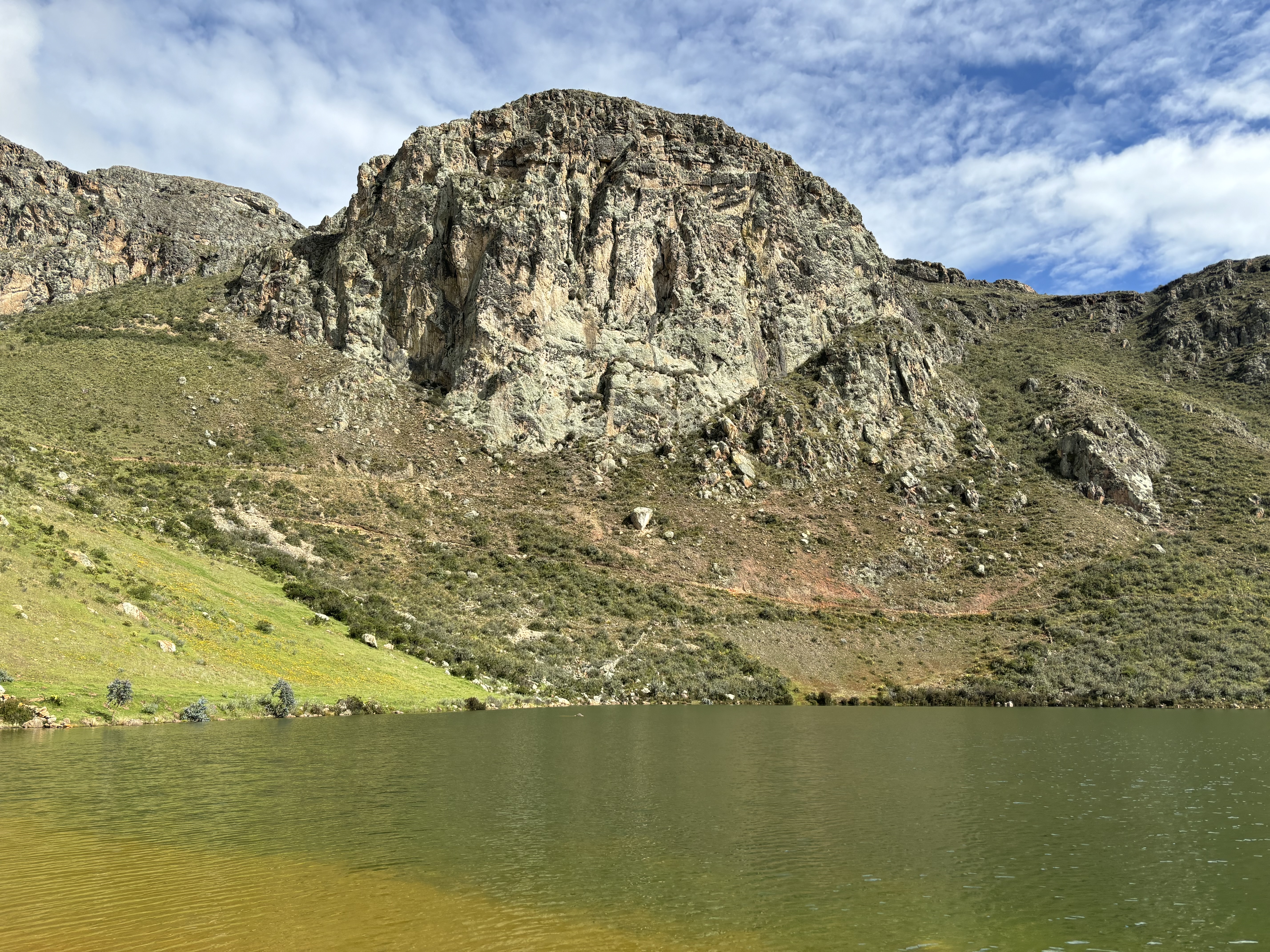
Access to Antacocha is much more straightforward than somewhere like Quebrada Llaca, the road is shorter, better and there is more infrastructure around the laguna, which has an entrance fee of 5 soles per person. From topos we could find, there were 12 routes listed, from 5 to 7b+, several of those being multipitches. However, upon arriving at the crag we found there to be quite a lot more bolted routes than this, particularly single pitch ones – a few harder routes and several easier ones too. We couldn’t find any mention of these online, but they are generally well bolted, so just jump on and find out! The crag has gorgeous views of the Cordillera Blanca and is a really lovely place to spend time. The crag sits around 4,000 meters and gets morning sun. We enjoyed climbing at Antacocha, whilst it isn’t the Huaraz areas best crag, it is still good and is definitely worth visiting.

Hatun Machay
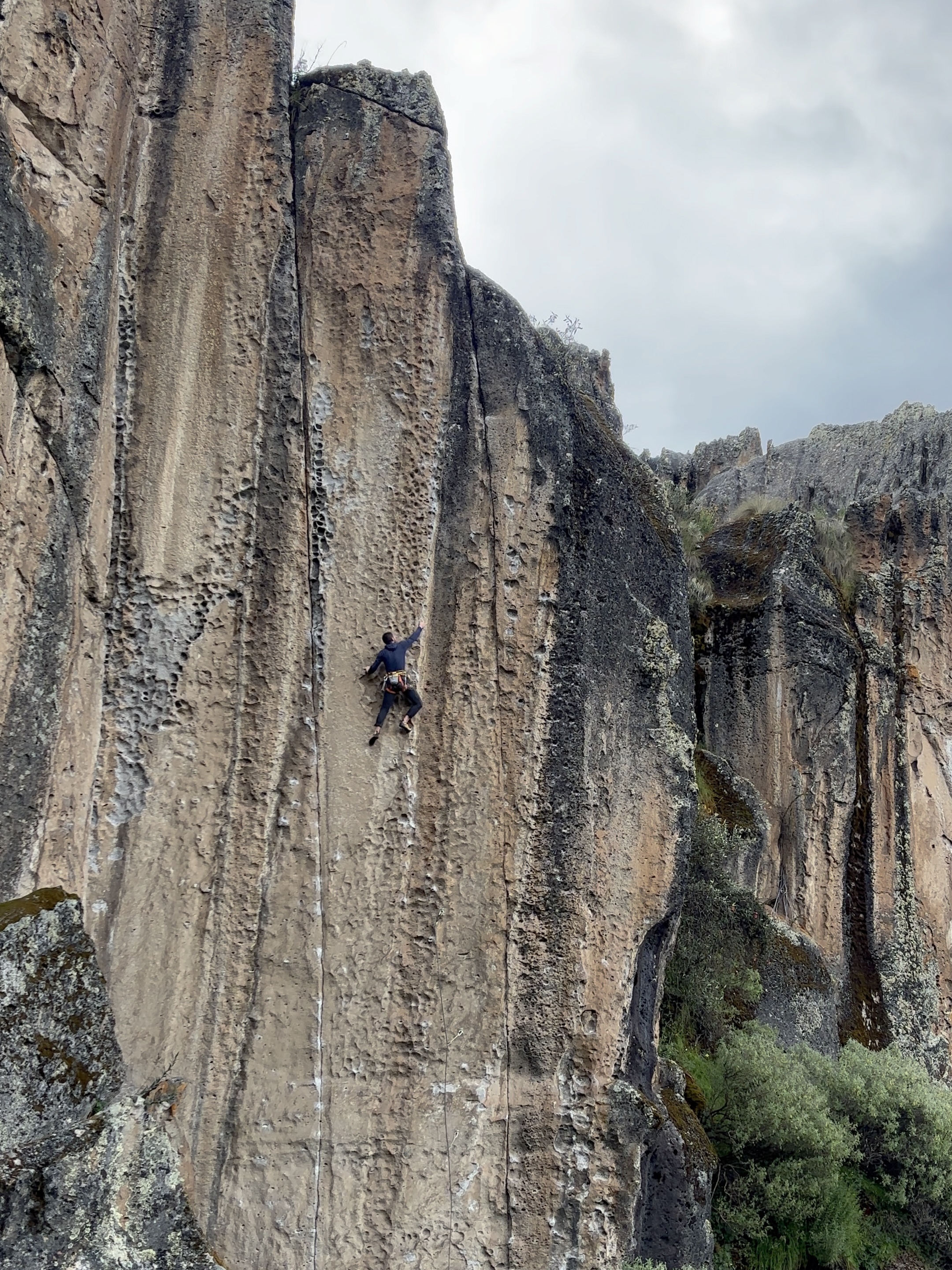
Hatun Machay is one of Peru’s largest and most established climbing areas that is less popular than it once was due to some controversy and bolt chopping several years ago. Thankfully that is in the past, access is now stable and the routes are almost all in great condition. Hatun Machay is a bosque de piedras, or stone forest, with endless weird and wonderful rock formations. The rock itself is a type of tuff formed from pyroclastic flows called ignimbrite. This interesting volcanic rock actually has a sandstone-esque quality to it and the routes typically have lots of interesting features. Quality wise the rock is superb, high friction and compact, very rarely flaky and not polished at all, even on the well travelled routes.
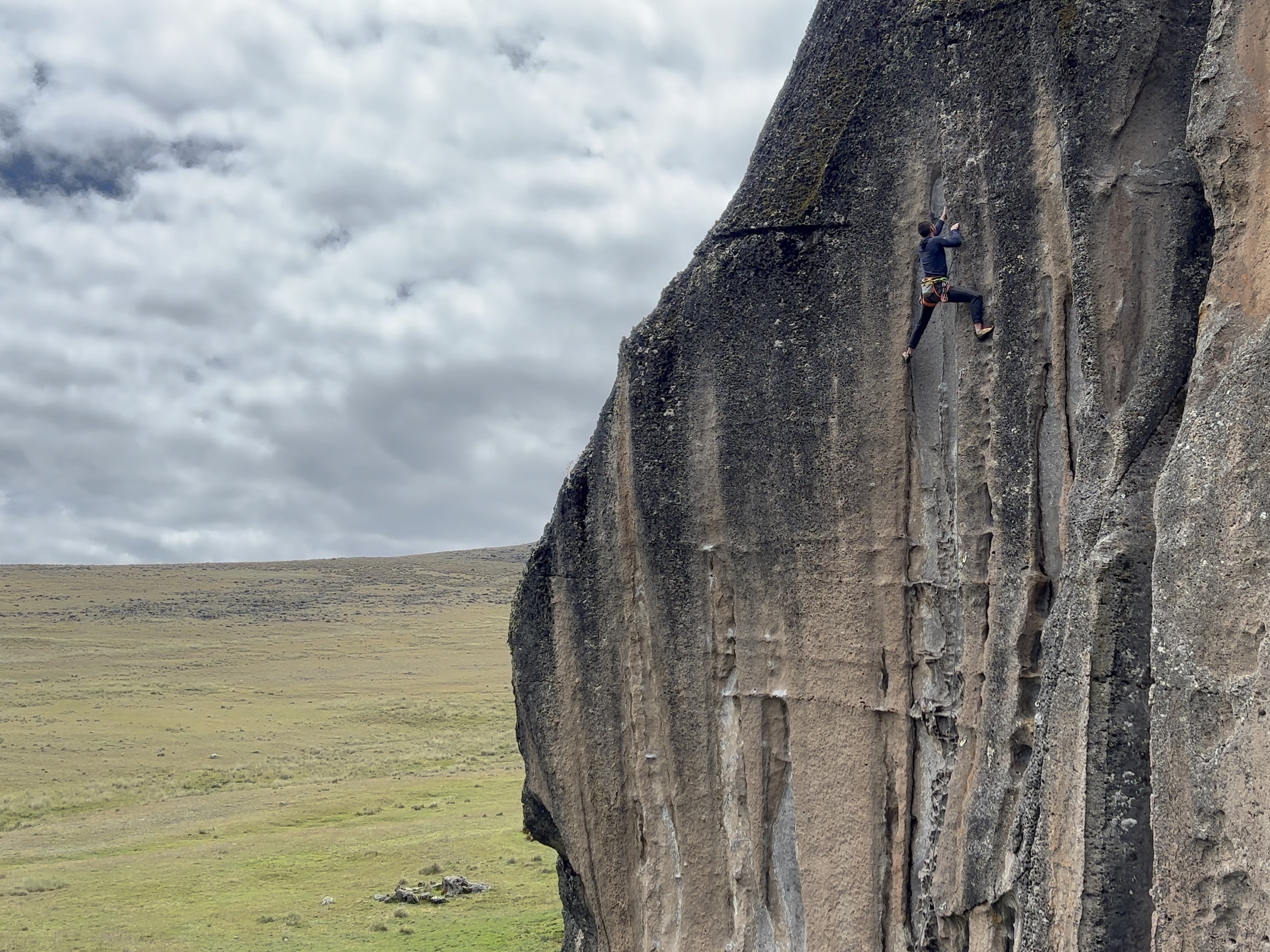


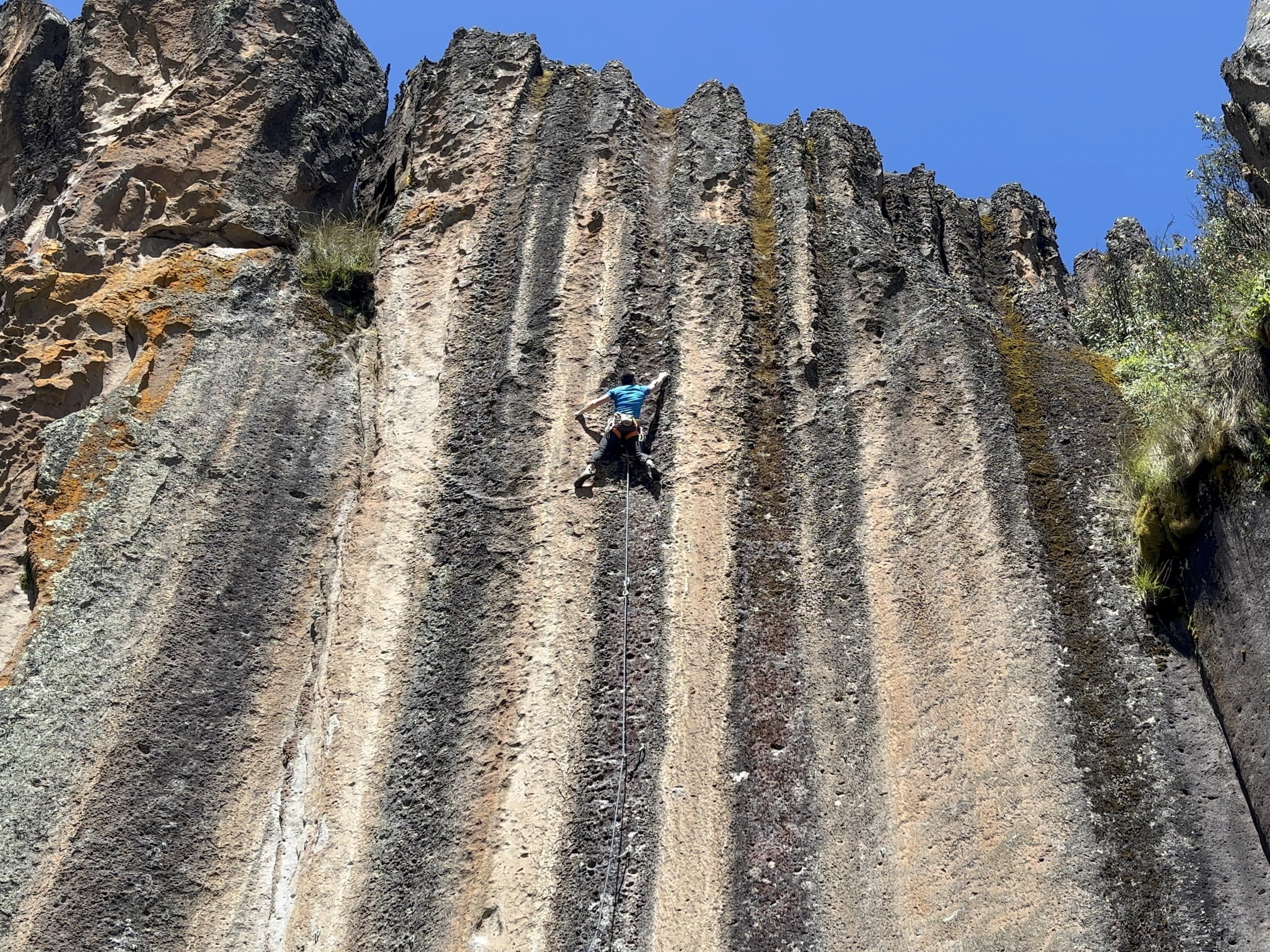

Some favourites from Hatun Machay
There seems to be some confusion about just how many bolted routes are currently at Hatun Machay. Having visited almost every sector on a giant walk and used 3 different sources of topos, we believe there is somewhere between 200-250 bolted routes currently, probably closer to the lower end of that estimate. Grade wise there will be something for most people, from very easy to around 8b as well as some very hard projects estimated to be around 9a at sector Avatar Total. Hatun Machay sits at an altitude of around 4,200 meters, which can give pleasant climbing conditions in the sun or shade, depending on the day, and there are sectors at almost every orientation. At night time it can be incredibly chilly, so while a t-shirt may suffice in the sun, you’ll want a big jacket for the evening.

There is a Refugio at Hatun Machay which is where you’ll stay to go climbing, being around 10 minutes walk from the nearest sectors, the area is remote and there is otherwise nothing around. The Refugio has been in various states over the years, currently it is basic but functional. There is a small kitchen area with gas burners, but it is recommend to bring your own pans and crockery if possible, running water and electricity from solar during the daytime. There is a room with some bunkbeds, but it is nicer to camp so it is worth bringing a tent if you can. You can pick up a few basic supplies like eggs at the Refugio, but in general it is worth bringing all your food with you, bearing in mind there is no fridge.
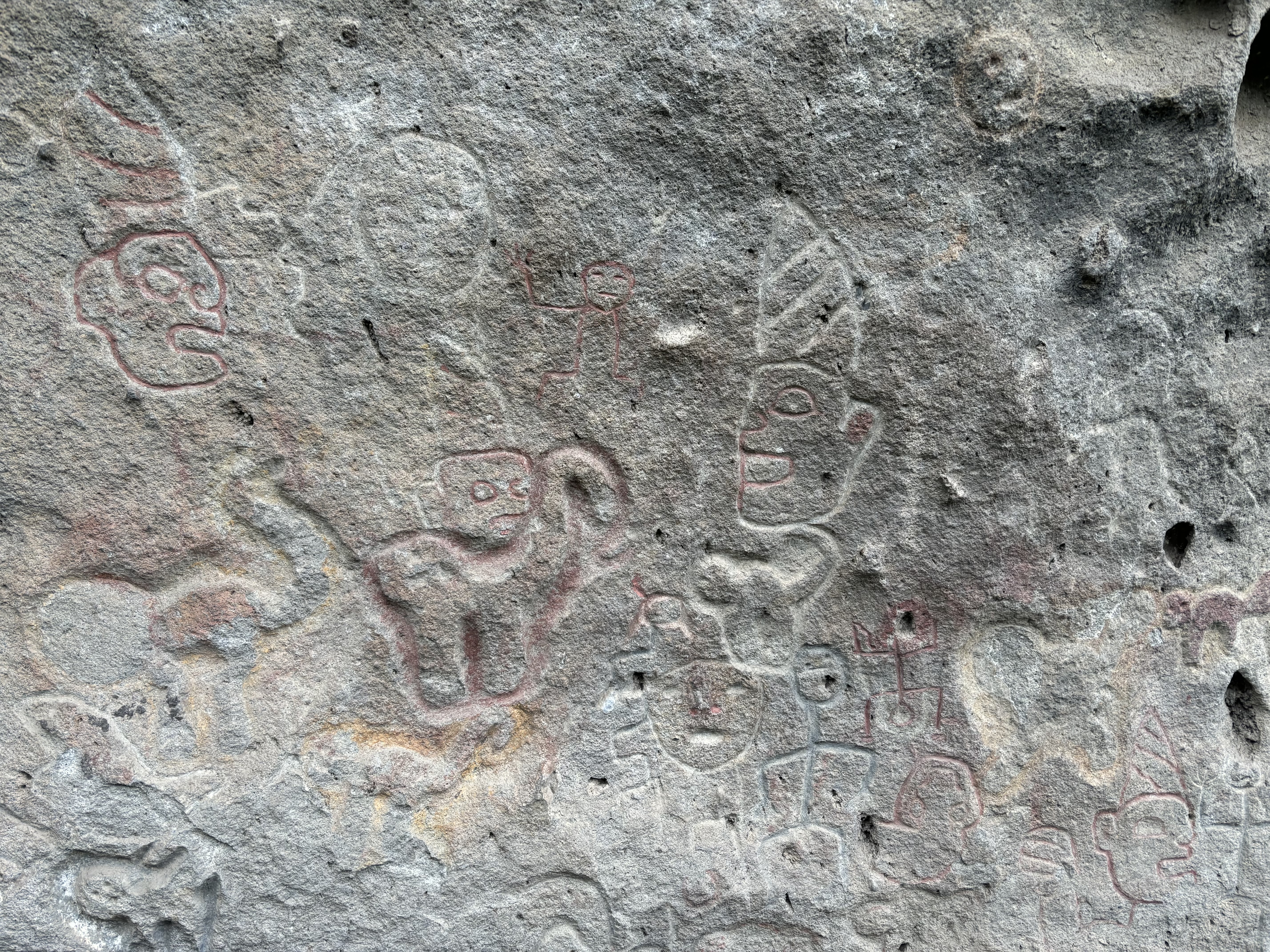
Aside from climbing, Hatun Machay is home to many petroglyphs and rock art of pre-Incan people, estimates vary greatly around their age, but they are most likely between three to five thousand years old. The sites are hidden all over Hatun Machay, some of which are marked on the Huaraz guidebook, but other smaller ones aren’t – you just stumble across them by chance. Knowing how long this area has been inhabited definitely adds to its unique atmosphere, it is a very captivating place.
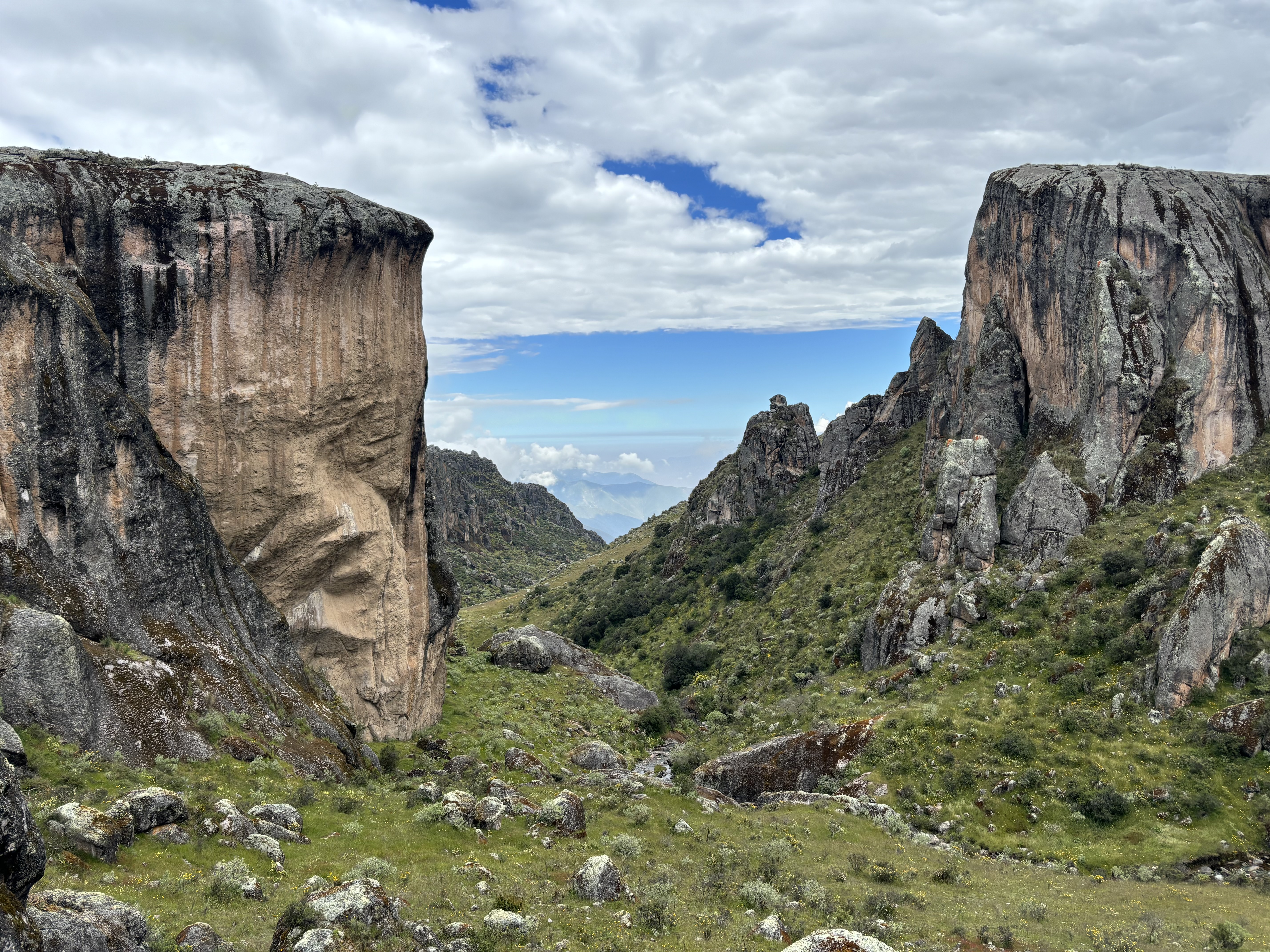
Quality wise, we thought Hatun Machay was world class, particularly for mid 6s to mid 7s sport climbing. The rock is fantastic and a pure pleasure to climb, the location is beautiful and surrounded by serene mountains, the routes are well equipped and not polished – and there are lots of them too. It is also important to mention there are tonnes of boulders and multi-pitch walls, so it isn’t just single pitch sport. There is also an endless amount of rock here and in the neighbouring Pampas Chico stone forest, that could have a huge amount of new routes. We loved Hatun Machay and would recommend spending roughly 1 week here to enjoy all of what the place has to offer.
Inka Waqanqa
Inka Waqanqa is a beautiful climbing area situated in a valley full of rock and with stunning views of the Cordillera Blanca. The crag sits along the main road from Huaraz to Lima, as it snakes its way down the mountainside, so access is easy. The small village of Conococha is only 5 km away from Inka Waqanqa, with guesthouses, restaurants and places specialising in cheese and cured meat! It is also possible to camp at the crag if you prefer to avoid the short commute. Inka Waqanqa is often viewed as the little brother of Hatun Machay, being only 8 km away as the crow flies. The two areas are comprised of the same rock, but despite all they have in common they are actually quite different.

It makes sense to compare the areas directly as they are so close to one another, one interesting difference is the layout. Whilst Hatun Machay is a bosque de piedras, Inka Waqanqa is more of a cliff band with a large boulder field beneath, home to many problems. Route wise, Inka Waqanqa has around 70 sport routes, with grades from 5 to 8c – making it by far the smaller area of the two. Whilst the rock is very similar, we thought the quality was slightly better at Hatun Machay, but potentially that is because the routes here have had less traffic. Inka Waqanqa is deifitnely a much less frequented crag, whilst Hatun Machay wasn’t busy at all, it is clear that Inka Waqanqa receives a lot less visitors – a great place to go if you want the whole place to yourself.

We enjoyed climbing at Inka Waqanqa, it is a good crag that is definitely worth visiting for a couple of days. However, it lives in the shadow of its neighbour and whether you go to Inka Waqanqa or not, you should definitely make sure to spend the majority of your time at Hatun Machay. This is definitely not to say that Inka Waqanqa is a bad crag, on the contrary if it were in Huaraz it would be about 10 x better than Los Olivos, merely that its proximity to a bigger, more remote climbing area means it faces steeper competition than other areas.
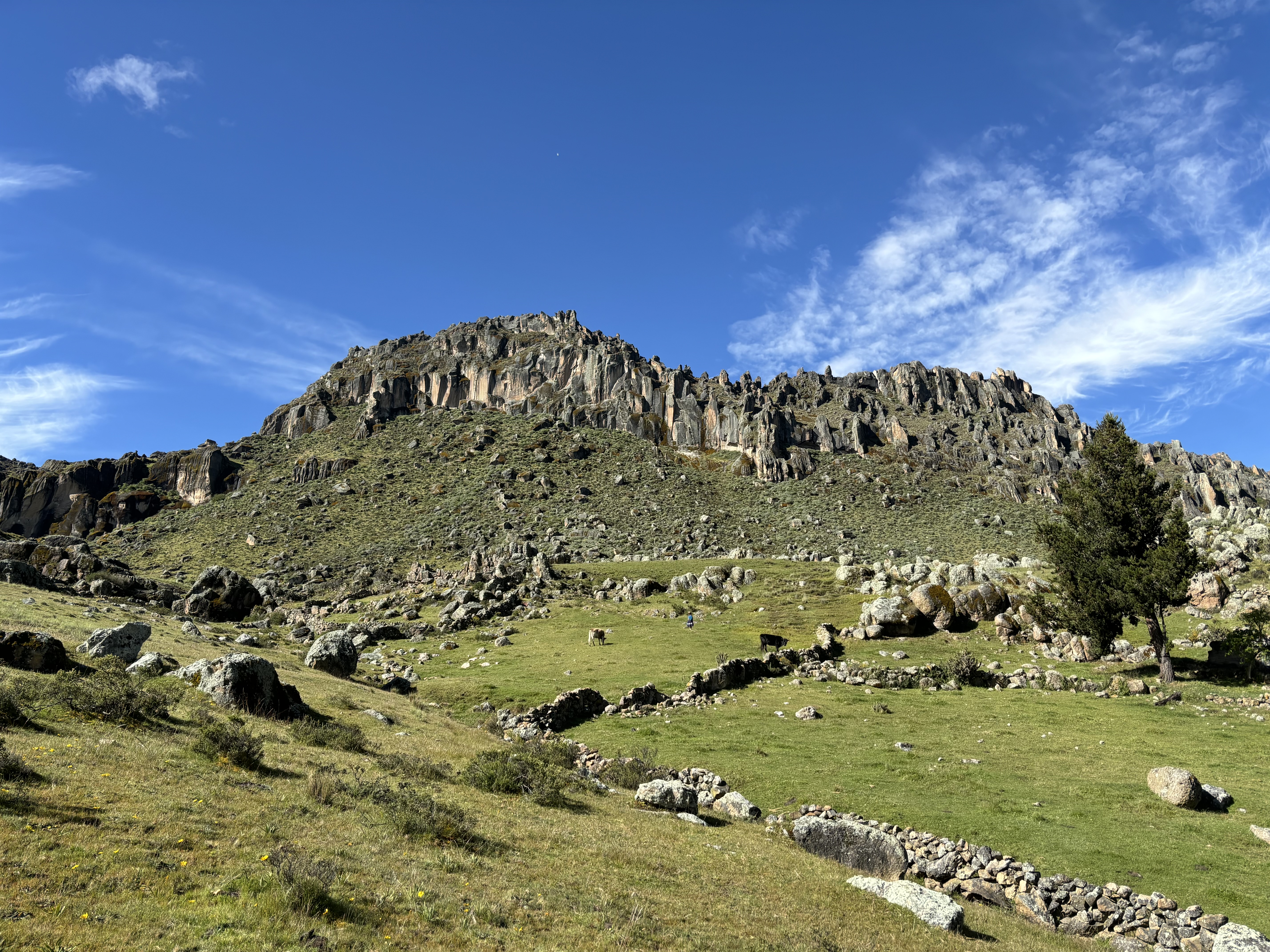
Bosque de Piedras de Huayllay
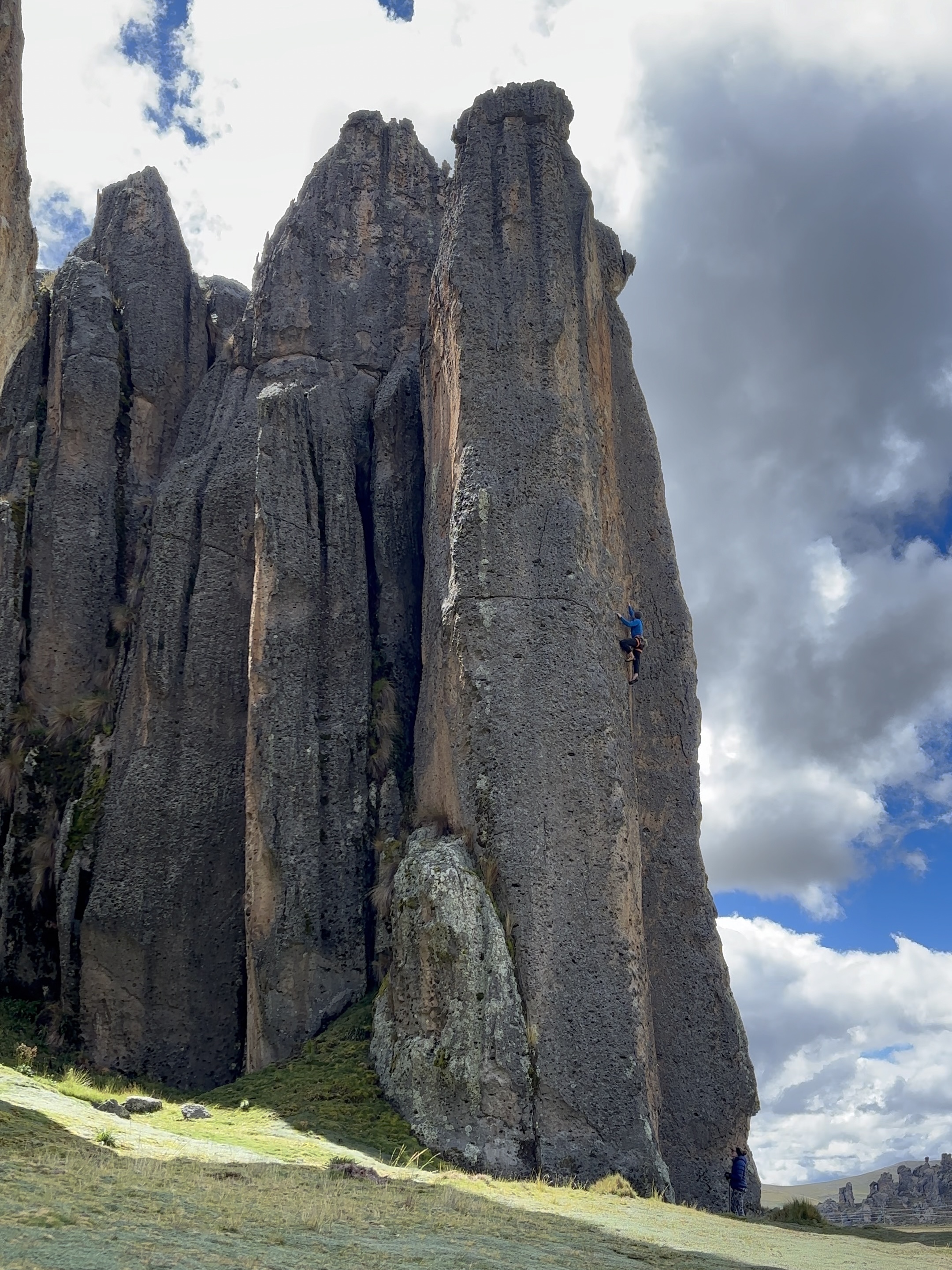
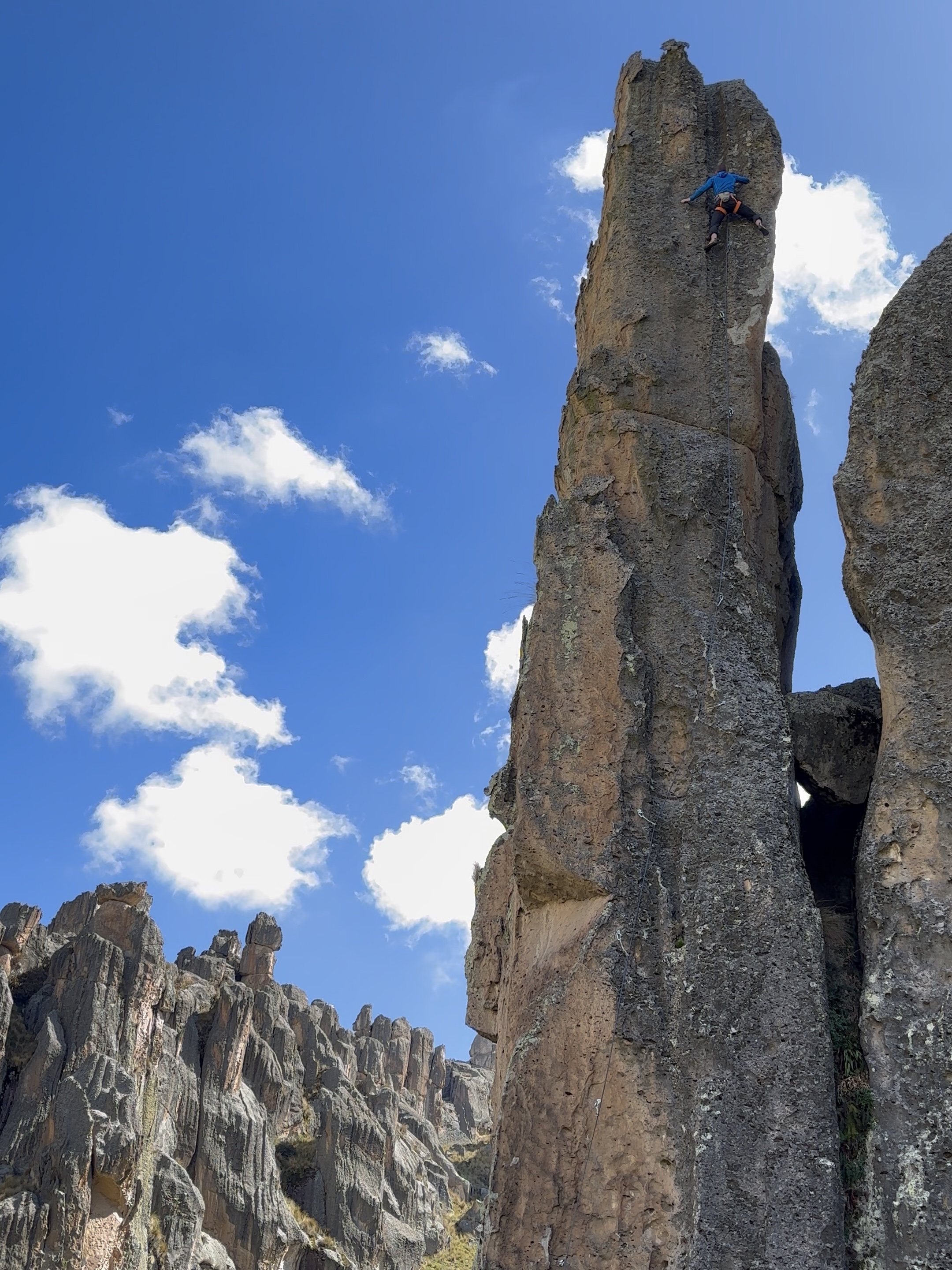
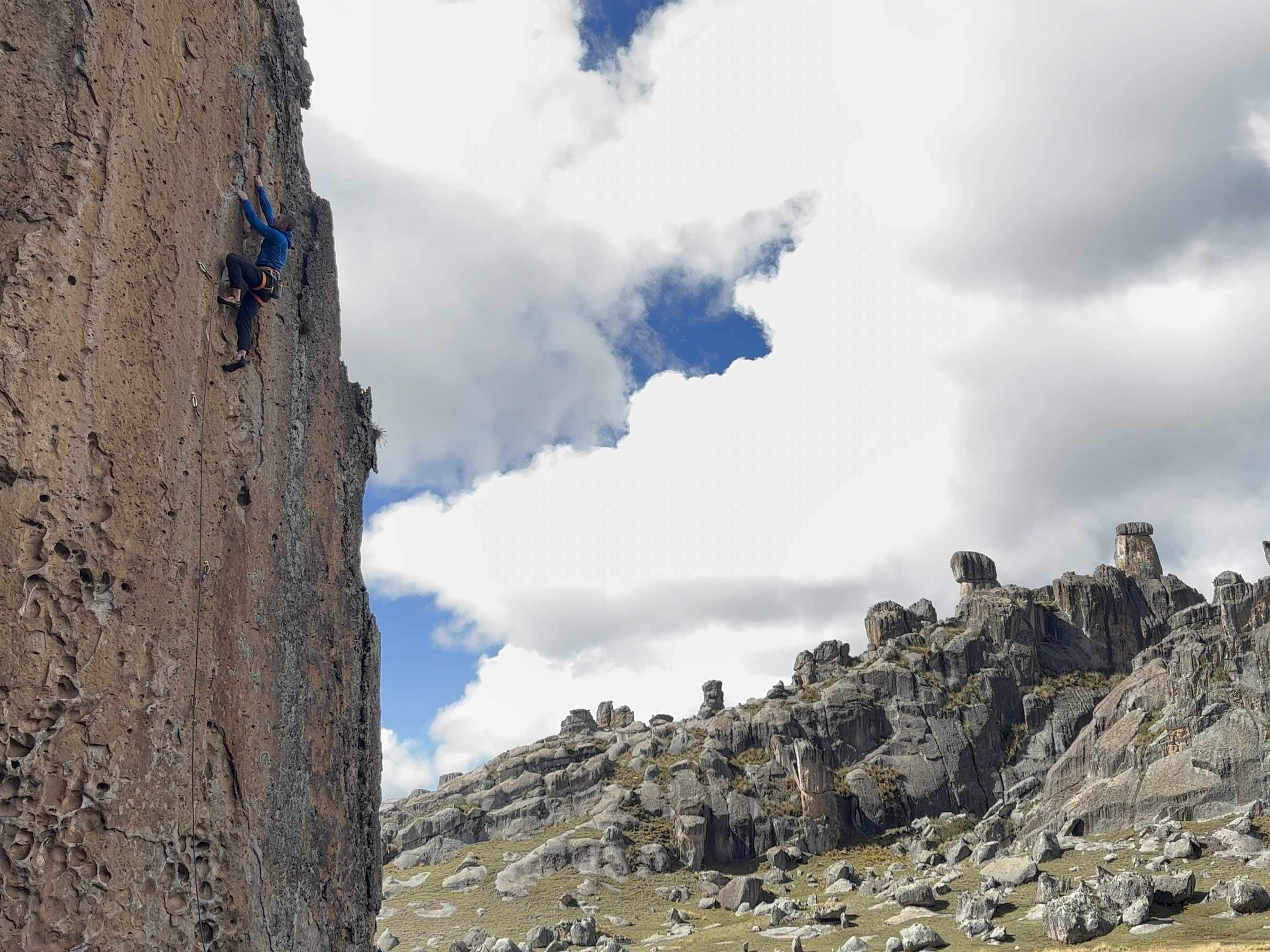
Bosque de Piedras de Huayllay is simultaneously one of Peru’s least known and most impressive climbing areas. As the name suggests, it is a stone forest and an absolutely huge one at that, perhaps the biggest we’ve ever seen. The scale is vast and there are dozens of sub areas of stone forest spreading out into the surrounding hills for well in excess of 10 km. The size of the rocks is also on a bigger scale, typically areas like Hatun Machay have routes of around 15 to 25 meters max, but in Huayllay there are many 35 to 40 meters high. Huayllay is the same high quality ignimbrite as areas like Hatun Machay and Inka Waqanqa, so anyone who has enjoyed climbing in those areas is bound to love it at Huayllay. Coincidentally, Huayllay also sits at almost exactly the same altitude of these other crags, around 4,200 meters.
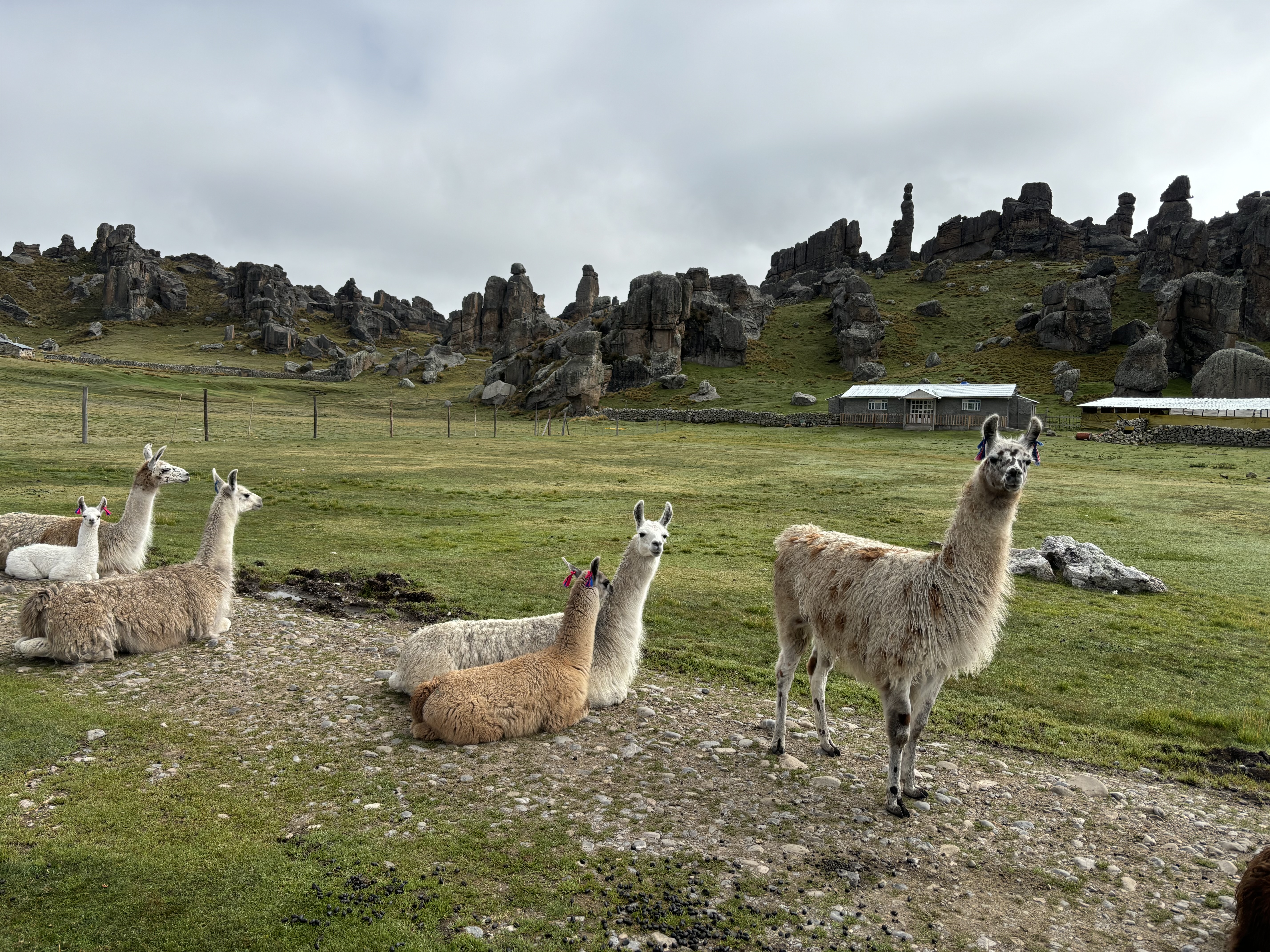
The reason Huayllay seems to fly under the radar is because there is not much information online about it, and that it is quite separated from the rest of Peru’s climbing areas. We travelled there using colectivos from Conococha to Huánuco via La Unión followed by a bus to Cerro de Pasco and another colectivo to the bosque de piedras. This is the best route to take if you want to travel there from the Huaraz area, but it will be different and faster if you’re travelling from Lima. Only 10 minutes walk from the best sectors is Cristobal’s house, a local farmer and possibly the friendliest man in Peru. Cristobal and his family have a homestay with en-suite rooms, wifi and hot water – as well as tasty home cooked meals. The family are so kind you’ll soon feel like one of them. They also farm alpacas, llamas and sheep in the bosque de piedras, they can direct you to the crags as they know the area well and you also get to enjoy the llamas & alpacas company whilst cragging.
Climbing wise the area isn’t frequented at all, and information online makes it tricky to work out what is what. Through sheer luck, we were sent a pdf topo by a local mountain guide, something we couldn’t find anywhere at all. We have uploaded the pdf here. Currently there are around 60 sport routes, with grades confirmed from 5 to 7a+, as well as a few ungraded projects. There are also hundreds of documented boulder problems. The area is incredibly beautiful, whilst the road is a few hundred meters away from the first routes, you won’t have to walk far to be out of sight and sound of anything or anyone, save for an alpaca or two. You can go on walking in the stone forest for hours upon hours and see all sorts of things, as we did on a few sunny afternoons. Some of the features are mind boggling and would make for some novel routes! We aren’t sure to what extent some of these may be protected, so it is probably worth finding out if you plant to bolt here.

It is quite possible that less than 1% of the climbable rock at Huayllay has been developed so far – the place really is that big! Quality wise the rock is excellent, very featured and with good friction but generally very solid and not friable, it is of the same or better quality as Hatun Machay. It is the quality factor that makes it so impressive, it probably isn’t hard to find large areas of unclimbed rock that are poor quality, but for such a large area to also be excellent is far rarer and more exciting. There is no reason Huayllay can’t be one of Peru’s most important climbing areas in the future. We are so glad we visited, it was without a doubt one of the highlights of our entire time in Peru, a truly wonderful place we would visit again in a heartbeat.

Las Viñas
There are several crags in the city of Lima, as well as Lima province, with Las Viñas being one of the oldest and best known of them. With that in mind we made it our first stop after arriving in Lima. The area is well known for its harsh desert environment, as is common across the coastal areas of Peru. The scenery at Las Viñas is very impressive for a city crag, there are even mountains over 1,000 meters accessible right from the suburbs. We were psyched to go climbing but unfortunately it wasn’t very good – by far the lowest quality we had experienced in South America thus far.
The rock itself is actually not too bad, pretty solid and not really friable. The problem is the desert, which has coated everything in dust. The desert isn’t sand grains but rather a fine powdery dust which becomes very pasty and almost black when you get it on your hands. The result is very unpleasant to climb on and in our opinion removes all the enjoyment from climbing there. The dust is almost like incredibly dry mud and it doesn’t just brush off the holds, you would probably need to scrub with water to get anywhere.
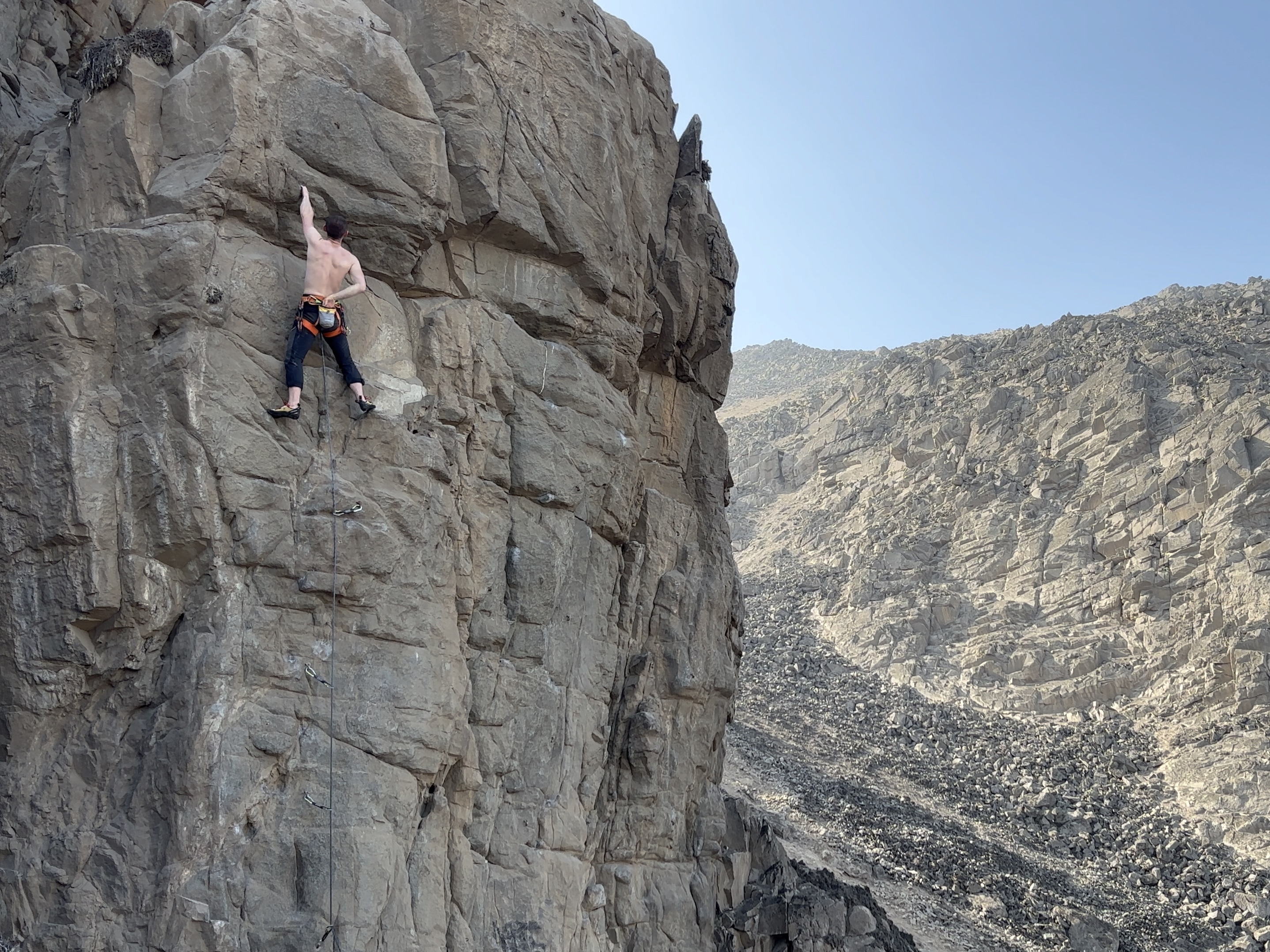
Las Vinas has around 45 routes from 4 to 7c and also has quite a few boulder problems. The routes are set on the mountainside spread between several craglets and slabs which generally receive the shade for the first half of the day. Due to the proximity to the coast some of the bolts were quite rusty, but there were also some that had been relatively recently replaced. We had planned to visit a few other crags in the Lima area, but as they looked so similar in environment and style to Las Viñas we decided to skip them as we didn’t feel psyched on more dusty rock. It may seem harsh but when the Andean region is full of world class climbing, these desert crags simply cannot compete. If you do find yourself desperate to climb in Lima then the option is there, but it is probably more enjoyable to stroll around the city and eat some ceviche instead!

Los Burros
In the south of Peru lies the country’s second largest city, Arequipa. Arequipa is a very beautiful city, known for its white buildings and the three big volcanoes, some over 6,000 meters, that overlook the city. Within very easy access of Arequipa there are several crags, the largest and most developed of which is Los Burros. The crag is set within the Valle de Chilina, a truly beautiful canyon that has stunning views of the snow capped volcanoes while you relax in a nice dry warmth surrounded by cactuses. The rock quality is mixed, some of it is pretty good but other areas can be quite flaky and crumbly. On the whole we found it to be pleasant to climb on but not what you would class as high quality rock.
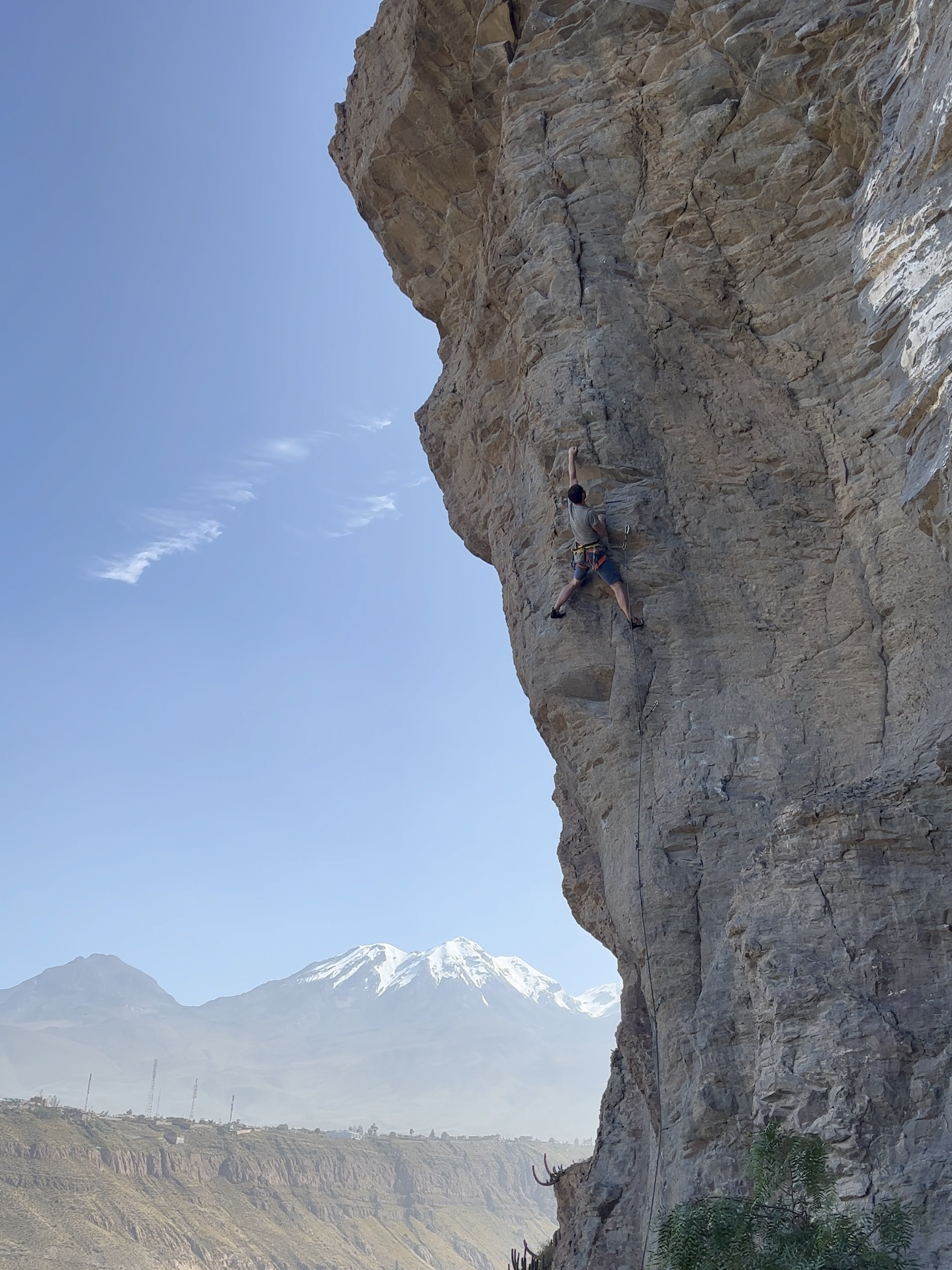
Los Burros has around 37 routes, from 4 to 8c. There are also some smaller crags not far away, that have around 30 routes between them, although Los Burros is widely considered the best crag. There is a great PDF topo for the crags in the Valle de Chilina on theCrag. Whilst Arequipa is definitely not one of Peru’s major climbing areas, it is a really beautiful place and a great stop to add in to a journey across the country. We thought it was one of the better city crags we visited – definitely better than those around Lima and we personally preferred it to Los Olivos in Huaraz too. That being said it is not a patch on the Andes best crags, but a fun place to visit if you plan on travelling around this area of southern Peru.

The Sacred Valley
The Sacred Valley of the Inkas is a beautiful historical area, considered the agricultural and spiritual heartland of the Inkan empire. The valley is lined with big mountains and loads of rock faces – there is the potential for everything from mountaineering objectives to hard sport climbs. There is lots of climbing currently developed, but the opportunity for new routes is huge. The climbing and rock type is very varied across the valley, there will be something for everyone here. Despite being the gateway to Machu Picchu, the crags themselves are generally well away from tourist areas and very quiet. We were always the only people at the crag, and even at the weekend crags are often totally quiet. It would take an article in its own to cover every crag, so we will discuss a few of the most significant areas in more detail below.

Lamay is one of the closest Sacred Valley areas to Cusco and has the benefit of incredibly easy access and a straightforward approach. There are several different sectors, but the standout one is Pilar, a beautiful tall tower of golden/orange rock. This is what attracted us to Lamay, as well as the claim that ‘La Peruana Suiza’ is one of the best 7a’s in the valley. From our experience, we agree, it is a fantastic route with excellent sustained climbing – and it’s no pushover either! Perhaps the only negative to Lamay is that the majority of the other routes can’t compete with the quality of La Peruana Suiza, so some of the other sectors can seem a bit underwhelming in comparison.
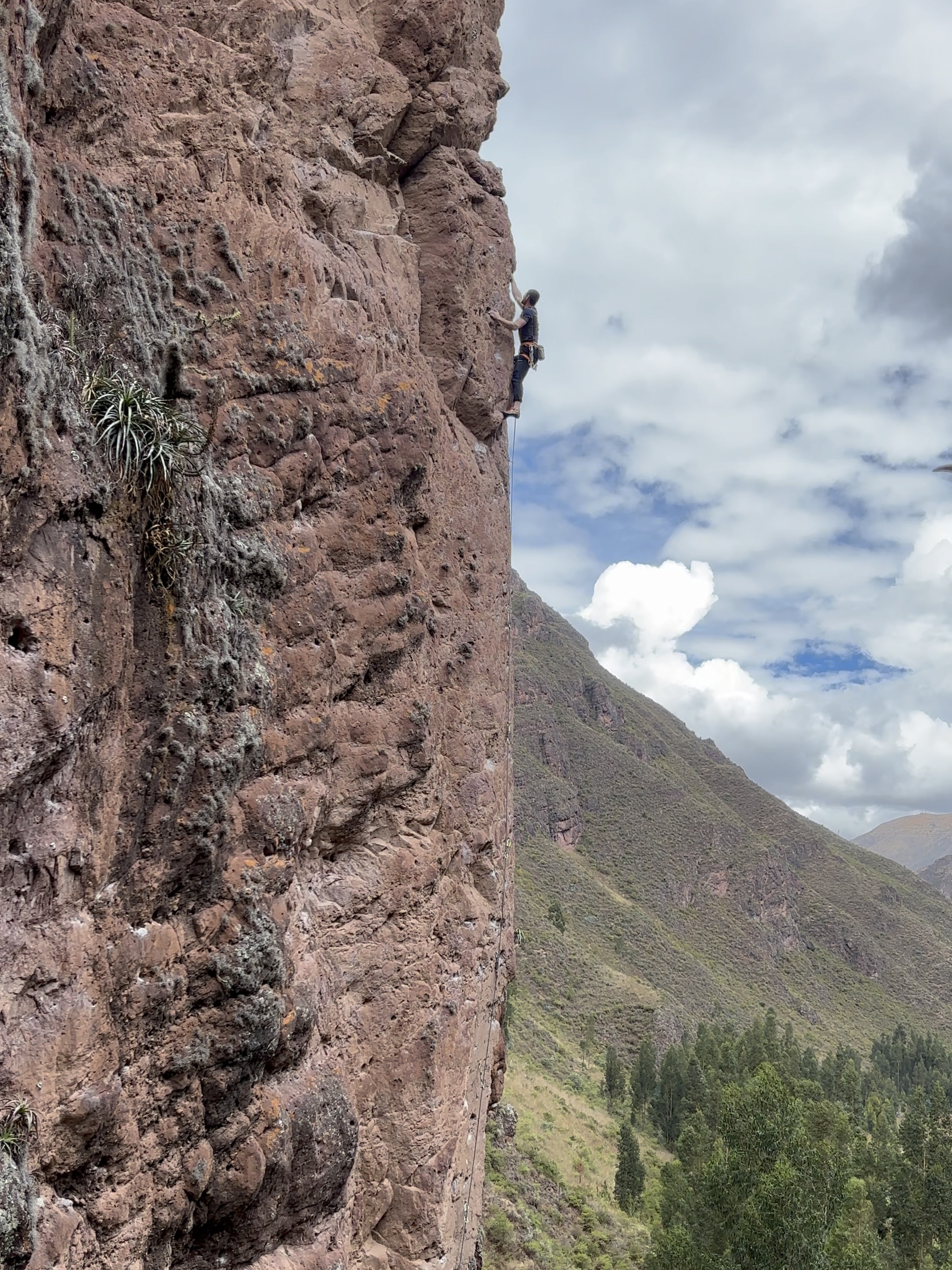
Urubamba Crags The town of Urubamba has several different climbing sectors within easy reach of the town centre. They are often described as separate areas, but we think they make more sense grouped together due to relative proximity. Sector Pumahuanca is on its own around 4.5km from the centre, and sectors Medinayoc and La Cobra are close together, around 4km from central Urubamba. In general the rock in Urubamba is a lot better than it looks, it is very compact and climbs almost like quartzite – it weirdly reminded us a lot of Montagu in South Africa. The climbing around Urubamba was really fun and we enjoyed it a lot, but an honourable mention goes to the approach to La Cobra and Medinayoc…make sure you find the right trail and wear thick trousers as the hillside is a carpet of thorns!

Pachar is one of the biggest areas in the Sacred valley, home to many single and multipitch routes. Like Urubamba, the Pachar crags are often described individually, but they effectively function as one area, e.g. sector El Cosmos is less than 3 km away from sector Pumahuancoso – and these are two of the furthest apart Pachar crags. The area is a contender for the prettiest climbing area in the Sacred Valley but access is also pretty easy for the most part. The rock is varied, there are steep routes, slabs and a bit of everything in between. Pumahuancoso has some of most unique rock, a black streak seemingly formed by water cascading from high above, missing a lot of rock due to overhangs and then pummelling this wall. There is a superb 7a and 7b that have really awesome moves and take in the full height of the amazing black rock. The Pachar area is one of the best in the Sacred Valley and is definitely worth visiting.
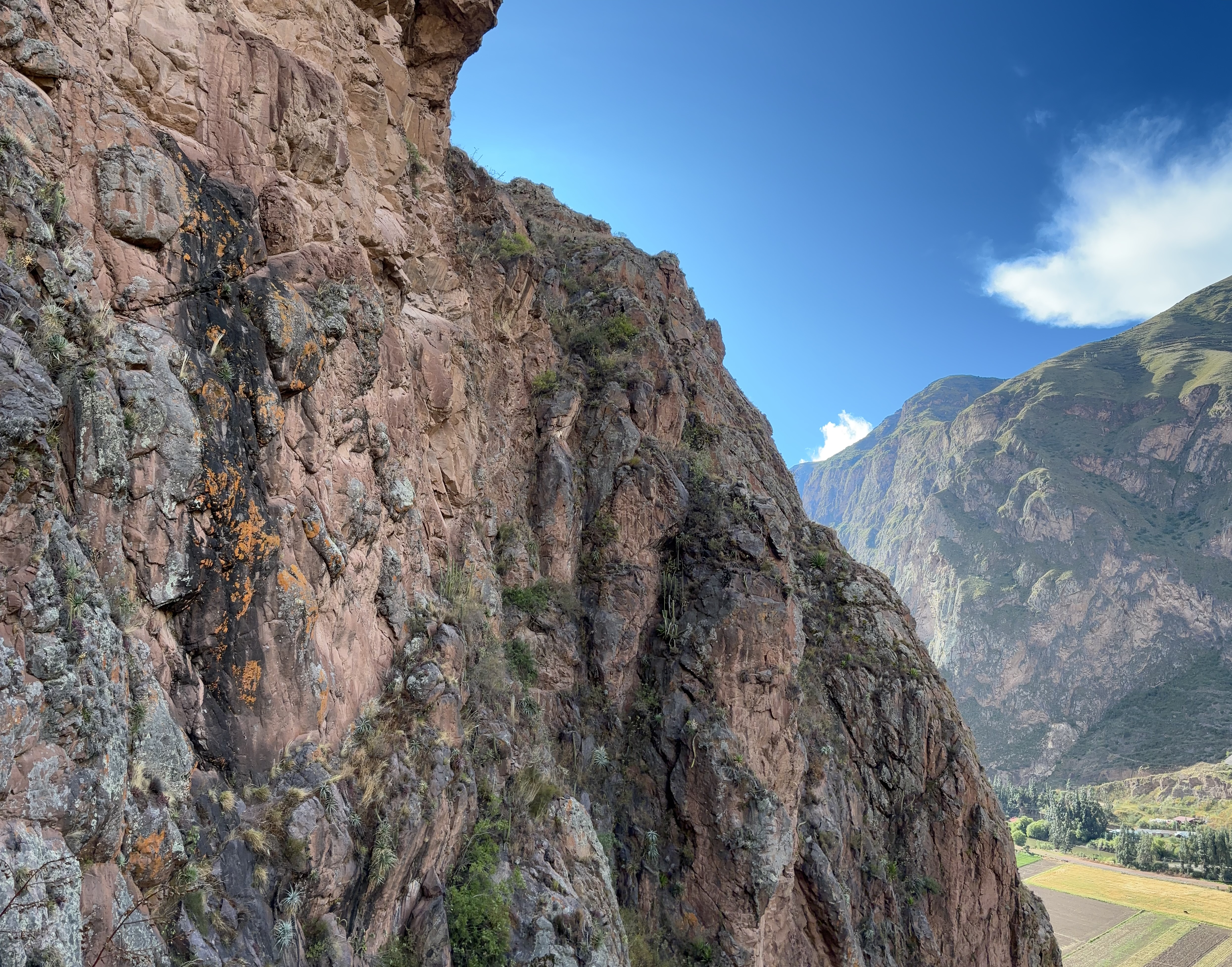
Pitumarca: Ch’aqo Wayllasqa
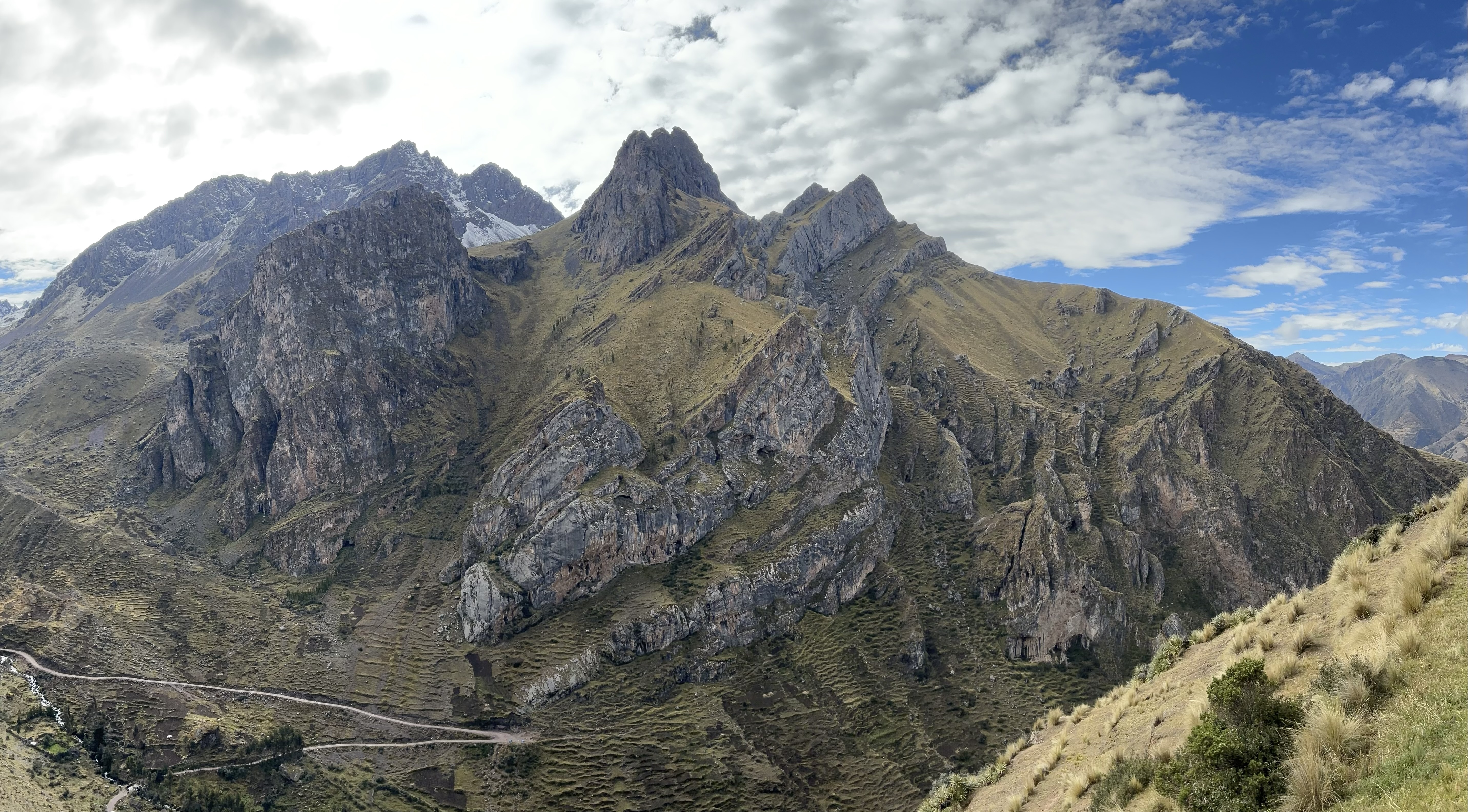
Pitumarca is one of Peru’s best and biggest climbing areas, a title it tends to hold jointly with Hatun Machay. Pitumarca is a small town around 2 hours from Cusco and above the town are two valleys, home to Ch’aqo Wayllasqa and Kuntur Sayana. Of the two, Ch’aqo Wayllasqa has by far the most routes and is considered the epicentre of climbing around Pitumarca. Ch’aqo Wayllasqa currently has over 200 sport routes, new routes still go up frequently and there is the potential for a thousand or more in the valley – the place is full of inspiring crags! Ch’aqo Wayllasqa has a community run Refugio where you can stay right near the crags. There are rooms with solar power, gas cookers & utensils and the water up there is drinkable. The local community are wonderful and very welcoming, they have been farming potatoes and alpacas in this valley for generations, since before the Inkans arrived! We enjoyed many a chat with them and would often be invited for some potatoes cooked underground, pachamanca style, on our way back from climbing, the perfect thing after a chilly day climbing.

The rock around Pitumarca is all limestone, of the very highest quality. There are loads of fantastic tufa climbs, super technical grey slabs, steep orange rock and everything in between. The routes are long, many over 30 meters, and there are also loads of excellent multipitches, particularly in the Libron Hoja 2 sector. For the best tufas, Gran Deslpome is the top spot, an awesome crag that would rival any European tufa crag. There are dozens of smaller sectors as well, all of which are worth visiting – the standard of the rock here is incredibly high. Yet despite all this, the place is very quiet. We were the only climbers staying up there for a whole week! The only other visits were from local climbers who live in the village – they’re the ones who bolted the majority of these routes. Whilst it was awesome to have the place to ourselves, it was also a bit sad – the area is deserving of attention, it is a world class climbing area.
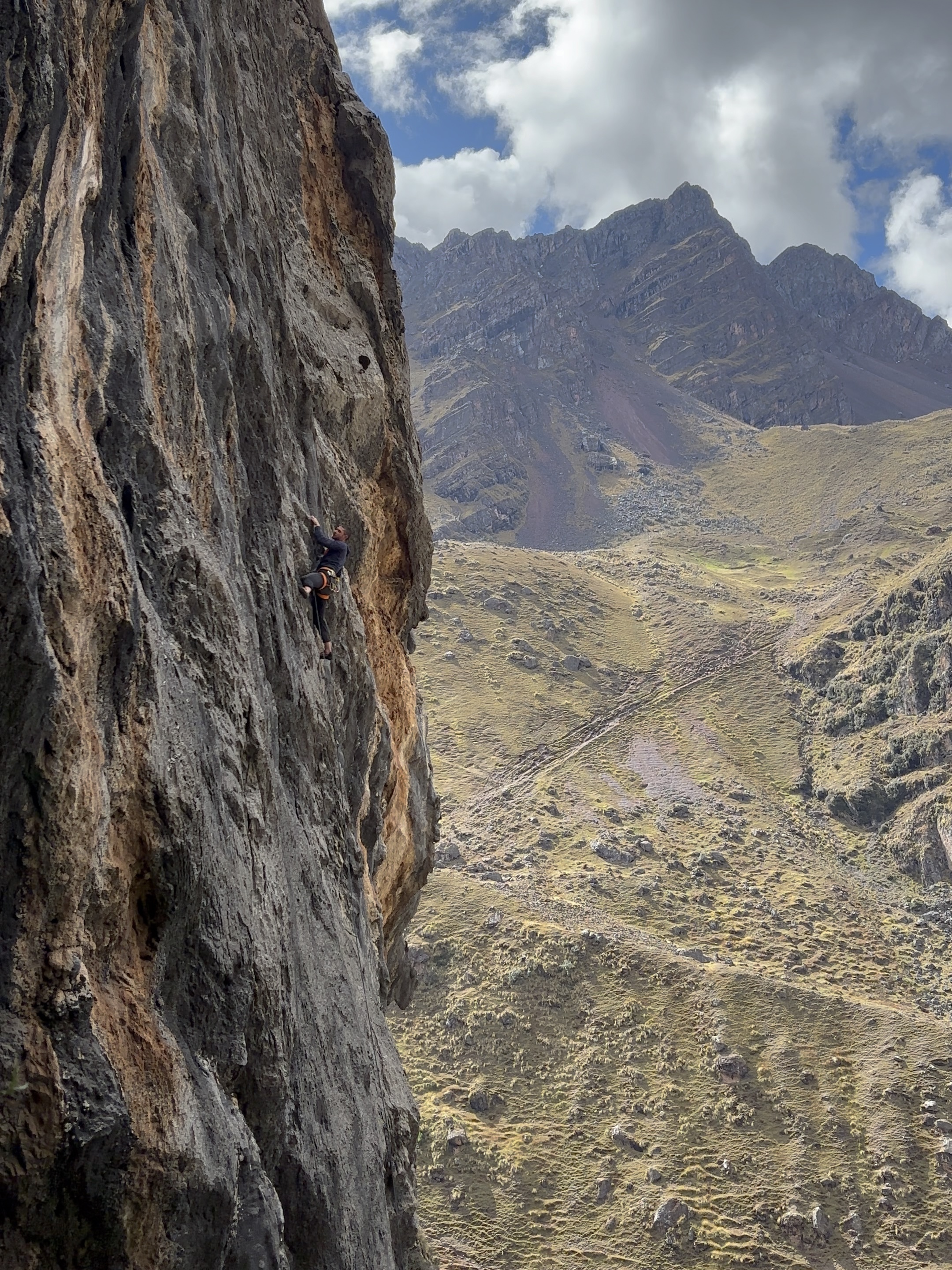
The climbing sits at around 4,100 meters, so conditions can be quite varied depending on the day. A sunny clear day can be hot, but cloudy and breezy can feel freezing – we frequently woke up to a frost! Thankfully the valley runs from North to South and as such the sectors are on the Eastern or Western flanks, meaning you can follow the sun or shade throughout the day as needed. For rest days there are trails around the valley and a small dirt track that leads all the way to a pass, where you can easily summit non technical peaks over 4,700 meters high! It’s a stunning place to be and spending all your time in the valley makes it feel extra special. You definitely will need some rest days too, as the rock is pretty sharp! There is certainly no polish here, but the crozzles and water pockets in the grey rock particularly can be painful after a few days on! One of the only slight negatives was some of the slabbier routes being a bit runout, more so than the tufa routes and of course less pleasant to whip on given the angle. This isn’t the case for all the slabs, but some more than others feel a bit spicy, we didn’t find it an issue on the steeper routes.

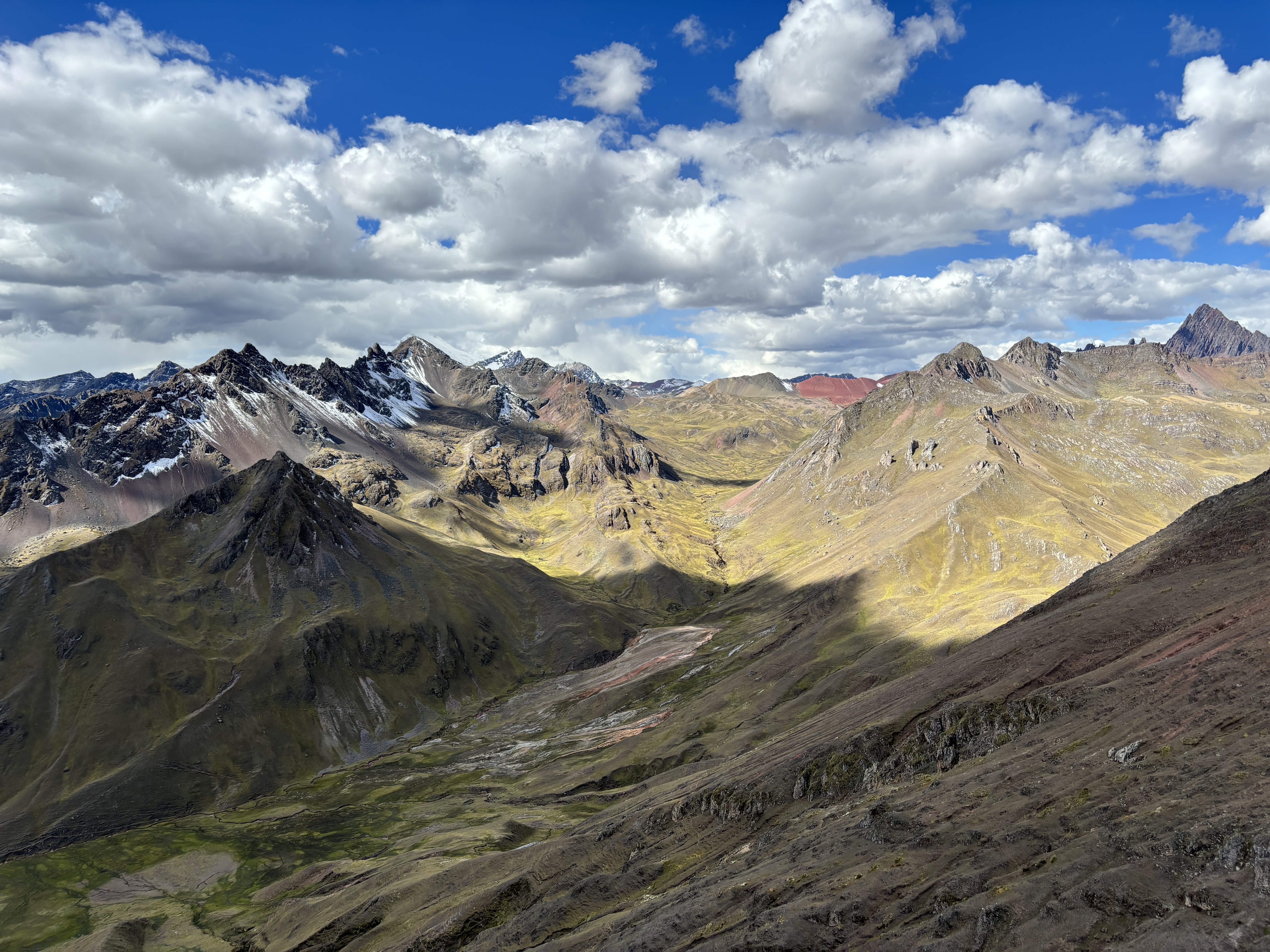

We had a great time at Pitumarca, the climbing is really high quality and the area is incredibly beautiful and a wonderful place to be. Deciding which wins out of Pitumarca and Hatun Machay is a very tricky call. Pitumarca has longer routes and feels more like a traditional large limestone climbing area, while Hatun Machay has a more unique rock type and lots of unusual formations – they both have a broadly similar amount of routes. We loved them both and the answer really is to visit both of them and decide for yourself! They each deserve at least a week of your time and they are both such special places it is hard to imagine missing one of them.
If you find our content useful please consider subscribing:
Rest Day Activities
Trujillo Pre-Incan sites
The beautiful city of Trujillo in northern Peru is home to several stunning historical sites of Pre-Incan peoples. Despite this it isn’t a very touristy place and receives significantly less visitors than Peru’s more famous cities and historical sites. The city is home to a lot of different ancient ruins that can be generally divided into two, those from the Moche Culture and those from the Chimú Culture. The Moche culture is the oldest of the two, and existed from the year 100 CE to 800 CE. The demise of the Moche isn’t fully understood, but it is believed it may have been linked to extreme weather changes. The Chimú succeeded the Moche and they existed from 900 CE to 1470 CE, the demise of the Chimú was the result of the Incan conquest, the Incan empire originating only in 1438 CE.

Trujillos most significant Moche historical sites are the Huaca de la Luna and the Huaca del Sol. No exact dates are known but they are somewhere between 1,900 and 1,200 years old. The Huaca del Sol can be walked around but hasn’t been excavated and sadly you can’t go inside – it was damaged badly and looted by Spanish colonists in the 17th century. The Huaca de la Luna is a different story, it is a remarkably well preserved temple home to many stunning painted murals and adobe reliefs. The eastern platform was a site used for human sacrifice by the Moche, who first engaged in ritual combat, the winner was spared and the loser taken off to be sacrificed. The amazing north wall of the Huaca is remarkably well intact and really gives you a feel of how imposing and advanced the temple was, it is a spectacular sight that peaks the imagination.

The most significant sights of the Chimú are Chan Chan, Huaca Arco iris and Huaca Esmeralda. Like the Moche site, these ancient structures are made from adobe, a mix of mud, water and an organic binding like grass. Amazingly, Chan Chan is the largest adobe city in the world and was home to around 60,000 people at its height. The site is huge and while it isn’t as visually striking as the Huaca de la Luna, it is impressive to soak in the scale of this once great city. The Huaca Arco iris and Huaca Esmeralda are two smaller sites that can be described as miniaturised versions of the larger Huacas surrounding Trujillo. They are easy to get to and affordable to enter, very interesting and complement the areas larger sites well. We particularly liked the adobe carvings at Huaca Arco Iris. Huaca is actually a word used to refer to temples and pyramids, hence it applies to both Moche and Chimú cultures. We were really impressed by the Trujillo Pre-Incan sites and highly recommend visiting them.

Paracas Candelabra
The Paracas Candelabra is one of the most interesting and enigmatic geoglyphs in the world, with many theories and rumours swirling around its meaning and purpose. It is around 180 meters tall and is carved around 60cm deep into the sandy desert hillside. Pottery found at the site has been carbon dated and found to be at least 2,200 years old, and the Candelabra itself is considered by many to be older. It is a very captivating feature, and it is hard not to be curious about what it really is. Our theory is that it represents a cactus, like Echinopsis Pachanoi, which is native to the region and is known to contain Mescaline, a substance that has been used for thousands of years as a hallucinogen. At the Peruvian archeological site Chavín de Huántar there is actually a petroglyph featuring a cactus that could be of the same genus – or one of several similar genuses that also contain mescaline. These cactus can grow in a similar shape, but we think the geoglyph looks like an exaggerated form of this cactus. This type of representation is common, just think of the cartoon-esque monkey at the Nazca Lines.
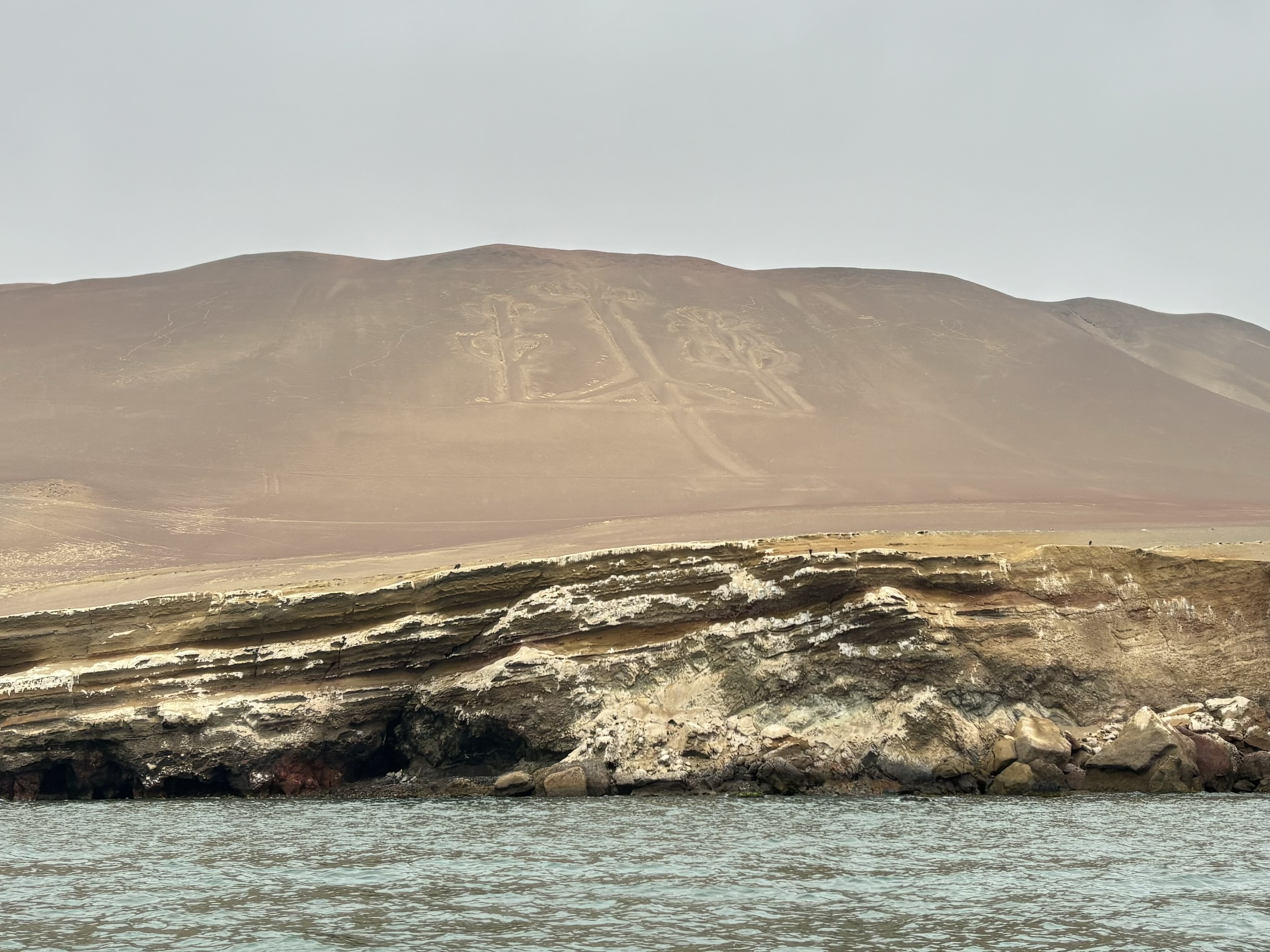
To see the Paracas candelabra you will need to take a boat from the town of Paracas, which will take you to the Candelabra – it isn’t allowed to walk on the land in this area as it is protected, plus it is much better observed from a distance. The boat will also visit the Islas Ballestas, a group of rocky islands where you will see Humboldt penguins, Peruvian pelicans, Inca terns and sea lions among many other animals. The boat trip is a nice rest day activity that takes a few hours and allows to you enjoy the interesting wildlife of the Peruvian coast as well as affording you the best view of the Paracas candelabra – which receives its name from the Paracas culture who made it, not the town you leave from! The Paracas culture existed from 800 BCE and 100 BCE, predating the Nazca culture. We really enjoyed it and it is a great place to break up the journey for anyone travelling by bus from Lima to Arequipa.

The Nazca Lines
The Nazca Lines are among the world’s most mystifying ancient wonders, they are widely known and are among Peru’s most famous historical sites. The lines were made by people of the Nazca culture and are around 1,500 to 2,000 years old. In the area there are also more geoglyphs of the older Paracas culture (like the cat) as well as the Palpa lines which may also be from the Paracas. The Nazca Lines were made by removing the surface material of the dark desert plains to reveal the lighter material underneath, they are usually 10-30cm deep typically around 35cm wide. Nazca is famous for its stunning depictions of animals but there are also lots of totally straight lines, of varying widths, criss crossing all over the desert – these are just as old and just as purposeful as the more elaborate designs. The crispness and accuracy of the lines is very hard to fathom, especially as those making them could never actually see them – they are invisible on the desert plains.

Nobody really knows why the lines were made but one of the most plausible theories is that they were used as a form of prayer or communication with the god of the Nazca people, potentially to pray for rain. Life is only possible in the shockingly dry desert due to the presence of underground aquifers and the occasional river that flows down to the sea from the high Andean mountains. To see the Nacza lines you have two main options: take a specific viewing flight or visit a couple of different natural and artificial viewpoints. Obviously you see less without the plane, but it is also way cheaper, and importantly for us fit in line with our goal of only travelling overland for our time in South America. The artificial viewing tower gives you an excellent view of 3 lines: a tree, a frog and a lizard – the first two being in excellent condition and very well preserved. At the natural view point nearby you can see the cat as well as many straight lines. Further up the road you can also get good views of several Palpa Geoglyphs.
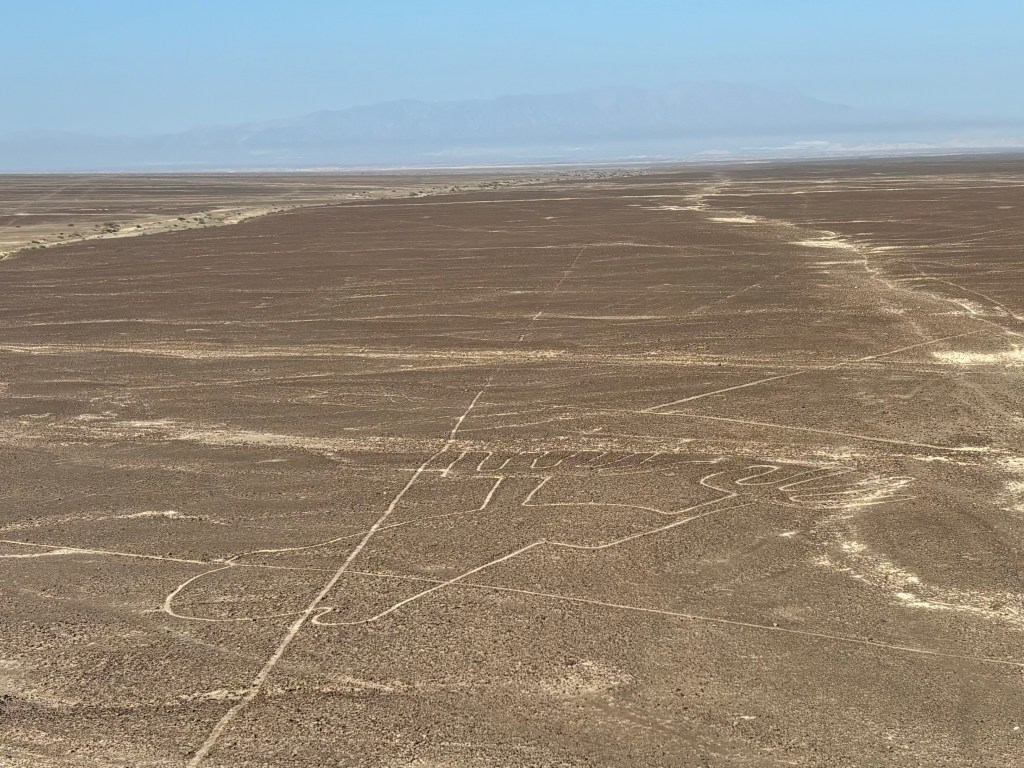
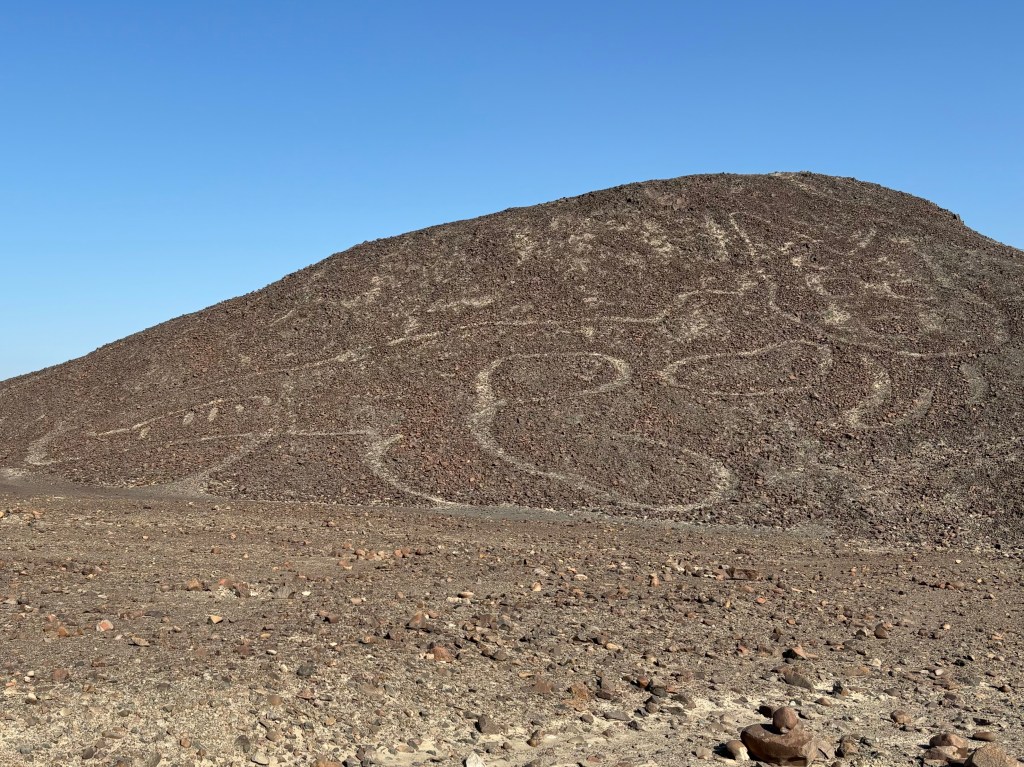
Around the town of Nazca there are also loads of other interesting historical sites to visit, including the Maria Reiche museum. She was a German who became an honorary Peruvian citizen as she studied the Nazca Lines for decades and helped them to become UNESCO recognised. The museum is home to an amazingly preserved tattooed mummy that is around 1,700 years old! There are also aqueducts of the Nazca, the Nazca built Cahuachi Pyramids, the Antonini archeological museum and perhaps best of all is the Chauchilla cemetery. The Chauchilla cemetery is a burial ground of the Nazca people and is somewhere between 1,100 to 1,800 years old. The location is in a particularly barren area of desert that has numerous open air tombs containing mummies who still posses their hair and the original clothing they were buried in. Often their hair is very long or in unusual braided styles, which helps your mind paint a picture of the people who made the Nazca Lines. It is a remarkable place and is definitely worth a visit.

Sacred Valley Inkan Sites That Aren’t Machu Picchu
The Sacred Valley is home to many stunning Inkan sites, and whilst all of them are visited by tourists, none of them are anywhere remotely as busy or expensive to visit as Machu Picchu is. Machu Picchu can receive up to 5,600 tourists a day in the high season, whilst it is less in the low season the yearly average is still in excess of 4,000 per day. Personally it just isn’t our thing, no doubt the site is stunning and the history is fascinating, but we aren’t keen to contribute to that level of mass tourism. The actual main site of ruins that features in the famous photos is around 530m long by 200m wide – not much space for all those people when they all want to visit the same bit! However, we still wanted to visit some Inkan ruins – so we visited several different sites across the Sacred Valley and Cusco – including Pisac, Ollantaytambo, Chinchero and Saqsaywaman. The next busiest site after Machu Picchu is Ollantaytambo and although it is far less busy, it is still very touristy and definitely not our favourite because of that.

The Inkan’s origins date to sometime in the 12th century, but the Inkan empire didn’t truly begin until 1438 CE. If ranked by age, with oldest first, the order is: Saqsaywaman, Pisac, Ollantaytambo, Chinchero and Machu Picchu. Amazingly, all of these were built within less than 100 years of each other, which gives an impression of the size and might of the Inkan empire at its height. Sadly, after such an intense building spree, the Inkan empire fell at the hands of the Spanish conquest in 1533 CE. Realising this gives an interesting angle to the achievements of the Inkas. They are actually quite modern as ancient civilisations go, yet they didn’t have the wheel or iron and steel to work with. Instead they used tools of copper, bronze, stone and wood and they were able to move stones up to 100 tonnes in weight by rolling them on logs and pulling with ropes, taking a huge amount of manpower. All of the Inka’s walls are dry stone, with incredibly tight joints – each stone is carefully cut to fit precisely, often so much so you couldn’t fit a knife blade in the gap. The different sites are also made of different rock types, e.g. Saqsaywaman is mainly limestone while Ollantaytambo is mainly andesite.
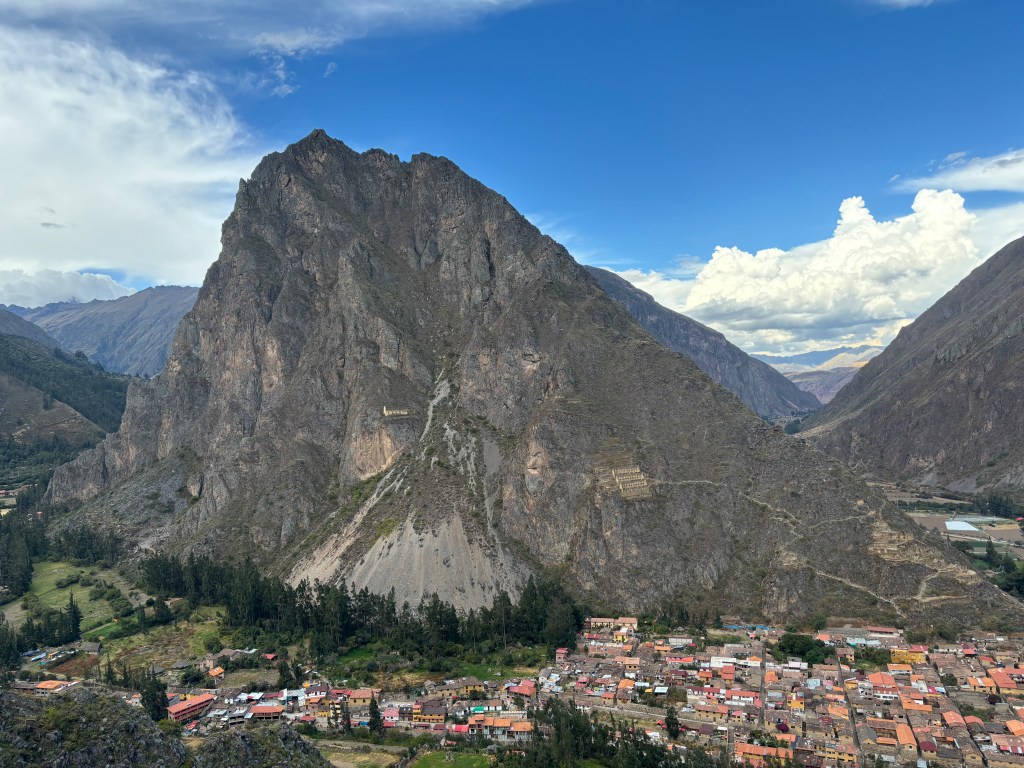

A beautiful view of Ollantaytambo and the amazing, almost futuristic, Temple of the Sun
The Inkan language Quechua is still spoken by around 10 million people in the Andes today. Whilst it can be written today, the Inkan’s didn’t have a written language and instead used something called a Quipu, which is a method of recording numbers and information using several pieces of knotted cord attached to one main cord. There are hundreds of surviving Quipu artefacts, but in general historians have been unable to decipher them. The Inkans also built an amazing amount of roads, over 40,000 km worth in a road network known as Qhapaq Ñan – pretty impressive for people with no wheels! To build all of their impressive infrastructure projects, the Inka used Mit’a, a system of compulsory labour that was a way of paying tax through work rather than money. In fact, the Inkans had no form of money or currency, remarkable for their time, but yet they managed to create a flourishing society through trade and exchange. Mit’a applied to able bodied men and included agriculture and military service as well as construction. Sadly Mit’a was, in an all too familiar way, ruined by the Spanish who effectively turned it into slavery.
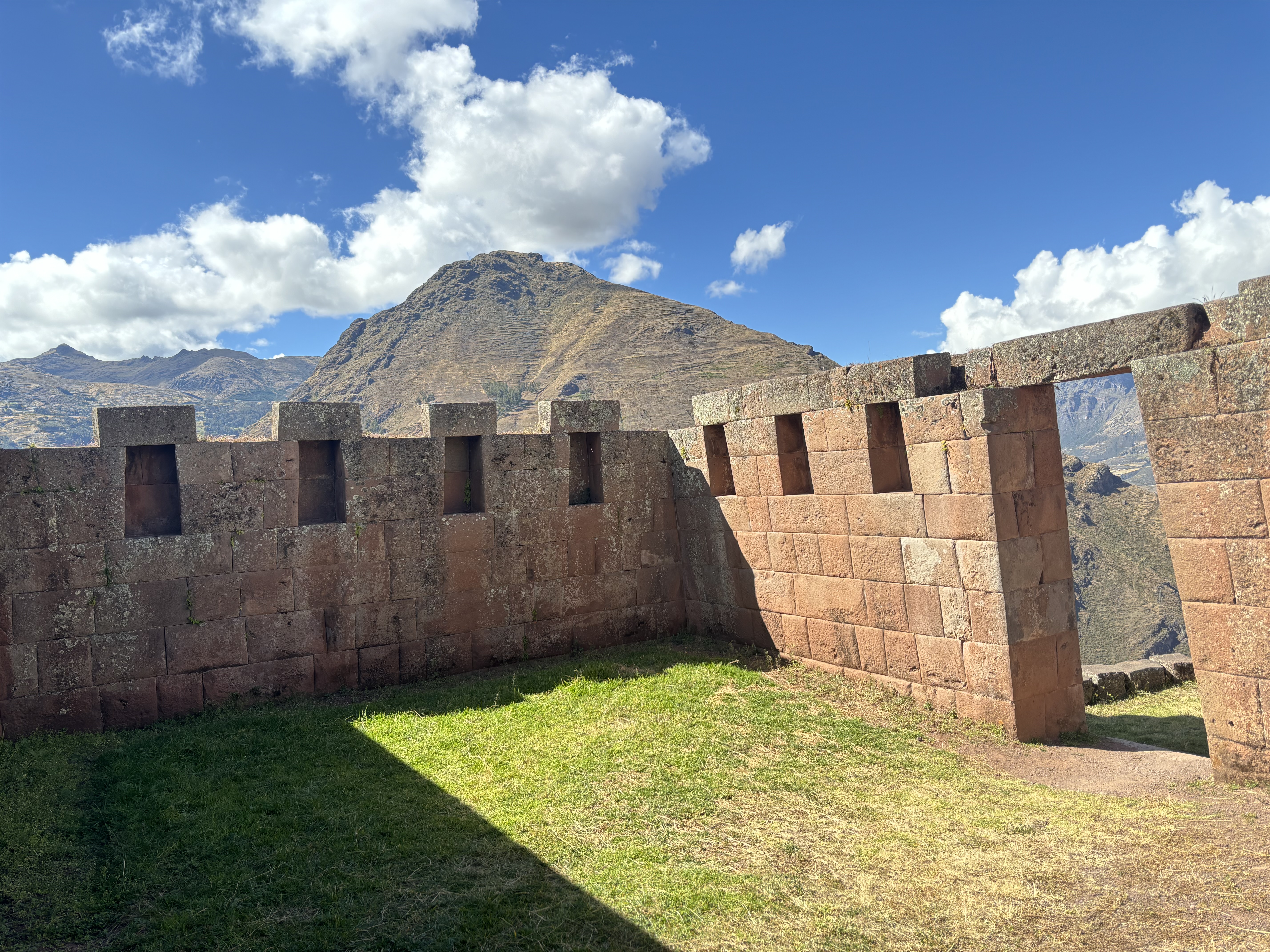
We really enjoyed visiting the different Inkan sites, and didn’t feel like we missed out by not seeing the famous one. In terms of our experience with the others, Ollantaytambo was probably our least favourite due to its location and relative busyness – however we did think the ruins themselves were very good. Pisac was definitely our favourite, a big and impressive site, it wasn’t very busy and if you walk deeper into the site to areas like Intiwatana or Hospitalniyoq you will more or less have it to yourself. We found the stonework at Saqsaywaman to be incredible and pleasantly quiet if you arrive when it first opens. Chinchero is probably the quietest but also least impressive of the sites, definitely the nicest one for a relaxing afternoon after climbing in the sacred valley. For the other ones an early start is recommend. It is important to mention this is by far the most touristic area in the whole of Peru, and Machu Picchu is the number one attraction. Inkan history is brilliant and well worth visiting, but remember there are loads of stunning, historical, un-touristy and authentic parts of Peru too – the Cusco surroundings aren’t the be all and end all.

Food
Ceviche is one of Peru’s best and most famous dishes, a delicious dish of raw fish or seafood marinated in lime juice and chilli, alongside red onion. The acidity of the limes transforms the fish, giving it a wonderful and unique texture. It is a superb dish to enjoy for lunch, with incredibly fresh fish, all along Peru’s warm pacific coast.
Cuy is a classic Peruvian dish, probably the most famous to foreigners, it is of course guinea pig! The classic way to eat guinea pig is in its whole form, it can be spit roasted, deep fried or baked in an oven. Cuy meat is very tasty and nothing to be afraid of, it is a classic dish of the Andes and a must try in the region.
Pachamanca is a Quechua word that translates to earth pot, the cooking process involves lining a hole in the ground with stones that are heated from a fire. The pit is then filled with marinated meat, potatoes, corn and other ingredients before being covered and left to bake. The result is tender and flavourful meat – one of our favourites in Peru. The city of Huánuco and surrounding areas are some of the best places to eat authentic Pachamanca, make sure to seek it out if you’re in the area.
Ají de Gallina is a type of chicken stew, a really warming and comforting meal. The stew is thick and creamy, with a distinctive yellow colour from the Ají chilli that gives the dish its name. It is served alongside rice, potatoes and boiled egg.
Lomo Saltado is one of the best examples of Peruvian-Chinese fusion cooking. Many Chinese migrants arrived in Peru in the 19th and 20th centuries, bringing their culinary skills with them. Lomo Saltado is a dish of stir fired beef tenderloin, with red onions, tomatoes and served with rice and fries. The best of both worlds, it is really delicious and a Peruvian classic.
Chicharrón de Alpaca is simply tasty fried alpaca meat. In some Latin American countries Chicharrón refers specifically to fried pork, but in Peru you can get all different types of meat as Chicharrón. What separates this from traditional fried meat is that Chicharrón is boiled first to tenderise, before frying. Alpaca meat is really tasty and has excellent flavour, the dish is common in towns and villages across the Andes.
Seco de Cabrito is a traditional goat stew from Northern Peru, with a thick flavourful sauce and tender slow cooked goat meat. The dish is usually served with rice, beans and cassava and is lovely hearty meal, definitely one of Peru’s under appreciated dishes.
Coca is a big deal in Peru, it is an integral part of the nations heritage. Despite the modern misuse of the Coca leaf, its use dates back thousands of years and it is still very common to consume coca in Peru today – in fact it is known to help with altitude sickness. The most common ways are tea made just from coca leaves and water, or chewing the leaves in a ball, often with an alkali added to increase the benefits. The tea is very nice and the chewing is more of an acquired taste, but is good to try – it’s hard to think of much as intertwined with Andean history as coca.
Queso Helado translates literally as frozen cheese, but there is no cheese to be found in this delicious desert! Instead, the cheese moniker comes from the way it was traditionally prepared in shavings, that resembled slices of cheese. What you’ll actually be eating is a superb creamy ice cream with aromatic flavours topped with a dusting of cinnamon.
Summary
We had a fantastic time in Peru, the climbing is world class and so is the culture and history. We managed to avoid being bogged down by tourist honeypots, which are surprisingly easy to avoid. Crag wise there are three big hitters that shouldn’t be missed: Hatun Machay, Pitumarca and Bosque de Piedras de Huayllay. Hatun Machay and Pitumarca are obvious choices due to their size and renowned rock quality. However, Huayllay is much less known, frequented and less developed. Despite this, the rock is just as good as Hatun Machay and the potential for thousands of routes is there – it could easily become one of the most significant crags in the country. Whilst pretty much every crag we climbed at was good, these are the three that should be top of every climbers list when visiting Peru. We thoroughly enjoyed our journey through Peru and it definitely deserves its reputation as one of the regions most spectacular countries.
We write for pleasure and climbing is our passion. Our articles will never be paywalled. However, if you would like to help towards the costs of running the site or if you have found our content useful, please consider contributing here. To read more about why your support matters, click here.
You can read more about the climbing in South America here.
Relevant links and resources
https://toposperu.wordpress.com
https://www.thecrag.com/es/escalar/peru
https://www.mountainproject.com/area/106089954/peru
Hatun Machay Petroglyphs: https://revistas.uniandes.edu.co/index.php/hart/article/view/3526/2651


Really love the look and feel of your website – awesome work!
How did you reach the more remote areas like Hatun Machay?
Did you rent a car?
LikeLiked by 1 person
Hi Manuel, so happy to hear you like the website, thanks for leaving a comment.
For areas like Hatun Machay whether to take a rental car or not usually comes down to if you think you would want to visit anywhere else during your stay. For us, as we could walk to all of the crags from the Refugio, we knew we would be better off taking a taxi as otherwise we would essentially be paying for the car to sit there for a week while we climbed. This would be very different for a spread out climbing area, like Arco in Italy, where you would really need a car to visit many of the best sectors. However in Peru, it was usually the opposite and we could stay in one location to visit all the sectors and didn’t ever feel like we needed a car.
For Hatun Machay we would recommend stocking up on food etc in Huaraz, then taking a bus or collectivo to Catac, and taking a taxi from Catac to Hatun Machay – the taxi is around €16 and you can take the drivers number and text/call them when you want to be picked up again, you can get signal by walking up the hill in front of the Refugio. The cost is much lower than renting a car and we felt just a flexible without one too, although if it is your personal preference the road surface is good and will be an easy drive in a normal 2 wheel drive car.
I really hope this helps, if you have any more questions please ask
LikeLike
Incredible photos, and it really looks like there are so many places to explore!
LikeLiked by 1 person
Thank you for the kind words, we’re really glad you liked the photos – and it looks even better in real life!
LikeLiked by 1 person
Amazing as always. I really enjoy reading your posts and getting to “travel” alongside you to so many different climbing crags around the world.
Your stories and photos always capture the essence of each place, makes me feel like I’m right there on the rock with you.
Greetings from Greece and keep sharing the journey.
LikeLiked by 1 person
Thank you so much for the comment, we really appreciate it! It’s always great to get good feedback about our posts, it really makes us smile to know you enjoyed it!
LikeLiked by 1 person
great blog! Thanks for sharing!
I’m always looking for a new summer climbing destination (restricted by my partners time off mid June to mid July)and this might be the next candidate:)
Bosque de Piedras de Huayllay sounds promising.
Have you been there in the summer?
Any idea what the temps are?
I don’t do too well with cold weather while cragging.
Thanks!
LikeLiked by 1 person
Hi Ronen, thanks for the comment, really glad to hear you’ve enjoyed the blog!
We visited in the southern hemisphere winter, which is northern hemisphere summer and fits with your dates of mid June – mid July. The period from May to September is the best time to climb in Peru in general, as this (their winter) is the dry season.
Bosque de Piedras de Huayllay is an amazing place to climb, and in general we would highly recommend it. However, it probably isn’t the greatest option if you don’t enjoy the cold. As the crags lie above 4,000 meters in elevation the weather can be very changeable. If it’s sunny and not windy you will be fine to climb in a t-shirt. However if it is cloudy and windy it can be very cold, and it wasn’t uncommon for us to wake up and find small bits of ice or frost in the early morning. Even though it is the dry season, rain isn’t unheard of either – this is the nature of climbing in mountainous regions like the Andes.
Personally, I would still recommend going if you’re psyched on the Andes and just pack warm layers and a waterproof. However, if you really need to avoid the cold (for health reasons, for example), there are plenty of climbing areas in South America that fit with your dates. Serra do Cipó in Brazil is a great contender, we have an article featuring it too if you’re interested.
Let us know if you have any other questions
Best regards and safe travels!
LikeLike
thanks so much for the response! My partner is also worried about adjusting to the altitude.. we did Peru 15 years ago not for climbing and we both had a hard time and got sick.
Brazil sounds great!
I’ll look for the article.
take care!
LikeLiked by 1 person
You’re very welcome! Yes the altitude can be tricky, we were lucky we had a long time on the trip to acclimatise slowly, but for sure if you head straight up from Lima it will be tough going! If you do go it’s worth considering Diamox, you can buy them at home and take them with you to help ease you into it. They aren’t a panacea for altitude sickness but they’re a helping hand!
Good luck, I hope you have an awesome trip wherever you go!
LikeLike
Great blog, really helpful for preparing our trip through Peru and Bolivia this year from May to July. We are planning for trekking and climbing mostly, getting around with public transport as far as possible.
I was wondering how you managed with your luggage? Did you also bring camping equipment for your trip through South America? Or did you stay only in the mentioned refugios, hostels, etc.? Was it necessary for you guys to stash gear at hostels or other places during your trip?
Thanks for sharing!
Greetings from Austria
LikeLiked by 1 person
Hi Matthias!
Thanks for the comment, really glad to hear you have enjoyed the blog!
Yes, we used public transport for all of our travel, in addition to taking a few taxis where necessary – like Hatun Machay, where you can pay a local driver to take you there. The entire rest of the time we used the bus, colectivos and hitchhiking.
With regards to luggage, we used a 45 litre backpack each, which doubled as our climbing bag as well, and we also had one 60 litre duffel bag each. Within this we had gear for sport and trad climbing, as well as a full camping gear set up. We had tent, sleeping bags, stove, pots etc – the whole set up required for ‘wild camping’ if necessary. We didn’t necessarily need to use all of the gear all the time, but we did use absolutely all of it at some point in the trip and are really glad we took what we did.
For using the bus it is no problem at all, it just gets stored underneath where there is always lots of room. On fancy city to city buses you may pay a small amount for luggage, but otherwise it was free and easy to bring all of our bags with us. We never actually needed to stash our gear in South America, even on small colectivos they tended to strap it to the roof and nobody ever had a problem with it. On previous trips we have stashed gear with no problems, so if you decide you do want to you will surely be able to do so quite easily. Usually we would do this at a guesthouse or similar which we will stay in on the way out and again on the way back, we never needed to this time but we definitely could have if we’d wanted to.
Hope this helps with your planning, please do ask if you have any other questions.
Best wishes for a safe and amazing trip!
LikeLike