Bolivia is less known for rock climbing than many of its neighbours, but despite being less popular, Bolivia is home to several great climbing areas and holds the potential for many more. Climbing aside, Bolivia is a country with rich culture and diversity – it has the highest percentage indigenous population in all of the Americas and is renowned for having some of the best preserved indigenous languages and traditional dress in the region. There are lots of beautiful and unique landscapes in Bolivia, it is worth visiting for that alone, and there is also more than enough rock to keep climbers interested. We began our trip in Bolivia by crossing the border from Peru at Kasani, by Lake Titicaca, and finished by crossing into Paraguay at Cañada Oruro/Infante Rivarola.

Guidebooks for Climbing in Bolivia
Currently (as of August 2025) there are no comprehensive guidebooks which cover all the major rock climbing areas in Bolivia. One of the best places to find information is theCrag, which has some topos, but not complete coverage. A few crag locations are incorrect, so make sure to double check them – particularly La Galleta (The Cookie). There is a great mini guidebook for the climbing in Peñas which can be purchased from Casona Don Ranulfo in town. The climbing in Aranjuez is covered by an excellent PDF guidebook which can be found here. For Estancia Churata, a printed topo can be found at the refugio. However, it seemed a little dated to us, with several routes missing and with grades and annotations which didn’t necessarily match how the routes felt. Despite that, it is good enough to help you find and understand all the main sectors. For the crags around Sucre, you can find all the topos on the Climbingsucre website.
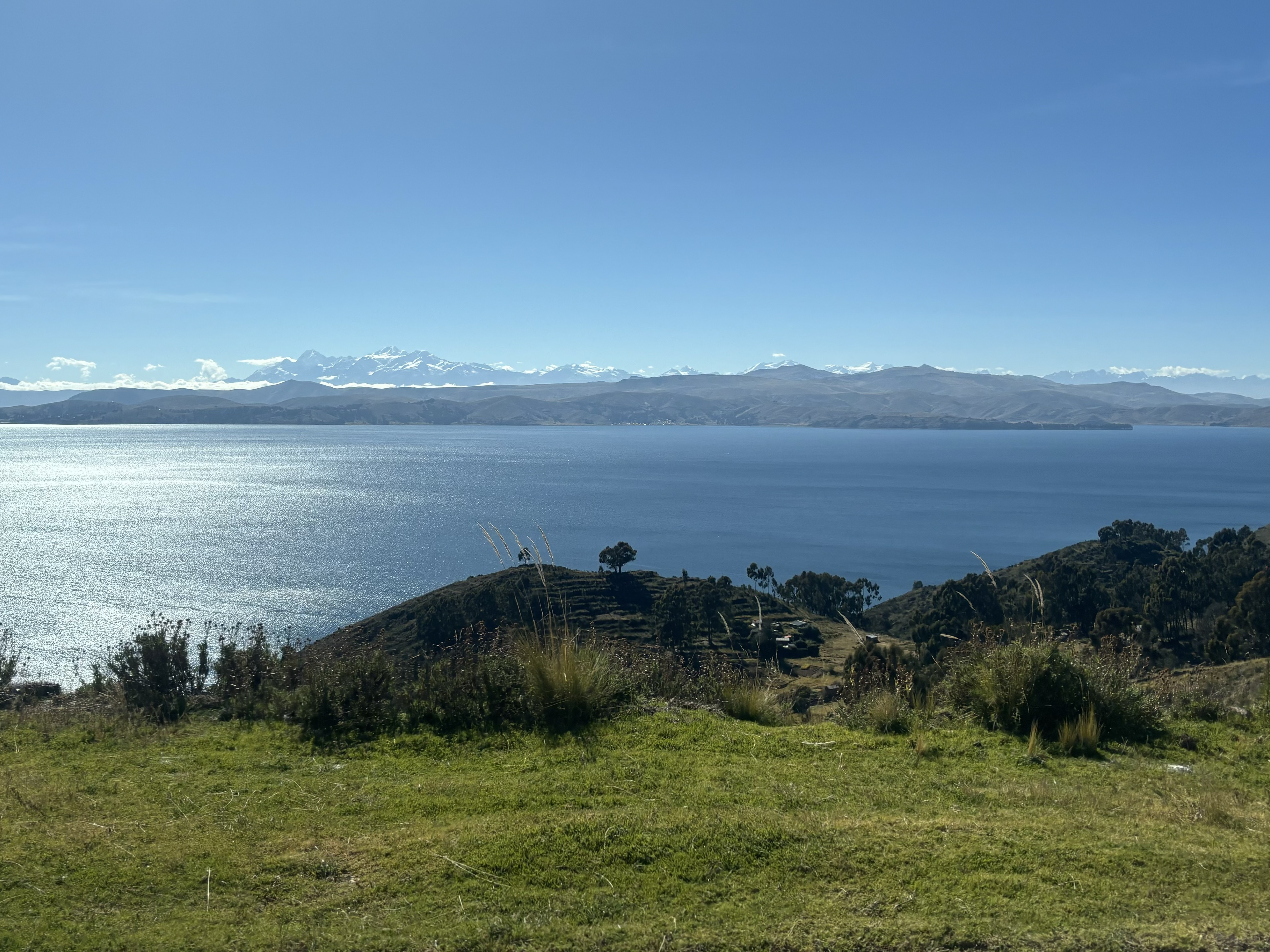
Weather and Climbing Season in Bolivia
The best time to visit Bolivia is during the dry season, which runs from May to October, bringing stable, cool and dry conditions – great for climbing! While some climbing may be possible during the wet season, from November to April, it is best avoided if you want to make the most of your trip. Many of the climbing areas are at relatively high altitudes, both Peñas and Estancia Churata lie between 3,800 and 4,000 meters. It is common to experience an extreme of temperatures in a single day, you can go from wearing a big down jacket on a frosty morning, to climbing in a t-shirt in the sun a few hours later. In general, the weather is more consistent and predictable than in neighbouring Peru, and we had blue sky and sunshine practically every day of our trip, even if it was a bit chilly!
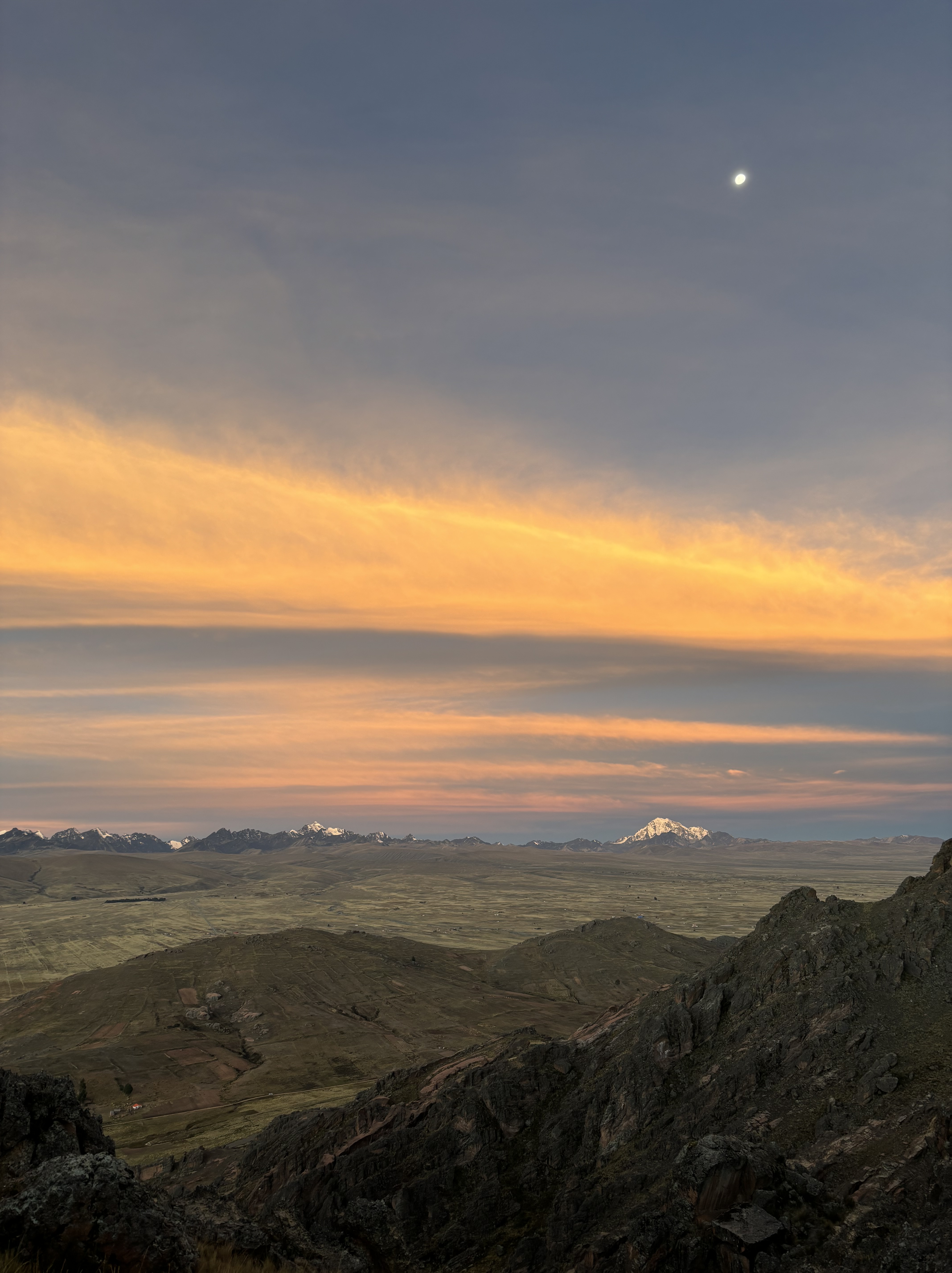
Below is a map of the different crags we climbed at in Bolivia so you can see where they are in relation to each other:
A Brief Note on Blockades
Without wanting to dive into Bolivian politics, we just wanted to mention our slightly unusual route and choice of rest day activities, which was influenced by some political turbulence during our time in the country. There were widespread road blockades that made many areas very difficult, or not feasible, to access. This meant we had to get creative with our bus routes and missed out on a few places we would’ve liked to visit. We were absolutely fine, and this is definitely not a complaint, after all we were just here for leisure. Many Bolivians livelihoods suffered greatly, with inflation hitting a 16 year high and the economy haemorrhaging hundreds of millions of dollars as a result. The blockades will almost certainly not be an issue for your trip, but we thought it worth mentioning why we missed certain areas, both for climbing and rest days.
Climbing Recommendations
Peñas
Peñas is one of the largest and best climbing areas in Bolivia, with generally good quality sandstone in a stunning setting. Peñas is not far from Lake Titicaca and is an excellent location for anyone travelling from Peru to La Paz. The small village of Peñas is a lovely quiet place with a few small food shops and a cafe restaurant that is open for part of the week. Only a short walk from the village is a canyon full of sandstone crags and fins with different aspects, styles and difficulties. There is a great local guidebook for 15 Bolivianos (~€1.80) that details 115 routes, with grades from 4 to 8b, including several multipitches. The routes are generally well bolted and usually feel fair for the grade, especially once you’ve got your eye in to the style.

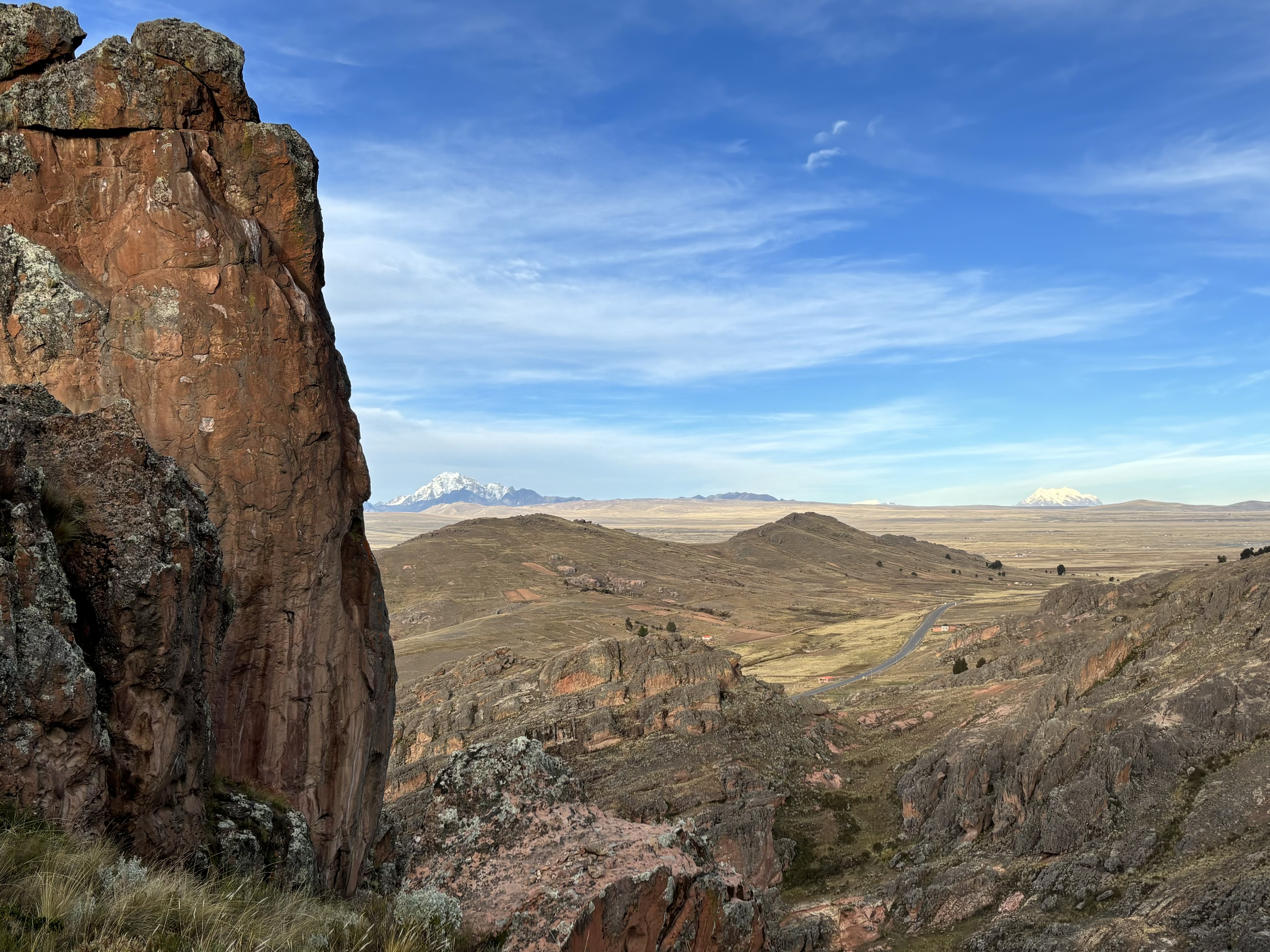
One of the most enjoyable things about Peñas is its location, situated adjacent to the Cordillera Real. The views from the climbing are absolutely stunning, you gaze across the Altiplano onto dozens of glaciated mountains, many over six thousand meters. Whilst you have easy access from the village, once you are in the canyon it is super tranquil and all that breaks the silence is the birds. There is a great short hiking trail at the back of the canyon that takes you to a panorama where you can see all the mountains on one side and Lake Titicaca on the other, a superb place to catch a sunset.

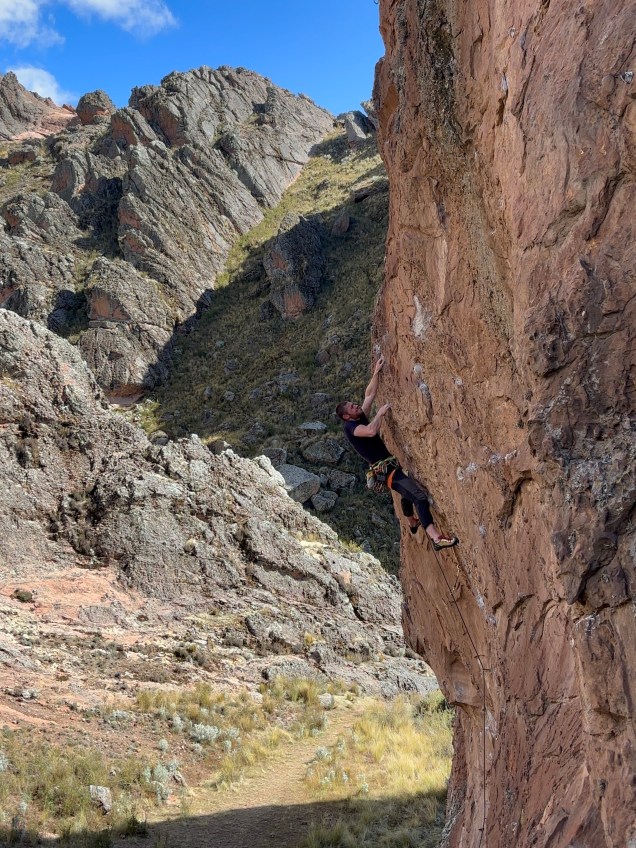
Two different sectors, two great quality routes named after giraffes!
We really enjoyed our time in Peñas, it was one of our favourite climbing areas in Bolivia and quality wise it is a strong contender for the best area in the country. The sandstone was a pleasure to climb on and it made us realise how much we had missed this rock type – we hadn’t seen any other sandstone crags on our South American journey since Colombia! Whilst the routes are clean and the area seems to receive a reasonable amount of climbers, we were always the only ones in the canyon for the duration of our stay, even on the weekends. If you’re visiting Bolivia we think Peñas should be very high on your list of places to visit, with great climbing and even better views it isn’t to be missed.
We write for pleasure and climbing is our passion. Our articles will never be paywalled. However, if you would like to help towards the costs of running the site or if you have found our content useful, please consider contributing here. To read more about why your support matters, click here.
Aranjuez
Aranjuez is the city crag of La Paz, an incredibly easy place to access, with a surprising amount of routes. As city crags go, this is one of the better and more developed ones. There is a great downloadable guidebook here, that details around 164 routes, with grades from 4 to 8b+. The rock type at Aranjuez is conglomerate, which is pretty good quality and with generally well stuck cobbles. The sunny crags are typically more solid than the shaded ones, and although the shaded rock was still pretty good, wobbly cobbles had been reinforced with sika in some places. The climbing style is typical of conglomerate and pretty pumpy, finding the best potato or pocket can be the hardest part and when you know where to go the routes can feel a lot easier than the first time around! It’s fair to say the location is not the most beautiful part of Bolivia, but it is great it is so close to La Paz, which is a super interesting city. We thought Aranjuez was a really fun crag that is well worth a visit, there is plenty to keep you busy and test your stamina.

Estancia Churata
Estancia Churata is often touted as the best climbing area in Bolivia, and in terms of location and environment it probably is, but in terms of rock quality it definitely has some stiff competition from Peñas. Around 55 km from Potosi, Estancia Churata occupies a very unique location – one that we’ve not really come across before, in South America or elsewhere. The landscape is very dry and sandy, even home to some sand dunes! The Altiplano is arid but not totally desertified, there is just enough vegetation to support life. In the valley there is a spring which forms a small stream and the entire valley bottom is green and full of life – while cactuses proliferate on the dry hillside. The area is incredibly quiet, only a few famers live at Estancia Churata and with them large herds of alpacas and llamas. If you wander around the surrounding plateau and valleys you’ll see plenty of vicuñas, some the last wild camelids of the Americas and a relative of the alpacas.
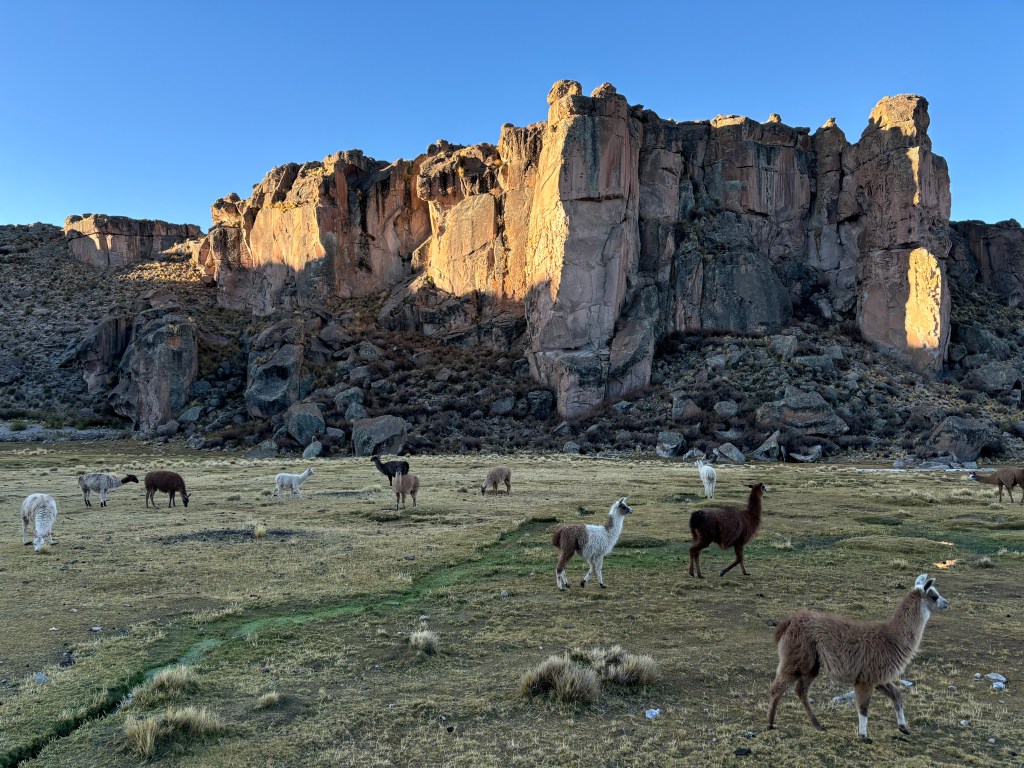

The stunning contrast in environments at Estancia Churata
In the valley there is a small refugio, which is open to climbers and operates on a donation basis – so give generously to ensure its future. Before you arrive it is worth contacting someone to let them know you are coming, there is a number for Germán here. The refugio has a kitchen, electricity and water, and even better still a fireplace – several times it was so cold the pipes froze overnight so we boiled water from the stream! In our six days there, we were the only ones around and it seems the area is very quiet, which is a shame as it’s an absolutely fantastic place to stay and enjoy rural Bolivia to the fullest. It is worth noting that while the Refugio has beds it has no bedding, so bring a sleeping bag or your night will be mighty cold. During the day the weather was usually very nice with blue skies and sunshine, it is nicest to climb in the sun but if you do want to climb in the shade wait until midday when the air temperature has increased. The only real issue you may have is wind, we had one very windy day that caused mini sandstorms, but we did manage to find some sheltered crags.
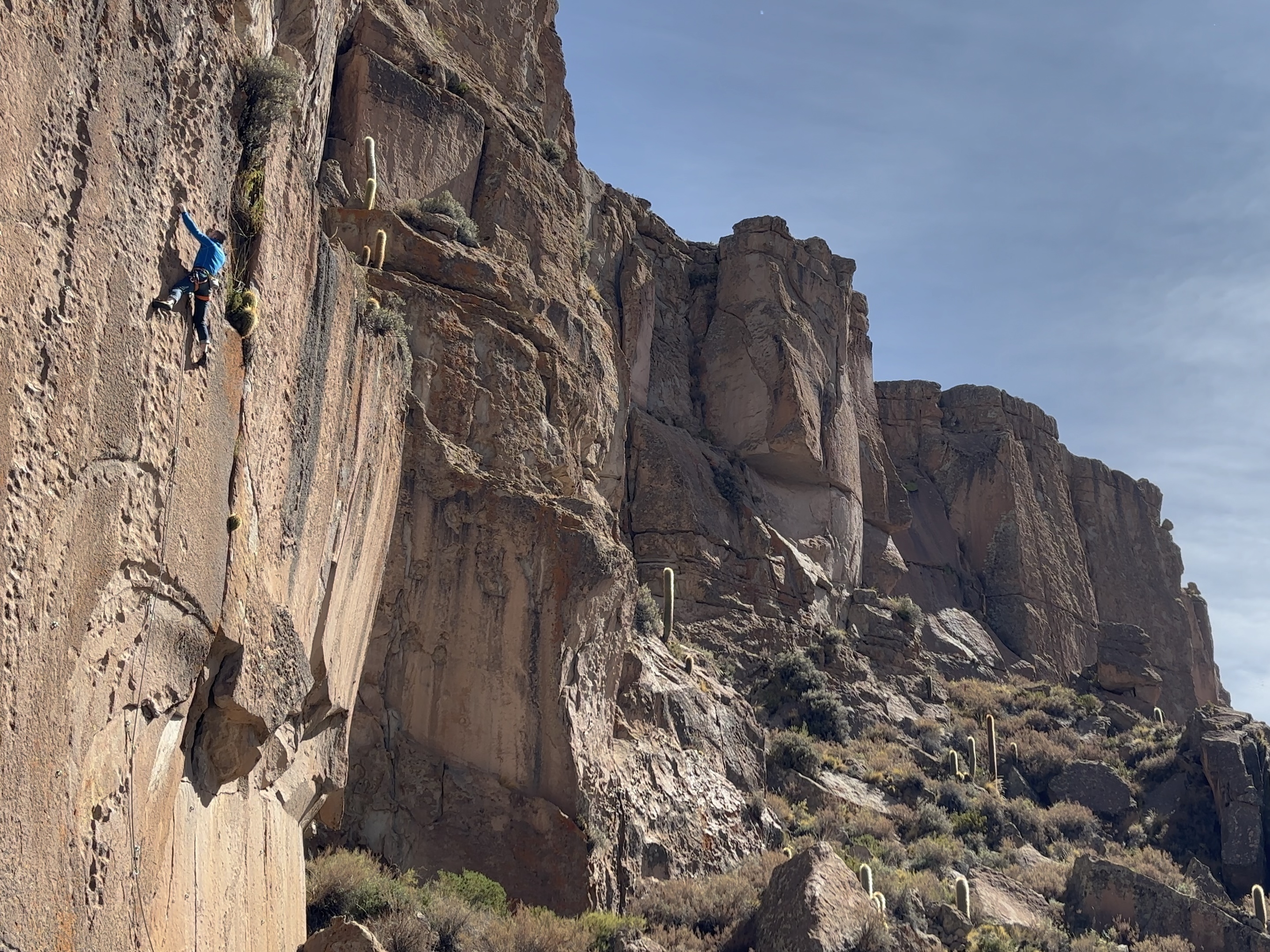
Climbing wise, Estancia Churata is quite interesting and very varied. The rock is Ignimbrite, the same as in some of Peru’s top areas like Hatun Machay and Huayllay. However, as the environment here is much drier the rock hasn’t been eroded by water in the same way, meaning it climbs quite differently. The weathering of the rock here is much more reliant on UV light and case hardening, meaning the crags that get the sun all day are usually much more solid and far less grainy. The exception to this was Sector Apertura, which is shaded and good quality. Other than this every single shaded crag we climbed at was poorer than the ones in the sun, a pretty noticeable divide across the north and south facing sides of the valley. Grade wise we found the routes could be a bit confusing, some of them felt soft and others big sandbags. There are topos in the Refugio which have been annotated with suggested new grades, although sometimes they felt off as well! The Refugio topos cover around 70 routes, the vast majority of which are unnamed, but we found many more in the valley so they are probably 90 plus in total. Grade wise there is a good spread, starting from the 5’s and even a 9a!
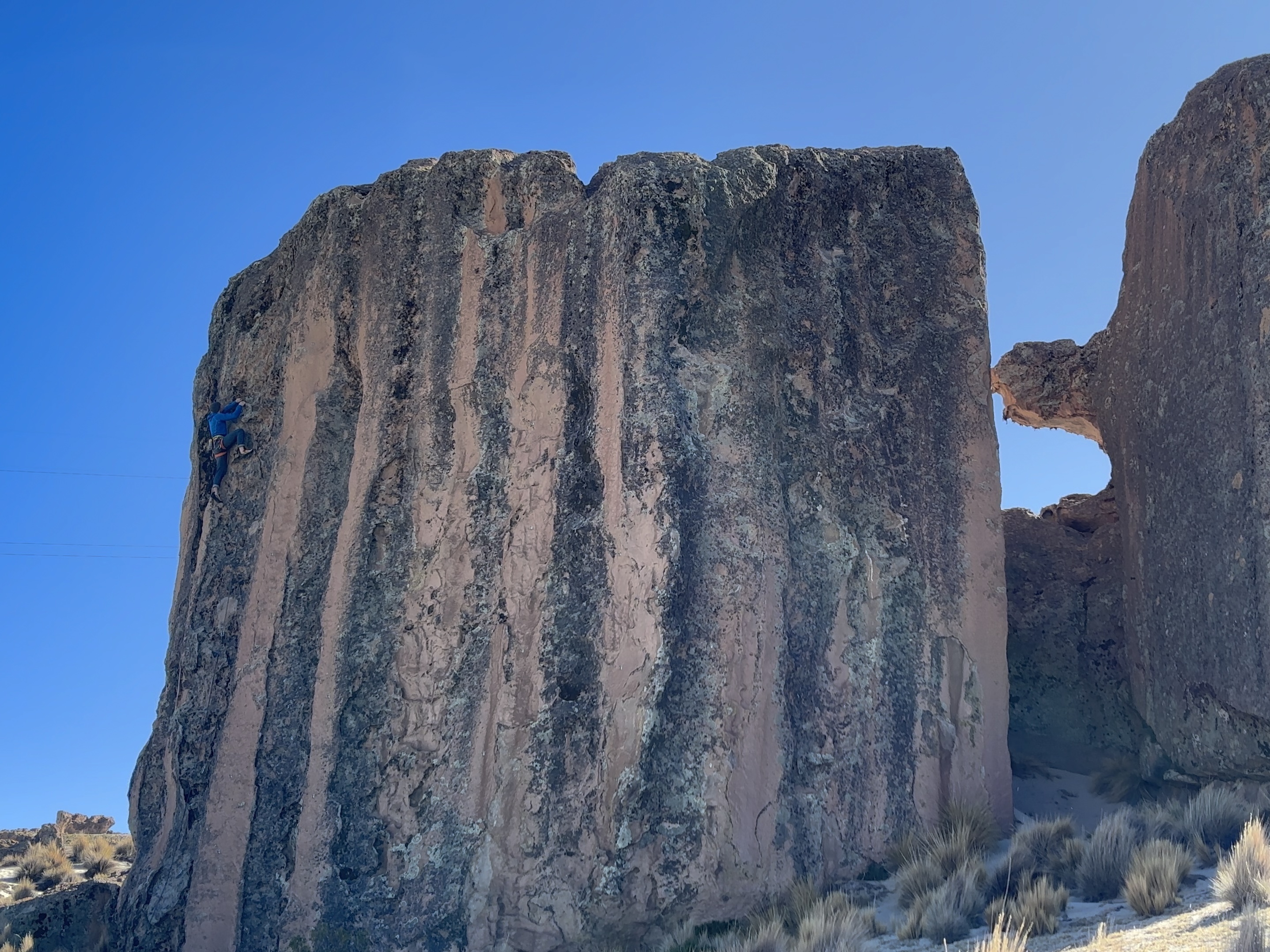
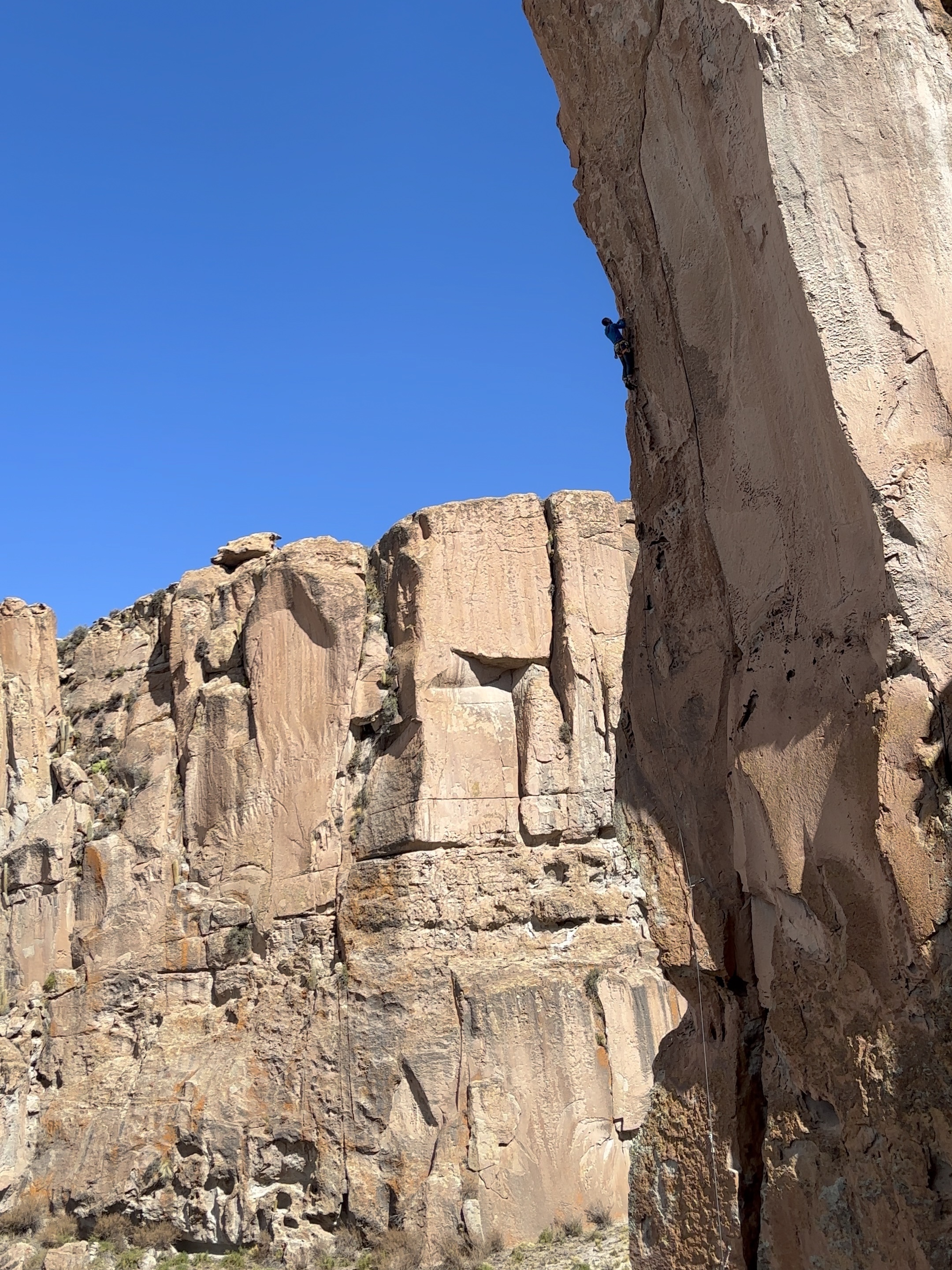

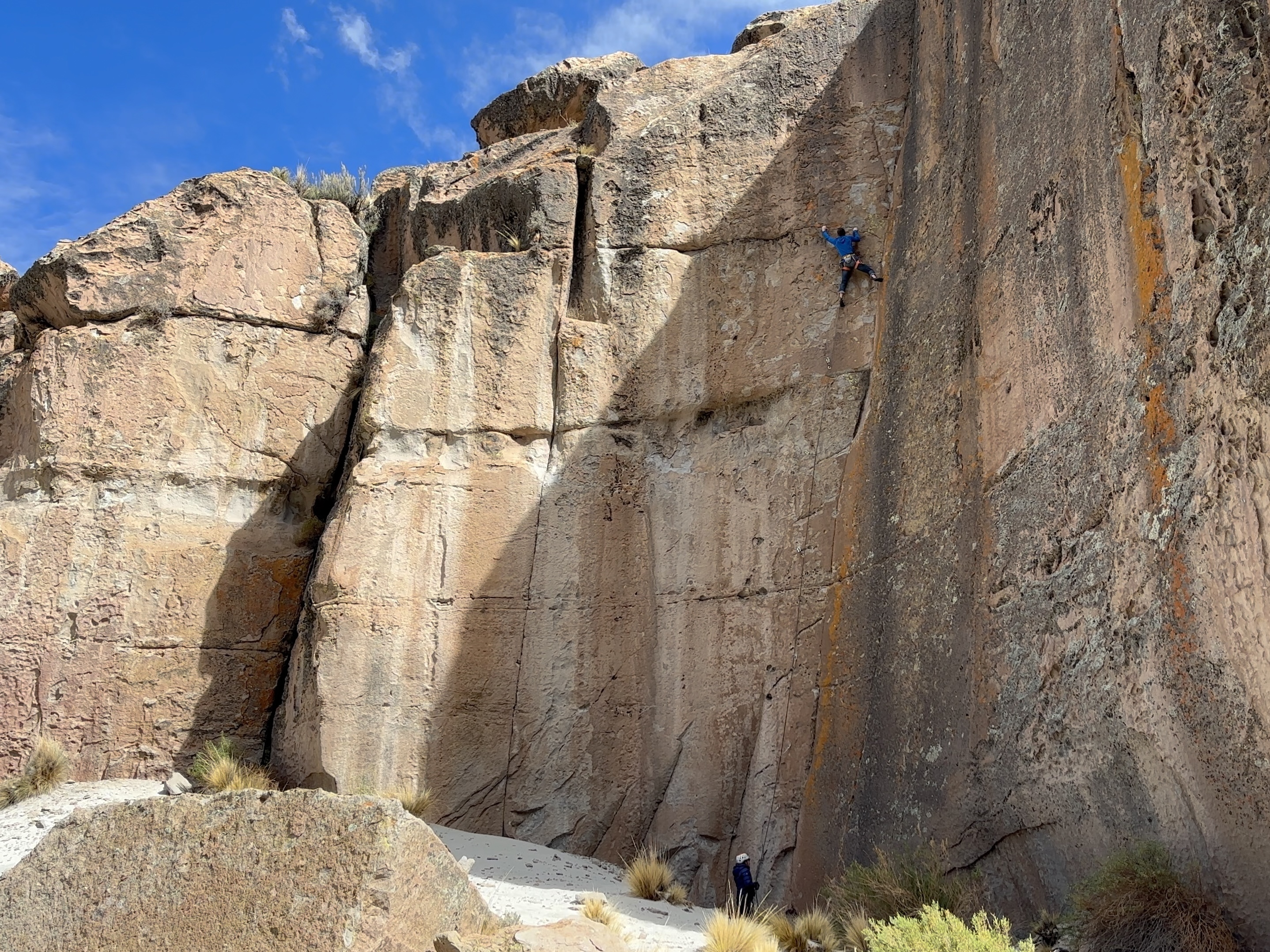

Some favourites from Estancia Churata
We had a great time at Estancia Churata, it is a stunning area and one of the most unique places you’ll ever climb – a semi arid plateau at almost 3,900 meters! Climbing quality wise it is mixed, but the good routes are very good and are both beautiful and very fun. The Refugio is great and it is testament to Bolivian climbers that such a great facility is there for people to use. It is very difficult to call whether it is truly the country’s best area or not, for us it is probably down to a tie breaker with Peñas, the best option is to stay long enough to enjoy spending time at both of them. Whilst Churata isn’t really remote it does feel it, the peace and tranquility is wonderful and you’ll sleep like a baby in the dark, quiet nights. As a short rest day activity you can walk north eastwards from the refugio and you’ll see a whole other canyon full of rock – maybe the next big thing in Bolivian climbing? Areas like Estancia Churata showcase perfectly what the country has to offer, there are no doubt dozens of hidden gems in the country which in the future could grow to rival the larger climbing areas found in neighbouring countries.

Sijcha Alegría
Around the city of Sucre there are several different sport crags, and we thought Sijcha Alegría looked the best of them. The area is not far from downtown Sucre, in the Alegría neighbourhood, but feels surprisingly rural, with local people having crop fields, terraces and livestock. The quiet atmosphere is lovely and you’ll likely be the only climbers there, there were no signs of much activity – even in the middle of the dry season none of the routes had any chalk on them. On the online topos on ClimbingSucre, Sijcha Alegría has 87 routes, but these are not all equipped routes. For example, some of them just have anchors and others have no anchors, bolts and don’t seem to have been cleaned – implying they may have been marked to indicate a potential route rather than an existing one. The grades can feel a bit stiff at first but they didn’t seem too bad once you got your eye in, some of the routes can meander around a bit too. The rock was surprisingly good quality, generally very solid and not snappy or loose – and pretty enjoyable to climb on. The climbing style is quite crimpy and there are lots of steep slabs at something like 80 degrees or so.

There is a great Wikiloc someone has created for the approach trail which was helpful, as there isn’t much approach information online. The locals were very friendly too and happy to give us directions. We thought Sijcha Alegría was a nice enough crag and we had a fun time climbing there, but it isn’t an amazing area by any stretch and is definitely one of the less significant areas in Bolivia. It is worth a visit if you’d like to see Sucre or are passing through in the right direction, but it’s probably not worth travelling out of the way for.

If you find our content useful please consider subscribing:
Rest Day Activities
La Paz & El Alto
Of all the cities in South America, one of the coolest and most unique is La Paz, an extraordinary city with so many interesting facets. La Paz is the highest capital city in the world at 3,650 meters, and the neighbouring El Alto is considered the highest major city in the world, with a population over 1 million, at an impressive 4,150 meters. The area is home to the world’s largest cable car system, with over 33 kilometres of cableways. The network is revolutionary, it carries on average 300,000 passengers per day – the majority of them local commuters. Not only has this reduced traffic and improved air quality, it is also very cost effective at 3 Bolivianos (€0.37) per ride. It isn’t just practical either, it also gives stunning views of the city and of Illimani, the 6,438 m peak that towers in the backdrop. It is such a brilliant system it feels like the future, the ease, comfort, speed and cost are all so perfect it makes travelling across the city a real pleasure – something you wouldn’t normally think about large capital cities!
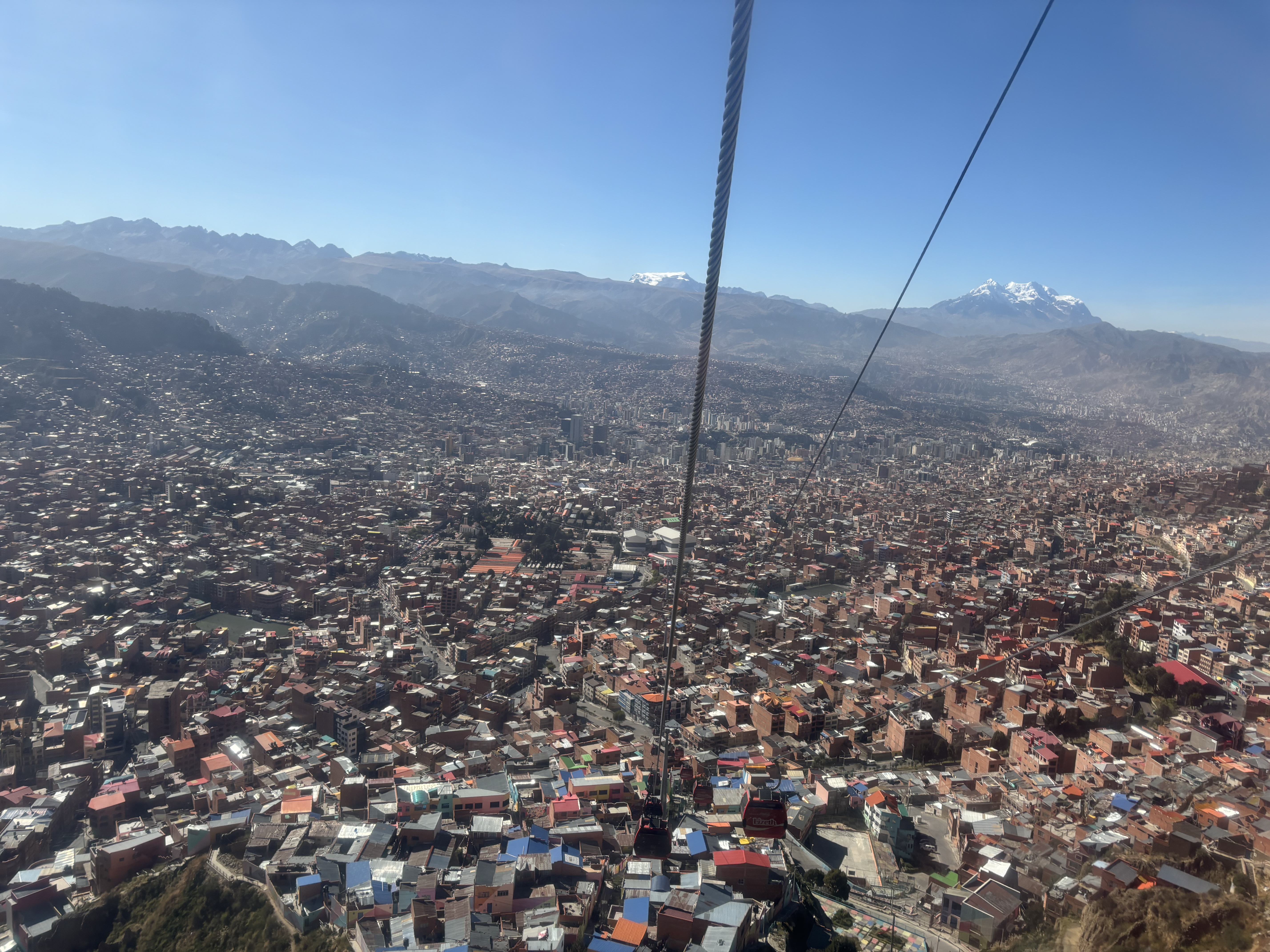
One of the best things to see in the area is the huge market Feria 16 de Julio in El Alto – one of the largest in Latin America. The market runs twice a week on Sunday and Thursday, we went on Sunday which is when the market is in full swing. The place has everything from clutches & car radiators to stationary, crockery and clothing. There is loads of great food, with traditional meals and ingredients, you will be able to get whatever you want somewhere in the market. El Alto is a cultural hub of the Aymara people, who make up the majority of the city’s inhabitants, it is a great place to learn about and experience Aymara culture and traditions. Despite some online reviews, it isn’t unsafe at all, just full of locals instead of tourists! Some blogs make it sound sketchy but that couldn’t have been further from our experience, it is just a bustling area full of people going about their daily business, nothing to worry about. The famous witches market, Mercado de las Brujas, in downtown La Paz, known for its llama foetuses, was completely different. Instead of locals this smaller area is set up for tourists, there are more keyrings and fridge magnets than spiritual goods and it isn’t a patch on the size and authenticity of Feria 16 de Julio. If you want the best and most authentic experience, head to El Alto, we didn’t see another foreigner up there!

Potosí
Potosí is one of the most beautiful and historical cities in Bolivia. The city is famous for the mountain Cerro Rico, which looms over the city, that is synonymous with both wealth and suffering. Cerro Rico was at one point home to the world’s largest known silver reserves, which the Spanish empire exploited by using millions of Indigenous and African people as slaves. Potosí was founded in 1545 and went on to become on of the richest cities in the world during the 16th and 17th centuries. As with much of the world’s wealth, it was generated with the enormous labour effort of working class people but with little benefit to them. In more modern times, the silver became less common, and today many miners still work at Cerro Rico mining tin, zinc and lead. The miners often still work in terrible conditions, despite their significant contributions to the local economy. Potosí is a UNESCO World Heritage Site due to the history of mining and its beautifully preserved old town. Potosí is a really nice city and definitely one of the nicest and most interesting in the region, not just in Bolivia.

Sucre
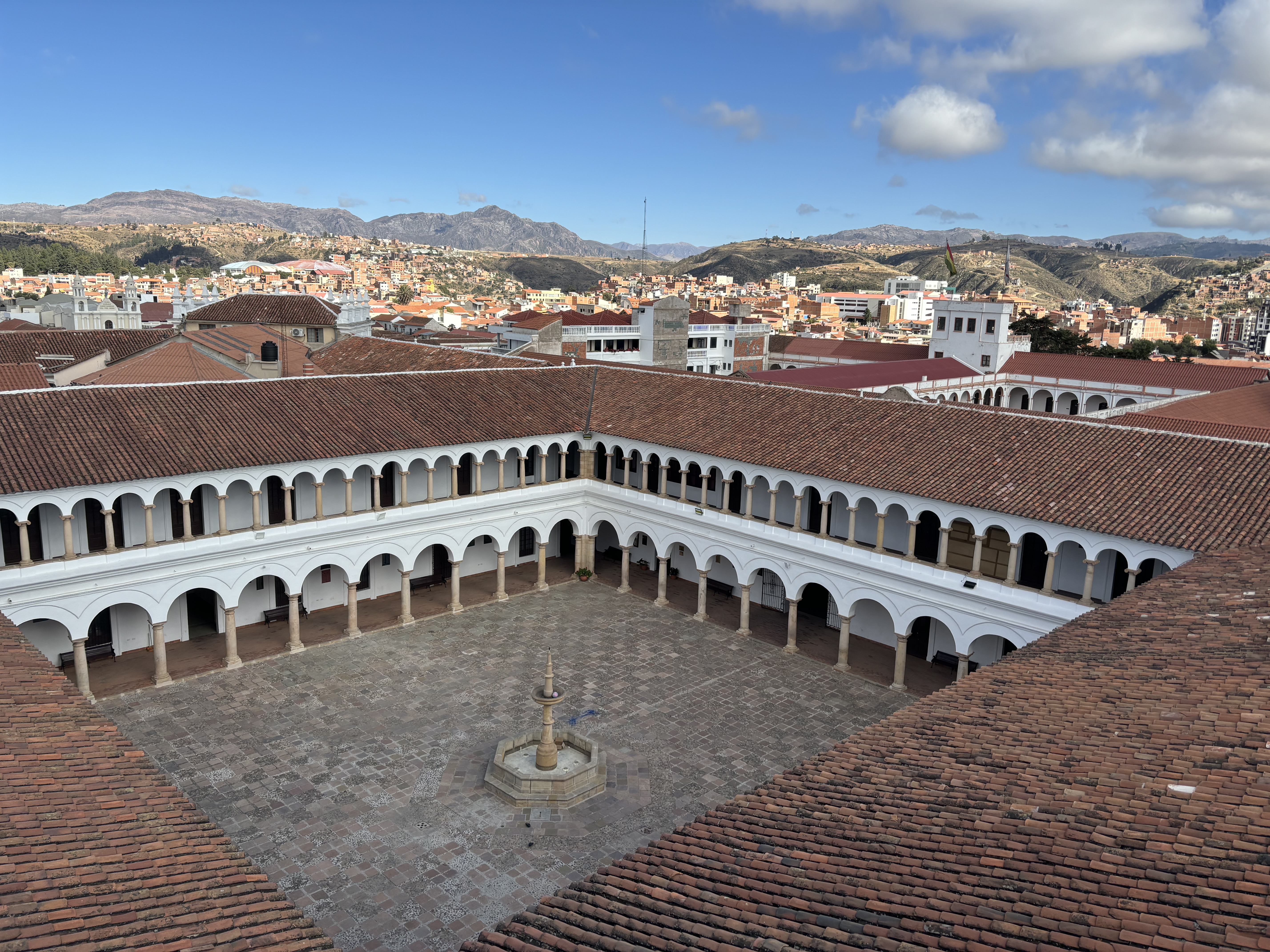
Sucre is the constitutional capital of Bolivia and is a designated UNSECO world heritage site for its colonial white washed architecture, typically built between the 16th and 18th century. The city is pretty central in Bolivia so it is very easy to include on a journey through the country, in all likelihood your bus route will pass through Sucre anyway. While it is a lot less exciting than La Paz, it is a very peaceful and relaxing city, with warmer weather too! Sucre has all the features and sites of a large city but with a population of around three hundred thousand, which pales compared to La Paz’s two million. This makes it feel really spacious and chilled, while at the same time being quite compact to walk around. The central city has many romantic European style courtyards and balconies, which give beautiful views over the red clay tiled roofs. The Mercado Central is well worth a visit and was one of the cleanest and best smelling markets we’ve been to. There is a great selection of fruit salads and juices, lots of lunch options and it is also great for Api con pastel at breakfast time.
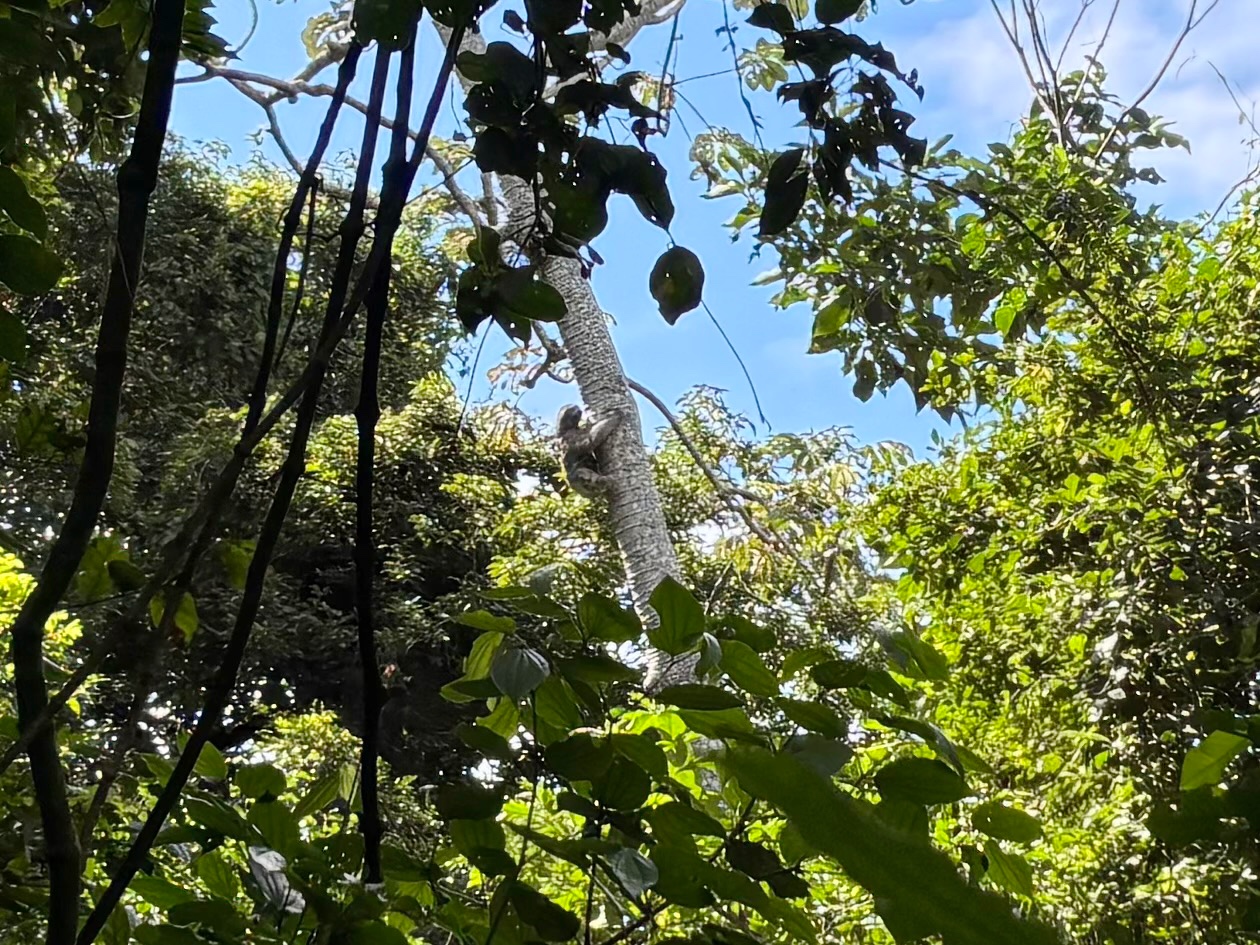
Santa Cruz, The Sloth Capital
Yes, you read that correctly! Santa Cruz de la Sierra is considered the sloth capital of Bolivia, and in some places, the world. We didn’t know this until we arrived, but we were visiting anyway on our journey to Paraguay. There are lots of different places to see sloths in the area, initially we had planned to visit Amboró National Park, but some salmonella made us downsize our plans to the Jardín Botánico, which is much closer to the city. Despite some quite bad reviews, the botanical garden was actually excellent. It is very big considering its location, and the reviews complained that it was overgrown and unmanaged. We thought the opposite, it was actually a natural area and not a manicured postage stamp. We walked for several hours in the outer reaches of the park and didn’t see a single person, the trails were very small and clearly don’t get used very often. This meant were saw tonnes of beautiful birds, including lots of toucans. We also got the best sight of all, a three toed sloth! We got to watch this unusual creature climb up and back down a tree, which was wonderful. It was also quite interesting for climbers, they might be slow but they certainly have impressive stamina, and they can do some pretty deep lock offs too!
Food
Charquekan is a delicous and very traditional Bolivian dish, a must try when you’re in the country. The main component is charque, which is dried and salted llama meat. The dried meat is shredded and fried, and served alongside mote, potatoes, cheese and boiled eggs. It is a very tasty and hearty meal, one of our favourites in Bolivia.
K’alapurka is a fantastic soup hailing from Potosí, made with corn, potatoes and meat, often charque. What makes the soup different is that it is served with a red hot rock inside it, causing it to boil rapidly. The stones are made from the volcanic rock that is common in the surrounding area, and they are heated in a fire until red hot. The soup is delicious and is the perfect way to warm up on a chilly day in Potosí.
Silpancho is a good hearty meal, similar to others you find across the region, like Churrasco in Ecuador. Bolivian Silpancho is centred around a breaded, pounded and fried beef cutlet served with rice, potatoes, salad and a fried egg. It is a reliable filling meal for when you’re hungry!
Pique Macho is a giant stir fry style plate with a bit of everything. The dish has beef, sliced hotdog, potato, onion, tomato, chilli and boiled egg. The portion is typically very big and spicy too, we found spicy food more common in Bolivia than the other Andean countries we visited – they seem to be fond of a good bit of chilli!
Salteñas are Bolivias version of the classic empanada and a favourite snack across the country. Salteñas have a slightly sweet, golden coloured dough and contain a stew like filling with lots of broth/sauce. They are baked and can come with a variety of fillings, beef and chicken were our favourite.
Api con Pastel is a traditional Bolivian breakfast and something we clicked with a lot, it was definitely one of our favourites. The Api is a hot purple corn drink, spiced with cloves and cinnamon – a wonderful warming and comforting drink to start the day with. The Pastel is not a cake, but is a deep fried savoury pastry filled with cheese. The pastel is light and not dense, and is dusted with icing sugar which gives a nice savoury/sweet contrast.
Summary
We really enjoyed our time in Bolivia, the country has a lot of culture and plenty of beautiful and unique environments. Although we did change our route from what we had originally planned, we still got to climb at the country’s biggest and best climbing areas, which we really loved. The sandstone at Peñas is probably the best quality rock in Bolivia and the environment at Estancia Churata probably takes the number one spot for beauty and uniqueness. We thought both of the areas were underrated and we were expecting it to be a lot more popular with climbers, when in fact it was incredibly quiet. There is no doubt there are a lot more crags in Bolivia, there is a lot of potential for new routes and the growth of climbing in the country will surely see it rival the more famous climbing of its neighbouring countries someday soon.
We write for pleasure and climbing is our passion. Our articles will never be paywalled. However, if you would like to help towards the costs of running the site or if you have found our content useful, please consider contributing here. To read more about why your support matters, click here.
You can read more about the climbing in South America here.
Relevant links and resources
Climbing topo resources
https://www.cuevaboulder.com/topos-bolivia-3
https://escaladaenbolivia.blogspot.com/search/label/Aranjuez%20-%20La%20Paz
Aranjuez guidebook
https://drive.google.com/file/d/1D6TXVyCoD4L6l5xqlnBTH5KCUZNYek3V/view
Wikiloc trail to Sijcha Alegria, Sucre
https://es.wikiloc.com/rutas-escalada/sijcha-alegria-sucre-104123423
 The Crag Journal
We really enjoyed Bolivia too, although we hiked rather than climbed, it is a great, mostly unexplored, country. Maggie
LikeLiked by 1 person
Yes, there is loads more to hike and climb in Bolivia, it is full of interesting environments – I bet there are so many hidden gems we have never even heard about! You could spend a very long time there and still only scratch the surface!
LikeLiked by 1 person
What a wonderful review about Climbing in Bolivia! You guys Rock! Really great post.
LikeLiked by 1 person
Thank you, really glad you liked it! Bolivia is a great country with a really amazing landscape, the climbing opportunities seem endless!
LikeLiked by 1 person
I can imagine that Bolivia, like many other countries have amazing landscapes! But hey, at some point, I will be waiting we climb together in Greece as well!
LikeLiked by 1 person
Yes for sure, we are definitely long overdue a trip to Greece! It is only a matter of time until we make it to Greece to sample the world class climbing on offer!
LikeLiked by 1 person