When it comes to climbing in South America, there aren’t many countries that receive as few visits from climbers as Paraguay. In fact, many climbers are under the impression that there is no climbing in Paraguay, which is definitely not true. As well as a few nice existing climbing areas, Paraguay has a surprising amount of rock waiting to be developed, and often the rock is high quality sandstone. Aside from climbing, we found Paraguay to be a really wonderful country, with some of the friendliest and kindest people in all of South America. Paraguay also has some of the best and most unique food on the continent, and a fascinating blend of indigenous Guarani and Spanish colonial culture. We began our time in Paraguay by crossing the border from Bolivia at Cañada Oruro/Infante Rivarola and finished by crossing the Friendship Bridge to Brazil in Ciudad del Este.

Guidebooks for Climbing in Paraguay
The most up to date guidebook (as of September 2025) for the Climbing in Paraguay is Guia de Escalada Paraguaya 2012 which is hosted on Scribd.com. Scribd is paid access, however, you are able to sign up for a free 30 day trial, which is very useful if you only need it to access this guide. The guidebook features Tobatí and Cerro Mbatovi, which are the two main climbing areas in Paraguay. Additionally, theCrag has overlapping information, with some topos from the guidebook. For Tobatí, theCrag was slightly better and a little more up to date than the guidebook, and has a very useful map for some of the individual sectors in Tobatí.

Weather and Climbing Season in Paraguay
The best time to visit Paraguay for climbing is during the dry season, which runs from May to September. As well as being the driest time of year, it also has the coolest temperatures, which gives nice climbing conditions. In the summer, Paraguay can regularly hit 40 degrees and also receives a lot of rain, so it is well worth avoiding the October to April period. It is worth repeating that the crags are mostly all sandstone so you won’t be able to climb on them if they are wet. Likewise, if there has been a lot of heavy rain they may take several days to completely dry. It isn’t uncommon for there to be some rain in the dry season, so it is worth taking that into account when you make your plans.

Below is a map of the different crags we climbed at in Paraguay so you can see where they are in relation to each other:
Climbing Recommendations
Tobatí (Itá Corá)
Tobatí is the largest and most developed climbing area in Paraguay, set on the outskirts of the nice town of the same name. There are a couple of crags scattered around, but the lions share of the routes are in the charming valley of Itá Corá. Despite being only 70 km from Asunción, the area is lovely and quiet, and it has the feel of a sleepy authentic town, a perfect base for climbing. The rock in Tobatí is sandstone, and a very good quality sandstone too. The type and feel of the rock can vary across sectors, some are better than others. However, the rock at Hugo Wall, for example, is genuinely top draw – as good as any sandstone we’ve ever touched anywhere. Some of the routes are quite short, but at sectors like Winter Wall they are a pretty good length, being around 25 meters.

The valley is on the property of a small local brick factory, you must pass through their entrance to access the valley that the crags are in. On theCrag it mentions that you must pay, but when we went and announced ourselves they said it was free and we only needed to pay if we wanted to camp. Still, we went to say hello every day when we entered just to let them know we were climbing. They were very friendly and happy to see climbers, if slightly bemused that we’d come to Paraguay to visit their small town! From there the walk in is easy and the valley is lovely and quiet, it’s just you, the vultures and the palm trees.
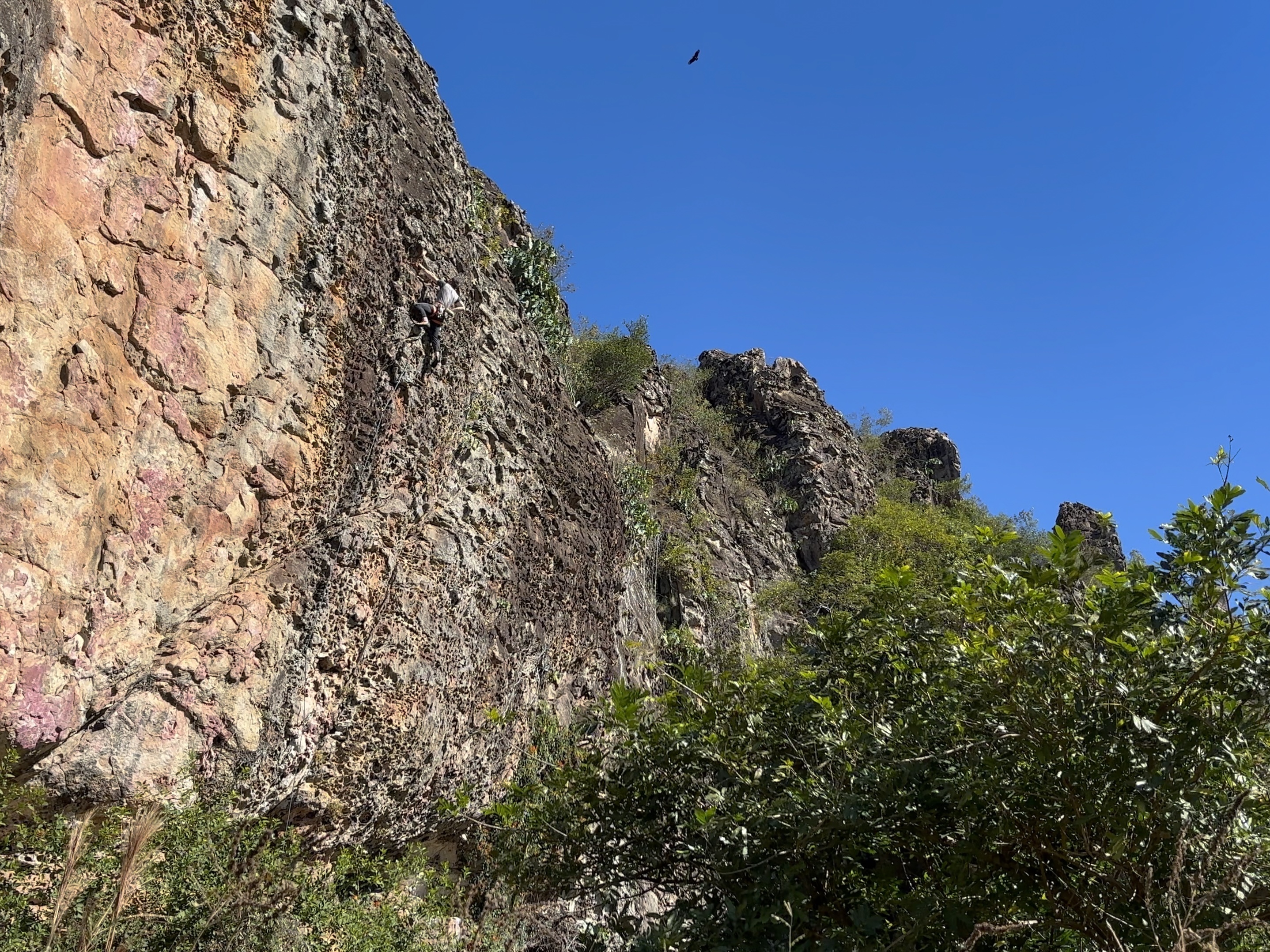
Tobatí currently has around 40 to 45 routes, with grades from 4 to 7a. There are a handful of routes we spotted that weren’t in the guide too. There is the potential for a lot more in the valley, there is plenty of rock and there is surely enough room for at least 100 routes in total. The valley has the option to follow the sun or shade all day as required, during our stay it was quite chilly, but evidently it can get extremely hot in the summer. We had a really great time climbing in Tobatí, of course it isn’t some enormous world class crag, but it has genuinely good rock, a nice location and you’ll have the place all to yourself. The quality of the rock really assured us that we had made a good call in choosing to visit Paraguay.

We write for pleasure and climbing is our passion. Our articles will never be paywalled. However, if you would like to help towards the costs of running the site or if you have found our content useful, please consider contributing here. To read more about why your support matters, click here.
Cerro Mbatoví
Cerro Mbatoví is a beautiful small climbing area that holds great potential for the future of climbing in Paraguay. The rock at Mbatoví is also sandstone, but it is incredibly compact and quite smooth, resembling quartzite in many ways. The area only has around 6 routes currently, but the whole mountainside is covered in rock and the opportunity for first ascents is high. Cerro Mbatoví is a butte that was formed because the rock it is made of was more erosion resistant than its surroundings, leaving it standing out on its own, like a sentinel. As is typical in the area, the crags look tiny from a distance and are well hidden by trees, but they are much bigger and steeper when you get up close. The base and surroundings of Mbatovi are clad in beautiful subtropical forest home to some fantastic birds and wildlife.

The guidebook and theCrag’s locations of the crag are set for the wrong location so we will discuss how to approach the crag. The best way to approach the crags from Paraguarí is from the road that heads towards Mbatoví village and take the dirt track to your right when you become parallel with the mountain (-25.567929, -57.131895) we took a Bolt from Paraguarí to here. Before the dirt track turns right, there is a gate, cross the gate and you are on the trail that leads to the summit. Follow this path and later you will branch off right as the larger crags start to come into view. The crags are generally west facing and get afternoon sun, so it is preferable to climb before around 3 pm when the crags start to come into the sun. The slopes of Mbatoví have a lot of boulders that could form a nice circuit quite easily, and the nearby mountains have some big and unexplored crags that could turn the area into a real climbing hub of Paraguay – we will discuss those in more detail below.

If you find our content useful please consider subscribing:
Areas of Note and Future Potential for Climbing in Paraguay
The current number of developed routes in Paraguay is a drop in the ocean of the potential climbing that could be established. The only other documented area we didn’t visit was Cerro Memby, in the Concepción department. There is currently one multipitch route which summits a sandstone butte. We weren’t able to locate a topo, however, we imagine writing to the first ascensionists emails, which are provided at the end of the PDF guidebook, would be the best place to start. Whilst searching online, we found the fantastic website Geologiadelparaguay.com.py, which highlights so many different rock formations throughout Paraguay, many of which look perfect for climbing. Make sure to scroll through the whole page to see some of the best formations. There are several different rock types and lots of appealing features – some of which are bound to yield good routes.

The most impressive area we personally saw during our time in Paraguay were the rock formations around the town of Paraguarí. Not only for further development of the existing routes at Cerro Mbatoví, there are also several other similar peaks which you can see from Cerro Mbatoví. Cerro Santo Tomas ‘peaked’ our interest the most, which is around 5 km from the town centre. There is a trail which runs from ‘Cabañas María Selva’ to the summit via some steep gullies and ledges on the left hand side of our photo above. The trail is a nice rest day activity and the summit is rather overgrown and wild. There is also a path which leads along the base of the cliff to a small cave – and a lot more interesting crags! Another peak in the area is Cerro Hu, which is between Cerro Santo Tomas and Paraguarí, it has the same sandstone butte formation as Cerro Santo Tomas and Cerro Mbatoví and is also home to several crags. The sandstone in this area is generally very good quality, although it would require the cleaning of dirt and vegetation prior to climbing, the rock underneath is very solid. Cerro Santo Tomas clearly has the potential for multipitches, as do some of the formations on the Geologia del Paraguay Geoturismo page.


Great quality sandstone just waiting to be climbed…
Rest Day Activities
Asunción
Asunción is a great city with a wonderful laidback atmosphere. Asunción is actually one of the oldest continually inhabited cities in South America, having been established in 1537. The city has lots of interesting historical architecture and is definitely a cultural hub of Paraguay. One of the defining features of Asunción is just how friendly it is for a capital city. It isn’t uncommon when walking around areas outside the city centre to be stopped on the street by locals who want to say hello and have a chat. It is a really upbeat place that left us in a really good mood, it was a pleasure to spend time there.
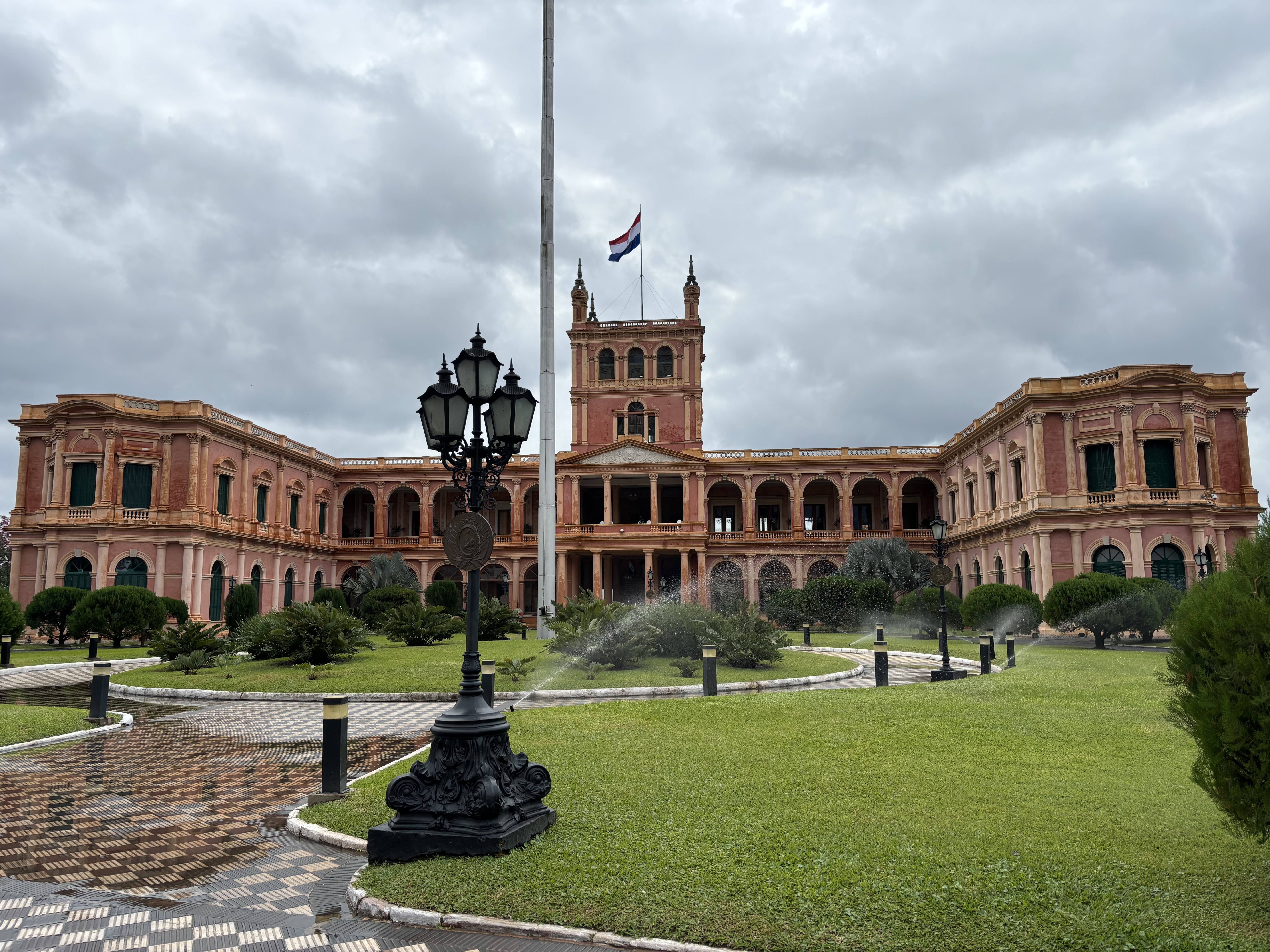
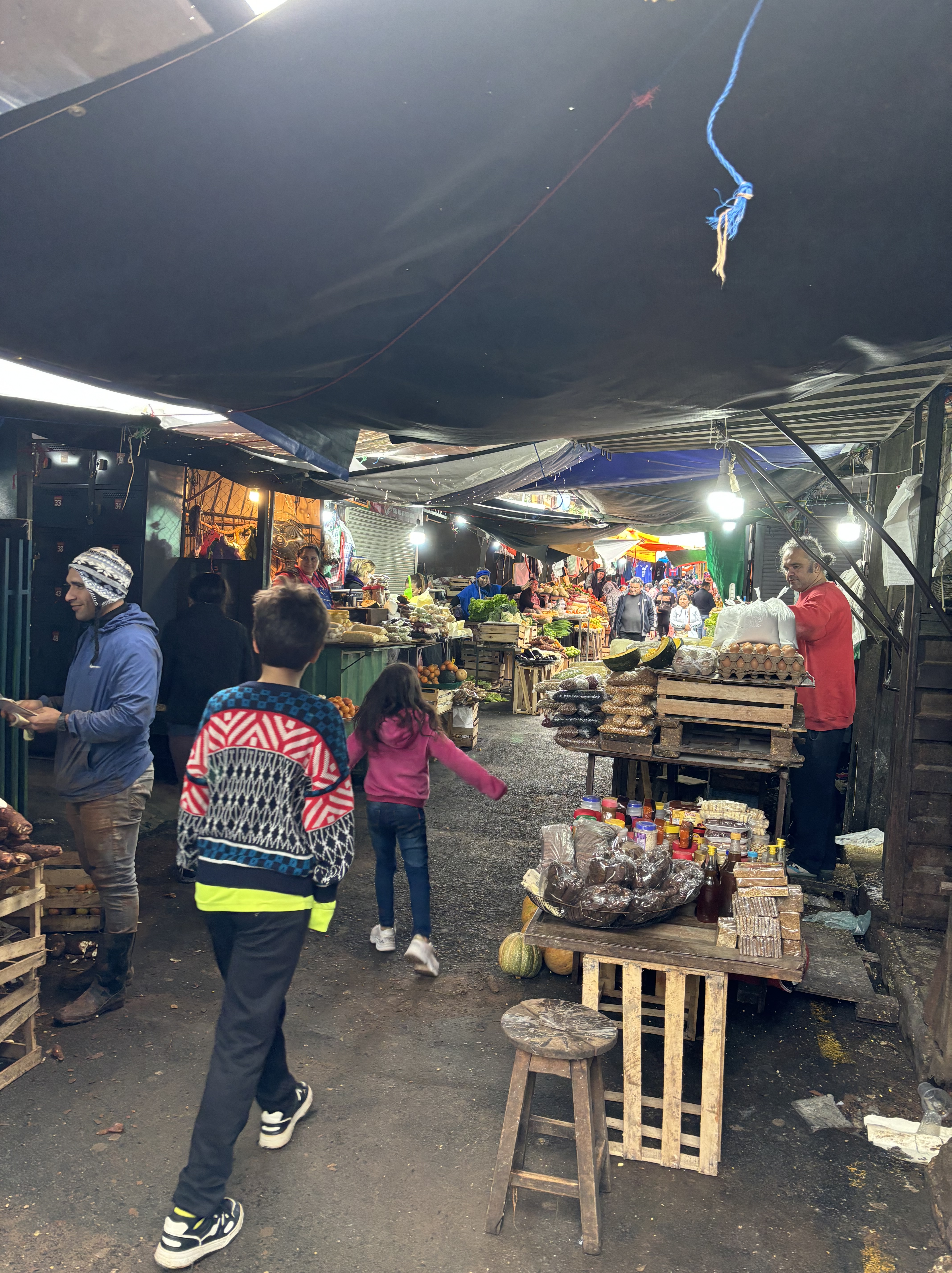
There are plenty of things to do in Asunción, including lots of historical buildings like the presidential palace and the Panteón Nacional de los Héroes. One of our favourites was the Mercado 4, a huge marketplace that sells everything from hand rolled tobacco sticks to guampas and fruit smoothies. It’s a great market to wander around and see what’s going on, it is one of the most lively parts of the city. Asunción is also a great city for food, Paraguay as a whole has great traditional food, and some of the best restaurants and eateries are in Asunción.
Hiking
There are loads of great hiking trails in Paraguay, often in the subtropical forest that surrounds many of the country’s hills. Paraguay isn’t the sort of place that has huge multi day treks like its neighbours in the Andes do, but there are loads of beautiful day hikes with great views and interesting wildlife. The trails are usually very quiet, so it is common to have the whole place to yourself, which makes for a calm and relaxing day out. If you want to find trails near where you are, we would recommend taking a look on Wikiloc, which seems to be quite popular with locals.

Mate and Tereré
The drinks Mate and Tereré are a huge part of Paraguayan culture and heritage. They are brewed using Yerba, a plant which literally has Paraguay in its botanical name: Ilex paraguariensis. Yerba was first cultivated and drunk by the Guaraní people indigenous to Paraguay, so it is interwoven in the country’s history. Mate refers to the hot brewed drink and Tereré is the cold brewed version. Both are widely consumed in Paraguay, but the country is most famous and most proud about its Tereré. Yerba in Paraguay is traditionally drunk from a Guampa, which is a container made from a cows horn, although sometimes a Calabash gourd is also used. Nowadays the stainless steel equivalents are also popular, due to ease of maintenance. The container is paired with a Bombilla, which is a metal straw with a filter on the end to strain out the Yerba. Drinking is a very social affair and the drink is passed around between friends and family. The Cebador is in charge of preparation and takes the first drink, afterwards passing it to another person. When they finish, the pass it back to the Cebador to be refilled before passing it on to the next person.

We loved Mate and Tereré so much it wasn’t long before we bought our own gourd and bombilla and began to brew ourselves – on a very regular basis! We have a few tips if you want to brew yourself and you’ve never done it before. The main one is water temperature – for Tereré it should be ice cold and for Mate it should be around 65 to 70 degrees and definitely not boiling. If you use boiling water it will be too bitter and totally ruin the drink. It is good to have a flask to keep your water the correct temperature between refills. Also, NEVER stir the Bombilla! For Tereré it is nice to add aromatic and medicinal herbs to the cold water, called Yuyos. This could be boldo, verbena, mint or even citrus peel – it all helps give an extra refreshing flavour to the Tereré. Another key tip is never to wet all of the Yerba at once, regardless of whether it’s Mate or Tereré. Instead, start pouring just around the Bombilla, having tilted the gourd to one side for the first pour and then gradually work backwards each time as you refill. Your gourd should be around 2/3 full of Yerba, which is why you can refill it with water so many times before it looses flavour.
As you can probably tell, we really love Mate and Tereré, they are something that we continue to drink to this day and it is a wonderful part of Paraguayan heritage we would encourage everyone to try.
Food
Vori Vori is a delicious traditional soup, which can be made with chicken or beef. The soup has a delicious and flavourful broth made with stock and vegetables, and the star of the show is the vori themselves, which are cornmeal and cheese dumplings – absolutely delicous!
Asado Paraguayo is simply traditional barbecued meats, which is reliably delicious. Paraguay is famous for its barbecuing prowess and once held the largest open air barbecue in the world, so they know how to grill!
Sopa Paraguaya is a real classic dish of Paraguay, but it is not, as the name suggests, soup! The dish is effectively a savoury cake made from cornmeal and cheese. The story behind its origin is that in the 1800s, the presidents chef was making a traditional cornmeal soup but added too much cornmeal by mistake. Instead of throwing it away, she put it in a tray and baked it, thus this delicous classic of Paraguay was born.
Chipa are a small traditional bread made from cassava starch and cheese. They’re easy to find on the street or even while taking a bus, vendors with huge wicker baskets sell freshly baked chipas – once you’ve eaten one you’ll want more!
Chipa Guasu, although having a similar name to Chipa, is made with fresh corn, cheese, eggs and milk and is baked in a large tin like a tray bake. It has a delicious soft and moist texture with great flavour and a creamy richness. It is often served as a side dish to grilled meat and while Chipa Guasu may sound similar to Sopa Paraguaya, it is actually very different.
Mbeju is a cheesy pancake made from manioc starch (cassava), which is fried until crispy on the outside and chewy and cheesy on the inside. Mbeju have a pale appearance due to the manioc – but don’t judge a book by its cover, Mbeju are very tasty and a must try in Paraguay.
Summary
We really loved Paraguay, it is a great place with lots of underappreciated places, great food and very friendly locals. Whilst, of course, there is less climbing than in many South American countries, Paraguay still has some great quality rock as well as the potential for plenty of new routes. The country is not affected by tourism and totally maintains its authenticity and culture, which is very interesting and very different to its neighbouring countries. For anyone spending time on an extended trip in the region, we would highly recommend including Paraguay in your journey, there is a lot to love about the country and it definitely deserves more recognition.
We write for pleasure and climbing is our passion. Our articles will never be paywalled. However, if you would like to help towards the costs of running the site or if you have found our content useful, please consider contributing here. To read more about why your support matters, click here.
You can read more about the climbing in South America here.
Relevant links and resources
Interesting website about the geology in Paraguay https://www.geologiadelparaguay.com.py/Geoturismo.htm
Guidebook for Climbing in Paraguay


Wow, you did it again!
Another excellent and informative post, and it is great to learn about so many beautiful spots in Paraguay. Your climb at Tatakua also looks very impressive.
Thank you for dedicating the time to create such a detailed and valuable post.
Greetings from Greece.
LikeLiked by 1 person
Thank you very much! Yes, Paraguay is a great country and really under appreciated by tourists, it definitely deserves more attention!
LikeLiked by 1 person