Brazil is the 5th largest country in the world and it makes up over 47% of South America, it is also the world’s most biodiverse country and is home to 60% of the Amazon. Contrast that with the fact that São Paulo is the 6th largest city in the world and that Rio de Janeiro has the world’s largest carnival and you can begin to understand how enormous, diverse and beautiful Brazil is. For rock climbers, Brazil has pretty much everything you could ever want, tens of thousands of sport and trad routes, big walls over 1,100 meters and endless boulders. There is sandstone, limestone, granite, conglomerate and many others – all of extremely high quality. Steep, slabby, safe or scary, you will find routes of literally every kind in Brazil. The best thing of all about climbing in Brazil is the locals, who are the friendliest climbing community we have ever met. They will do absolutely anything to help you and make sure you have a great time in their country, you will make many new friends and it is very hard to leave!

During our 3 months in Brazil, we did loads of climbing at many fantastic crags, but we only scratched the surface and there are still many places we didn’t visit, that we would love to return for. There is so much to climb in Brazil that even if you stayed for a millennium you wouldn’t climb it all! We began our time in Brazil by crossing the border from Paraguay at Ciudad del Este and finished by departing Salvador airport. This marked the end of our journey through South America, having travelled more than 17,000 kilometres overland through 6 countries, starting in Colombia.
Guidebooks for Climbing in Brazil
Brazil has loads of well made climbing guidebooks covering pretty much everywhere you are ever likely to visit. Depending on the crag, it will usually either have a printed guidebook available for purchase, or a pdf topo called croquis, which are shared among climbers and that locals at the crag will be more than happy to share with you. It would be impossible for us to list all the guidebooks as there are so many, but rest assured they are easy to find and as always, the local climbers will help you. There are several resources worth mentioning, that will help you decide which crags to visit and give you an overview of how much climbing Brazil has to offer.
Escaladas.com.br is an excellent website with thousands of crags all over Brazil and a great interactive map. Some areas have some topos, although many don’t, but it is extremely useful for trip planning and access beta. The 50 Classic routes of Brazil is a gorgeous book and a must have to really appreciate the scale and diversity of the climbing on offer. The book is beautifully put together, very useful in terms of actual topos and approach notes for the routes, as well as having a coffee table quality to it. We bought the 2022 edition and it is a real love letter to Brazilian climbing and as well as a great guide it is also a great souvenir to take home with you! The book also has a page where significant updates are posted. naokiarima.com.br is a great website with excellent coverage of certain parts of Brazil, for example this superb guide to the Pancas area of Espírito Santo. Sadly we didn’t have enough time to climb in Espírito Santo, but this website made sure we want to come back and visit sometime!
Weather and Climbing Season in Brazil
Brazil is an enormous country with many different climate zones and vast seasonal differences. However, for the parts of the country with the greatest density of crags & routes, the best time is during the dry season, from May to September. This is the southern hemisphere winter, which in Brazil offers the coolest and driest conditions of the year. The shoulder months of April and October can also work, but be prepared for more rain. Local climbers manage to climb throughout the year, but to make the most of your trip it is best to stick to the dry season. Whilst Brazil has many tropical areas, you should also go prepared for some colder weather, for example, we woke up with ice on our car in Piraí do Sul! However, at the same time in Bahia it will be very hot and your sunscreen will be more useful than your jacket.
Below is a map of the different crags we climbed at in Brazil so you can see where they are in relation to each other:
Our Route
As Brazil is such a big country, with many different climbing areas, choosing which ones to visit and how can be tricky. Once we knew which general areas we wanted to visit, the main consideration was renting a car, which is necessary for most crags in Brazil. The cars are relatively affordable, but only if you return it to the same place you collected it, if you drop it off elsewhere it becomes extremely expensive. With this in mind, we did three separate rental car loops in different parts of Brazil, and took the bus between different cities to keep the cost down. We have described the climbing areas in the order we visited them.

Our route was as follows: After crossing the border from Paraguay, we took a bus to Curitiba where we rented a car to visit climbing areas in Paraná and Santa Catarina. We then returned the car to Curitiba and took a bus to São Paulo, where we took a different rental car to visit climbing areas in the State of São Paulo, Minas Gerais and the State of Rio de Janeiro, doing a large circular route allowing us to visit many different crags and returning the car to São Paulo. We then took a bus to the City of Rio de Janeiro where we climbed in the city without a car. Finally, we took a bus to Salvador where we rented a car to climb in Bahia, before returning to Salvador at the end of our journey.
Brazilian Climbing Grades
| French | Brazilian |
| 6a | 5 |
| 6a+ | 5sup |
| 6b | 6 |
| 6b+ | 6sup |
| 6c | 7a |
| 6c+ | 7b |
| 7a | 7c |
| 7a+ | 8a |
| 7b | 8b |
| 7b+ | 8c |
| 7c | 9a |
| 7c+ | 9b |
| 8a | 9c |
Brazil has its own grading system, which while looking familiar to other grading scales, is actually very different. If you haven’t seen the Brazilian system before, then at a glance it would be easy to confuse the mid grades with French and the high grades with Yosemite decimal e.g. – 11a is 8c, not 5.11a!
Everything from French 7a+/Brazilian 8a upwards converts perfectly. From French 6c/Brazilian 7a up to that point converts quite well for most routes. French 6b+/Brazilian 6sup and below doesn’t convert as easily and can be very different depending on the area. We have made a small table to give an overview of the Brazilian system, but it isn’t a perfect conversion for the lower grades. We haven’t included the higher grades as it is easy to self convert when you understand the pattern.
Brazilian traditional routes have an E grade rating, which is different from the British one. It goes from E1 to E5, with E1 denoting safety similar to a sport climb and E5 meaning serious injury/death is likely in the event of a fall. The grades in between reflect the spectrum between the extremes and can feel quite different depending on the area.
We will use French grades throughout the article, for the sole reason that this article is most likely to be used by foreigners.

Climbing Recommendations
Piraí do Sul
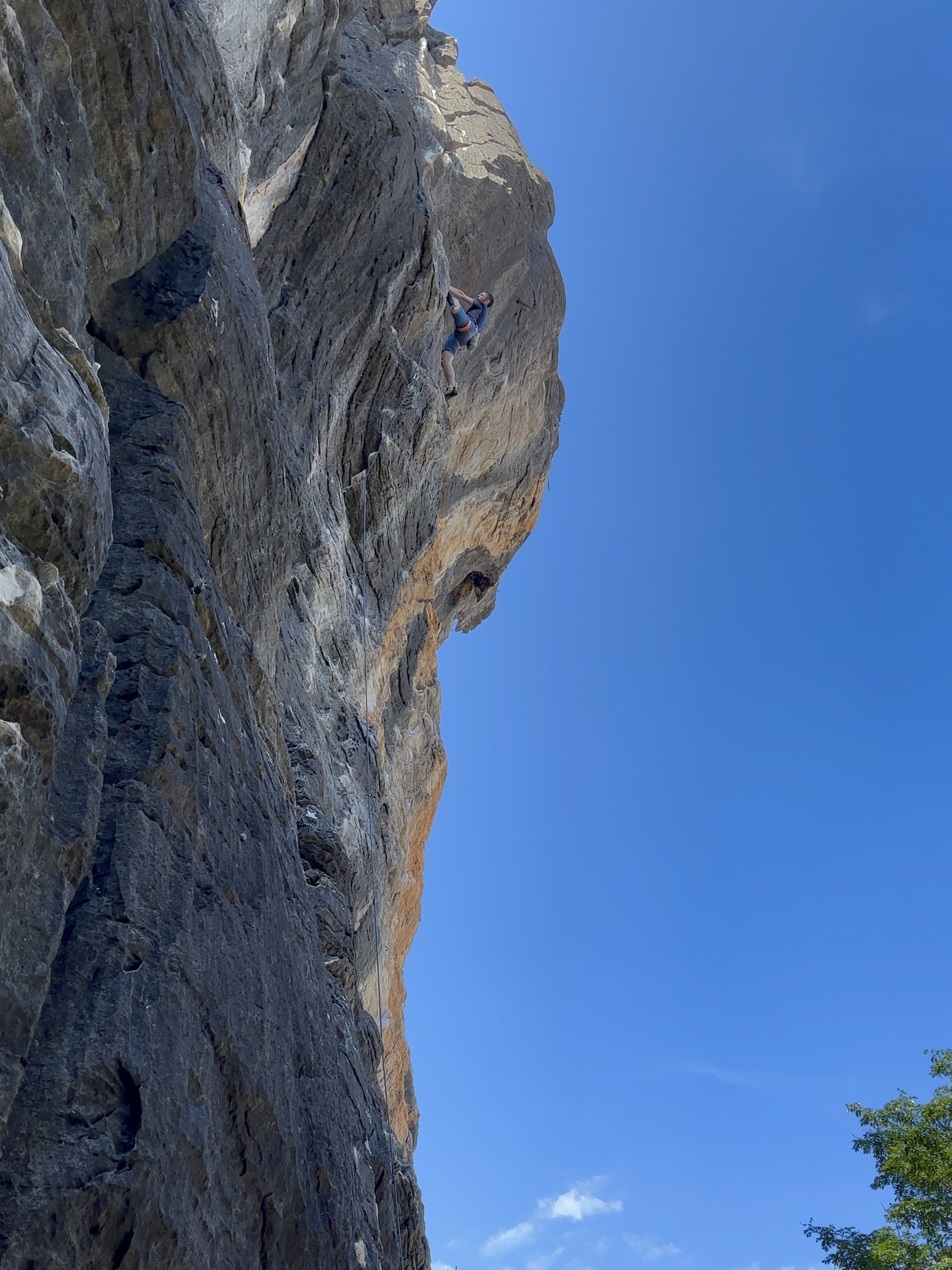
Piraí do Sul is an absolutely stunning climbing area, of world class quality, that is undoubtedly a rising star of South American sport climbing. Whilst climbing in the area dates back around a decade, the last few years have seen an enormous effort by local climbers who have opened new sectors and put up hundreds of new routes. There are now around 600 to 700 routes in Piraí, the exact number isn’t known because new routes are still going up on a weekly basis. The way the crags have been developed is superb, a lot of work has been put into creating easy to follow trails, the routes have been cleaned properly and bolted well, there are even pit toilets at some sectors to help preserve the environment. The rock at Piraí is sandstone of the absolute highest quality – easily comparable to some of the world’s best and most famous climbing areas. The crags are big, the routes are long and there is loads to go at, the place is an absolute diamond.


Piraí do Sul was the first place we climbed at in Brazil and what a place to start, as well as a very high bar set. The recent development has created a real buzz around Piraí, the atmosphere was great and there were loads of local climbers – all of them really psyched to be there. Amazingly, in the 11 days we were there, there were no other international climbers, just Brazilians. We have to say that Brazilian climbers are almost certainly the most friendly and welcoming bunch we’ve ever come across – they are very sociable and will go out of their way to help you with route recommendations and tips for other areas all over Brazil.

Piraí do Sul can be vaguely divided into two halves – the Corpo Seco area and the Amigos area. The crags are all on private land and which area you want to visit depends on who you need to pay. For the Corpo Seco area, which also includes sector Torre dos Ventos, you pay 15 Reais per person per day, or a little more if you want to camp. You pay at the last house before you reach Corpo Seco, it is on the right and has a red gate. For the Amigos area, which includes sectors Araucárias and Pedras Brancas, you pay 20 Reais per person per day, or more to camp, at Chácara Invernada – which is the place directly beneath the crags at the end of the road. You also need to fill out a digital form, which you can do on arrival.
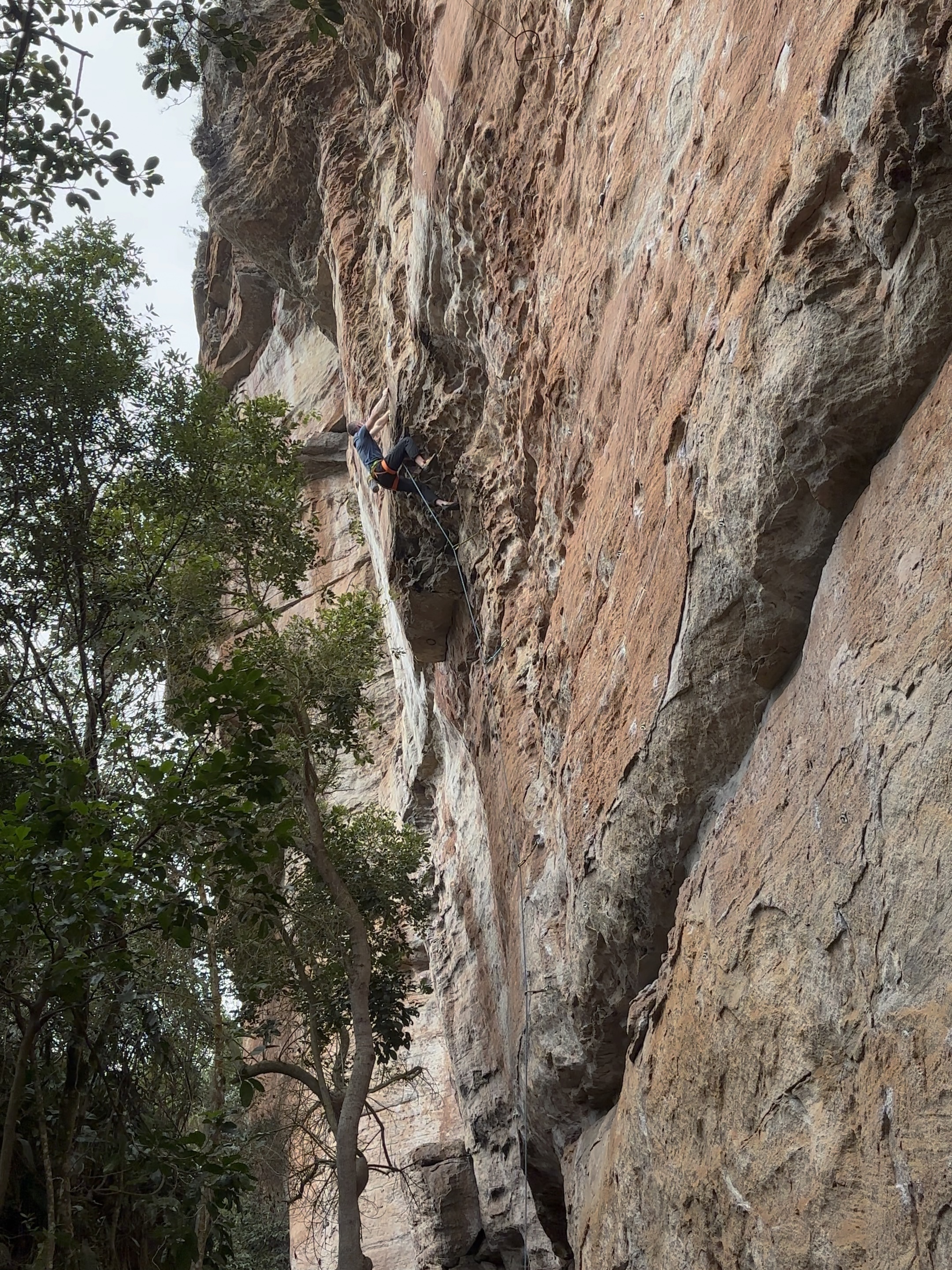
All of the sectors are really good, it is worth visiting all of them during your time in Piraí. The two biggest and most impressive sectors are Amigos and Corpo Seco – they are huge areas with loads of routes and many inspiring lines. Torre dos Ventos is one of the smaller sectors but is also one of the quietest sectors and is usually very peaceful. Pedras Brancas is the most shaded sector and has the coolest location, with a beautiful walk through the subtropical forest to get there. Araucárias is a bit like a smaller Amigos – it has the same great rock and nice lines, just a few less routes than its bigger neighbour, but it is still a great sector. We had such a good time at Piraí do Sul, it is comfortably one of the best crags we visited during our time in South America and we are very keen on going back again!

We write for pleasure and climbing is our passion. Our articles will never be paywalled. However, if you would like to help towards the costs of running the site or if you have found our content useful, please consider contributing here. To read more about why your support matters, click here.
Buraco do Padre
Buraco do Padre is a nice climbing area relatively close to the city of Ponta Grossa, being only 27 km away. It is also not that far from Piraí do Sul, which meant we almost didn’t visit – Piraí is so good we thought maybe Buraco do Padre wouldn’t be worth it. However, we are glad we did as it’s actually a great crag and a really nice place to climb. The rock is good quality sandstone, typically pretty steep and very featured, with lots of long pumpy routes. Interestingly, the rock isn’t sharp at all, which differentiates it from Piraí. Buraco do Padre is in a nature park and there are lots of other things to do aside from climbing, including a famous waterfall that gives the place its name (Priest’s Hole). The park is closed Mondays and Tuesdays, and there is an entrance fee for climbing of 28 Reais per person – this is separate from the parks other attractions. The crags are in a lovely location away from everything else, meaning you’ll likely be the only ones there. Whilst it isn’t a major crag like Piraí, it has great rock and plenty of cool routes – it’s worth a visit, even if only for a day.


Braço Esquerdo
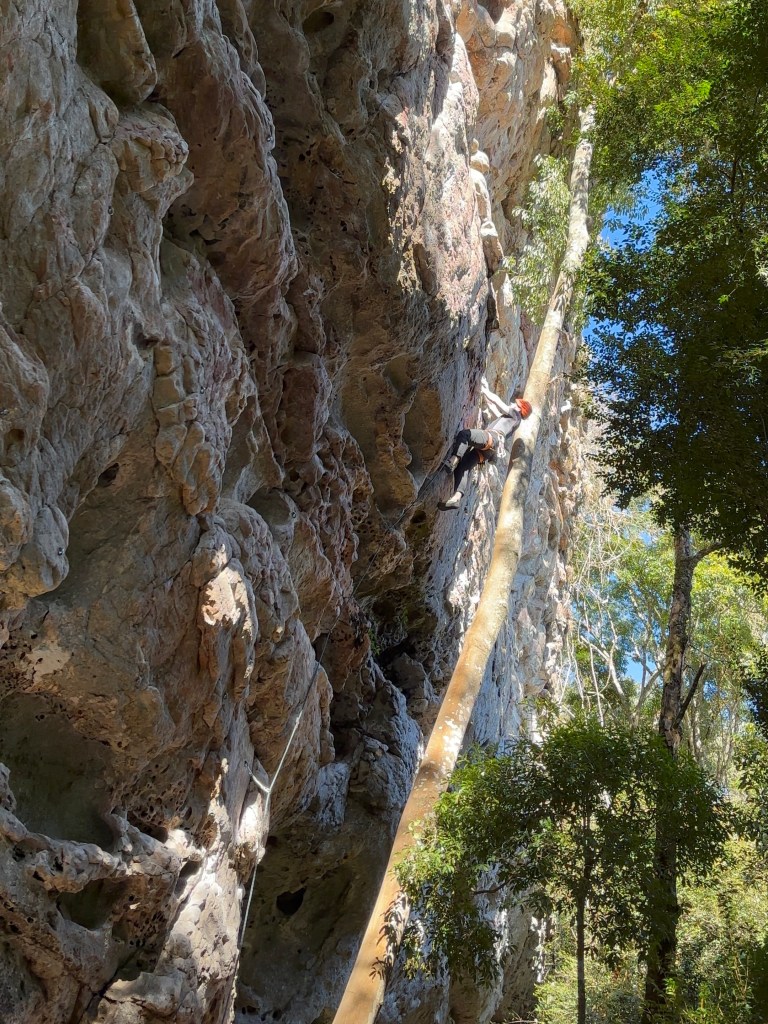
Braço Esquerdo is a wonderful climbing area in the state of Santa Catarina. The general area is really beautiful, with lots of mountains, rice paddies and waterfalls. Braço Esquerdo itself is in a nature park and the jungle clad mountains surrounding the crags are absolutely stunning. Entry to Braço Esquerdo is 10 Reais per person, the people that run the park are really friendly and they even leant us a guidebook which was helpful – there are also topos online here and here. The park is really well preserved and has plenty of nice non-climbing activities too – including an impressive waterfall and lots of nice hiking trails. It is worth noting the park is closed on Mondays and Tuesdays. The rock at Braço Esquerdo is extremely good quality conglomerate, which is steep, not sharp and typically has quite slopey holds – which makes things very pumpy!

The main wall is huge and much more impressive than it looks in photos, this sector is home to lots of hard routes, and apparently has one of the highest densities of hard sport routes in the country! Aside from that there are loads of other sectors too and they are really worth visiting. There is a beautiful trail that branches off to several excellent and quiet sectors that are much underappreciated, like Planeta dos macacos and Onda – which are really cool and well worth the hike. While we were near Onda we heard some climbers bolting new lines but never actually saw them – it seems like new sectors and routes are still going up here and there is an active local climbing scene. There are 89 routes in the guidebook, but the true number is probably more like 100 to 120 as there are whole sectors that don’t feature in the guide. Grade wise there are routes from 4 to 9a but it is ideal if you can climb in the 7’s or harder to enjoy the best of it.

Anhangava
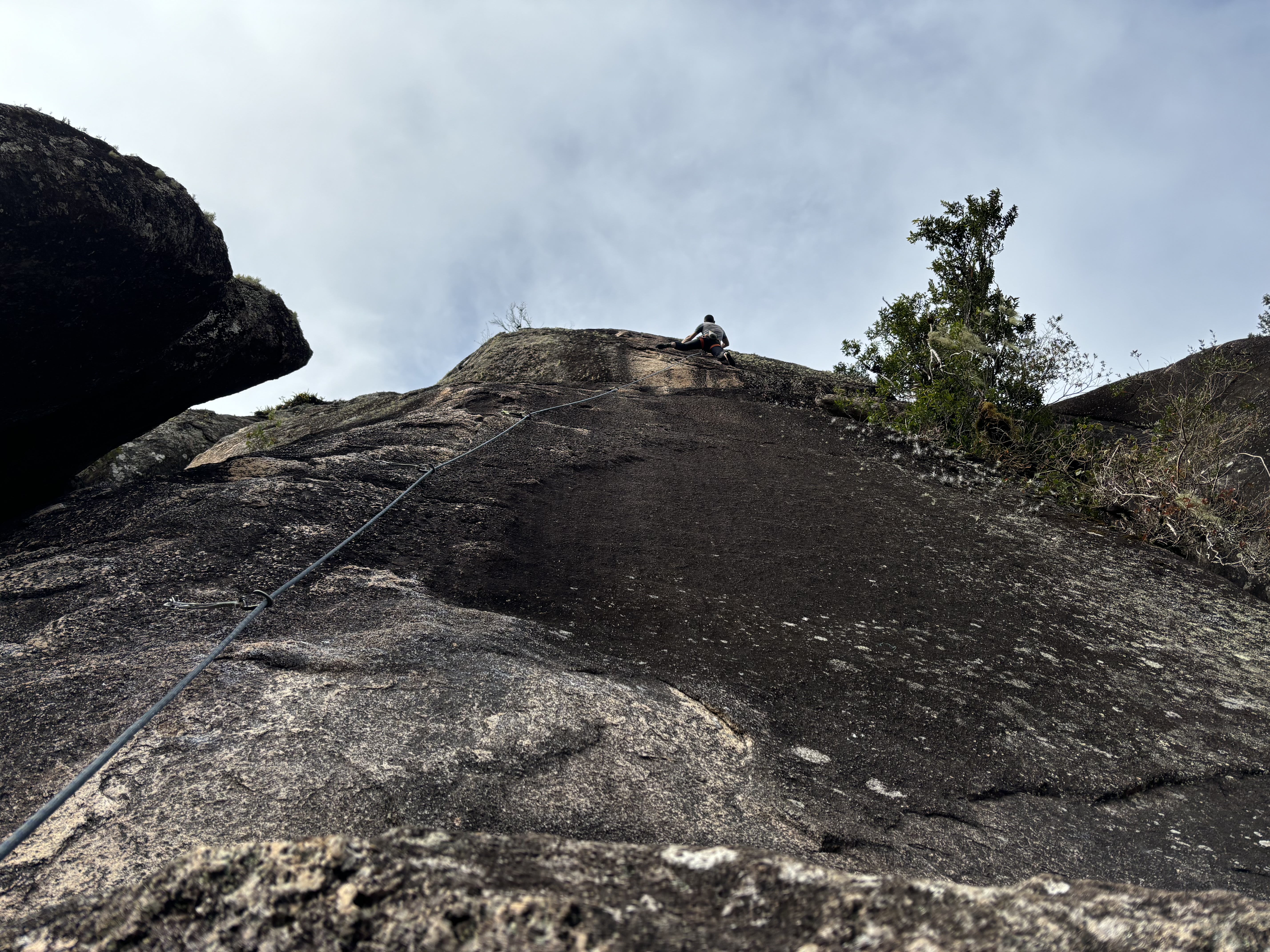
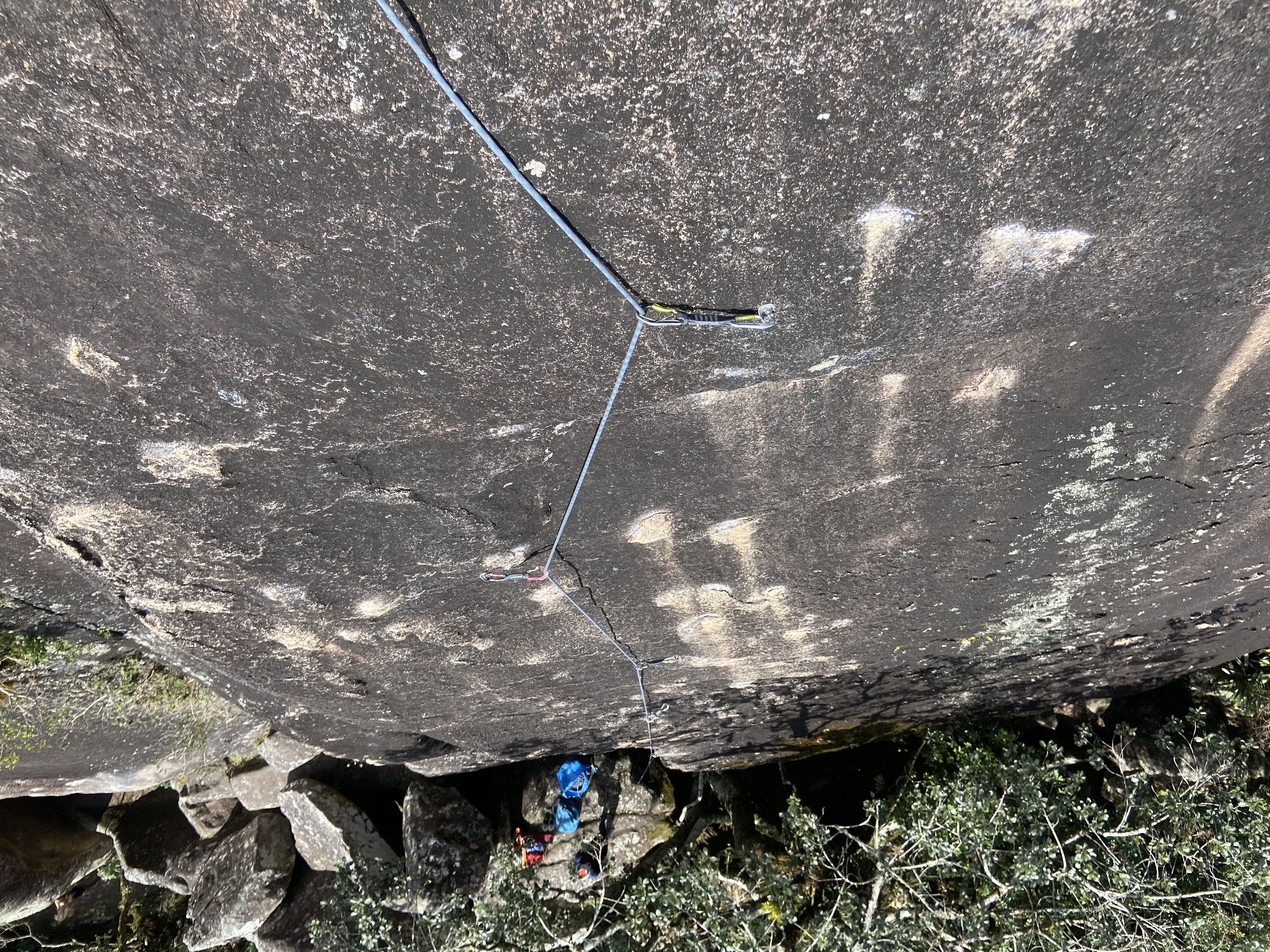
Anhangava is a classic and historic climbing area close to Curitiba. The crag is only 30 km or so from the centre of the city, yet the environment is very peaceful and has great views. The rock at Anhangava is granite, which is excellent quality and manages not to be glassy, sharp or flaky – pretty much perfect. Whilst there are a lot of slab climbs, there are definitely a few steeper routes too so if you want to work your arms more than your calves you will still find something to go at. Despite its close proximity to the city, the approach is surprisingly long, about 45 minutes with a healthy amount of uphill. The routes are spread out over numerous different buttresses all over the hillside – some are right next to the main path to the summit, others are hidden away on small trails through the bushes. Anhangava has around 200 routes from 3 to 7c+ including several multipitches and hundreds of boulder problems. Whilst it isn’t a ‘must visit’ in Brazil, it is a really nice crag in a very handy location, anybody travelling in southern Brazil will likely pass through Curitiba at some point.
Descalvado
Descalvado is one of the three crags, including the next two – Cuscuzeiro & Colorido, that we visited from the city of São Carlos. Staying in the city or surrounding towns gives you easy access to a number of different crags, with an easy drive to get there making for convenient day trips. Descalvado is the largest and most recently developed of these crags, with many long sport routes that go the full height of the crag. The rock is good quality orange sandstone, which is typical for the São Carlos area. Whilst it is a soft sandstone, it isn’t particularly grainy and is generally very solid. The climbing style is quite unusual with lots of technical and challenging moves – you need more than strength to make it work! The area is lovely and quiet with a forested base which provides shade and comfort and even a few crag monkeys to keep you company! Descalvado has around 130 routes, from 4 to 8a as well as several hard projects.

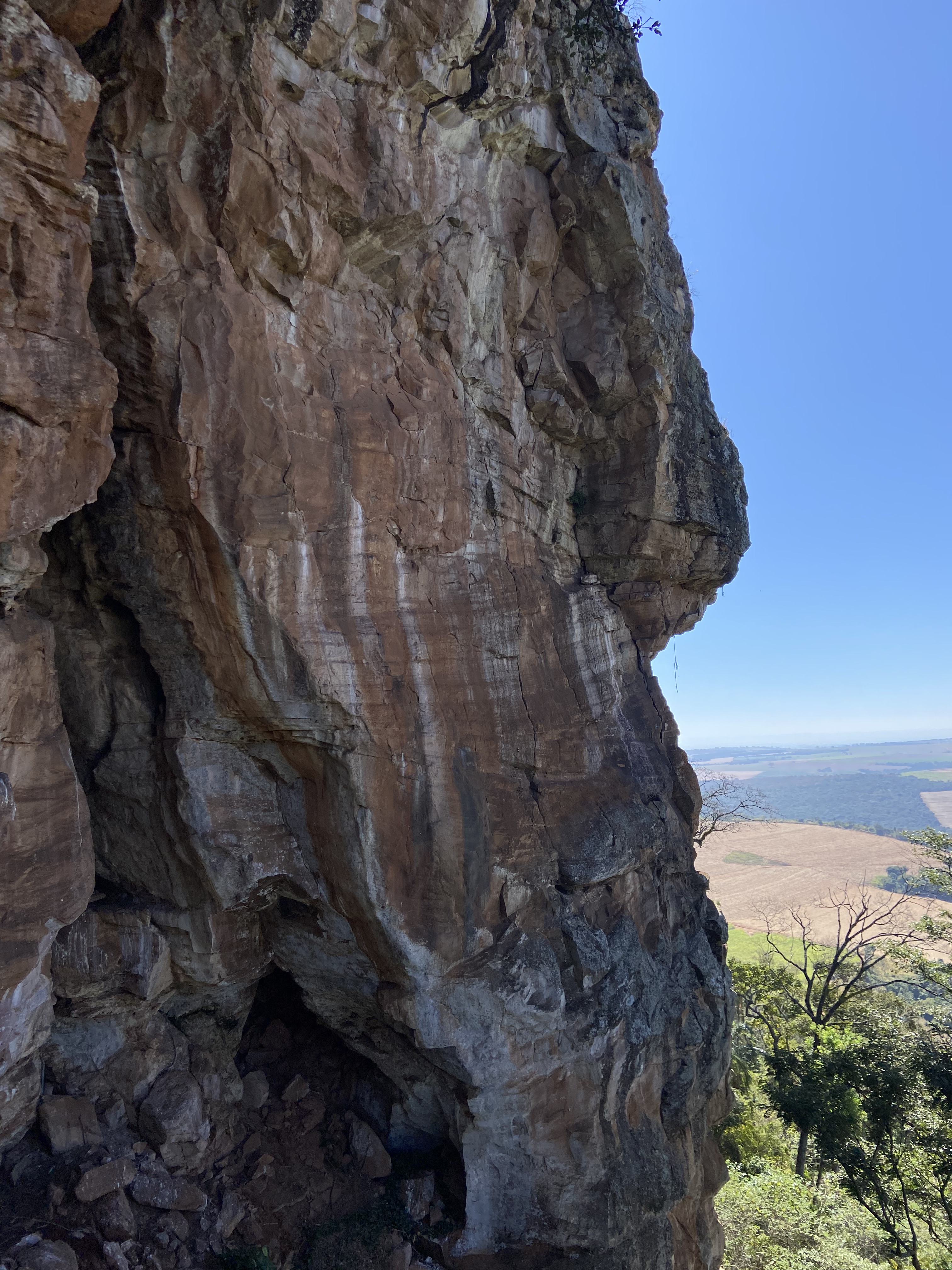
Cuscuzeiro
Cuscuzeiro is the classic crag of the São Carlos area and a really cool place – a big towering sandstone mountain with cliffs in all directions. The rock at Cuscuzeiro was really great and many routes have beautiful holds and formations on them. Cuscuzeiro is quite famous in this part of Brazil and is an old school crag with lots of classic routes, like Visual – a superb route that goes the full height of the crag and can even be climbed in one big pitch. Climbers currently seem to prefer the other crags in the area and usually rate them higher – perhaps because they have done most of the routes at Cuscuzeiro before and the newer crags hold more new and exciting prospects. For us as visitors, Cuscuzeiro was our personal favourite and we really loved climbing here.

Cuscuzeiro has the benefit of offering shaded crags at every hour of the day and you can follow the shade around as you please. It is possible to climb in the sun early in the morning, but once it is past 10am you will definitely want to be in the shade! There are some great routes on the south face that get shade all day and have excellent harder routes on harder and more compact stone than the north face. Routes like the classic 7a+ ‘Distúrbios do Forró’ are a great example of Cuscuzeiro’s offering – hard, varied and great quality – as well as being solid at the grade! Cuscuzeiro has a guidebook detailing 60 routes, in total there are now around 80. Grade wise there are routes from 5 to 8a, the best thing is that the quality is good regardless of the grade.

Colorido
Colorido is a great crag, with potentially the best rock of all the crags we visited in the São Carlos area. The sandstone at Colorido has a great balance of the bright orange colour and striking features whilst also being very compact. In other areas the compact rock is often a lighter colour or even grey, whereas Colorido is almost a bit more like quartzite than the others – although it is still sandstone. There are some very aesthetic lines at Colorido and with some really cool climbing, big bouncy moves between big sloping features and compression moves – almost a little reminiscent of comp style climbing. Perhaps the drawback of Colorido is that for the most part the routes aren’t as long as at Descalvado or Cuscuzeiro, but they certainly still pack a punch! Colorido has around 80 routes, with grades from 4 to 8a+. We really enjoyed climbing at Colorido and around São Carlos in general, there are loads of excellent routes to enjoy here in a part of Brazil that definitely deserves recognition.

Arcos
Arcos is a great climbing area on an unusual karst limestone formation that has created a stone forest. The rock is excellent quality, mostly grey limestone, with a very unique climbing style. The grades are all over the place, some routes feel soft and others sandbags, but the good news is the climbing quality is excellent regardless of the grade. The main area in Arcos is Rastro de São Pedro, which has around 260 routes, from 4 to 7c+, including several projects. There are also several other sectors in the area that have many more routes – including some very close by.

The closest thing the rock reminded us of is limestone that forms radiator style runnels, but it is definitely not the same as that either. Sometimes the holds are huge jugs, but there is nothing in-between, so you climb a bit like a cartoon caterpillar, bunching yourself in a U shape before going for the next hold. Needless to say it is a really fun style and the rock formations are beautiful. There are also some routes on crimpy water drop pockets, which have nice deep finger pockets but can be tricky to get your toes into. One thing to look out for in Arcos is ticks, they are very bad and despite wearing long trousers and socks we still got 3 between us, so make sure to check each time you get back from climbing. We really loved Arcos and thought the climbing deserves more attention, it is definitely worth a visit.

Serra do Cipó
Serra do Cipó is the biggest name in Brazilian climbing, the most famous area inside and outside of the country, as well as the largest sport climbing area in Brazil with around 750 routes and counting. The climbing is near the town of the same name, which is surrounded by the Serra do Cipó national park, which is full of mountains and many beautiful waterfalls. The rock in Cipó is very unique, and also totally different to Arcos. The rock is effectively marble, and at one area that was once quarried many years ago you can see cut sections of the rock that have beautifully swirled patterns and colours. Thankfully the crags were saved from mining and the vast majority of the rock was never touched. The formations are visually striking and very cool, gnarled strata and striations that form stunning shapes and sometimes even resemble driftwood. The rock is very solid and is almost never loose or flaky.

The climbing style varies massively depending on the sector, sometimes steep and juggy, sometimes crimpy, slopey or with lots of side pulls. The Cipó style is unique and locals will understand if you say you are left confused on your first few days. The rock generally doesn’t have much friction, so the footholds can feel slippery and the handholds too, especially sloping ones – if you don’t get your body positions right the moves feel impossible. But whilst that can be true at one sector, you could walk to another and be on something completely different, like pumpy routes with lots of positive crimps, jugs and good footholds. It is really worth visiting lots of different sectors and seeing which you like the most, the rock is great quality at all of them, but the styles are so different that some you will click with and others will shut you down!

Also worth mentioning is the old school vs modern routes, which are very different in character. For example, Lamúrias de um Viciado is a classic and excellent route, but with very scary bolting which may make you get a bit of disco leg. Whilst it is a great climb, the runouts aren’t always so much fun. At Papagaio, one of our favourite sectors, you can climb routes of a very similar style, with beautiful yellow rock, that have more modern and much closer bolts. Basically, you can find whatever you want in Cipó, you just have to look in the right places.

The layout of Cipó is cool and very interesting, when you are walking to the crags or between sectors you will almost never see any rock, as they are so well hidden by the forest. Eventually you will appear at a huge sector with 40 meter routes that a few minutes ago you didn’t even know existed. The sectors are split into 3 groups which have different approaches. The guidebook uses QR codes that link to Wikiloc to help you follow the trails, but this can be a bit confusing for moving between sectors. One of the greatest assets of all these different sectors is that you can always, even on weekends and national holidays, have a sector to yourself. If you walk around it is surprising how some amazing sectors are often quiet, because people get so well spread out.

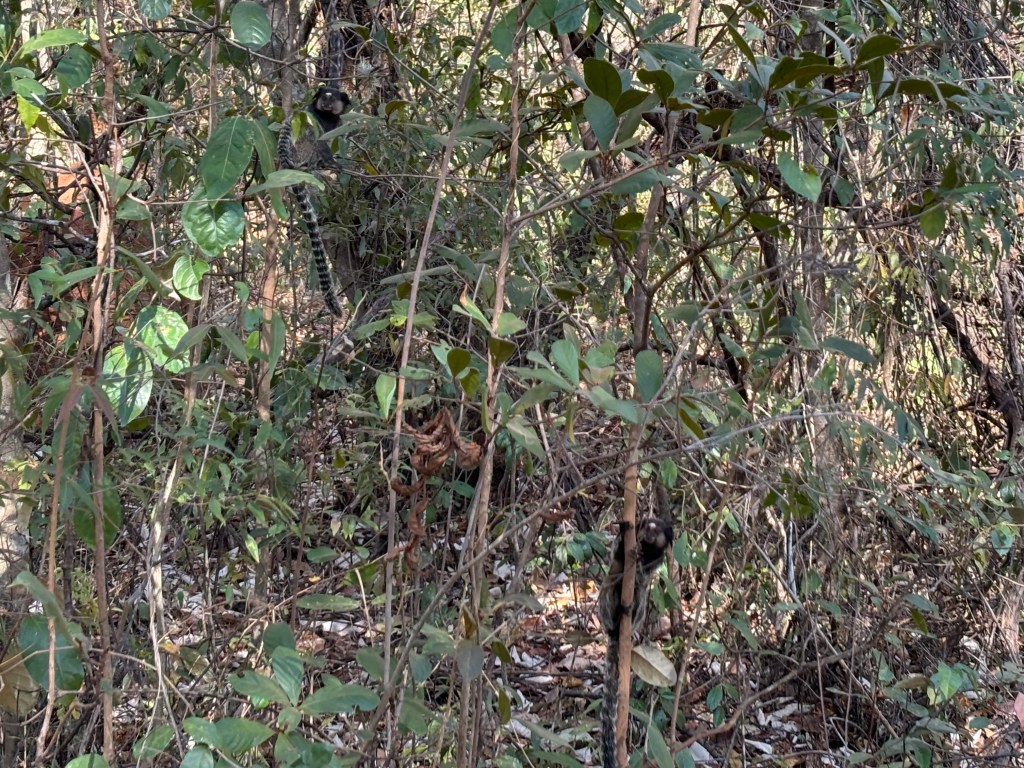
The mega classic ‘Lamúrias de um Viciado’, 7a & approach trail black-tufted Marmosets
Rest day activities in Cipó are great, there are lots of beautiful places to visit and you won’t have to travel far. One of the nicest things you can do is rent a bike from the national park entrance and cycle on the many endless trails that go through stunning scenery and to many gorgeous swimming spots. The town of Serra do Cipó itself is very nice and has lots of great restaurants and bars, the area is perfectly set up to receive climbers. We spent 2 weeks in Cipó, which felt like a good length of time. Of course there are so many routes you could stay forever, but it is well worth leaving enough time to visit some of Brazils many other amazing crags as well, the whole country is full of excellent climbing.
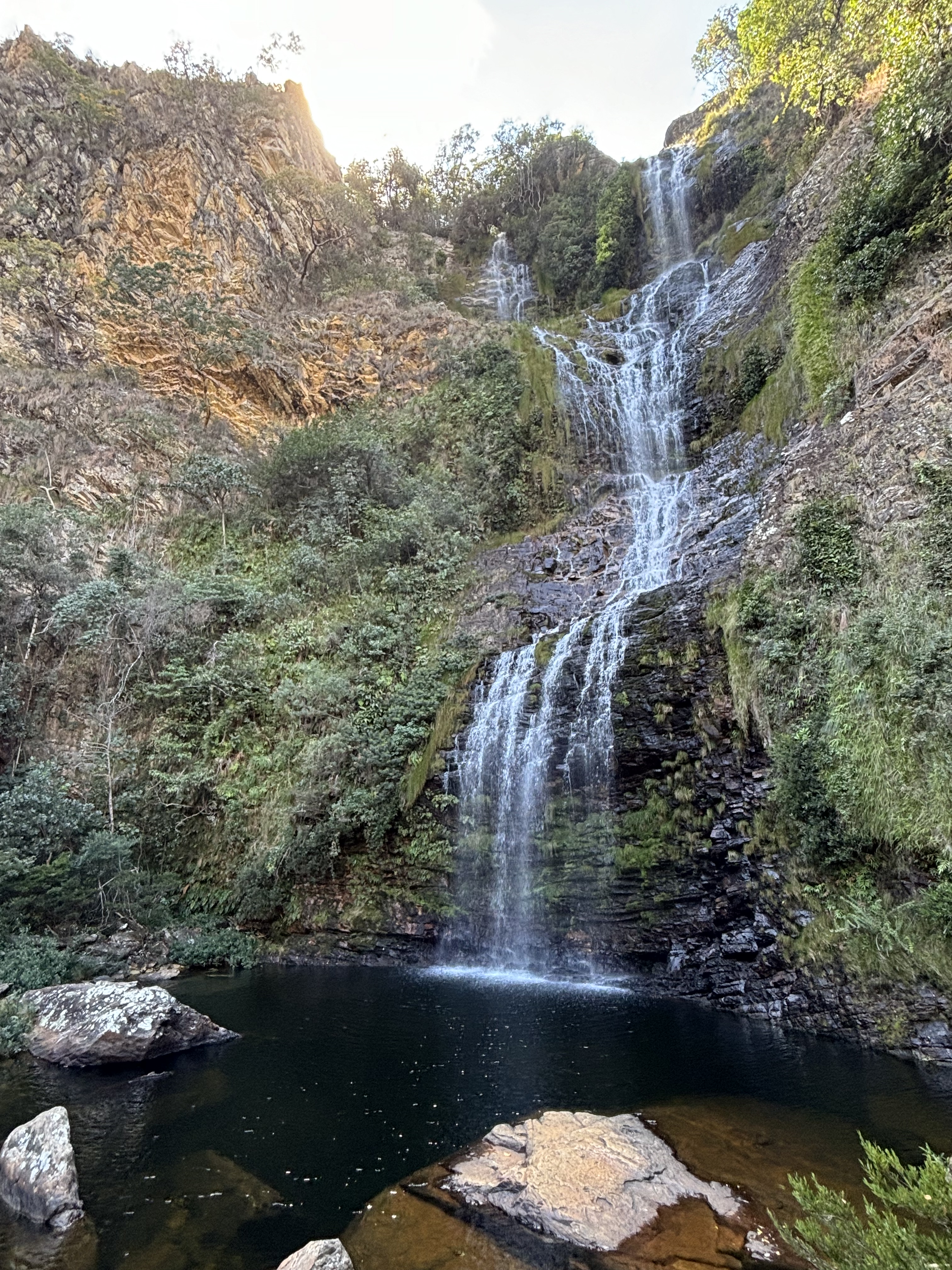
Dedo de Deus
The Dedo de Deus is a symbol of Brazilian climbing and it is without a doubt one of the country’s most famous and captivating summits. A giant pinnacle, rising out of the jungle and surrounded by dozens of other mountains with huge faces and pointed summits, it really is a thing of beauty. Although there are close to 30 routes on the Dedo de Deus, the classic and most popular route is the Face Leste com Maria Cebola, which is a variant named after onions because sometimes it makes people cry! The route has around 8 pitches and is mostly around 5c, albeit old school grading! The Maria Cebola pitch, an exciting and exposed dihedral is the same grade with A1, or around 6b free. I set off on the pitch without realising it, thinking the free grade was 5c and thought what a sandbag! The difficulty is at the start which is well protected with pegs. As the corner gets slabbier the runout begins and it was certainly nice to have some cams! The climbing is very easy but solely smearing and relying on friction, with massive exposure – an absolutely mega classic pitch.
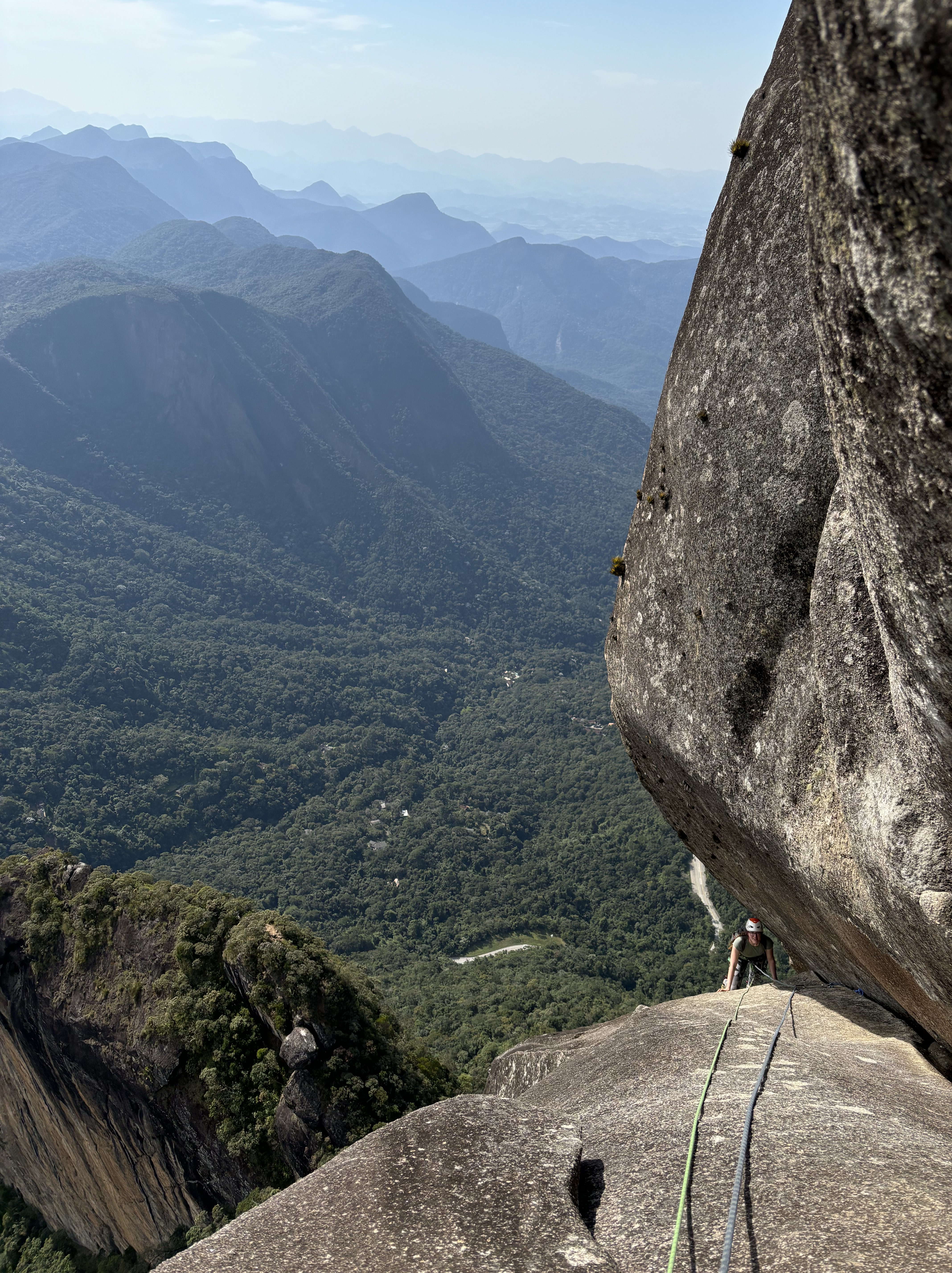


The Dedo de Deus and the stunning Serra dos Órgãos national park
The approach to the Dedo de Deus is relatively long and involves some exposed sections of slabs with old cables, it is recommended to rope up as they are slippery. The time taken for the route depends on ability, but for experienced climbers with grades in hand, 8 hours car to car is a good estimate, although it isn’t unheard of some teams taking 20 hours! Even if you will be quick, it is worth starting early so as to get the coolest conditions possible. Even though the summit is 1,692 meters, it can still be hot and you will be exposed to the sun for most of the climb, and you will need to bring all your water with you as there aren’t any water sources to refill from. It is a wonderful mountaineering style day out, with a really traditional and old school feel. The fact that a summit so iconic can be reached via relatively easy climbing is remarkable, when looking up in awe you’d be forgiven for thinking all the routes would be desperate. When you’re on the summit you get views of the gorgeous Serra dos Órgãos national park, as well as Teresopolis to the east and the Bay of Rio de Janeiro to the west. The Dedo de Deus is a superb mountain that should be on every climbers list.
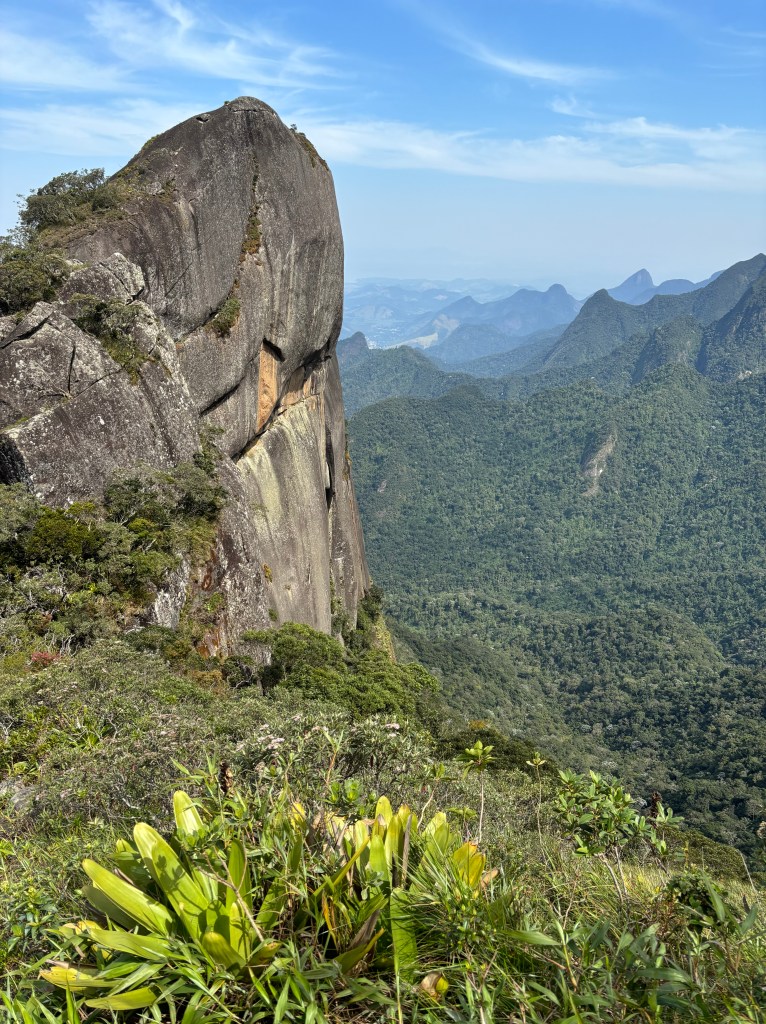
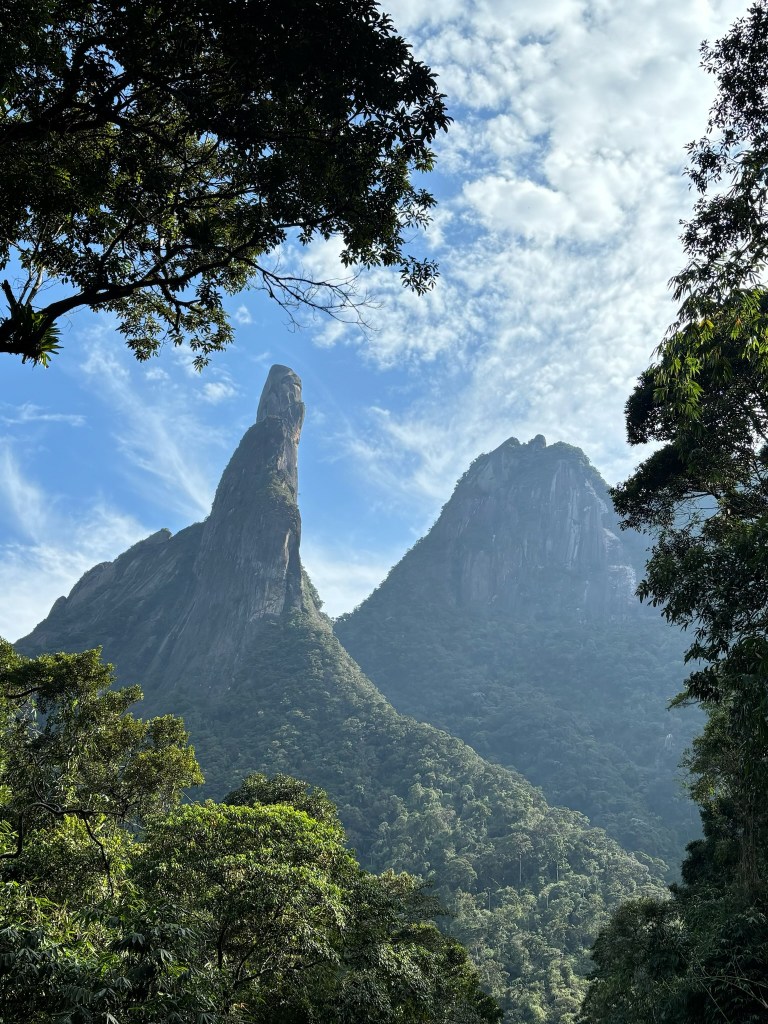
One of the Dedinhos (little fingers) seen from the col of Dedo de Deus after abseiling down the north face & Looking back at the summit after a great days climbing
If you find our content useful please consider subscribing:
Passa Vinte
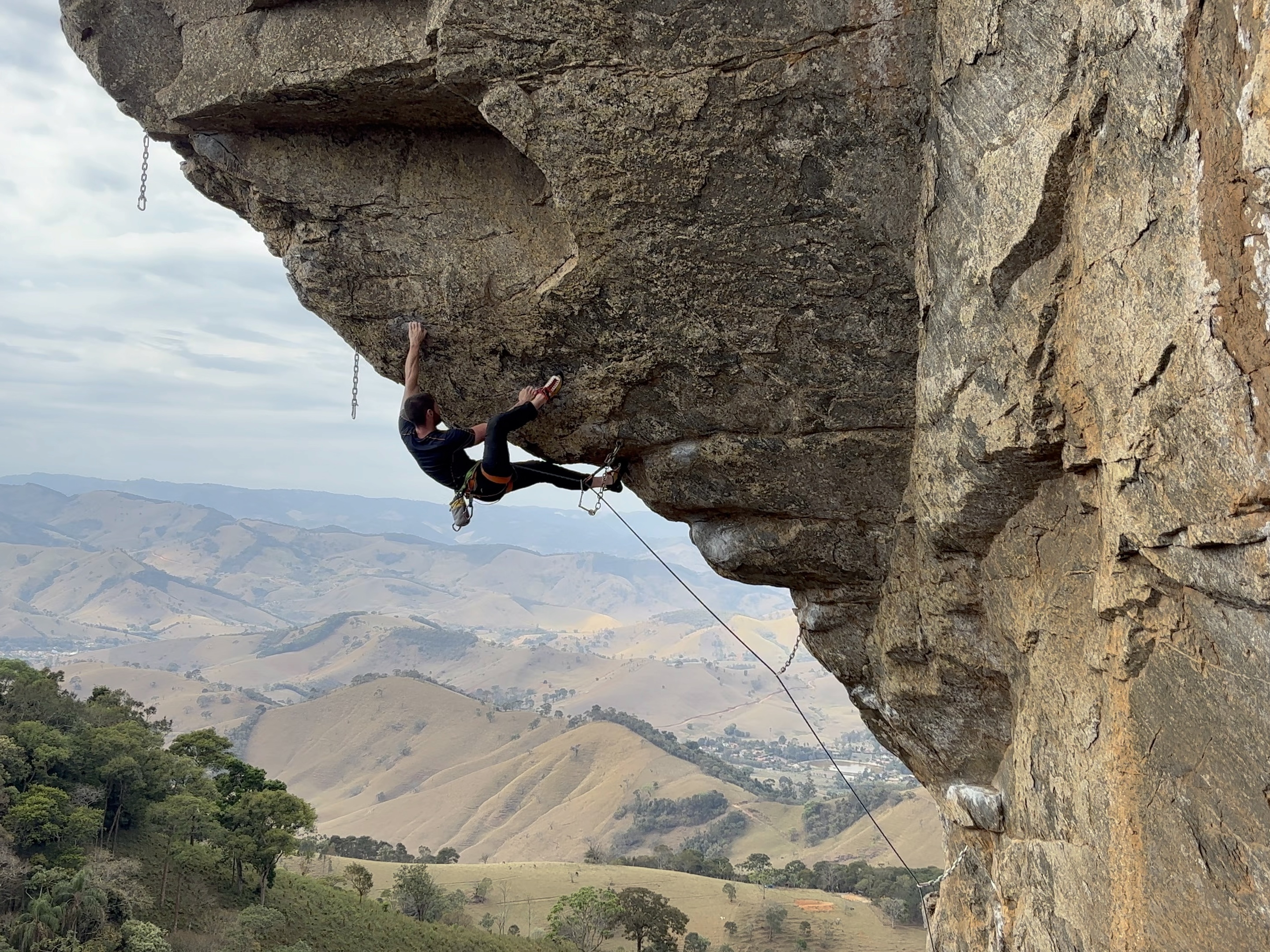
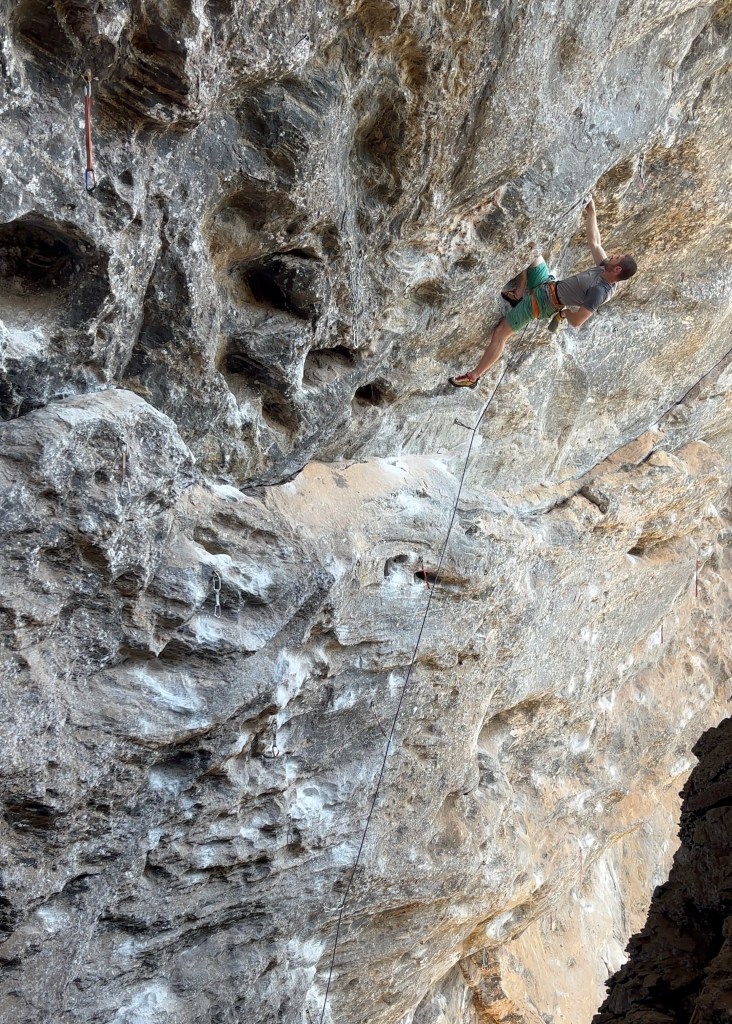
Passa Vinte is an impressive sport climbing area known for its amazing and incredibly steep cave. The scale of the place is really impressive, the crag is absolutely massive and in some places overhangs by around 45 degrees or even more. The crag is in a peaceful location with beautiful surroundings and thanks to the steepness it gets a lot of shade, a few routes are almost always shaded and basically the whole crag is fully shaded by around 11 am. The rock is gneiss with lots of beautiful patterns and strata bands. The rock in the overhang of the cave is excellent, but some of the easier routes on the flanks or the short wall beneath the steepness are not as good, meaning that although the crag has some easier routes, it is definitely better if you enjoy harder sport climbing. It is also true that some of the routes in the steepest part have been chipped. The sensation of climbing in the cave is spectacular and you feel completely dwarfed by the rock architecture. We think the only other crag of this size and steepness we’ve visited before, that isn’t limestone, is Flatanger – even including limestone caves there won’t be many.
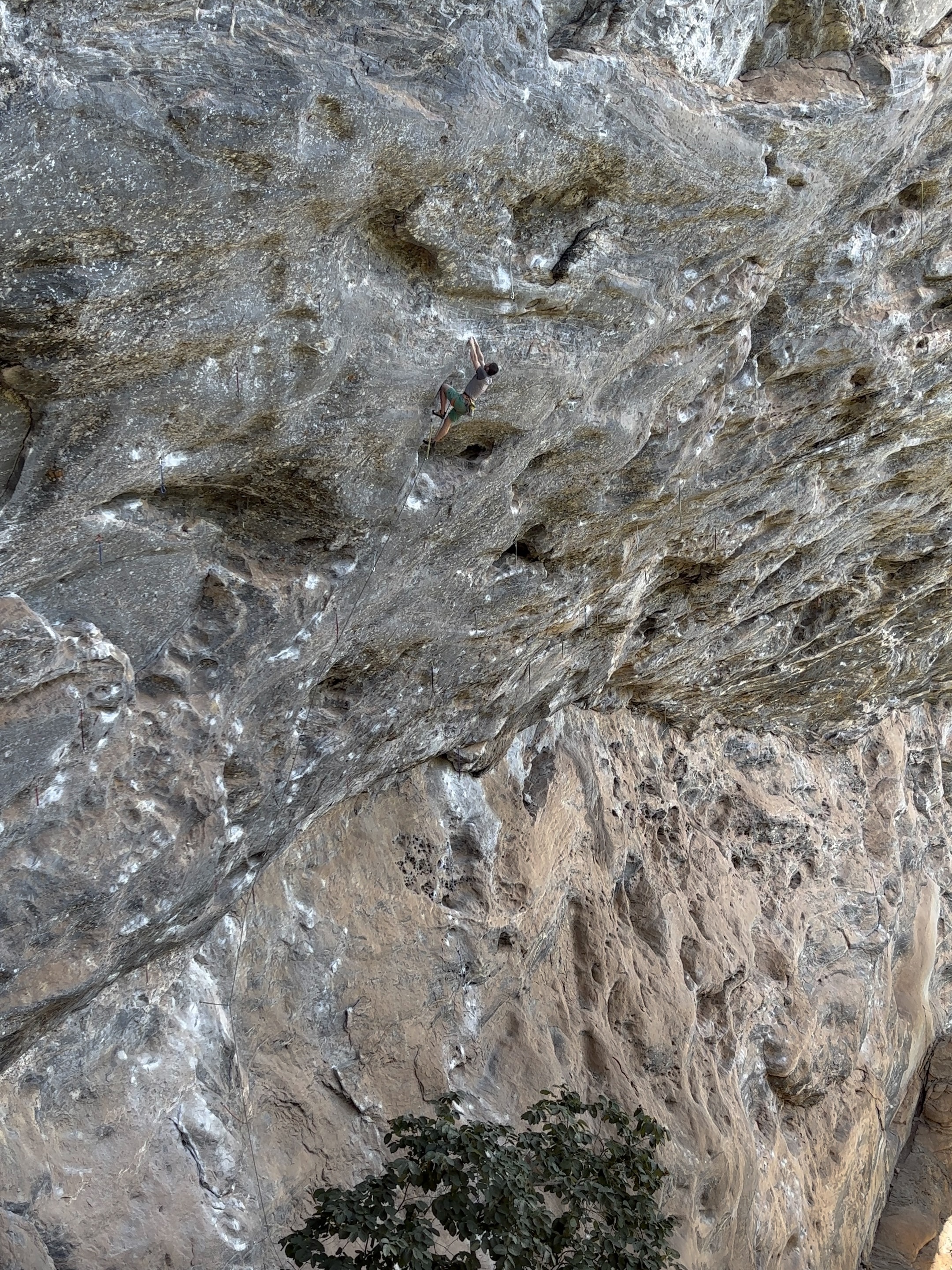
There are over 150 routes at Gruta de Passa Vinte, with grades from 5 to 9a – with the classics of the cave generally being from 7c upwards. Nearby there is a huge wall called Pedra do Carapuça, which has many hard multipitches up to 8 pitches long, as well as single pitch routes. The crag overlooks the village of Passa Vinte and is impossible to miss as you drive past. We didn’t get the chance to climb there ourselves, but some inspiring pictures of the crag definitely sowed the seeds for a return visit sometime. There is a great campsite very close to the Gruta, Camping do Angeus, which is the perfect place to stay if you want to walk to the crag. The whole Passa Vinte area is really beautiful, surrounded by mountain views and great scenery. The steep routes in the centre of the cave are awesome and well worth the journey for anyone up to the challenge, remember to pack your forearms!

São Bento do Sapucaí
Pedra do Baú Complex:
The Pedra do Baú complex is an amazing collection of peaks, with tonnes of multipitch climbing, as well as lots of single pitch routes. The complex is comprised of three mountains: Pedra do Baú, Bauzinho and Ana Chata. The mountains have a stunning formation, whilst they often look like towers from one angle, they are actually more like giant fins of rock that are long and have a narrow Ridgeline along the top. The area is relatively compact, and yet is more than big enough to provide many, many adventures. The rock is Gneiss which is really good quality, it is never sharp and has just enough friction to keep it from being polished. There are many quartz veins and striations which give the rock a beautiful appearance and there are also lots of impressive features – like the insane overhanging fin of ‘Origens’, which at 8c+ is something most of us can only dream of. There is an amazing video of the route here, which will really get you psyched for the climbing in São Bento!


The Bauzinho (left) and Pedra do Baú (right)
There are around 200 routes in the Pedra do Baú complex, with grades from 3 to 8c+. The area is incredibly beautiful and should definitely be on your list of climbing areas to visit in Brazil. Depending on where you want to climb in the complex can depend on where is best to stay. To access some of the routes on Pedra do Baú and the Bauzinho it is easiest to go from the national park entrance near the Bauzinho, which is a surprisingly long drive from São Bento. For other parts of Pedra do Baú and Ana Chata it is easiest to go from beneath the south side of the mountains, at either Chico Bento or the Restaurante Pedra do Baú, which is much closer to the town. The main advantage of the national park entrance is that it has quick approaches with almost no uphill, whereas the others are more direct and quicker to drive to. Visitors will probably want to climb at a mixture of both places, which is easy enough to do if you have a car, which is really recommended for São Bento, as well as for the majority of climbing areas in Brazil.

Pedra da Divisa: Is the largest sport crag in the São Bento do Sapucaí area with many classic routes and a beautiful location. The rock is Gneiss, same as in the Baú Complex, but it is quite different and a little bit more varied in quality. Some sectors, like Pilar Central, have great rock that is mostly very solid, whereas some other sectors, like Cangaço can have quite a few hollow crimps that feel a bit snappy. We actually loved the climbing at Cangaço regardless, but wearing a helmet is necessary in case something breaks, thankfully for us it never did. Divisa has pretty much every style you could want, from tiny crimps to incredibly steep overhangs and overall we thought it was a great crag. Divisa gets a lot of sun as it faces north, so picking the right day to climb is important, we visited more than we would’ve thought as we actually had quite a bit of rain during our time in São Bento. There are a handful of routes that you can still climb while it rains, perhaps unless it is very heavy, and it is definitely a better choice for rainy days than the Baú. The crag is on private land and the owners are very friendly, but make sure to follow the rules and etiquette for the crag as signposted at the start of the approach.

Rio de Janeiro
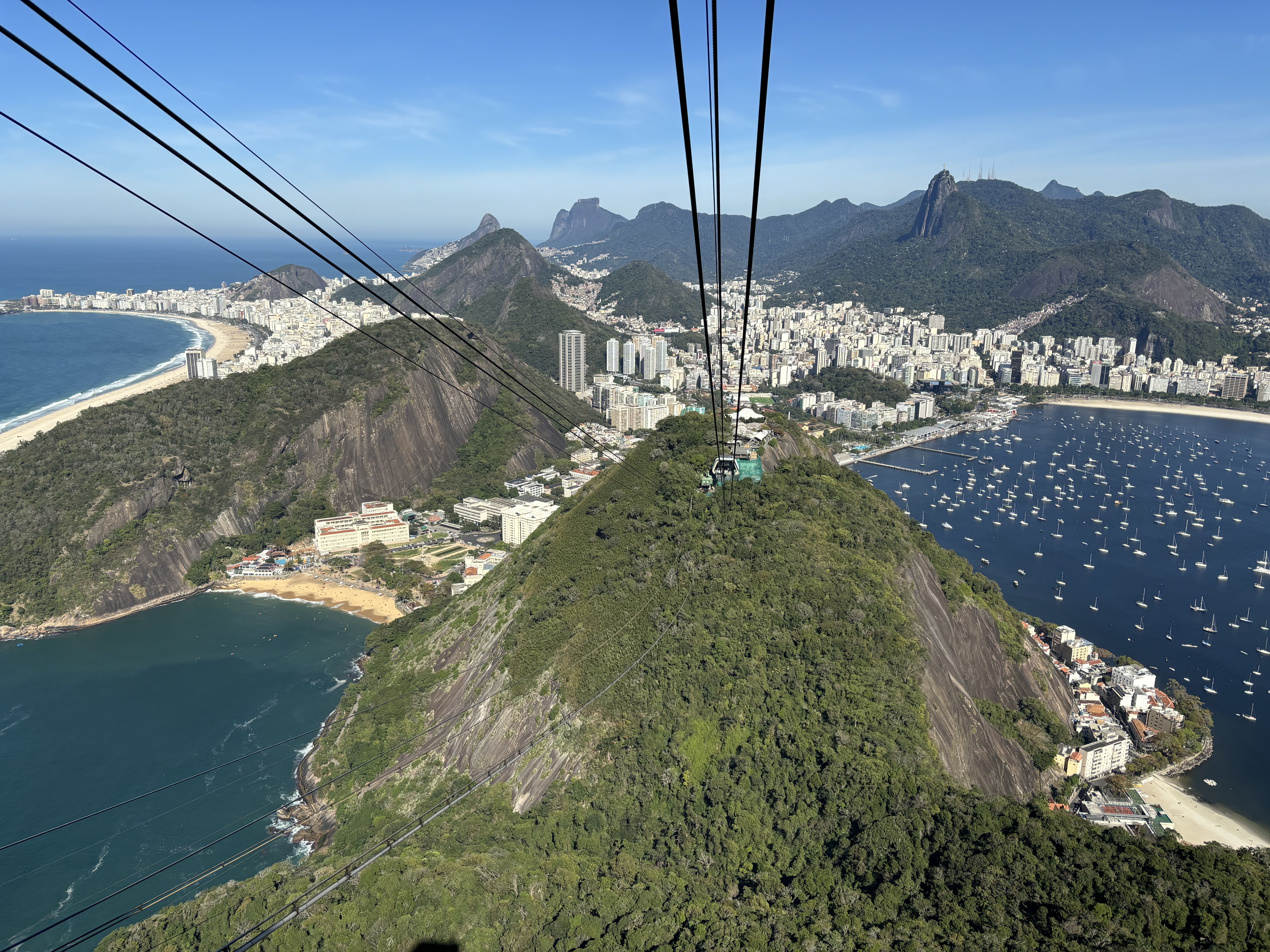
The Pão de Açúcar is an icon of Rio de Janeiro and is famous throughout the world, to climbers and non-climbers alike. This towering monolith overlooks the city and has unbelievable views of the surrounding mountains and coastline, it is spectacular. The rock is a type of gneiss, which is excellent quality and also quite unusual. Whilst the gneiss in areas like São Bento has swirled patterns and is similar to granite, the Pão de Açúcar almost resembles conglomerate and has many crimpy pebble features for the hands and feet. The rock is very solid and beautiful to climb on. The grades on the Pão de Açúcar are very old school and the bolting can also be runout, so don’t go thinking just because a route is a 5 or 6a it will be easy, it won’t feel it! The settings can also be very exposed which adds a lot to the experience and makes for some memorable moments. The summit is 396 meters and many of the classic routes have a length of between 220 and 270 meters, giving some great multipitch adventures in an amazing location.
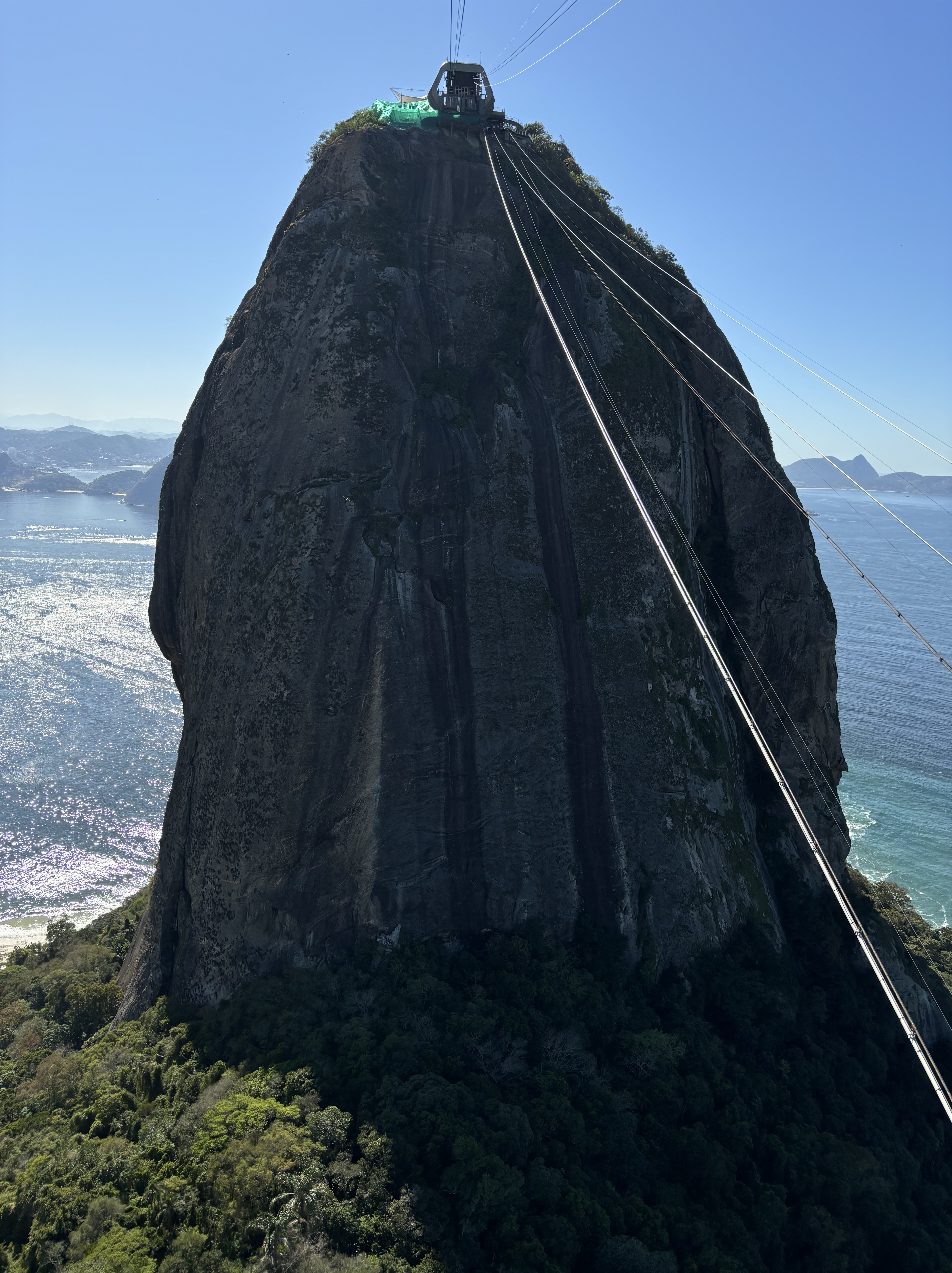


The beauty of the Pão de Açúcar
The most famous classic of the Pão de Açúcar is Via Dos Italianos, which climbs a beautiful blunt arête with some surprisingly tiny holds for a 6a+! The route is well deserving of its legendary status and is undoubtedly one of the best and most classic routes of its grade, not just in Rio, but anywhere. Via Dos Italianos finishes when the arête does, after 3 pitches, at which point the best option is to continue up another route, ‘Secundo Costa Neto’ which has more pitches of excellent slab climbing at around 5b, and a cool layback pitch at the top. A couple of beautiful but airy traverses take you to Secundo and the overall route including Italianos is usually done in 8 pitches. Alternatively you can go up the fixed steel cable via ferrata of the CEPI route. Either way, you definitely need to continue to the summit as the views are superb and best of all you get a free cable car ride back to Morro da Urca, as climbers don’t have to pay on the way down. Tickets are expensive and you would have to pay for a full ride from the bottom station to reach the top, which is €30 per person. You can use the money you saved to treat yourself to a restaurant meal and cocktails on the beach afterwards!

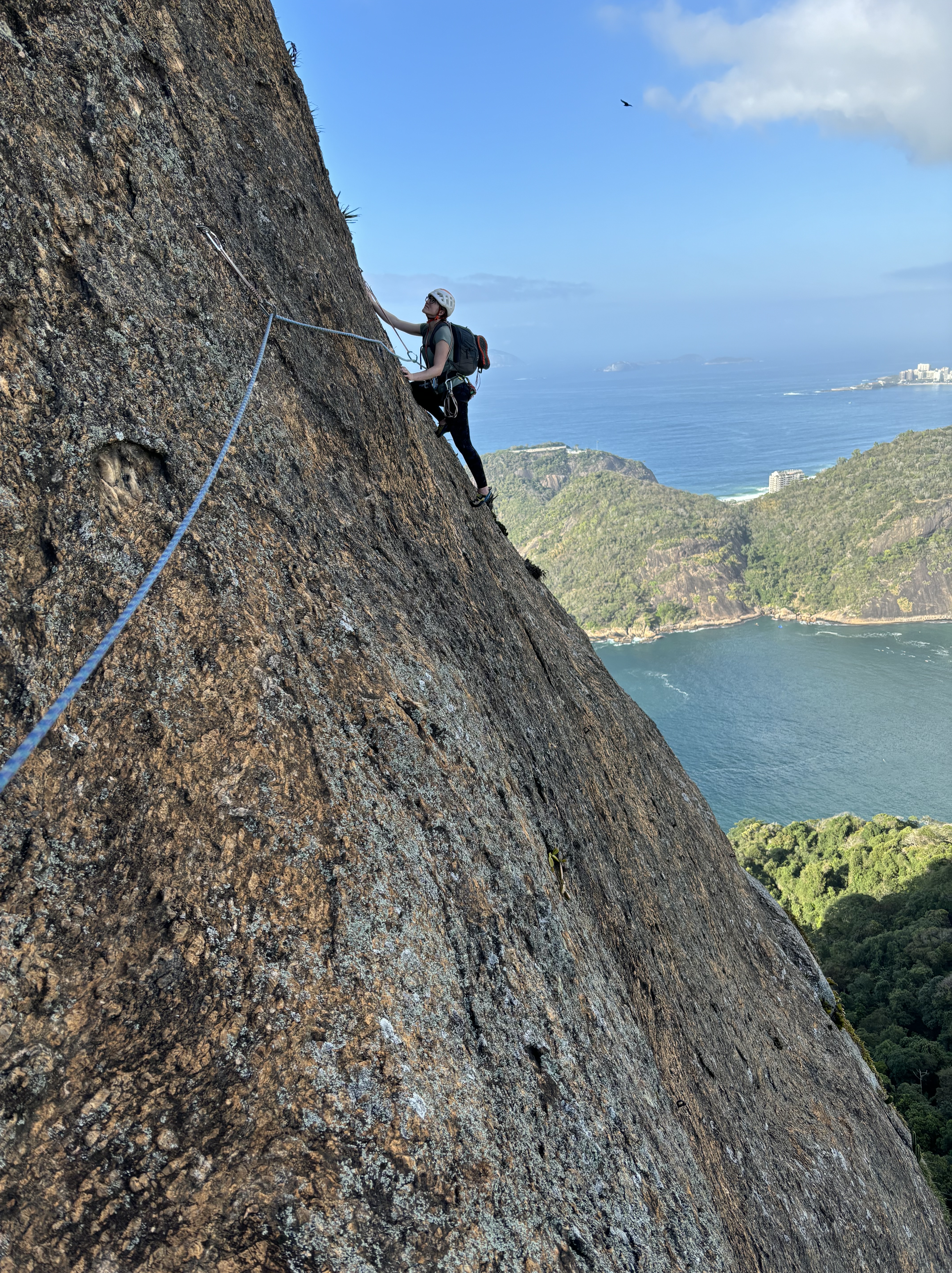
An ultra wide angle of Italianos second pitch (left) and traversing to Secundo Costa Neto on pitch 5
Pedra do Urubu is a beautiful boulder located right by the sea, below the Pão de Açúcar and with beautiful surroundings. The boulder is 10 to 20 meters high and has around 25 routes with grades from 6b to 8b+/c. Some routes have new high quality glue in bolts, but others don’t, the routes with old bolts are mostly on the sea face and are worth avoiding until rebolted. The hardest route on the boulder is ‘Southern Comfort’, first climbed by the legendary Wolfgang Güllich at 8a+, making it one of the hardest routes in South America at the time. Since the sea has eroded some of the start it is now around 8b+/c. The rock is excellent quality and very technical, a great test of your footwork. Whilst not one of Rio’s major crags, it is definitely worth knowing about as a great place to visit for a relaxed day, if the weather is too poor for the multipitches or even for a few extra routes after you’ve descended from the Pão de Açúcar. Even better, the Praia Vermelha is only 10 minutes walk away so you can go for a swim and a coconut after climbing!

Barrinha is a great crag, widely regarded as the best sport climbing in Rio. The rock is superb quality gneiss that is an absolute pleasure to climb on. The rock has enough friction, isn’t sharp and doesn’t feel polished either, so it is pretty much perfect. The crag is gently overhanging and the routes certainly get you pumped. The climbing style is quite interesting, the rock typically has plenty of good footholds, definitely when compared to some of the other crags in Rio. The handholds are usually quite positive too, crimps, jugs and sometimes pockets proliferate, thankfully not many slopers! Perhaps the main catch of Barrinha is the entry level, you basically won’t find anything below 7b+/c, so it definitely isn’t an easy crag. That said, if you want to pull hard, try a short project or you’re comfortable at the level you will have a great time as the rock is great and the routes are long, sustained and beautiful. Many of the bolts are old pegs, some of which look like they’re past their best, it is worth keeping this in mind depending on which part of the crag you’re on. Despite its steepness, Barrinha can get wet after heavy rain, so take the previous days weather into account to make the most of your trip. We would definitely recommend visiting Barrinha, it is a stunning crag, not just for Rio, but in general.
Corcovado is one of the most impressive walls in Rio de Janeiro, it looms over the city and is instantly recognisable because its summit is home to the famous Christ the Redeemer statue. Corcovado’s summit is 704 meters, yet it is only 3.2 km from the sea as the crow flies. The views you are granted of Rio, the bay and the surrounding mountains are superb and it is probably the best view in Rio, even better than the view from the Pão de Açúcar. The walls on Corcovado are some of the largest in the city, there are routes of 450 meters here and some of them are very hard and committing. The classic of Corcovado, and one of Rio’s best routes is K2, a fantastic route of around 140 meters/5 pitches that starts from the right shoulder of Corcovado. The rock is excellent gneiss, and one thing that sets K2 apart from some other classics is the variety of its climbing – there are dihedrals, laybacks, cracks and plenty of slabs, both padding and crimping. The climbing is around 6a and you need cams to protect some pitches adequately, the style is definitely old school and as is common in Rio, is no giveaway.
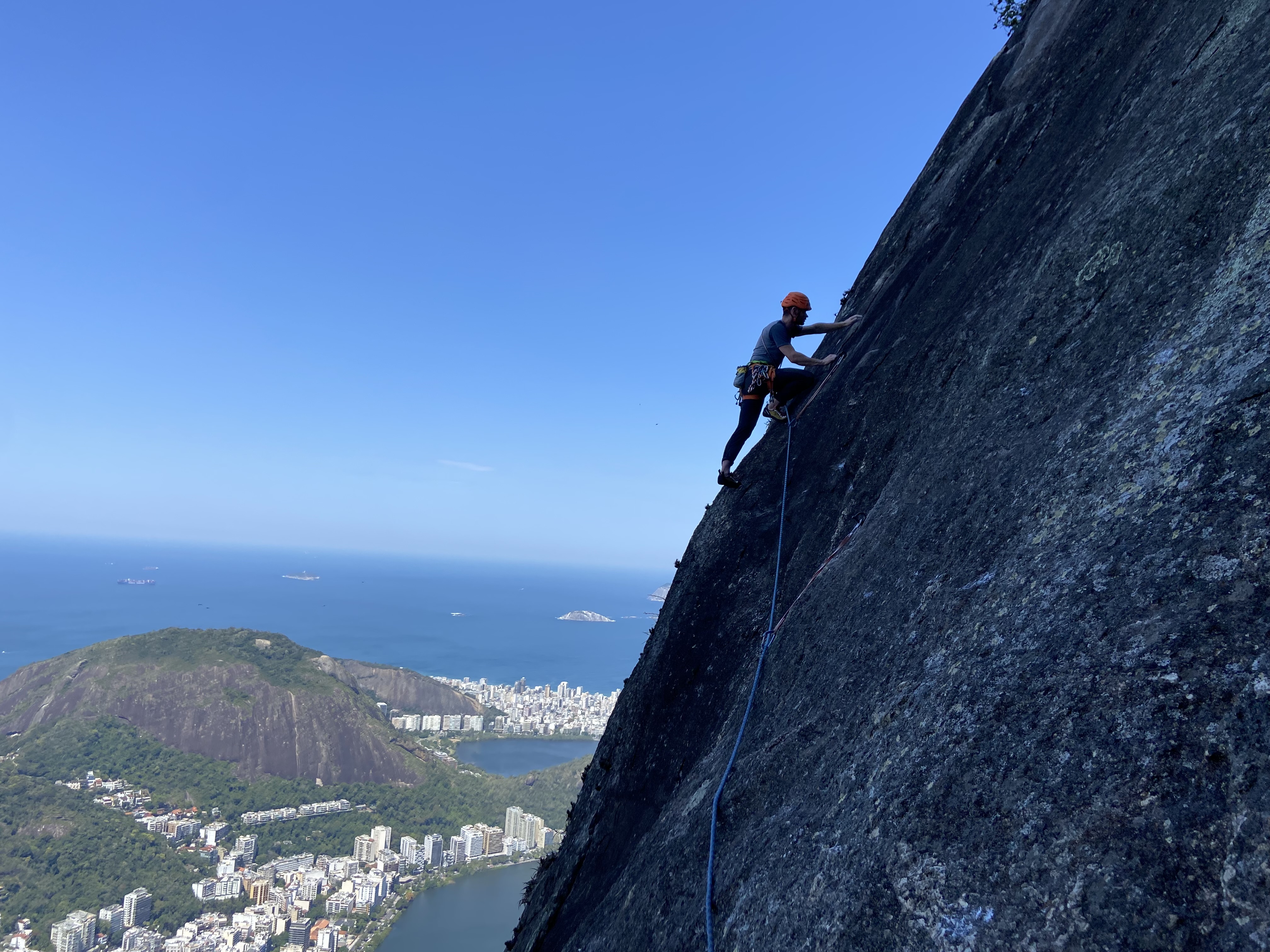

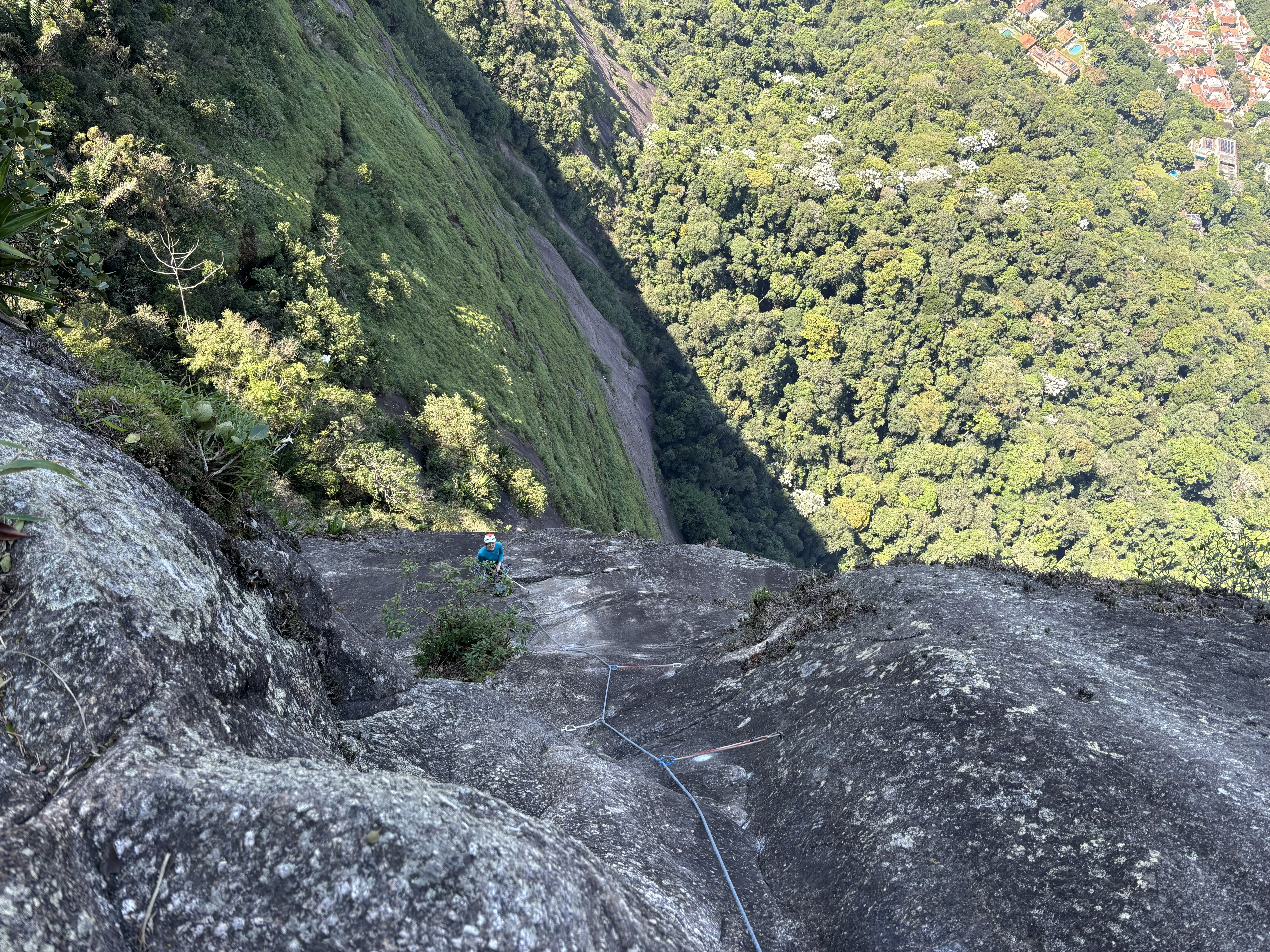
A beautiful day on K2, Corcovado
Perhaps the most unique thing of all about Corcovado is that the routes top out to Christ the Redeemer. After finishing the route and walking 20 meters through the bushes you arrive at the viewing platform of one of the world’s most recognisable landmarks. You will also be greeted by many strange looks from people who just got off a minibus and walked 5 minutes to get there! The contrast is stark as you go from climbing in peace on the cliff to suddenly being the lone smelly climbers surrounded by people who’ve got their best outfits on to take pictures with the statue! Once you’ve sorted your gear you hop over the decorative wall and then you are there, on the summit of Corcovado and taking in the statue that was above you whilst you climbed. Normally you have to pay to access the platform but there is an informal arrangement that climbers can access for free. We walked up the road to approach and asked a security guard for the way back to the road and he let us out of a side gate, no questions asked. The experience was great, the climbing is such good quality it would be classic anywhere, but throwing in a wonder of the world at the top out makes it extra cool.

Itatim
Itatim is one of the largest and most significant climbing areas in Brazil, although it isn’t as well known as some of the others. The rock at Itatim is gneiss and it is some of the most amazing and unique rock you’ll ever climb on. In many places it almost looks like sandstone, with an orange colour and similar formations, like pockets. In other areas it has radiator style runnels almost like limestone does. From the pictures you might think it would be flaky or loose but it isn’t, the vast majority of the rock is very solid and excellent quality. The variety of routes is also impressive, there are loads of multipitches, up to around 300 meters long, overhanging caves, crimpy walls, dihedrals, slabs and more – there is basically every style you could want here. The 2025 guidebook has over 620 routes and there are still new ones going up, with the potential for thousands.
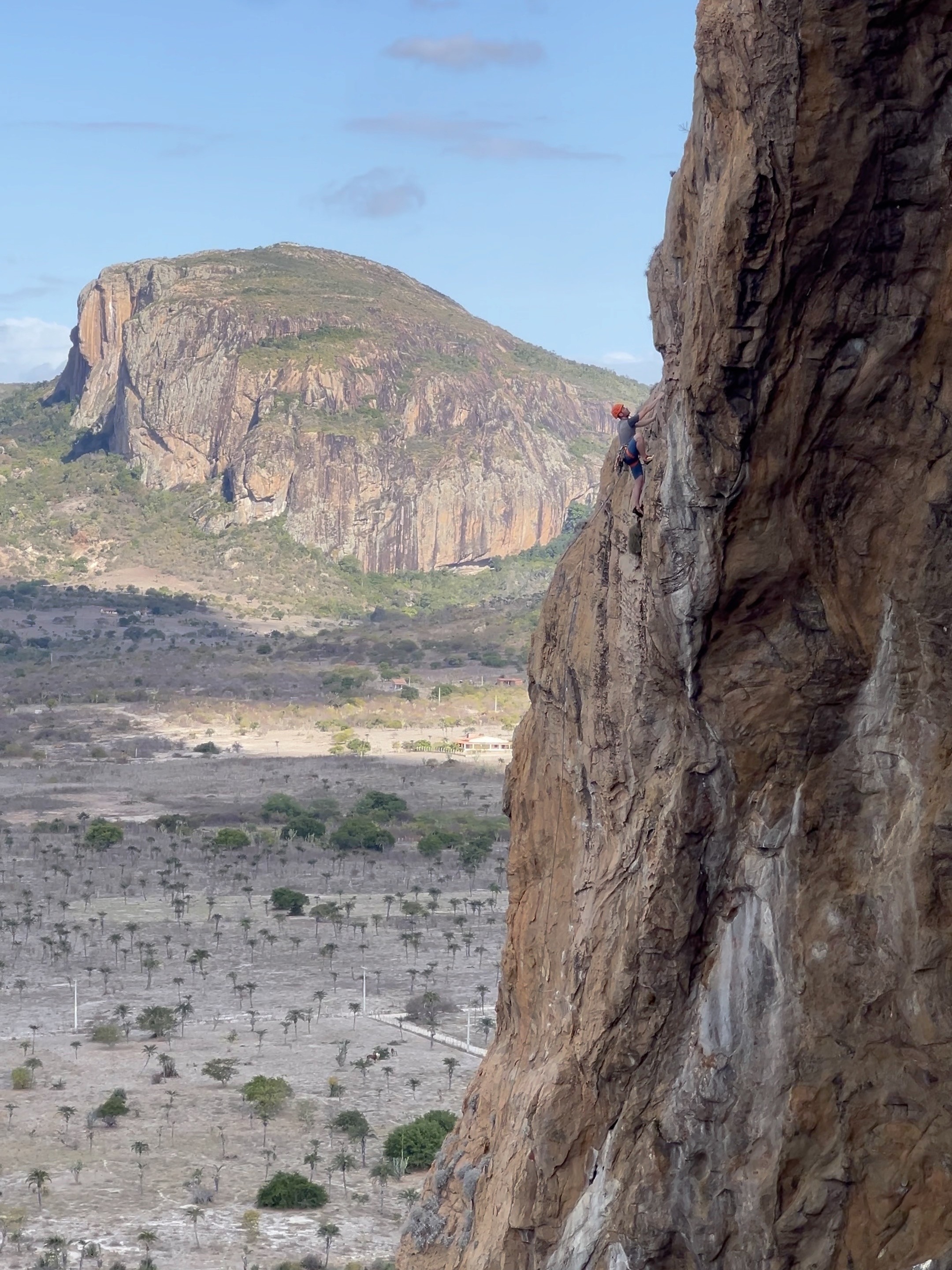
The quality, quantity and beauty of Itatim make it a world class climbing area, we were shocked at how good it really was. Whilst you do see and hear a bit about Itatim online, it isn’t particularly hyped up and we hadn’t realised quite how large it is. There were no other international climbers during our time there and only a handful of Brazilian climbers. It isn’t uncommon to have the whole mountain to yourself, even on the weekend. The climbing is very spread out, with sectors on lots of different inselbergs spread around the flat semi arid landscape home to the Caatinga, which is a unique type of biome found only in Brazil. The biome is home to lots of stunning colourful birds, a small rodent that lives in the rocks called Mocó and many interesting plants. Many of the plants are super spiky, but thankfully there are good trails to the crags to avoid you drawing blood!
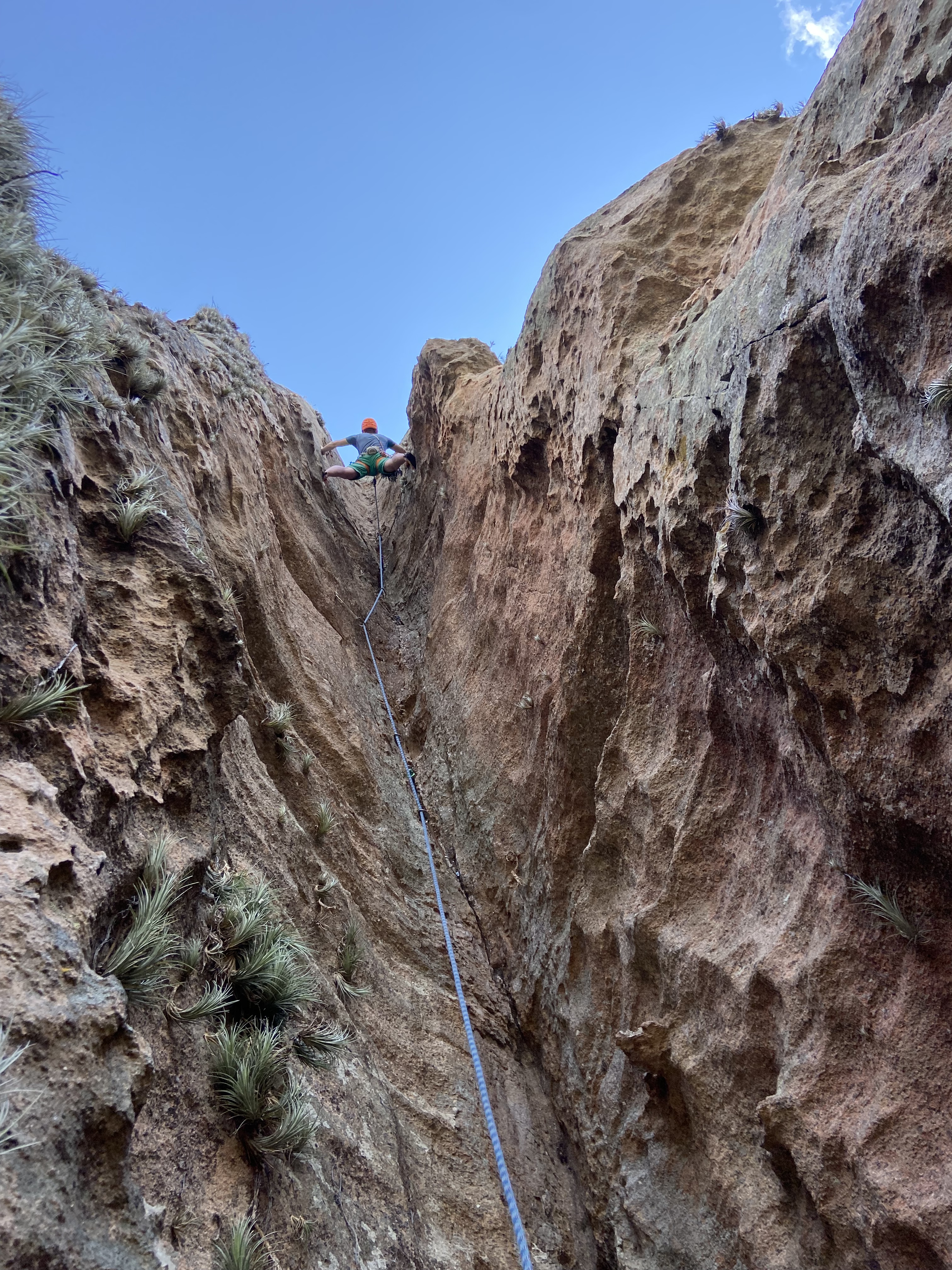
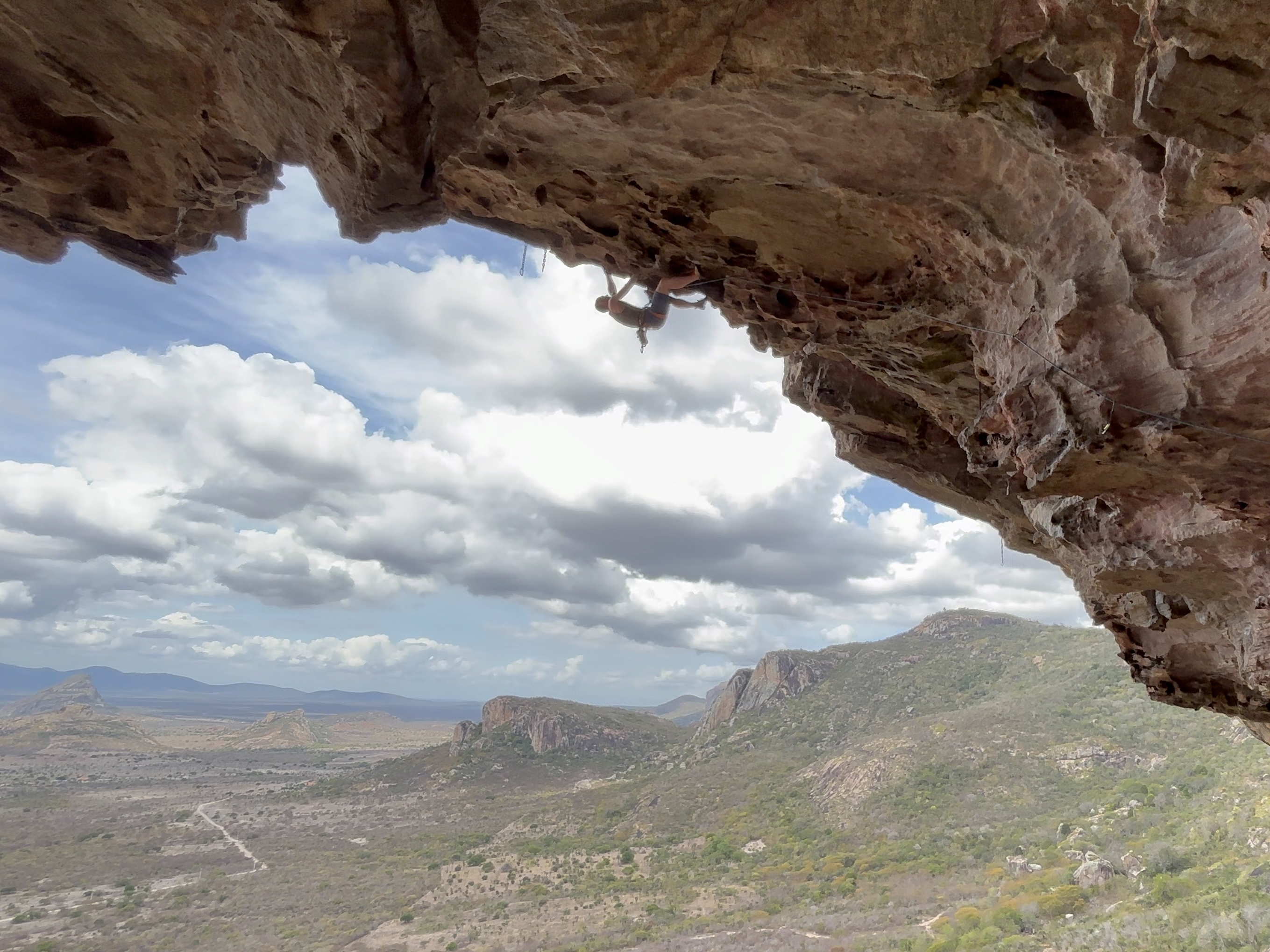

Left: ‘5 Então’, pitch 4, 6b. Top: ‘A Bruxa’, 7b. Right: Crocodilo seen from Peitinho
One of Itatim’s greatest assets is the high number of multipitches, which combine beautiful climbing with generally easy access. Due to the flat nature of the surrounding plains, you can often drive on dirt tracks to within one or two hundred meters of the crag base. There are also a few places climbers can stay right next to the base of Morro da Toca, where you are an easy walk from the start of the routes. Many of the multipitches are Brazilian traditional climbing, meaning you will need cams and nuts but there are also bolts. There are also some sport multipitches where you need very little other than quickdraws. A special mention must go to Arco da Toca, which traverses the left hand lip of the cave of Morro da Toca – it is a superb route and one of the best of its type we’ve ever done! The summits of many of the mountains can only be accessed by climbing so you get to enjoy a serene and almost untouched summit after a route.

We thought Itatim was absolutely the complete package, pretty much a dream climbing area. It has loads of routes, great rock, lots of variety, beautiful locations and it isn’t busy. We hadn’t expected so much, so we only had a week to spend here, in which we were so psyched we climbed every day. In the future we’d love to come back and spend an extended period of time here, a month or more would go quickly in such an amazing place. If you are climbing in Brazil, we highly recommend taking the journey up to Bahia to visit Itatim!
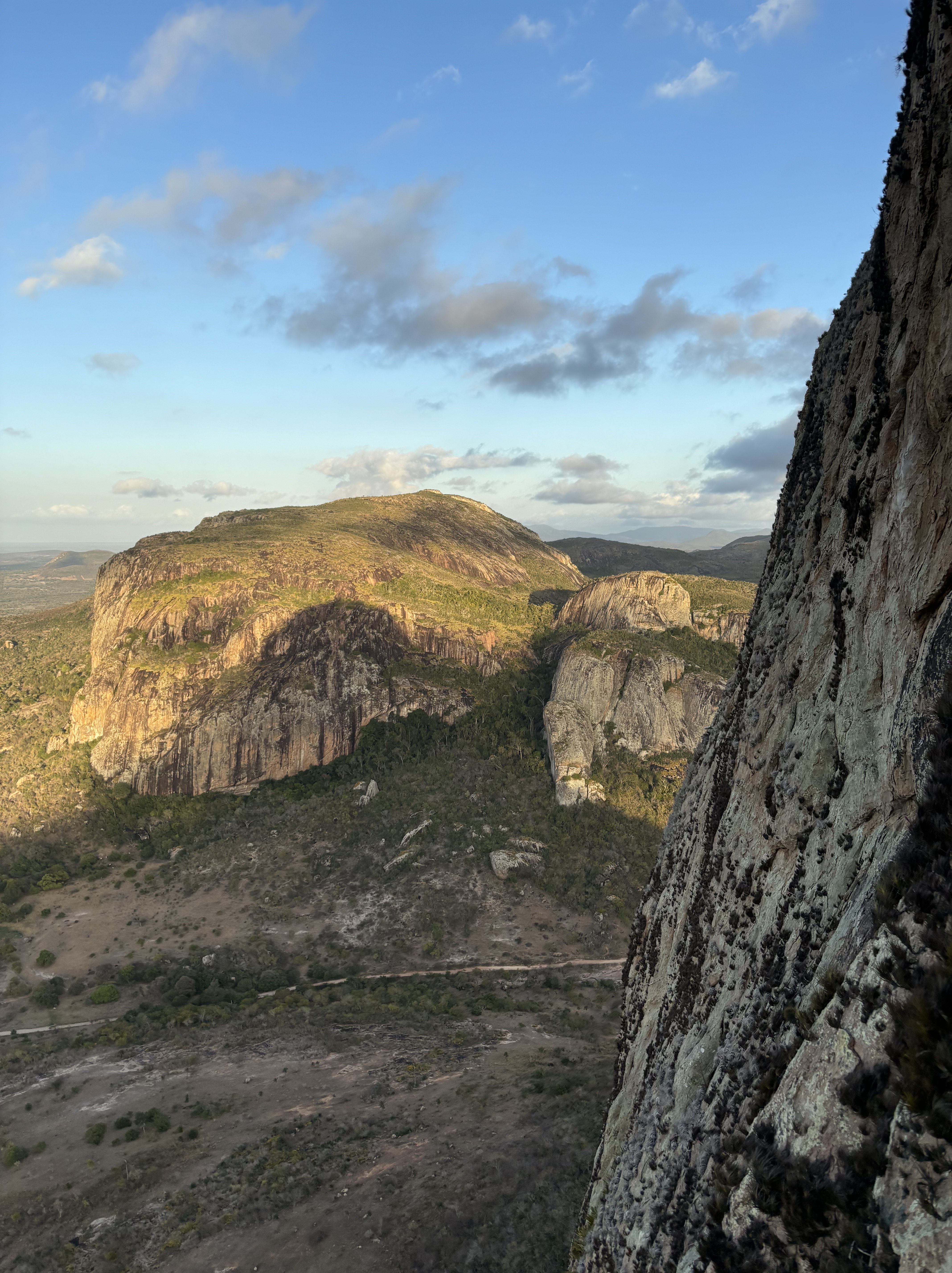


The classic ‘O Jardineiro’, 300 m, 6c, Enxadão
Igatu
Igatu is a gorgeous small village in Chapada Diamantina, known for its stunning old buildings, diamond mining history and, of course, climbing! Igatu is in a really lovely location, very peaceful and relaxing, almost like an island. The old stone road to get there gives you a first impression that lasts, that of a beautiful place surrounded by nature. Igatu is most famous to climbers for its bouldering – there are over 1,000 developed problems here! We came to climb routes this time, which are of a typically bouldery style themselves, punchy, powerful and intense. The rock at Igatu is excellent quality quartzite, very solid and with high friction, it can be a bit harsh on the skin after you’ve been pulling hard all day! Typically the routes are between 10 and 20 meters, usually overhanging and with quite stiff grading. There are around 200 sport and trad routes, but with the potential for tonnes more. Igatu is surrounded by rock, some of the crags are only 5 minutes walk from the main square while others are a long walk, in a remote setting.

When walking to crags around Igatu, or to the many different waterfalls, you will see quite a lot of crags that haven’t been developed for climbing yet. This is common in Chapada Diamantina, there is just so much quality rock it would be completely impossible to climb it all. There is a great pdf guidebook for climbing in Igatu that you can kindly download for free from the Companhia da Escalada website. The sketches that show the location of the routes in boulder field areas, like the Labirinto sector, are amazingly accurate and must’ve been made with a lot of effort and local knowledge combined. We really enjoyed our time in Igatu, although the routes are less varied and extensive than in Lençóis, the area is very charming and the quality of the rock is great. If you are in Chapada Diamantina it is definitely worth setting aside some time to stay and climb in Igatu, it is quite a unique area.

Lençóis
Lençóis is more or less the main town of the Chapada Diamantina national park and is a starting point for many great adventures in this stunning area. Whilst it is fair to say Lençóis is definitely not as charming a town as Igatu is, the climbing is a different story. The quantity, quality and variety of rock around Lençóis is absolutely amazing and we were genuinely stunned by it. Lençóis was the last area we climbed in on our South America trip and what a way to end on a high! In many ways it was a metaphor for the climbing in Brazil, which is just so good and so plentiful it is hard to take it all in. There are some dedicated local climbers and route developers in Lençóis, but the crags are quiet and you will almost certainly be the only ones around at the crag on any given day. Many of the crags are also not close to any tourist hiking trails, so you get to enjoy the pristine nature and tranquility all to yourself.
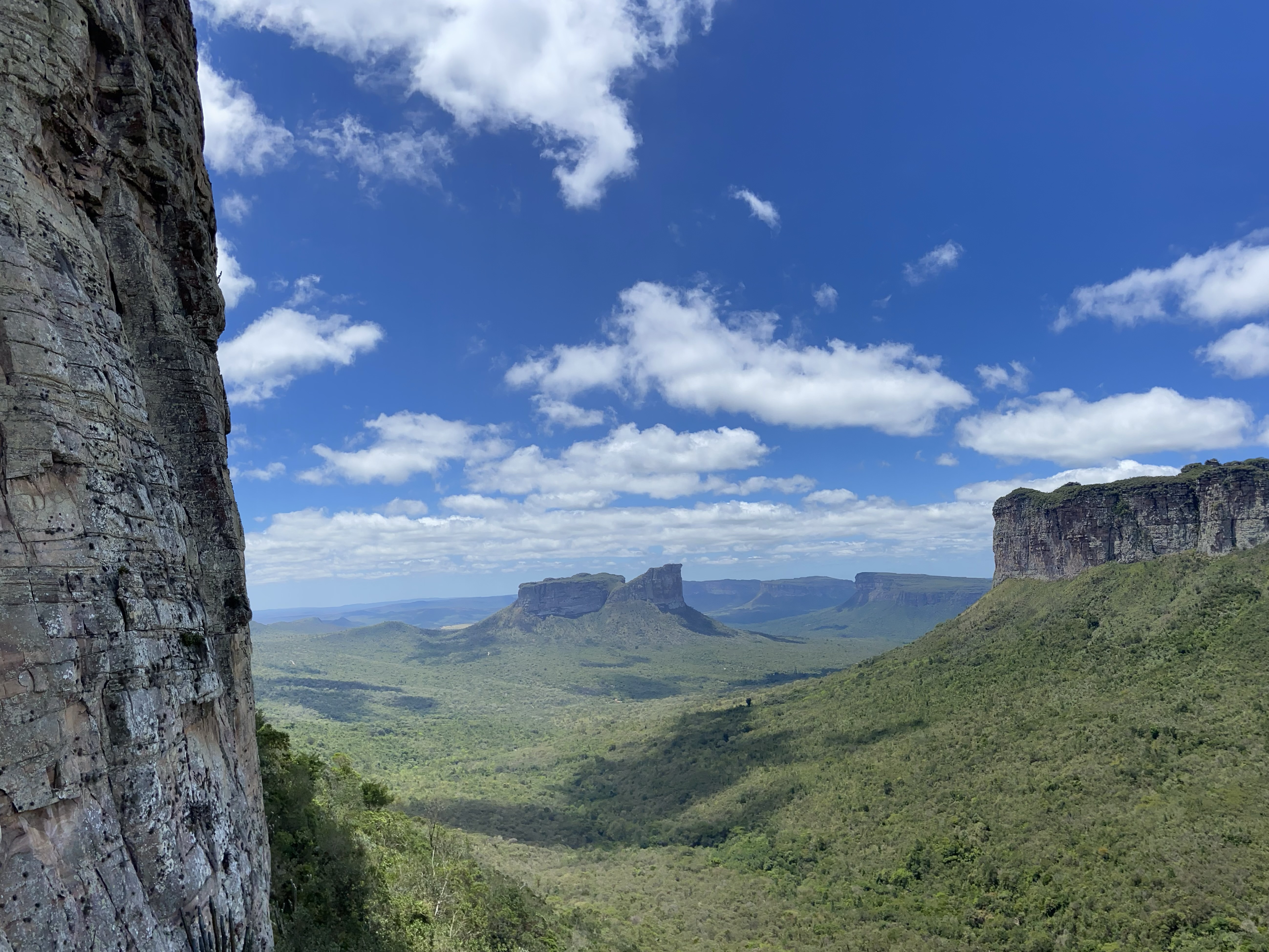

The stunning view from Morro da Mãe Inácio and a view taken from the unbelievably good ‘Imaculada’, 6c
Lençóis has two main types of rock, quartzite and conglomerate. The conglomerate is very solid, compact and great to climb on. For the most part the conglomerate is more of a Margalef style, in the sense that you use mostly pockets, rather than using potatoes or large pebbles for handholds. The quartzite is superb quality and has some of the most stunning colours of any rock we’ve ever seen. For example, the crag Barro Roxo has a beautiful pink/purple colour and the rock is so compact, it is perhaps as close as you’ll ever come to climbing an amethyst. Meanwhile, there are numerous other crags with equally high quality quartzite in shades of yellow, orange, red and even white. The rock has lots of horizontal breaks with big dynamic moves between generally good holds. The dense and solid nature of the quartzite means there are often no intermediate holds at all, it is totally blank and impossible to imagine climbing it if the breaks weren’t there. Interestingly the quartzite around Lençóis is not sharp or harsh on the skin like the Igatu quartzite can be.


The amazing Barro Roxo, with ‘Pulo do Gato’, 6c+(!) and ‘A Múmia’, 7a
The climbing around Lençóis is very spread out so it is essential to have a car to make the most of your time. Often you can drive surprisingly close to the sectors on dirt roads, which for the most part were in good condition during our time there. Depending on what you would like to climb you can find many excellent sport routes, which typically are well bolted. There are also lots of mixed trad routes on the quartzite, which typically have solid gear placements in the horizontal breaks. If that isn’t enough, there are plenty of big adventurous multipitches, some of 250 meters, that go through some outrageous terrain – many of them in are in the mid 7s sport grade but are mixed trad. Style wise there is a good mix of slabby and vertical rock, but the best and most memorable routes are the overhanging ones with amazing sustained climbing on big positive holds. The areas are really beautiful with amazing views, and there is so much rock in the area it would last many lifetimes. There is probably more climbable rock in Chapada than in many small to medium sized countries!

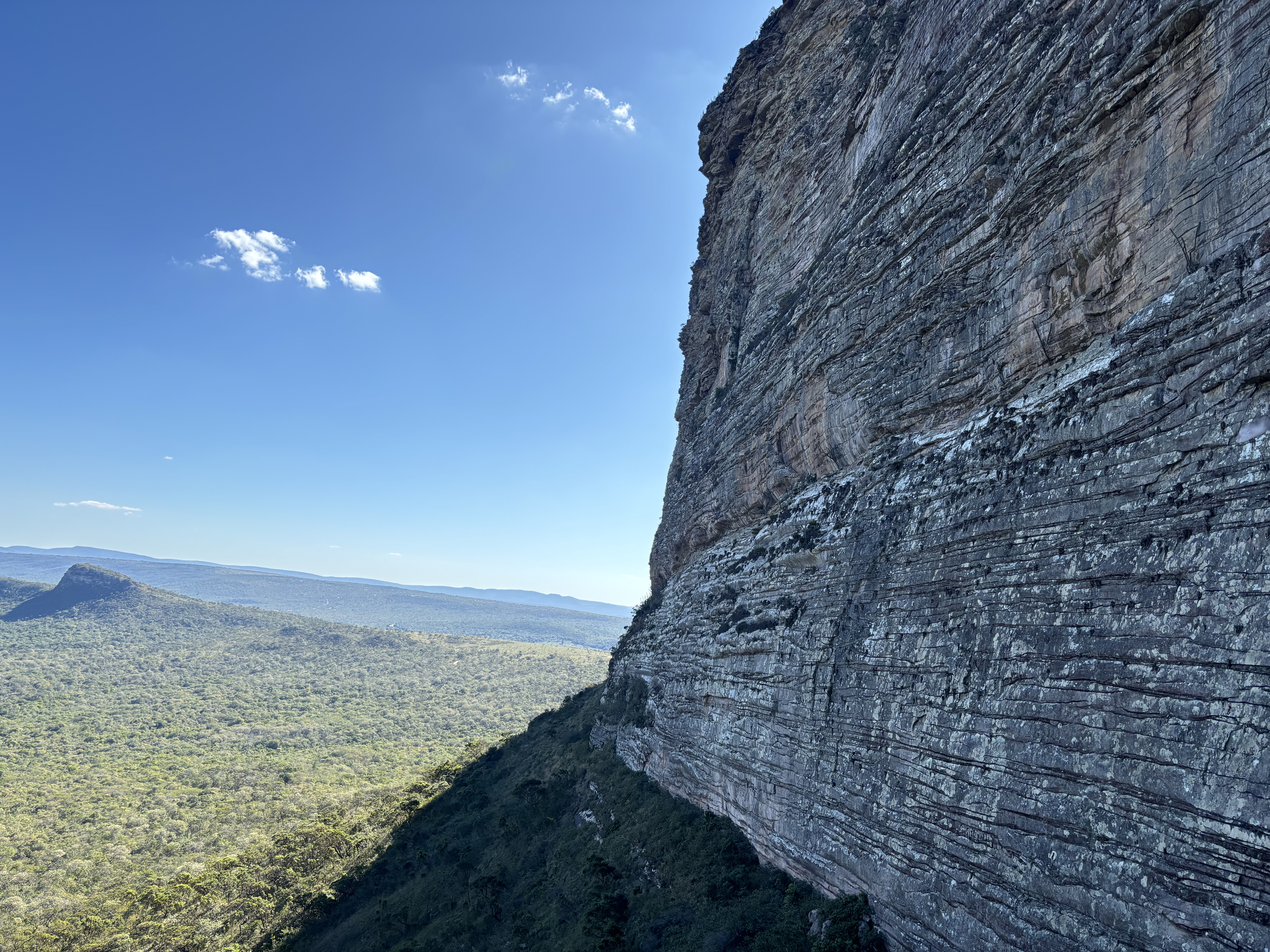
Beautiful scenery and impressive walls at Morro do Camelo
Perhaps one of the best things we can say about Lençóis is, in a similar way to Itatim, is that even though we were exhausted at this point in the trip, we still couldn’t keep ourselves from climbing basically every single day – it was just too good to rest! We didn’t do a bad route our whole time here, the standard is very high and easily keeps pace with any of the best climbing areas in Brazil, or indeed anywhere we climbed in South America. The beauty of Chapada Diamantina means that when you eventually do need a rest, there are plenty of stunning places to hike, swim and enjoy nature – you have absolutely everything you could want or need. It was a great place to end the trip but equally it was very sad to leave, it’s the sort of place you can imagine arriving in and staying forever.

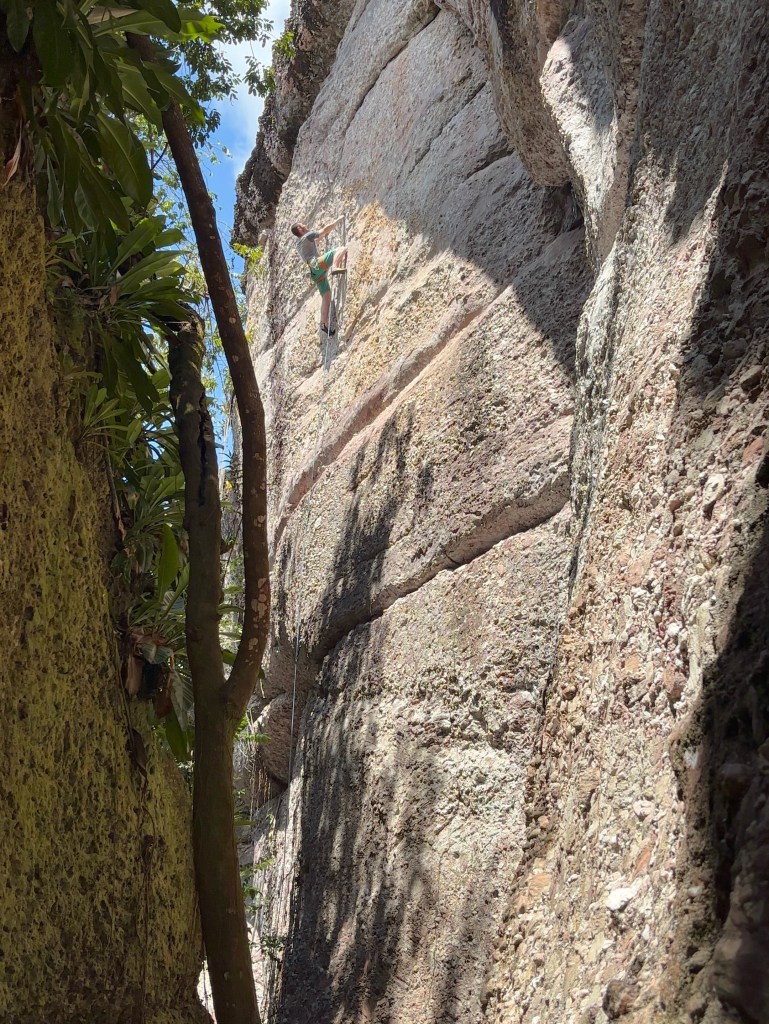
Great conglomerate at Barro Branco, with ‘Angelical’, 6c and ‘Fenda Ilusória’, 6c
Rest Day Activities
Cities
There are lots of amazing cities in Brazil, both those well known to tourists and those less frequented. The stunning mountains and coastline of Rio de Janeiro are world famous and rightly so, it is one of the coolest cities in the world! We also enjoyed visiting Curitiba, which is definitely a hidden gem as far as big cities in Brazil go. Curitiba has a nice old town and great parks, we were also lucky to visit during the Feira de Inverno (winter market), which was really nice. São Paulo is also an impressive city often overlooked by foreigners, there are lots of things to do and places to eat, it is the largest city in the Southern Hemisphere and the largest in the world outside Asia. São Paulo also has the largest population of Japanese people of any city in the world outside Japan! One of Brazil’s greatest cities is Salvador, which amazingly has the highest black population of any city in the world outside of Africa! Salvador is bursting with culture, great food and has a stunning historic centre as well as many beaches. The difference between these cities is what makes Brazil so great to travel – the beauty and diversity between them is just amazing, it’s like travelling the world within the borders of one country!

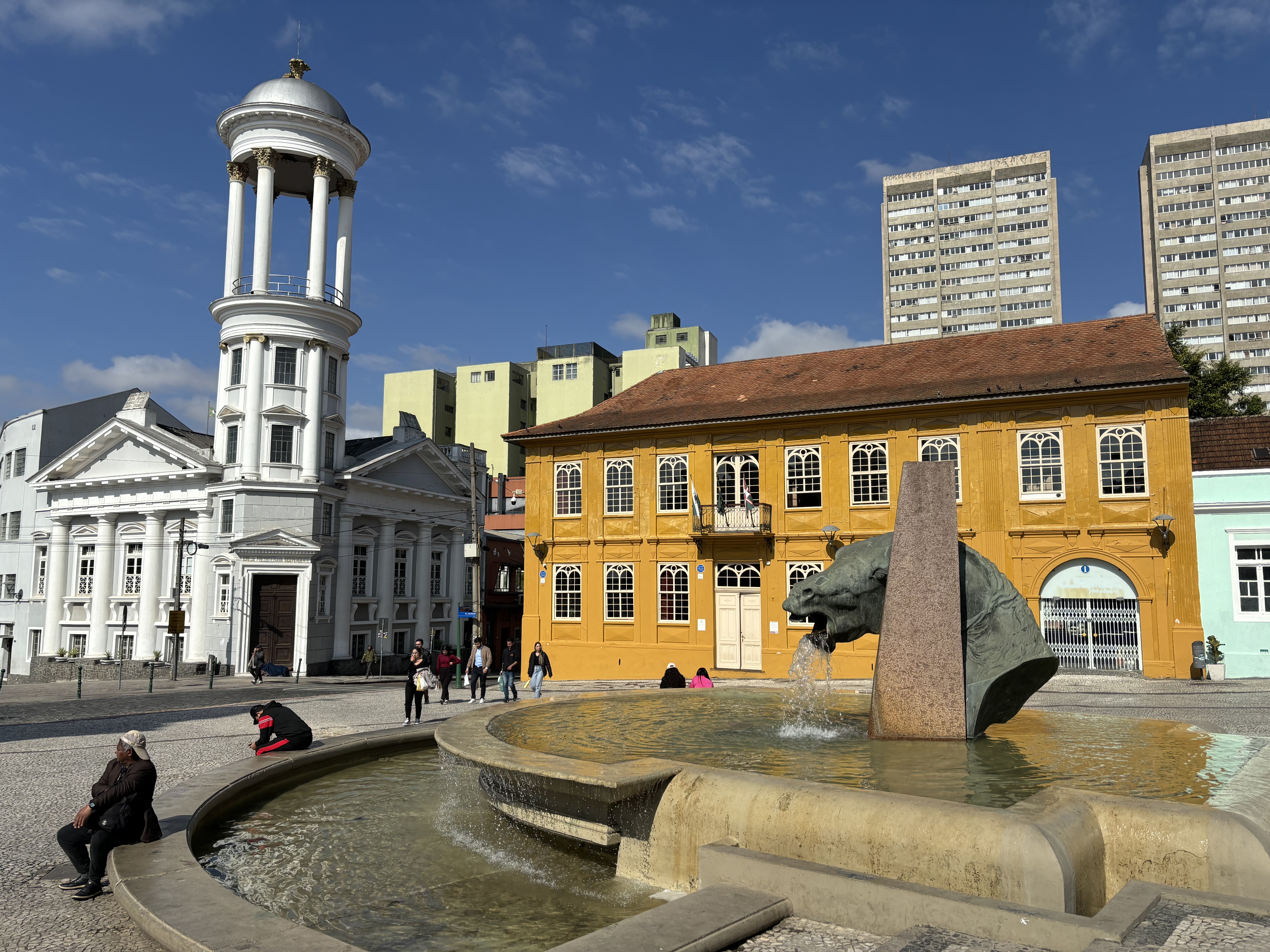

Clockwise from left: The Royal Portuguese Cabinet of Reading in Rio, Curitiba’s historic centre and Azulejos in the Church of the Third Order of Saint Francis in Salvador
Hiking
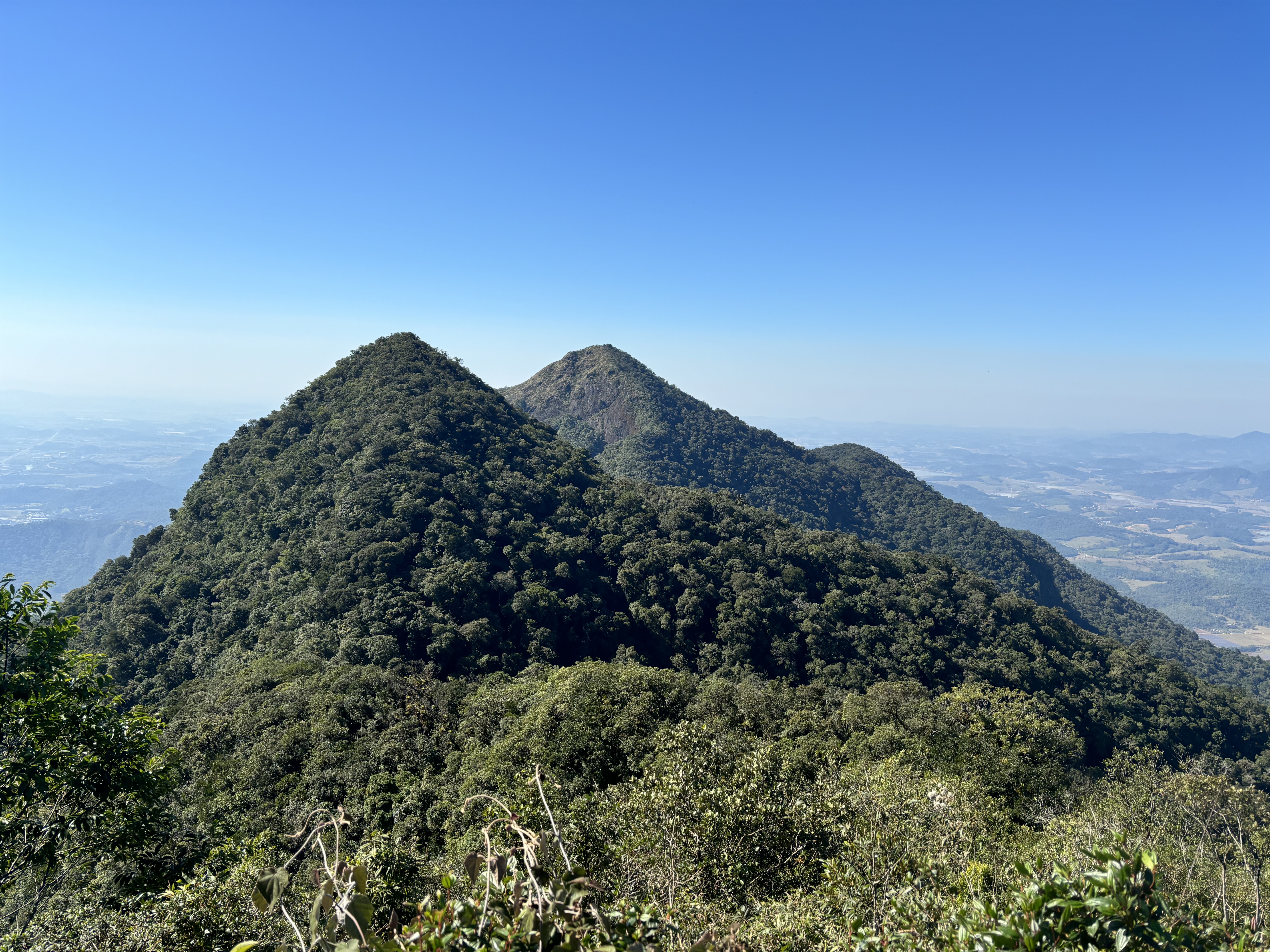
Hiking is really popular in Brazil and there are endless different hiking trails to suit whatever type of hike you are looking for. There are many famous multi day hikes in Brazil, like the one from Teresópolis to Petrópolis or the one through the length of Chapada Diamantina. Personally, we were usually tired enough from climbing that a day hike was all we really had energy for! Needless to say, there are tonnes of great day hikes in pretty much every part of the country, some through beautiful forest or up some pretty steep mountains! Brazilians use Wikiloc quite a lot, so it can be useful to have a browse on the app for the area you are in to find the local trails easily – sometimes Wikiloc is also helpful for finding long crag approaches too, like the Dedo de Deus.
Waterfalls
Brazil has a seemingly never ending supply of waterfalls, often in really beautiful locations and with crystal clear water. Perhaps the most interesting thing for us was that even in the middle of the dry season, there is always more than enough water to swim in and flowing water to keep the pool fresh. In the hotter parts of Brazil there is no better way to cool off after a day at the crag, or relax on a rest day, than going for a swim at a waterfall. You can visit many almost straight from the car and there are others with long hikes and guaranteed solitude, so there is something for everyone.


The perfect natural swimming pool, even in the dry season, at Cachoeira da Laranjeira
Beaches
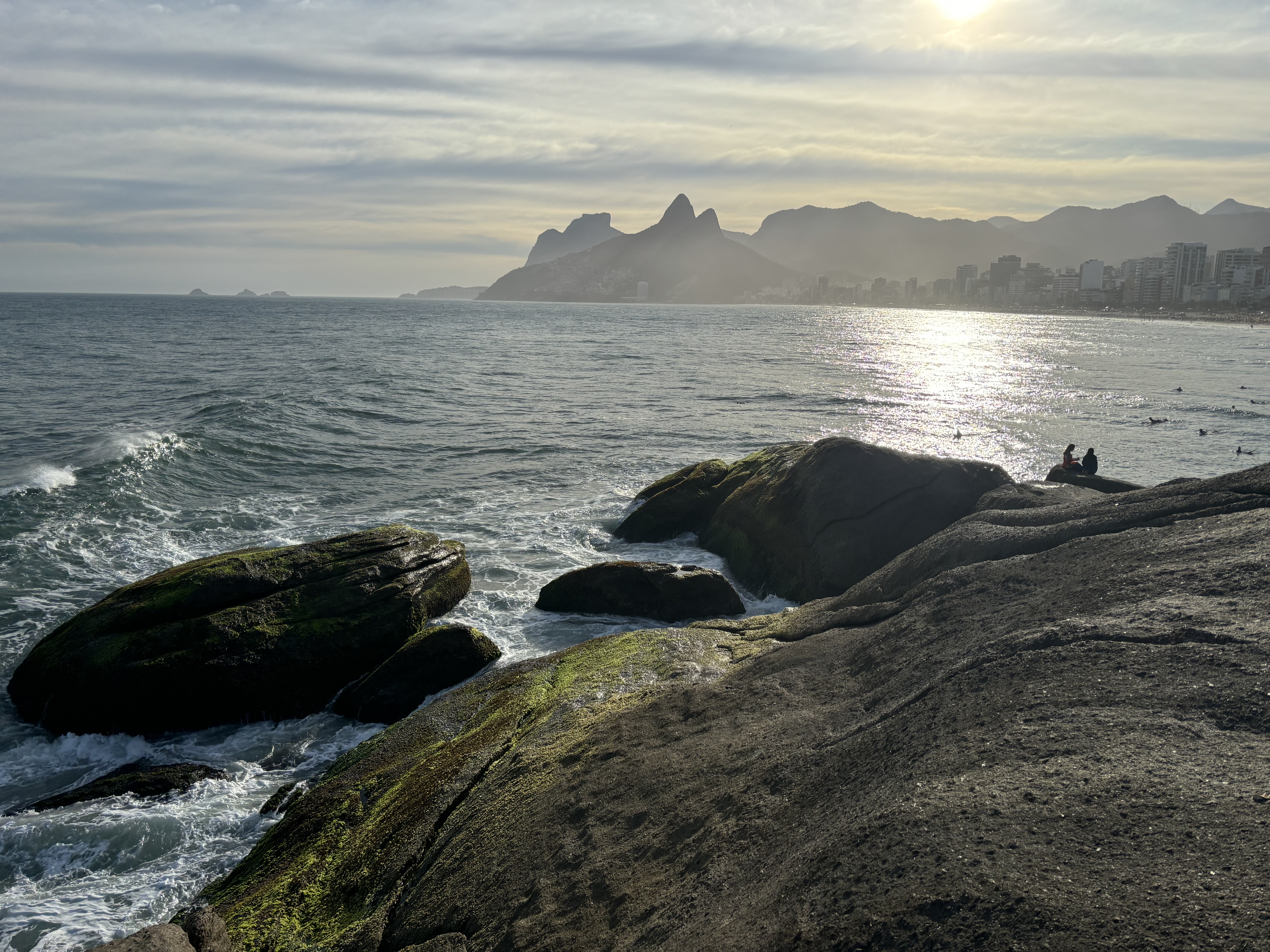
Brazil is world famous for and has absolutely loads of amazing beaches, in many different parts of the country. Due to the size of the country, you may not always be able to do a day trip to the beach from where you are climbing (that’s where the waterfalls come in). However, when climbing in Rio de Janeiro you certainly won’t struggle to visit some amazing beaches right after climbing! Inevitably you will want to visit Copacabana at some point, but for sure it isn’t the best beach in Rio, let alone Brazil. The other side of the headland is Ipanema, which is nicer, calmer and has better views, all the way down the continuing beach of Leblon and on to the mountains of Morro Dois Irmãos and Pedra da Gávea. One of our favourites was Praia Vermelha, which was only 10 minutes walk from where we stayed in Rio, has great views of the Pão de Açúcar and we even swam alongside green sea turtles, pretty special for an easy access city beach!
Food
Feijoada is a black bean stew made with various cuts of pork, including sausage, and sometimes beef. The stew has a delicious smoky flavour and is very tasty. It is often eaten alongside Farofa, which is a type of toasted, crunchy cassava meal, which adds great texture to the dish.
Pão de Queijo are delightful cheese breads made from mandioca (cassava) flour and don’t contain any wheat. They are crisp on the outside and chewy and cheesy on the inside, and once you start eating them you can’t stop!
Pudim de Leite is a delectable caramel flan made with sweetened condensed milk. It is rich, creamy, sweet and absolutely gorgeous! It is great as a desert or alongside a coffee.
Acarajé is a delicious street food popular in Bahia, and is a cultural link to the regions West African roots. The main component is a patty made from black eyed peas that is deep fried in Dendê oil. It can come with a variety of filings, such as Vatapá – which is a paste made from bread or cassava flour, shrimp, coconut milk and peanuts or Caruru which is made from okra, cashews and shrimp. Then you’ll get some salad on top and finally some extra shrimp to top it all off and optional hot sauce to taste. Delicious and hearty, Acarajé should be high on your list of foods to try in Bahia!
Coxinha are a tasty snack usually made of shredded chicken meat, surrounded by dough which is shaped like a tear drop, breaded and fried. They are a delicious snack to grab on the go and are surprisingly filling for their size!
Tapioca is a cassava flour pancake, usually eaten for breakfast, that can have a variety of fillings from cheese and meat to strawberries and chocolate! They have a pale white appearance and are much tastier than they first appear.
Açai is a type of fruit that grows on palm trees native to the Amazon basin. The fruit is traditionally eaten like a savoury porridge alongside fish, but now it is most commonly eaten as a sweet sorbet type desert. The sorbet is usually just açai pulp, water and some sugar, it is really refreshing and has a wonderful flavour. It can be eaten on its own or with a variety of toppings, milk powder is one of the most popular.
Pinhão translates literally as pine nut, but these nuts are not from a pine, but from the Araucaria Angustifolia. This tree grows only in Southern Brazil and is a relative of the monkey puzzle. The nuts come from huge cones and are cooked in a pressure cooker before eating. They have a great almost meaty texture and a delicous flavour, they are a real part of the culinary culture in Southern Brazil and you won’t find them anywhere else.
Buffets, whilst not a single type of food, are such a big deal in Brazil they definitely need a mention! All over the country it is popular to have a buffet lunch, but they are restaurant quality, not just to fill a hole. The best buffets are traditional and keep the food warm with a log fire and have a separate churrasco area where a chef freshly grills meat throughout lunch. Our favourites were in Minas Gerais, where you get delicious quality food and they have everything you could dream of – you won’t leave hungry!
Summary
We had an amazing time in Brazil, the people, climbing, culture, landscapes and food combined make it one of the best experiences we’ve ever had. The quantity of beautiful places is never-ending and for climbers Brazil is an absolute goldmine. Serra do Cipó and Rio de Janeiro are the country’s most famous climbing areas and they are both excellent. For us personally, the standout areas were Piraí do Sul, Itatim and Lençóis. This is for a variety of reasons, like the uniqueness, rock quality and views. Of course the Cipó rock is also unique and Rio also has stunning views! But there was something about Piraí, Itatim and Lençóis that we loved so much we just can’t stop thinking about them! There weren’t any climbing areas that we didn’t like, even smaller and less significant crags like Buraco do Padre were still good and very enjoyable. Brazilian people are incredibly friendly and the country has such an upbeat atmosphere you can’t help but feel happy to be there. The country also has a very strong and historical climbing culture which is almost certainly the most developed of anywhere we went in South America. We loved it all so much it’s impossible to believe this will be the last time we visit!
We write for pleasure and climbing is our passion. Our articles will never be paywalled. However, if you would like to help towards the costs of running the site or if you have found our content useful, please consider contributing here. To read more about why your support matters, click here.
You can read more about the climbing in South America here.
Relevant links and resources
https://companhiadaescalada.com.br/produto/50-vias-classicas-no-brasil/
https://companhiadaescalada.com.br/atualizacoes-50-vias-classicas/
https://pt.wikipedia.org/wiki/Cotação_%28montanha%29#Tabela_comparativa
 The Crag Journal
As always a great post with stunning photos and really useful info! Well done!
LikeLiked by 1 person
Thank you! Really glad you like the post and hopefully we did Brazil justice!
LikeLike
Excelent post!!
LikeLiked by 1 person
Thank you, we are really glad you enjoyed it!
LikeLike
Great article, thanks! Do you think it’s feasible to go climbing from January to April in Brazil considering the rain and summer?
LikeLiked by 1 person
Hi Ben, thanks for the comment, really glad you liked the article!
It’s difficult to say for certain, one thing I would mention is that it depends a lot on where/what you want to climb. For example, afternoon thunderstorms could make multipitches in tropical areas, like the Dedo de Deus, impossible or a bit dangerous. Whereas in somewhere like Itatim, which is much drier, you could be fine, just hot.
If you have flexibility with your time it would be better to try and move your trip a few months forward – e.g March-June would be better than January-April if you can manage. Peak season starts in May.
Hope that helps you make plans, Brazil is an amazing country and we wish you an excellent trip! Please let us know if you have any other questions.
LikeLike
is the climbing just in the city of rio de janeiro destination-worthy, or more like decent cragging if you happen be in the city?
how easy is it to find partners without speaking portuguese? i am mostly interested in multipitch trad areas
LikeLiked by 1 person
Hi James,
The climbing in Rio de Janeiro is definitely destination worthy in its own right, there are loads of stunning walls and some very exposed and adventurous climbs to enjoy. We had an amazing time there, but in 10 days or so we only scratched the surface and there is definitely a huge amount of climbing beyond the famous classics.
Partner wise we can’t really say, as we went as a couple. However, Brazilians are very friendly people, both climbers and in general, so I’m sure you’ll be able to find a partner ok. Climbers from Brazil often speak English, as many of them travel to crags around the world to climb too. Im sure you’ll still manage to find someone even if you dont speak Portuguese.
Have a great trip!
LikeLike
amazing post,thanks for all the info! My partner and I want do to a similar trip this June to August and this post got us so psyched. What were accommodations like at most of the crags? Should be bring a full camping kit?
LikeLiked by 1 person
Hi Taylor,
Thanks for leaving a comment, and it’s great that the post has got you psyched!
The question of camping equipment is a tricky one. There are lots of campsites in Brazil, so if you want to save money and travel cheaply then you will have loads of great camping options. We had a full camping set up with us as part of our trip in general, but we definitely wouldn’t have had a problem in Brazil if we didn’t have it. There is almost always a Pousada, hostel, hotel or similar where you can stay within a short drive or walk to the crags. Having a Pousada breakfast can be an enjoyable part of the experience in itself!
If we were to revisit just Brazil, I think we would probably prefer to travel without camping gear to make luggage lighter and just generally have less bulk with us. You won’t struggle to find accommodation in any of the areas we climbed, and the quality of accommodations was very high. As we mentioned above, the main difference would be if you wanted to travel as cheaply as possible, in which case camping is always your friend.
All the best for an amazing trip! Hope you have a great time in Brazil, it is a truly amazing country!
Please let us know if you have any other questions
LikeLike
Thank you! What was an average cost for a day in a climbing area with food+rental car+accommodation?
LikeLike
No Problem! The question of cost is kind of impossible to be accurate on, it will just depend so much on variables like location, what exactly it is you want and when. For example, a steak meal in Copacabana will obviously cost significantly more than a vegetarian meal or a pizza in the town of Pirai do Sul. Car rental will depend on which car you want to rent, smaller obviously cheaper but also which insurance option you take. Booking accommodation in advance may get you some good deals but equally so can just showing up and asking for the nightly rate, again depending on where you are in the country.
I understand we haven’t really answered your question, but we want to make sure we don’t suggest a budget to you that you may find incorrect. Times change and prices can fluctuate a lot, the best suggestion we could make would be to cost it up online. You can use price comparison websites for rental cars, look for photos of the menus of restaurants in the areas you want to visit and check the websites of various pousadas etc to get up to date information on the costs right now.
Apologies if this is rather vague, but as we said, we don’t want to promise you a budget which may not be possible. Local to us currently the price of fuel has gone up €0.30 in the last month! Checking prices live as they change will be much more accurate and hopefully give you a realistic budget that avoids any shocks.
Best regards for a fantastic trip!
LikeLike