Greece is an exceptional country in many ways; its history, people, coast and of course the climbing, all play a part. While everyone knows how beautiful the beaches of Greece are, some might be surprised to know that it is an incredibly mountainous country, there are a huge amount of peaks throughout Greece, many of which are over 2,000 meters. The dramatic landscape created by the contrast of a long impressive coastline and lots of big mountains makes Greece a stunningly beautiful place. Greek people are also incredibly friendly, we have travelled extensively in Europe for many years, and to say Greeks are some of the friendliest we’ve met on the continent would not be an exaggeration. We had been long overdue a trip to Greece, which for one reason or another didn’t work out until now, when we were lucky enough to spend over 11 weeks in Greece on a stunning road trip, taking in many of the country’s best crags and most beautiful locations.
Guidebooks for Climbing in Greece
Affiliate Disclosure
We have an affiliate partnership with Climb-Europe.com, which means we receive a commission if you buy a guidebook via one of our links, at no extra cost to you. Currently, we only use affiliates for guidebooks from Climb Europe, not anything else. To read more, click here.
Greece is well covered by various guidebooks and topos, and most areas will be covered in a guidebook. For visitors, perhaps the most useful book is Greece Sport Climbing: The Best of, which is seemingly sold out, or maybe out of print. However, you can access it via the Vertical Life premium subscription. You will probably also want the Leonidio & Kyparissi guidebook – the Panjika version is available from Climb Europe. You can also use a different guidebook for the same area, by Aris Theodoropoulos, on Vertical Life Premium. The Greece: Best of guide has a small selection of routes in Meteora included, but if you want a bigger selection to choose from, the Meteora classic multipitches guidebook and the Meteora sport climbs guidebook are available from Climb Europe.
It is also definitely worth checking out Olympus Mountaineering, especially if you plan to visit the Ermionida region. Olympus Mountaineering is run by a passionate Greek climber who has created excellent, free PDF guidebooks for various crags both in Ermionida and in other parts of Greece, like Agios Andreas. There is also a good interactive map with lots of great hikes and waterfalls mapped on, which are perfect for rest day activities.
Weather and Climbing Season in Greece
In general, the best time to visit Greece for rock climbing is from October through to April. Of course there are exceptions to the rule, some parts of Greece will be in winter mountaineering condition at this time of year. But on the whole, the vast majority of sport climbing in the country will be in good condition between these months. Areas in the south of the country, or at low elevation, can actually be surprisingly hot on a sunny winters day – you can be in a t-shirt in January! Equally, there are places that will be too cold to be enjoyable in mid winter, but are also too hot in summer – like Meteora. For crags like this, spring and autumn will give the best conditions, rather than winter. We encountered a bit of everything weather wise during our stay, some snow, baking sun and plenty of rain. However, it never stopped us climbing for more than a day or so and the vast majority of the time we were able to climb where we wanted when we wanted.
Below is a map of the different crags we climbed at in Greece so you can see where they are in relation to each other.
For simplicity, we have described the crags from north to south.
Climbing Recommendations
Nea Iraklitsa
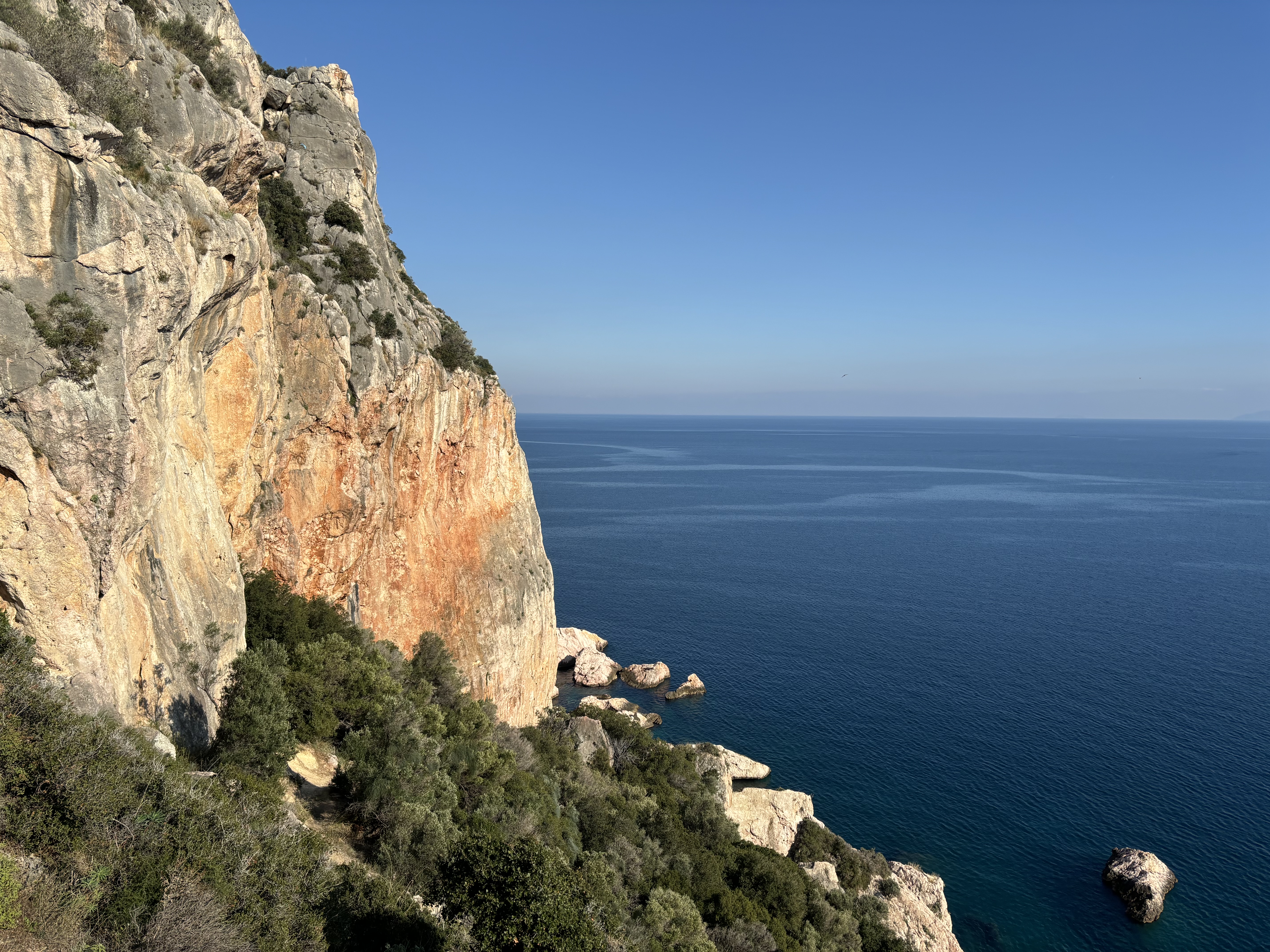
Nea Iraklitsa was the first place we climbed at in Greece, and a very impressive place to begin our time in the country. There are many different sectors in Nea Iraklitsa, with a good mix of styles. There are lots of sport routes, multi pitches, some trad routes and also some deep water soloing. We went for a look at the DWS and had a swim, but it was a bit too cold for us to put on our climbing shoes – so we stuck to the sport routes instead! In total, Nea Iraklitsa has around 210 routes, with grades from 4 to 8b+. Midweek you will probably be the only people climbing here and at the weekend you will meet local climbers. Perhaps due to its location, Nea Iraklitsa seems to be very off the radar of travelling climbers and it definitely deserves more recognition.
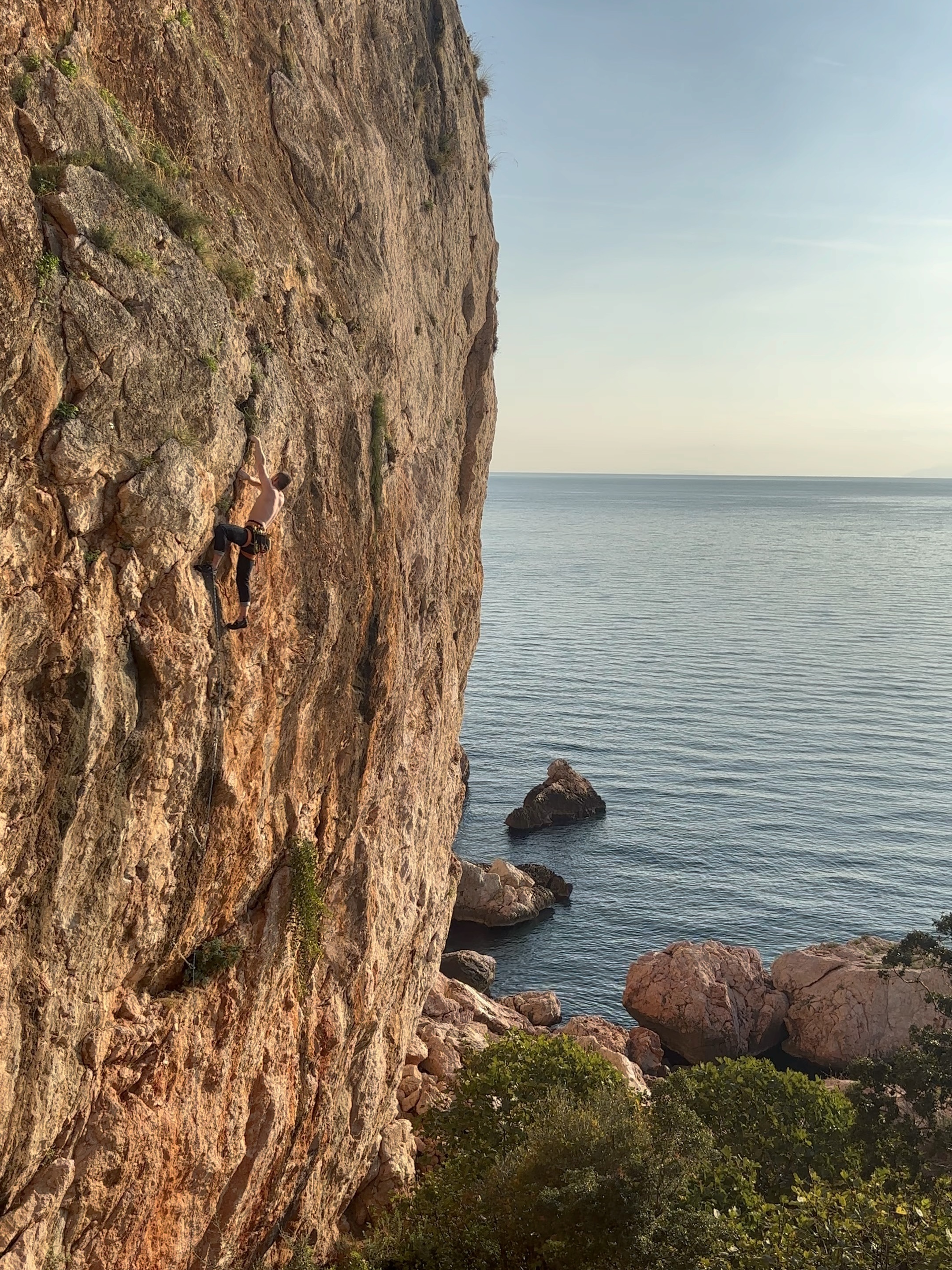
As it was the very first climbing area we visited, we were of course keen to visit many other areas too, so we only stayed for a few days. In hindsight, we would probably have stayed a while longer here and chosen to cut time off from some other crags. The rock quality is very good, well featured and solidly held together coastal limestone. The rock is, in our opinion, much nicer to climb than other crags right by the sea we visited, like Varasova. Additionally, the location of the crags at Nea Iraklitsa is very charming. You are nestled down by the coast, out of sight of any roads or buildings – it is an incredibly peaceful spot. We thought Nea Iraklitsa was a great area, a little slice of paradise that is absolutely worth adding to your list and was a wonderful place to start our climbing journey.
We write for pleasure and climbing is our passion. Our articles will never be paywalled. However, if you would like to help towards the costs of running the site or if you have found our content useful, please consider contributing here. To read more about why your support matters, click here.
Meteora
Meteora is one of the biggest names in Greek climbing and in many ways it is a must visit area, due to its inspiring summits and captivating history. It would be fair to say the climbing in Meteora can be something of an acquired taste, with some adventurous runouts and occasional popping out of the cobbles. However, despite the potential for some raised pulses, it is really worthwhile climbing here and experiencing it for yourself. The summits of the towers are awesome and the density of them in a relatively small area is amazing. Meteora has upwards of 800 routes so there is a lot to go around and you are bound to find something appealing with that much choice!
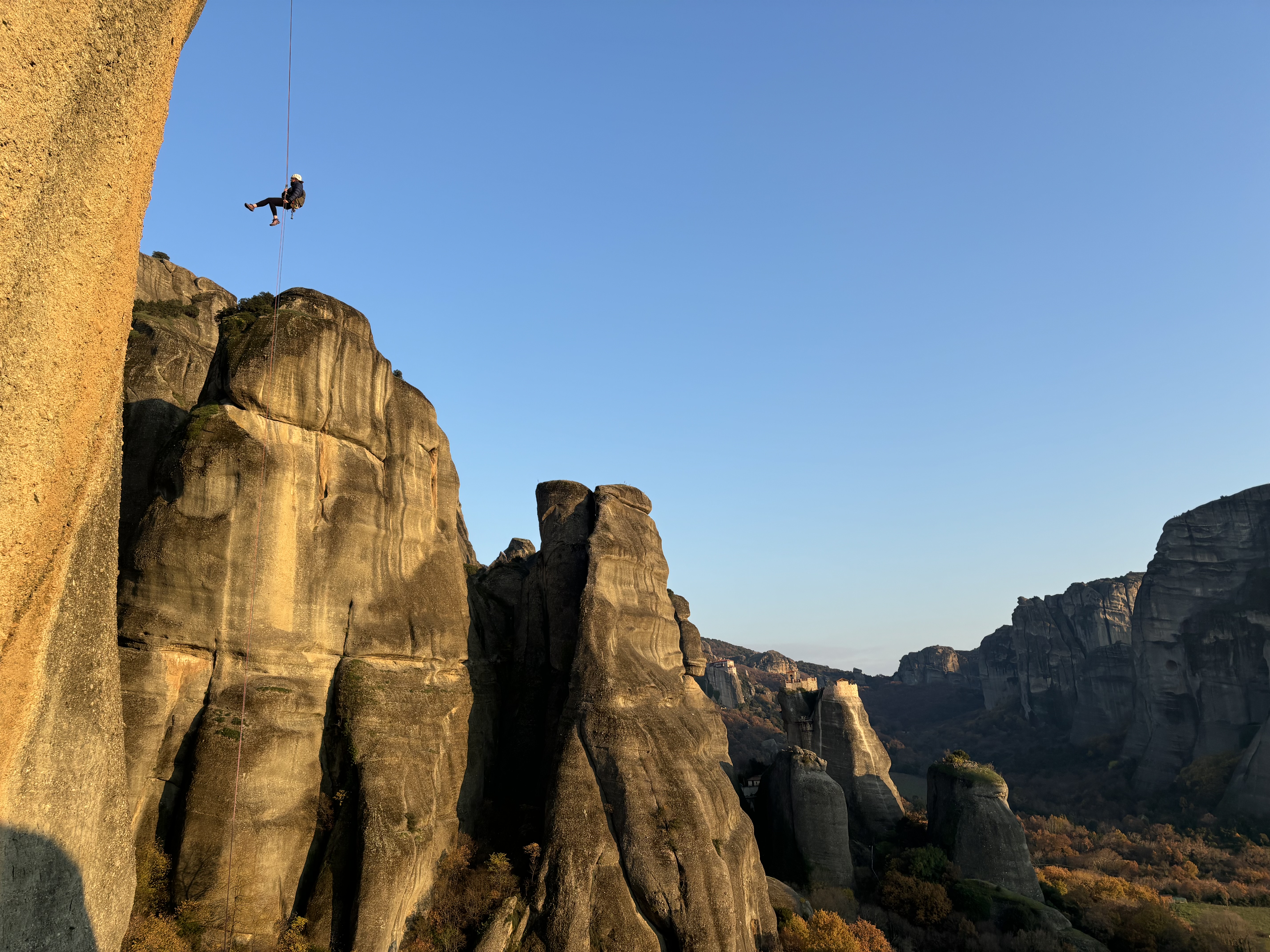
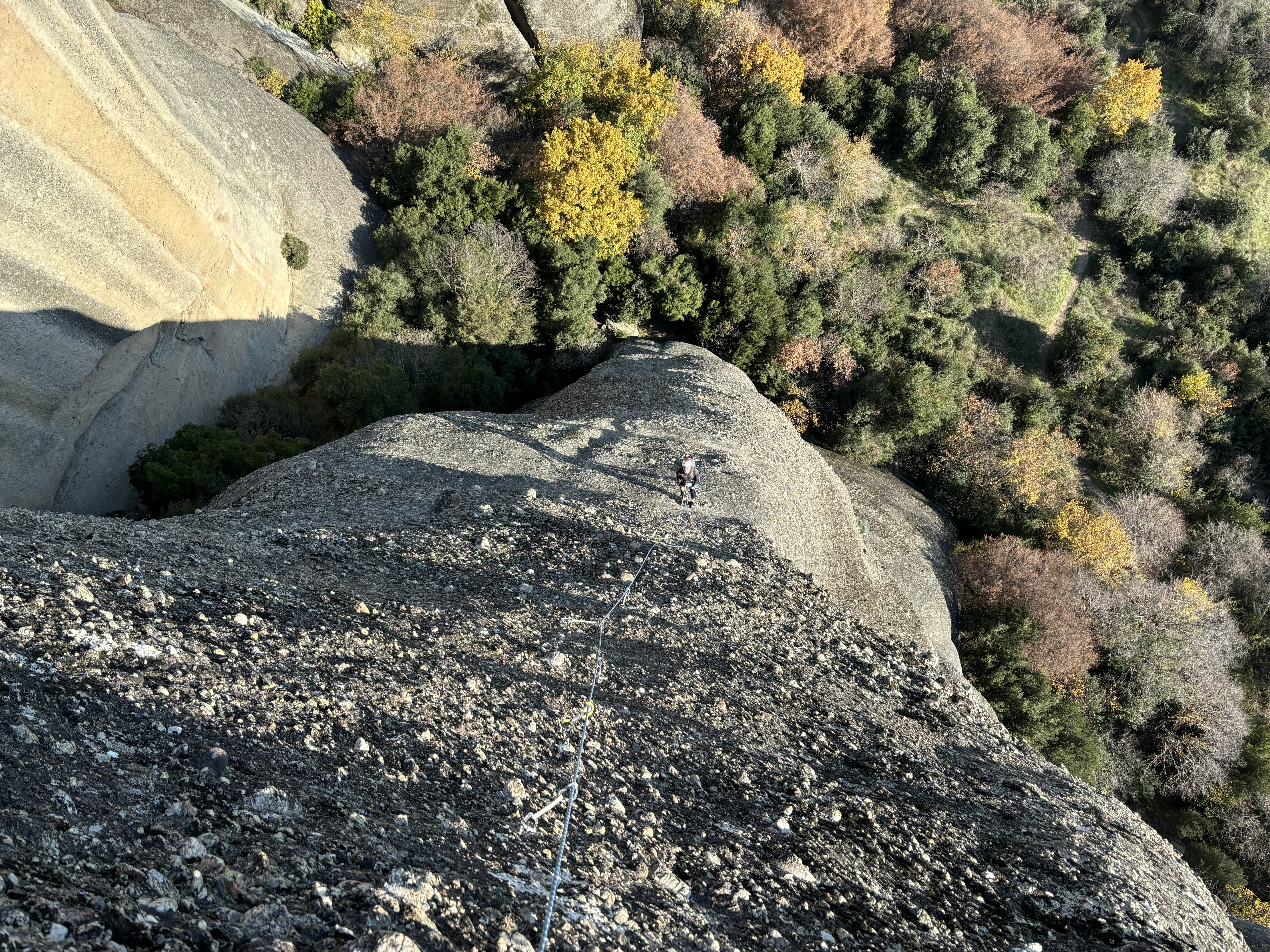
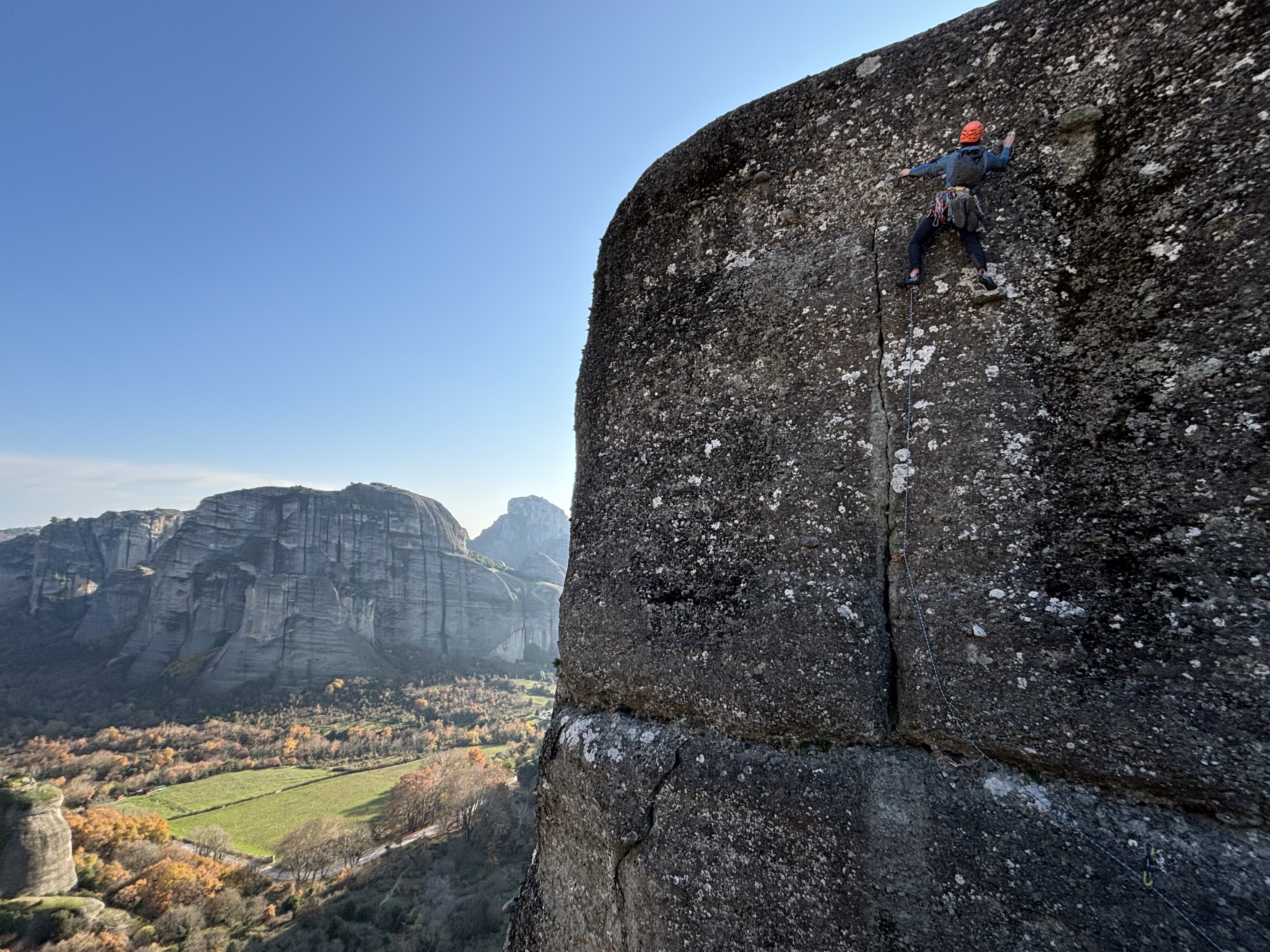
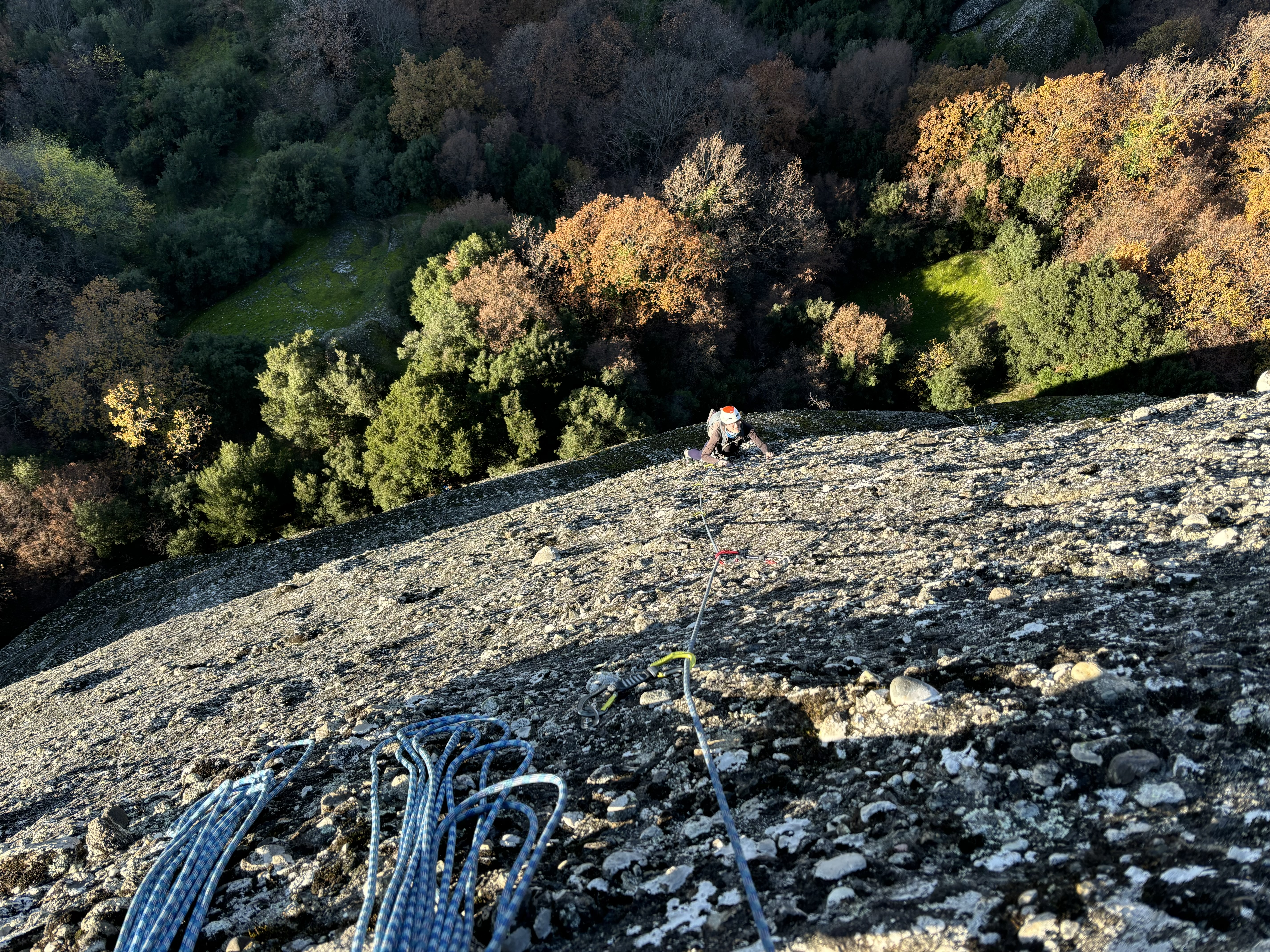
Great climbing on ‘Dresdner Eierschecke’, 6a+, up to the summit of The Grail, followed by a golden hour descent
The conglomerate rock of Meteora is pretty straightforward to climb on. The main variation comes from either the steepness or the size of the pebbles. The easier classic routes are off vertical and usually on cobbles somewhere between the size of an egg and a large potato. There are harder routes too, which are typically steeper and on smaller holds – but with closer bolts! Whilst the conglomerate has formed so many beautiful summits, to be truthful it isn’t the best quality of conglomerate. We encountered several loose pebbles even on popular routes, and also broke a few off that seemed solid. Normally this wouldn’t be a big deal but you must be extra careful in Meteora, as 10 meter runouts are not uncommon, some are longer! If you’re an experienced climber, it’s hard to imagine falling off any of the classic routes, due to the straightforward nature of the moves – so paying extra attention to the solidity of the cobbles is the best way to avoid logging some unwanted air time.
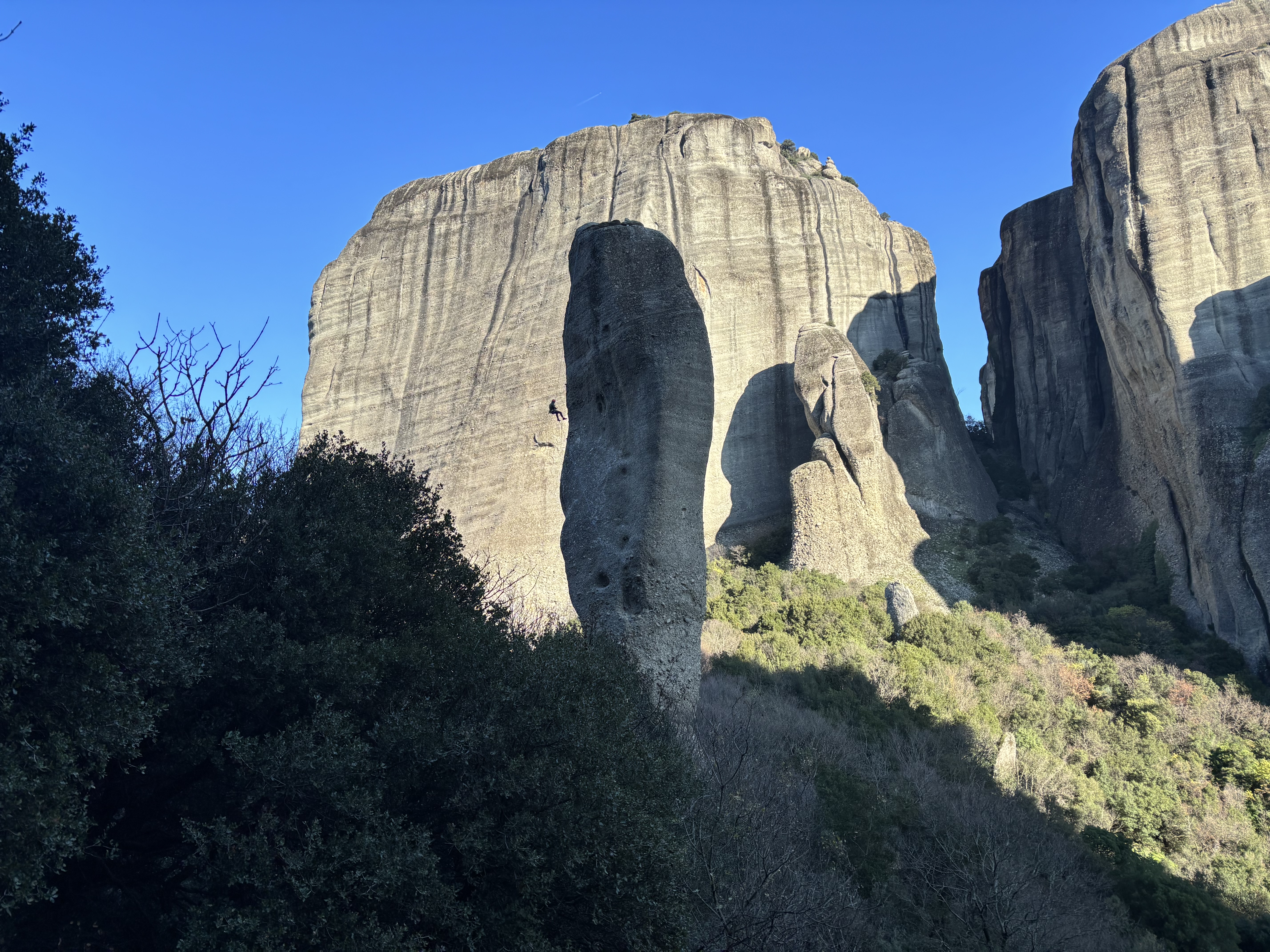
As well as the classics, there are plenty of more modern routes that are bolted much more like a conventional sport multi pitch, with 2-3 meter bolt spacings. the routes on The Bell are a great example of this. They have excellent sustained climbing, usually around 6b+ or 6c, are 3 to 4 pitches long and have particularly good rock quality. There are plenty of others like this too, generally the harder the grade the better the bolting. We much preferred the style of these routes, not even necessarily for the bolting, but it is more fun to climb in the mid to high 6s than the 5s, as the easy climbing can be quite homogenous and less varied. One route that stands out for uniqueness is the amazing ‘Corner of Madness’, which was very high on our to do list. Sadly it was very wet, and despite a full 8 days of December sunshine it never got warm enough for it to dry out. Thankfully the vast majority of routes were dry, we even got to climb in t-shirts some days! However, if we had been able to we would have preferred to visit in a warmer month than December.
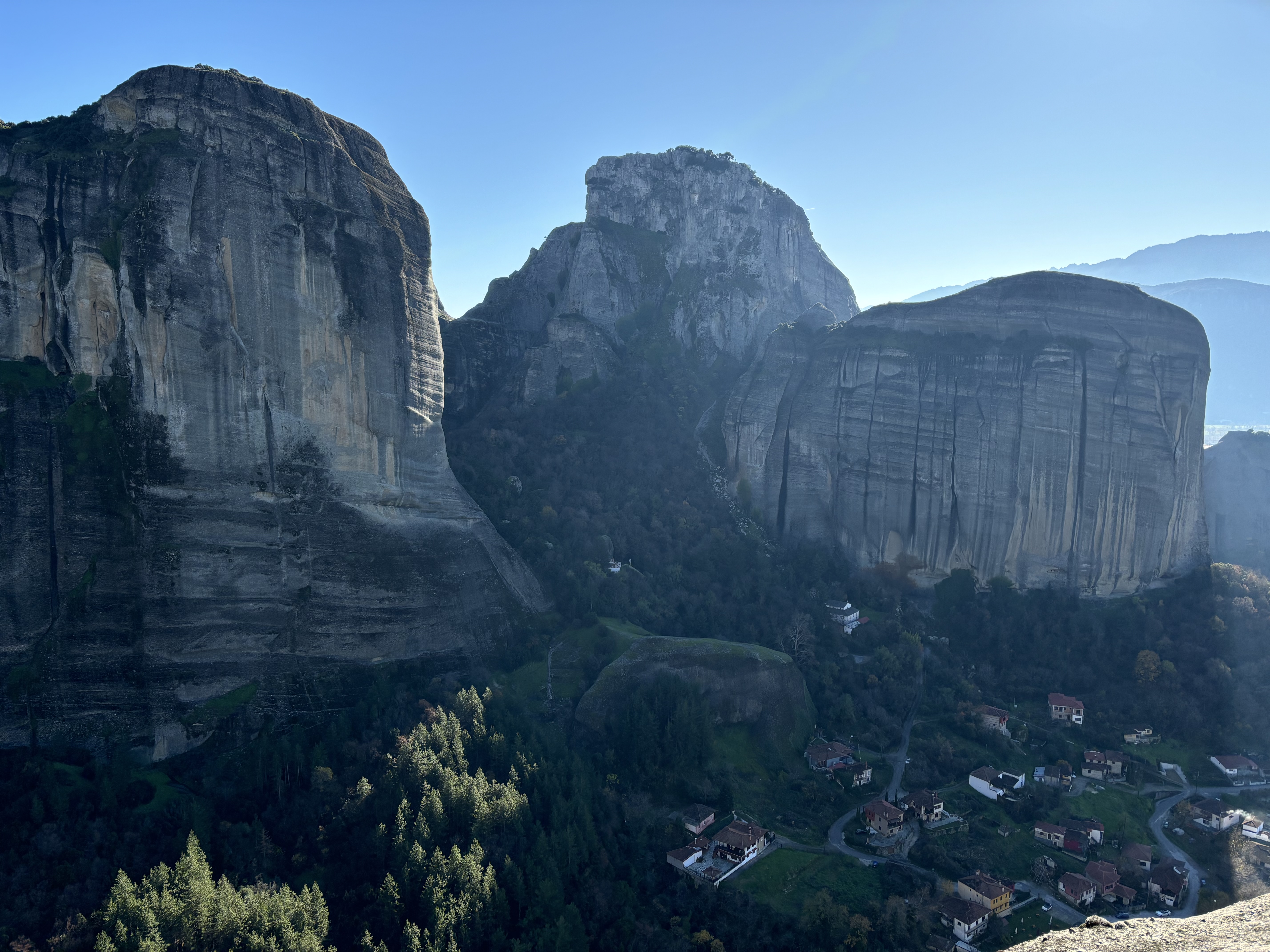
We really enjoyed climbing in Meteora and visiting the area in general. It is a very beautiful place and an idyll for climbers. In many ways the style of climbing here can feel a little bit like mountaineering. It is great fun to reach a summit, write in the book on the top and abseil off before going to do another tower straight afterwards. The beautiful monasteries of Meteora are incredible, but also very touristic. For climbers there is no such problem. We enjoyed having the summits to ourselves and lounging about in the sunshine on the top, taking in the view. For sure it can have some adventurous moments, but it is well worth the effort to leave with memorable experiences that live longer in the mind than the average sport route.
Pyli Little Gorge
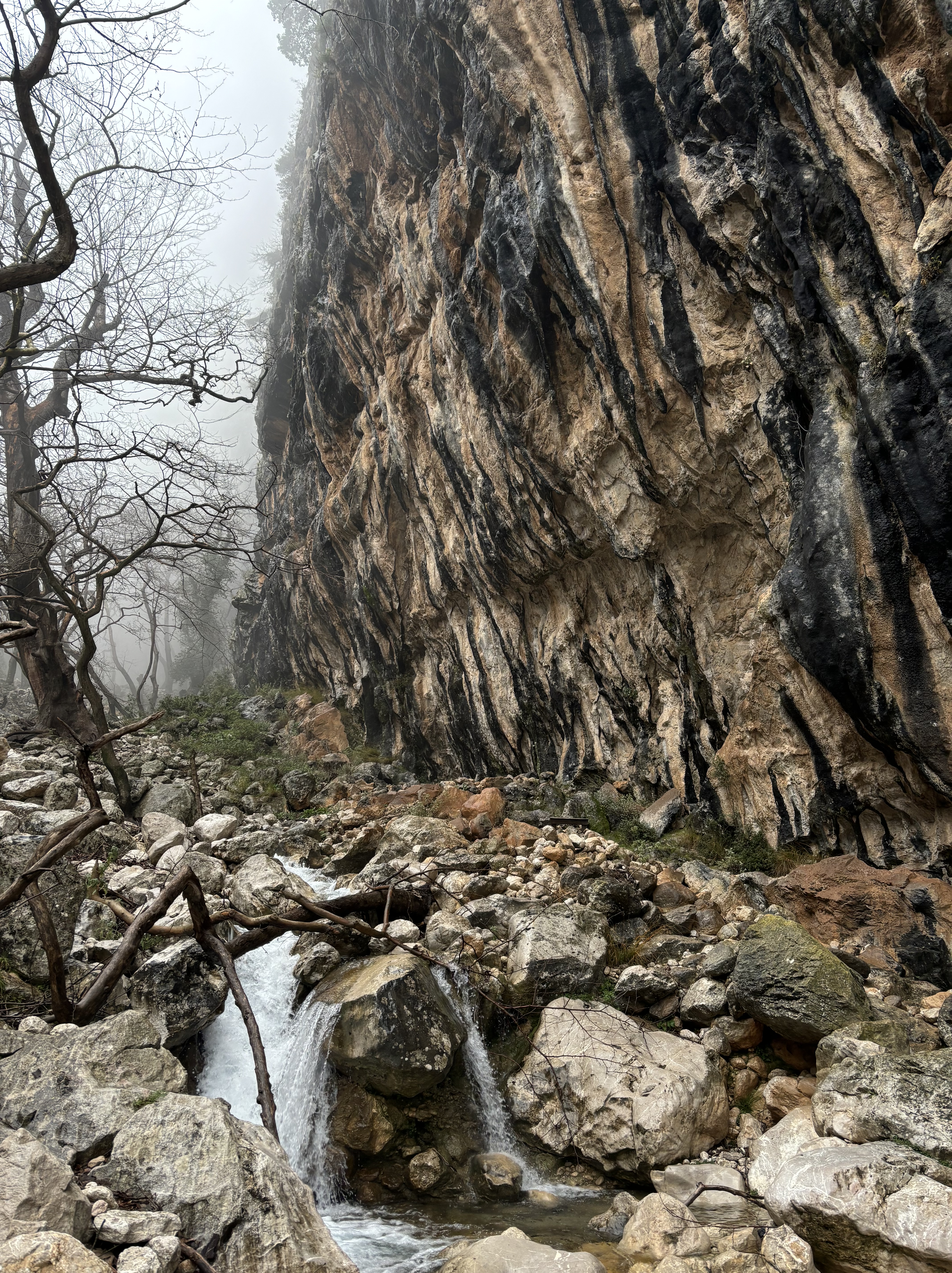
Pyli is a nice crag set in a peaceful and scenic canyon. One of the strengths of Pyli is that it is quite a cool crag, with a reasonable amount of shade due to its location and the cooling effect of being so close to the river. Unfortunately for us that same strength for the warmer months was very much our undoing in the cooler months, and we found the crag to be pretty soaking! The crag is only 40 km from Meteora, which makes it an easy stop if you fancy some chilled sport climbing after those conglomerate towers. The Pyli little gorge has around 75 routes, from 6a to 8b. However, whilst it may be perfect in September or October this is clearly not a winter crag. We enjoyed visiting to have a look, and we’d be happy to return another time to get stuck in, but unfortunately it was too wet to climb this time. The good news is that Mouzaki is only 9 km away and dries quickly!
Mouzaki
After seeing Pyli so wet, we didn’t hold out much hope for Mouzaki, but we were very pleasantly surprised to find it mostly dry. Even after some morning rain the crag was climbable in the afternoon and we were very psyched to get stuck in. It is fair to assume the tufa routes will be seeping, but everything else should be dry. Our first impression of Mouzaki wasn’t amazing, whilst it its a good size crag we weren’t sure if the rock quality on all of the routes would be high. Thankfully, after getting started and doing some routes we thought the rock was great and found the climbing to be very pleasurable. Take for example a route like ‘Pretty Fly’ – we initially thought it looked a bit crumbly, but actually the rock was very solid and has 35 meters of fun moves with some tricky sequences at the top. Mouzaki has over 80 routes, from 4 to 8b+, and is well worth a visit if you are in the area.
Manikia
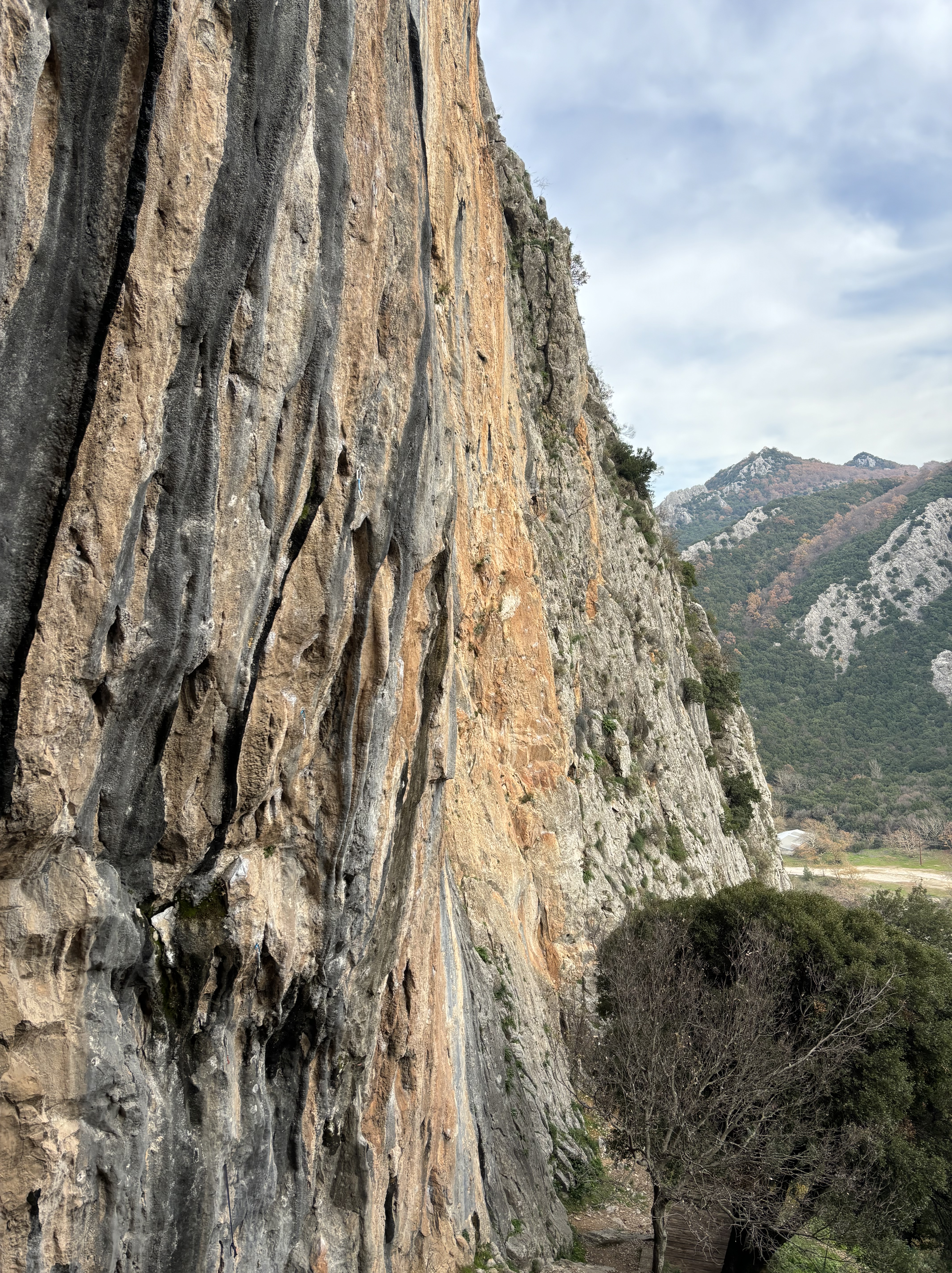
Manikia is perhaps Greece’s third most significant climbing area, after Kalymnos and Leonidio. The crags are set in a beautiful location, up in the mountains, on the island of Evia. The island is accessible by bridge and is only 128 km from Athens. Whilst it is a relatively new area, it is fast growing in popularity and it is definitely a major destination now, that receives quite a lot of climbers. Whilst it can feel busy, it definitely isn’t anywhere near as busy as Leonidio, which is pretty crowded. Equally, don’t expect it to feel like an ‘off the radar’ area, it definitely isn’t that. Manikia has over 700 routes currently, but there is still plenty of room for more development – the cliffs are very expansive!
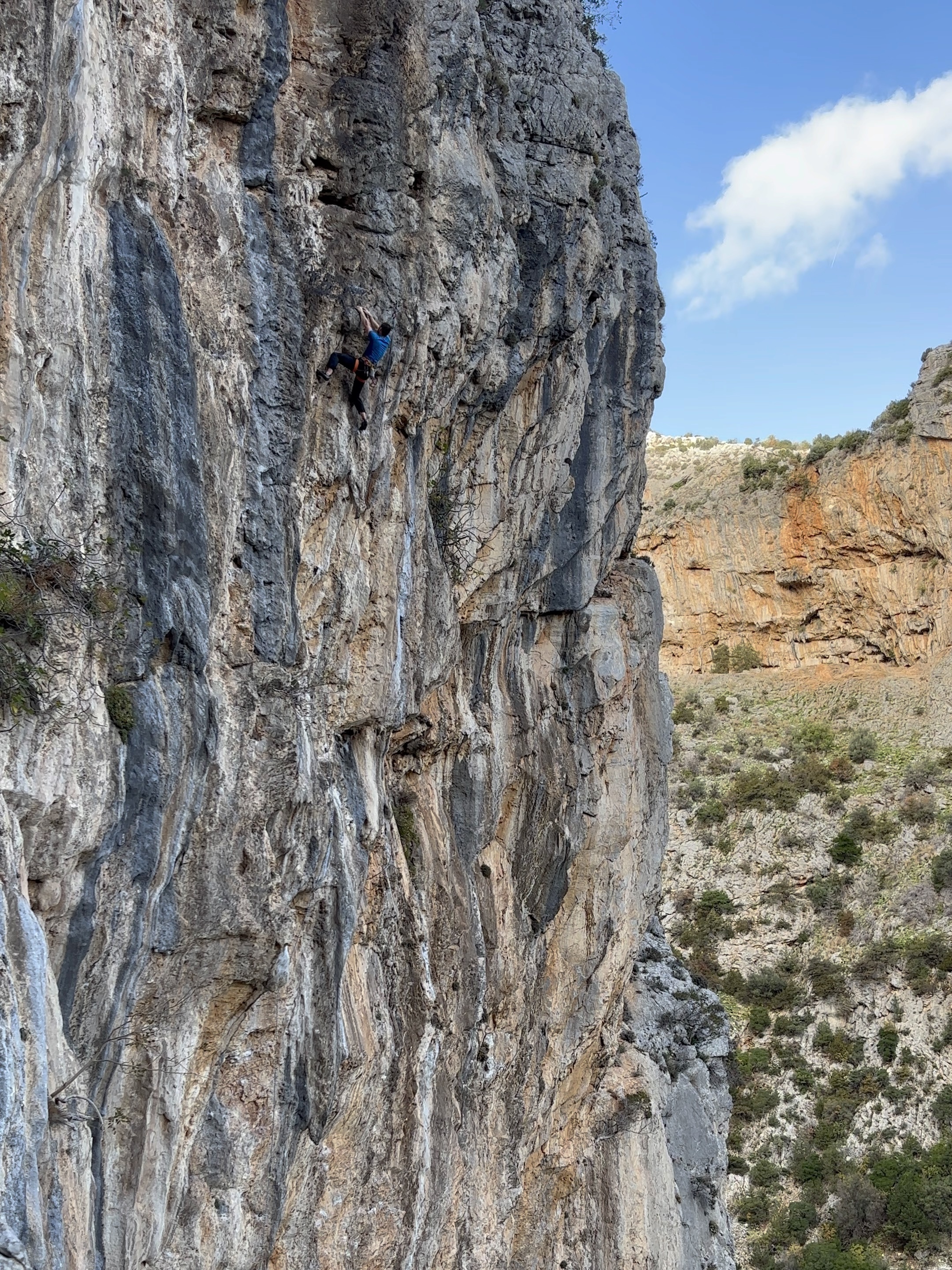
The climbing lies along tall bands of cliffs that run between the villages of Manikia and Vrisi. There is a good mix of styles, with plenty of tufas, grey slabs and steep orange rock. There are also a good amount of multipitch routes to choose from. One thing to bear in mind with Manikia is that there isn’t a huge amount of north facing or very shaded crags. This means you can have limited options if you’re in the hotter months, and can lead to honey potting. It can also get cold in mid winter, but there are lots of sun trap crags to give you some nice warmth if the forecast is good. We climbed in Manikia for a week in November and it was generally pretty good conditions – overcast and mild. When the sun did shine it was surprisingly still quite hot and the shade was preferable.
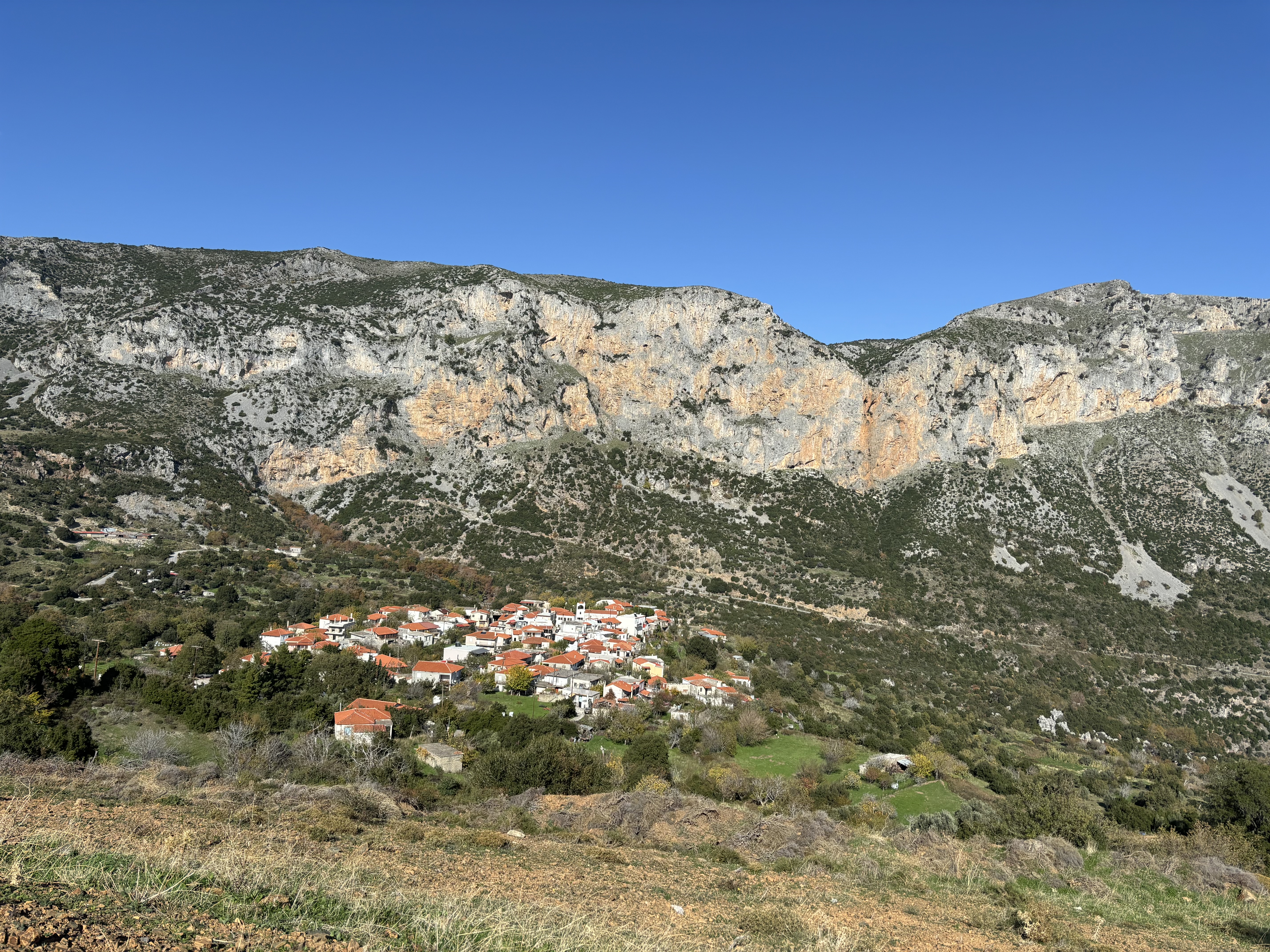
The climbing is grouped together into different areas, like Mpouzagi, Lower, Middle & Upper valleys, Canyon/North Face and above Manikia. Whilst all these lie within only a handful of kilometres of each other, the area is very hilly so you will definitely need some transport to move between the different sectors during your trip. It is worth visiting plenty of different sectors, as the quality can vary quite a lot between them. We didn’t do any bad routes, but some of the sectors can be pretty average – whilst others are absolutely fantastic. The popularity of the sector isn’t always an indicator of its quality either. Our personal favourite sector was Alaska Beach, which has some newly developed mega long tufa routes as well as plenty of great crimpy face climbs.
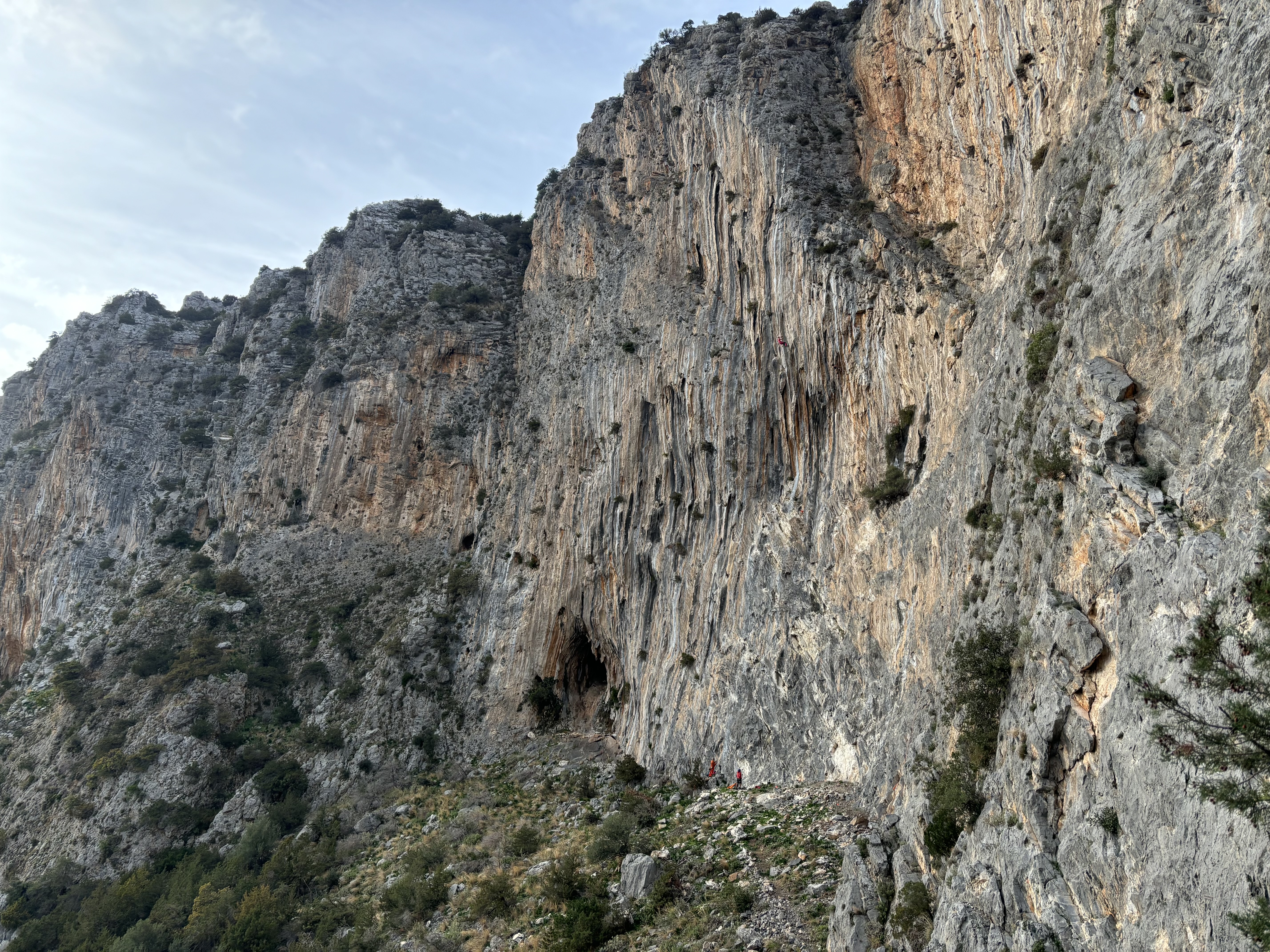
We enjoyed Manikia, the area is really beautiful and there are lots of great routes to go at. The question on most peoples lips is, is it better than Leonidio? In our opinion, no, the climbing in Leonidio is better. However, we actually had a much more pleasant experience in Manikia, as although it is frequented it wasn’t swamped with climbers like Leonidio. Plus, so far, Manikia doesn’t have anywhere like the levels of polish Leonidio does. Overall, we liked Manikia, we would go back again and we would encourage people climbing in Greece to visit and have a look for themselves.
Kleisoura
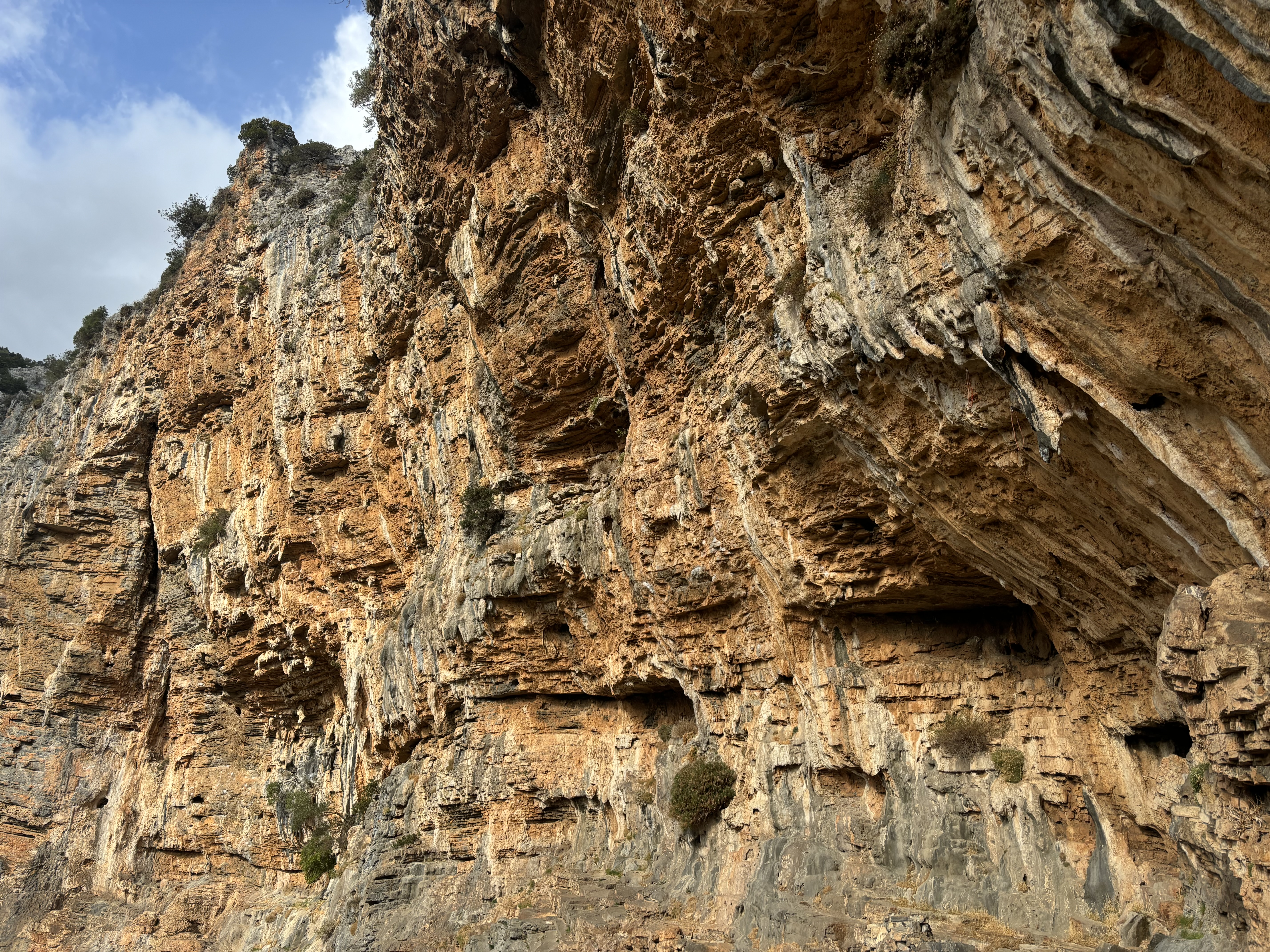
Kleisoura is a large and impressive canyon, with a huge amount of rock, right next to the road. In fact, there are lots of walls both inside and outside the canyon, with the potential for many routes. It is very clear that not all of the rock is good rock, but there are plenty of absolutely gobsmacking tufa walls and it was unclear to us how many of these have been developed. The sector we visited is the main area, as described in the Climb Greece guidebook. The approach is very short and there are 53 routes from 6a+ to 8c. There are more 8s than 6s, so it is definitely a crag for the harder climber. Some of the harder tufa routes here are unbelievably cool lines, if you can climb in the 8s you’ll surely want to visit as many of those routes look just as good as any we saw in Greece. As well as tufas, there is a good selection of steep routes on orange rock that seem to be almost permanently dry, which we enjoyed climbing a lot and found to be much better than they look. Whilst it is not yet a major area, we really enjoyed Kleisoura and think it is well worth a trip for anyone passing through this part of Greece.
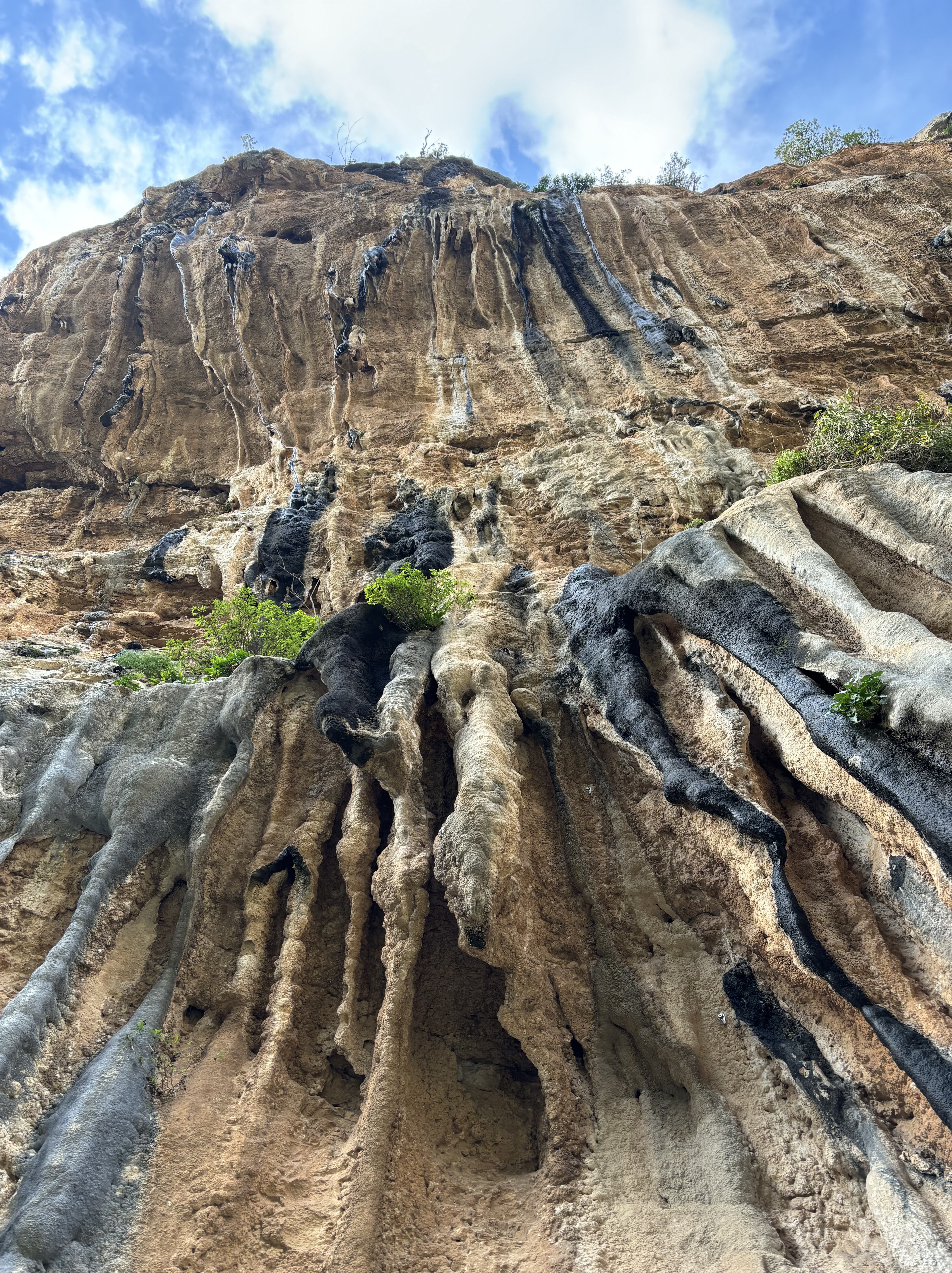
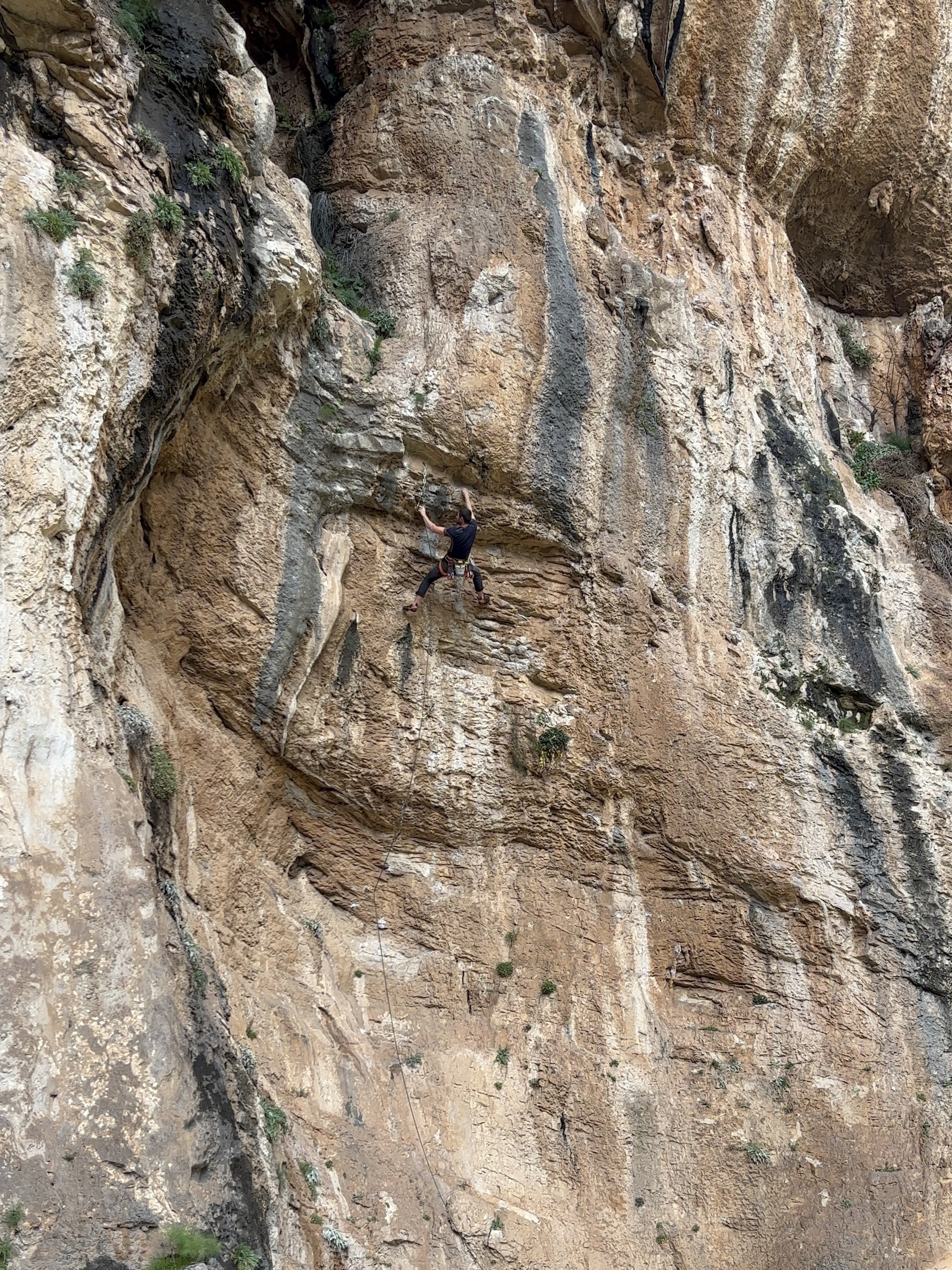
Stunning tufas at Kleisoura & Very fun, steep and energy draining climbing on ‘Armadillo’, 7a
Varasova
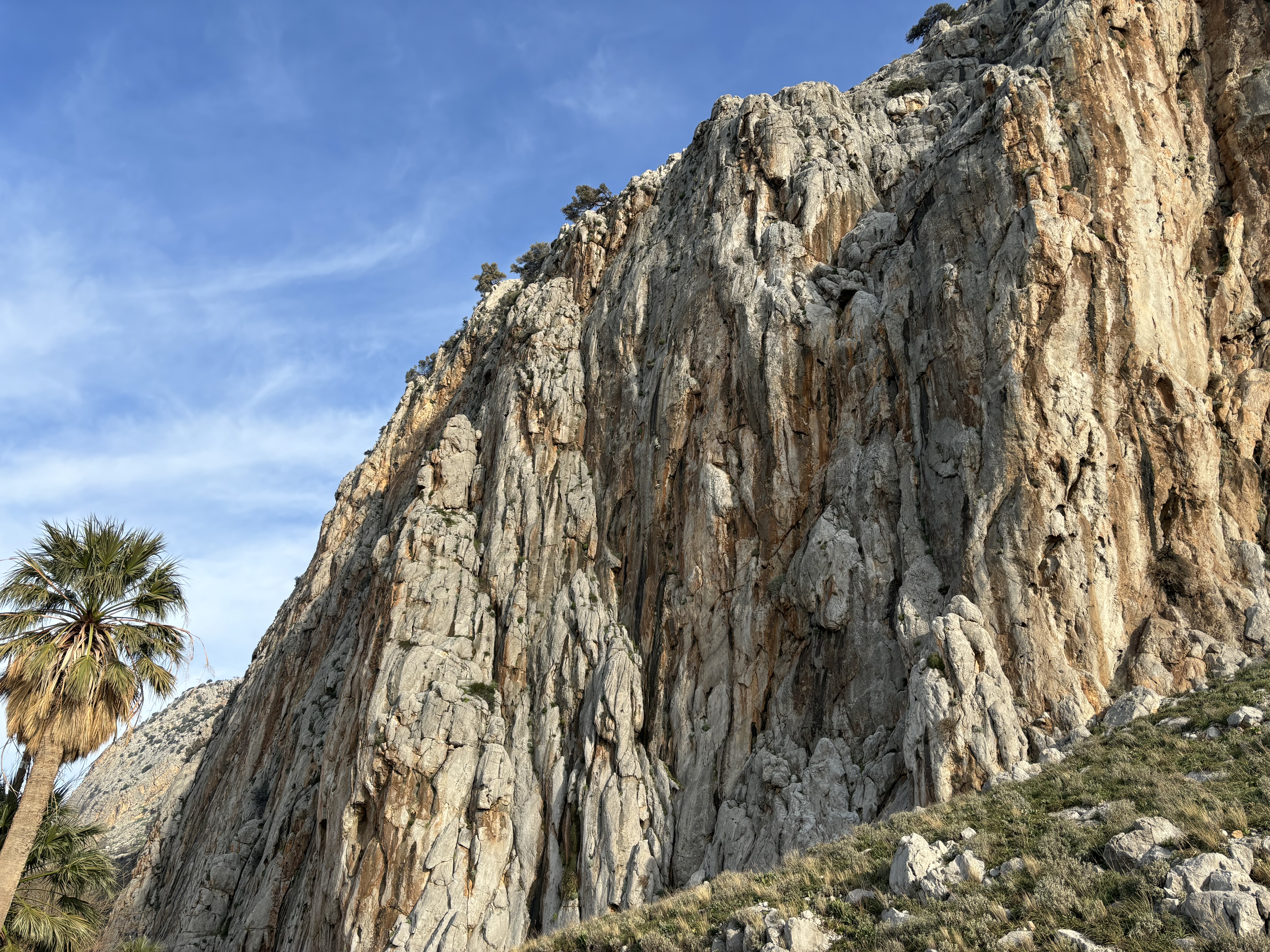
Varasova is a large and historic climbing area, with big eye catching cliffs located right by the sea. Many of the crags have a very short approach, and people often park literally right beneath the routes. The area has quite a variety of climbing, with some of the longest multi pitch sport climbs in Greece, some of them are 600 meters! We were in the mood for, and had the weather for, single pitch routes. The actual location is nice but it has been a little detracted from by trash and too many camper vans. We even saw one ‘vanlifer’ struggling away trying to chop down a small bush with a very blunt axe….not a good look for climbers. Route wise, the lines are quite eye catching, some of them are very long and there are plenty of them – around 100 routes up to 8b. Whilst the routes look cool, we found the climbing often very difficult to click with because everything was incredibly greasy. We aren’t sure if it is always the case, but even after time in the sun to burn off the sea grease everything felt very shiny and slippery. It was also not uncommon to find some loose holds too. This seems to affect the harder routes in the orange/yellow rock the most – and in general the grey rock had more friction and was better quality. Personally, we thought the climbing at Kleisoura, 36 km away, was better.
If you find our content useful please consider subscribing:
Mavrosouvala
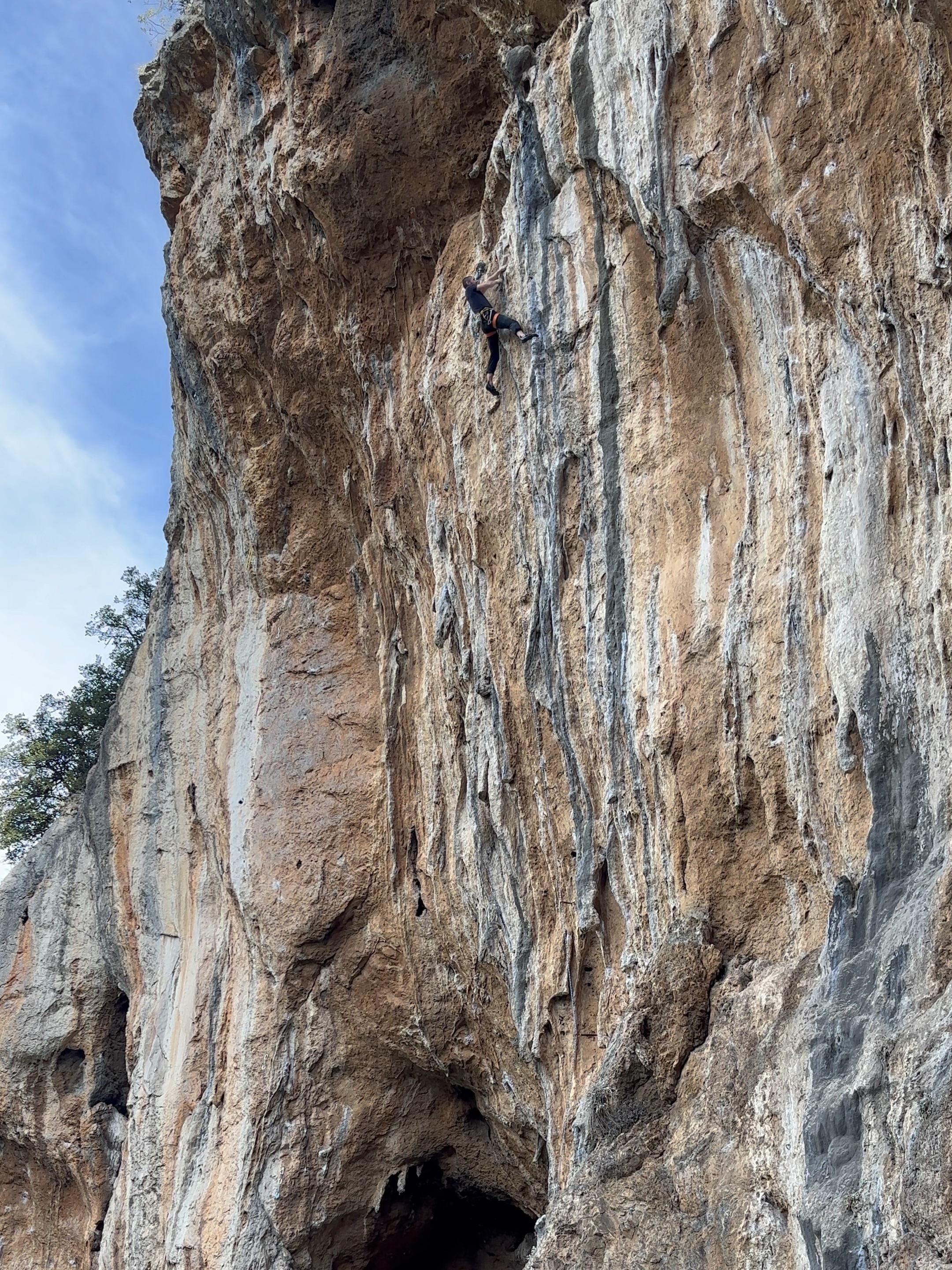
Mavrosouvala is an excellent crag not far from Athens, but in a surprisingly peaceful location. The crag is around 35 meters high, with the hardest routes going the full length but many stopping at around 25 meters. The rock quality is great and there are lots of stunning tufa climbs, with drainpipes, blobs and even a few stalactites. The routes are so good they rival many of the individual routes at some of Greeces most famous crags, it really is an excellent sector. The only real negative is that it basically is just the one sector on its own, not a whole climbing area. Mavrosouvala has around 35 routes if you only count individual lines, but has around 50 if you count extensions and link ups, and has grades from 6b to 9a. The approach is very short and easy, and whilst the crag has a lively scene of Athenian climbers at weekends, you will likely be the only ones around midweek. We loved Mavrosouvala and thought it was a brilliant place, exactly the sort of crag we love to visit and one we wouldn’t hesitate to return to.
Kalogria
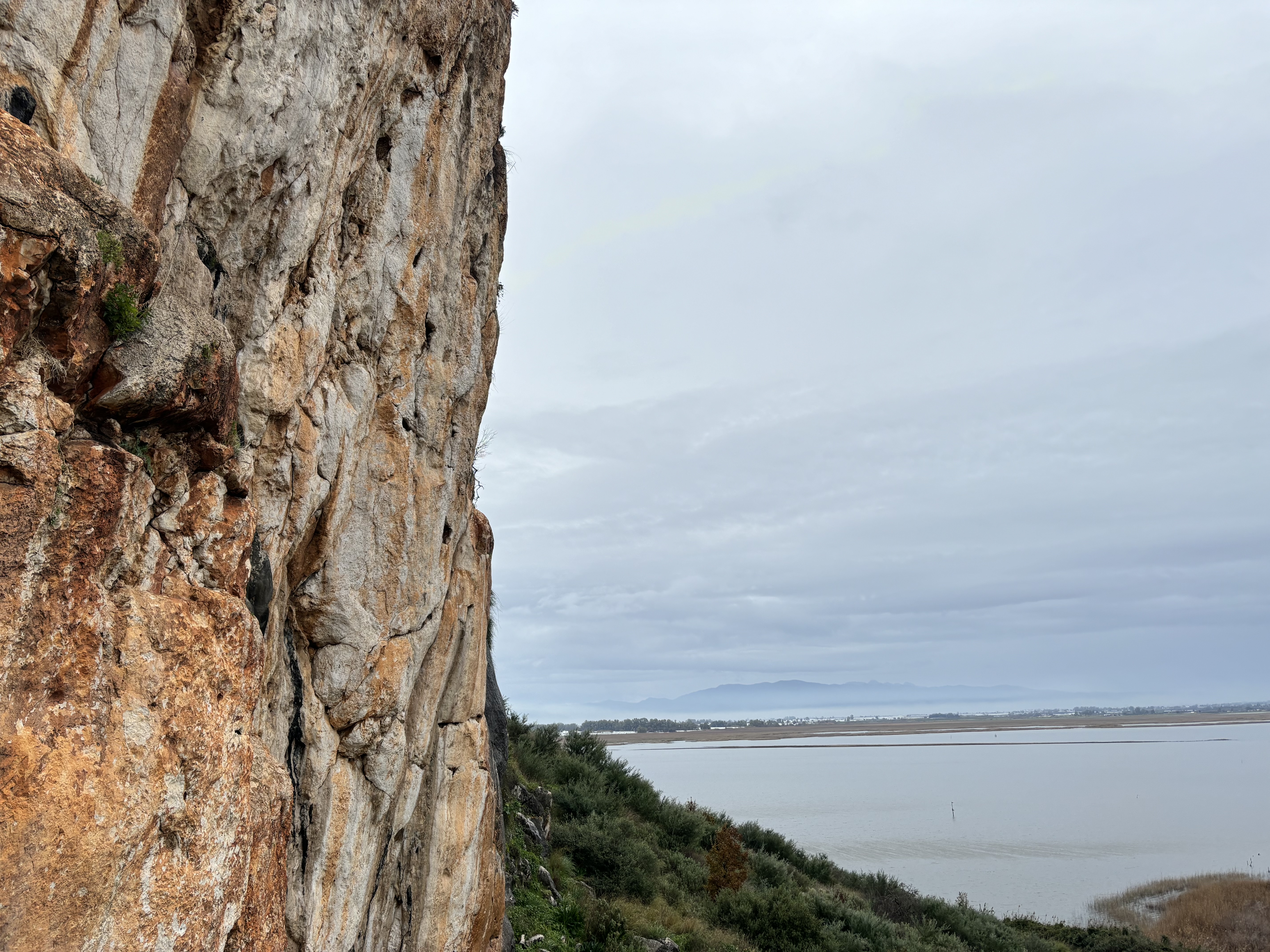
Kalogria is in many ways the brother crag of Varasova, and it lies just across the sea on the Peloponnesian side. Kalogria is in a nicer location, whilst it is set back slightly further from the sea, it is right above the Strofylia national park. Strofylia is a wetland area with a huge amount of birds – you can easily see pelicans, flamingos, ibis and much more. In many ways this was actually our favourite thing about the crag! As for its similarities to Varasova, that is very much to do with the rock type, which was almost identical. The slippery and frictionless orange rock was very much the same. Whilst Kalogria doesn’t have the big multipitches that Varasova does, its single pitch offering is similar, but with a much superior location. Kalogria has over 100 routes, with grades from 4 to 8b. It definitely isn’t the best of Greek sport climbing, but we really enjoyed it due to its location in the national park – it is worth a stop if you’d like to combine some climbing with rest day bird watching and short walks.
Fyli
Fyli is a small town very close to Athens, that has absolutely loads of routes spread over many different sectors. In total, there are well over 500 routes just in this one part of Athens, and Fyli is not the only climbing area near Athens either! The climbing in Fyli is composed of various different cliffs on the slopes of Mount Parnitha. The area is very pretty, has easy access, and the rock is excellent. We would have been keen to climb in Fyli for a while, the only reason we kept it short was because of the rather cold weather, we woke up in -2 degrees one day! Aside from being a bit chilly, we liked everything about the place. One sector is named Mikri Varasova, mikri meaning little. Whilst it is indeed smaller than Varasova, we think the climbing is even better than actual Varasova! After really enjoying several routes, with a great mix of crimps, pockets and technical moves, we headed into Athens for some sightseeing. Our plan for after that had been to check out the excellent looking crags at Mount Hymettus, but sadly heavy rain made us head west to drier crags.
Alepochori
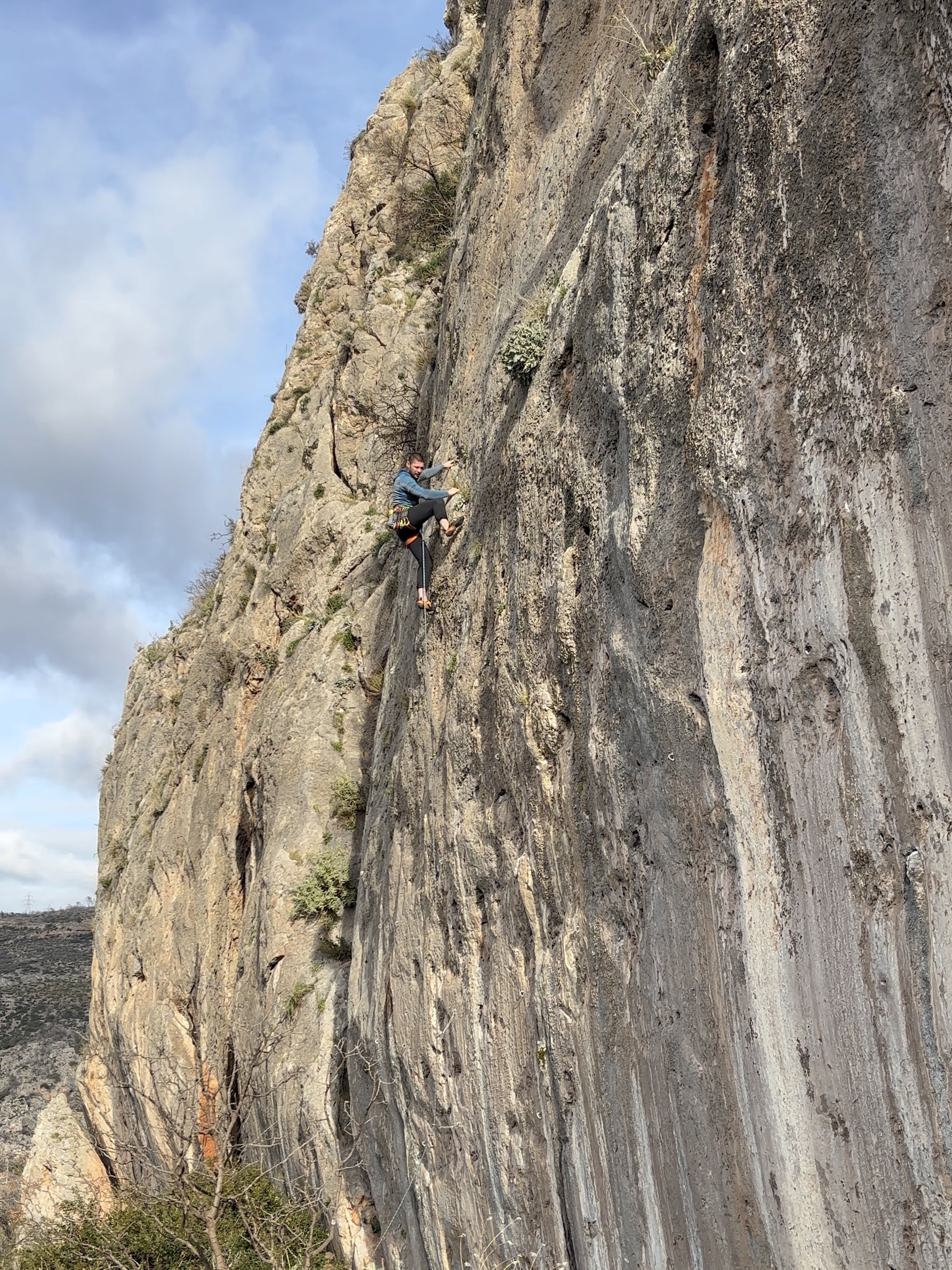
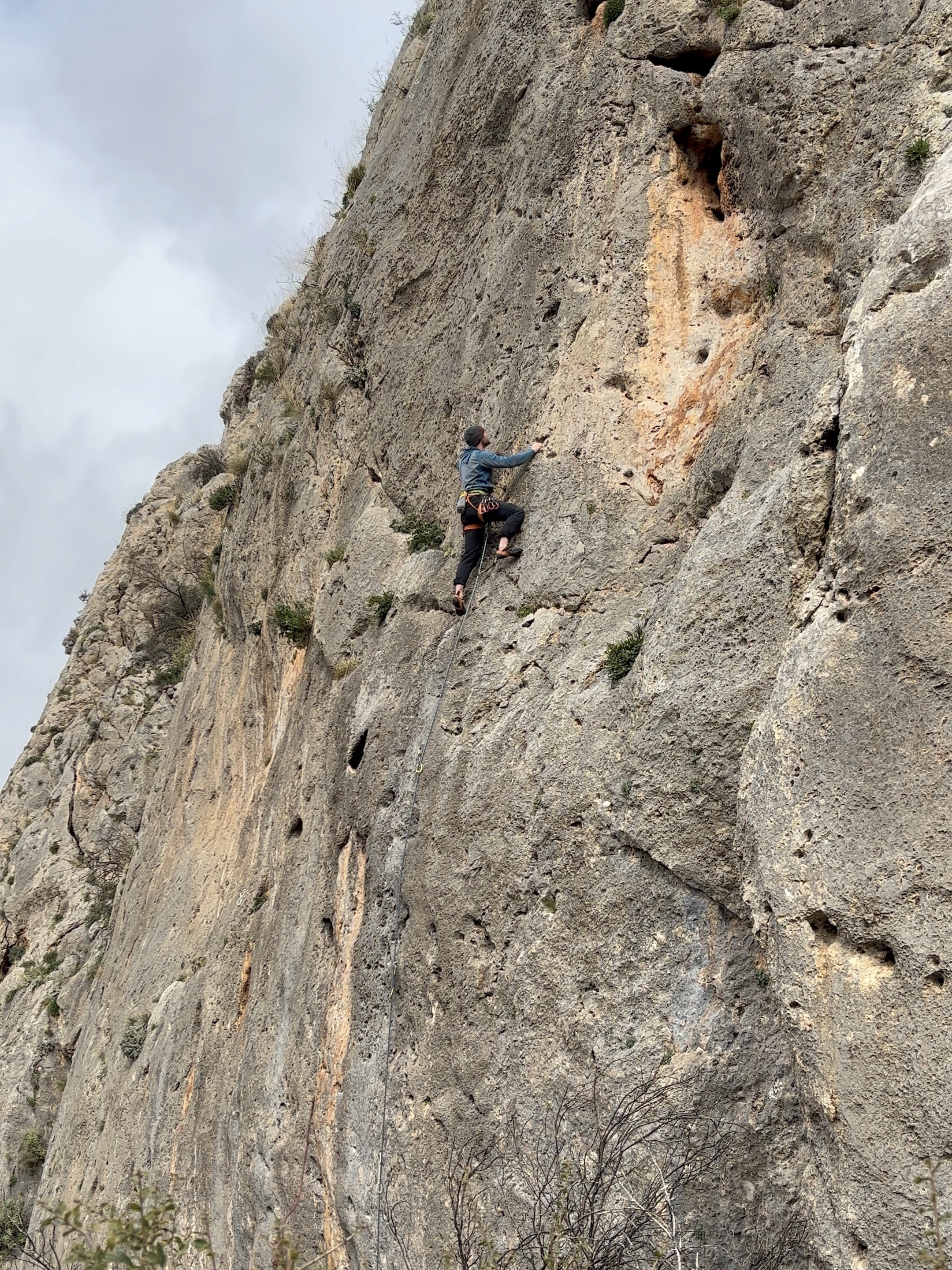
Alepochori is a great climbing area, in an incredibly beautiful and peaceful mountain setting. Alepochori is an area with two sides to it, literally. There is an east and a west set of crags, on opposite sides of the same hill to each other. This gives you the handy option to follow the sun or shade as needed, bearing in mind the crags sit at around 550 meters elevation. The east/west split is also great style wise, with a distinct difference between the two. The west is an amazing tufa area, with some super impressive lines and formations. The routes are up to 30 meters, with a few longer, and the style is quite varied – with some thought provoking moves at the top of the routes, after you’ve left the tufas behind. The only caveat for the west crags is that things only really get going at 7a, so if you climb beneath that grade you won’t find much there. The grades can be a bit stiff too, so not necessarily the easy soft touch you would want to break into new territory.
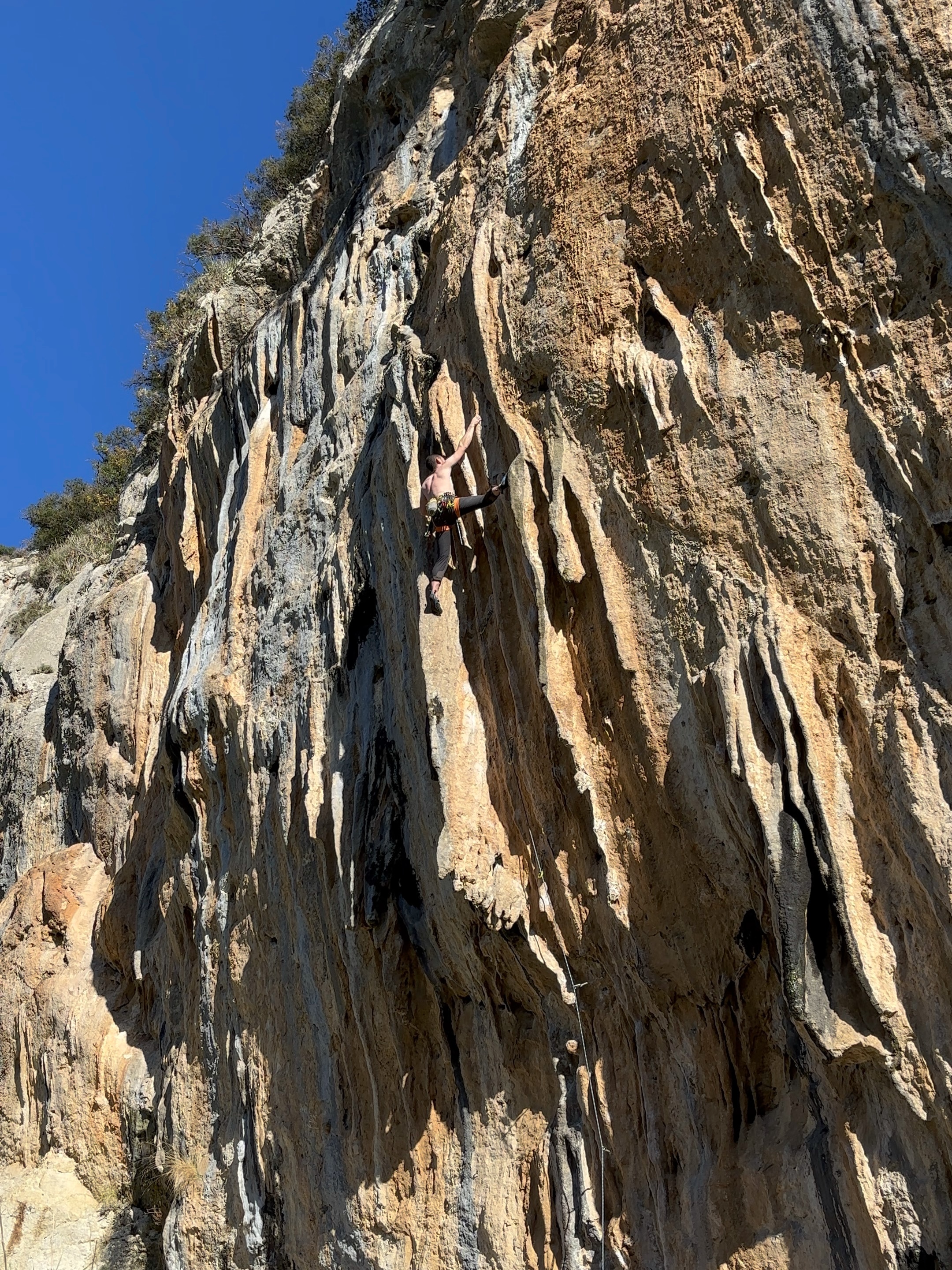
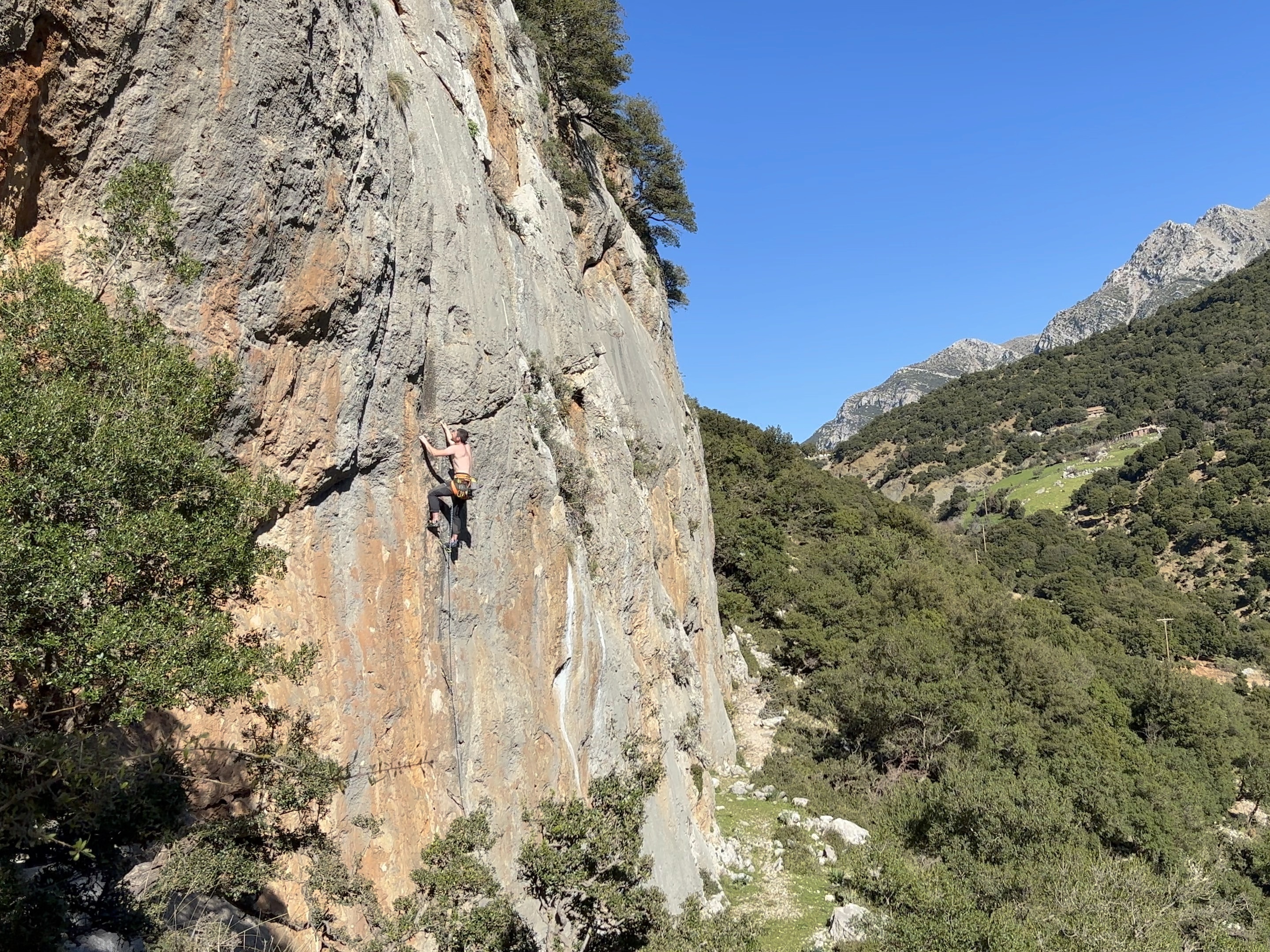
By contrast, the east is mostly vertical, with an abundance of crimpy grey rock. The view from the east is even better, with a 180 degree mountain vista right in front of you. The routes here also feel hard for the grade at times, but there is a great spread of easier routes, with plenty of 5s and 6s, as well as some awesome 7s, like ‘Barba Dinos’, which has some amazing moves and is a very devious onsight. The routes at the east are generally shorter than the west, at around 20 meters, but they definitely pack a punch for their size. The rock is excellent, as it is across Alepochori. In total, there are around 100 routes in Alepochori, with something for everyone both grade and style wise. We absolutely loved it here, it was everything we’d hoped for and more, and we would definitely be keen to come back and climb here again in the future.
Chatzouri
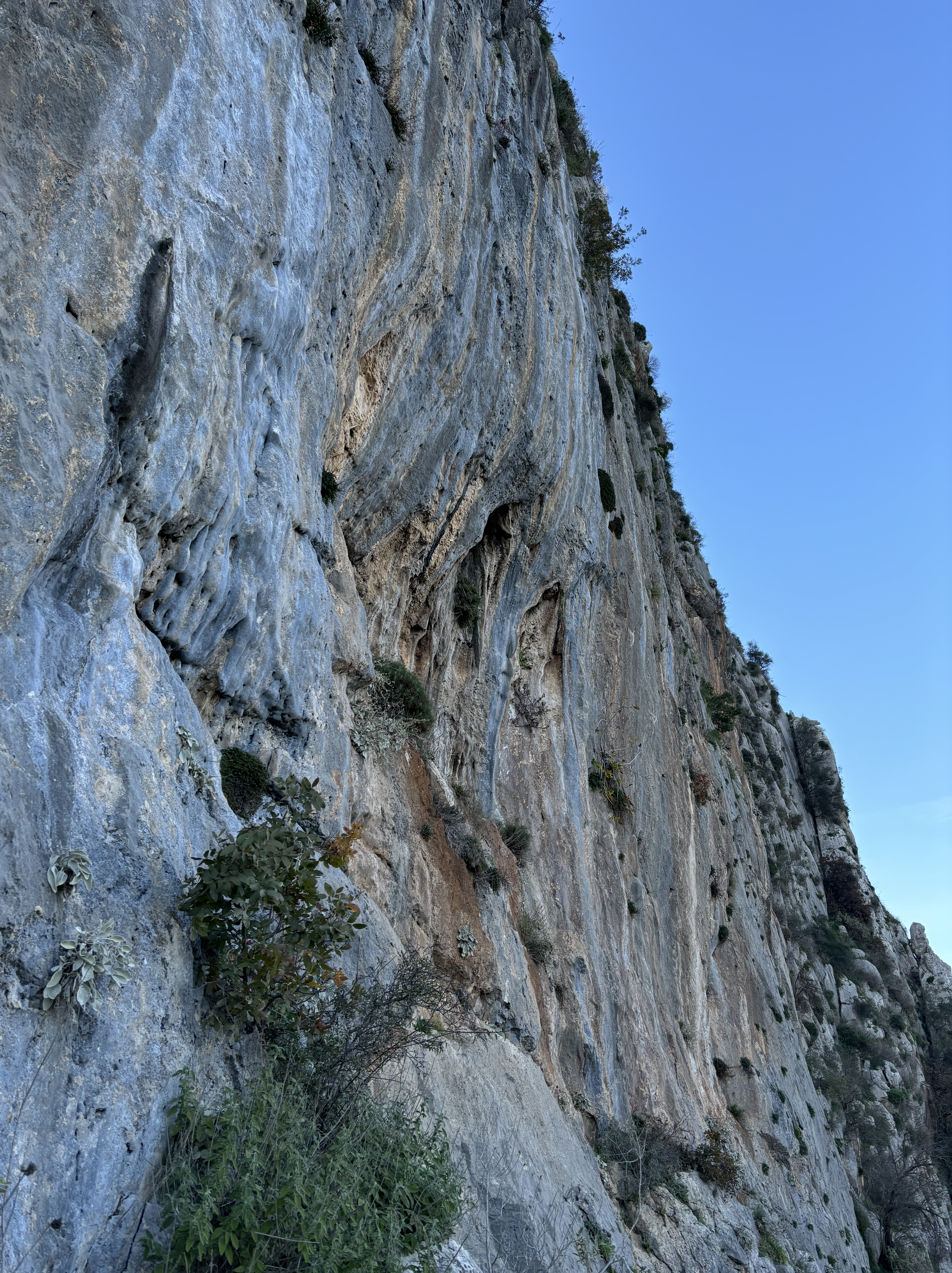
Chatzouri is a cool crag, in a nice area, in the same general region as Alepochori. Whilst the location isn’t quite as nice as Alepochori, Chatzouri does have a great view and some very impressive walls. The crag has around 60 routes, with grades from 5b to 8c. It is worth bearing in mind that lots of these routes are hard link ups, above 8a, in the cave sector. If you’re climbing these grades you will need a long time before you exhaust all your options there! For 6s and 7s there are a few routes outside of the cave and three other sectors; left, middle and right wall that all have options for you. Left wall is definitely the nicest and most impressive, with plenty of long (35m/+) routes on beautiful blue grey limestone. It is definitely worth visiting Chatzouri for this, maybe not if you’re a long way away, but if you’re going to visit Alepochori then it is definitely worth making time for a day at Chatzouri as well.
Nafplio
Nafplio is a beautiful coastal city, one of the most significant in Greece – It was actually the capital of the country for a period in the 1800s. There is a lot of history in Nafplio, like the huge hilltop fortress that was built by the Venetians over 300 years ago. Climbing wise, Nafplio has a lot to offer, with many different sectors spread over a relatively large area, mostly very close to the sea. Nafplio has somewhere around 190 routes, with grades from the 4s up to the mid 8s. Some sectors, like Akronafplia, are right on the promenade that leads into the city. The star sector is Neraki, which is right above a beautiful beach. Personally, we think if you are looking for a crag with good climbing to combine with a swim, Neraki is better than Vlychada. Other sectors, like Karathona, are further from the coast and therefore a bit further away from any seaside bustle. Most of the crags get a lot of sun, so this is the perfect place for climbing during the winter, and probably best avoided in the summer. If the heat gets to you, then you are only a few meters away from some crystal clear water, perfect for a swim.
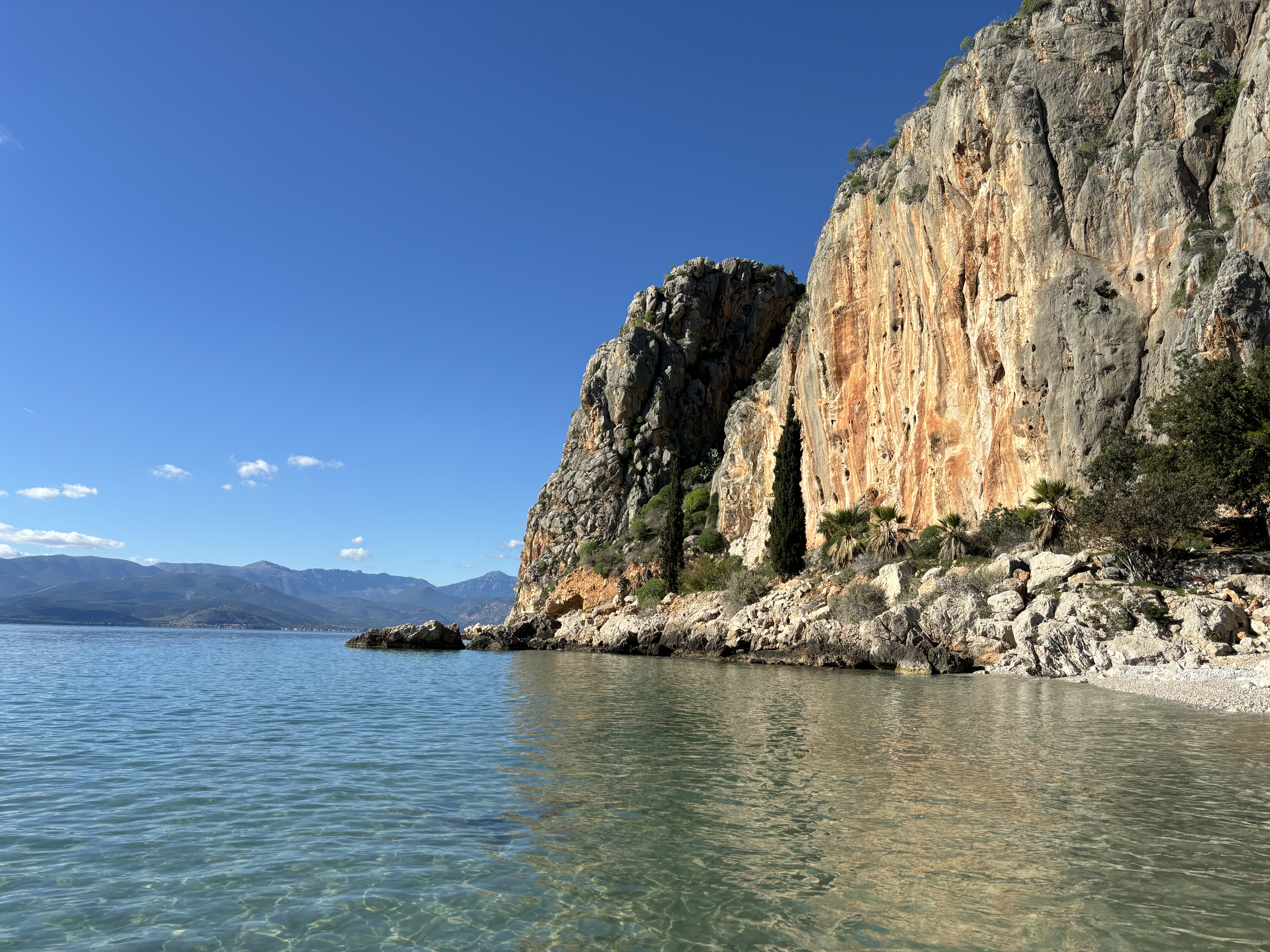
The climbing style here is quite interesting, in the orange rock it is typically quite bouldery and punchy moves separated between excellent rests in the giant huecos that pepper the cliffs. The grey rock has a mix of pockets, jugs and crimps and is also very nice. We found some of the popular routes to be polished, but the rock is very good quality and we didn’t have any problems with grease like we did at Varasova. We rated Nafplio well, it is a great place to climb and well worth a visit. It gets well visited by climbers, but it wasn’t really busy, and the city in general is more known for tourism and sightseeing than climbing. You certainly won’t need to queue for routes here! The only thing it lacks, that other areas have, is that peaceful and remote feeling of being alone in nature. However, being close to the city also has great perks, if you want to grab a coffee or go for souvlaki you can just stroll along the boulevard and it’s there!
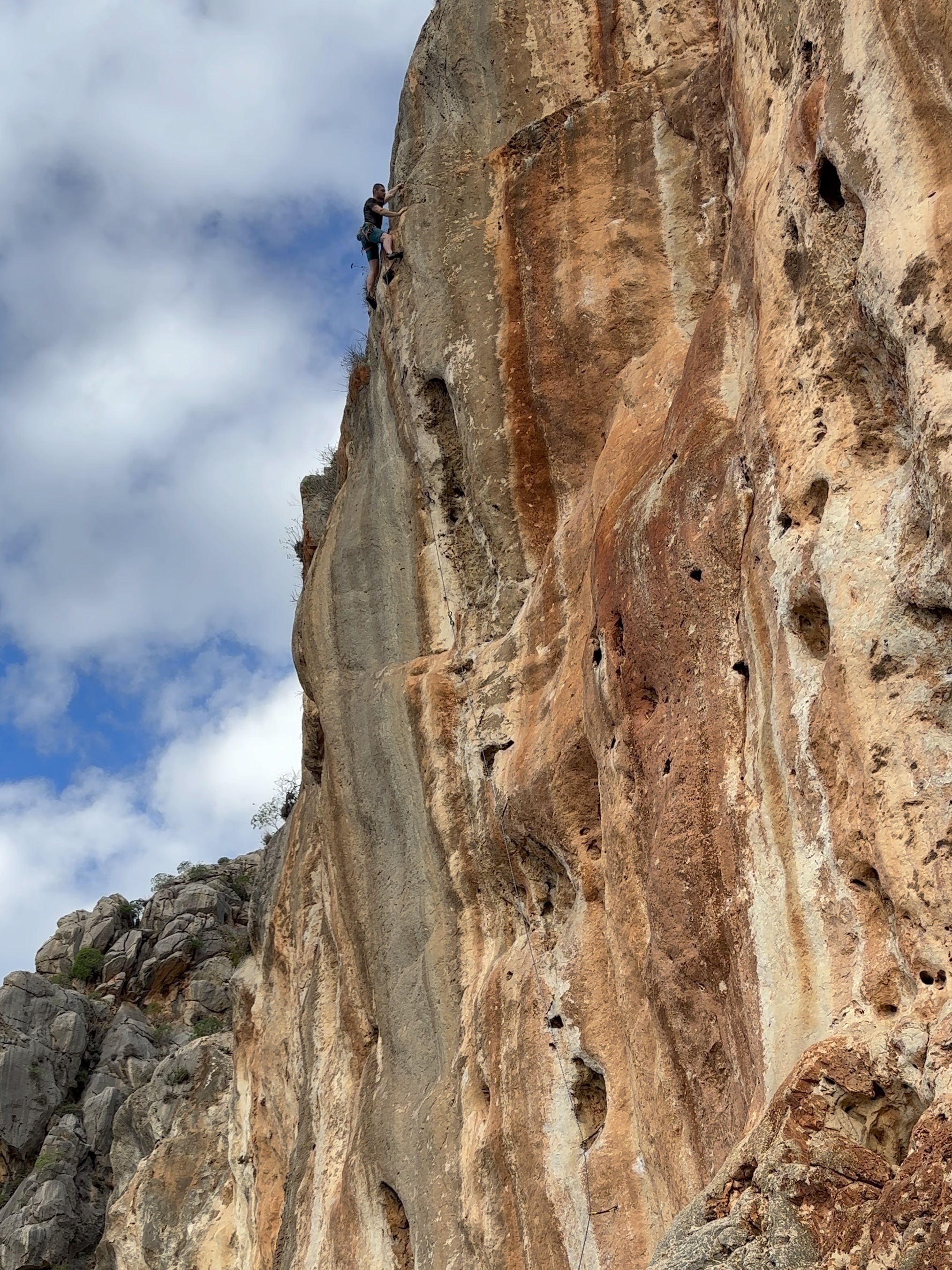
Charamos
Charamos is a nice small crag, in a peaceful location and with a short approach. It isn’t a huge or epic wall, but a very pleasant and enjoyable place to spend a day or two, especially if you’re passing it by on your way to Ermionida. The rock is very nice quality and you definitely don’t need to worry about polish or crowds here! The routes are nice and ‘down to business’ – there aren’t hands off rest ledges and huge jugs. It is mostly pocket and crimp pulling, with quite powerful and intense crux sequences for the grade. Any route you tick here you will have earned, no soft touch gifts to be found! We liked it, climbing onsight was testing and as a result, satisfying. Charamos has around 20 routes, with grades from 5 to 7c+, including a few projects, and you can find an excellent free topo on Olympus Mountaineering.
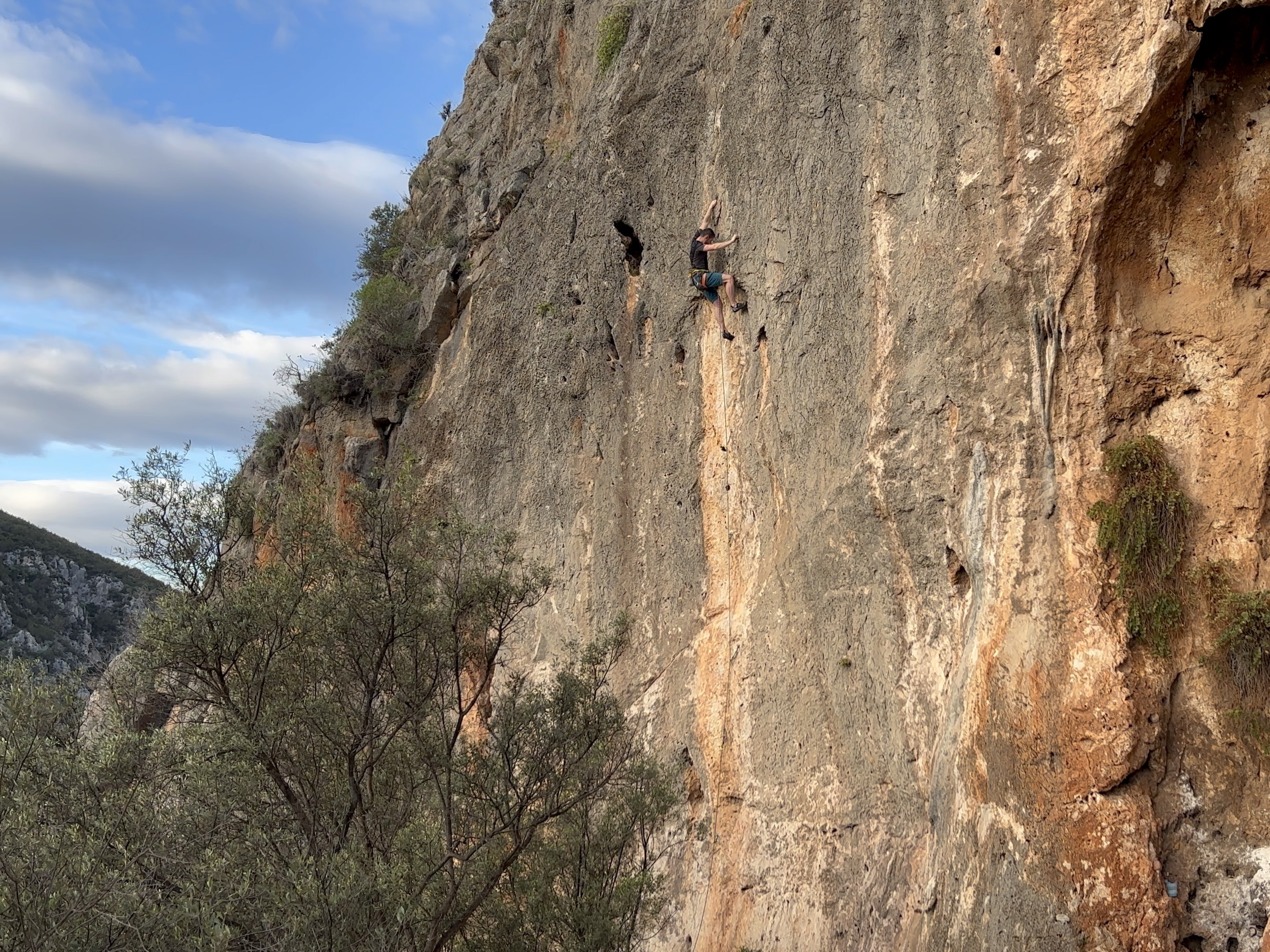
Agia Sofia
Agia Sofia is a nice singular sector, with some eye catching tufa lines and some great quality routes. When you drive along the road you can see the crag and it has instant appeal, as soon as you see it you want to climb on it. Agia Sofia has 28 routes, from 6a to 8c, and topos can be found on theCrag. Some of the best lines you can see from the road are indeed the 8th grade ones, so if you’re climbing around 7a/b you can expect to stop about halfway or 3/4 of the way up the crag. The climbing is nice and the routes are good, but personally we much preferred Agios Andreas, which is only 28 km away and in our opinion is a nicer crag, although Agia Sofia is much quieter. Be careful where you park your car and what you leave in it. A suspicious man took a long and very shady look at our car, but as we had left the glove box open, nothing at all inside the front and steering lock on, we were thankfully not broken into. However, it is definitely something to consider, and maybe use alternative parking spots if you want to make sure.
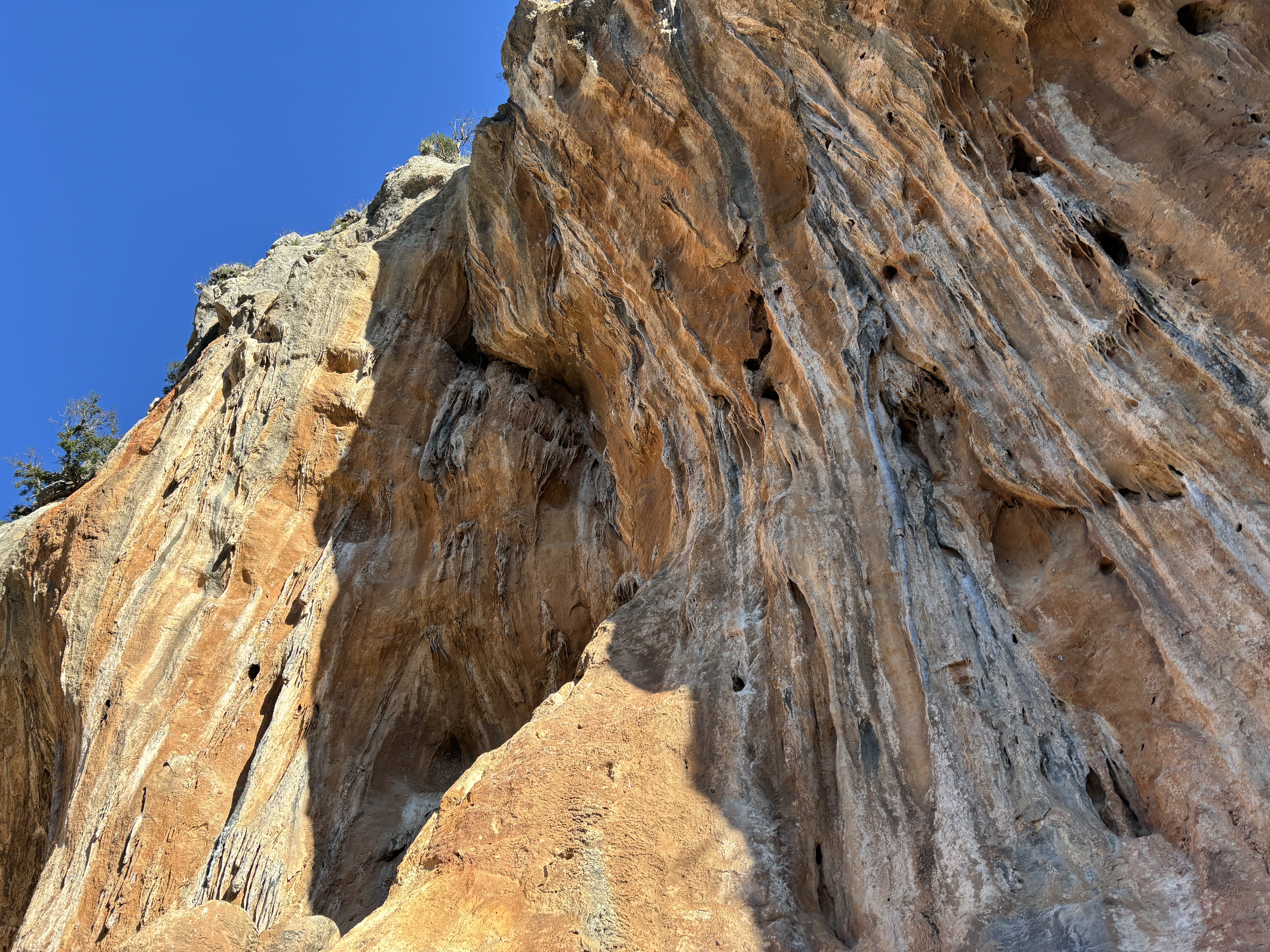
Castle Thermisia
Castle Thermisia is a beautiful climbing area in Ermionida. The geography of the place is very impressive, the cliffs form a natural fortress, upon the hillside and with a panoramic view of the coast and mountains in the surrounding area. The castle ruins on the top are also very interesting, you can see and get a feel for what the place used to be like, Castle Thermisia was first mentioned in written records back in 1347! Castle Thermisia has over 30 routes, with grades from 5a to 8c+, and you can find topos in the great Ermionida PDF guidebook on Olympus Mountaineering. Climbing wise, we thought the routes were all very well bolted, and the rock quality was generally really good, especially at the Venetian Wall sector. We thought the routes at Leons wall were nice but quite hard for the grade and could do with more traffic. Castle Thermisia is a nice crag, well worth visiting, especially when considering the stunning surroundings.
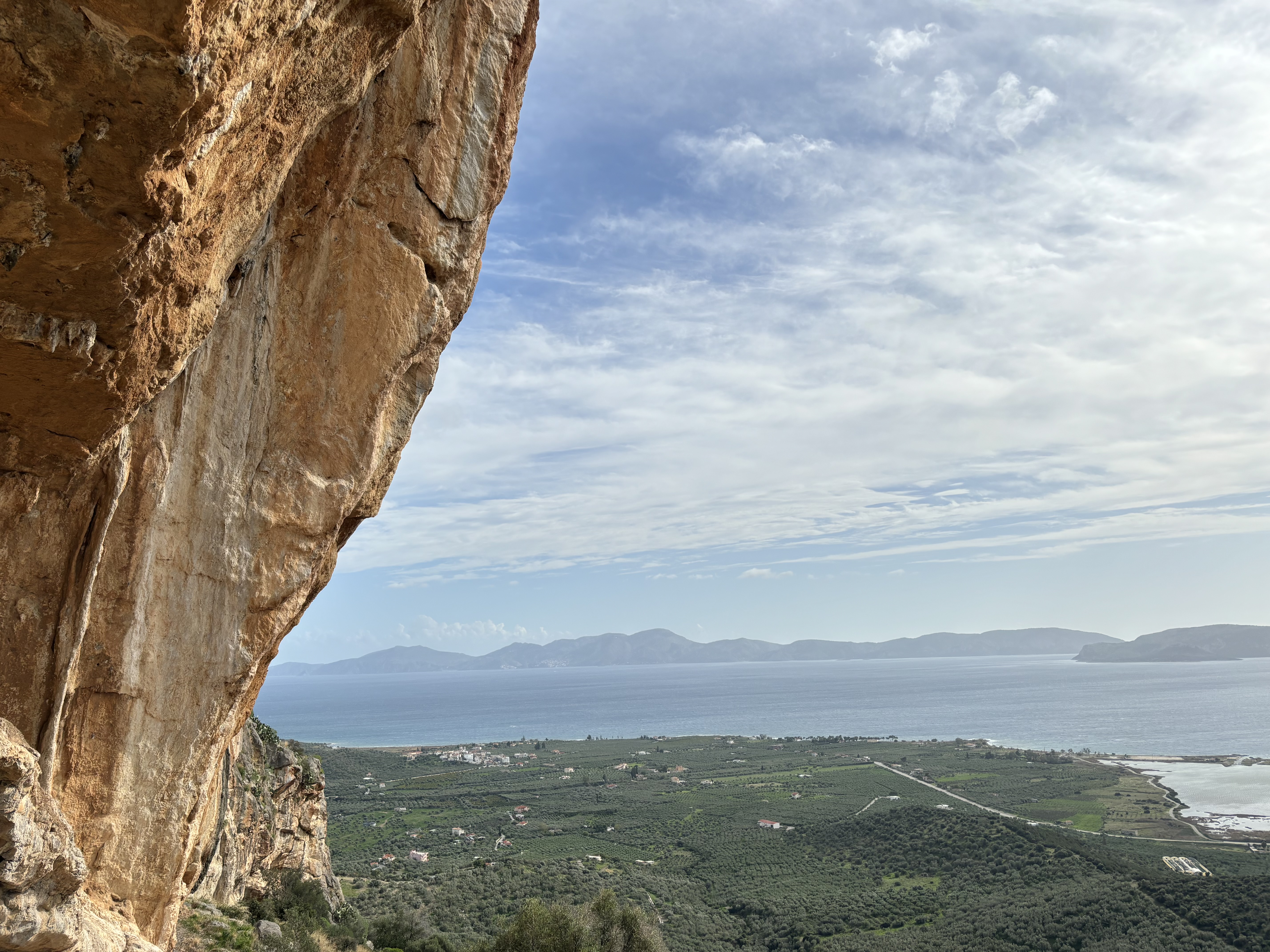
Katafyki
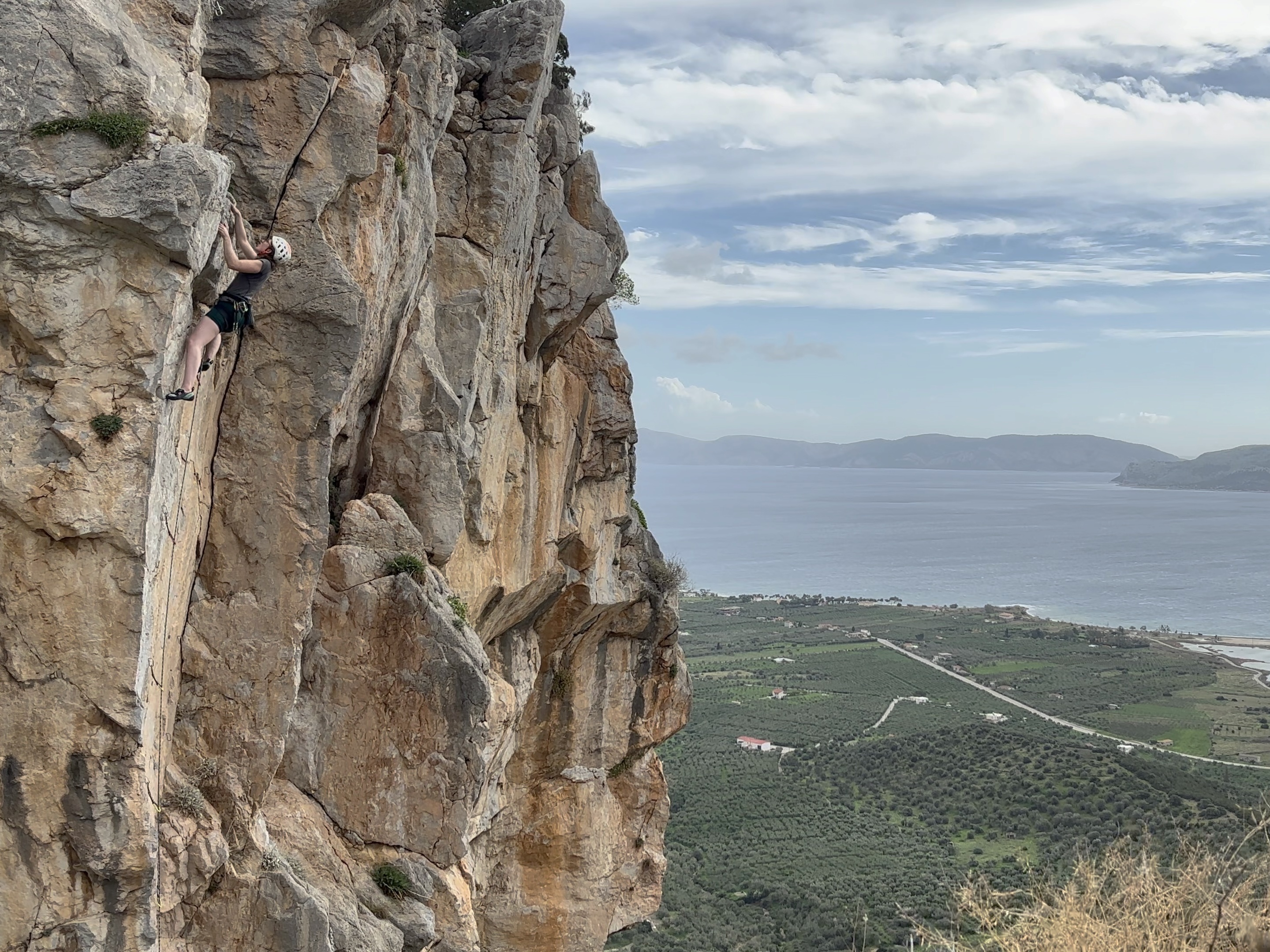
Katafyki is without a doubt the best crag in the Ermionida region, with a great selection of routes on excellent rock. Katafyki is especially good for climbers in the mid 6th grade, where you will find some fantastic routes on good rock, well bolted, and as fun to climb as anywhere else in Greece at that level. The rock has the great benefit of not being sharp but also having plenty of friction and generally no polish. The grey rock in particular is very well featured and can have an abundance of jugs on the easier routes or fun, crimpy and technical moves on the harder ones. There is a good selection of routes in the low 7s too, many of which are a full 40 meters long. Katafyki has over 70 routes, from 5a to 7b, and is also very close to Pleiades, which has several multipitches on a crag of around 150 meters in height – all of the topos can be found on Olympus Mountaineering. The area is peaceful and quiet, and the approach to the crag is extremely short. We got to spend quite a few days climbing in Katafyki and we always enjoyed it, it is definitely underrated and often we were the only climbers here. It is a very charming place, definitely worth a visit.
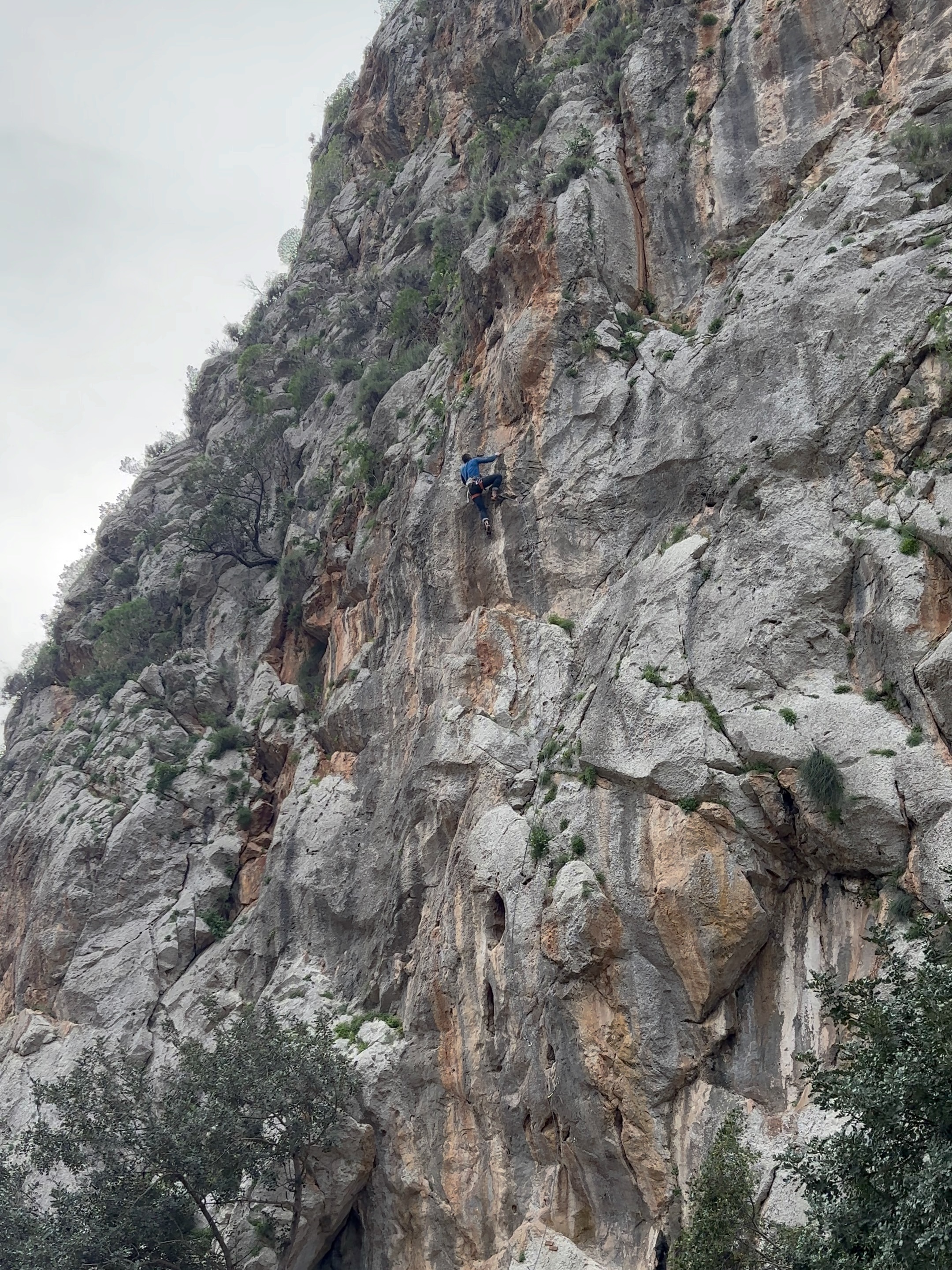
The Katafyki Incident
One thing that we can honestly say we did not expect to happen on our trip to Greece, was that a once in a generation flash flood would come out of nowhere, wash away a road entirely and leave our minivan stranded in a canyon for 2 weeks. Yet that is exactly what happened! With only 2 millimetres of rain forecast, we had plans to climb the next day and no inkling that so much water would soon arrive. The small stream in Katafyki was completely dry, as it normally is, until a phenomenal amount of water arrived almost unannounced. After attempting to drive out early on and realising it wasn’t possible, we were able to park on high ground and wait while the water rose and rose. Eventually, the entire road, along with many other things, was completely swept away. Thankfully, while there was much damage to property across Ermionida, nobody lost their life. When the majority of the flood had passed, it was clear to see that this wasn’t something that was going to be fixed with a few shovels and a wheelbarrow.
Naturally, this was not our idea of fun. But what followed after that turned the whole thing on its head, and ended up becoming our favourite part of the trip. A local climber went above and beyond to help us, something for which we will always be grateful. The local people all over were so nice to us, that one act of kindness led to another, and such generosity and caring was shown to us that we could never repay it all. A local family gave us somewhere to stay, shared their meals with us and took us in as their own. We bonded with them and became friends, shared many laughs together and we even went back to spend New Year there with them. When eventually the road was repaired enough for us to drive out, we didn’t even really want to leave any more. What began as a disaster finished as a highlight. It was a metaphor for life in many ways, there are no flowers without rain, after all. Needless to say, the kindness the people of Ermionida showed us is something we will remember forever and will always be grateful for, it is somewhere we care about and are connected to because of the flood, so, in the end, we are thankful for the flood as well.

Agios Andreas
Agios Andreas is a very good crag, considered by some to be ‘Leonidio’, to us it makes sense to categorise it separately since it is actually 42 km away from Leonidio! Access to the crag is easy and there are plenty of eye catching routes with some cool moves. Agios Andreas has 35 routes, with grades from 4 to 8b, and it is probably best for anyone climbing 6c+ and upwards, where there are some really great routes. The crag can get surprisingly busy some days, but be very quiet on others, so it is definitely not a secret spot. Some of the routes can also be a bit polished, but nothing crazy. Comparing it as an individual sector to those in Leonidio, it fares quite well, but is mainly worth visiting because you drive past it anyway on the journey to Leonidio from the north. It probably isn’t worth going for a long day trip from Leonidio as there are closer sectors that are just as good. Regardless, we did like the crag and very much enjoyed some of the routes here.
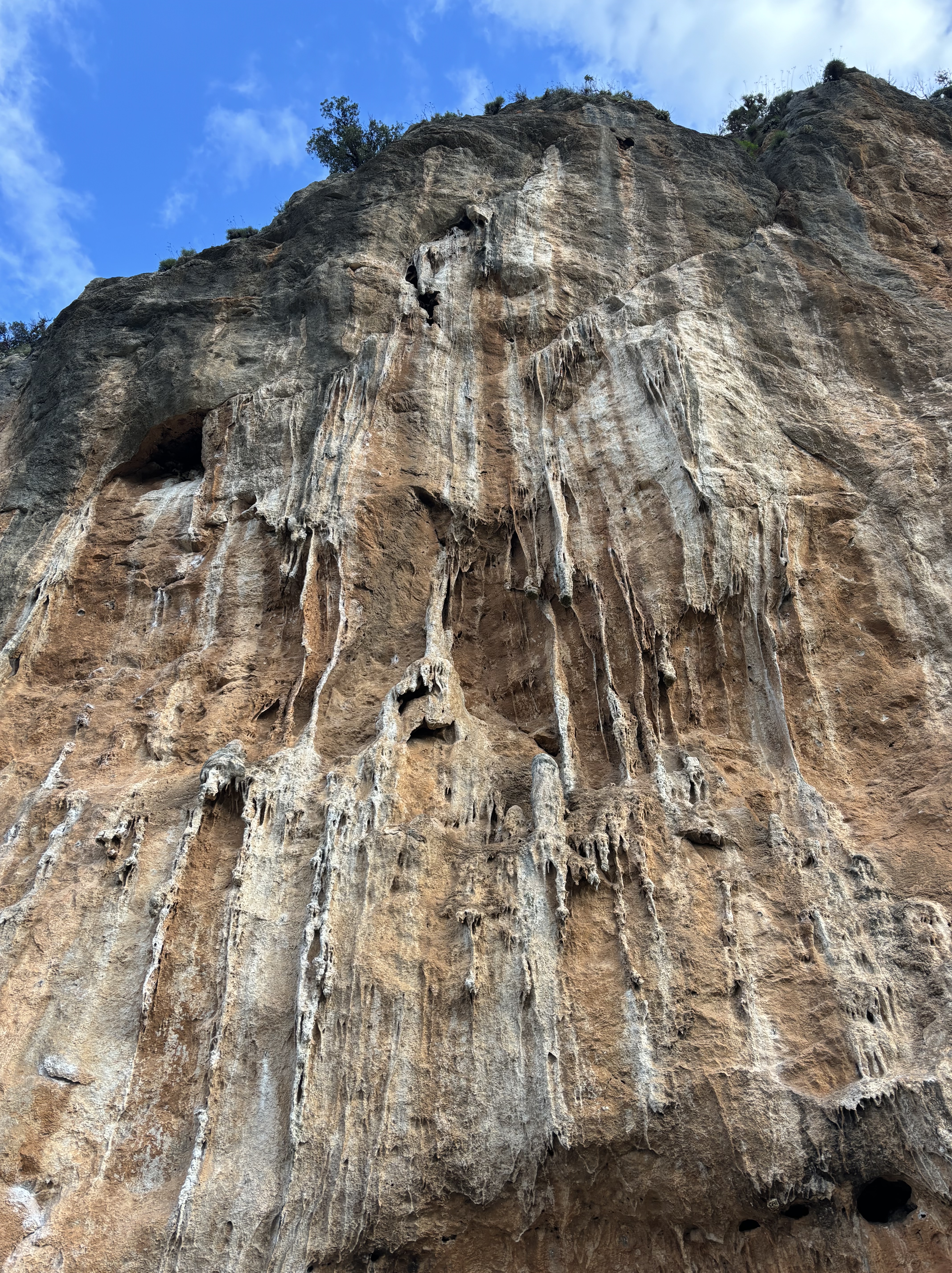
Leonidio
Leonidio is the biggest and most famous climbing area in mainland Greece, and the second most significant area in the whole country after Kalymnos. Leondio has around 2,700 routes and as you can imagine, there are grades of all levels available. The rock quality is generally excellent and there are many amazing routes. However, don’t assume that every single route is good, there are some dud routes and sectors that definitely aren’t of the same standard as the best ones. Is Leonidio a world class sport climbing area? Yes. Is it without fault? No. We think the biggest thing that affects perceptions of huge climbing areas like Leonidio is people highlighting only the positives, giving a rose tinted glasses view of the experience. In reality, there is much more to it than that. The reason this matters is because many crags in other parts of the country are also excellent, and much less appreciated. If you’re on a climbing trip in Greece, you should definitely visit Leonidio, and climb some amazing routes there. However, don’t make it your only stop, visit some other crags and eat in different villages. Don’t only visit this one, very busy, place. With that in mind, we will first share some of the negatives of climbing in such a popular place and then we will share some of the many positives, giving some well earned praise as well.
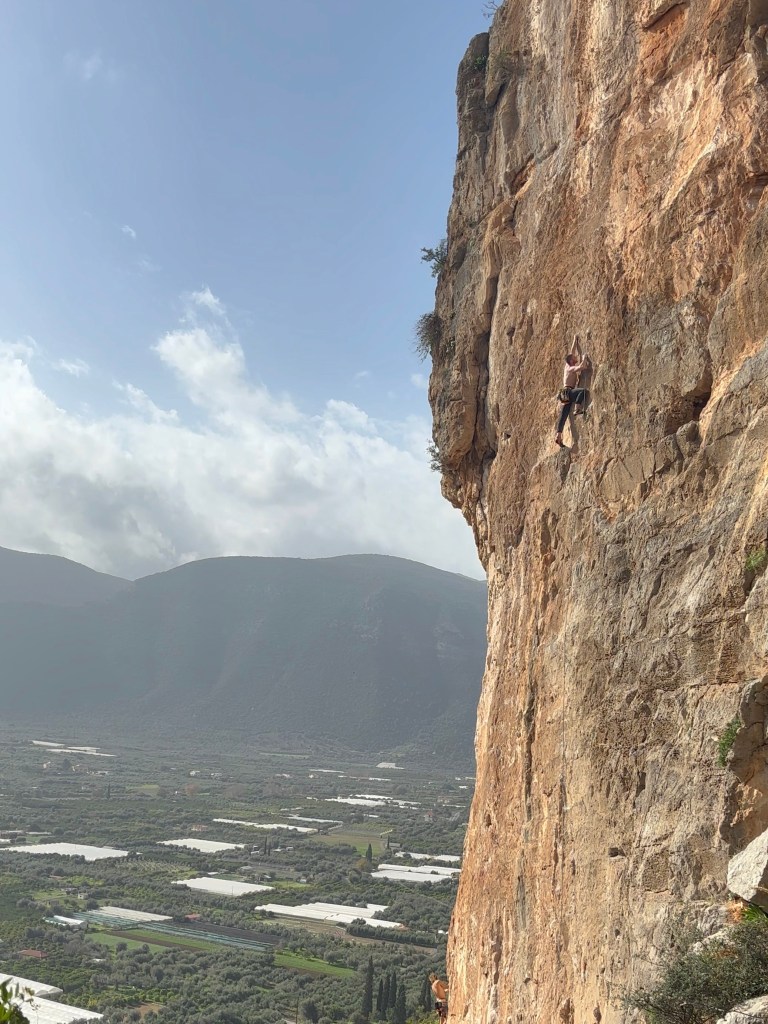
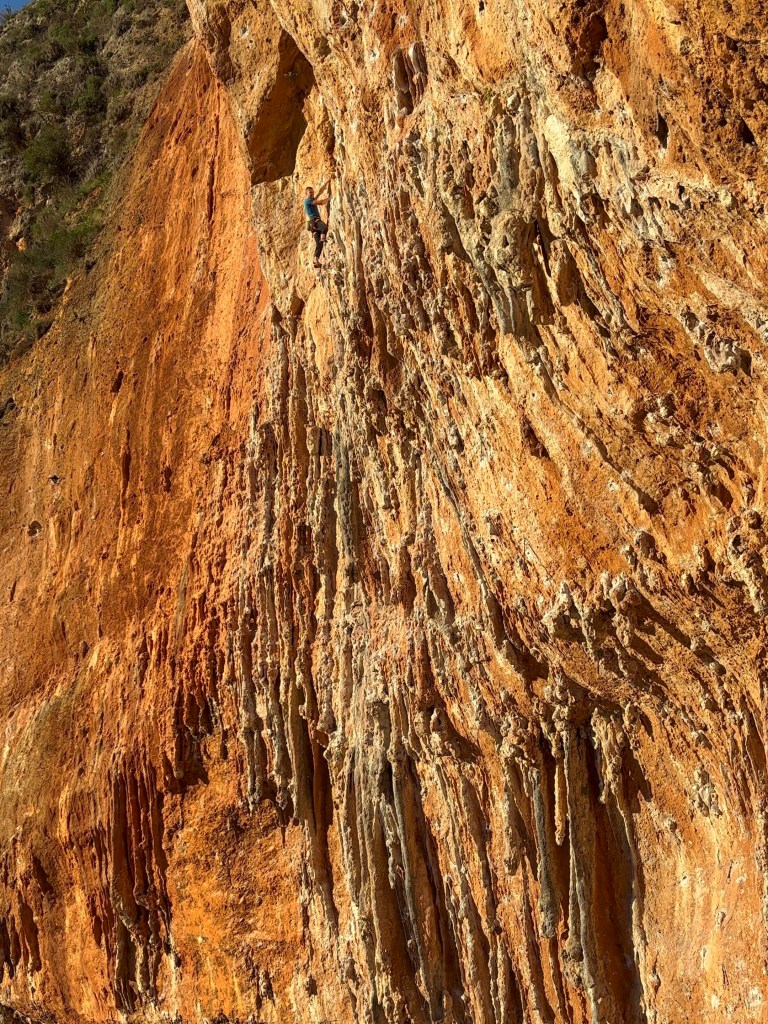
First off, you should expect that the most famous sectors will be very busy and the routes will be very polished and caked in chalk. Many of the routes in Leonidio have very close bolts, sometimes they are too close. Whilst it is always great to know you won’t hit the deck, the feeling of doing as much clipping as you do climbing can also be a bit tiresome. In general the grades are very soft, definitely intended to give people an easy holiday tick, we thought the routes were usually one or two grades easier than those we climbed in other parts of Greece. When you combine this with chalk and polish, it can make the experience at some sectors feel a bit basic and over simplified. Crowd wise, sectors like Mars can become a total farce, with close to 40 people jostling for routes and terrible crag etiquette from some climbers. However, there are two very effective antidotes to avoid crowds like this: get up early or do a long approach. We got a very early start at Mars and climbed 5 routes before the next climbers showed up, having the crag all to ourselves was bliss! Equally, walking a bit longer to crags like Loupas or Pounta, which have great routes, will often allow you to have the crag to yourself all day.
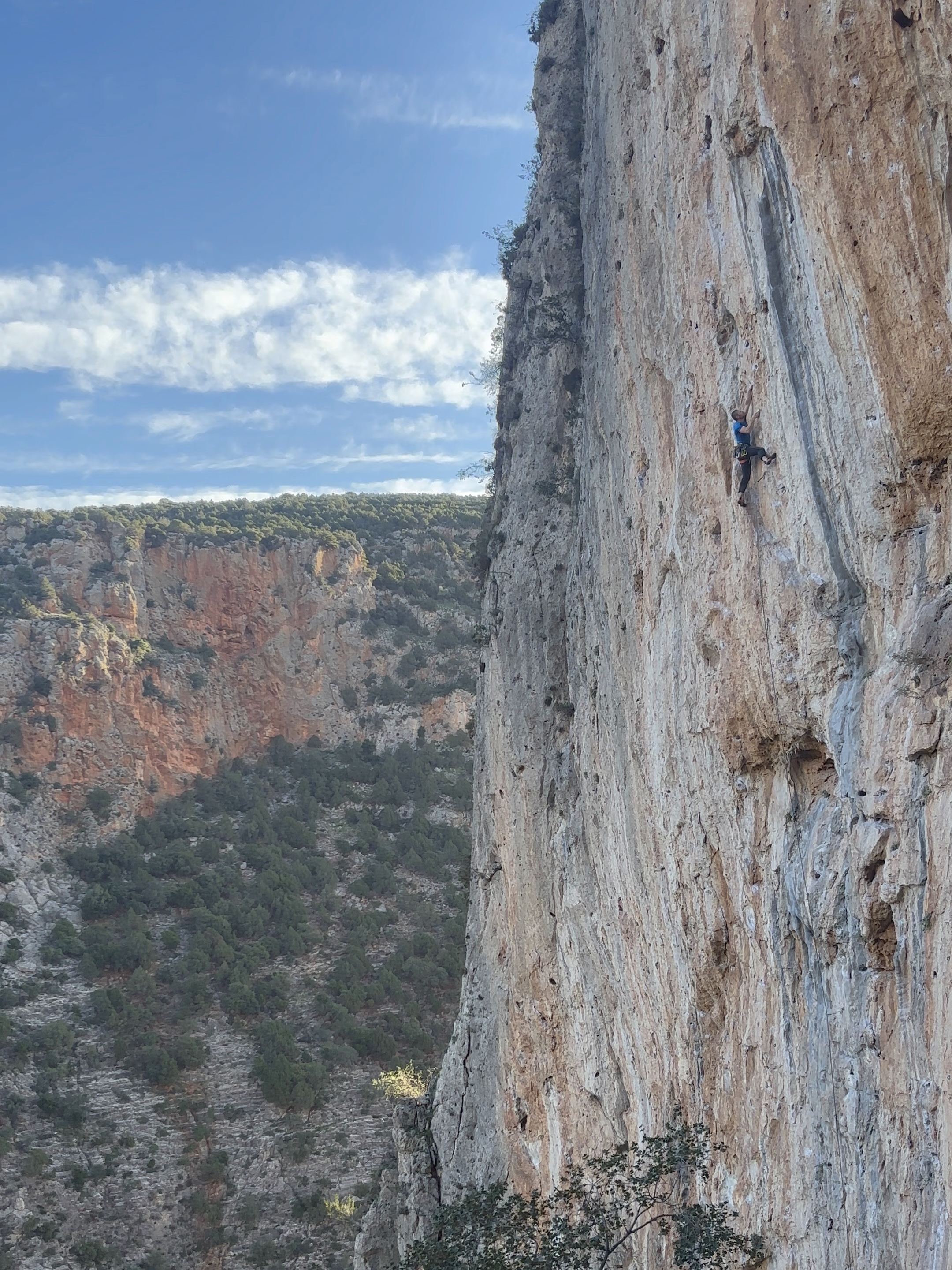
One of the absolute best things about Leonidio are the multipitches. There are walls of around 200 meters, with many truly excellent lines going the full height and also being fully bolted and very well equipped. The rock is great quality, and it seems crowds and polish are much less of an issue, as most people seem to stick to the single pitches. Most of the multipitches are vertical or slightly steeper, so you really feel like you’ve exerted yourself and the added exposure is makes it very enjoyable. It wouldn’t be an exaggeration to say that the multipitches in Leonidio are perhaps the best anywhere in mainland Greece. True, they don’t have the unique beauty and summits of Meteora, but from an out and out climbing perspective, Leondio is brilliant for multipitches. In our experience, the most pleasurable way to do the multipitches on Kokkinovrachos is to approach from the bottom, then instead of abseiling the route or walking down, heading to the climbers right and using a descent route with a short scramble and an abseil piste. This is by far the fastest way and was a much appreciated addition by the equippers.
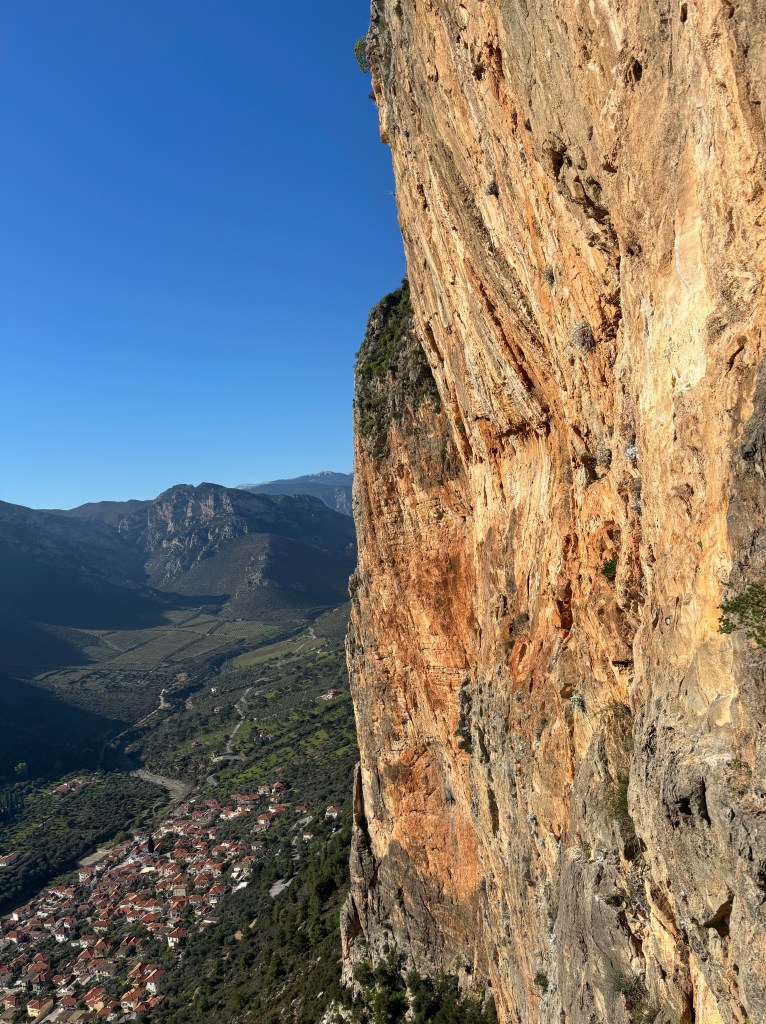
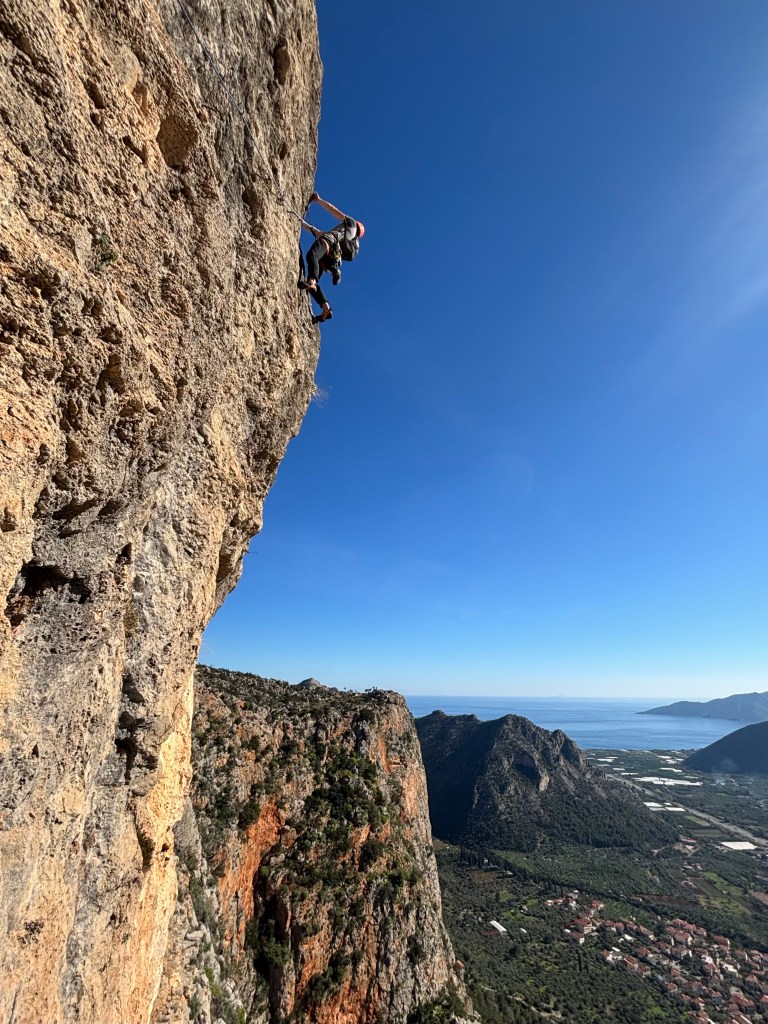
The stunning view and amazing traverse on pitch 5 of 6 of ‘Ramisi Rock’, 6c+, 200 meters
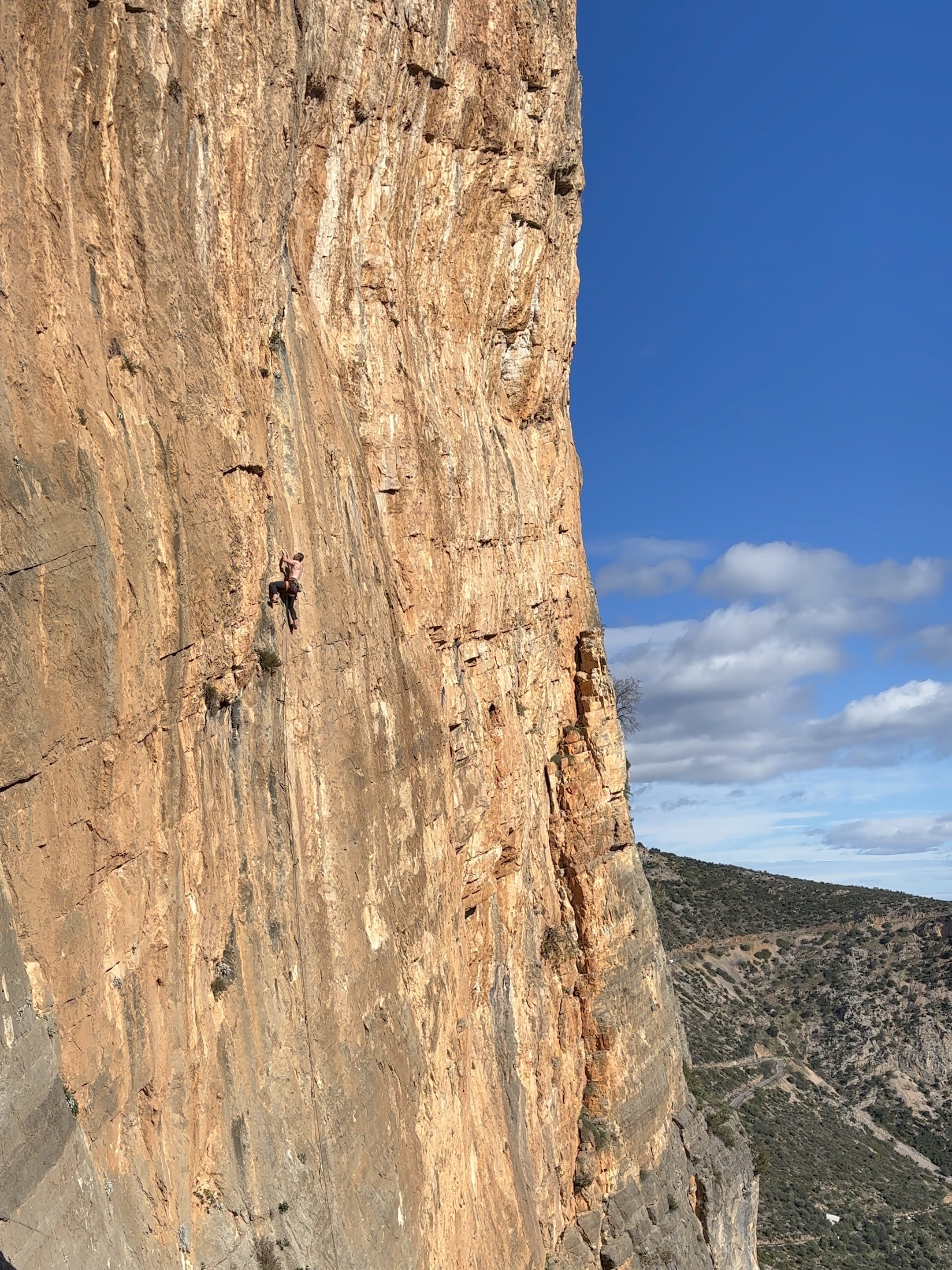
Single pitch routes in Leonidio also have great variation, and there are some very high quality routes on offer, both famous ones and those far lesser known. There is an enormous amount of rock in the area, and the crags go from almost sea level at Sabaton, to an elevation of over 800 meters at Nifada. The limestone is consistently great quality and the routes have generally been developed very well and with much care. There are plenty of tufas of course, but often we preferred the crimpy wall climbs which were usually fantastic. As mentioned earlier, crags with longer approaches are quieter. Equally, climbing at higher elevations or in the shade, on colder days, often means you also get the place to yourself. One of our tips to understanding how to enjoy Leonidio to the fullest, is realising that there is not one sector, or handful of sectors, that are the only ones worth visiting. In reality, the majority of the sectors are very good, and most of them have great routes. It is true that a crag like Elona is probably the most amazing individual wall, but that doesn’t mean some smaller crags you haven’t heard of aren’t brilliant. There are great routes all over Greece, what makes Leonidio so impressive is how many of them there are, so close together. You will be surprised how much you’ll enjoy a route at a random crag more than you did at Mars or Theós. Get up early, visit loads of different crags, both famous and obscure, and you will surely have a fantastic time.
Nedousa
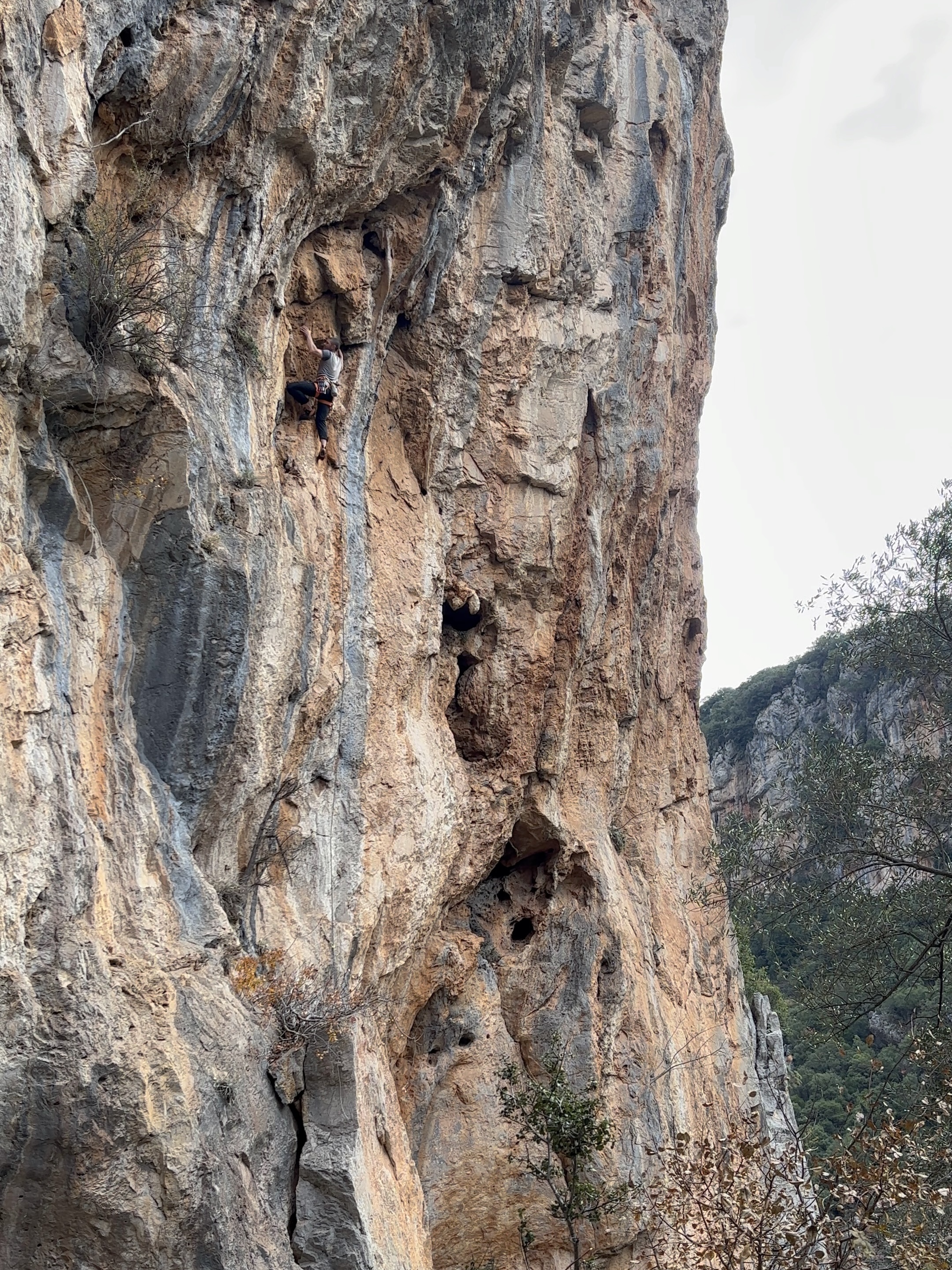
Nedousa is a nice climbing area set in an incredible valley, lined with huge crags. You have to be outside the valley to realise just how many cliffs extend above you, that you often cant see when you’re in the valley bottom. Currently, Nedousa has around 100 routes, with grades from 5 to 8b. The rock quality is generally good and there is a very nice mix of tufas and orange rock to enjoy. The routes are a good length and the different sectors vary from roadside to quite long approaches. In our experience, the harder routes are definitely better and whilst there are plenty of nice enough easier routes, the top quality stuff will be in the higher grades. We didn’t find the routes were a giveaway either, for example, we thought the excellent 7b ‘Thallos’ was desperate and didn’t resemble routes of that grade we climbed with ease elsewhere in Greece! The moves and the rock were excellent, but no gravity-free pass on this one! We enjoyed Nedousa and thought it was very good, but not amazing in its current level of development, but it could one day be amazing. Perhaps the main weakness of Nedousa is that it is only 32 km away from Lagada, which in our opinion had better climbing.
Lagada
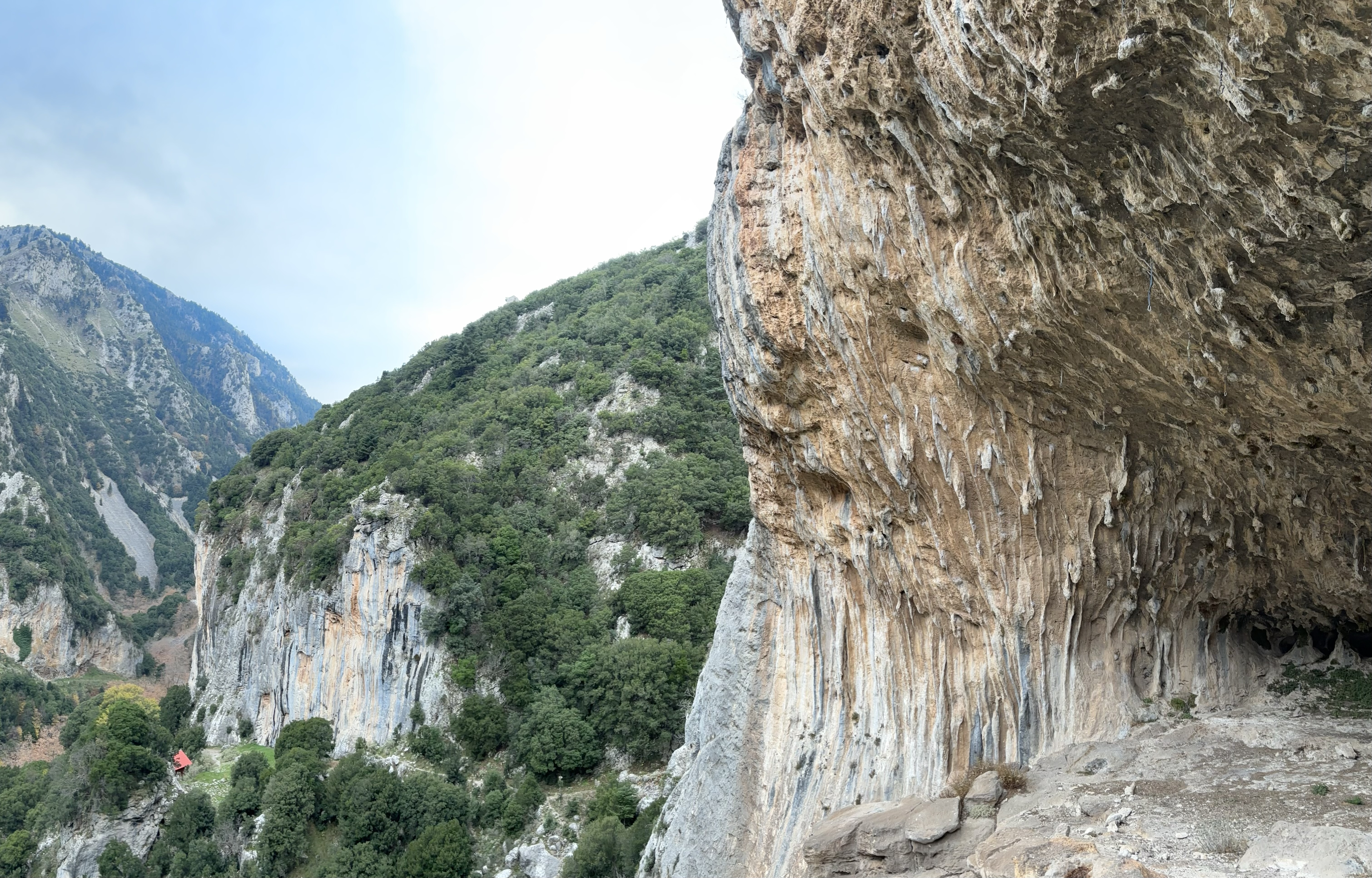
Lagada is a fantastic climbing area, with some very cool rock, a great mix of styles and a beautiful location. There are amazing mushroom and drainpipe shaped tufas, pockets, crimps, slabs and overhangs. Lagada has more than 150 routes, with grades from 5 to 8b. The rock is generally very good quality and the climbing itself is excellent. At the sectors above the road, near Aloni, there is a mountain hut you can sleep or take shelter in, right next to the crag. The area has been really well developed and clearly a lot of time and money has been put into it. From reading in the guidebook, the development was part of an EU grant in the late 90’s, in collaboration with the mountain club of Sparta. The rock, development and beautiful surrounding mountains have to make Lagada one of the most impressive and appealing climbing areas in Greece, and certainly one we loved.
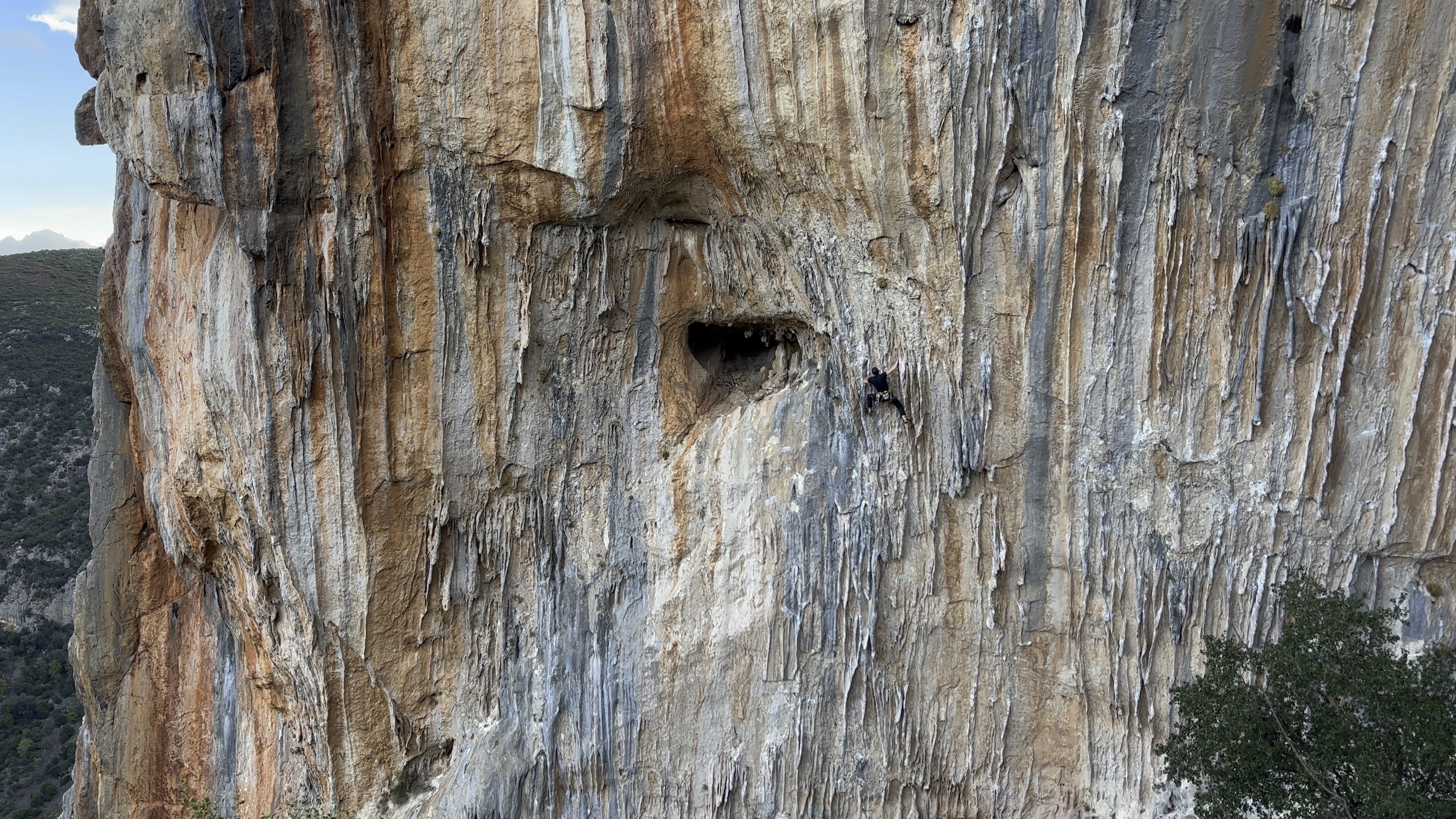
There is only really one downside to Lagada and that is the issue of car break-ins at the main parking area on the road. You used to be able to read about these on the google maps pin, but that has seemingly been removed. You can read some on park 4 night and on theCrag – including as recent as May 2025. Clearly this doesn’t happen everyday, or to every climber, but it is something to be extremely vigilant about. Firstly, of course, nobody wants to have their car damaged. However, it is also important as a community to ensure we don’t make it fruitful for thieves – leave nothing in your car to ensure they get used to disappointment, not success. This applies to the parking used for sector Aloni and Petsanes, so plan ahead for this if you want to visit these sectors. If you don’t have the option to empty your vehicle and don’t want to risk theft, there is some good news. You can drive down a narrow road, followed by a bumpy but easy track to the Splithari sector, which you can park directly beneath, and which has excellent climbing. Splithari is one of the major sectors anyway, and has loads of great routes to enjoy. There is also the Stani sector, which is right on the main road and has routes which you could practically belay for from the car. This sector is not as good as Splithari, but we still enjoyed its short, sharp and unforgiving style – not one for knee bar tufa warriors though!
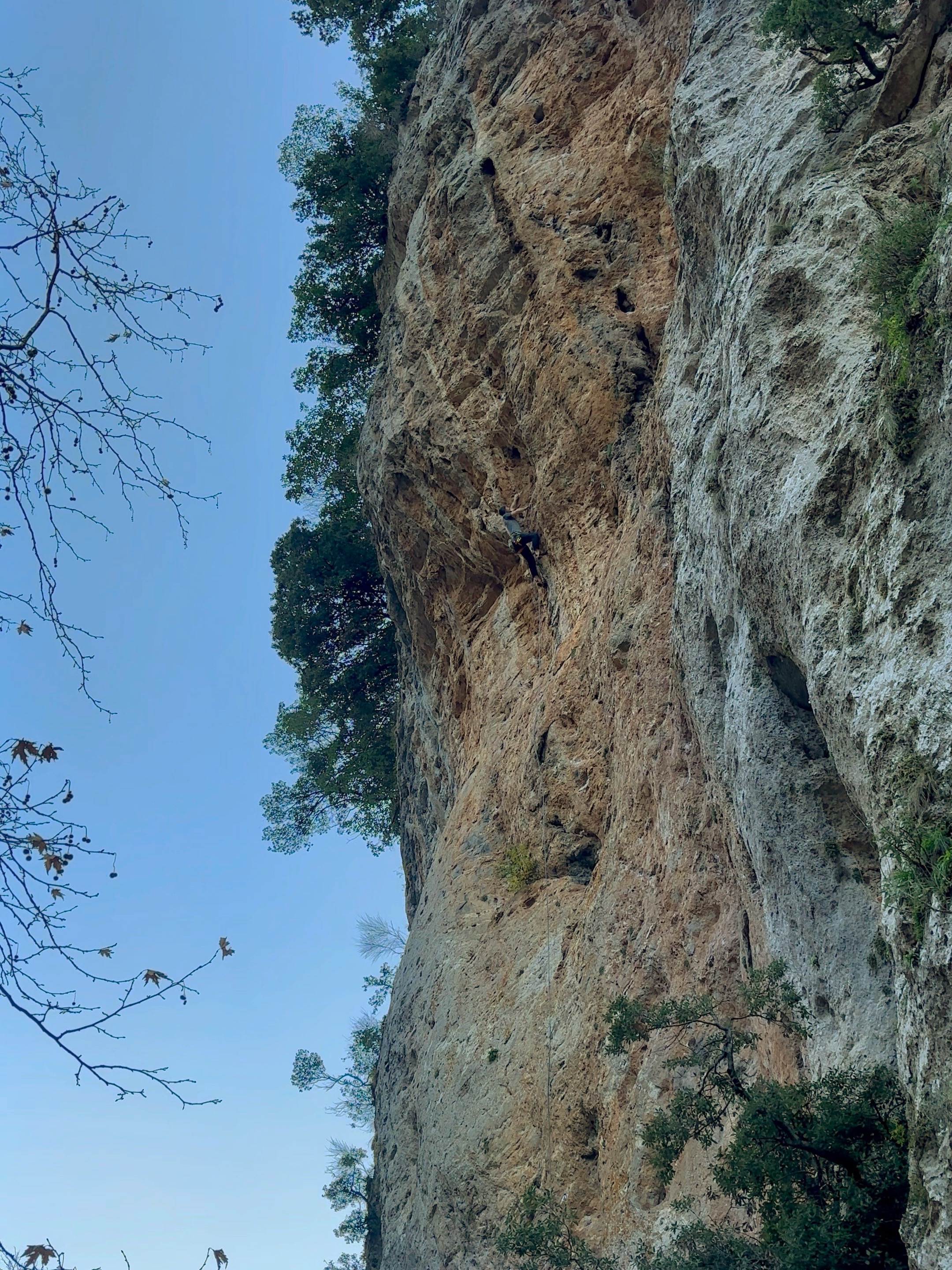
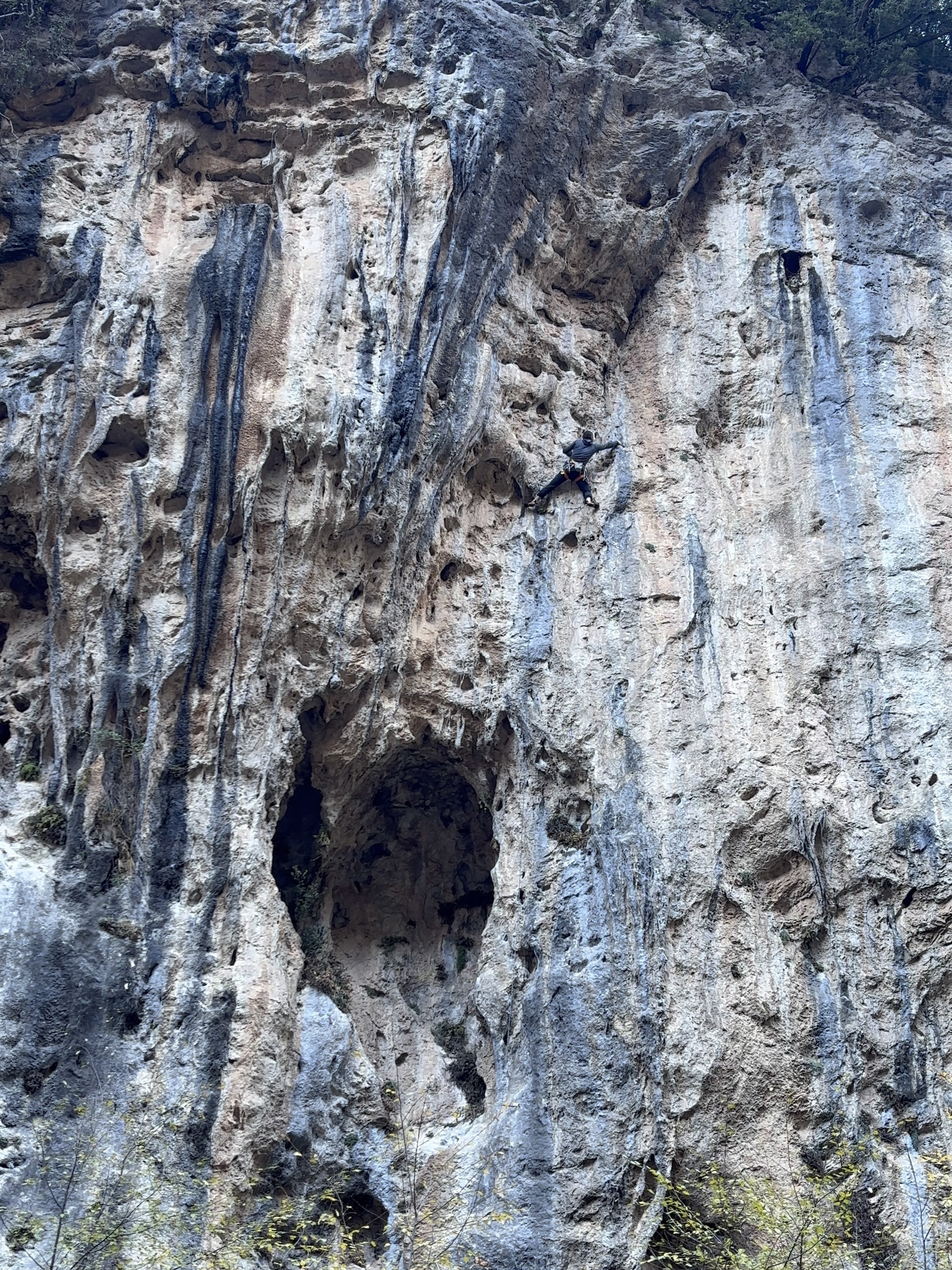
Awesome routes at sector Splithari
Hideout & Kápsala
Hideout and Kápsala are two separate crags very close to one another, but both of a similar style and location. Hideout is the best of the two, it is a beautiful tufa crag on a ledge above the sea, with excellent views and good bolting. The approach to hideout is quite tricky and involves descending some fixed ropes and scrambly sections – not the sort of place to go if you have a child or a dog. The positive is that this seems to keep the crowds away. The effort is well worth it, and the quality of the routes at hideout is absolutely fantastic, juggy tufas galore. The majority of routes are in the mid 6th grade and at this level, they are some of the best routes anywhere in the Peloponnese. If you climb in the mid 6s then you should absolutely make the effort to go and climb at hideout.
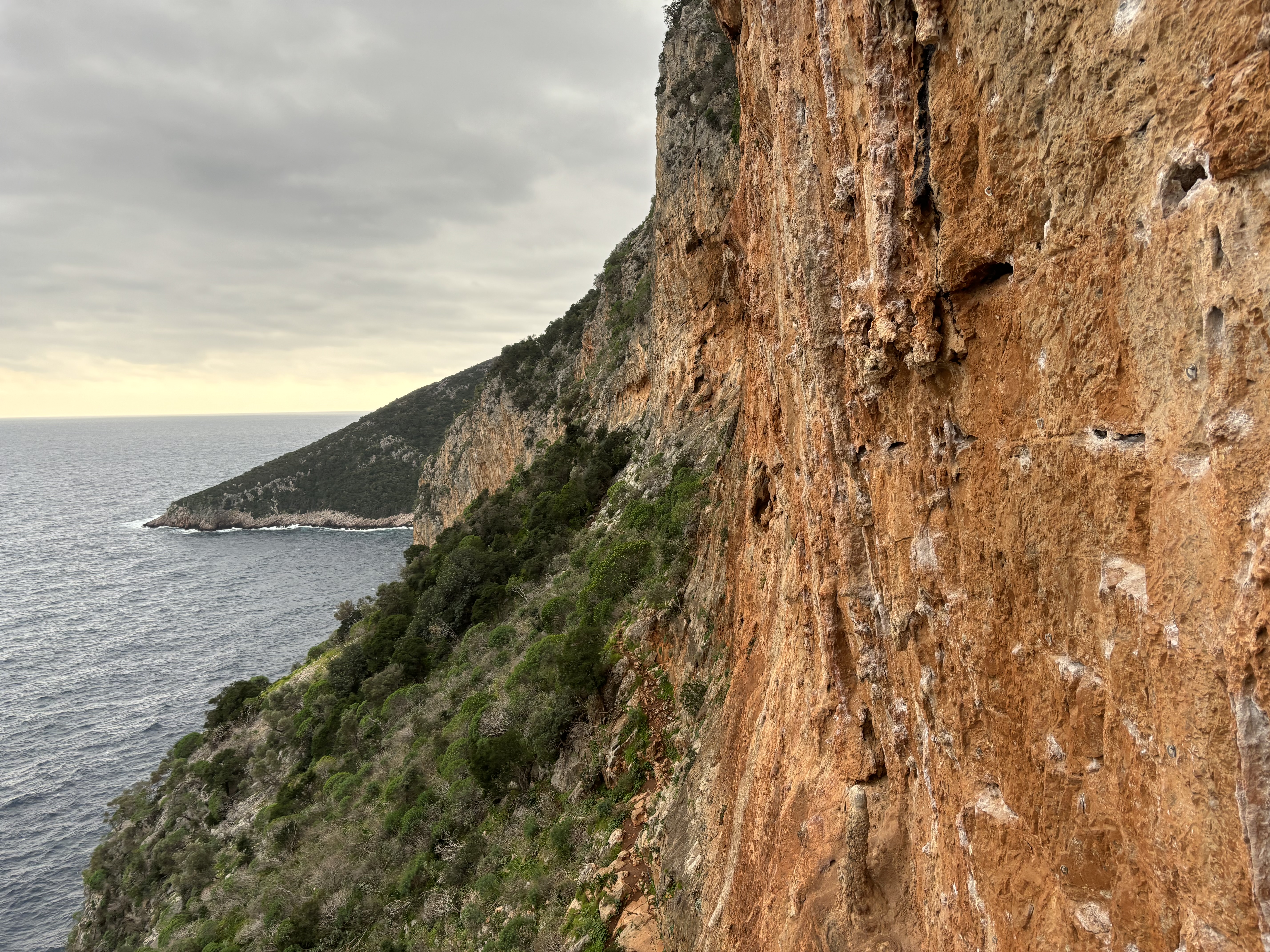
Kápsala is also a good crag, although not quite as good as Hideout overall. However, the approach to Kápsala is much easier and there are more routes in the low to mid 7s so if you want to climb those sort of grades you will find more than at Hideout. The quality is great, and for example a route like ‘Nobel Bolt’, 7a+, is superb and as good as you will get anywhere else we climbed in Greece. Between them, Hideout and Kápsala have 57 routes with grades from 5b to 7c. Having these two crags so close together, with so many great routes and much quieter than Leonidio, but only 40km away, makes it really great area that we would definitely recommend visiting.
Kyparissi
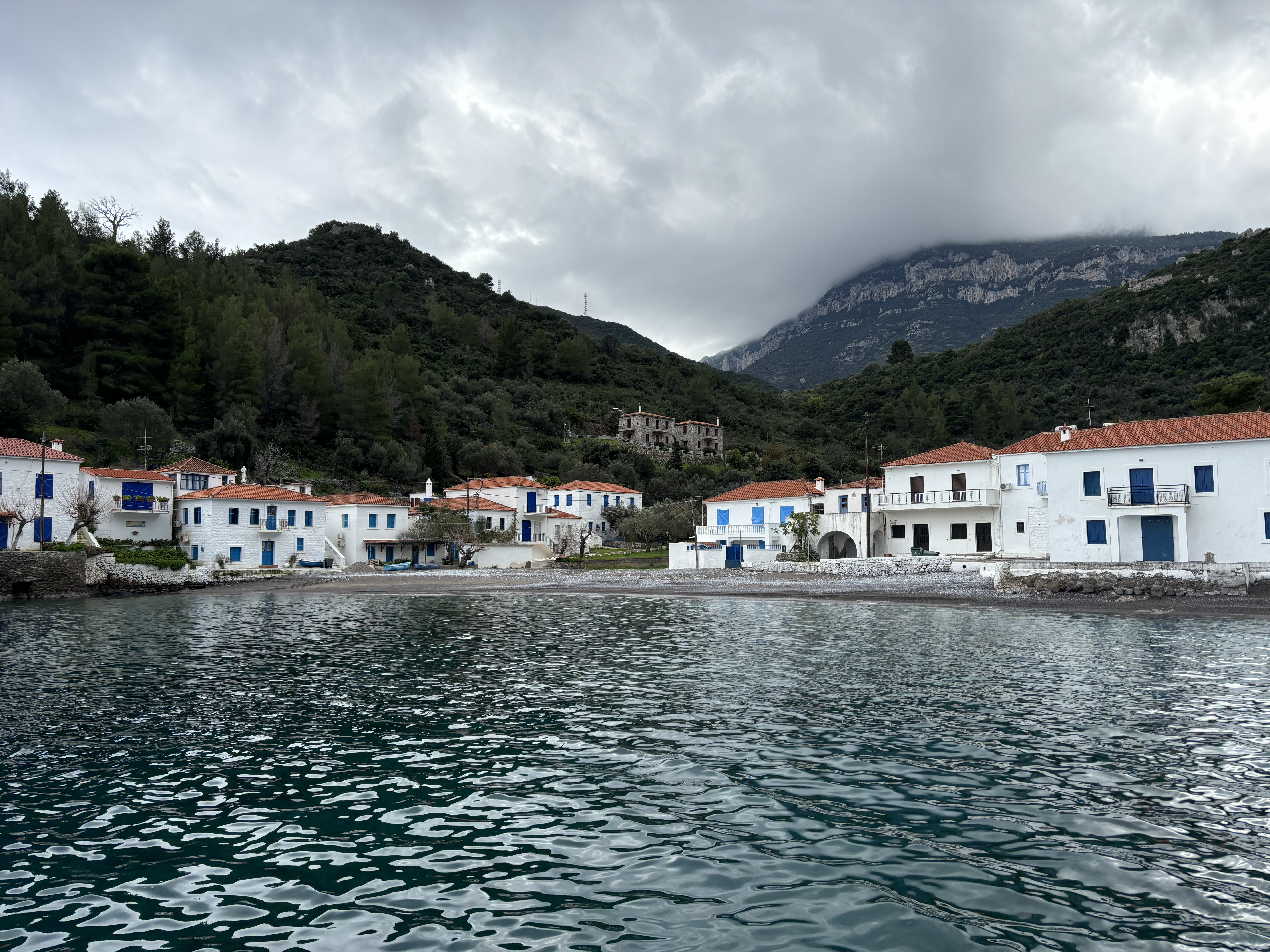
Kyparissi is a stunning small village by the sea, with a variety of crags nearby, as well as some further away. In fact, Hideout/Kápsala and Vlychada are often considered to be Kyparissi crags, although they are 15km and 35km away respectively. The primary sector of Kyparissi is Watermill, which is an absolutely brilliant crag, with lots of stunning lines. The tufas at watermill are superb and easily rival those of some of the best crags in Greece. Watermill is undeniably a popular crag, but it is definitely less busy than equivalent crags in Leonidio and can actually be quite quiet if you go in the middle of winter. The approach to Watermill takes only a few minutes and then you are right at the bottom of a great variety of superb routes, only a couple of kilometres from Kyparissi village. Nearby is another crag called Kastráki, which is a good option for those looking for lower grades, but is not comparable in quality to Watermill, which is the superior sector.


The gorgeous Watermill tufas & getting a hands off stalactite rest on the superb ‘Thanks George’, 7a+
One of Kyparissi’s other main and most significant crags is Babála, which is renowned for its excellent quality tufa climbs. Unfortunately we didn’t climb at Babála, as the crag is at relatively high elevation and receives a lot of shade, it is quite common for it to be wet in January and February – and we weren’t blessed with good weather either, there was quite a lot of rain during our visit to Kyparissi. We really loved the place though, it is a very charming village and the quality of the climbing is excellent. Although it definitely isn’t off the beaten track, it does have a much lower key feel than Greece’s most popular climbing areas, whilst also having a higher quality than some of the country’s smaller and quieter crags. We really liked Kyparissi and would be happy to go again, especially if there is less rain!
Vlychada
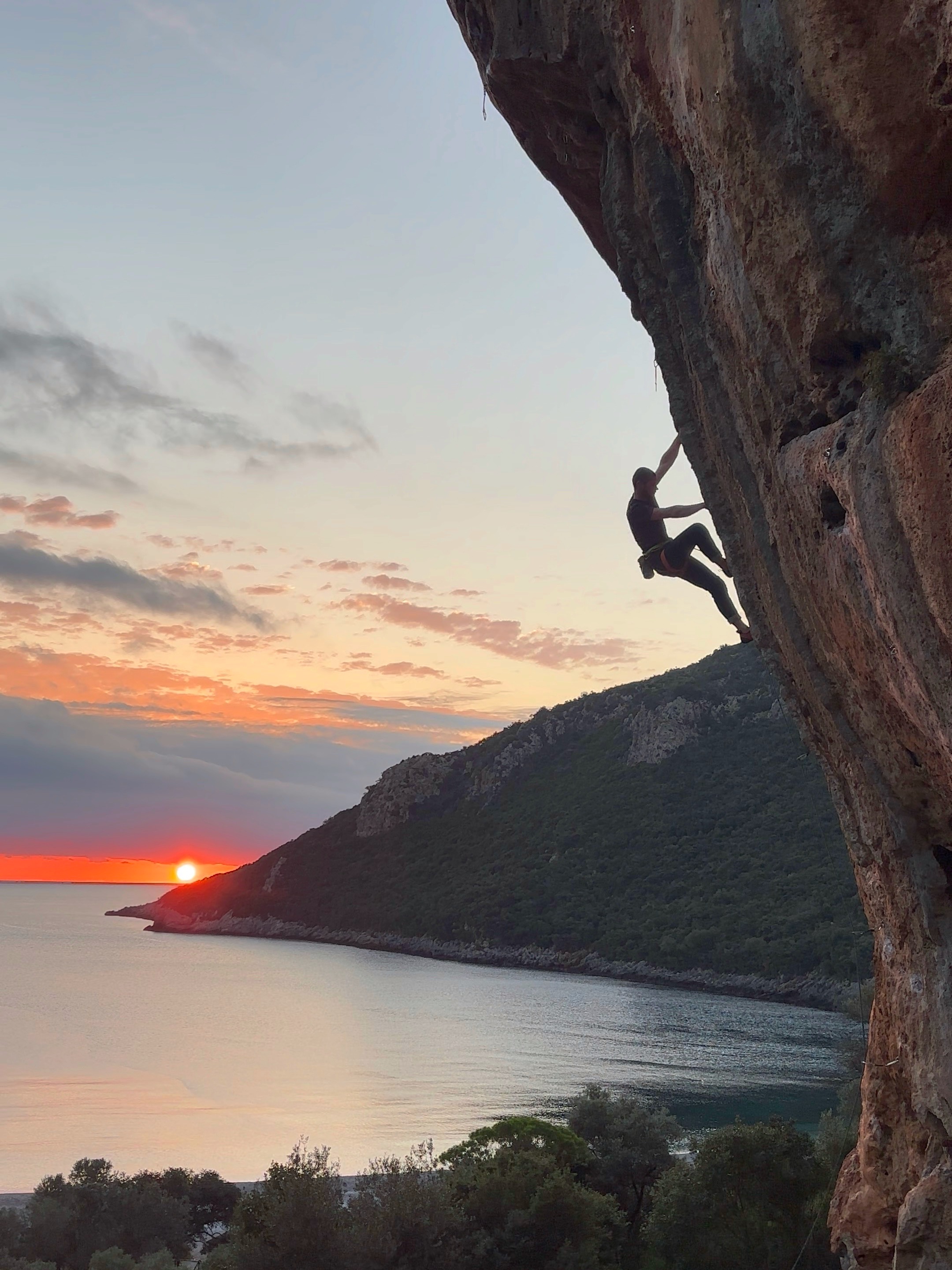
Vlychada is a very famous crag, well known because of its beautiful position right above a pebble beach, in a bay with crystal clear water. The place is very photogenic and no doubt you will have seen many photos of it before. The crag has 24 routes, with grades from 3 to 8a+. Vlychada was the first place we climbed at after Leonidio and to be honest, it was quite disappointing. The crag is significantly poorer than any sector we climbed at in Leonidio and it probably wouldn’t get a second thought if it wasn’t right on the beach. The rock was very polished and it was also much busier than the other areas we visited in the Kyparissi area. This may seem quite harsh, and perhaps we are being harsh, but reviews online and comments on logbooks billed this place as amazing, a dream crag of world class quality, and in our opinion it really isn’t. Some of the routes we climbed were also several meters shorter than listed, and in general we just couldn’t find much to love about the climbing itself. By contrast, Watermill has loads of excellent routes, not far away. The area is genuinely very beautiful, so if you want to go for a swim in the gorgeous water and soak up some sun then great, but if you just want to climb then there are definitely better crags in the area.
Zobolo
Zobolo is an absolutely stunning climbing area, at one of the most southerly points in mainland Europe. Zobolo has amazing coastal views and is in a peaceful area – it is an enormous crag with lots of routes as well as plenty of multipitches. When you see the size of the cliffs and the location, the next thought that follows is…why is nobody here? We were really shocked at how quiet the place was. We met some very friendly local climbers from the nearest town when we first arrived, and then for the following 4 days we didn’t see anyone, at all! Zobolo is a perfect crag for the winter months, there is a lot of sun, which you can follow as necessary, low elevation and generally it isn’t too exposed to the wind, considering its location. The whole place feels like quite an escape, with all the beauty of Greece’s most famous areas but without any of the crowds.

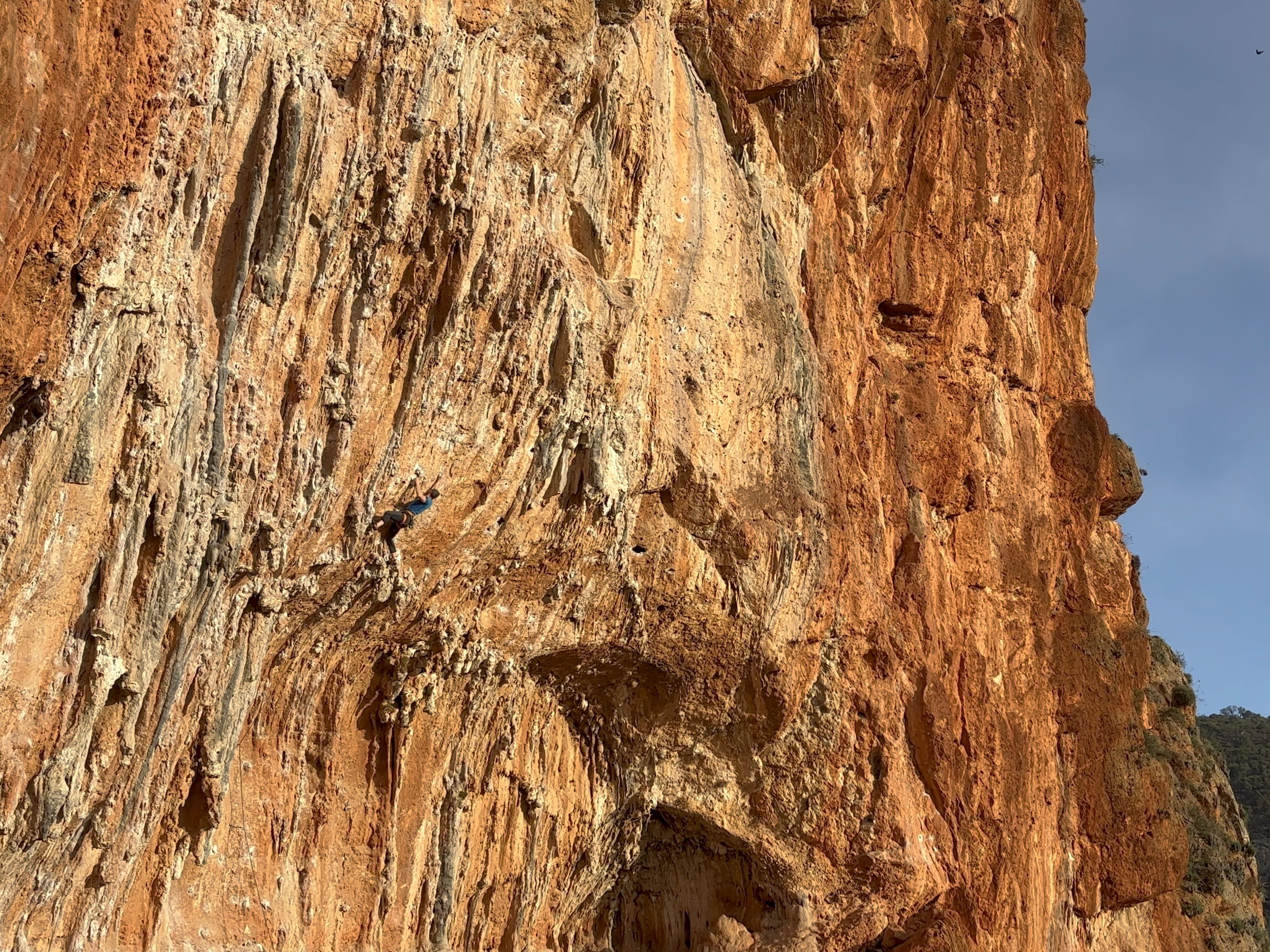
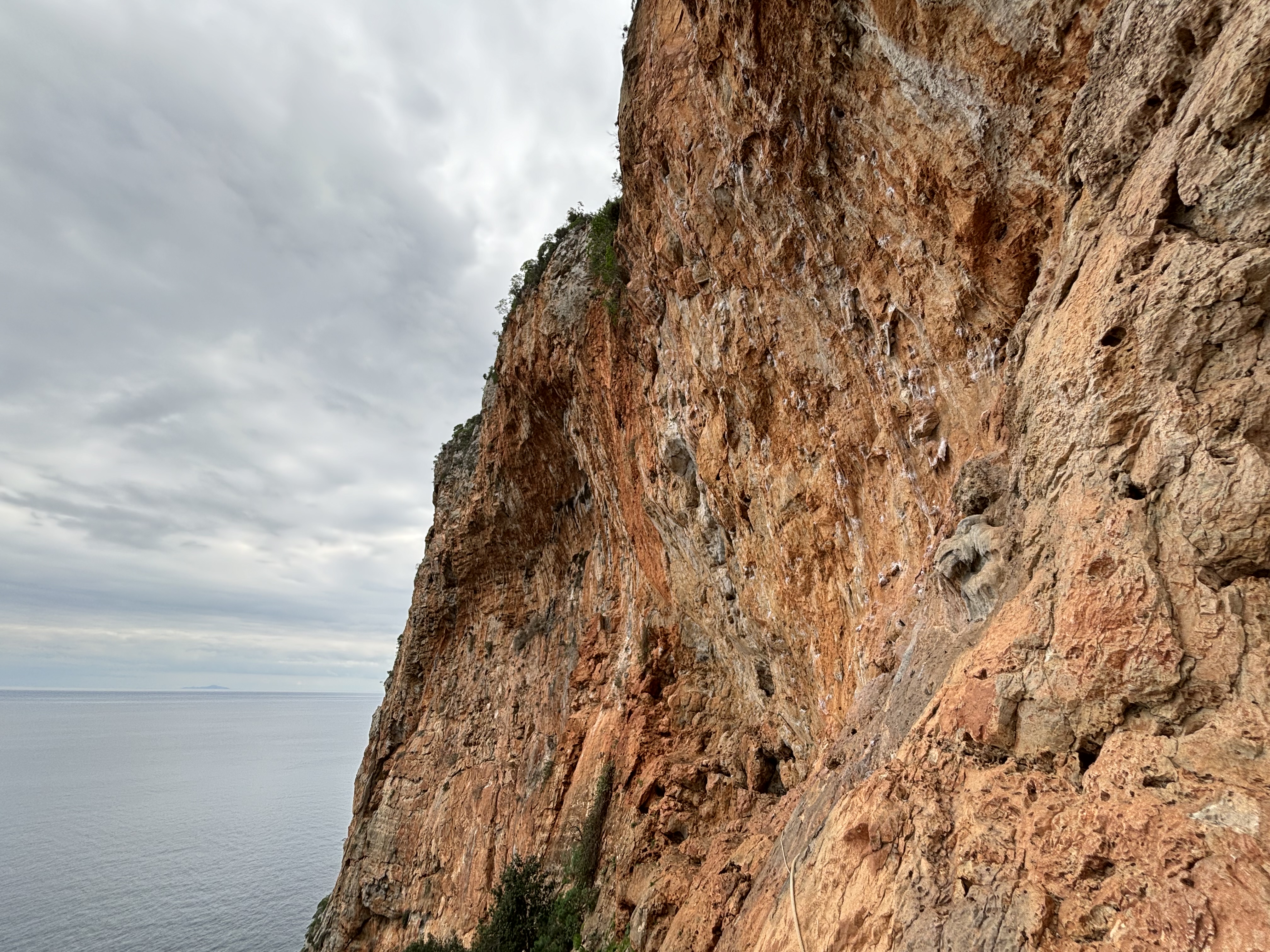
The rock at Zobolo is generally good quality, but can be an acquired taste in places. The cliff can generally be split into two sections, west and east. Zobolo west is the most impressive area, with huge orange walls rising out of the hillside. The rock in the west is generally quite smooth and in some places has very little friction, which can make it feel greasy at times, although not in the way Varasova did. The west also has some tufas and quite steep climbing for the most part. Generally the bolting is very good, but you must be careful of old rusty bolts on some routes. As the crag slopes down the hill towards the corner, and the eastern side, it gradually changes. The rock in the east is usually more grey and can be very sharp in some cases. The routes in the east are also slabbier and typically a bit shorter as well. We really enjoyed Zobolo, the routes are good, whilst not the best in Greece, the climbing is still very enjoyable and the location is definitely among the most beautiful and scenic in the country.
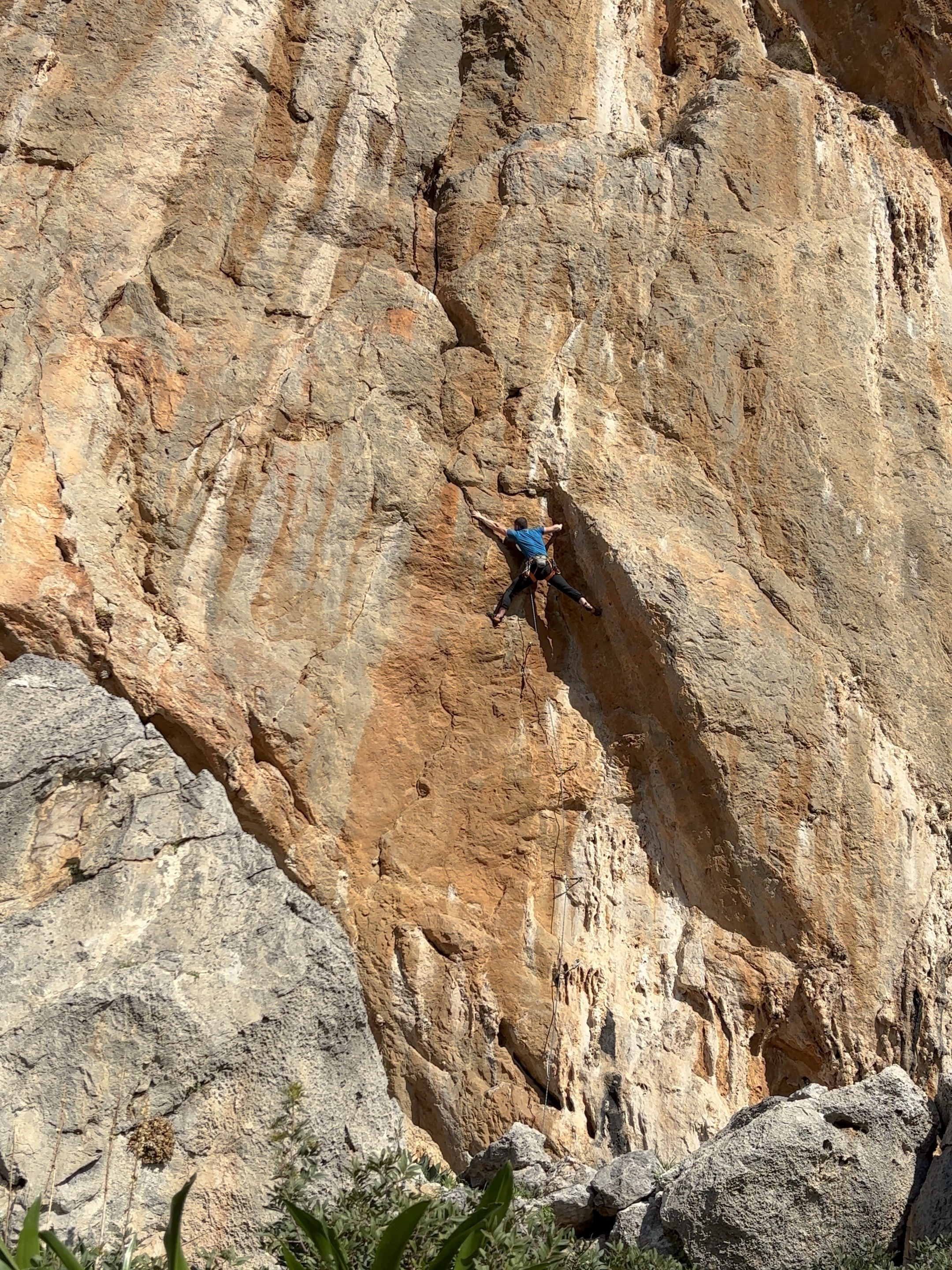
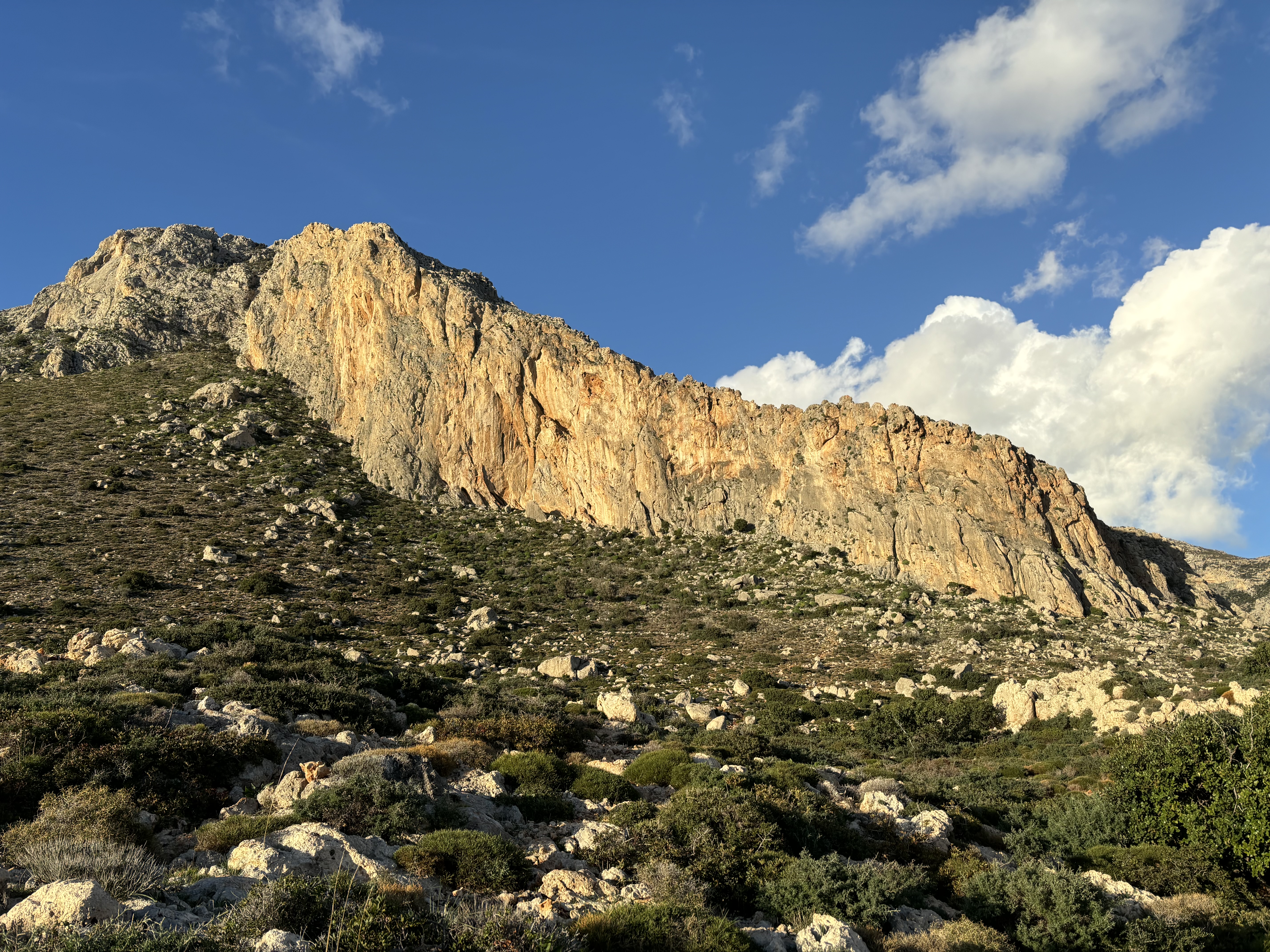
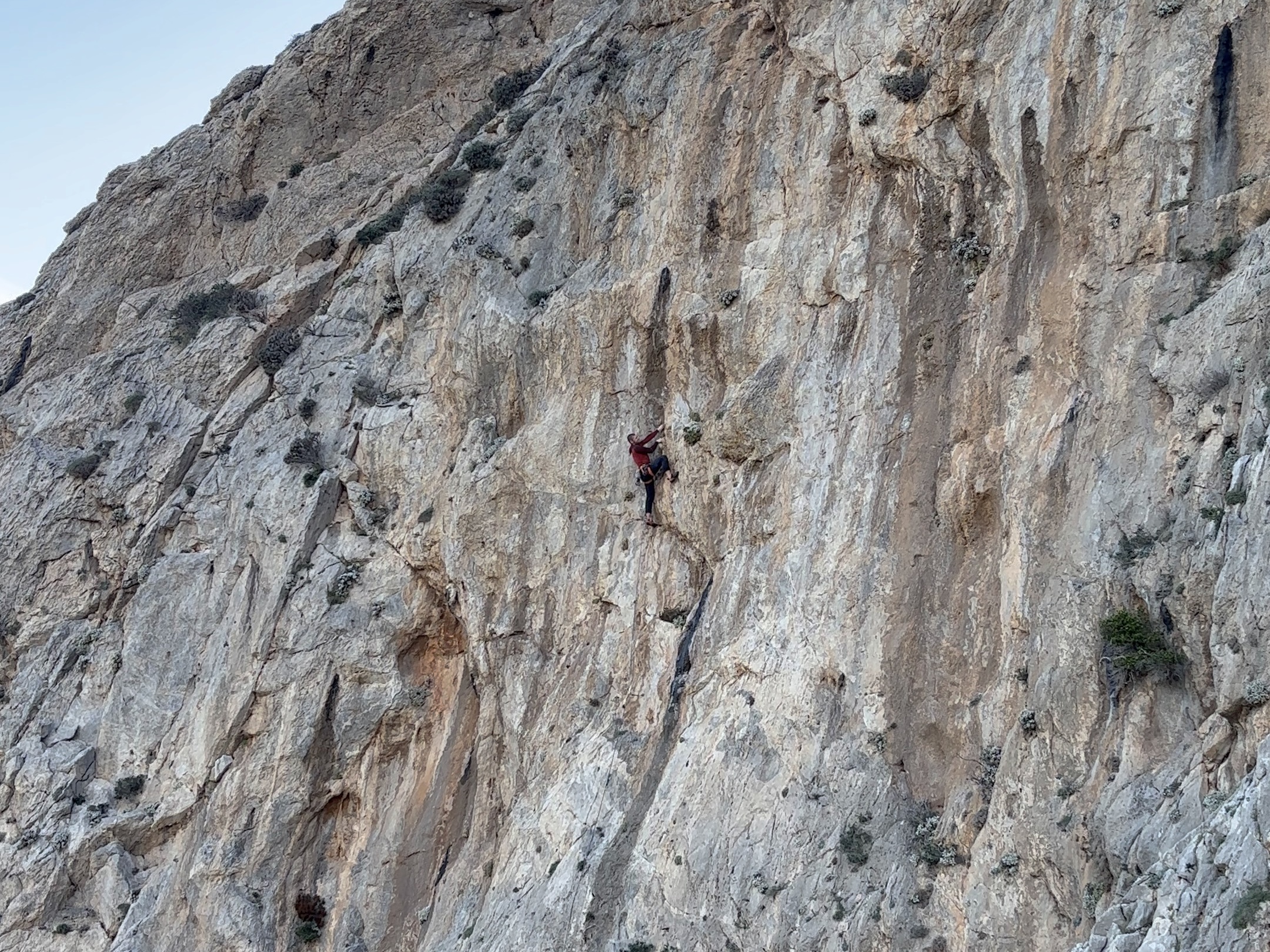
From left: ‘Myrtoo Pelagos’, 7a+, the beautiful view of Zobolo from the parking area and ‘Klotho’, 6c+
Rest Day Activities
Historical Sites
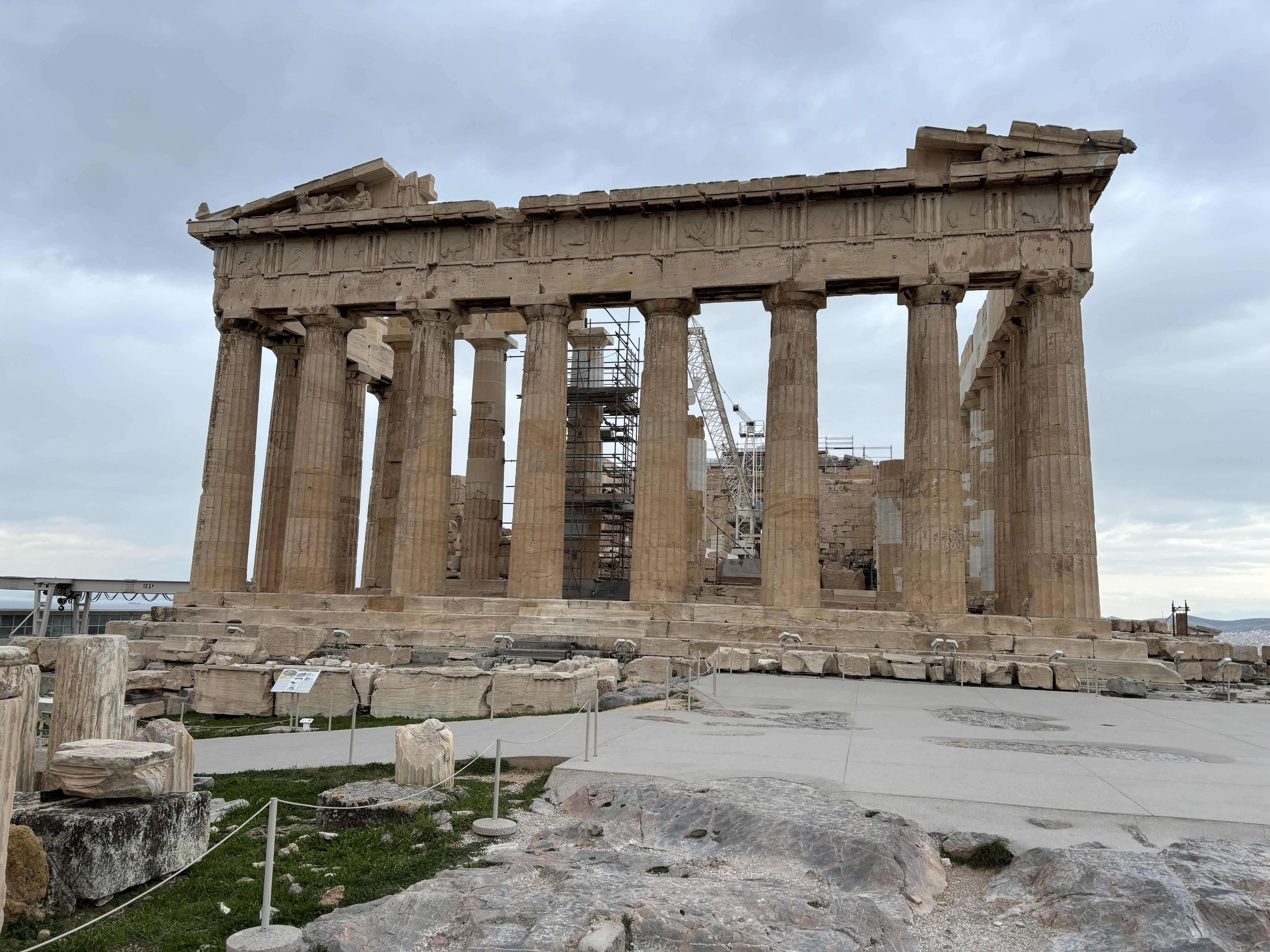
Greece is world renowned for its rich history and there are many significant historical sites you can visit across Greece. From ancient Olympia, Marathon, Delphi, Sparta and Mycenae to the incredibly famous sites of Athens, there is just so much historical depth to Greece you are never far away from something interesting. There is perhaps nothing quite so captivating as the golden age of Athens, around 2,500 years ago. This era, under the leadership of Pericles, saw the birth of democracy advanced further. The golden age also saw the rebuilding of the Acropolis by Pericles, there is evidence of the Acropolis being used for various purposes by humans for almost 6,000 years. The building of the Parthenon in 447 BCE symbolises the strength of Athens at that time. Socrates was around 31 years old when the Parthenon was completed, the same year Plato was born. The impression you get is of a city with, for its time, an almost unimaginable capacity to build, develop and think. It raises the question if, in certain regards, we have actually progressed as much as we think we have since then.
Whilst historical sites in Greece can become extremely busy in the main tourist season during summer, it was wonderful how quiet they were during the climbing season. If you visit in the winter months for a climbing trip, you should take full advantage of visiting some of Greece’s most amazing historical sites at the most crowd free they’re ever likely to be.
Monasteries
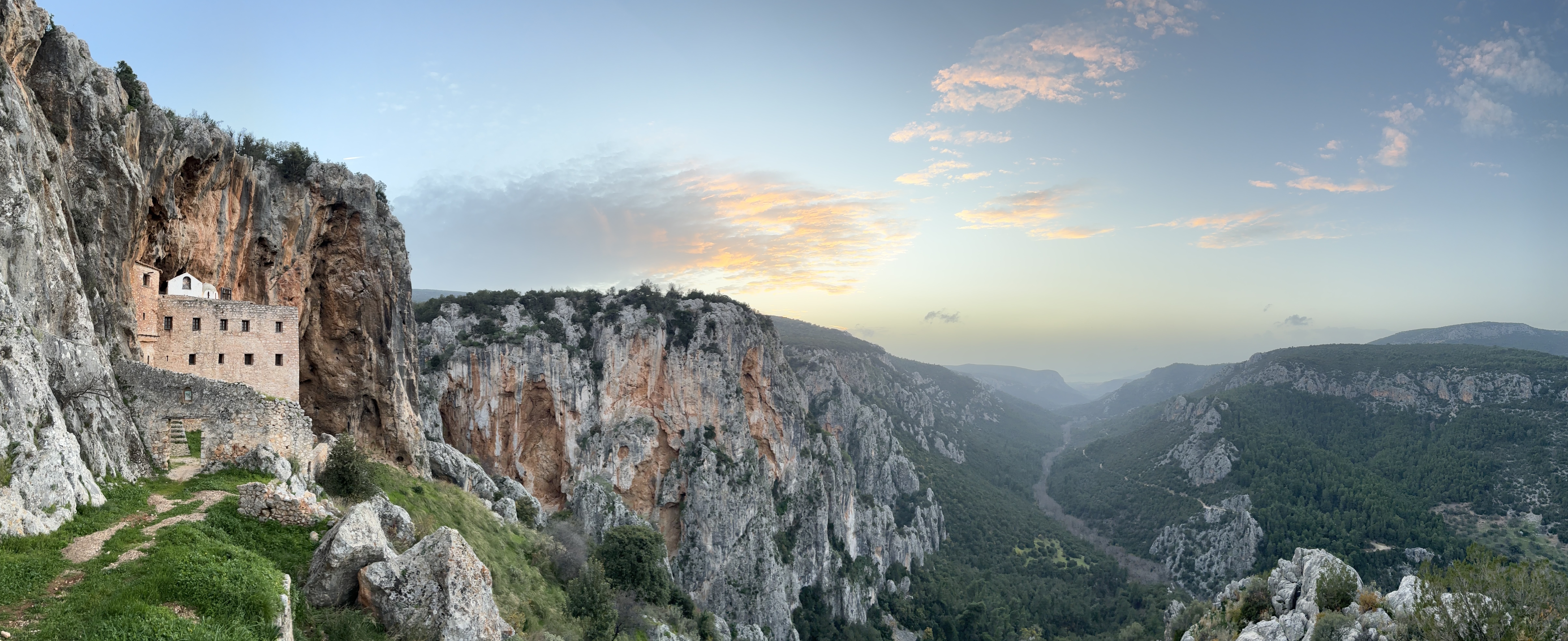
Christianity has played a big part in the history of Greece and Greek culture & identity. Greece is an Orthodox country, and there are many beautiful and ancient monasteries and churches throughout the country. If you are climbing in Meteora you should definitely visit some of the clifftop monasteries there, they are absolutely fascinating. However, we thought we would give a special mention to the Monastery of Agios Dimitrios of Avgo, or egg monastery for short. There have been monasteries at this site since the 11th century, and most of what you can see today is from the 15th century. There is a long, winding dirt road to get there and upon arriving you are in an incredibly beautiful and tranquil place. The monastery is built into the cliff, and despite its position high on the mountainside, it is surprisingly hidden from view from almost every angle. There are rooms inside where pilgrims can sleep, although the monastery is completely unoccupied otherwise. There are some beautiful frescos inside the chapel, as well as some in the cliff, leading from the roof, at a burial site. The whole place is incredibly interesting and a great example of Greece’s many historical treasures.
Beaches
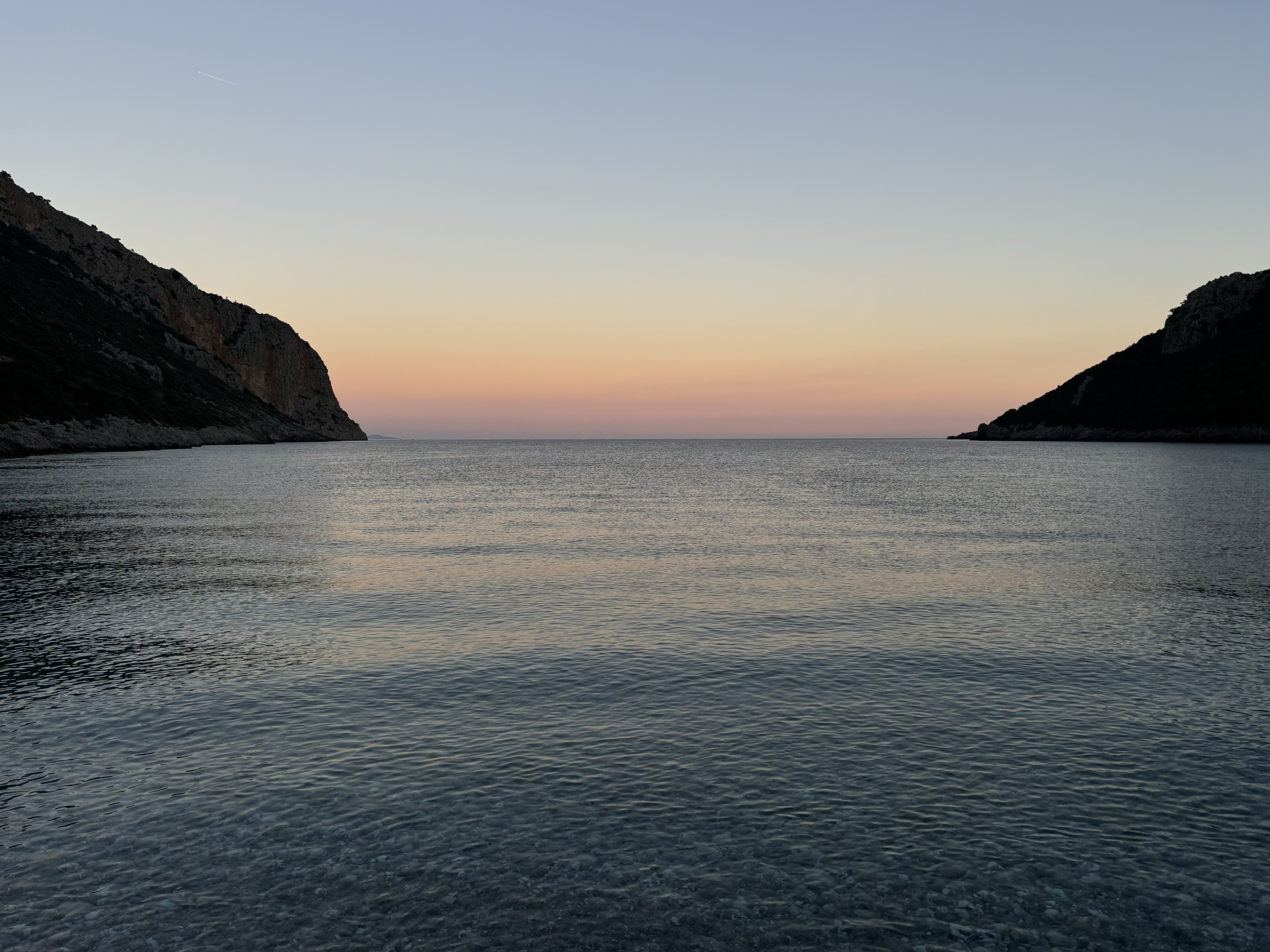
Greece is justifiably world famous for its coastline, and you will usually not be far from somewhere beautiful to go for a swim. During the winter months, in the height of the climbing season, the water is often still a pleasant temperature. Don’t expect it to be like a bath, but it is perhaps warmer than you would think. For example, the sea temperature in Nafplio is usually around 20°C in November, and around 15°C in February- which is the coldest month. Better still, when the sun is shining and it is warm outside, the sea is a great way to refresh yourself without being chilled to the bone.
Food
Souvlaki is meat, usually pork or chicken, grilled on a skewer. The meat is very tender and succulent, with great flavour from the grilling and seasoning. Souvlaki can be eaten alone, or wrapped in a pita with tomatoes, tzatziki, onions and sometimes fries. It is a very tasty meal and easy to find anywhere in Greece.
Gyros is a delicious vertical rotisserie, also usually pork or chicken, that is cooked as it rotates. In countries where gyros is not normally eaten, gyros meat is made from a rather off-putting meat paste, formed around the skewer. In Greece the quality is much higher, and the gyros is made by stacking thinly sliced pieces of meat, which is much more flavourful. It is eaten in a wrap of pita, in the same way souvlaki often is.
Stifado is a traditional Greek stew, with a delicious and comforting flavour. Typically, beef is stewed until it is very tender, alongside shallots and a sauce made from red wine. It is one of the most homely and satisfying Greek meals you will eat!
Giaourtlou is a type of kebab made from minced lamb, served on top of a pita along with a tomato sauce and Greek yoghurt. The lamb is usually very tender and the whole dish has a wonderful flavour combination. It is less common than some other Greek dishes, but is well worth seeking out as it is absolutely delicious!
Moussaka is a wholesome dish made from laying eggplant and potato, with either minced beef or lamb in a tomato sauce, topped with creamy béchamel. It is a rich and hearty meal, that will definitely leave you feeling happy.
Tiropita & Spanakopita are both types of pie, one with a creamy cheese filling and the other with a feta and spinach filling. The pies are made from phyllo pastry and can be either in a spiral shape or just a regular slice. Either way, it is always very tasty and a great lunch to grab on the go.
Greek Salad, on paper, is a very simple dish. Tomatoes, cucumber, red onion, olives, feta and the olive oil dressing is all that’s required. Yet the salad is absolutely delicious, more so than a ‘Greek salad’ you’ll find in other countries, due to the fact the ingredients are very fresh and locally grown. If you see a Greek salad with little cubes of feta you can tell it’s not a proper one, in Greece the feta comes in a large slice on the top – perfect!
Tzatziki is a classic Greek dip made from yoghurt, cucumber, garlic, herbs and olive oil. Simple yet delightful, it goes brilliantly with many things.
Summary
We had a fantastic time in Greece and we can truly say we found it to be a wonderful country full of wonderful people. There are loads of amazing crags and fantastic routes, no matter what your climbing preference, you will find something to love here. The standout climbing experience for us was probably Meteora, due to the stunning unique landscape and memorable experiences of the routes we did. Aside from climbing, we perhaps had the best part of our trip, something which we had not planned. What started out as a disastrous flood in Katafyki turned out to be the highlight of our trip. Making friends, and the kindness and hospitality of the local people is something better than any route. Of course, that isn’t to say the routes weren’t brilliant – because they were! Our trip to Greece was long overdue, and after waiting a while to visit we can say it was well worth it, it exceeded our expectations in many ways and we had an awesome trip.
We write for pleasure and climbing is our passion. Our articles will never be paywalled. However, if you would like to help towards the costs of running the site or if you have found our content useful, please consider contributing here. To read more about why your support matters, click here.
Relevant links and resources
Affiliate Disclosure
We have an affiliate partnership with Climb-Europe.com, which means we receive a commission if you buy a guidebook via one of our links, at no extra cost to you. Currently, we only use affiliates for guidebooks from Climb Europe, not anything else. To read more, click here.
 The Crag Journal
brilliant write up – sounds like you had an amazing time. There’s even a couple of places to add to our to do list. The flash flood sounds terrifying!
Cheers, Dom and Helen
LikeLiked by 1 person
Thank you both! Yes, we had a fantastic trip, what a great country Greece is! Indeed the flash flood was a bit hair raising for a moment, thankfully no swimming was required!
Cheers and enjoy your time in Spain!
LikeLike
Great write up, thank you. I too have a couple of new crags to explore now! 🙂
I would also mention Solomos. A great crag, new routes being added regularly too. Easy access and a lovely setting with a view toward Corinth and the mainland.
Couple of points – Charamos – chipped to death! A lot of the routes have been manufactured and are awful as a result. Naraki – The two 8’s are chipped. The routes are all polished. The extensions seem to be less affected and are excellent. The crag along the path, a little closer to Nafplio has some great routes and zero polish! Kalogria – prey for a breeze. Mosquito hell. Varasova – what a shame. We were there again recently and it’s looking tired and very sad now. As you say, trash, run down tavernas and the major curse of the area, camper vans. Also suffered with Mosquitos this trip. Leonidio – agree with the numbers there and the crowded crags, but maybe a mention of the proliferation of camper vans, mostly respectful, but many not and tarring us all with the same brush. The camp site Semeli is excellent and thats where the van life climbers should be going imo. Manikia – sssshhhhh. It’s lovely, quiet and peaceful, also very sunny climbing. There’s a good camp site for vans with
LikeLiked by 1 person
Hi Mike, thanks for the comment!
Solomos sounds great, we would like to check it out sometime, and I’m sure there are many more we missed!
Charamos I would partly agree with you, some routes were chipped but others weren’t, but you are right some of them have been drilled. Didn’t bother us much on the whole really, but not ideal.
Yes, Nafplio was polished on some routes but not others, we didn’t have a problem avoiding it if we wanted to. Not surprising Neraki has had a lot of traffic over the years considering the location.
Agree with you about needing a breeze at Kalogria! Hopefully Varasova will get better, with some TLC it could once again be a beautiful spot.
With Leonidio we do agree. We stayed at Camping Semeli for the entire of our time there and we did see a lot of bad van life at the crag parkings and in the town. We almost got bitten by some van lifers unattended dog, and saw people parking in olive groves with their laundry out etc. Definitely something that needs to be policed, if I was a local there I wouldn’t be impressed with it.
We also stayed at the place you mentioned in Manikia and loved it.
All the best, and happy climbing!
LikeLike