South Korea is somewhere that had been on our radar for a while, we knew there was great rock there and had it earmarked for when the right time came around. When we finally arrived and started climbing we were very impressed as the quality of the crags and the scale of them was even better than we had imagined. South Korea is over 70% mountainous, there are hills, crags and forest almost everywhere, if you aren’t in a city or on a beach you’ll probably be on a mountain! We spent five weeks in the country and climbed loads, the time absolutely flew by and it would have been no problem to spend twice as long. If you enjoy both trad and sport climbing then the selection is excellent and you will be spoiled for choice. Aside from climbing, we found Korean people to be exceptionally friendly and helpful and we were shown a great deal of hospitality during our trip. The country also has a wealth of great cultural and historical sites, so it really felt like there was everything we could have asked for. South Korea also has world class public transport and you can reach the overwhelming majority of crags by bus or train, which is both convenient and very reasonably priced. South Korea is a superb place to be a climber and it is hard to find anything not to like.
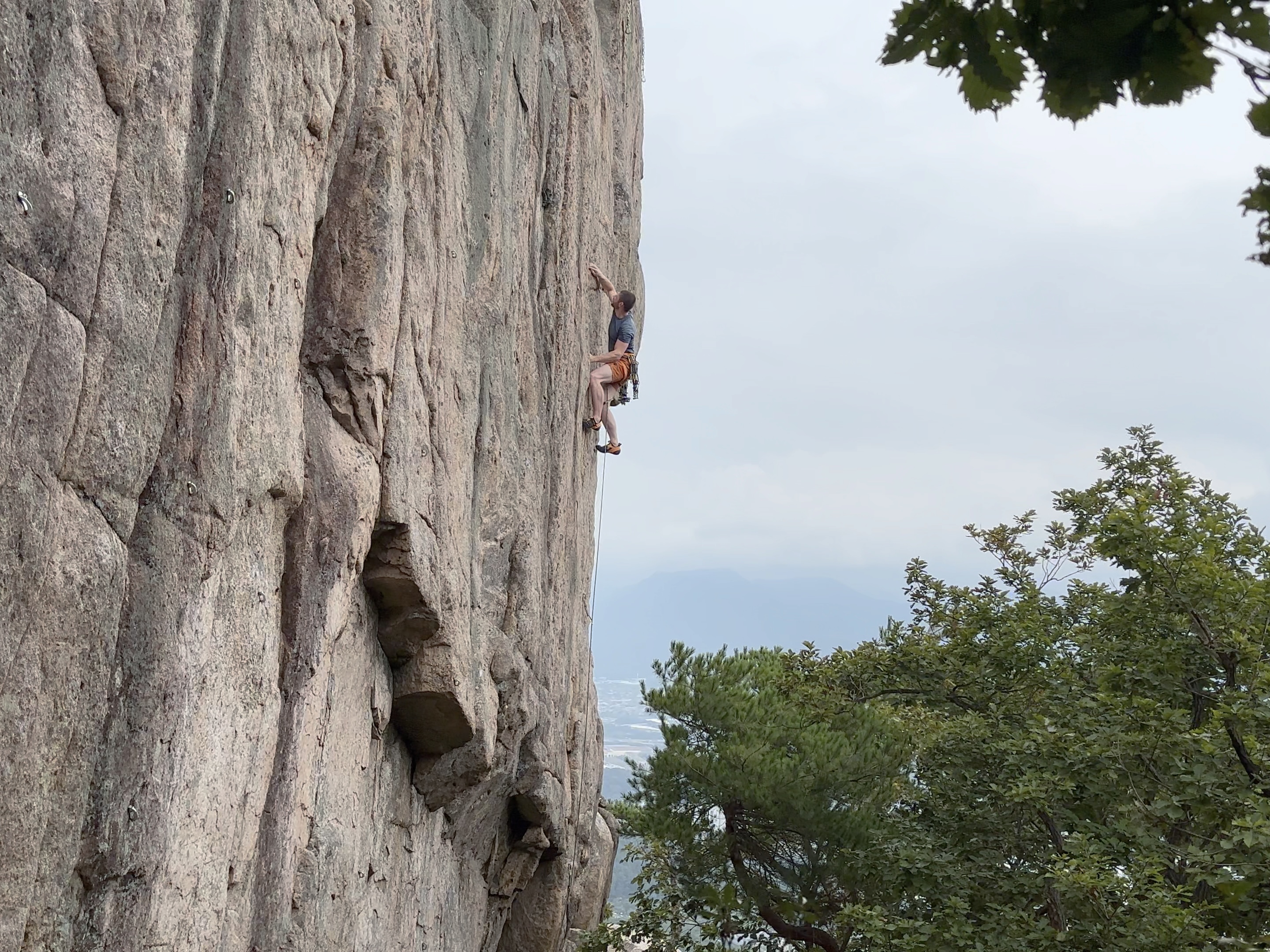
Guidebooks for Climbing in South Korea
South Korea is well covered with various sources of climbing topos and information. A great place to start is the guidebook, called Climb, which has loads of crags spread all over the country. The guidebook can be downloaded from Scribd. The guidebook is great for getting an overview of how much is on offer and where it is, it was clearly made with a lot of love. However, it is worth bearing in mind that at the time of writing the guidebook is 14 years old and usually has route lists rather than topos. This means some crags can be hard to find using the approach notes as, of course, a lot changes in 14 years. It is still a very useful tool and has probably the broadest coverage of any single source. Another great source is Mountain Project, particularly if you want topos for multipitch climbs, it has particularly strong coverage and detail for routes in places like Insubong and Seoraksan. There is also Korea on the Rocks, which has got many different crags, all uploaded by climbers and edited as such, we found it a useful comparison to the guidebook for things like approaches. theCrag is also worth a look, although much of the information there has been directly copied and pasted from the guidebook. However, it was useful to read comments from other users ascents and see uploaded photos.
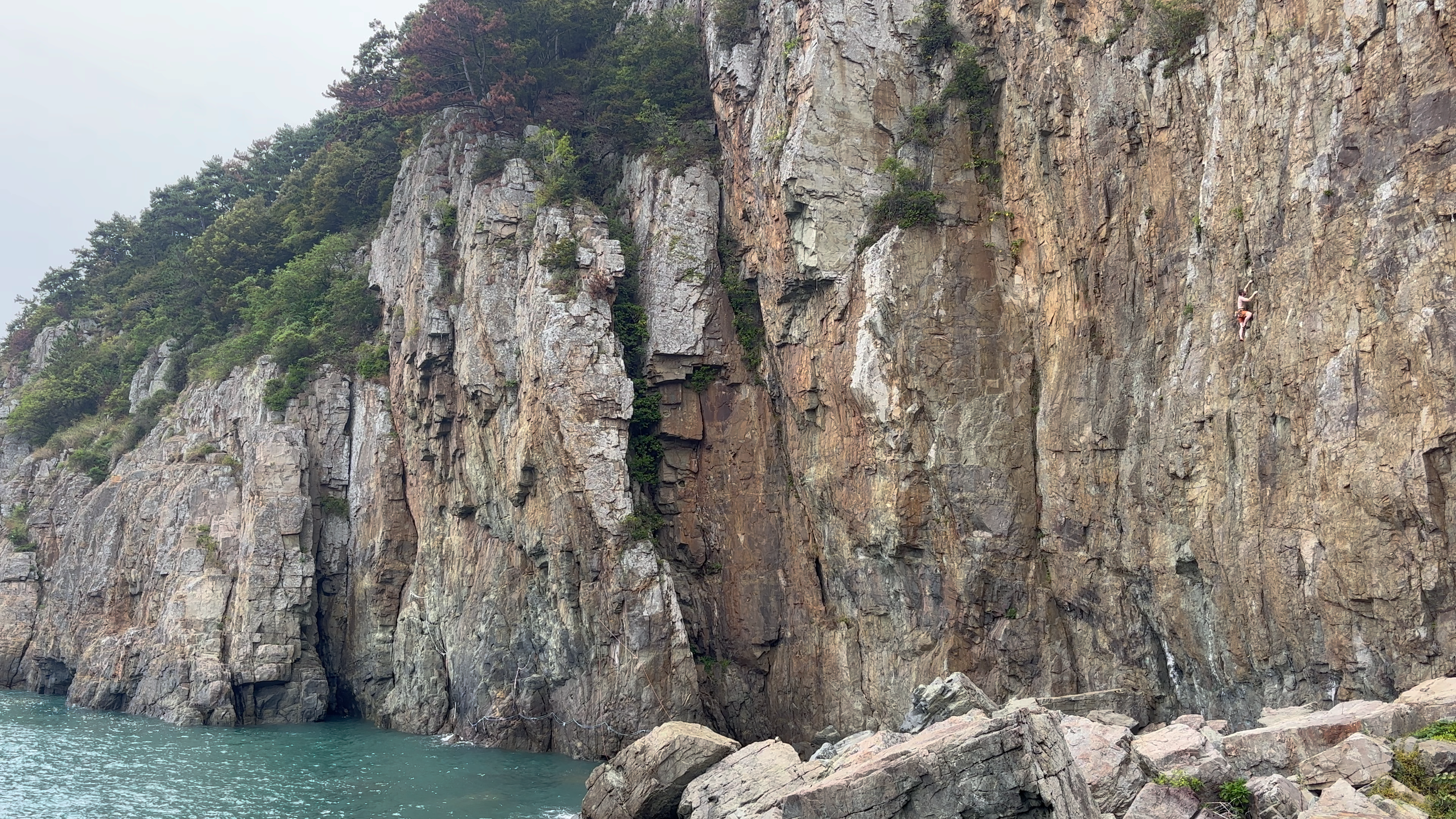
Weather and Climbing Season in South Korea
The rock climbing season in Korea is definitely spring and autumn, with the months April to June and September to November offering the best conditions. In the winter months, people go ice climbing, winter mountaineering and skiing, so it is definitely not a time to come rock climbing! Meanwhile July and August are both the hottest and the wettest months of the year, meaning you will want to avoid summer to make the most of your trip. We spent 5 weeks climbing in South Korea, during September and October. Our experience of conditions was generally quite good, although it was definitely on the warmer side. We visited at that time to make sure our time in South Korea fit with the rest of our trip in the region, but if you have the option to pick any time then October onwards is better than September. Conditions in the shade were fine during our whole trip, it was mainly dealing with heat on the very sunny days. We found the weather to be hot rather than scorching, so it was possible to climb in the sun (like on many of the multipitches) if you covered up and brought plenty of water. It is all about making the most of what you’ve got, it is easy to imagine how cold some of the walls will be by the latter half of November.
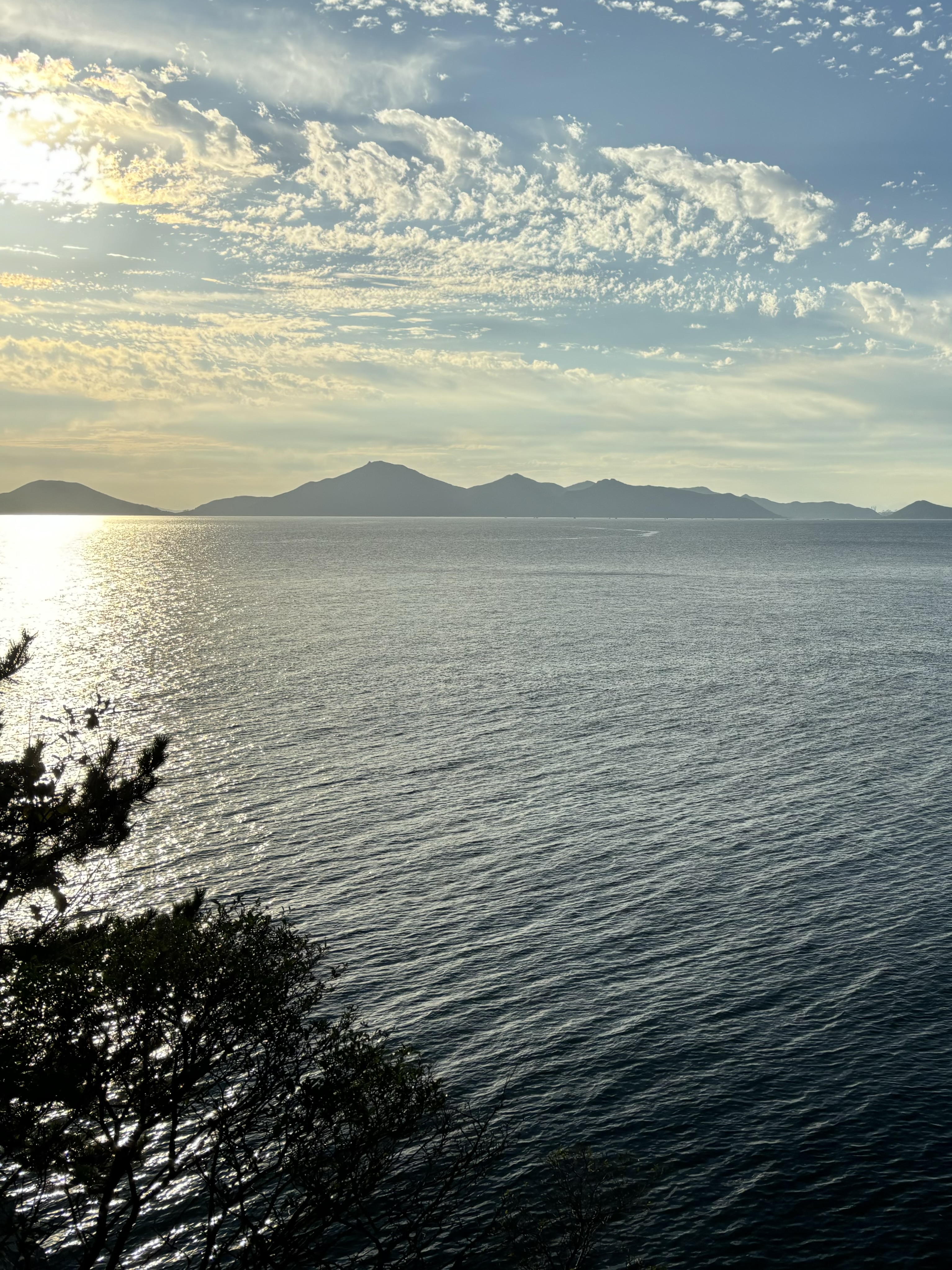
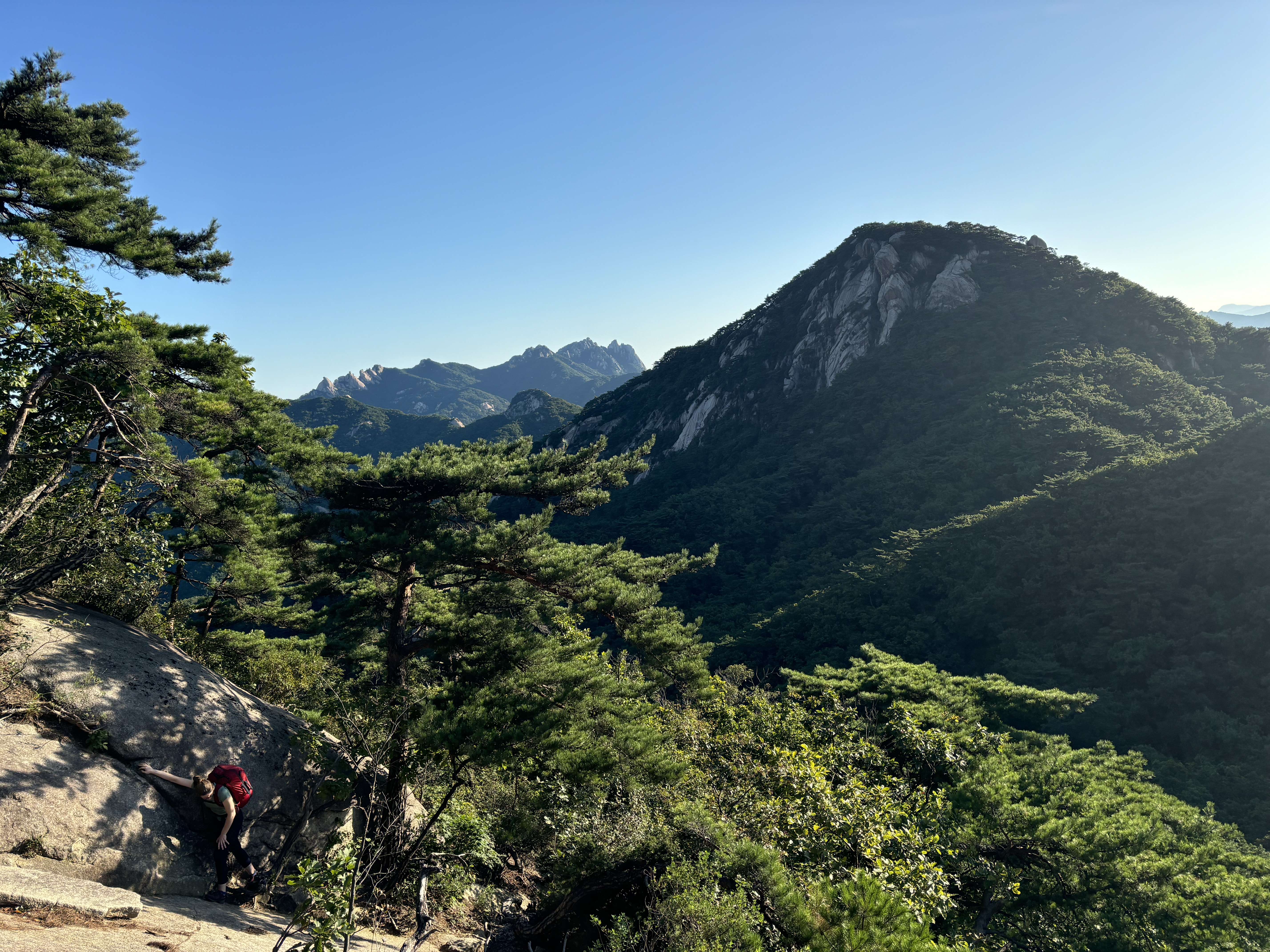
Beautiful contrasting environments between the coast and mountains of Korea
Below is a map of the different crags we climbed at in South Korea so you can see where they are in relation to each other. We have described the crags in the order we visited them.
Climbing Recommendations
Bukhansan National Park
Bukhansan National Park is an absolutely stunning mountain area right on the doorstep of Seoul. In fact, you can step off the subway or bus from the city centre and be ready to start your approach to the crags. Despite its proximity to a metropolitan area of 26 million people, once you get on the side of a cliff or in the forest, the city feels distant. The rock in Bukhansan is granite of very high quality. The rock has lots of cracks, dihedrals and slabs with excellent friction, but be prepared, the grades here are no giveaway! The climbing style is very old school and you will have to rely on good jamming and footwork for the grades to feel anything like they are on paper. Despite being hard, they are excellent, and you would be hard pressed to find a bad route, regardless of grade they are all such great quality. The scenery is truly beautiful and we would say, alongside Rio de Janiero and Cape Town, Seoul is one of the best major cities we’ve ever visited for climbing.
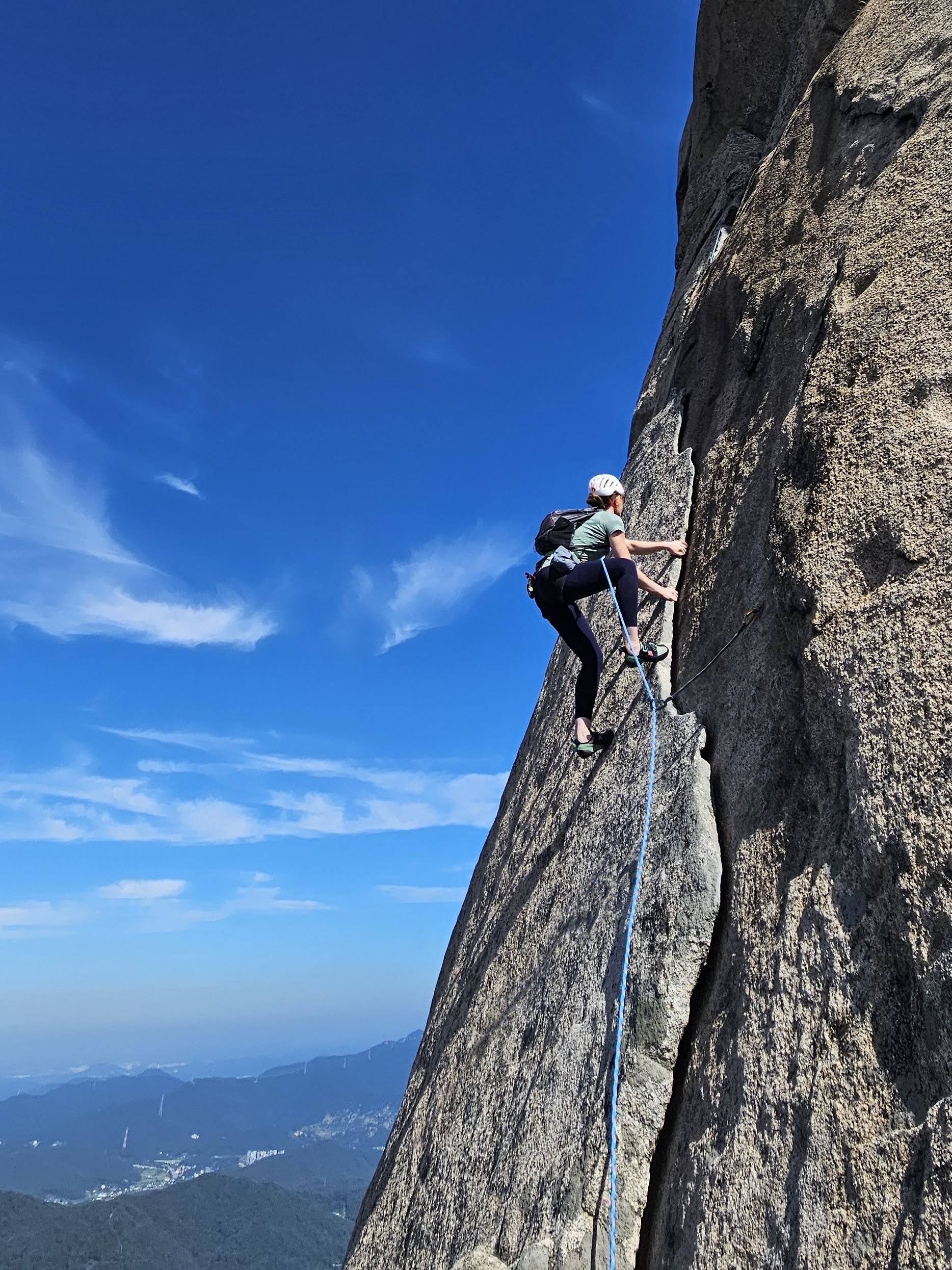
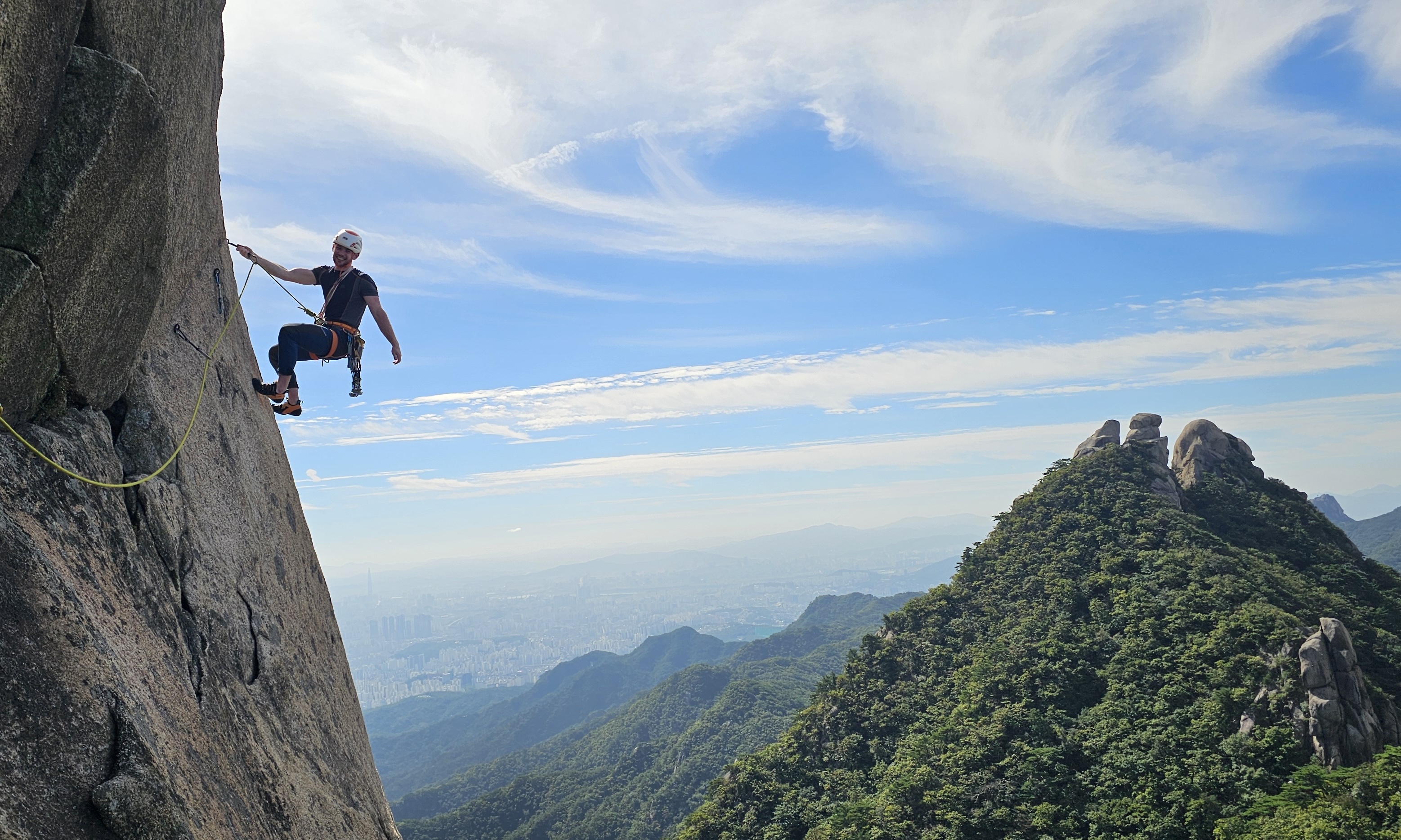
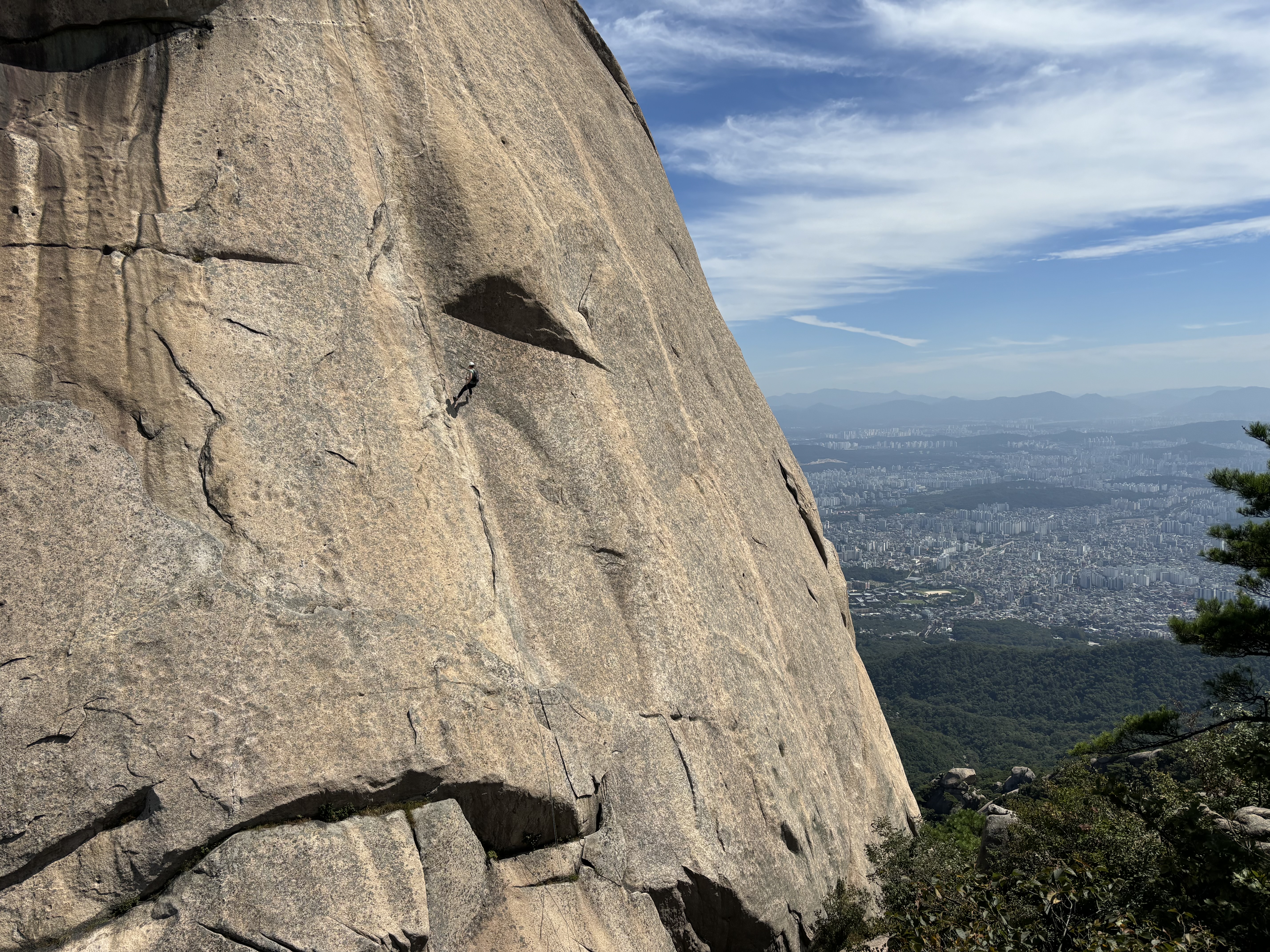
The excellent quality low grade classic ‘pigeon’, 5a A0
Probably the most classic crag of Bukhansan, and perhaps even South Korea, is Insubong. Insubong was first climbed in the 1920’s, and Korean climbers have been climbing there since around that time, with an uptick in local climbers happening in the 1930’s. It should come as no surprise then, that Korean climbers are very good and have a very strong culture of climbing and mountaineering. Anyone who visits Insubong on the weekend will see that Korean climbing is thriving, with dozens of climbers getting stuck in to the quality trad climbing on offer. Insubong even received a visit from the legendary Yvon Chouinard, who did some first ascents there in the 1960’s. It isn’t hard to see why it has become such a classic venue, the crag is amazing! Most routes are multipitch, with the longest ones having around 7 pitches. The rock is consistently excellent and there are many fun adventures to be had here. Whilst most routes are trad, there are a few bolted single pitch lines that you could climb without any trad gear, there are also loads of boulders in the area for anyone who has a pad. The summit of Insubong can only be reached by climbing, and it’s an awesome spot to take in the views.
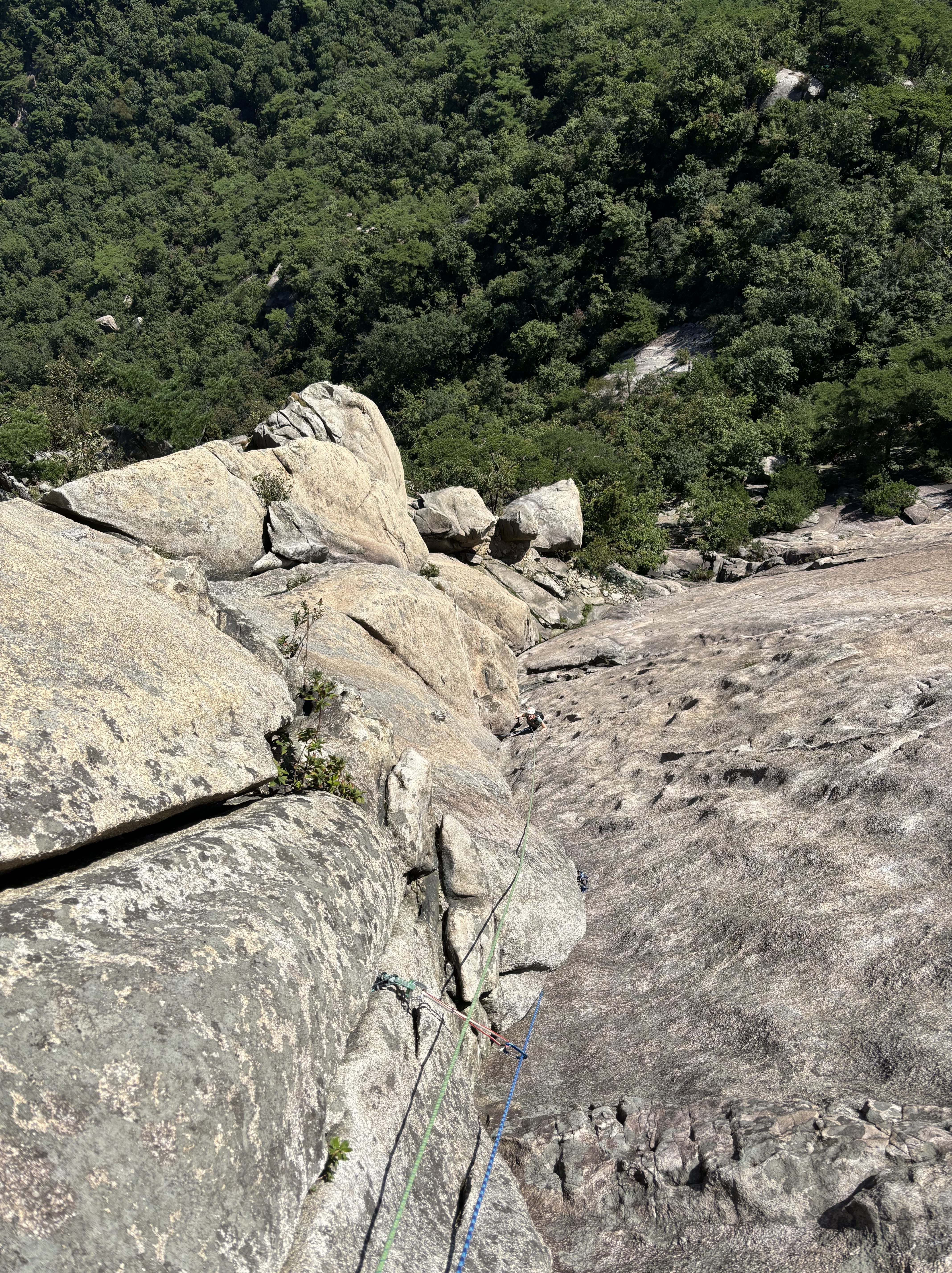
One of the other classic areas of Bukhansan is Seoninbong, which is a similar formation to Insubong, with the same high quality rock. The eye catching lines and scale of the crag are so impressive, it really is an awesome place. Any climber from Seoul is truly blessed to have so many amazing and memorable pitches on their doorstep. The length of the routes at Seoninbong is similar, around 7/8 pitches, but the crag is a bit steeper and more imposing than Insubong, it also seems to be less popular and quieter with climbers. There were also a handful of single pitch bolted routes here, although some of them are runout. The approach times and styles for both Insubong and Seoninbong are very similar, taking around 1 hour, with 3/4 or more of the approach being on an obvious main hiking trail before you branch off to the base of the cliff, although Seoninbong has the slightly easier approach of the two.
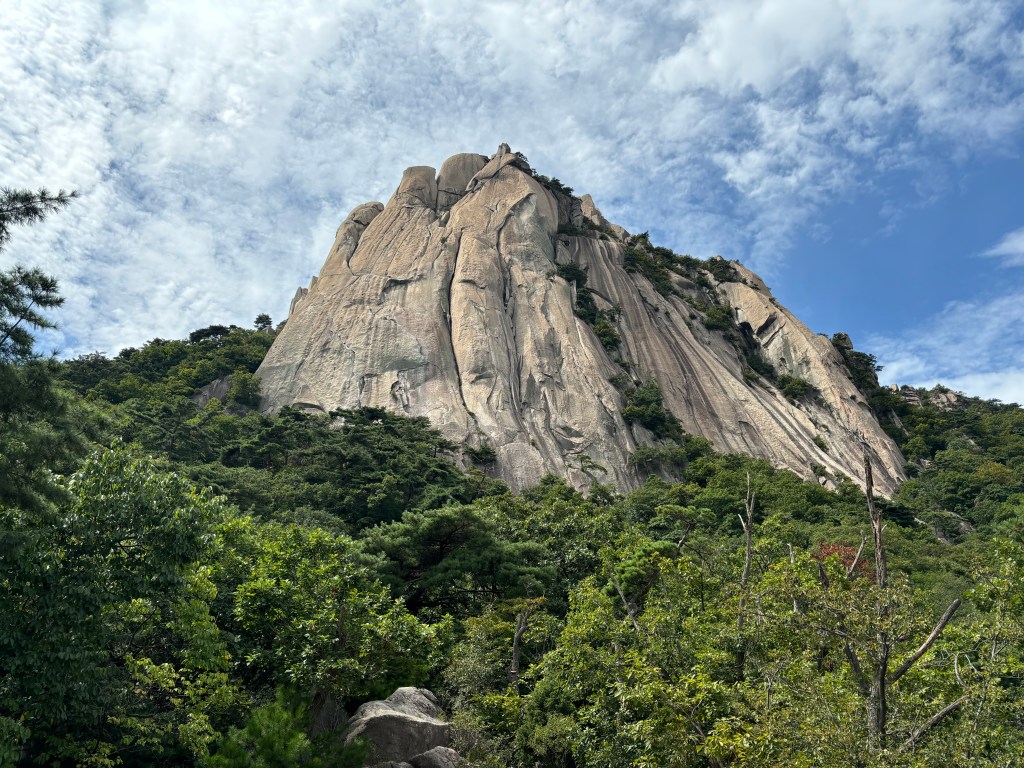
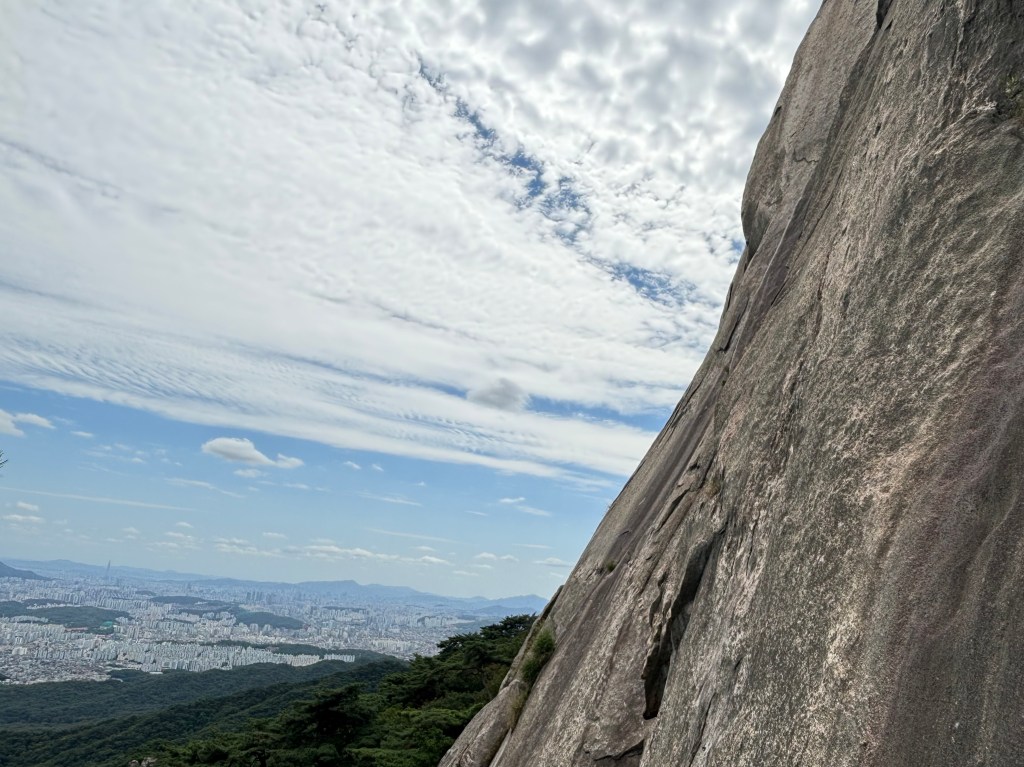
Beautiful Seoninbong
We really loved climbing in Bukhansan, the quality of the climbing was even better than we had imagined and we went with high expectations. As well as the climbing there are tonnes of great hiking trails that are absolutely worthwhile. There are also lots of beautiful temples that are a real treat to visit and add a wonderful cultural dimension to a days climbing. We don’t have a bad word to say about Bukhansan, but as great as it is, make sure to get out and about and visit plenty of the country’s other crags as well – the whole place is full of awesome rock!
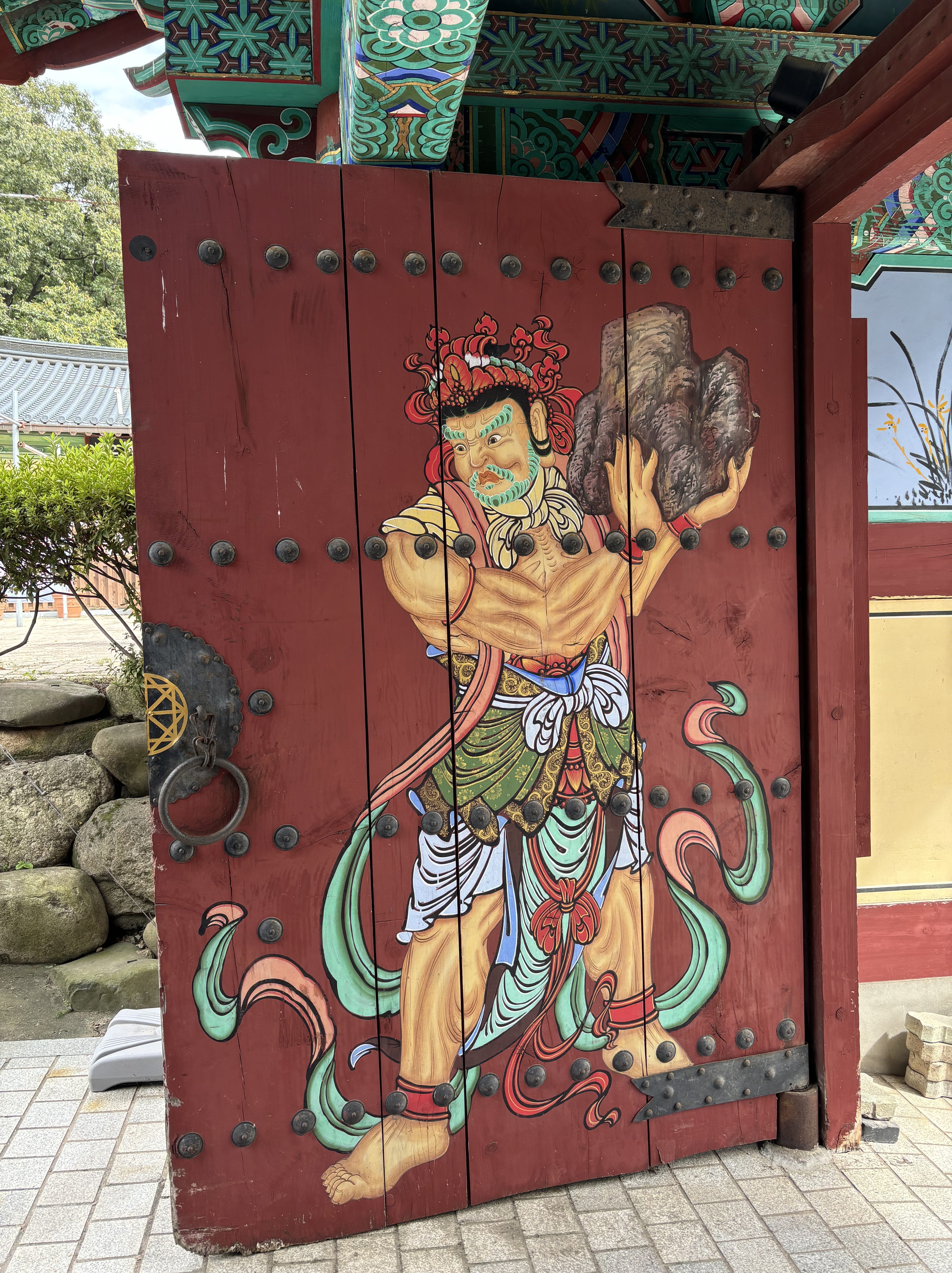
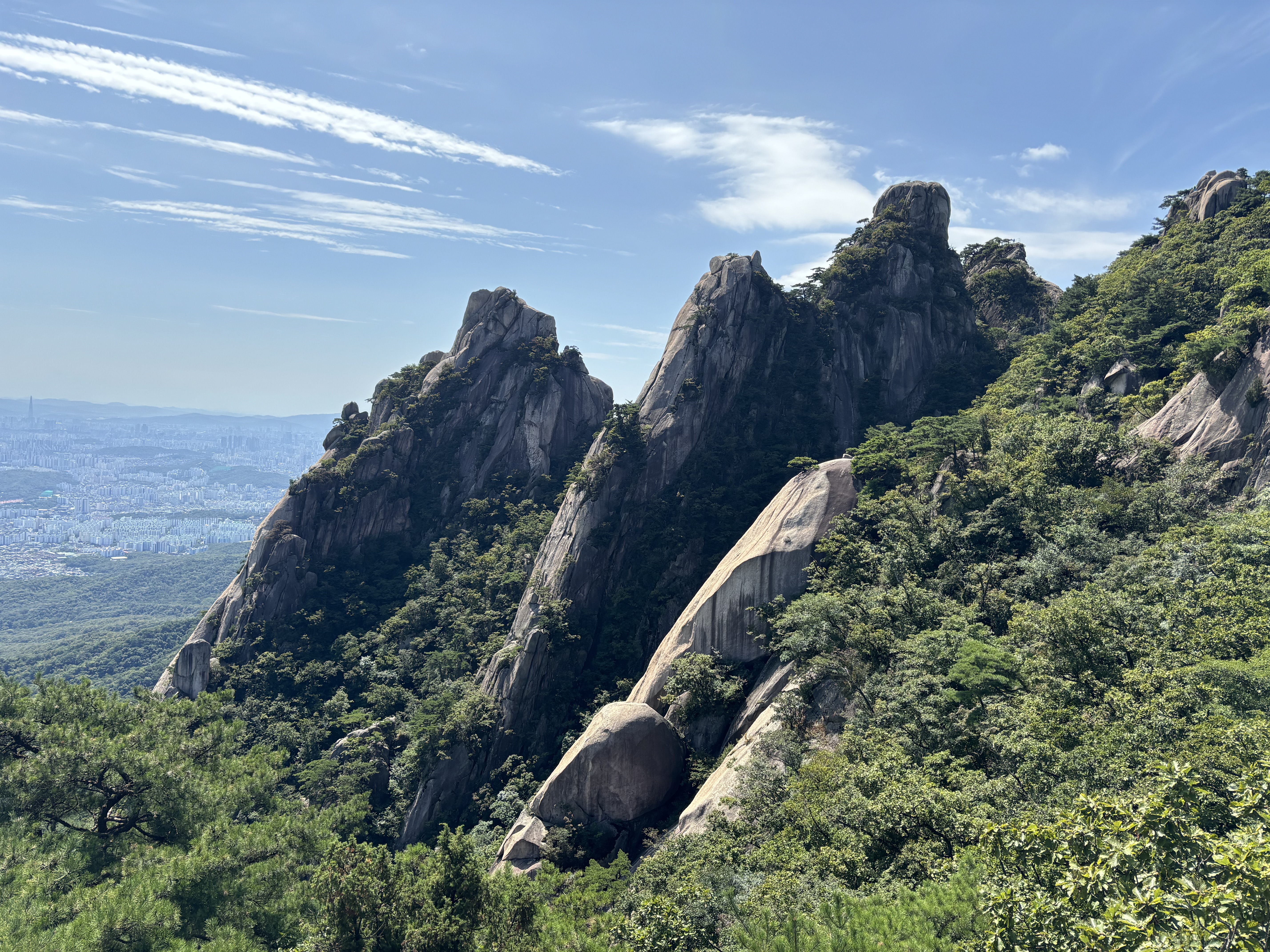
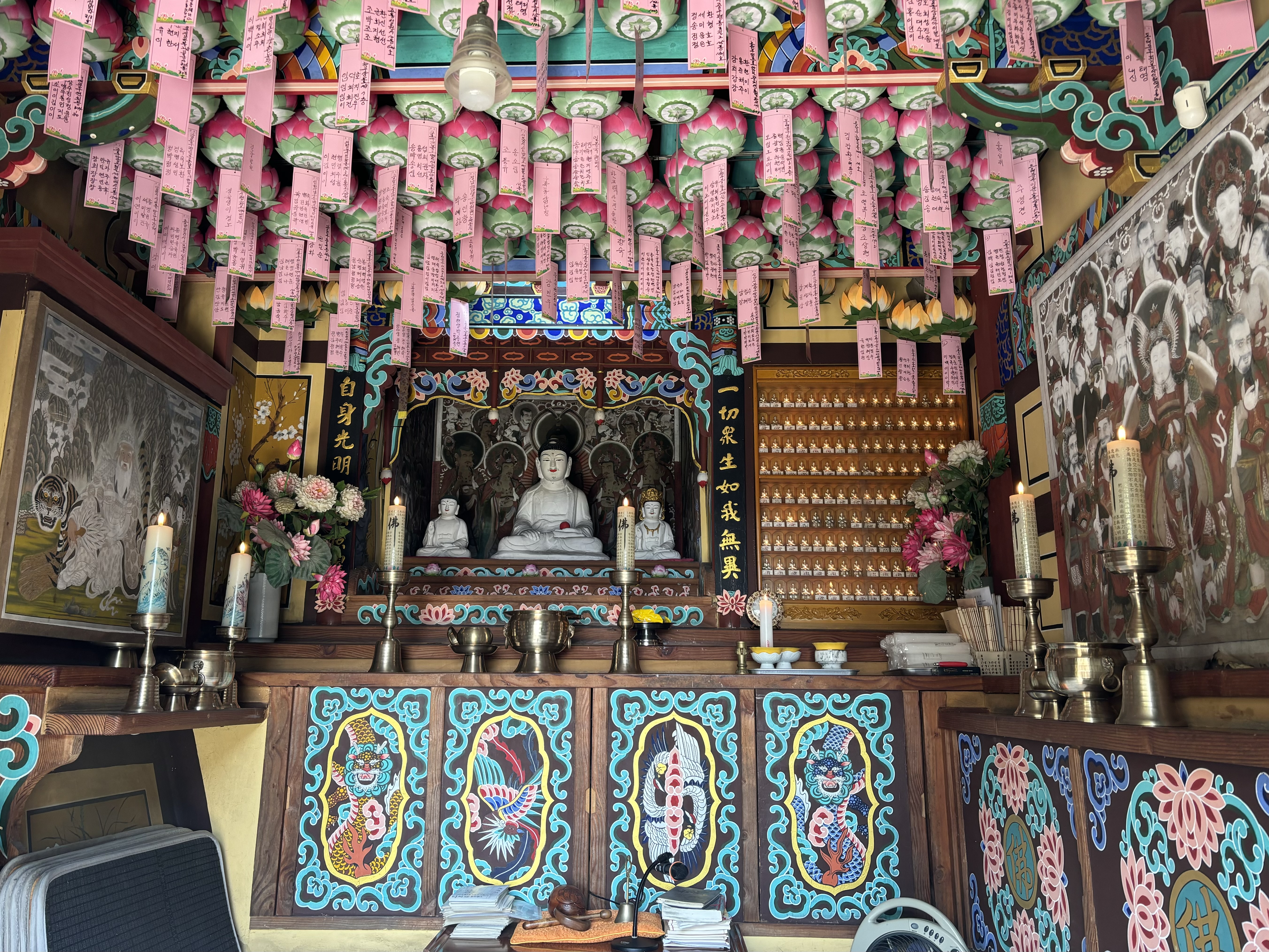
Gorgeous hikes and cultural sights in Bukhansan
Samseong-san
Samseong-san is a quiet little mountain area just south of Seoul, with around 150 sport routes spread across a dozen or so small crags. Access is very easy and you are deposited by the bus only a few hundred meters from where the trails start. The crags can be surprisingly difficult to find as many of them are well hidden by the trees. It is amazing that so many crags and routes can be so well hidden, but that is also part of what makes the crags so enjoyable when you do arrive! The hiking trails themselves and the surrounding area is very pretty, it’s a nice place to be away from the noise and bustle of the city. The quality of the rock is excellent, even though the crags are small in comparison to those of Bukhansan to the north of Seoul, the quality is still there, so if you want some chilled out sport climbing on great granite Samseong-san has you covered. Naturally it isn’t a major area in the country, but it is still a nice place that is worth visiting.
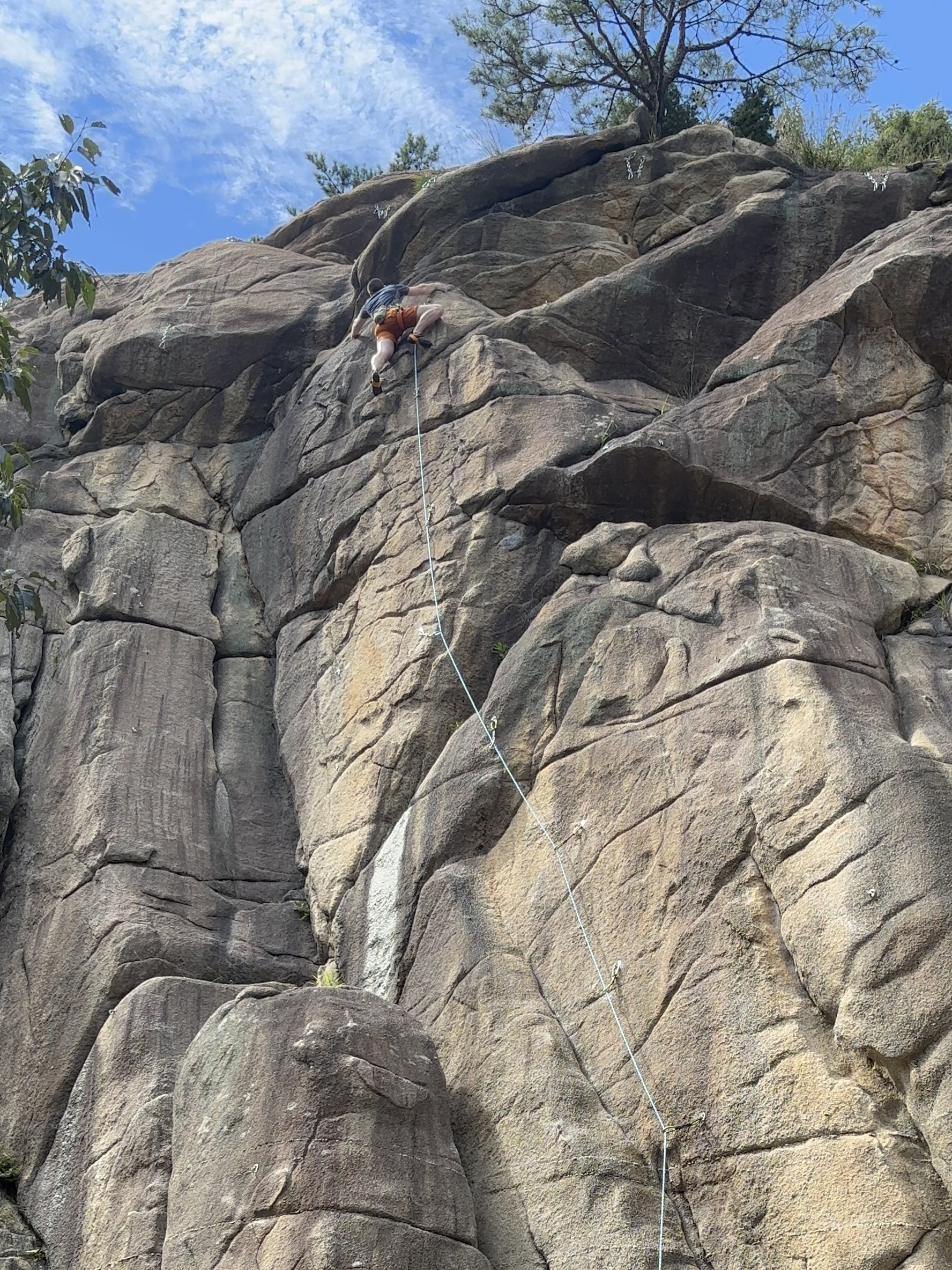
Byeongpung-am, Duta-san
Byeongpung-am is a crag which sits in the Mureung valley, overlooked by the mountain of Duta-san – a name which is often used as an umbrella term for the area. The scenery in Mureung is absolutely stunning, it is so beautiful it caught us off guard and it would be worth visiting the area for the scenery alone, including if you aren’t even a climber. The whole valley is full of crags, varying from huge towering buttresses to craglets and plentiful boulders, the potential for climbing in the area is massive. The valley is also lined with a lush dense forest and a gorgeous river that is home to many waterfalls and great swimming spots. We aren’t sure if any of the other crags or boulders have been developed yet, the only information we could find was for Byeongpung-am. It is worth noting that most places have the location coordinates of the crag wrong, showing it closer to the trailhead than it actually is. The crag is very close to the twin waterfalls written in Korean as 두타산 쌍폭포 and we have marked the exact location on the map at the start of the article.
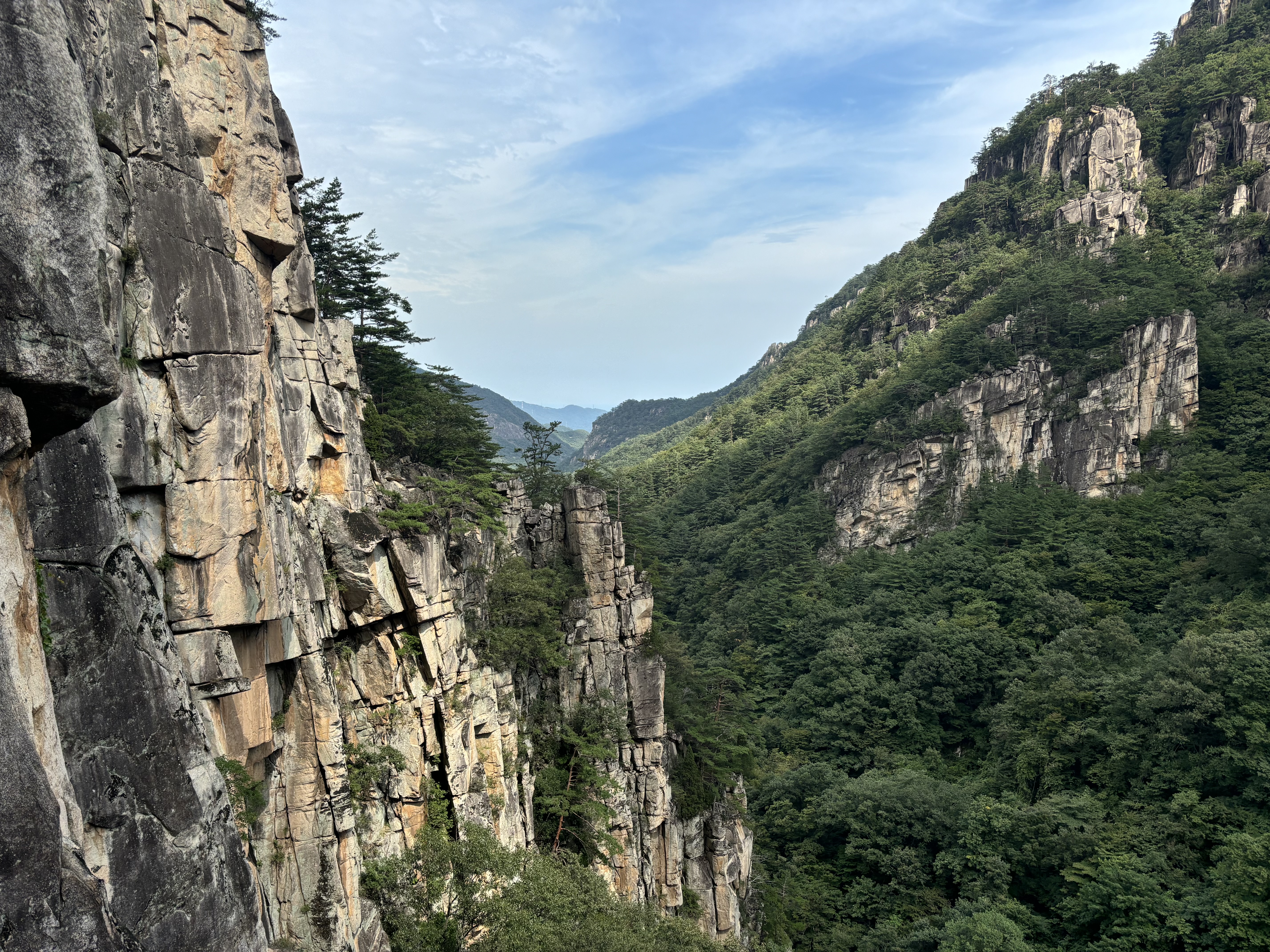
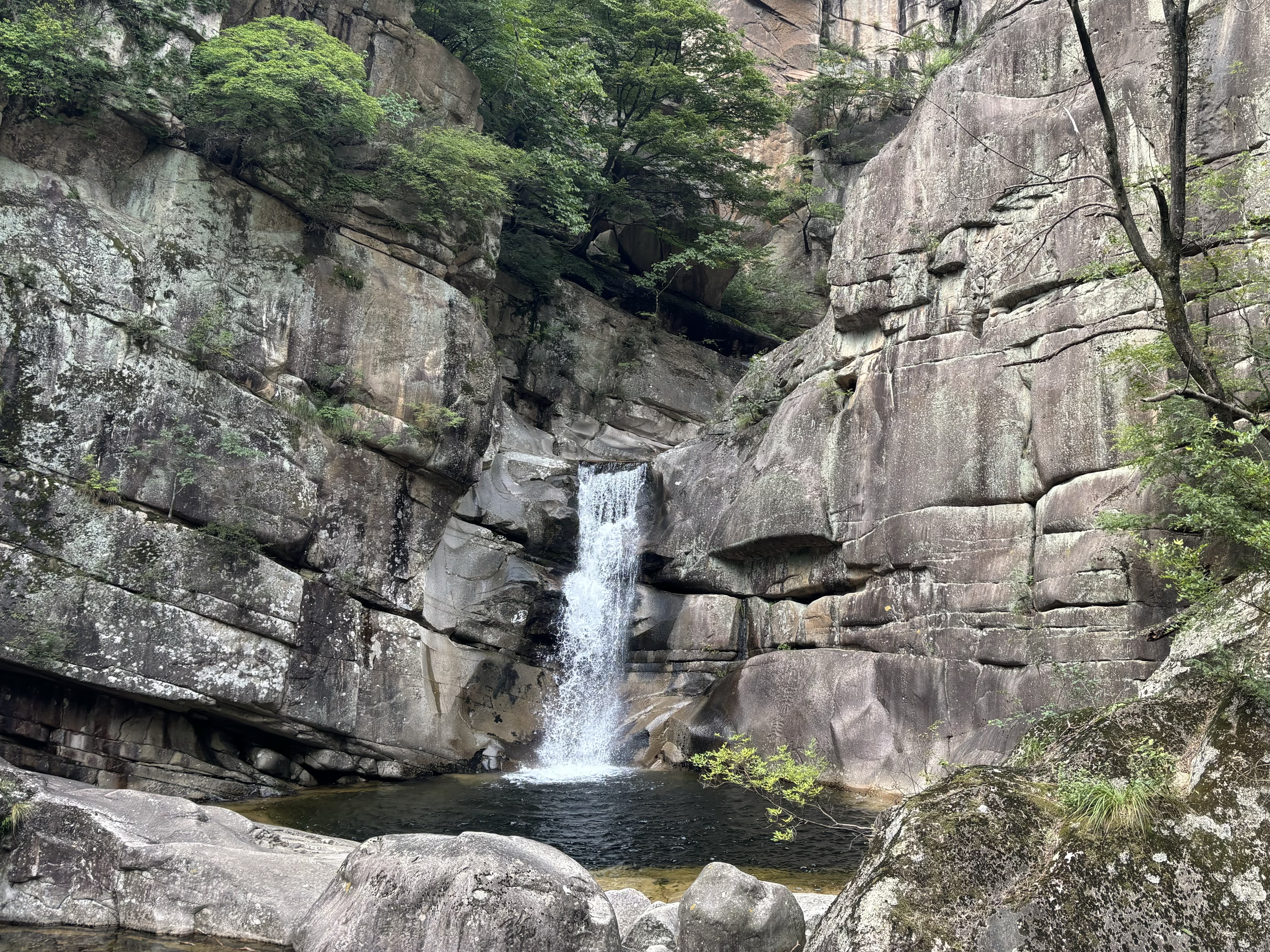
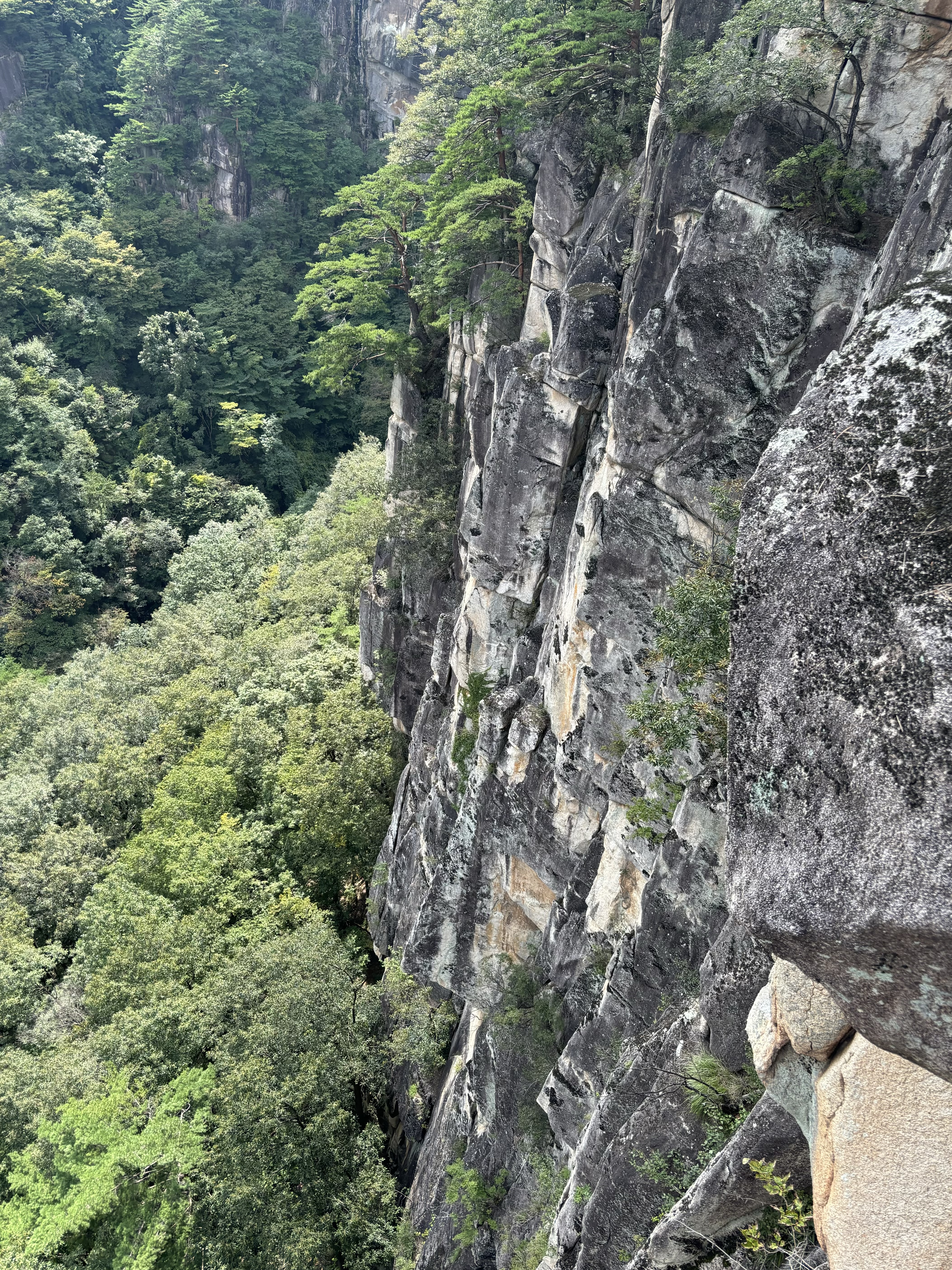
The stunning Mureung valley
Byeongpung-am is a big sprawling crag with many dihedrals, arêtes and cracks, it is both impressive and intimidating in equal measure! It turns out the impression of it being hard was true, and we found the climbing to be pretty brutal, there are definitely no soft touches here. Ego aside the climbing itself was very good, but sadly it seems like it doesn’t get much activity recently, with parts of routes being a bit dirty and some of the bolts looking very tired. Thankfully, someone has gone to the great effort of replacing many of the anchors, so thanks to them for that. The climbs are listed as some trad and some bolt protected, but you should go expecting a trad experience. Many of the routes are two pitches, around 50 meters or so, with the very longest routes being around 80 meters, done in 3 pitches – there are around 20 routes in total. They certainly pack a lot of adventure into their size! The overall experience of climbing and visiting Mureung will be one you remember for a long time, it is definitely an under appreciated area for climbing in Korea. The area deserves more traffic and love from climbers, it could easily turn into a much bigger and very impressive climbing area.
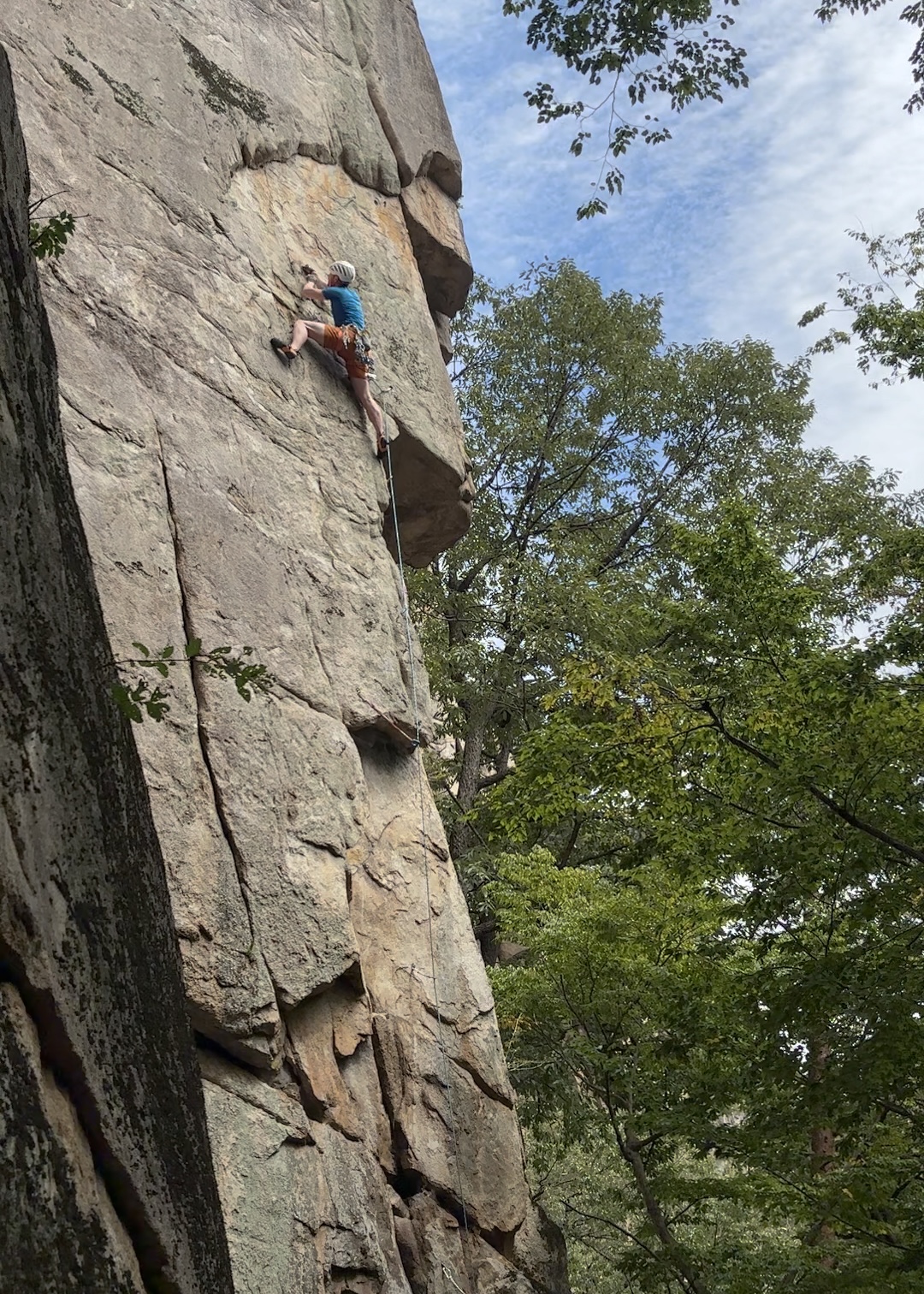
Seoraksan National Park
Seoraksan National Park is without a doubt one of the most beautiful areas in all of South Korea and it also happens to be home to some of the best multipitch trad climbing in the country. Whilst we absolutely loved Bukhansan, it is fair to say Seoraksan is like a bigger, better and even more beautiful version of it. The size of the walls and the quality of the rock is nothing short of world class, it is massively underrated as a destination for adventurous climbing. Much like in Bukhansan, the grades are no push over in Seoraksan and you definitely want to be comfortable at the grade of whatever route you choose to take on. There are loads of other things to do in Seoraksan aside from climbing, including some beautiful historic temples and loads of great hikes. The hikes in Seoraksan are the business, there are even four separate mountain shelters you can stay in and buy basic amenities from. Hiking is great for giving you a sense of the scale of Seoraksan, when you walk several kilometres through the national park you will be blown away by the amount of huge cliffs, craglets and boulders.
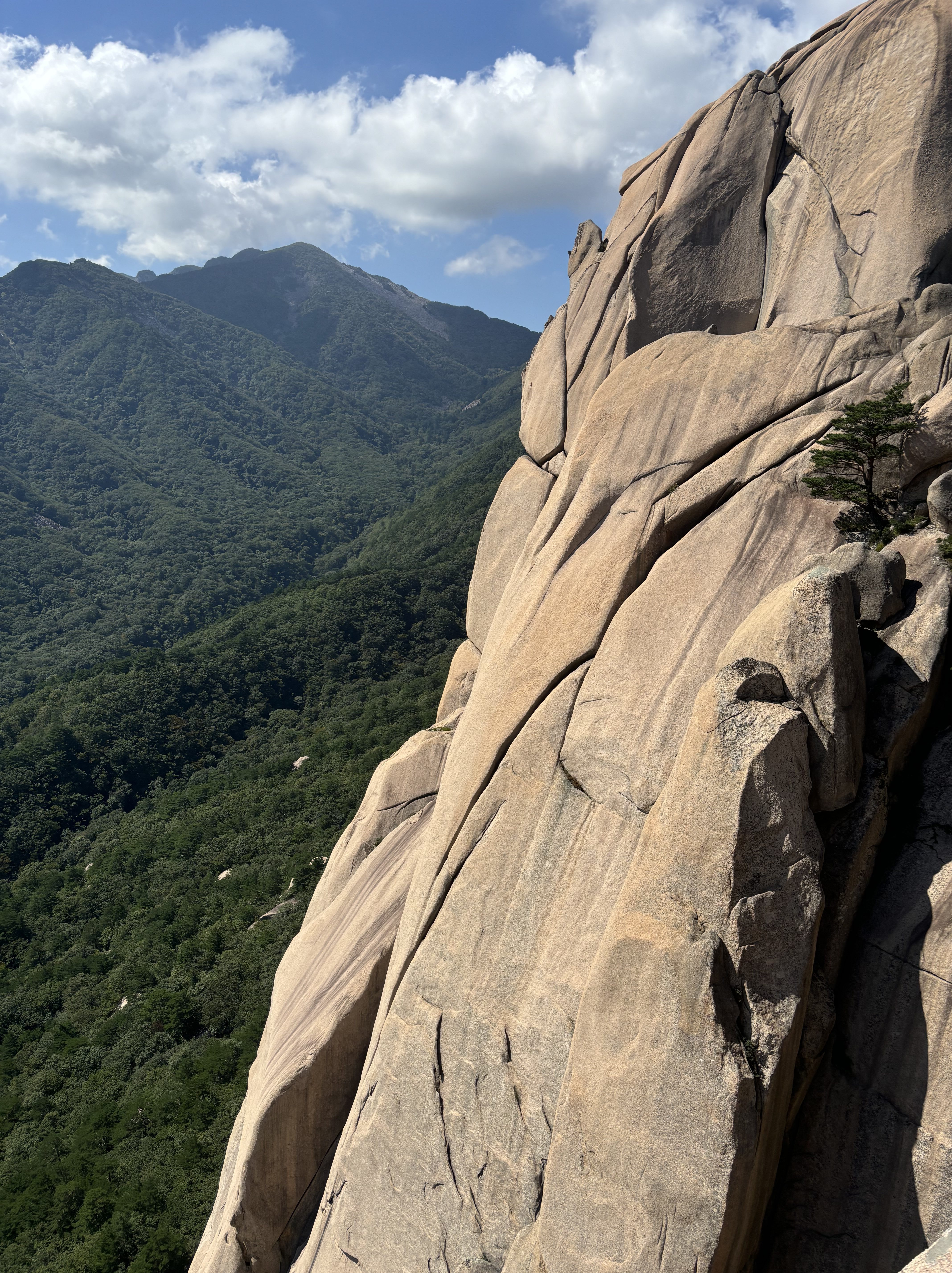
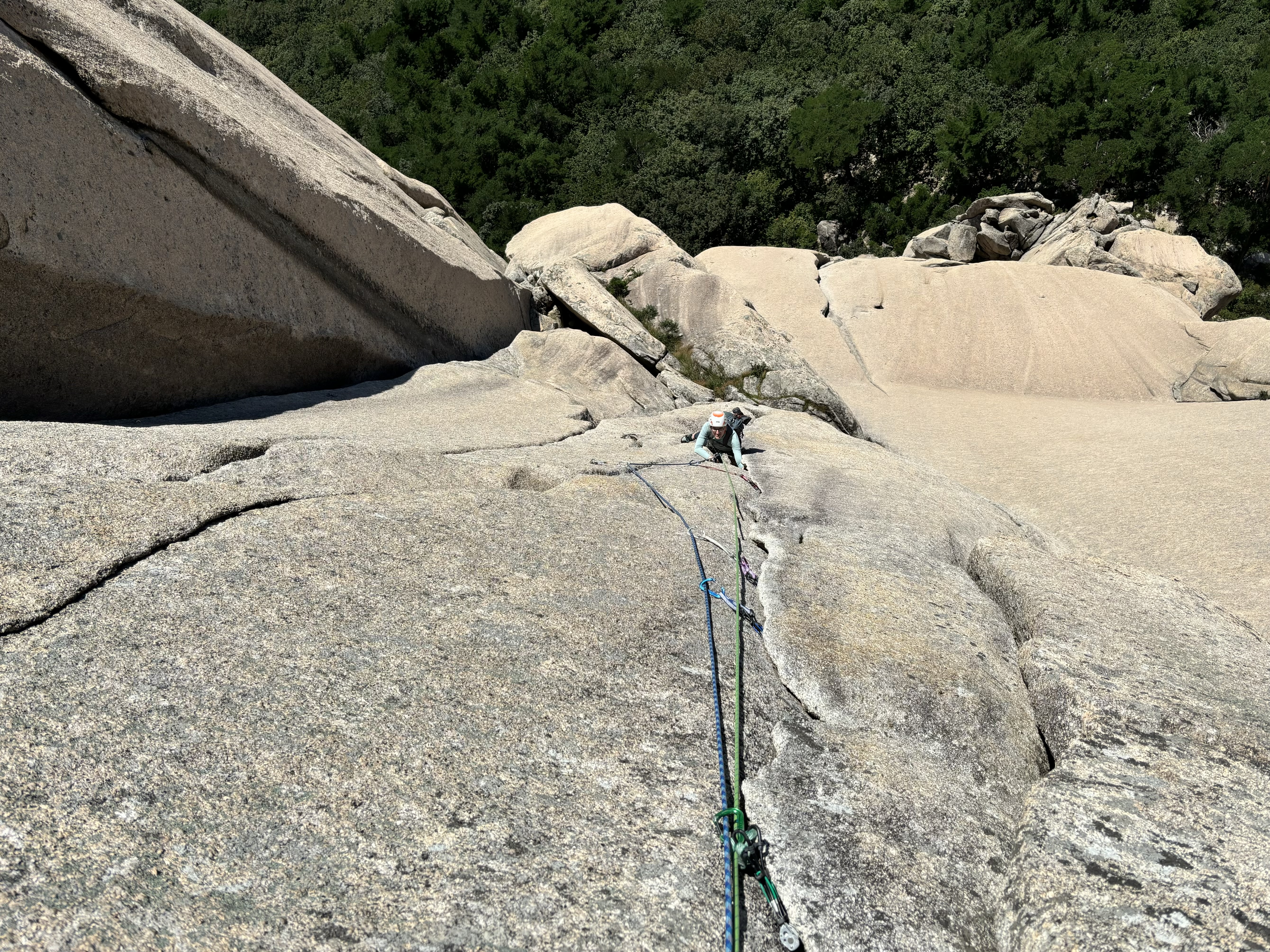
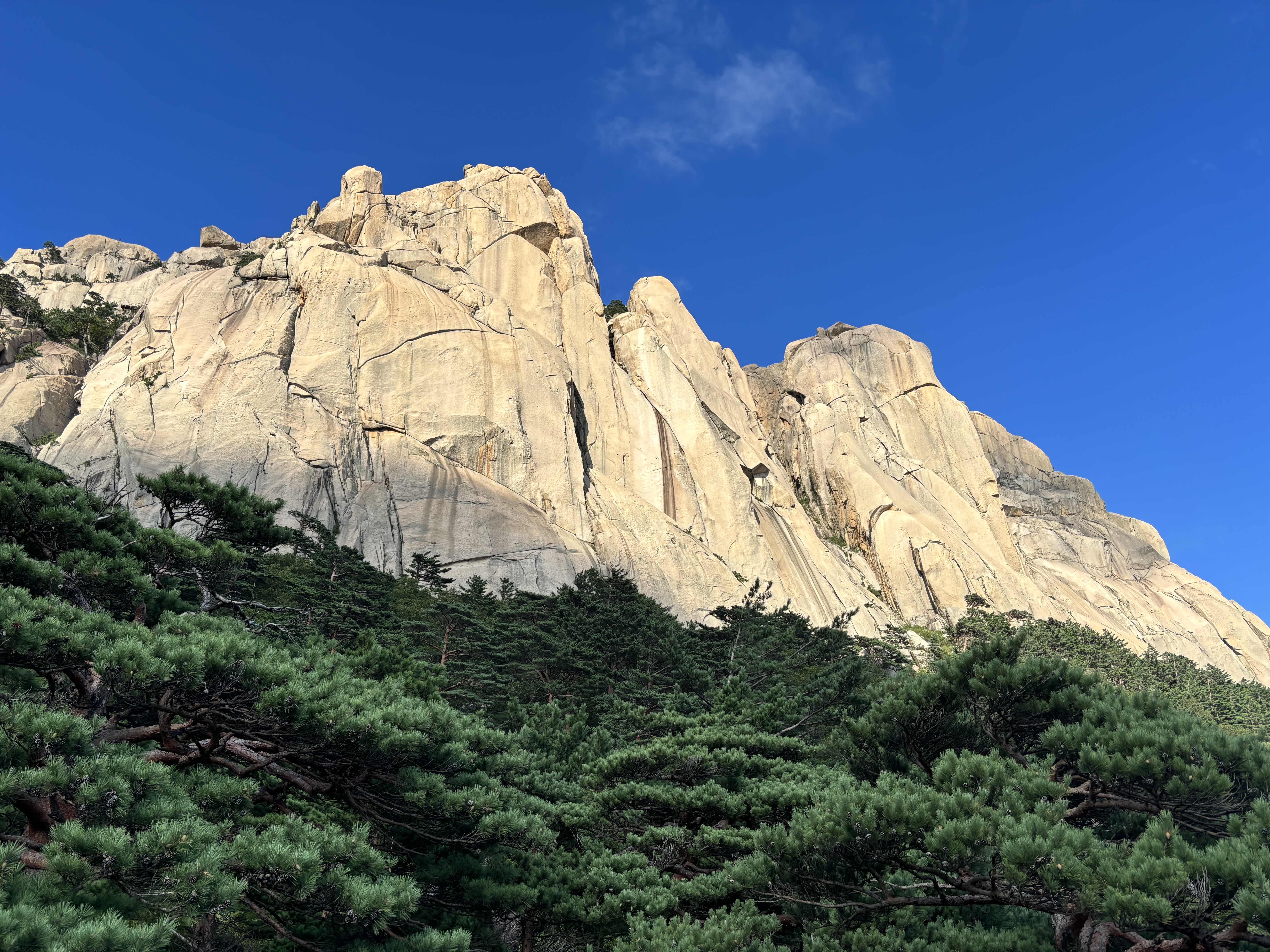
The phenomenal granite walls of Ulsan-bawi, top right is pitch 5 of 9 on the mega classic ‘Munri-dae’, 6a
The granite is excellent, very rough, coarse textured and compact – it can actually be a bit biting at times! That is to say, don’t wear your favourite t-shirt when you head into a offwidth. The massive plus side to this is that what can normally be slippery, smeary granite footholds, like when laybacking, feel much more secure and you definitely won’t have a problem getting your rubber to stick. Likewise, we were never really the sort of people to wear crack gloves or to tape up, but thank god we had crack gloves with us for Seoraksan as our hands may well not have survived without them. We were certainly glad to have done some jamming in Bukhansan before we came here, if you arrive fresh from face climbing mode it will be a steep learning curve. There are quite a lot of wide cracks in Seoraksan, so you will want a proper rack of cams. We were debating whether or not to bring a size 4, but are very glad we did! In fact, there are plenty of pitches we didn’t do where it is necessary to have a 5 and a 6. The wider cracks are such a full body work out, we certainly realised we were lacking a lot of finesse in that style! It is also well worth mentioning that Seoraksan does have a sport climbing sector at Sotowang, with a good selection of sportingly bolted routes on excellent rock, with morning shade. While it isn’t the star attraction, it is actually a really nice crag and some of the routes even have a couple of pitches. You can climb here just with sport climbing gear, but it is still worth bringing cams for the more runout routes if you have them.
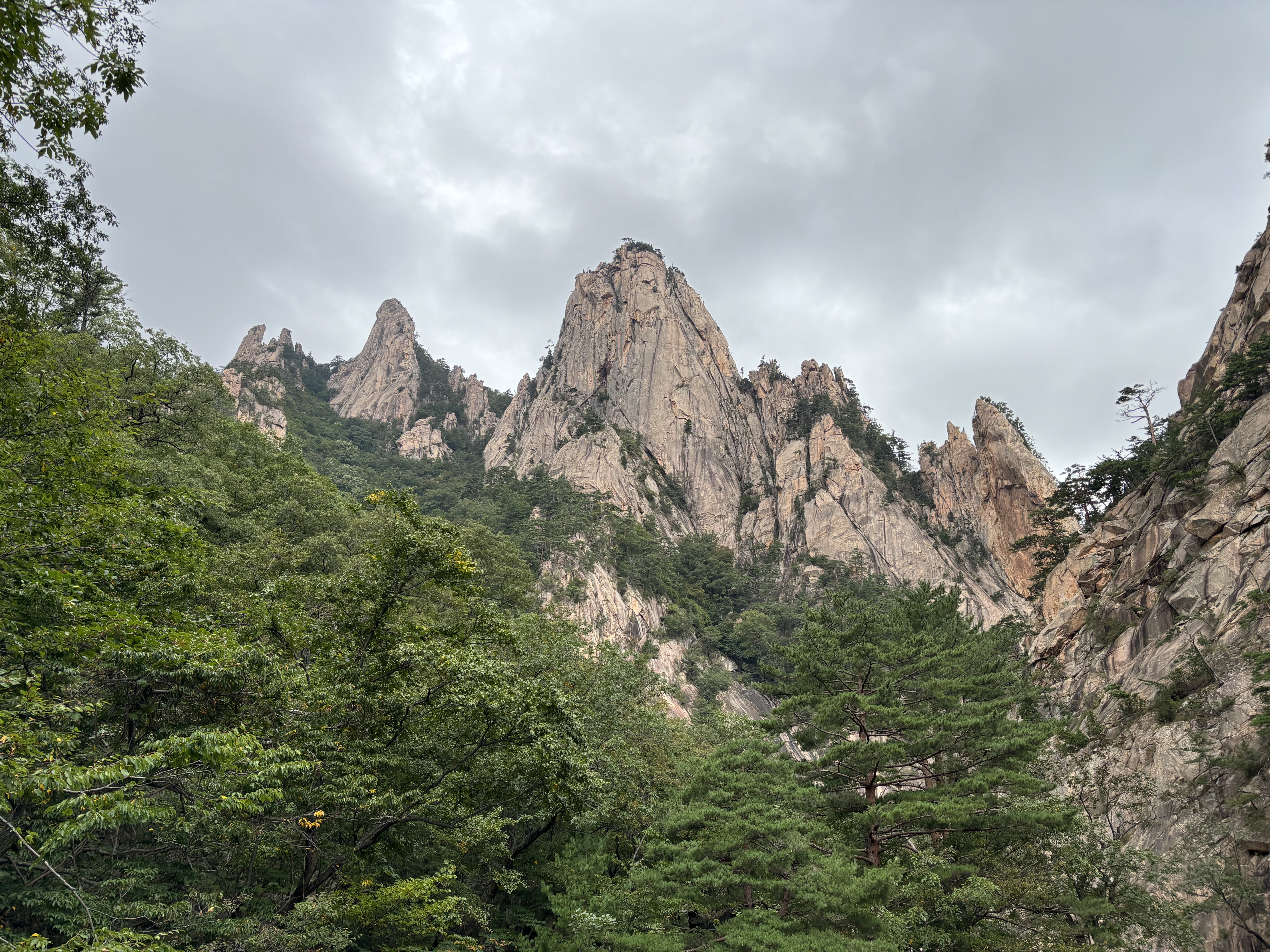
As Seoraksan is a massif close to the sea, the weather can be a bit volatile, as is typical with areas of this geography. During our stay in September, we had some quite iffy weather including a few torrential downpours and heavy fog. Thankfully we also had some lovely clear weather to enjoy the climbing, but it is worth factoring in the potential of rain into your planning, make sure you check the forecast before you book your stay and travel over. When the sun was out, we found the September weather to be hot, but not unbearable, for climbing in the sun. To climb anywhere in Seoraksan you must get a permit, which before we arrived we thought may be a little confusing. It is possible to apply online here, however it is pretty tricky unless you are Korean. The options for applying need either a local ID or a local phone number, but even with a Korean number we couldn’t get it to work. Thankfully, it is still possible to get a permit from the Mountain Rescue office at the national park itself. It didn’t specify this anywhere online, so we weren’t sure before we went. However, the rangers were very friendly and helpful, and we had absolutely no problem getting a permit from them directly, at least one day before you plan to climb.
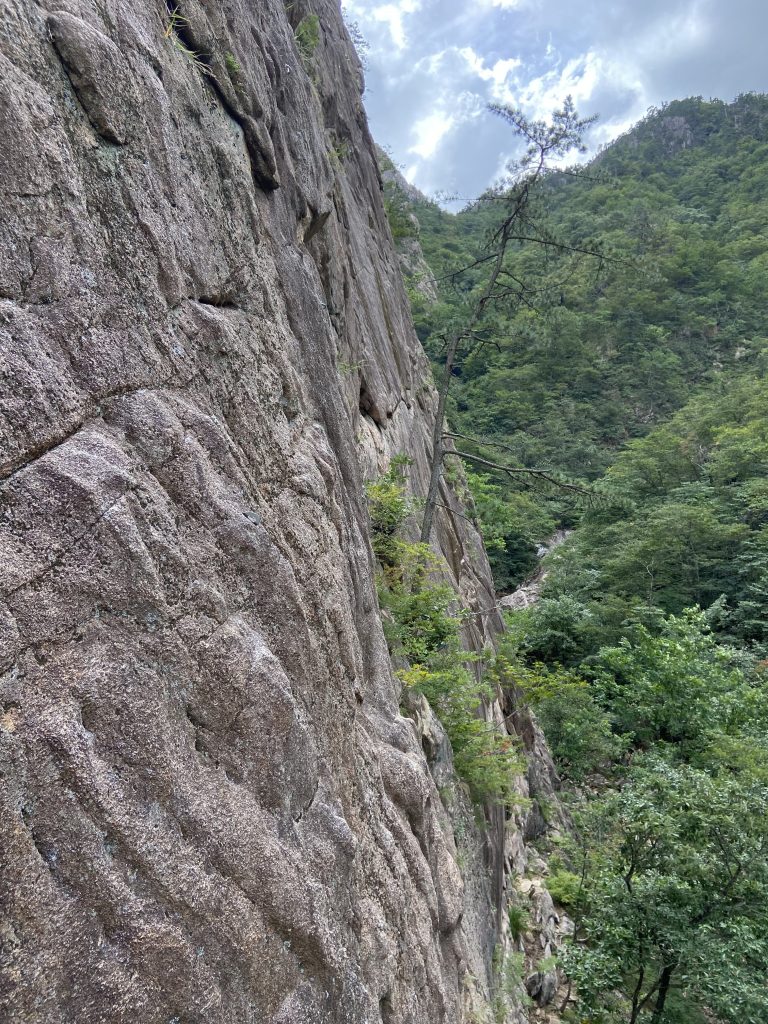
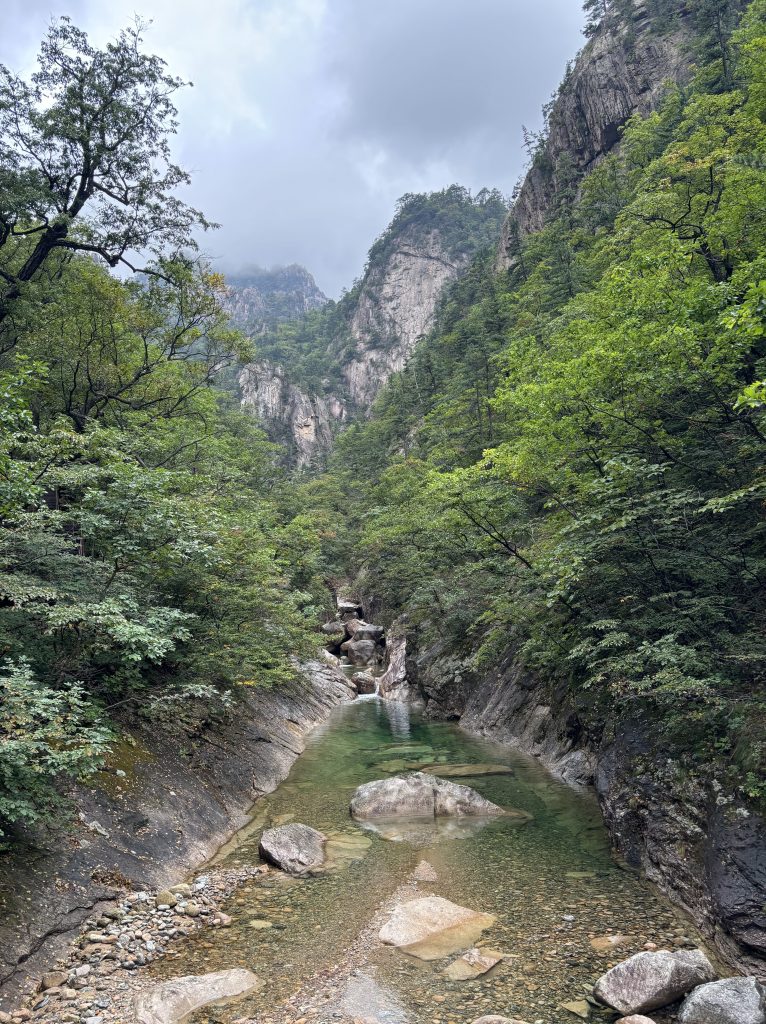
Great sport climbing at So-towang canyon and typical Seoraksan scenery
We thought Seoraksan was absolutely awesome, and the climbing is some of the most beautiful and memorable of our time in South Korea. Getting to Seoraksan from Seoul will take around two and a half hours. Having such great trad climbing in Seoul, and then being so close to Seoraksan really goes to show how much there is for a trad climber to go at in this part of the country. You could spend a lifetime in these mountains and you wouldn’t climb half of it. Even just coming to Seoraksan to stroll through the forest and see the gorgeous emerald green rivers would be worth it. When you add in the crags and the longer mountain hikes it becomes the complete package. We loved our time in Seoraksan and we would visit again in a heartbeat, it is a special place and should be very high on the list of any climber visiting the country.
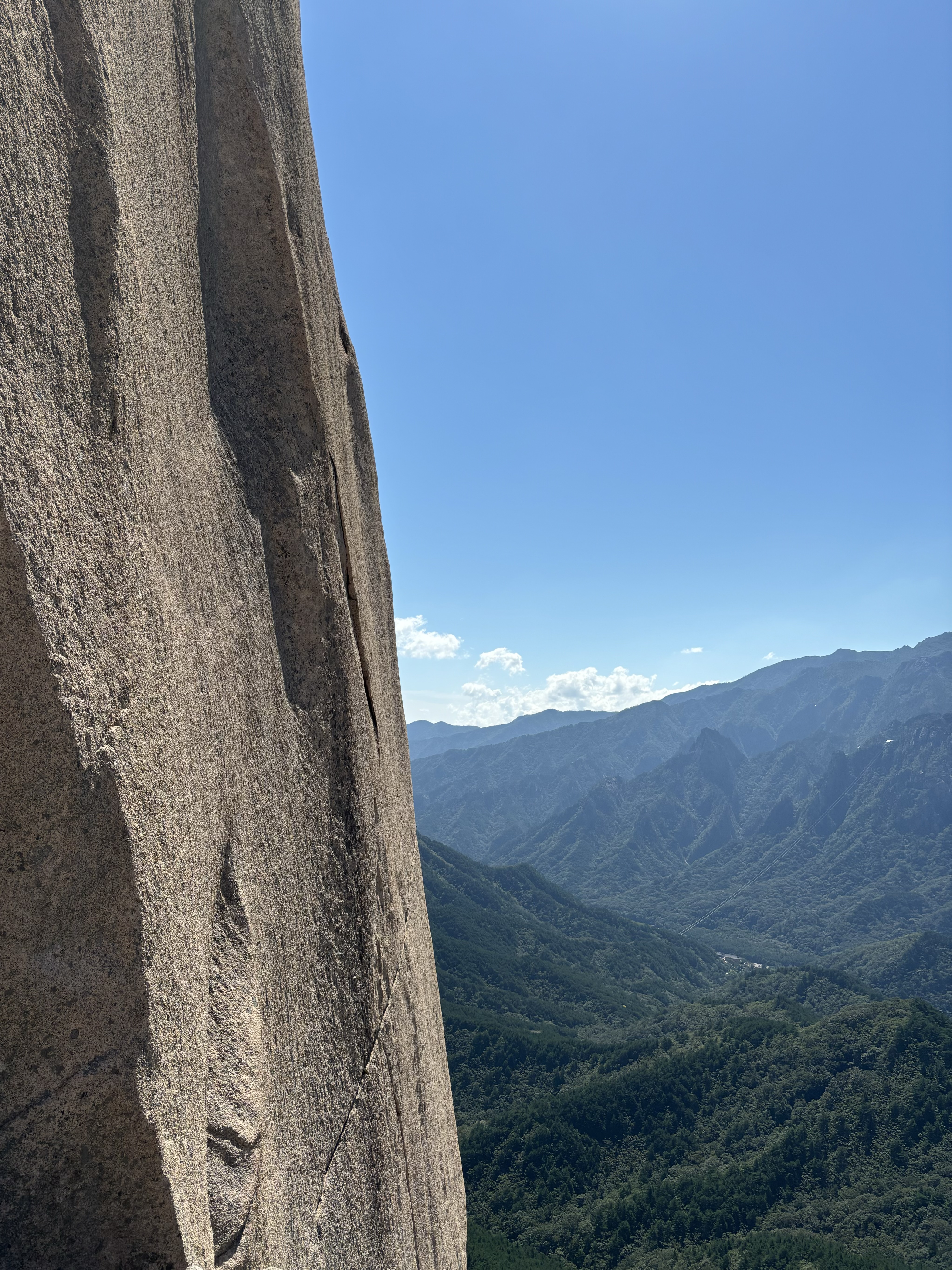
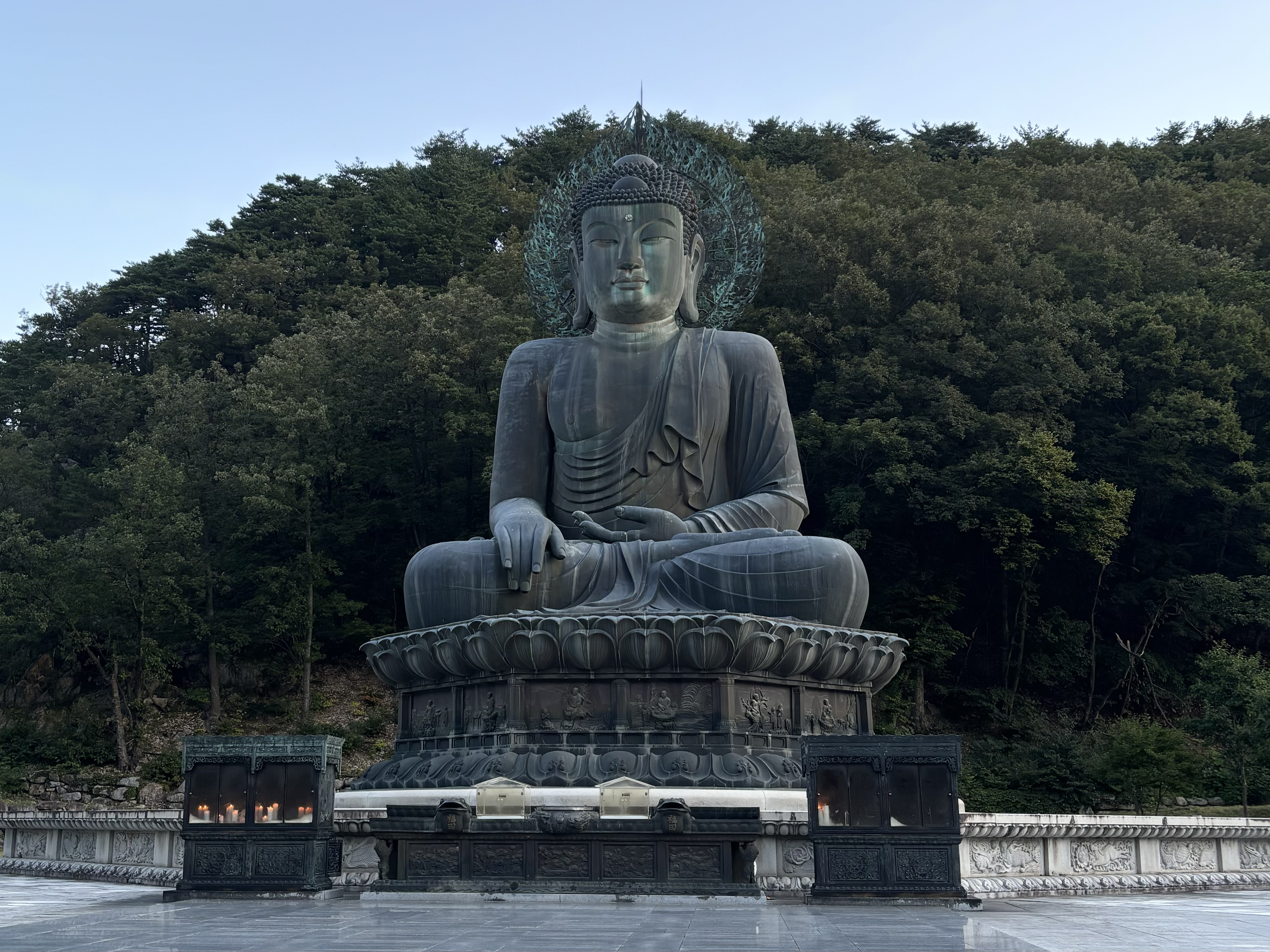
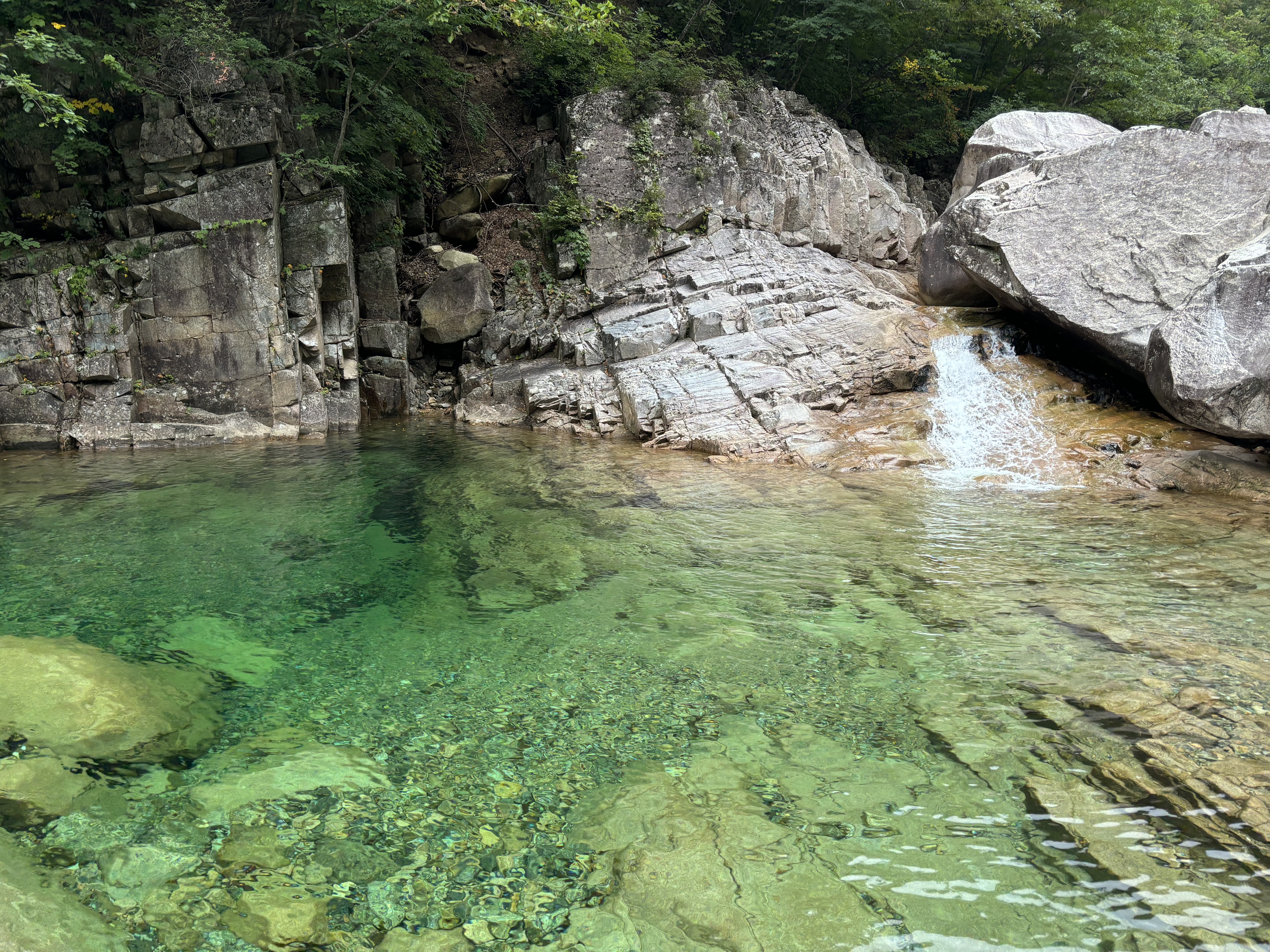
Seoraksan is the sort of place you never want to leave, a climbers paradise
Seonunsan
Seonunsan is superb climbing area, and is widely regarded as the epicentre of Korean sport climbing. The rock at Seonunsan is limestone, of very good quality, which gives a great contrast to the wealth of granite climbing throughout the country. The rock is very heavily featured, mostly covered in pretty big holds, jugs, slopers, pockets and flatties are the most common, with a few crimpy routes on the more vertical walls. It is also fair to say that Seonunsan tends to come in two flavours: steep and really steep! The contrast in rock is also a big contrast in style, in Insubong your biceps won’t help you, but in Seonunsan they definitely will! The size of the holds means that for an area this steep, the entry level grade is not as high as you might expect. From around 6b+ or 6c upwards there are a great variety of routes to go at. Better still if you can climb into the mid 7s, then it becomes an absolute feast, with tonnes of classics to keep you busy. There are around 220 routes in Seonunsan, with grades from 5a to 8c+.
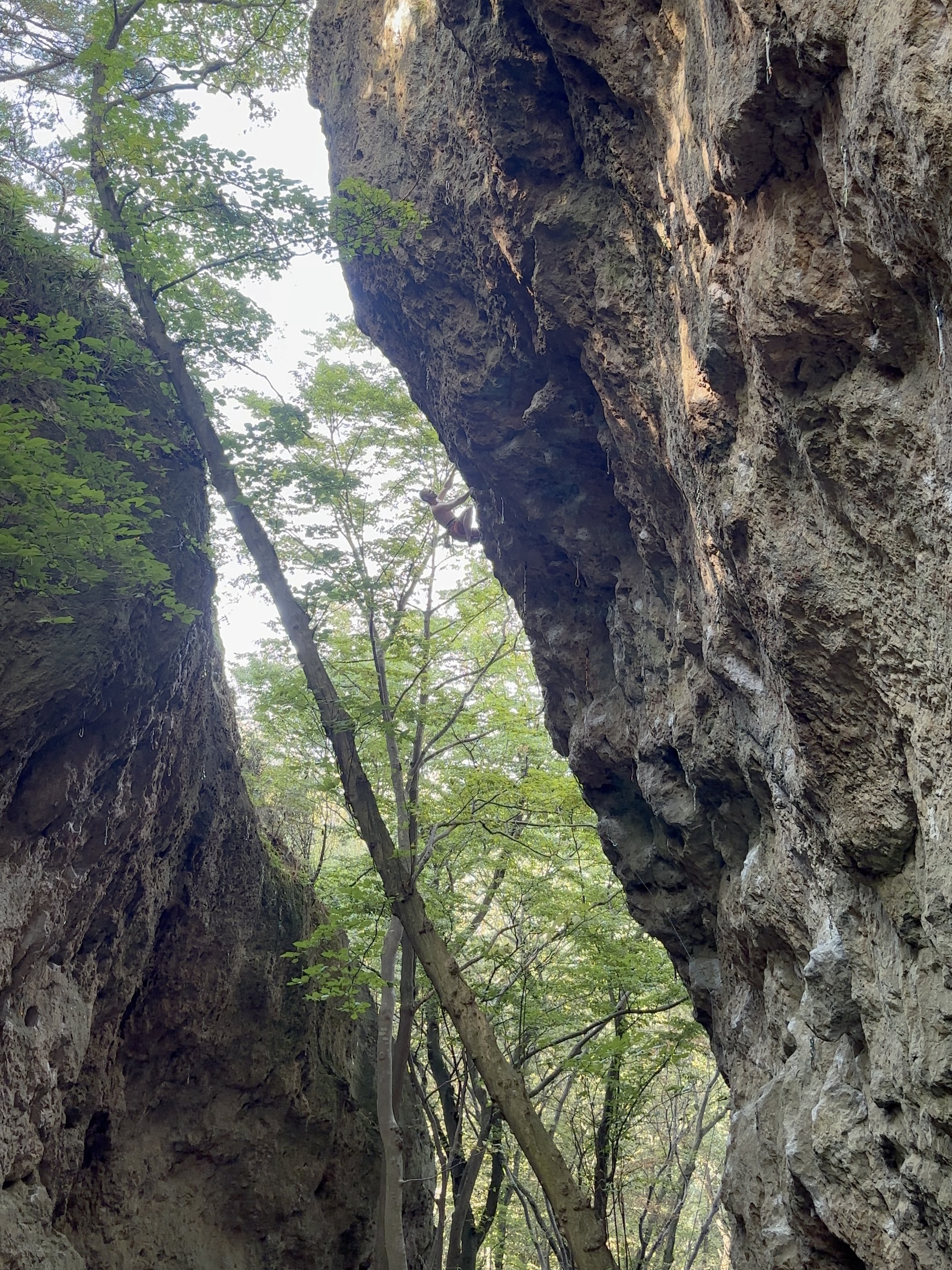
The star area of Seonunsan are 3 sectors all clustered together, almost like the different sides of a giant limestone apple that has split in half. The middle sector is called Tugu-bawi, which is effectively a canyon through the middle that gets almost permanent shade and overhangs on both sides, one mildly steep and one aggressively steep. slightly downhill, in the direction of the lake, is Soksal-bawi, the best and most inspiring wall in the area. Soksal-bawi is like a bigger and more impressive version of the already brilliant Tugu-bawi, and it receives shade in the afternoon. Soksal-bawi is one of those crags that would be a popular and highly regarded crag wherever it was. Both Soksal-bawi and Tugu-bawi have loads of routes with the quickdraws permanently in place. Some of these are chain perma draws and other just random quickdraws, but it appears they are equipped rather than just left from peoples projects. This is majorly helpful as it means there is no need to strip the routes, which when they are as steep as they are, can be hard. It must also be said that the routes are incredibly well bolted, there are no Frankenjura-esque runouts here! To the other side of Tugu-bawi is Mun-bawi, which is poorer quality than the other two sectors but is nice for some more vertical climbs if you need a break from the steep. Mun-bawi is also the quietest area and receives morning shade.
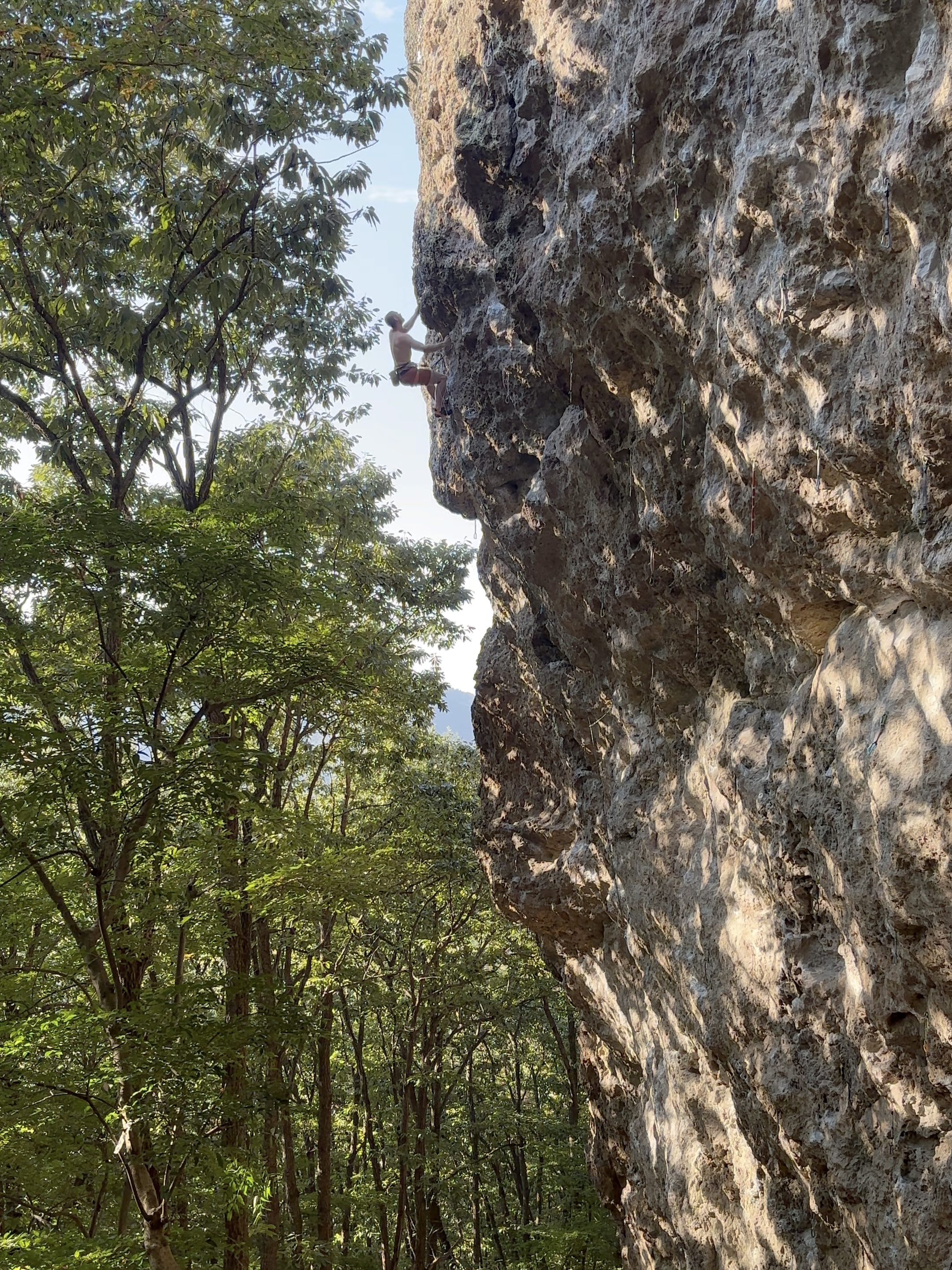
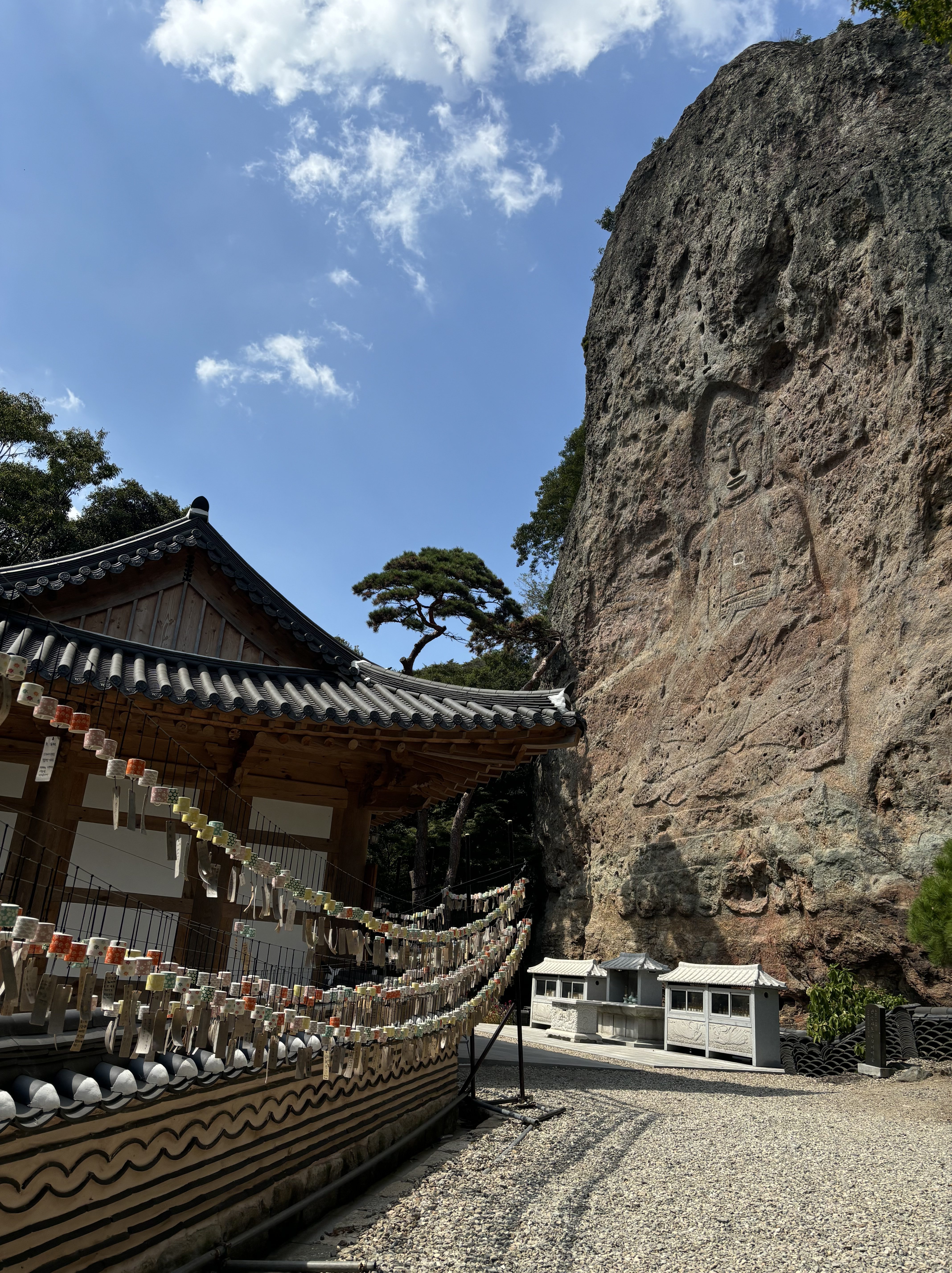
There is also another large sector in Seonunsan called Dosol-am, which is very close to a temple of the same name. It is a pleasant easy walk along a gravel road to get to the temple, and there are a lot of different crags in the area, including one with a very impressive giant buddha carving on it! We had read a few comments about this sector being somewhat left behind and not somewhere people climb much these days. Having had a good walk around the temple and the surrounding trails we would agree, it doesn’t feel like a great place for sport climbing as you are mostly very close to the temple and the monks. Besides, the cliffs at Soksal-bawi and Tugu-bawi are much better anyway. It is also the case that Seonunsan is far from climbed out and there are still clearly several cliffs further away that don’t have any routes on them yet, although it isn’t clear if being in a provincial park means climbing on them is restricted. There is also a crag outside of Seonunsan, but that you pass literally in front of on the road there, called Halmae-bawi. It is a really nice crag and with very easy access, but we chose to stick to climbing in Seonunsan as the crags there have a lot more shade, due to both tree cover and orientation. Halmae-bawi is much more exposed to the sun and is best left for cooler weather than we had.
Can sport climbing areas get any more beautiful than this?
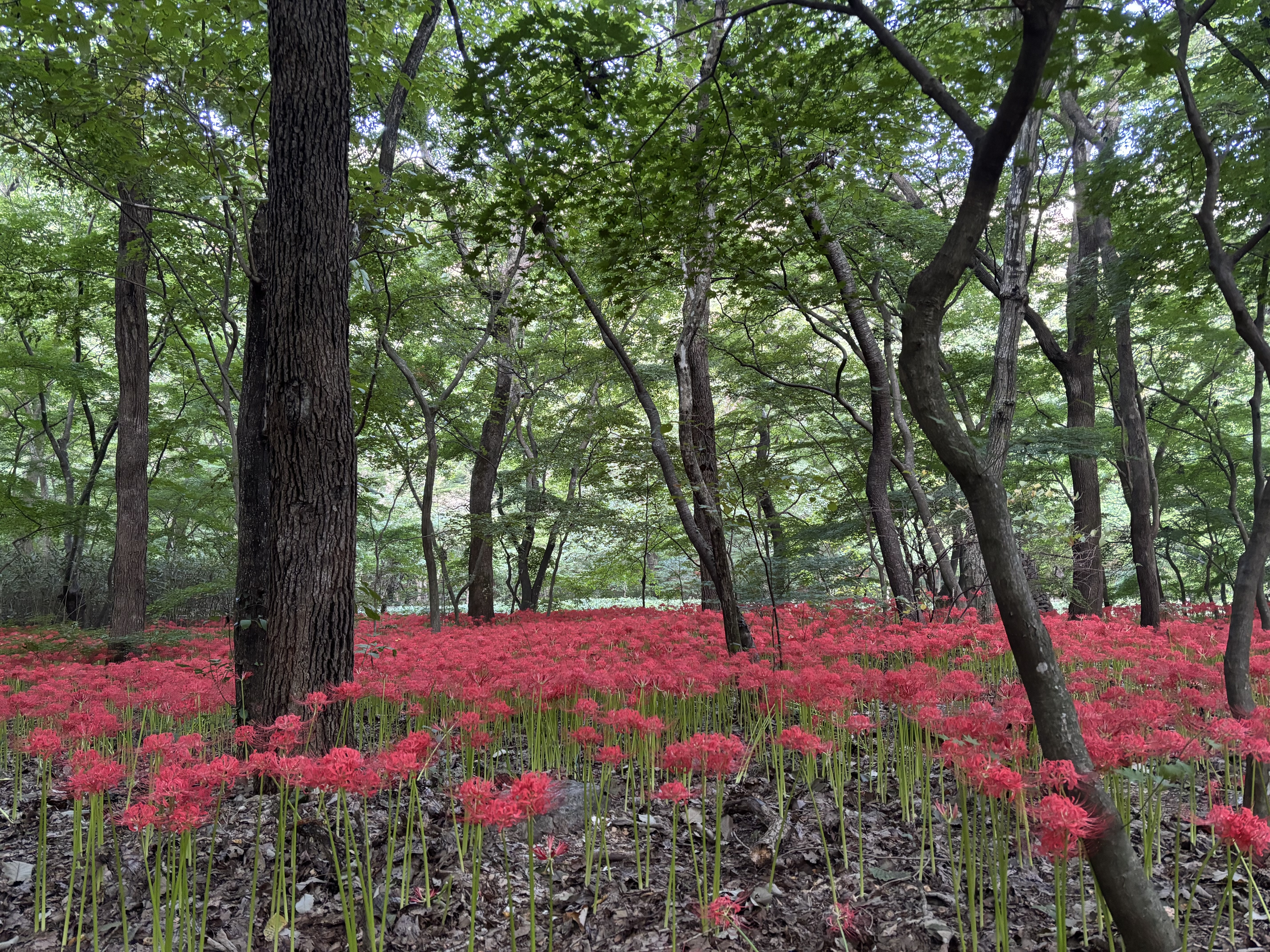
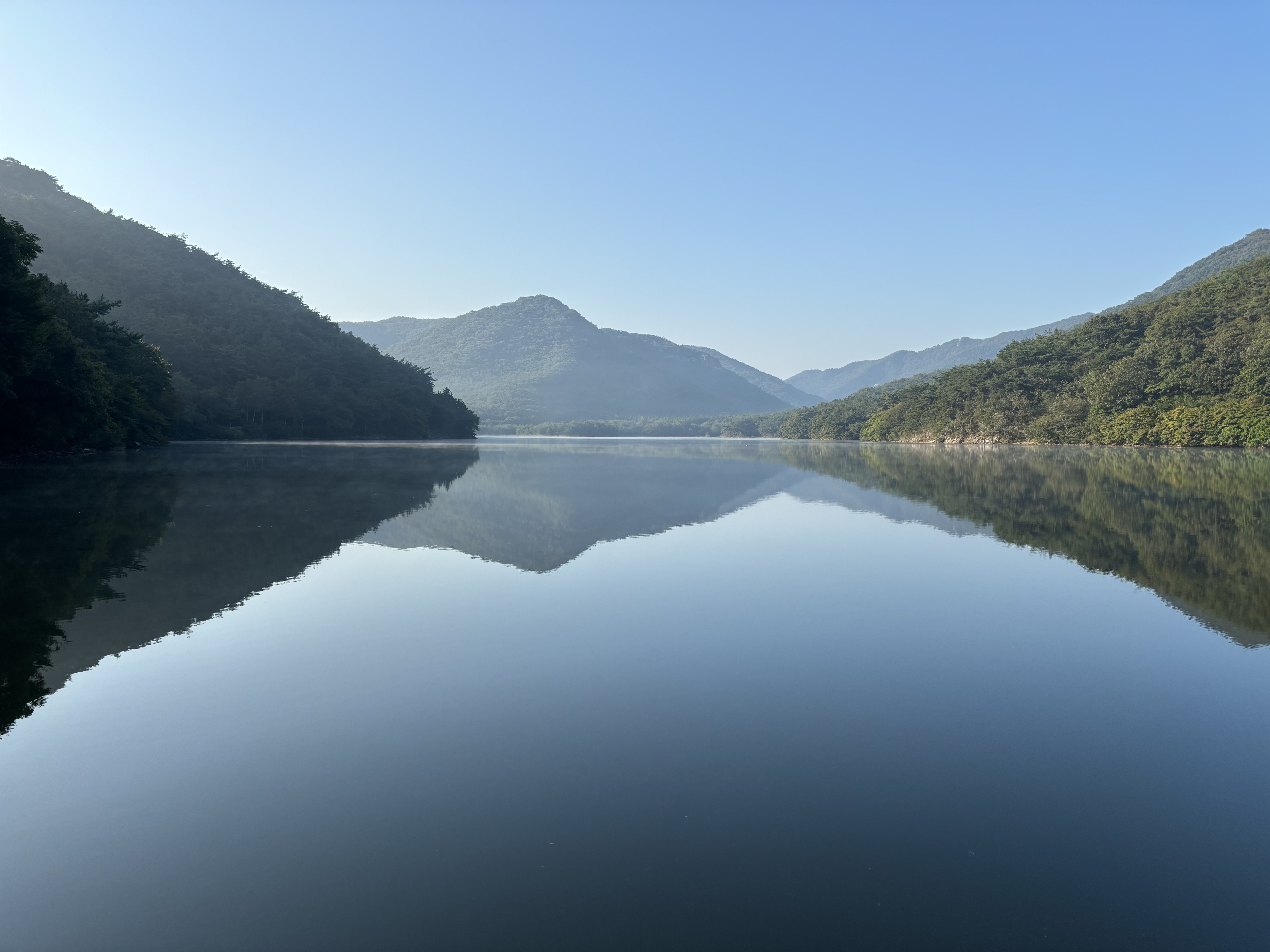
Seonunsan is an incredibly beautiful area and we were caught by surprise by how much there was to do there aside from climbing. The climbing areas we visited all across South Korea seemed to be perfectly set for rest day activities, history, culture and hiking. It is something that stood out to us as being particularly good compared to many other places we have visited, where it is normal to have to travel at least a small distance for rest days. Seonunsan was just as excellent, with the Seonusa temple being one of the most beautiful and historic temples we saw in Korea. The area is known for Bokbunja-ju, which is a delicious wine made from Korean black raspberries which is widely known around Korea and originates from this area. It is a delicious sweet wine, a reasonable amount stronger than red wine and with great flavour. It is often popular to have black raspberry soft drinks or sodas if you want something softer after a hard days climbing. Without realising we also happened to visit right as the famous red spider lilies were blooming, a stunning attraction in of itself. We had an awesome time in Seonunsan and rated it very highly, just like so many of Korea’s other climbing areas, there is nothing not to like about it. The climbing was great quality and the area was beautiful, we were left with the same feeling we had in Seoraksan, we just didn’t want to leave!
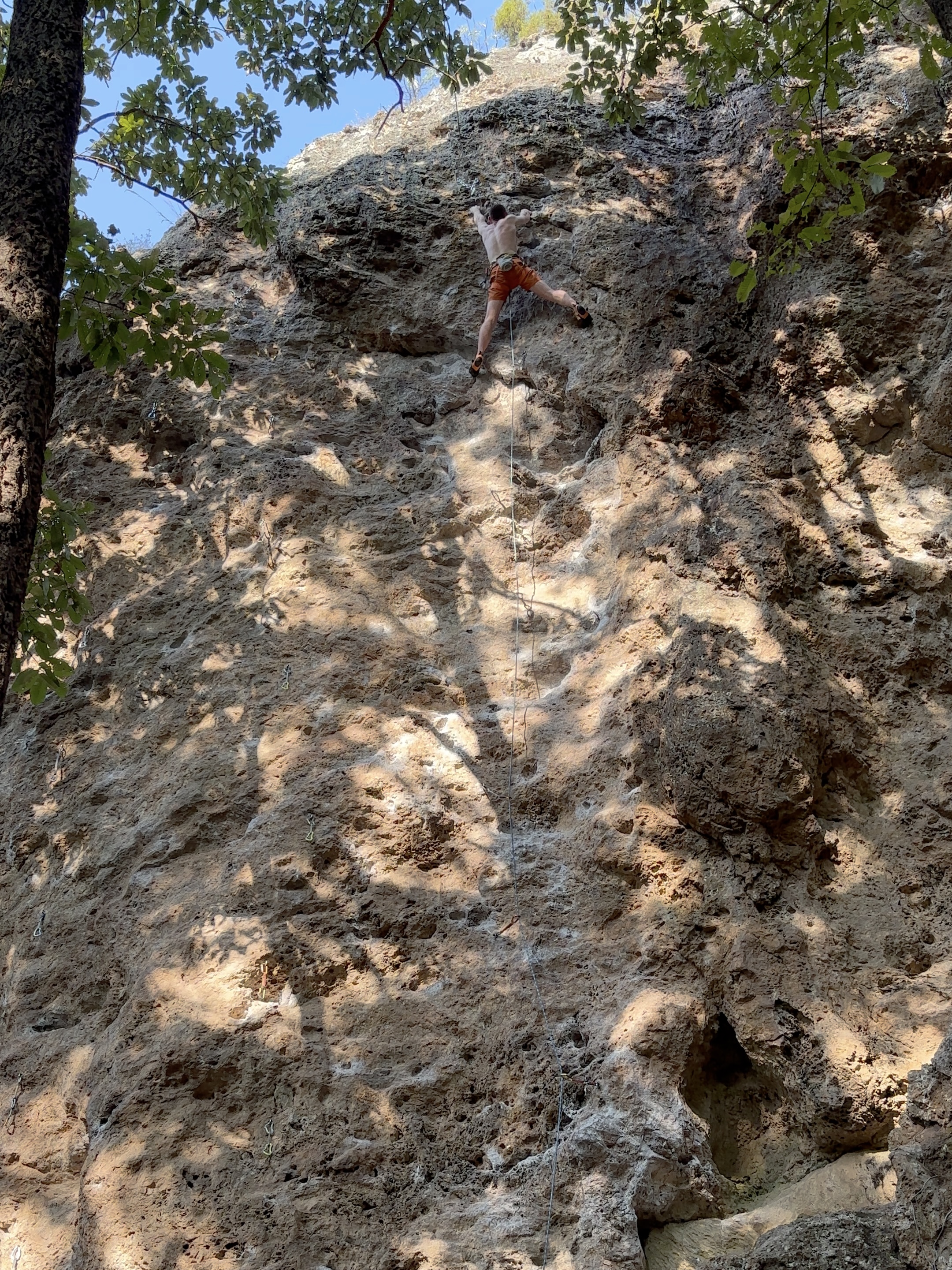
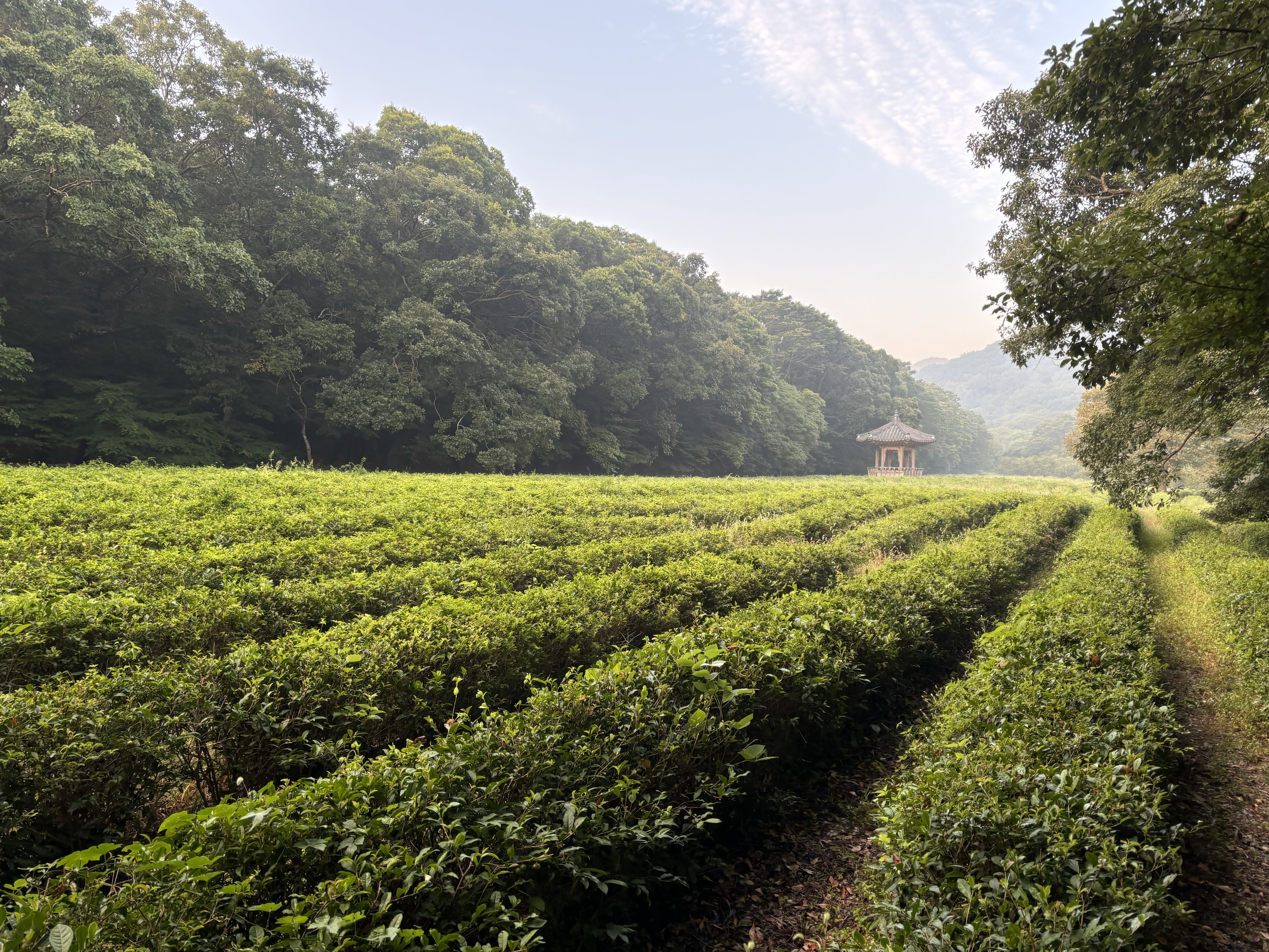
The tricky finish of ‘Freshman’, 6c and tea fields on the approach
Yongseo Pokpo
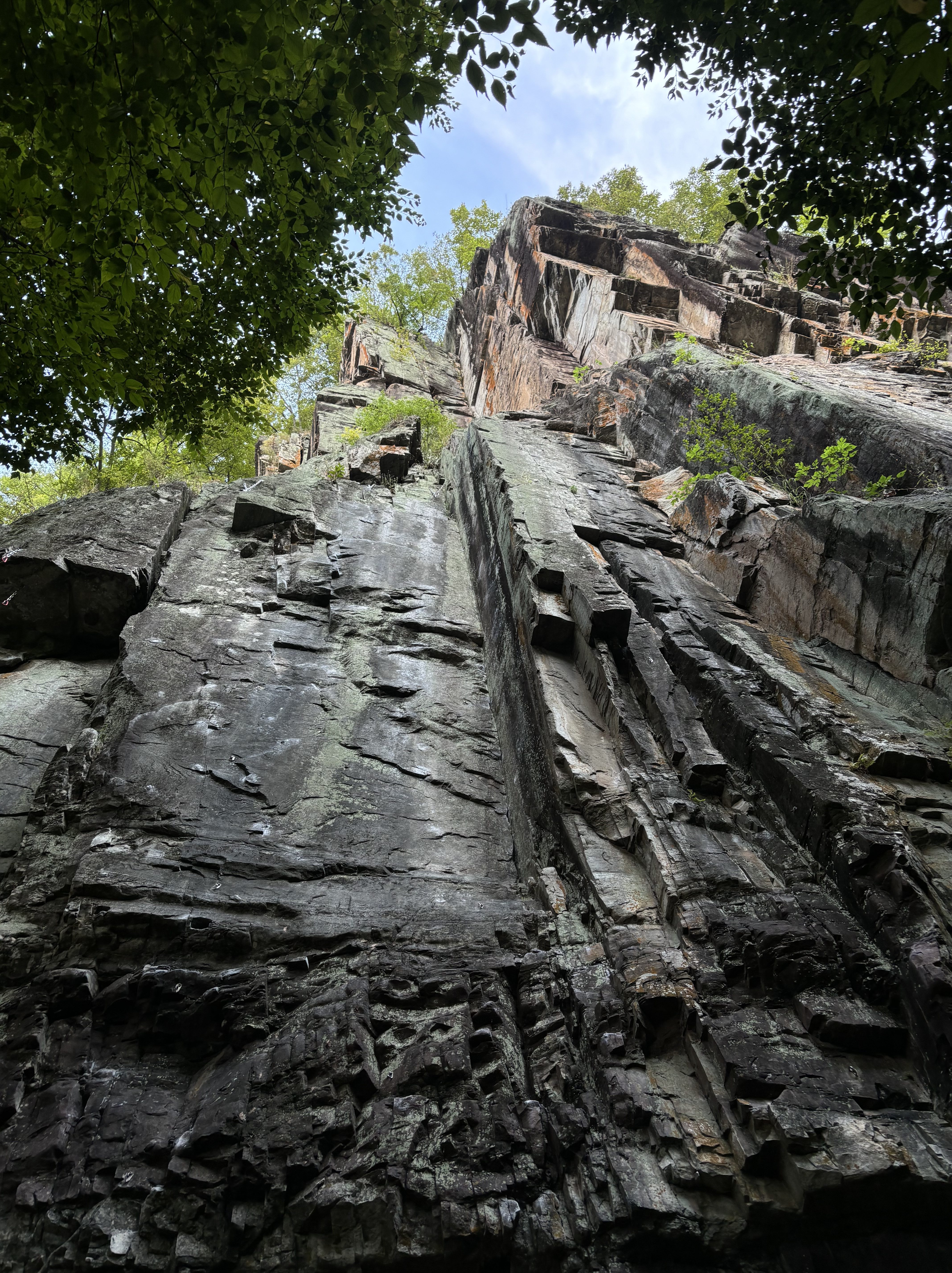
Yongseo Pokpo is a beautiful and rather unique crag, with lots of great routes. The cliff is split in half by a large waterfall and effectively has sectors on both sides of the water, with two tiers on each side. The rock is also very interesting and is described on various climbing sources simply as ‘sedimentary’. We are definitely not geologists but have climbed on a fair amount of different rock types in our time, and we just couldn’t imagine how it could possibly be sedimentary. It didn’t even seem to us to be a metamorphic rock like quartzite and instead it reminded us very much of the various andesite crags we’ve climbed on in the past. Whatever the rock is, it is super cool to climb on and has formed loads of striking features. There are some amazing dihedrals, arêtes, roofs and walls with many excellent quality routes. The rock is very compact and climbs brilliantly, but it is worth noting there are a few hollow sounding holds right at the very top of the routes, as you approach the ledge/break that splits the crag horizontally. The approach is short and straightforward, the crag base is nice and peaceful, nestled in the trees. The crag faces mainly south but due to the amphitheatre type shape of the crag and the nature of the various buttresses, you should always be able to find something shaded.
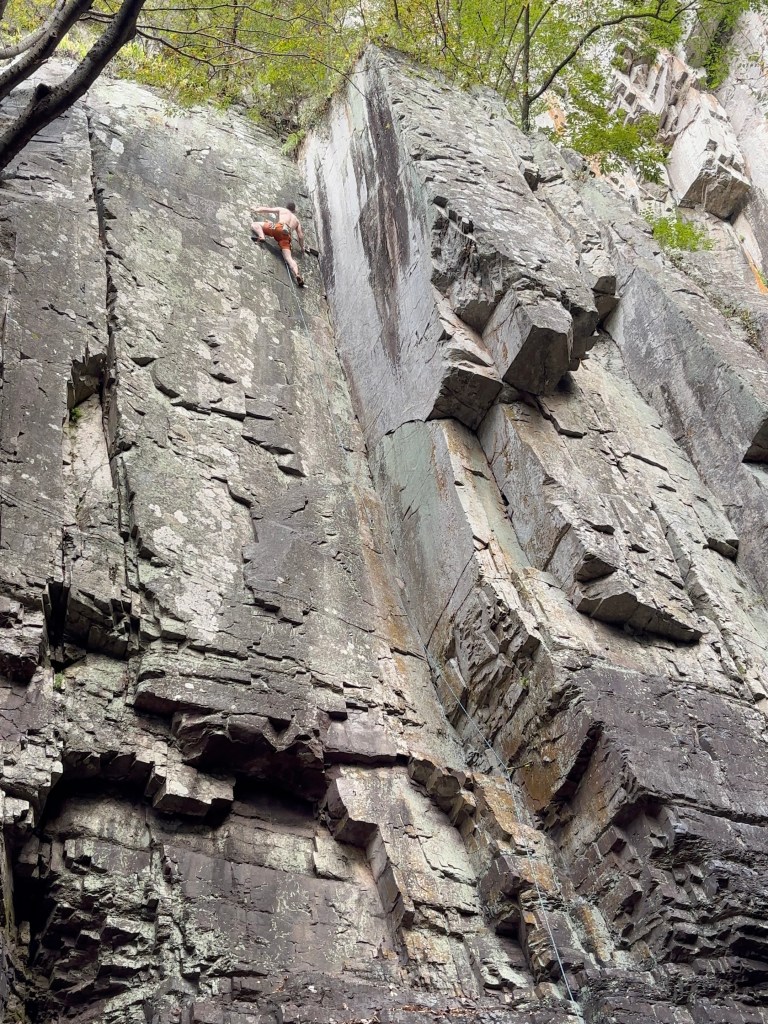
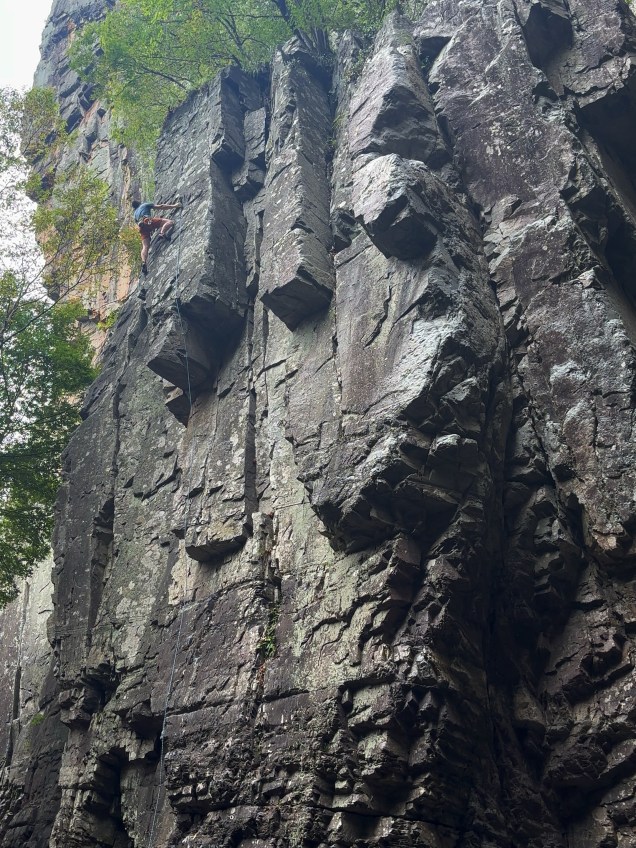
Pure quality, that would be classics anywhere: ‘Haejeong 2’, 6a and ‘Little Prince’, 6b+
There are around 80 routes in Yongseo Pokpo, with grades from 5b to 8b. The quality of the routes in the 6a-7b bracket is superb and the bolting is generally very good. We thought that Yongseo Pokpo probably had some of the best lower 6th grade sport routes of anywhere we climbed in Korea, they were just great. The climbing style was also very up our street, with more crimps and sidepulls as well as generally good footholds. The grading also felt a lot fairer here, culminating in a joyous onsight of ‘Stubble Spirit’, 7a+. It was also slightly amusing because as happy as we were, it genuinely felt less difficult to us than any 5c or 6a crack or offwidth we did at Insubong or Seoraksan! That’s the great thing about climbing, you’ll always be able to find a route to humble you and plenty of the granite routes in the north of the country did just that! Whilst Yongseo Pokpo is just the one crag rather than a whole area, it is absolutely worth a visit, even if you have to go out of your way to get there. We thought the climbing was both very high in quality and very different in style from the other areas we climbed in Korea, it is an excellent string in the bow of the country’s climbing inventory.
Gadeok-do
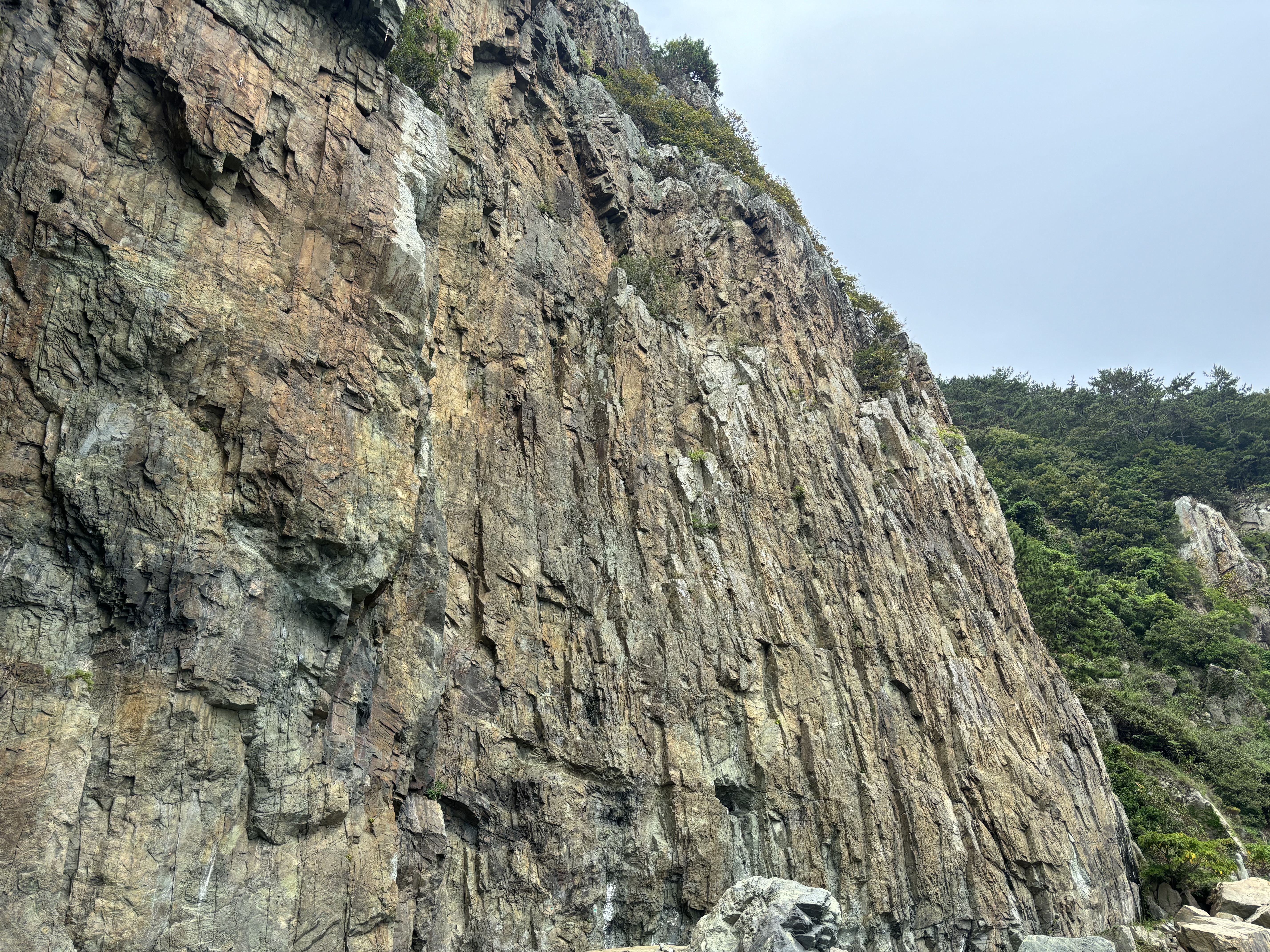
Gadeok-do is described in the guidebook as the largest sea cliff in South Korea and that alone was enough to entice us to visit. The crag is indeed a very good size and is in a nice location, in a sheltered inlet out of sight of any roads or buildings, with just the passing ships (and occasional submarine!) to keep you company. The rock at the crag is gneiss and the quality is very good. At first glance it looks like the sort of crag you would expect to have hollow or wobbly holds, but we didn’t encounter any and found the rock to be super solid. The routes are a good length, and often have bouldery moves in the steep initial meters before more cruisy climbing on the walls above. The routes are fully bolted and well bolted, however they should be treated with some suspicion. It appeared many of the bolts were 304 stainless steel, which is not the ideal material for a coastal environment. They didn’t seem to be very old and visually showed little to no signs of corrosion, but it is worth knowing that there are inherent risks with these types of materials in this type of environment. We had a fine time with the bolts, but always use your own judgement and be cautious.
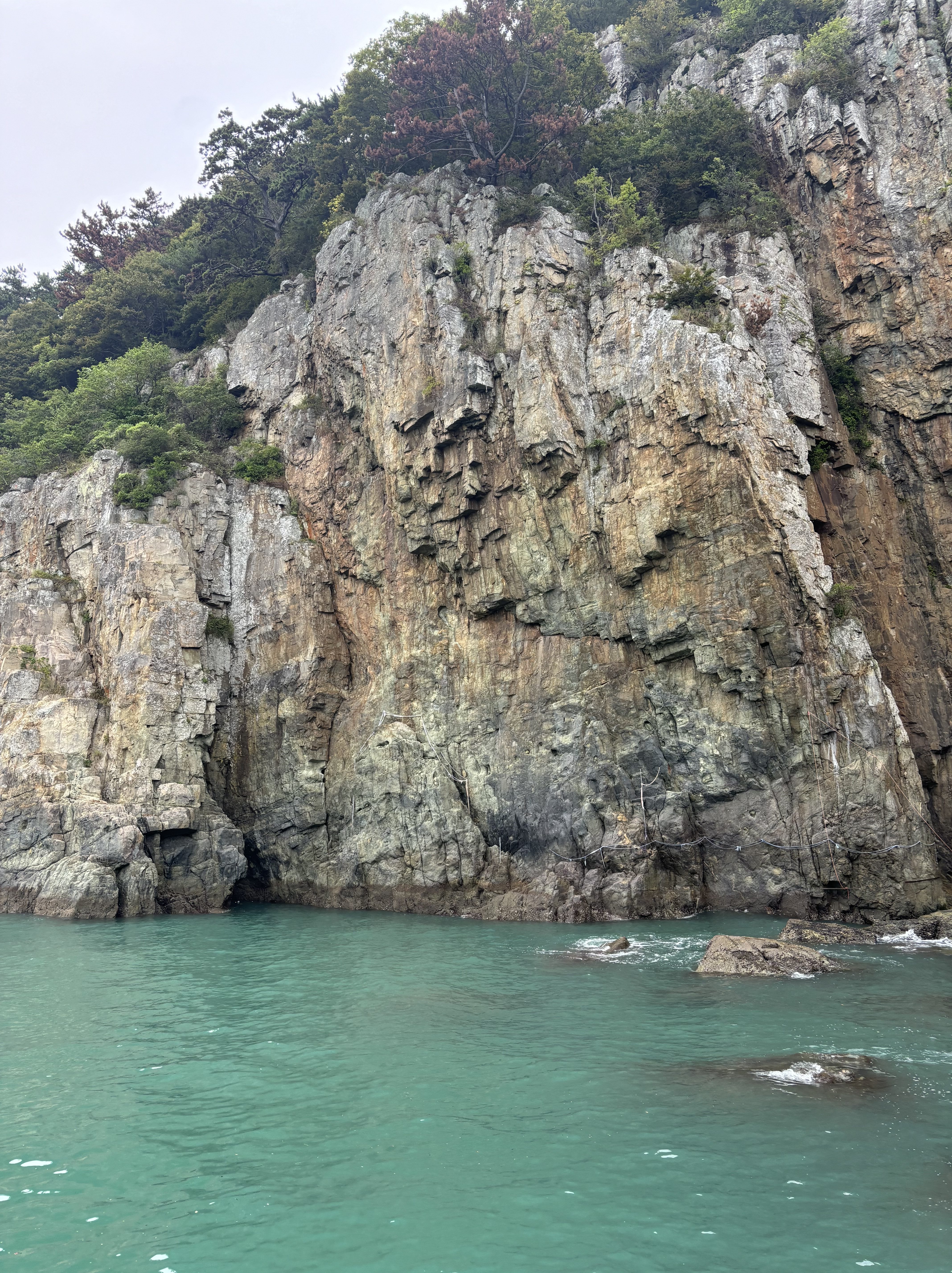
The climbing style at Gadeok-do was very cool but quite unforgiving. There are lots of sidepulls and flat holds, it is also common to slap for a jug of glory only to discover it is instead a sloper, which can be heartbreaking when you’re pumped! The grades are pretty stiff and it is the sort of style where you can easily end up redpointing your warmup if things don’t go your way. Regardless, the climbing itself is excellent, so if you can put your ego to one side you are bound to find plenty of great routes to keep you occupied. Around half of the crag is non-tidal and you can climb here at anytime. The other half has a traverse on fixed lines with some sections of metal rails for your feet, some of which have dropped off. At high tide the foot rails are underwater so it is necessary to wait for a mid or low tide to climb there. The traversing is relatively easy but the fixed ropes are pretty old and heavily worn in places. Thankfully we weren’t gifted an impromptu swimming lesson! We really liked Gadeok-do and thought the climbing was great, the crag definitely deserves recognition as a place worth visiting and it is worthy of some love.
Guemjeong-san
Guemjeong-san is a classic climbing area of Busan, being close to the city and very easy to access via public transport. The crags are set in the forest on the top of the mountain and the area is also home to the historic Guemjeong fortress, which was built in the 1700’s. The ruins of the walls still snake across the mountain now and you actually walk through the eastern gate of the fortress on the way to some of the crags. The two main sectors, and the ones we climbed at, are Buchae-bawi and Daeryuk-bong, both of which are excellent. The access from Busan is easy with public transport, and the environment up in the mountains is beautiful. We thought it was interesting to compare this to the climbing near Seoul. Whilst this crag, or any of the other Busan crags, are nothing compared to Insubong or Seoninbong, they are actually quite a lot better than the single pitch sport climbing at Samseong-san. The conclusion we would draw is that Seoul is the top city for trad climbing and Busan is top for sport climbing – that is for big cities, not countrywide, as Seonunsan is definitely the best sport climbing area in South Korea.
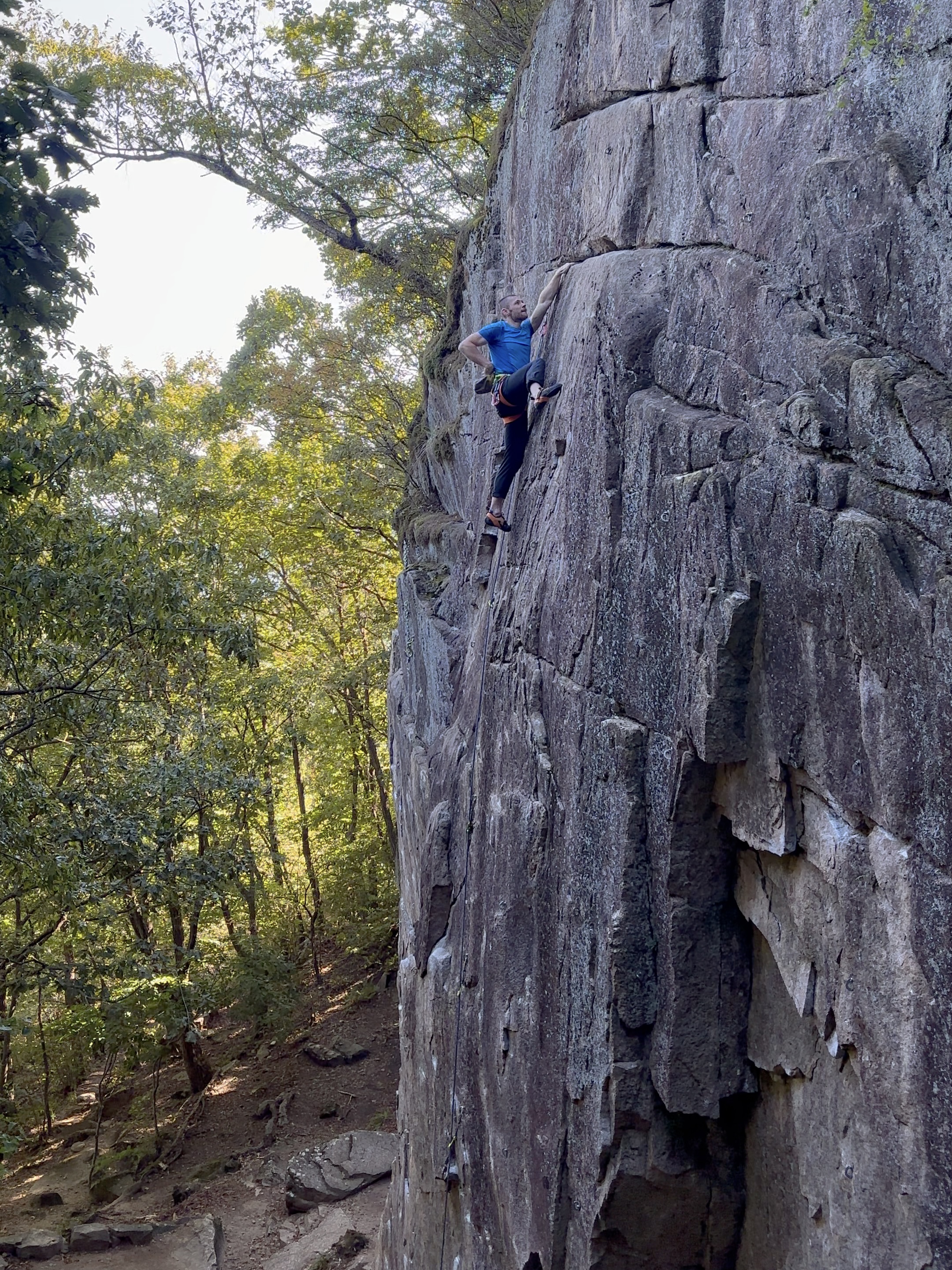
There are several different sectors in Guemjeong-san, with a really good variety of climbing. There are plenty of sport routes as well as some trad routes, several of which are 2 pitches. There are also a variety of orientations to the crags allowing you to seek sun or shade as required. The rock is high quality granite with quite a unique style, you can feel the old school nature of the routes when you climb them. The steeper routes seem to have features you’d be more used to using on slabs and you really have to cling on from start to finish. The bolts and anchors we encountered were all in great condition and quite new, but the bolting was a bit more runout than other sport crags in Korea, especially at Buchae-bawi. The guidebook mentioned taking cams as well, we didn’t know if this was meant for the trad routes, so we brought them just in case. We ended up using some of them to plug gaps, usually at the top of the routes, not essential but nice to have. We didn’t find it necessary at Daeryuk-bong though, only at Buchae-bawi.
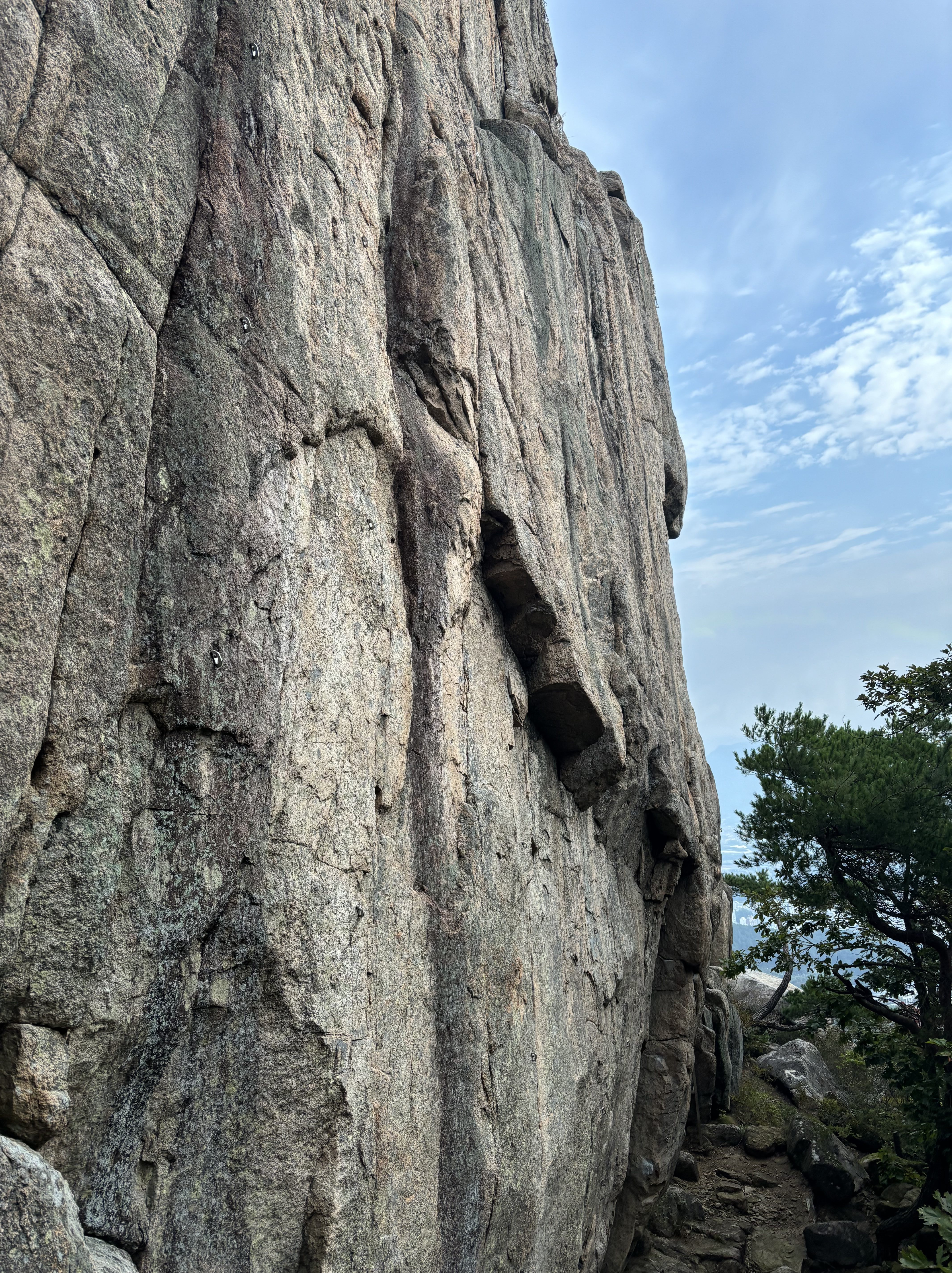
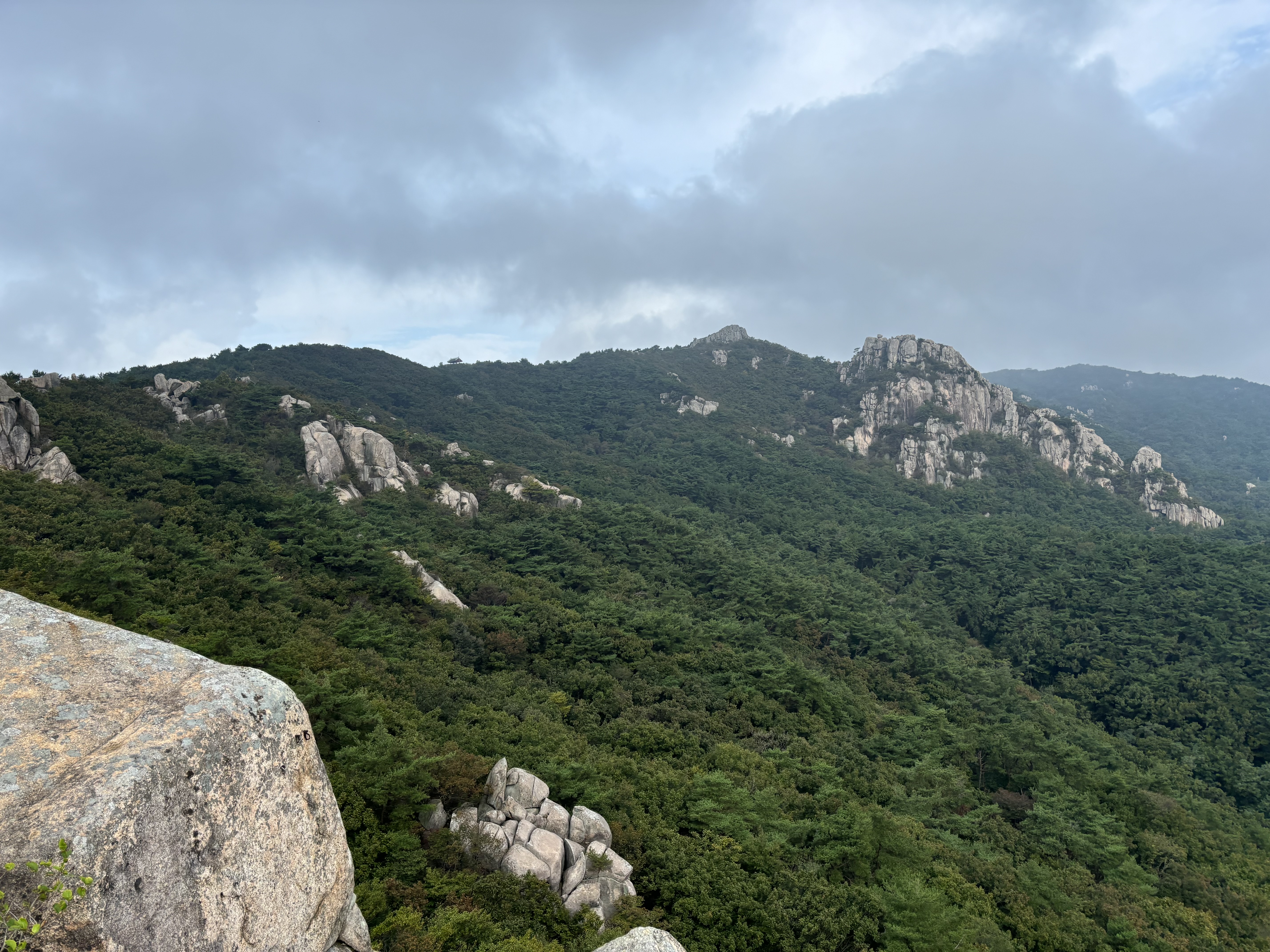
Great rock and scenery at Buchae-bawi
Hakdam-am
Hakdam-am is a really nice crag with a very easy approach, in a lovely, quiet part of the country. It is true that access via the bus may take a little longer than the average crag in South Korea, however the crag is only 50 meters from the road when you do arrive! Thankfully the road is pretty quiet and it doesn’t disturb the climbing ambience much at all. The rock at Hakdam-am is a type of gneiss with excellent qualities and it is a pleasure to climb on. There are lots of nice crimpy routes on the vertical walls and the steeper routes have a lot of blocky pinches/sidepulls. The crag is just a single sector but it was bigger and better than we thought it would be. We enjoyed every route we did and thought the crag is the ideal place to get some mileage on wonderful rock and enjoy a more relaxing pace of day – no sketchy offwidths or mega walk-ins to worry about! The crag has three faces with different orientations and in general the routes get a good amount of shade. Hakdam-am has roughly 45 routes, with grades from 5a to 7c+, and there is a board at the crag with all the routes names and grades listed on it.
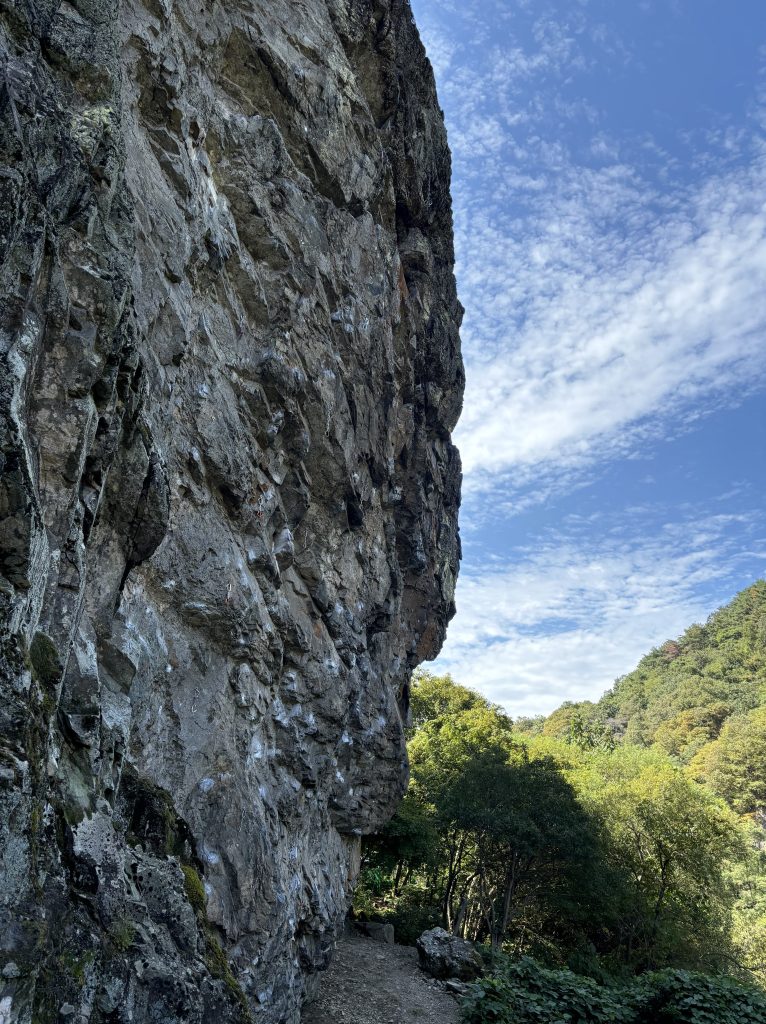
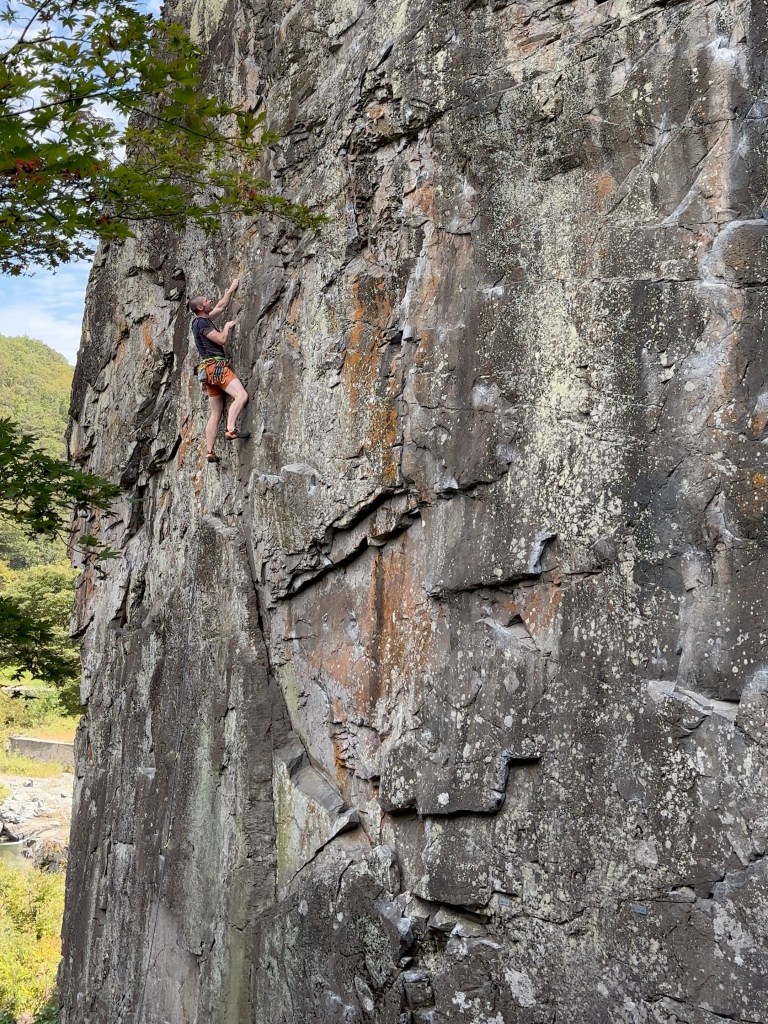
The delightful walls of Hakdam-am, including the super fun route ‘Birth’, 6a+
Youhak-san
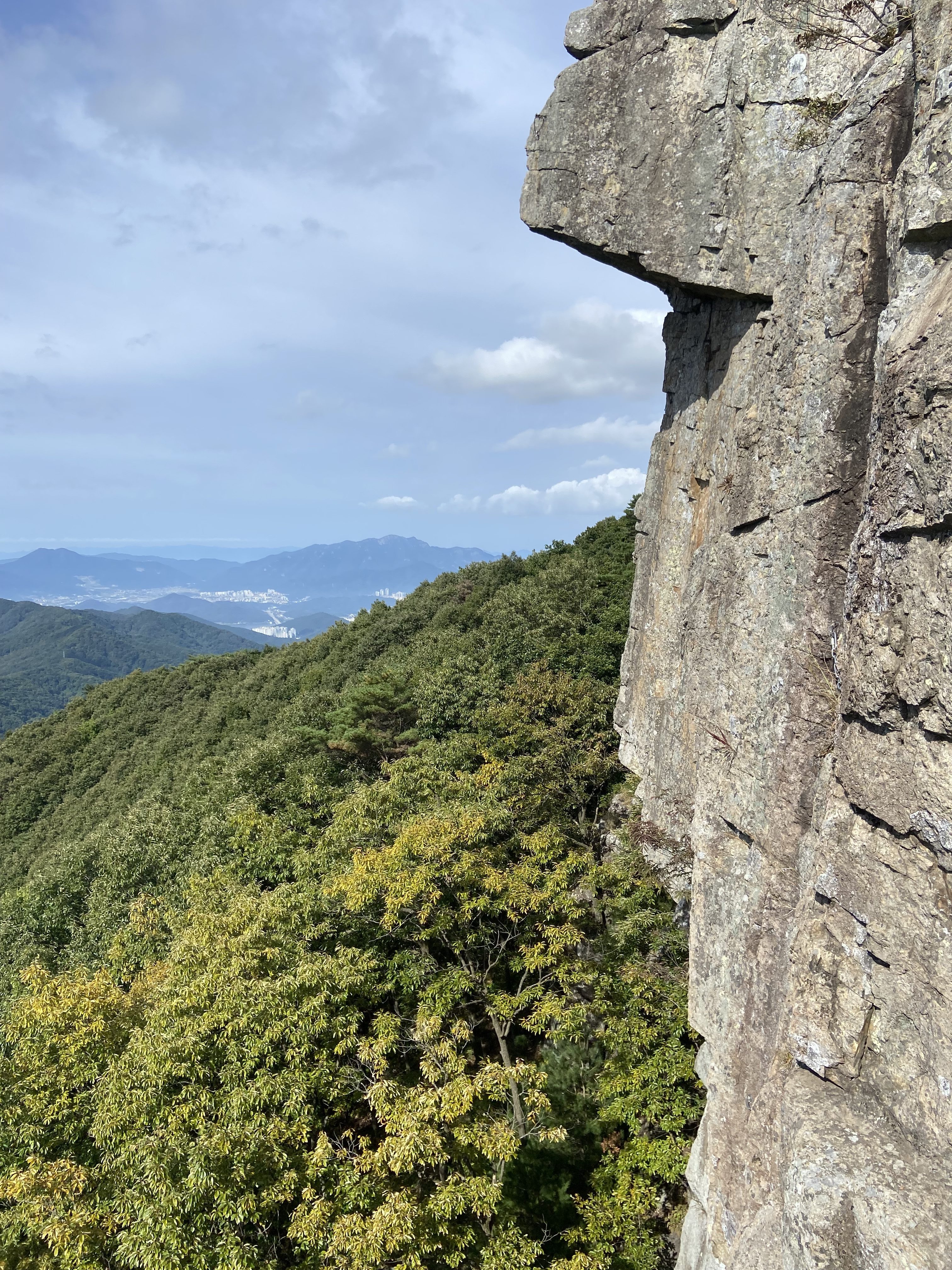
Youhak-san is quiet climbing area situated on a mountain of the same name, near the town of Waegwan. Based on the guidebook description, we had expected the crag to be a large and very impressive buttress, but it is actually more like a selection of crags and craglets, broken by large sections of vegetation. The rock is gneiss which is of mixed quality. The composition of the rock is very solid, it isn’t friable or crumbly at all. However, some sections of routes can have some pretty large, hollow blocks. There were a few blocks we didn’t want to pull on for fear of them coming off. Not all of the rock is like this, some sections are absolutely beautiful. It is more than fair to say the quality varies a lot, and on the whole is not as good as the typical standard in Korea. There are over 70 routes at Youhak-san and by far the best routes are the hardest ones. There are some good routes in the mid 6s to mid 7s, but by far the best lines are in the high 7s. Whilst Youhak-san was definitely not our favourite crag, we actually had a very pleasant time visiting the area. It is definitely well off the tourist radar and there is also a beautiful temple on the mountainside, not far from the crags. When we were walking to the bus, a local stopped to give us a bottle of water each and while we were waiting at the bus stop a couple stopped and gave us a lift to save us waiting, and even bought us some grapes in an incredibly kind gesture. These sort of experiences are what make us love travel so much, and realise why visiting these quieter areas is almost always worthwhile.
Mucheok-san
Mucheok-san is a very interesting climbing area with great and rather unusual rock. The climbing style is notably different from the other areas we climbed at in Korea and has a lot more pockets than anywhere else we visited. Some of the crags were described as granite, but none of them seemed that way, some of the sectors were probably gneiss but others were much harder to identify (maybe Andesite?), we aren’t really sure what it was! The climbing is quite spread out and the area can feel like a bit of a maze. The mountainside is positively littered with cliffs and working out which ones are sectors and which aren’t can be a bit tricky. The overall area is very interesting and there is a beautiful Buddhist temple by the trailhead as well as some other small sites, like a little hermitage we stumbled across, hidden relatively deep in the woods.
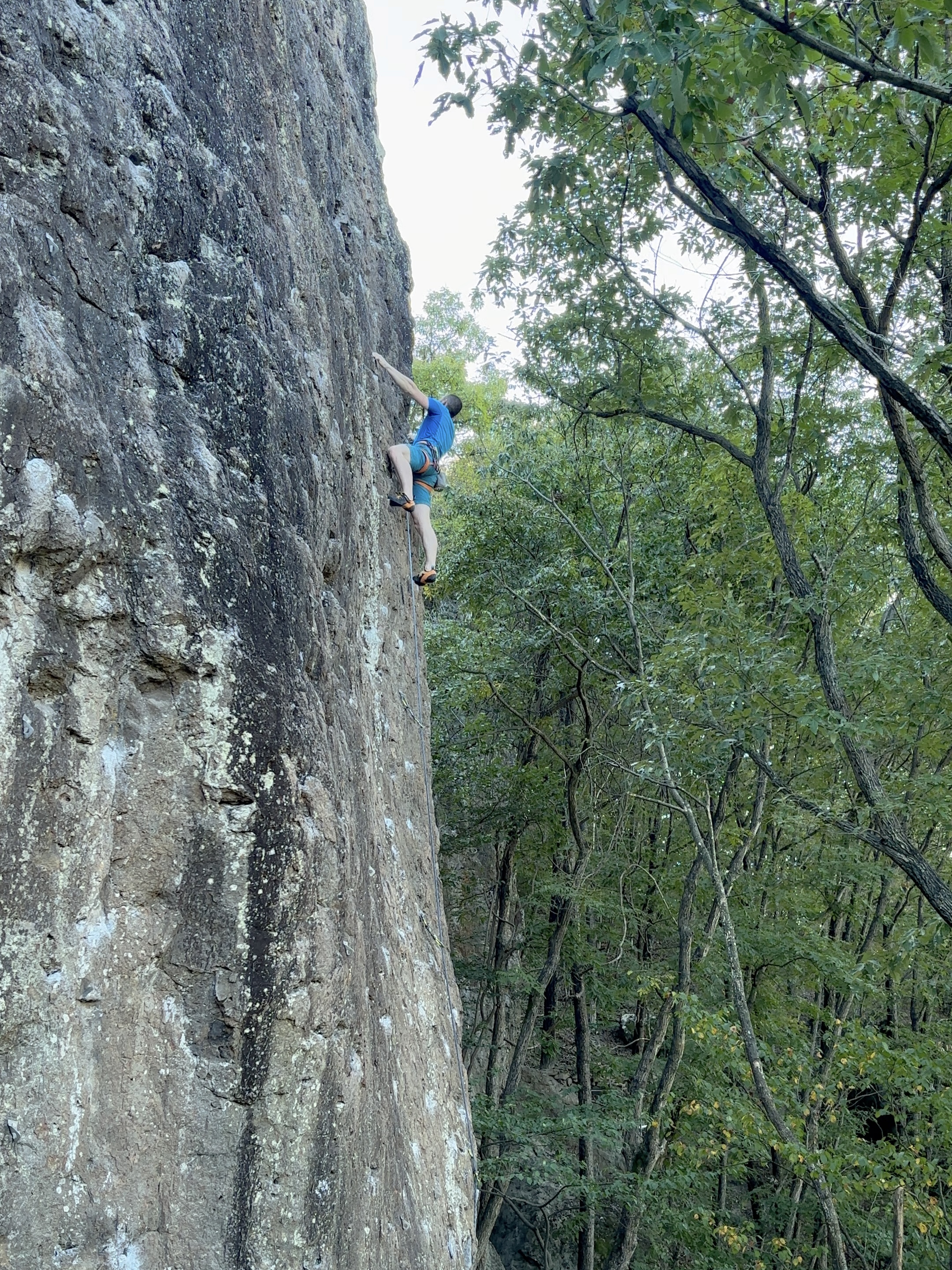
Mucheok-san is further away from Busan than Guemjeong-san, so on our last few days in South Korea, before taking the ferry to Japan, we almost didn’t make the journey up to climb there. It would have been easier and faster to climb at Guemjeong-san some more, and whilst it is an excellent area, we are glad we didn’t. Mucheok-san is a very cool place and has a definite uniqueness to it, it would have been a shame had we missed out on it, so it was very much worth the longer journeys. We thought the grading was very fair and the routes were well bolted, it has sectors at different orientations as well so you should be able to find conditions to suit your needs. The whole are was lovely, but it was the rock quality that really made it. It was in many ways a fitting end to our time in Korea, a place where the mountains always seem to impress and provide much greater variety than you would at first think. If you are in the Busan area then it is well worth your time going to climb at Mucheok-san.
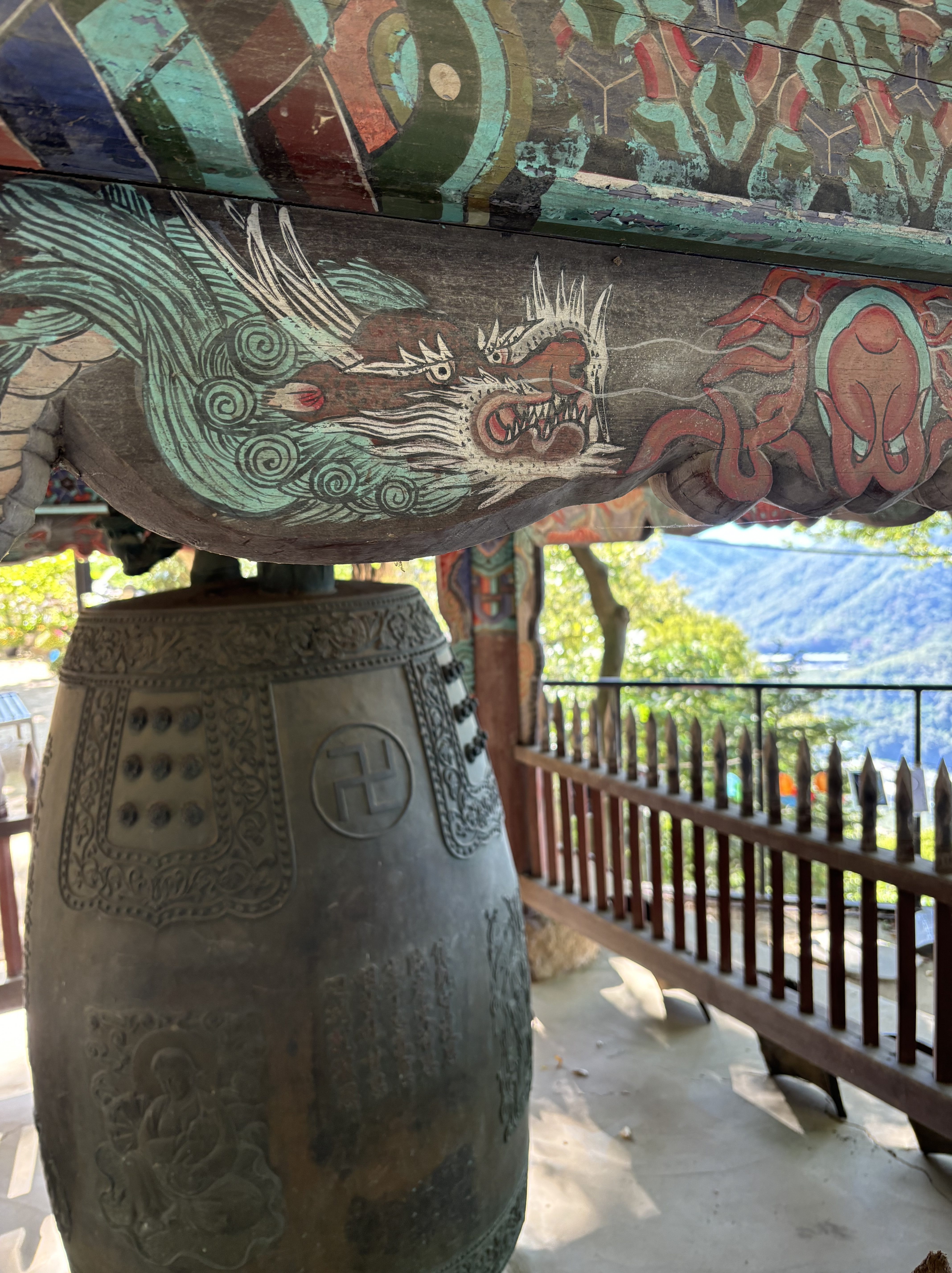
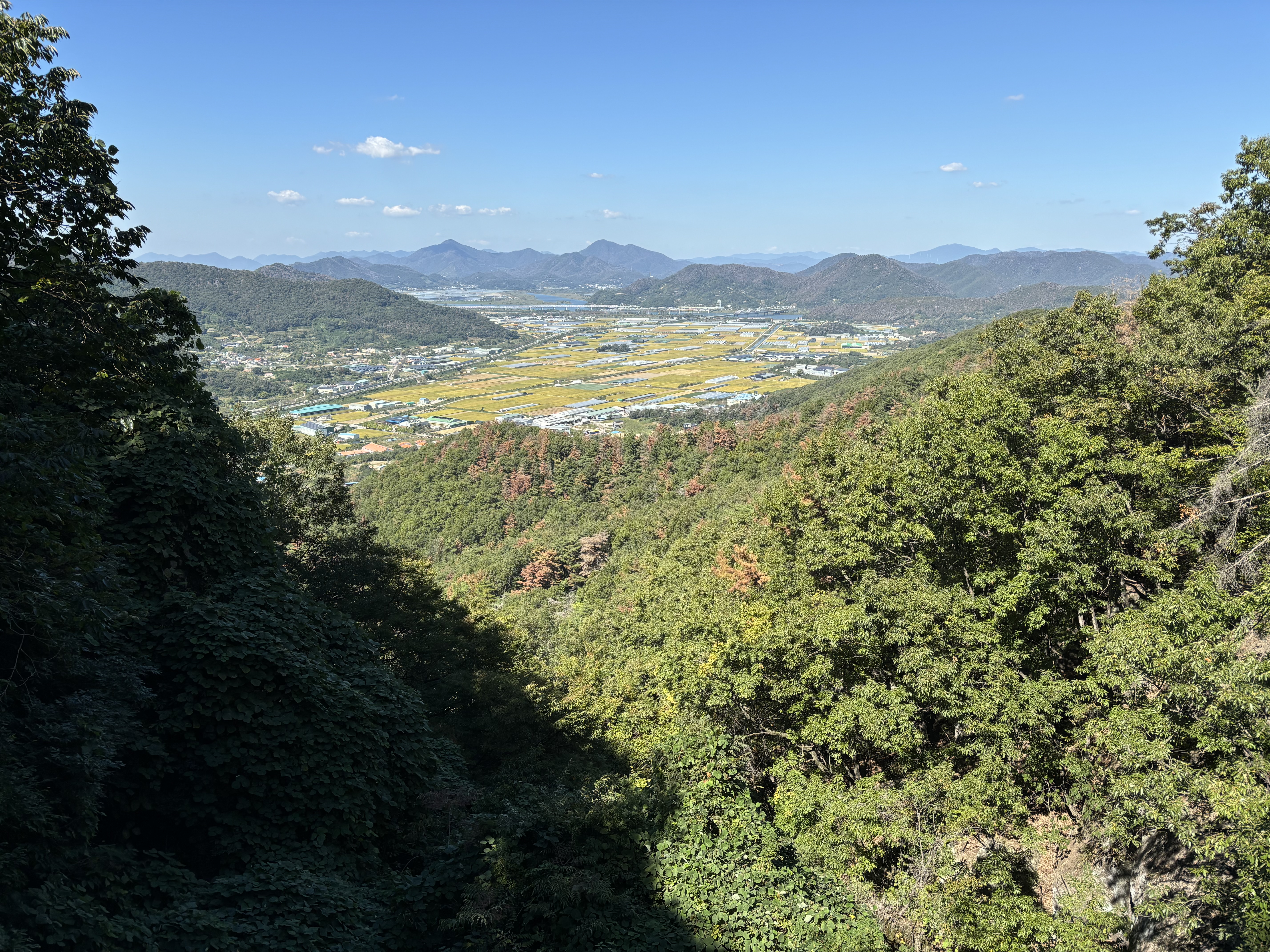
The pretty scenery of Mucheok-san
If you find our content useful please consider subscribing:
Rest Day Activities
The Palaces of Seoul
When most people think of Seoul, they imagine huge skyscrapers and densely populated, fast paced urban life. In many ways, that is all true, but Seoul is actually an ancient city with a great deal of history behind it. The area has been inhabited since the Palaeolithic period and was even a capital of the Baekje kingdom, when it was called Wiryeseong, way back in 18 BC! Today, some of the most beautiful and emblematic sites of Seoul’s history are the five palaces of the Joseon Dynasty. The Joseon Dynasty began in 1392, when the Joseon King Taejo managed to successfully overthrow the Goryeo Dynasty. The Joseons would go on to be Korea’s longest ruling Dynasty, lasting for an astonishing 505 years. The stunning palaces of the dynasty had to weather several storms during that time, the most notorious of them all being the Imjin war, during which Japanese invaders burned them down in 1592! The conflict was very tough on Korea, but impressively they managed to grind their way to victory, ultimately repelling the Japanese in 1598.
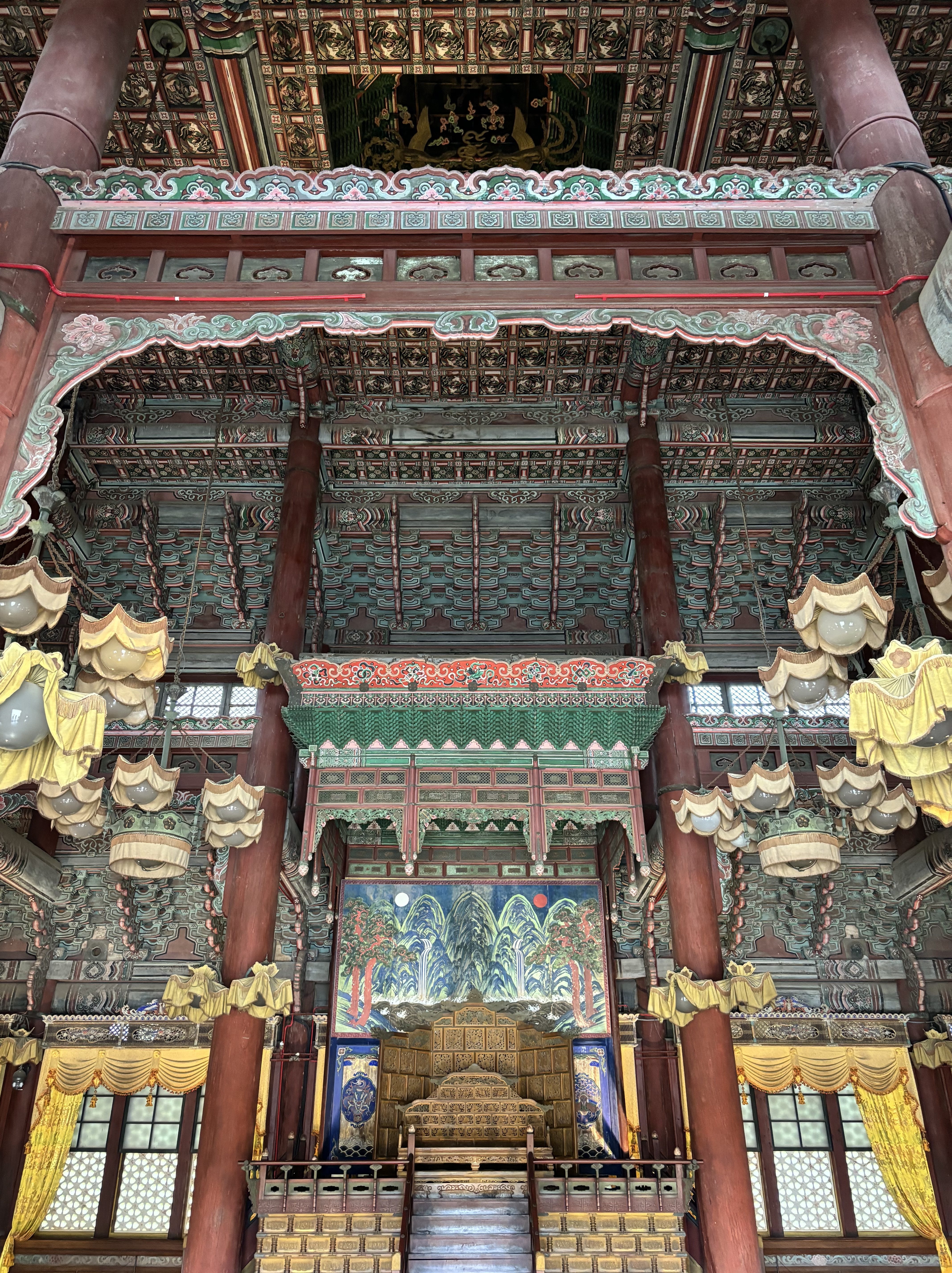
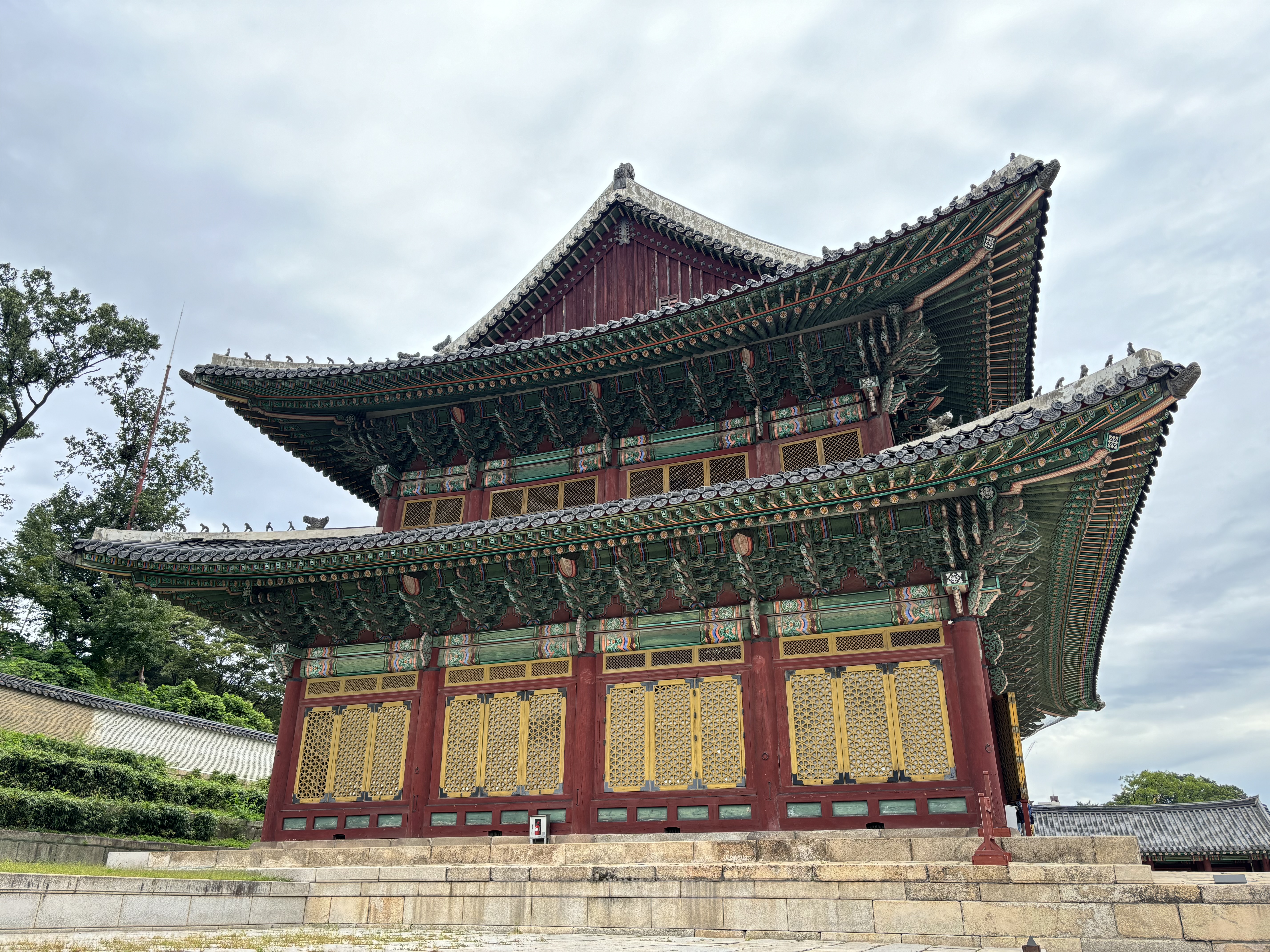
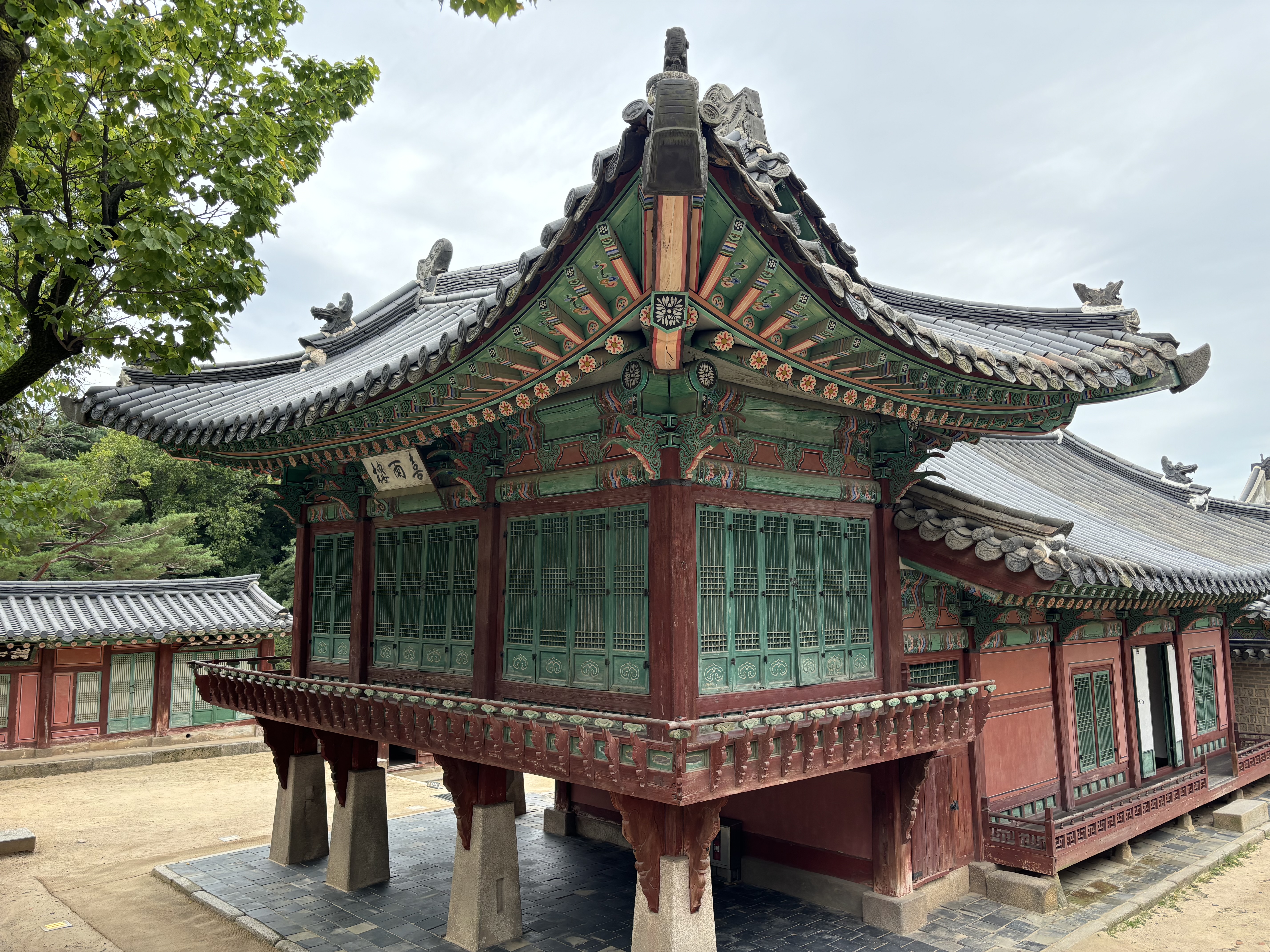
The immensely impressive Changdeokgung palace
The Joseons didn’t have an easy ride after that either, and suffered many brutal conflicts throughout their 505 year reign. Another of the most consequential wars for the dynasty were the Manchu Invasions, with the second, from 1636-37 proving the worst. Joseon Korea was invaded by the Qing Empire, who targeted the Koreans because of their loyalty to the Ming Dynasty. The Qings won a decisive victory against the Joseons and forced King Injo to surrender and kneel before the Qing Emperor. Amazingly, the Joseons were able to maintain their rule despite the surrender, on the condition they sever all ties with the Ming and re align their loyalties to the Qing. Whilst the peninsula was far from conflict free over the following centuries, the next most significant occurrence was the Japanese returning once again in 1910, when the Empire of Japan managed to colonise Korea for 35 years until 1945. The Japanese empire committed some heinous atrocities during this time and also damaged and looted Seoul’s palaces once again. The day Korea gained their independence, August 15, 1945, is widely celebrated and is known in Korea as Gwangbokjeol, which translates as ‘the day the light returned’.
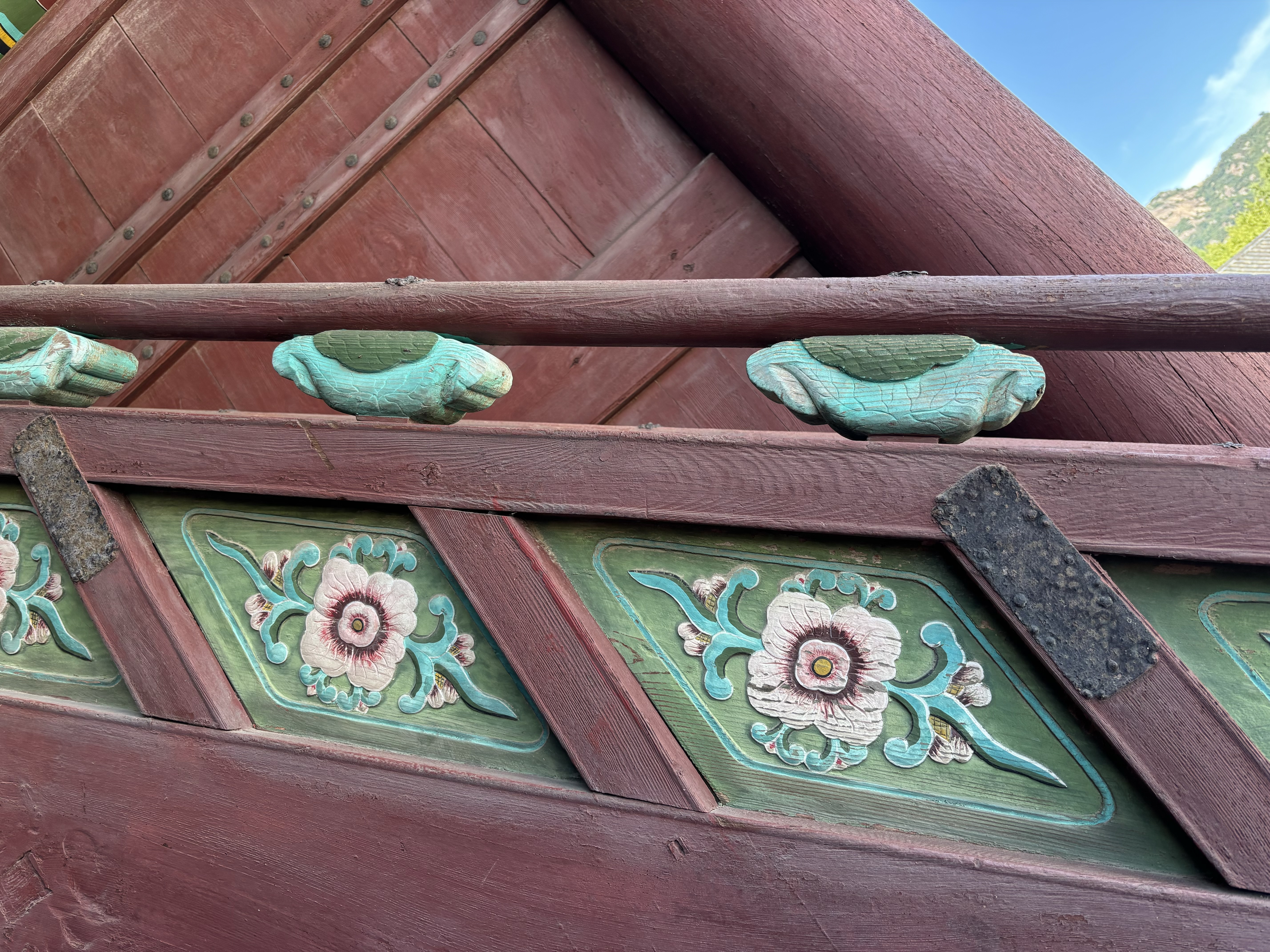
Today the five palaces of Seoul offer a glimpse into the country’s amazing history and depth of culture. The quality of the craftsmanship and the intricacy of the designs is simply stunning and they are without a doubt the highlight of Seoul. The largest palace is Gyeongbokgung, the scale of the place is very impressive and for the admission fee of 3,000 Won (€1.99), it is insanely good value and a site you won’t forget in a hurry. The Changdeokgung palace is perhaps the most significant of the 5, and it is the only one which is listed as a UNESCO World Heritage Site. Changgyeonggung is another stunning site and is home to the oldest standing main hall. Whilst the other palaces may have been built first, their main halls were rebuilt after being destroyed, and the main hall of Changgyeonggung, whilst not the original ever, is the oldest standing of any of the five palaces. Overall, we thought the palaces were incredible and the combination of scale and quality, when combined with the cost of visiting, makes them a truly superb and unmissable sight. We thoroughly enjoyed visiting the palaces and they stand out as a real highlight of historical sites we’ve visited, not just in Korea, but anywhere.
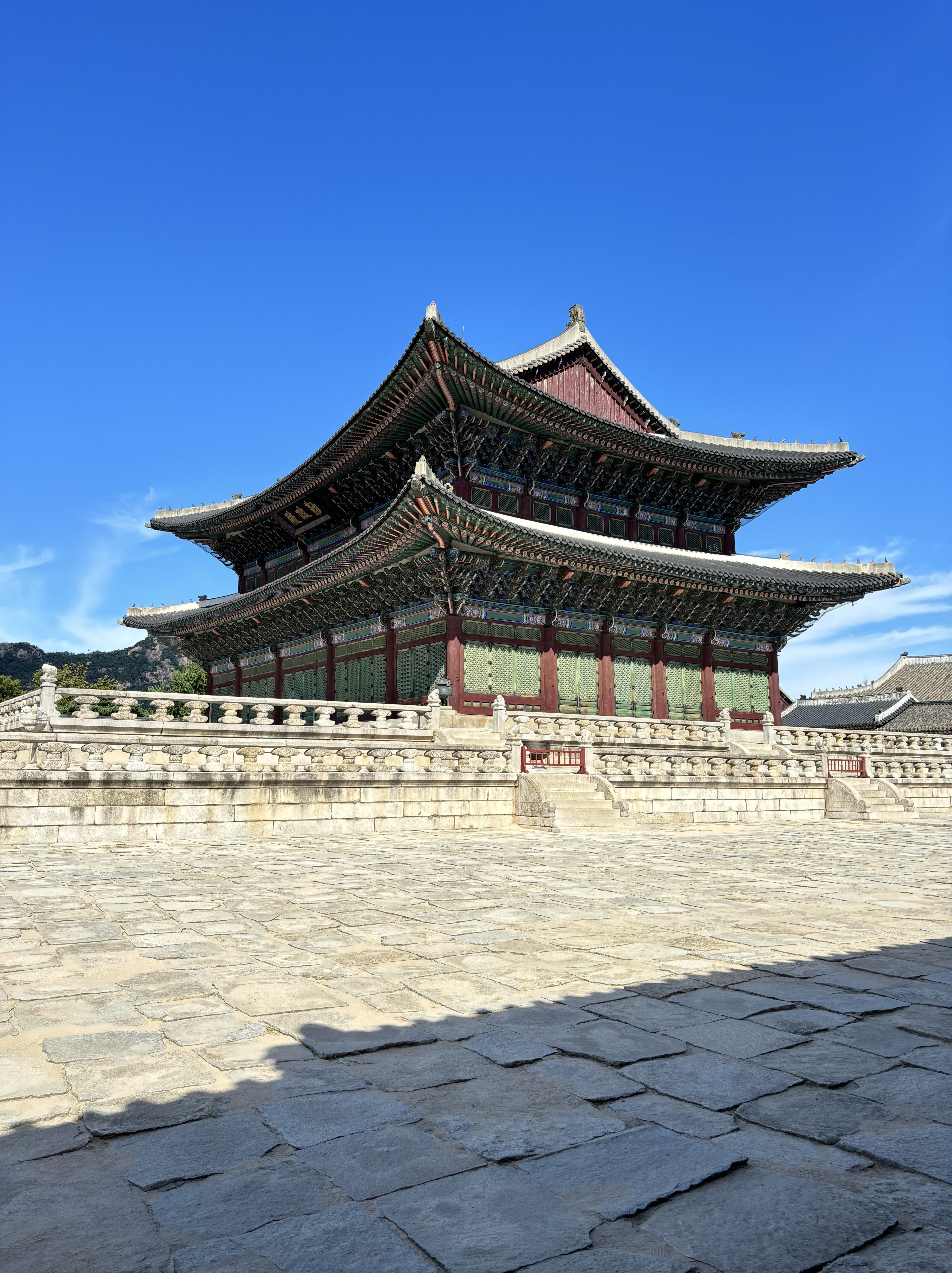
National museum of Korea
The National museum of Korea is a truly excellent museum that is free to visit and should not be missed for anyone visiting Seoul. There are tens of thousands of artefacts from all periods of Korea’s history and the scale of the place is vast. If you want to make sure you can take it all in and enjoy properly, make sure to have a few coffees and a good breakfast before you arrive, because it is very extensive. We, of course, expected a good quality museum before we visited, but it was even better than we hoped. It is easily among the best national museums we have visited and considering it is free, it ranks very highly indeed on our list. Make sure to check it out!
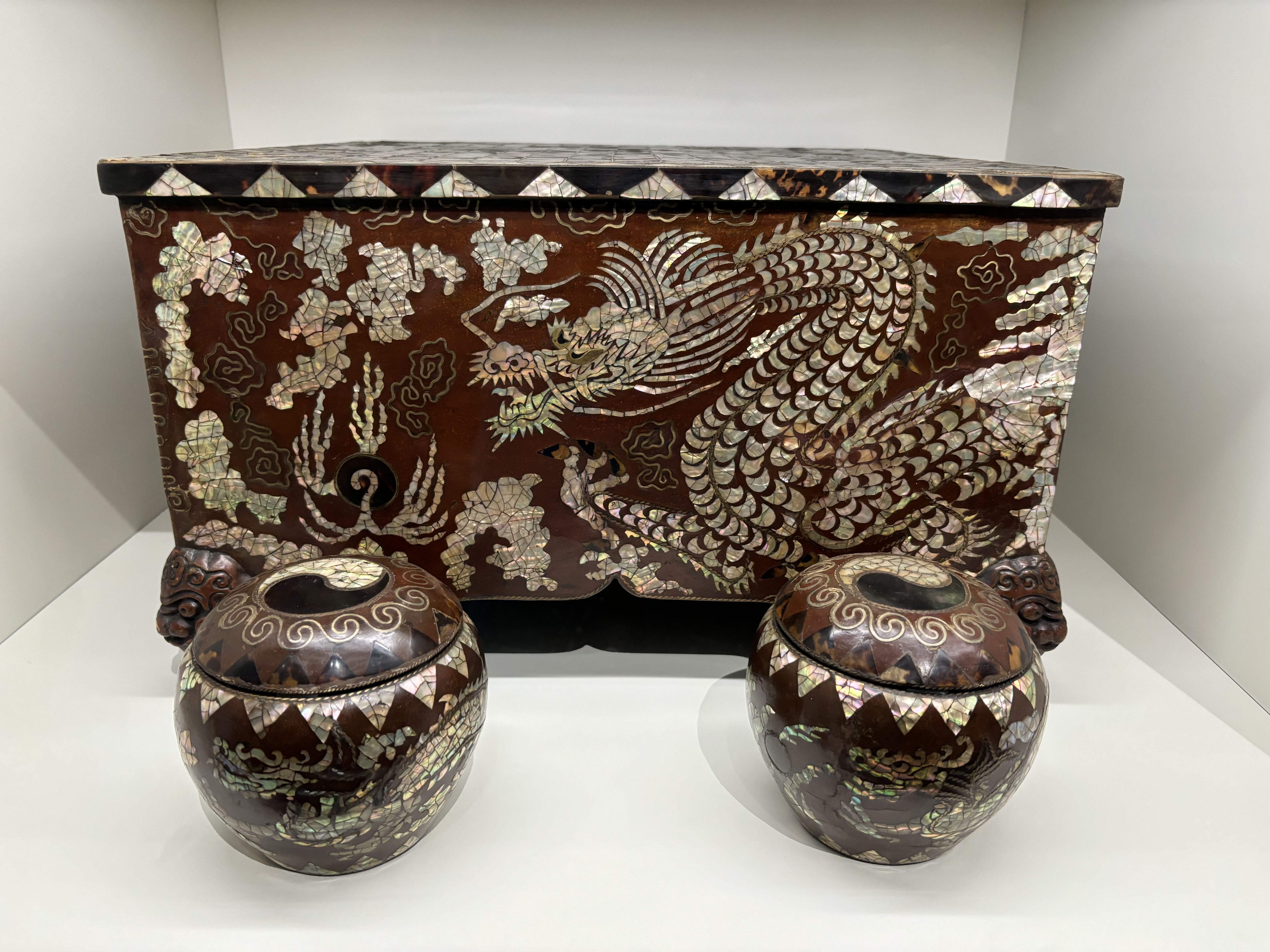
As well as the excellent museum in Seoul, we also visited museums of Korean history in both Daegu and Busan, both of which are excellent. They were smaller in scale than the Seoul museum, but still had lots of impressive artefacts – both are also free to enter.
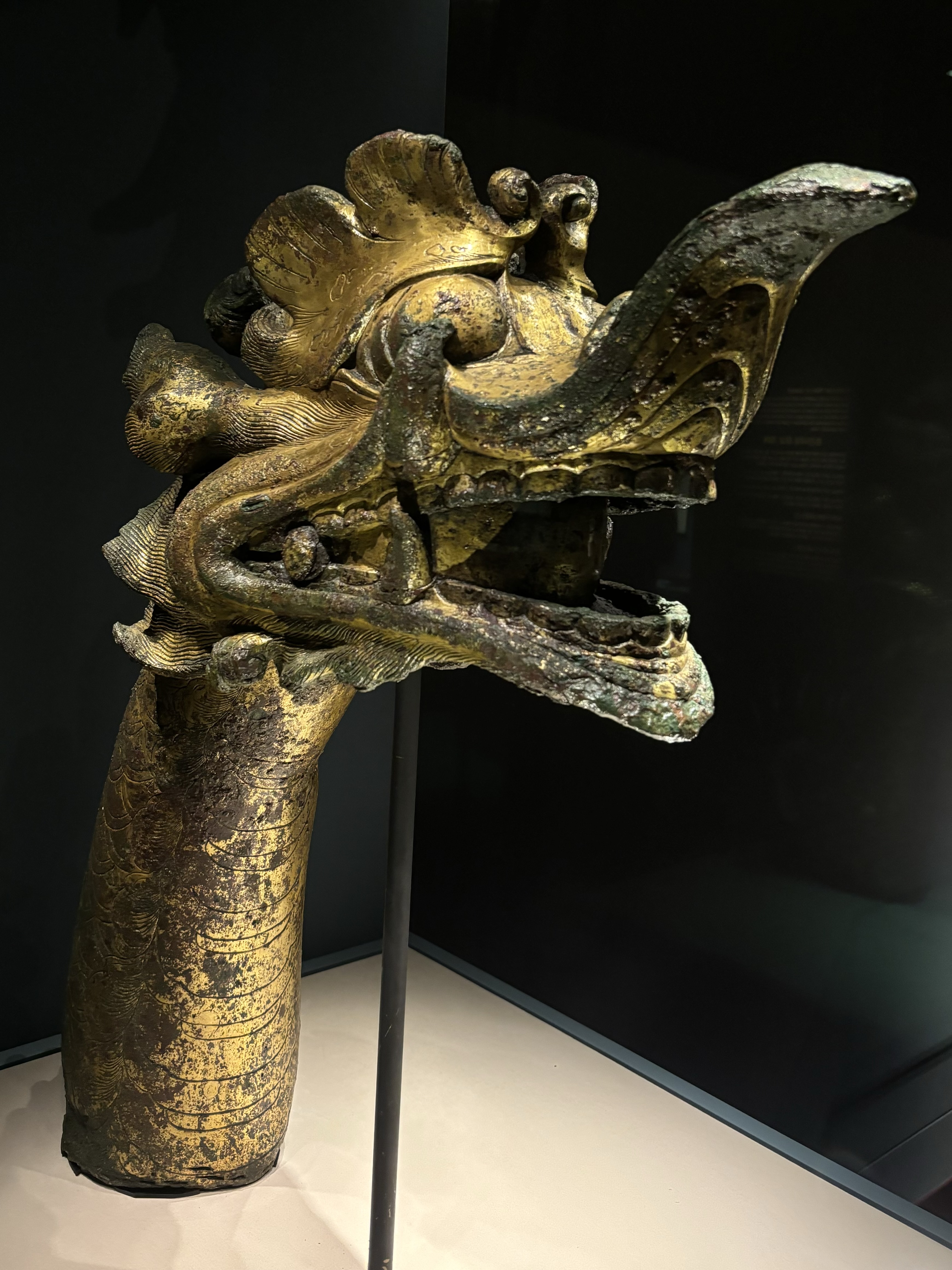
The War Memorial of Korea
The War Memorial of Korea is a museum as well as a memorial, another very large and extensive museum that is also free to visit. The museum covers in a good level of detail, wars throughout Korean history, like the Imjin war, as mentioned previously, where Japanese invaders attacked the peninsula on two huge separate invasions between 1592 and 1598. This historical section is incredibly interesting and has some amazing exhibits of the historical weapons and techniques they used back then. There is also a very large part of the museum dedicated to The Korean War of 1950 to 1953. The war famously never ended, and is still technically ongoing as only an armistice and not a peace treaty was signed, which is what resulted in the DMZ that exists today. One of the most saddening aspects of the Korean War is that civilian deaths significantly outnumbered military ones. There were roughly 1 million military deaths in the war but staggeringly around 3 million civilians were killed. All of those lives lost and devastated in only 3 years, and in the end the DMZ line is very similar to how the 38th parallel was before the war started. The overall emotion you are left with is the purely destructive nature of war, how so much could be destroyed in a short space of time and that neither side gained anything from it just goes to show how no good, only bad, arises from conflict.
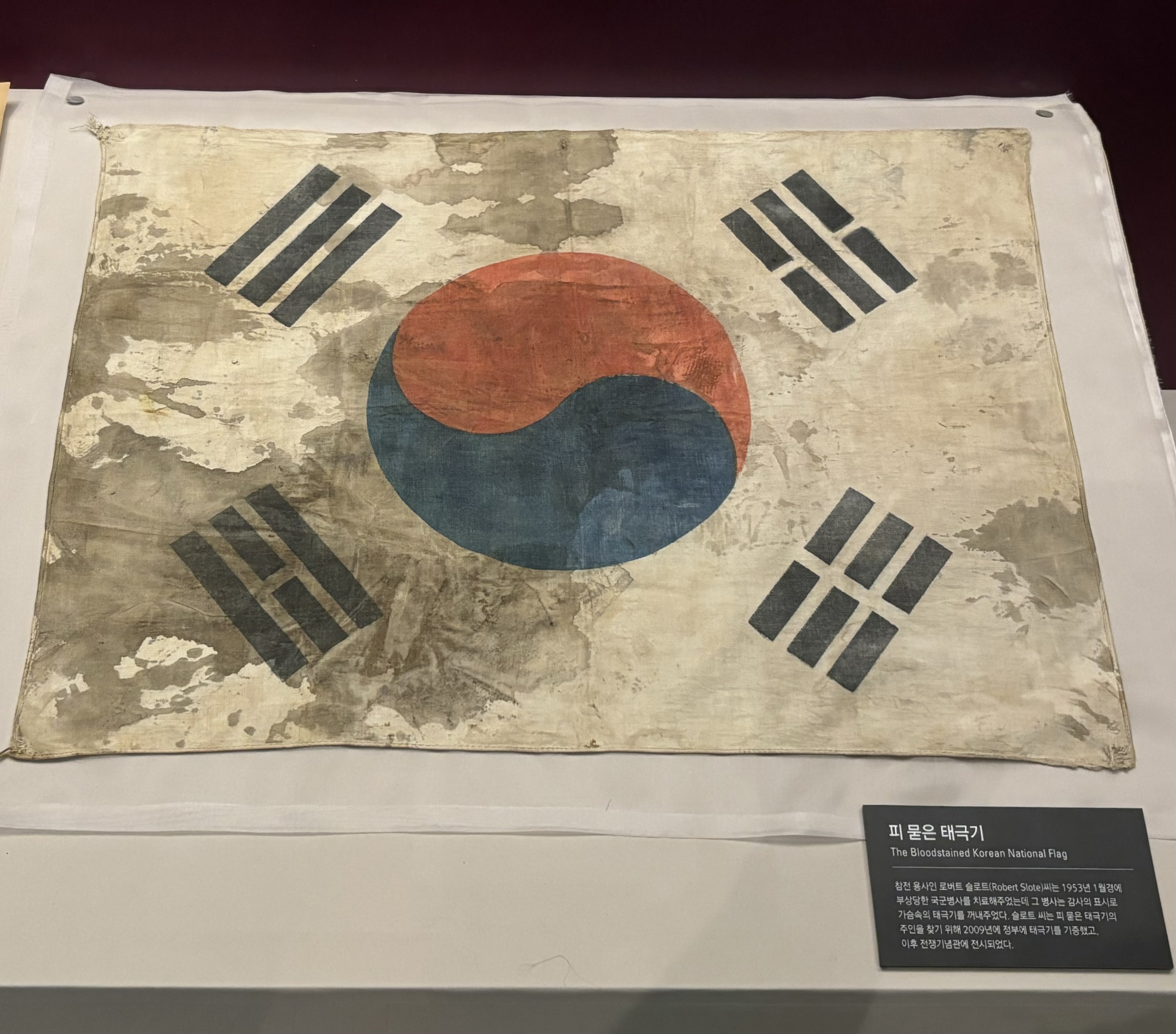
Buddhist Temples
Buddhism first arrived in Korea in 372, which is over 160 years before it first arrived in Japan. As you can imagine, Buddhism is very well established and has a deep cultural history here. Korean buddhism is from the Mahayana branch, and the specific following of most Korean buddhists is Seon, which emphasises meditation. Korean Seon is comparable to Chinese Chan or Japanese Zen, but maintains its own identity and unique aspects. The largest sect of Seon buddhism in Korea is Jogye, which originates from a Korean monk called Master Jinul, who lived in the 12th and 13th centuries, during the Goryeo dynasty. Master Jinul is renowned for uniting various disparate sects of buddhism at that time behind one coherent practice. The deep tradition of Buddhism in Korea can be very much felt today, and there are many beautiful historic temples across the country. The location of these temples is often very well aligned with the climbing areas, it is a real treat to be able to visit these places so easily as part of a climbing trip. We were incredibly impressed by the numerous different temples we visited, both the magnificent old ones and the smaller, quieter ones.
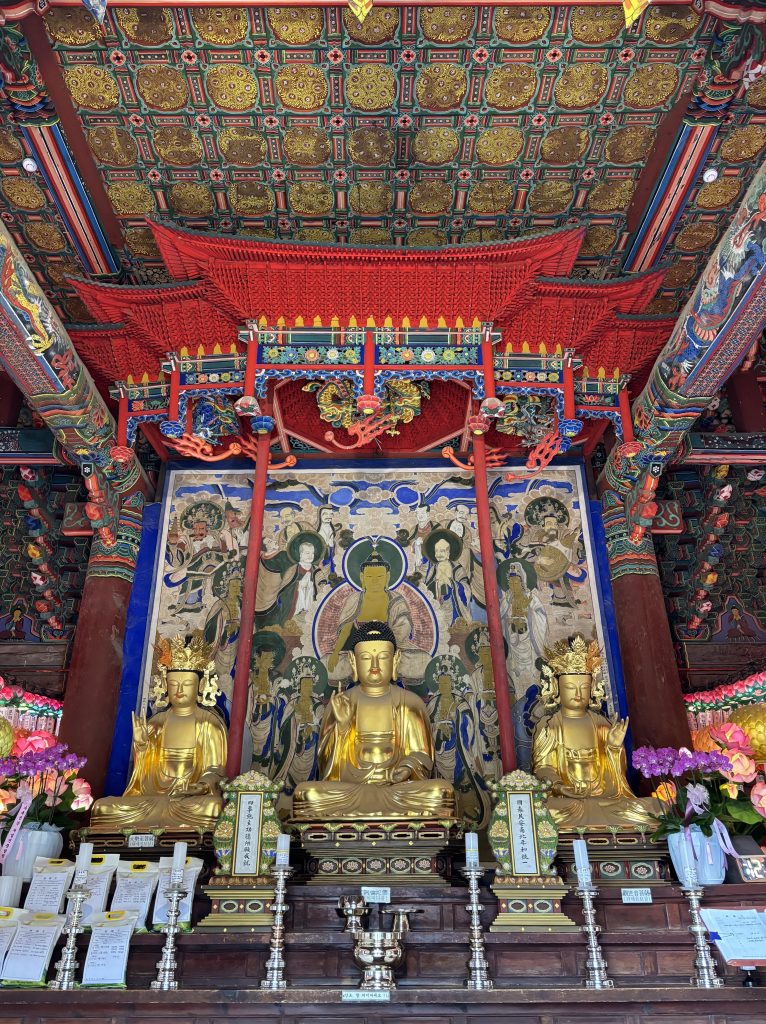
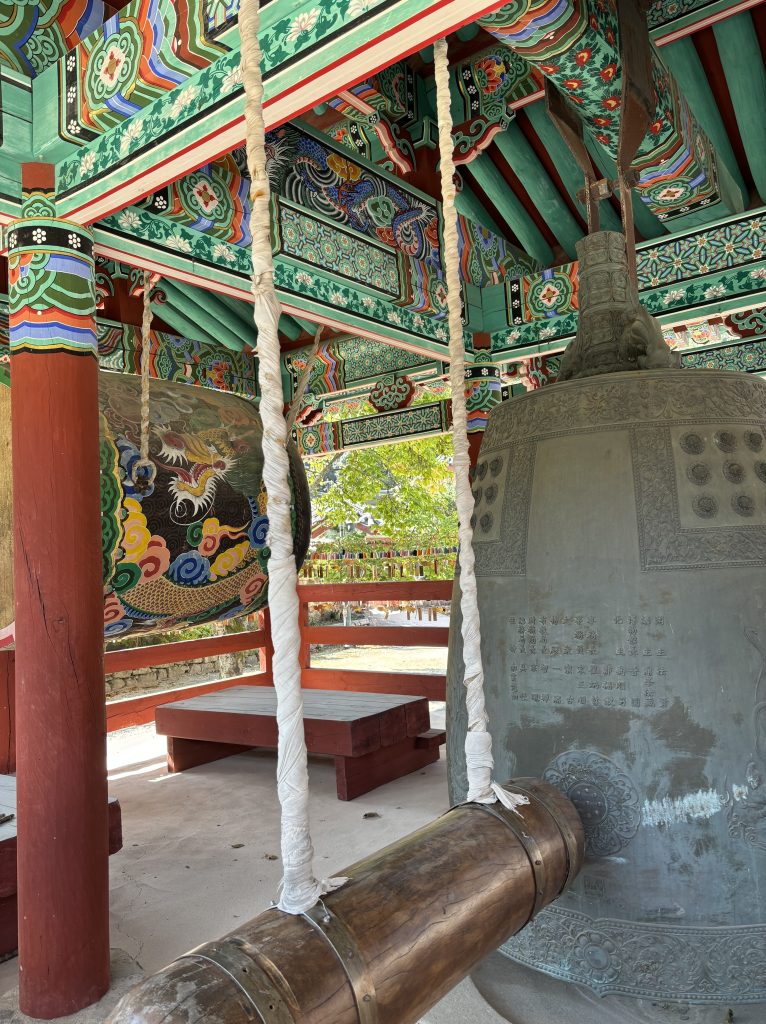
The detail and beauty of Seon buddhist temples is truly remarkable
Hiking
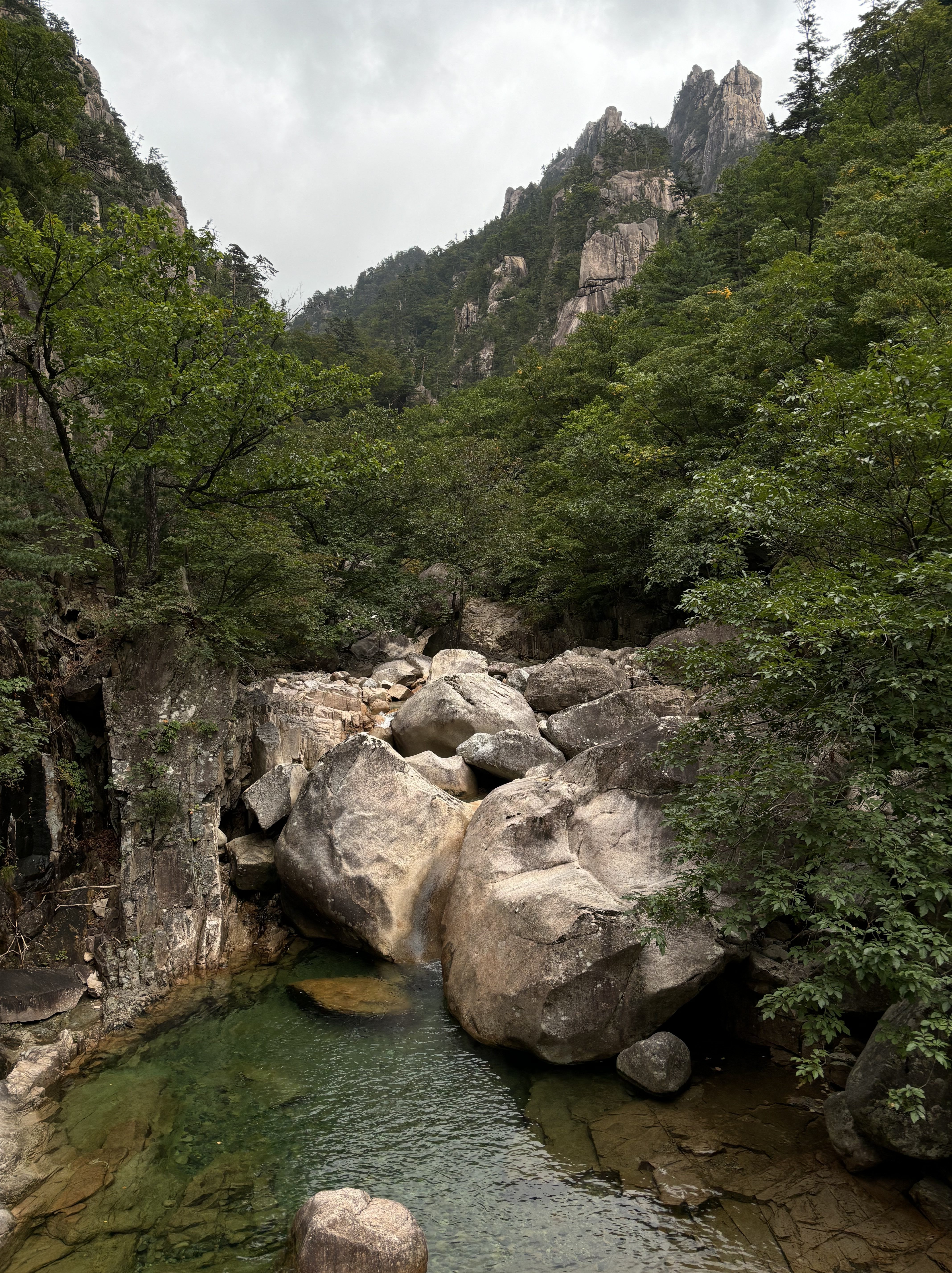
In a country so mountainous, it will come as no surprise that there is an almost endless amount of hiking to keep you busy in South Korea. There are plenty of very easily accessible trails that you can start and finish by taking the bus, train or subway and often the trails are very peaceful and tranquil despite being so efficient to get to. There are quite a lot of summit hikes that have some steep rocky sections, sometimes with some scrambling. As is typical in the country these are often equipped with some aid like a fixed rope, railings or metal steps. Of course, there are also plenty of longer and more adventurous hikes to do, particularly in national park areas like Seoraksan. One of our favourite things about the hiking here is that the mountains are almost entirely covered in forest. This gives you shade from the sun and also more flora and fauna to admire. There are lots of interesting plants, mushrooms, berries and, best of all, chipmunks! The hiking in South Korea is excellent and shouldn’t be missed, whether you are there for climbing or not.
Food
Korean Barbecue is an awesome and very interactive way to eat, very popular across Korea. The essence of barbecue is that each table will have its own grill, usually charcoal but sometimes a gas griddle, with an extractor above to get rid of any smoke. In a very communal nature, you then grill your own meat on the barbecue, right there in your own table and ready to share with your friends and family. Typical items popular in Korean barbecue are Bulgogi, which is thinly sliced marinated beef with a delicious flavour, Samgyeopsal (pork belly) and Jangeo-gui, which is a super tasty type of eel. Banchan is served alongside the meats, and you can order as many additional dishes, like various soups, as you want. Korean barbecue is a truly excellent way of dining, and you always leave feeling like you’ve had a meal fit for a king.
Tteokbokki is a delicious dish of chewy rice cakes simmered in a spicy sauce. The sauce is often based on a fermented chilli paste called gochujang, which gives the dish a great kick. Korean fish cakes called eomuk are also incorporated into the sauce as well, these are popular to eat on their own too. Tteokbokki is a really tasty dish and a must try when you’re in Korea.
Hwangtae Haejangguk is a type of ‘hangover soup’, but it is also very enjoyable even if you don’t have a hangover! The soup has a milky white broth and the star of the dish is dried pollock, which has a wonderful chewy texture. As well as this dish, there are also several other types of hangover soup traditional in Korea, including some nice spicy ones. You can pair up a hangover soup wonderfully with Sotbap, which is rice cooked in a heavy earthenware type dish. After you have removed the fresh, fluffy rice, you are left with a layer of crispy, golden brown rice on the bottom of the dish, this is called Nurungji. To enjoy this as part of your meal, you pour hot water over it and put the lid back on to let it steep while you eat. When you are finished your meal you then eat the rice and drink the delicious nutty tea/broth made from the water and crispy rice – the name for this drink is sungnyung. The flavours are wonderful and it is a really unique dining experience to enjoy in Korea.
Korean fried chicken is a satisfying crowd pleaser of a meal, with bite size pieces of juicy chicken fried twice to give an extra crispy finish. The batter is thin and light and usually made from potato/corn starch or rice flour, which also stays crispy when coated in sauce and is less greasy. When coated with a delicious spicy and slightly sweet sauce called it is called dakgangjeong. Regardless of whether you have sauce or just plain, it is bound to hit the spot. Fried chicken is a big deal in Korea, and when they do it this well it isn’t hard to see why!
Sundae is a traditional Korean sausage, made from pigs blood encased in intestine. The sausage also contains glass noodles and glutinous rice that help give it a nice chewy texture. We really enjoyed eating Sundae and found it very tasty and satiating. As well as being eaten on its own it is also incorporated into many other dishes.
Mandu are Korean dumplings that can come in various forms, the word mandu doesn’t refer to one specific type of dumpling, but is an umbrella term. The most common fillings are minced pork or beef, glass noodles, various types of vegetables and the list goes on. As well as being steamed, mandu can also be fried, boiled or served in soup. With so many variations you will easily find some that become your favourite.
Kimbap is a beautiful Korean dish made from a variety of fillings rolled in rice, wrapped in seaweed. Annoyingly, some people refer to Kimbap as Korean sushi, which it isn’t. In Kimbap there are no raw ingredients, everything is either cooked or pickled. Kimbap is renowned for its stunning vibrant colours, common fillings include egg, fish cake, meat like ham, crab stick, carrots, radish and spinach. The various combinations are huge and it a feast for the eyes as well as the mouth. Kimbap comes sliced and wrapped in paper, which makes for a practical and tasty crag lunch.
Bindaetteok is a super tasty mung bean pancake, shallow fried in oil. They are delicious in the original mung bean form, but can also be elevated with additions like meat, seafood or kimchi. Bindaetteok are a great, filling and perfect to grab on the go.
Kimchi is an absolute classic Korean food, something you will eat a lot of and grow to love during your time in the country. Kimchi is made from vegetables fermented in chilli and other seasonings. Cabbage is the most common, but almost any type of vegetable can be fermented in this way, Kkakdugi (cubed radish) is another classic example. Kimchi has a spicy, tangy and savoury flavour – and is served with almost every meal. When you order a meal in Korea you will almost always be served several small side dishes called Banchan, of which kimchi is an integral part. There are a huge amount of other dishes included in banchan aside from kimchi, classics include Kongnamul Muchim (soybean sprouts), Danmuji (pickled radish) and yeongeun jorim (braised lotus root).
Kimchi Mari Guksu is a delicious cold noodle soup, made with thin noodles and given a spicy and tangy flavour from the kimchi. What makes the dish extra special and interesting is that it is served icy cold, sometimes the broth even has some ice cubes in it. The combination is amazing and the cold broth helps cool the spice down as you eat. It is a super refreshing dish that is wonderful when eaten alongside a bbq on a hot day.
Makgeolli is a traditional Korean rice wine, which has a milky white colour and is lightly sparkling. It is a fermented drink and has a slight tangy flavour, which makes it very refreshing. Makgeolli is one of Korea’s oldest and most traditional drinks and is a real part of the nations heritage.
Soju is a distilled spirit, clear in colour, that is one of the most popular and widely consumed alcoholic drinks in Korea. Traditionally Soju was made from rice, but now it is often made from things like sweet potato or barley. Soju is incredibly smooth, at around 17% it slips down very easily. Soju is also commonly mixed with beer to create a classic Korean drink called Somaek.
Summary
We had a fantastic time in South Korea, the landscape of the country is genuinely stunning and very impressive. The cultural and historical sites across the country are equally amazing. We found Korean people to be very friendly and welcoming and we received many generous gestures throughout our time there. The quality of the rock climbing as well as the quantity is top drawer, pretty much every crag we climbed at was great and many of them were superb. There is a good variety on offer as well, contrasting the multipitch cracks and offwidths of Seoraksan with the juggy overhanging sport routes of Seonunsan demonstrates it perfectly. The time really flew by and it would have been easy to spend longer, anyone who visits South Korea for climbing has got a feast of quality crags to choose from. We really did love it and we wouldn’t hesitate to return.
We write for pleasure and climbing is our passion. Our articles will never be paywalled. However, if you would like to help towards the costs of running the site or if you have found our content useful, please consider contributing here. To read more about why your support matters, click here.
Relevant links and resources
https://www.scribd.com/document/735794049/South-Korea-Guidebook
https://www.mountainproject.com/area/106225629/south-korea
https://www.koreaontherocks.com/home/

