Useful Tips for Climbing and Travelling in the Caucasus

The Caucasus region is an amazingly diverse area, sandwiched between the Black Sea and the Caspian Sea. It is truly transcontinental, with an enormous amount of culture packed into a relatively small area of land. The ‘heart’ of the Caucasus consists of Armenia, Azerbaijan and Georgia. To the north is Russia, with Turkey in the west and Iran in the south, just adding to the areas impressive cultural diversity. The region is famous for mountains, climbers can find almost anything in the Caucasus, from peaks over 5000m to stunning canyons and abundant cliffs. We spent 10 weeks in the Caucasus and we genuinely loved it, it is one of our all time highlights – for the people, the culture and the climbing.

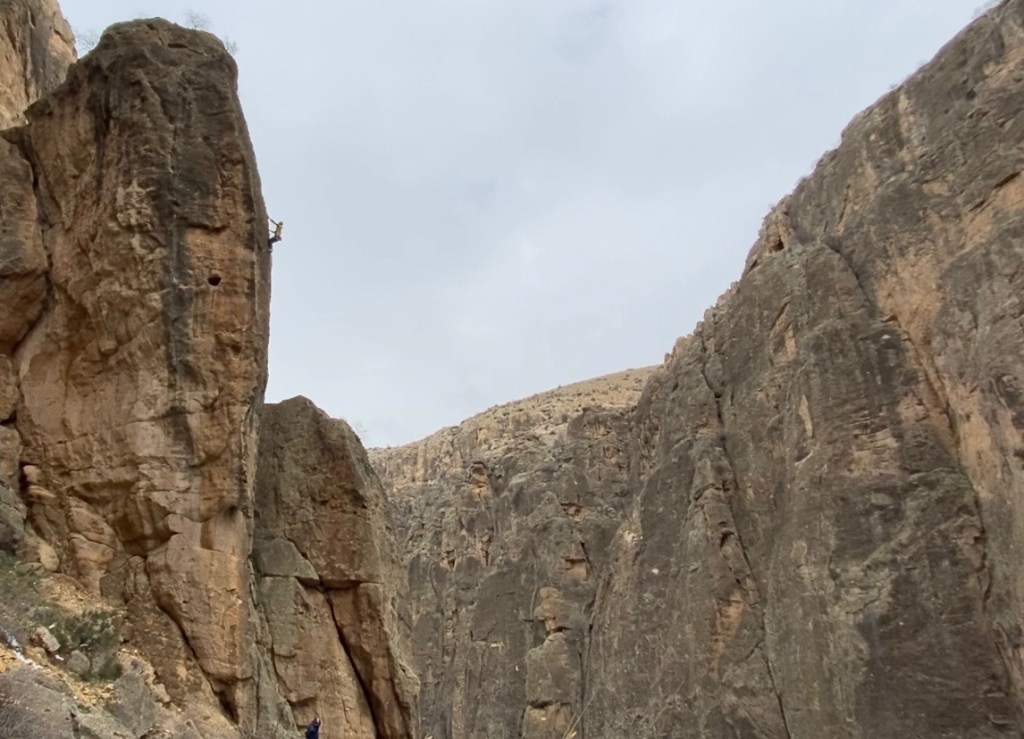
Silhouette of a climber on a pinnacle protruding from the left hand side of the tall sided canyon which is made from dark volcanic rock with long crack feautres.
Exposed climbing in Noravank, Armenia

In this article we will discuss hints and tips for travelling in the region to help you get the most out of your trip. Below is a map of the all the different crags we visited during our trip to the Caucasus region, as well as our favourite rest day activities. If you would like to read more about specific areas, please visit our individual posts about Armenia, Azerbaijan and Georgia.

Continue reading

Climbing in Romania: Europe’s Best Kept Secret?

Romania is a country we have wanted to visit for a long time and we knew there were a lot of amazing places to visit. We waited for the right time and it was definitely worth it, we had 6 weeks of fantastic climbing and almost perfect weather, it was everything we had hoped for and more. Romania is home to a vast swathe of the Carpathian Mountains and seems to have an almost limitless supply of rock. There are crags, canyons and mountains at almost every turn as well as some of the largest old growth forests in Europe. Climbing aside, we found Romanian people to be very friendly and kind, it was a real pleasure to be able to spend time there.

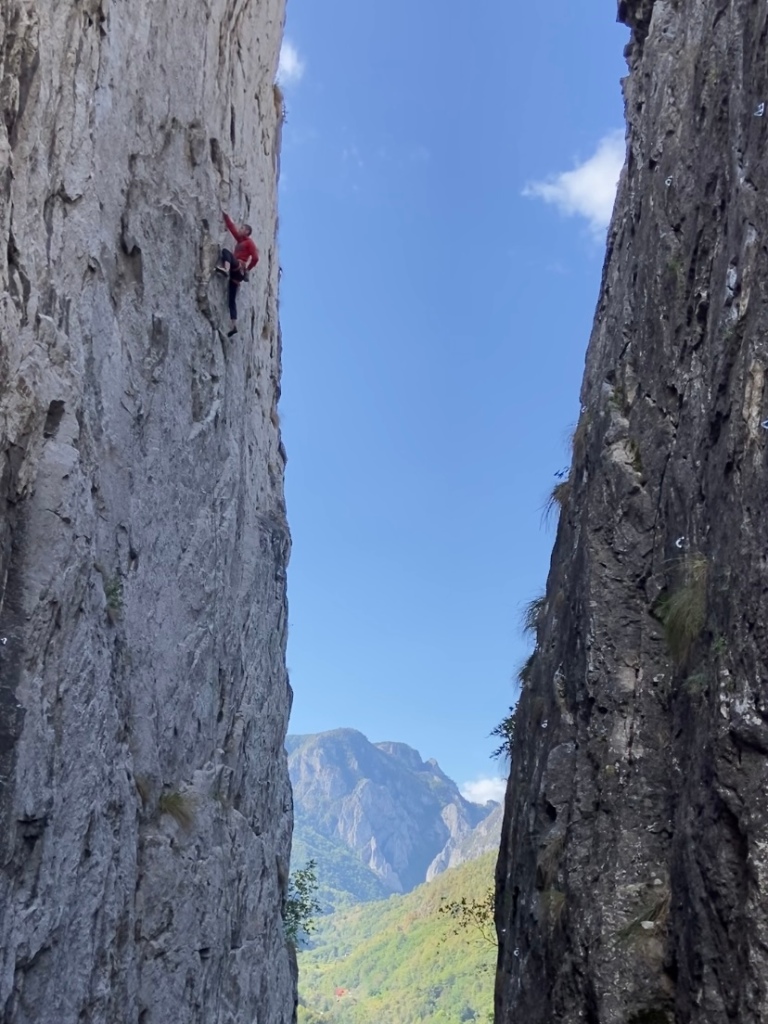
Climber chalking up on a tall vertical cliff on the left hand side of a narrow canyon. Between the two walls the view looks over a forested valley and another rocky limestone massif
Great climbing in an amazing position on ‘Pleasure Dome’, 6c+, Cheile Mănăstirii
Continue reading

Climbing in Hungary: Europe’s Cultural Crossroads

With 84% of Hungary lying less than 200 metres above sea level, the country isn’t known for being mountainous or craggy. However, you might be surprised at how much rock there actually is in Hungary, theCrag.com lists over 2,500 routes and several hundred boulder problems. When you combine this with Hungary’s excellent location, it makes total sense to spend some time here if you’re on a European climbing road trip. Hungary borders 7 countries: Slovakia, Ukraine, Romania, Serbia, Croatia, Slovenia and Austria – all of which have climbing and mountains of their own.

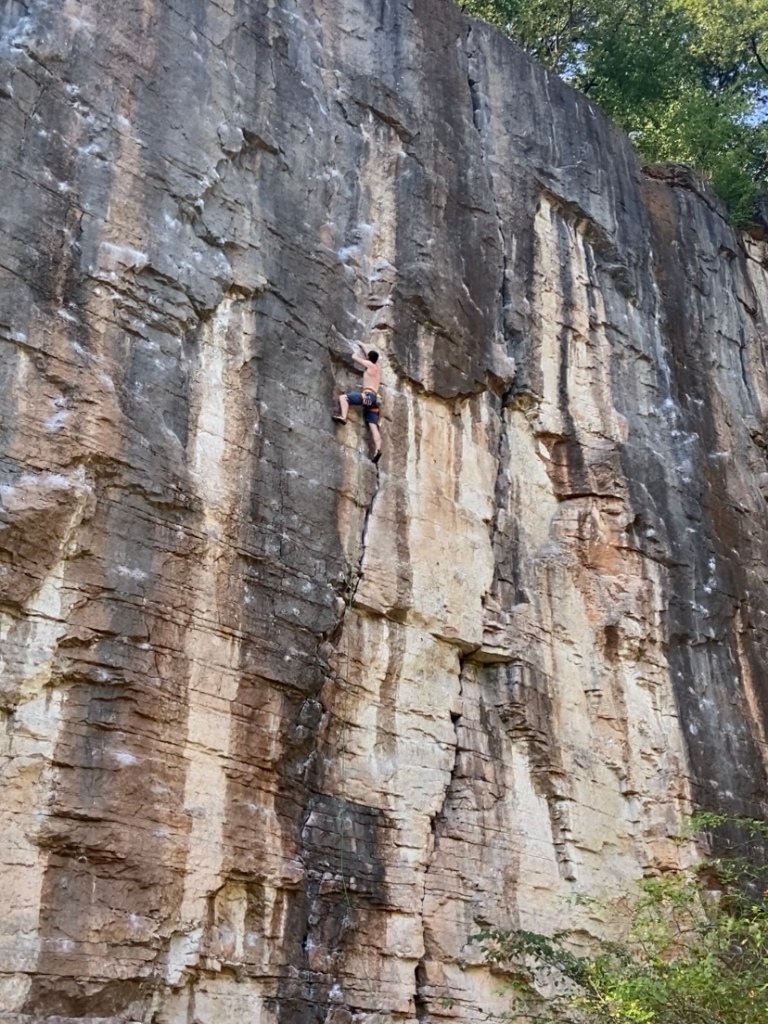
Climber making their way up vertical and horizontal crack systems with traces of chalk highlight the holds along the way. There is both darker rock and lighter rock
The brilliant pumpy crack of ‘Moha & Páfrány’, 6a

The options of where you could be going to or coming from are vast, but despite many climbers passing this area, very few actually stop and enjoy some climbing in Hungary. By not stopping, they miss out on lots of interesting things to see and do, as well as some good days climbing along the way. Travelling slower will allow you to enjoy Hungary and you won’t have to worry about losing your climbing fitness either, win win.

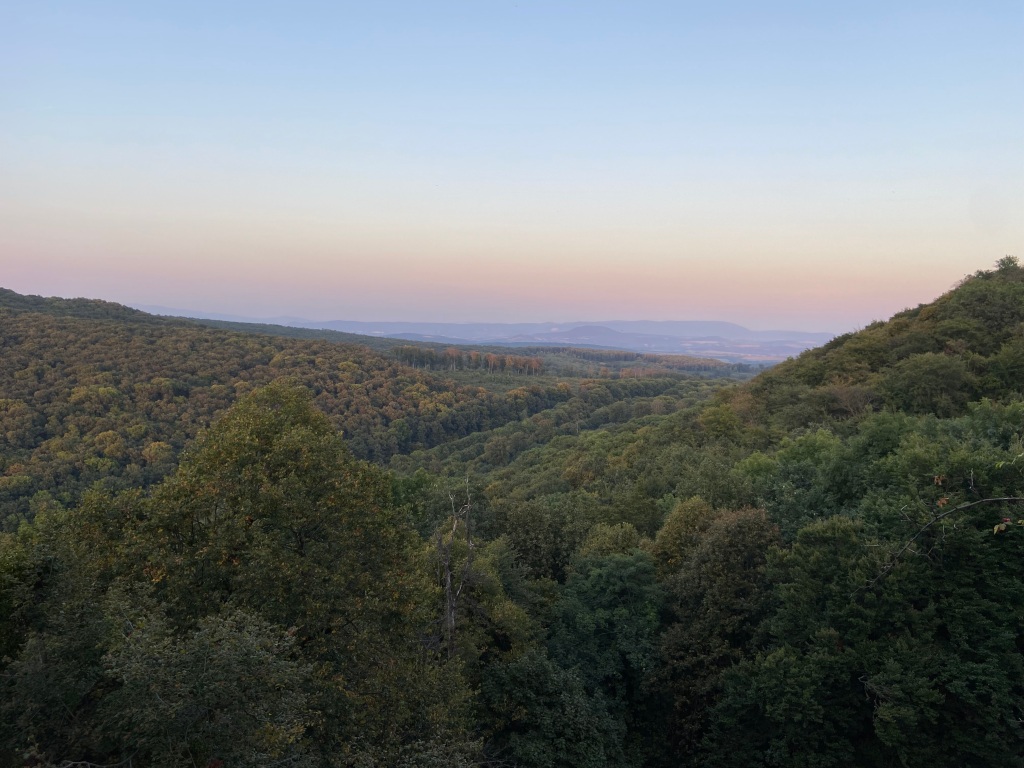
Looking out over rolling forested hills, with the sun making the sky a hazy pink colour
A beautiful sunset view from Kis-Gerecsei

This article is not intended to be a comprehensive guide to Hungarian climbing. Rather, it is aiming to give an idea of what to expect if you decide to include Hungary on your climbing road trip.

Continue reading

Climbing in The Polish Jura

Poland is not a place that most people think of when planning a climbing trip in Europe, and those that do are probably headed to the Tatra mountains for long multipitch routes. It isn’t well known that Poland has a fantastic sport climbing area of its own, the Jura. The climbing is great, with thousands of routes across the grades and many beautiful & unique crags. The area sees a lot of activity from Polish climbers, who are known for being very strong, but sadly gets very little attention from international climbers. We have spent 2 weeks climbing in the Jura and throughly enjoyed it, the quality is very high and we never felt like we would run out of cool crags to visit.

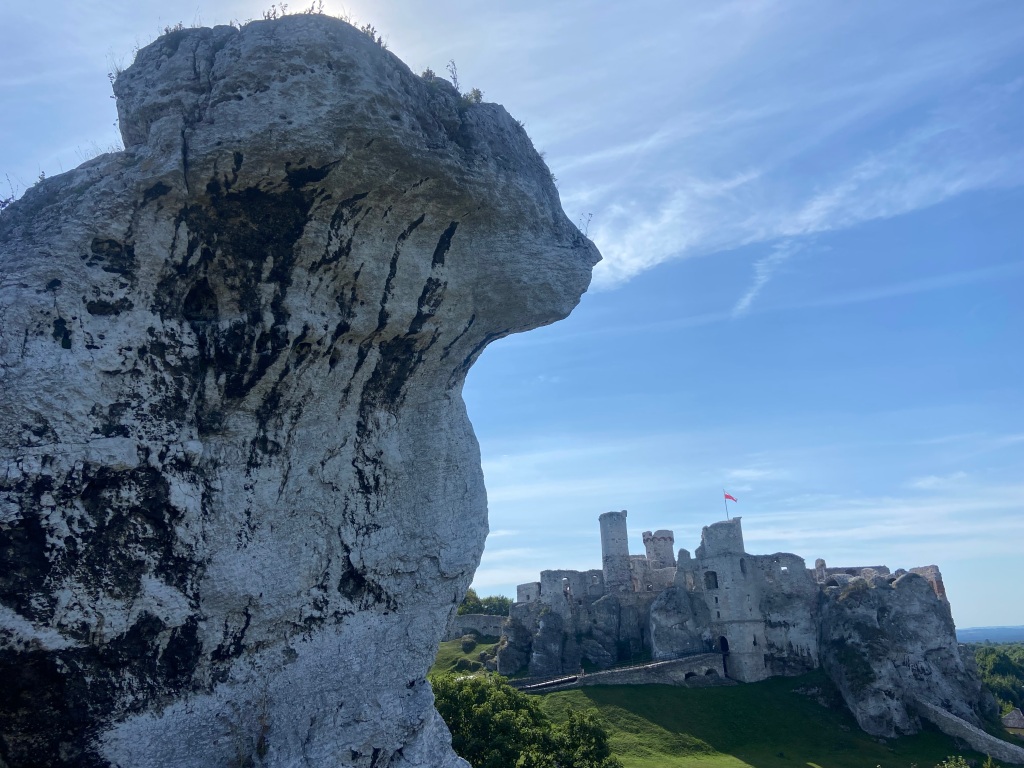
Overhanging limestone pinnacle with black marking on. In the background there is a larger crag with a castle fortress built into it with a large drawbridge across.
The stunning Kaczor sector at Góra Zamkowa
Continue reading

Climbing in Estonia: Baltic Bouldering

The Baltic region is well known for being flat and it sits in the heart of the Great European Plain, which is the largest area in Europe without mountains. This probably accounts for why Estonia sees so little climbing activity, but you would be very wrong to assume there is no climbing in the country. On the contrary, there are hundreds of boulders in Estonia and it isn’t low-ball pebble wrestling either, many of them are enormous.

Climber on large boulder with a flat grass landing with rocks
Spooky slab climbing on ‘Right Parallel’ 6B, at Jaani-Tooma

The large number of erratic boulders in Estonia were used to help develop early theories about continental glaciation. Now we know that both igneous and metamorphic boulders were carried to Estonia from Finland on a glacier, around 20,000 years ago. The boulders were deposited in their final resting place roughly 13,000 years ago when the glacier melted. Geologists have compared the composition of the boulders to those in southern Finland and have been able to map out which areas specifically they travelled from.

Climber using the crack features on a large boulder in the field above a bouldering mat
Great climbing on ‘Step Dad’ 6A, Tammneeme

We started our journey in Estonia much the same way the boulders did…by taking the ferry from Finland. After reading about the boulders on ClimbEstonia, we knew we wanted to spend some time climbing here and enjoy seeing some beautiful parts of Estonia that are off the radar of almost everyone.

Continue reading

Climbing in Sweden Part Two: The return to Scandinavia

Around a year after we last climbed in Sweden, we returned this summer to enjoy the bullet hard granite, peaceful nature and long summer days. You can read our original post ‘Climbing in Sweden: A Scandinavian Road Trip’ to see all of the crags we visited last year, mostly in southern Sweden. This year we climbed more in the north, generally in the Gulf of Bothnia area. We didn’t revisit any crags from last year, so everything in this post is different. If you want information on climbing season, rest day activities etc, please read last years post, as the same things generally apply we will avoid repeating ourselves.

Log cabin in front of lake with outside deck, windows and a chimney in the pine forest
A beautiful cabin in the forest, free for everyone to use respectfully
Continue reading

Climbing in Indonesia: A Journey through South East Asia

Indonesia is a prodigious country, with an extraordinary amount of records to its name. Indonesia is the world’s most populous Muslim country, the world’s largest archipelagic state and is home to over 700 languages. Choosing where to go in somewhere so vast is tricky, but we settled on Java as it has by far the most documented climbing areas. We spent a month on Java and it flew by, trying to visit anywhere else on top of that would have spread us too thin. Java is the world’s most populous island with over 145 million people, bigger than the population of the UK and France put together! It is an exceptional place, the people are great, the culture is captivating and the geography is fantastic.

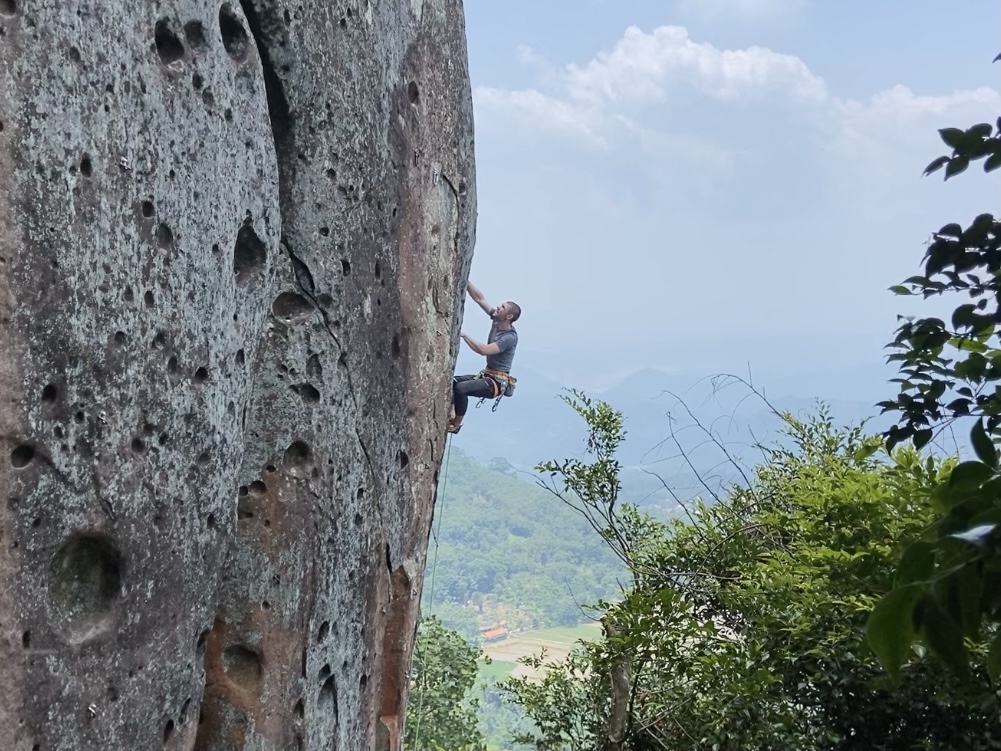
Climber on a slightly overhanging wall looking for the next move. The rock is pocketed pink and grey andesite. Below are the flat green rice fields and small villages. Behind these are more jungle covered mountains in the haze.
Beautiful scenery and rock at Bongkok, on ‘Letjen of the Fall’, 6b
Continue reading

Climbing in The Philippines: A Journey through South East Asia

The Philippines was the dark horse of our time in South East Asia, many climbers we spoke to before we went had no idea there was any climbing there at all! In fact, we would often be asked if we were going there just for sight seeing. What makes this so surprising is that the climbing in The Philippines is excellent and there is loads of it, all over the country! Aside from climbing, we really loved The Philippines as a country, it is a truly beautiful place and the people are genuinely some of the friendliest we have ever met. During the 3½ weeks we spent in The Philippines, we barely scratched the surface of what’s on offer and we were sad to leave, we could easily have spent over double that amount of time and still not had long enough.

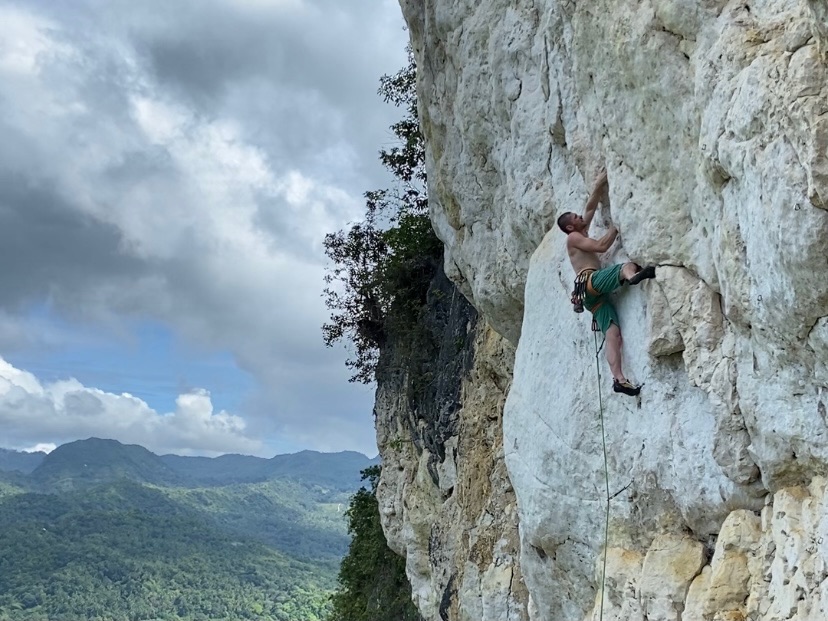
Climber trying hard on a thin section of vertical white limestone. In the background are mountains and jungle.
Absorbing moves on ‘Firefly’, 6c+
Continue reading

Climbing in Vietnam: A Journey through South East Asia

Vietnam was a major stop on our trip in South East Asia and somewhere we had looked forward to visiting for a long time. It certainly didn’t disappoint, we loved the country and Hữu Lũng is a very strong contender for our favourite climbing area of the entire trip. We began our time in Vietnam by crossing the border from Cambodia at Mộc Bài and made the long and interesting journey all the way up to the north with the excellent train line, enjoying a few stops along the way. Whilst we didn’t climb in the south, we really enjoyed experiencing the different culture and landscape on our way north, Vietnam is a country of great contrast. During our month in Vietnam we had a genuinely great time, not only was the climbing superb, the places, people and history were equally good and it was a definite highlight in every sense.

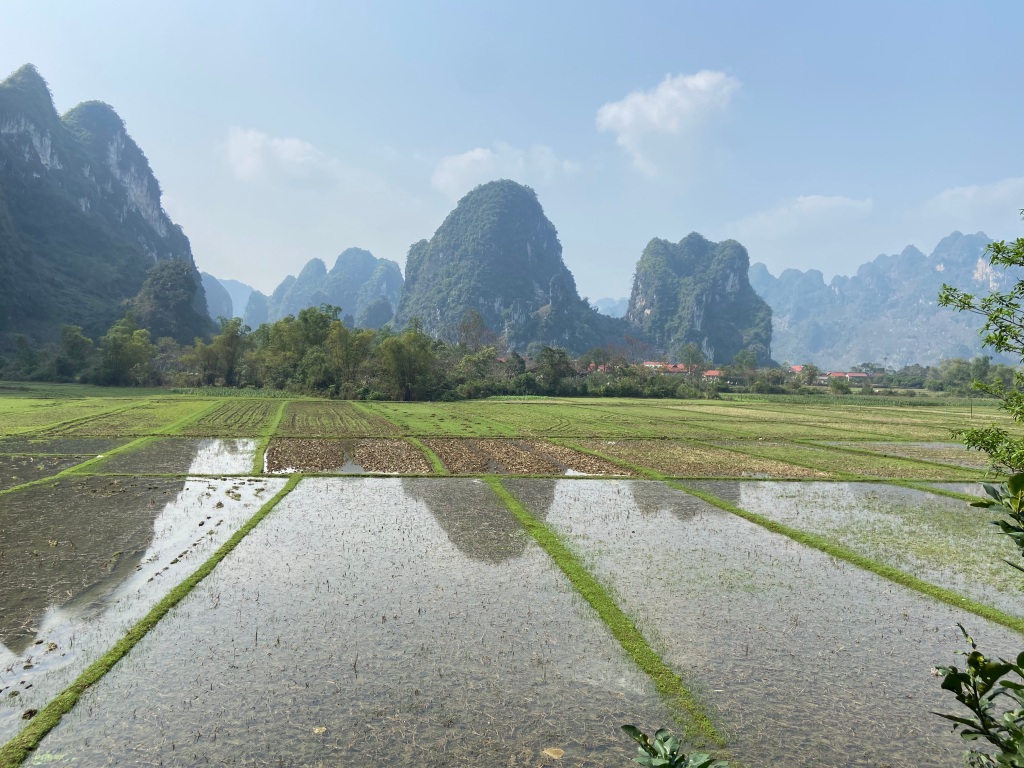
Large limestone mogotes, covered in white limestone cliffs and green vegetation rising up steeply from the flat flooded rice fields. There are many of them rising up in the distance. They are also in the reflection of the rectangular flooded rice fields.
Surreal beauty in Hữu Lũng
Continue reading

Climbing in Cambodia: A Journey through South East Asia

Cambodia is not the place that usually springs to mind for climbers in South East Asia and it is often thought of as a totally flat country. It is true that Cambodia has the one of lowest elevations in the region, at an average of 126 meters above sea level, which is significantly less than in neighbouring countries. However it would be false to represent Cambodia as mountainless. Its highest peak, Phnom Aural, is actually 1,813 meters and Phnom means mountain or hill in Khmer. That being said, mountains and crags are more scarce in Cambodia than other parts of the region. It is true that the climbing in Cambodia is lower in both quality and quantity than in bordering countries. We knew we wanted to include Cambodia as part of our trip, and it fit well with our route, entering from the Laos border and crossing into southern Vietnam to begin the long journey northwards up the coast. There are a handful of climbing areas to choose from in Cambodia and there are less climbers here than anywhere else we visited on our trip. We were glad we visited, Cambodia was a really nice country with a distinctive culture and a long captivating history.

Limestone cliffs with vegetation on top of them rising out from the green rice fields with blue but cloudy skies
The beautiful Kampong Trach mountains
Continue reading